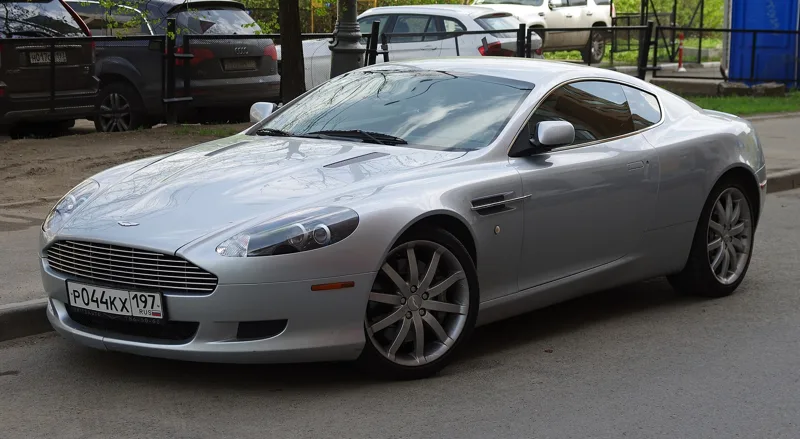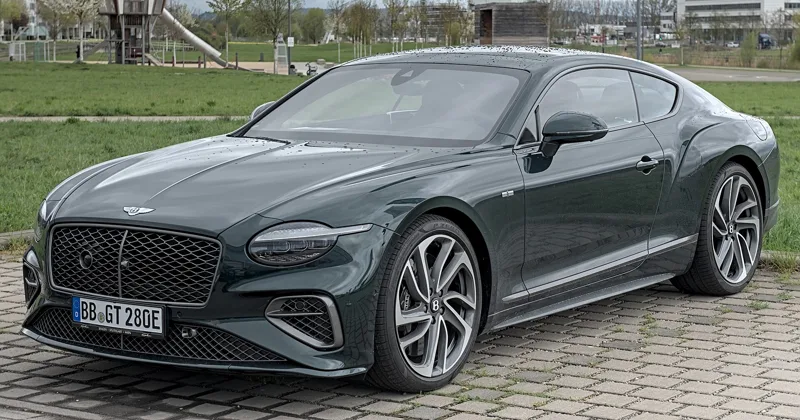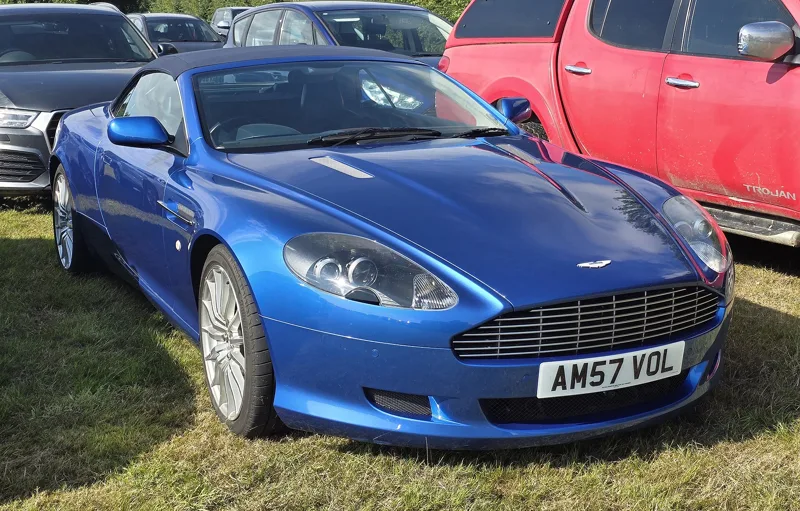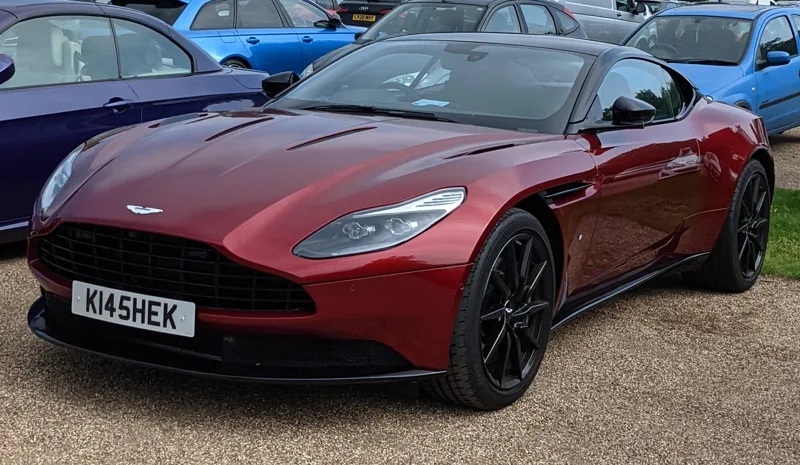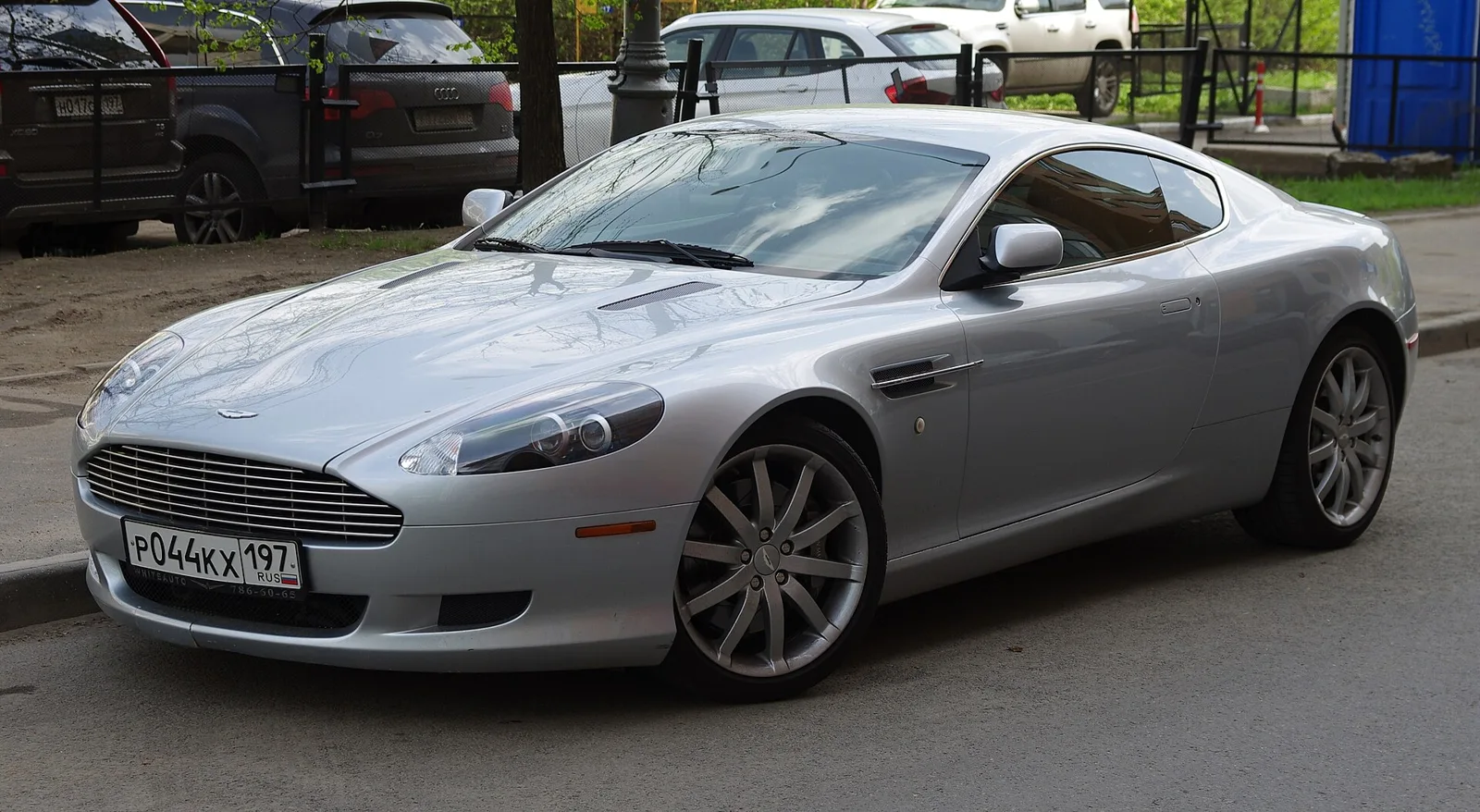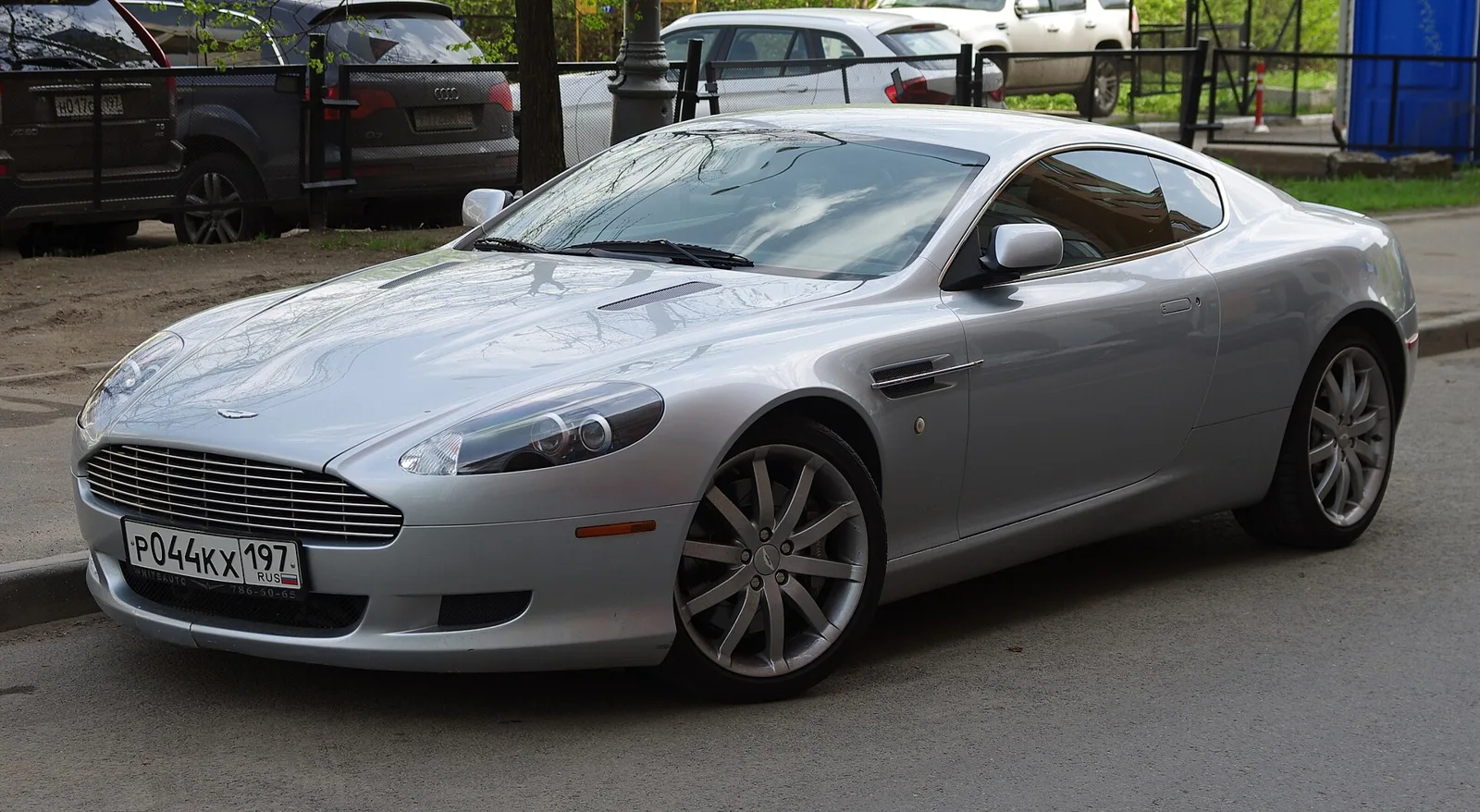
Two British two-door grand tourers from the early 2000s, one built around aluminium and a V12, the other around a twin-turbo W12 and four-wheel drive.
The Aston Martin DB9 paired a 5.9-litre V12 with a lightweight aluminium structure and was sold as a coupe and Volante between 2004 and 2016. The Bentley Continental GT offered four seats, a twin-turbo 6.0-litre W12 and permanent four-wheel drive, and it went on sale in 2003.
The Aston Martin DB9 and the Bentley Continental GT were both two-door grand tourers from British makers, and both reached the market in the early 2000s. The DB9 paired a 5.9-litre V12 with a largely aluminium structure, while the Continental GT offered a twin-turbocharged 6.0-litre W12 and permanent four-wheel drive. Which one suits a buyer depends on whether they prize Aston's lighter construction or Bentley's four seats and four-wheel drive.
Where did each car come from?
The DB9 replaced the DB7, a grand tourer that Aston Martin built from 1994 to 2004 and which sold about 7,000 examples, making it the company's best seller until its successor passed it. The Continental GT came from Bentley after Volkswagen's 1998 takeover, and it was the first new Bentley of that era.
Ian Callum and Henrik Fisker designed the DB9, which debuted at the Frankfurt Motor Show in September 2003. Callum split his time between Jaguar and Aston Martin for part of the project, and Fisker took over as lead designer in 2001. Series production started at Gaydon in Warwickshire in January 2004, and the DB9 was the first model built at that plant.
The letters DB honour David Brown, who owned Aston Martin from 1947 to 1972. The company avoided a DB8 name because it could suggest a V8, and the DB9 has a V12 under its bonnet.
Bentley had previewed a smaller, more affordable convertible, the Concept Java, at the 1994 Geneva Motor Show, when Rolls-Royce Motors owned the brand. The Java never reached production in that form, although 13 cars were built for the Sultan of Brunei. The Continental GT realised the same idea in far greater volume.
The Continental GT debuted at the 2002 Paris Motor Show, then made appearances at Le Mans, Goodwood in 2003 and a Bentley Drivers Club day at Silverstone. Bentley stressed that it was a mass-produced car rather than a coachbuilt one, and its launch price was less than half that of the Continental R.
Aluminium and a V12 on one side, twin turbos and four-wheel drive on the other.
How did the two cars differ in construction?
The DB9 sat on Aston Martin's vertical/horizontal platform and used aluminium and composites throughout. Its bonded structure weighed 25 per cent less than the DB7's steel monocoque while giving more than twice the torsional rigidity. The Continental GT, by contrast, relied on a good deal of hand assembly while still being a product of mass manufacture.
The DB9's exterior skin is mostly aluminium, though its front bumpers and bonnet are composites. Anti-squat and anti-lift technology in the rear suspension controls the car under heavy acceleration or braking, and the platform later carried several other Aston models.
The DB9 interior drew on the 2001 Vanquish but changed much of it. The air vents sit lower to free room for pop-up satellite navigation, and the starter is a clear glass button that glows blue with the ignition on and red when the engine runs. Bentley's coupe, meanwhile, dispenses with the B pillar, and that choice carried into every later generation of the car.
Which engine made more power?
The Continental GT W12 was rated at 560 PS (412 kW; 552 bhp) at 6,100 rpm on the DIN scale, against 456 PS (335 kW; 450 hp) at 6,000 rpm for the original DB9. Aston narrowed the gap in later updates, with the 2012 car reaching 517 PS (380 kW; 510 hp) and the DB9 GT making 547 PS (402 kW; 540 hp).
The DB9's 2008 update added 20 hp (15 kW) and 31 Nm (23 lbf ft) through higher compression and a deeper sump, and top speed rose to 306 km/h (190 mph). Torque on the original car peaked at 570 Nm (420 lb ft) at 5,000 rpm, while the Bentley's 650 Nm (479 lbf ft) arrived across 1,600-6,100 rpm.
The Continental GT sent its power to all four wheels through a Torsen-based permanent four-wheel drive system, fitted as standard. The DB9 kept a rear-wheel drive layout, and Aston said its front mid-engine design improved weight distribution.
How fast were they?
The DB9 with the manual gearbox reached 97 km/h (60 mph) in 4.7 seconds and topped out at 299 km/h (186 mph). The early Continental GT reached 100 km/h in 4.8 seconds and 318 km/h (197.6 mph), though the two sprints use different speed bands, so they do not compare cleanly.
The DB9 automatic took 4.9 seconds to 97 km/h with the same top speed. After the 2008 update Aston quoted 4.6 seconds, and the 2012 facelift brought a 4.5-second sprint with a top speed of 295 km/h (183 mph), a figure lower than the 2008 car's 306 km/h.
Specifications side by side
| Specification | Aston Martin DB9 | Bentley Continental GT |
|---|---|---|
| Body | Two-door coupe; Volante convertible | Two-door coupe or convertible, four seats |
| First shown | Frankfurt Motor Show, September 2003 | Paris Motor Show, 2002 |
| Production | Coupe from 2004, Volante from 2005, both ended in 2016 | Marketed from 2003; second-generation W12 car 2011 to 2018 |
| Engine at launch | 5.9-litre V12 | 6.0-litre twin-turbo W12 |
| Power | 456 PS (335 kW; 450 hp) at 6,000 rpm | 560 PS (412 kW; 552 bhp) at 6,100 rpm, DIN-rated |
| Torque | 570 Nm (420 lb ft) at 5,000 rpm | 650 Nm (479 lbf ft) at 1,600-6,100 rpm |
| Drive | Rear-wheel drive | Permanent four-wheel drive, Torsen-based |
| Acceleration | 4.7 seconds to 97 km/h (60 mph), manual | 4.8 seconds to 100 km/h |
| Top speed | 299 km/h (186 mph) | 318 km/h (197.6 mph) |
| Gearbox | Six-speed manual or six-speed ZF automatic | No figure |
| Boot | 187 L (6.6 cu ft) coupe; 136 L (4.8 cu ft) Volante | No figure |
| Strongest version | DB9 GT: 547 PS (402 kW; 540 hp) | Supersports: 630 PS (463 kW; 621 bhp) |
| Convertible | Volante, production from February 2005 | GTC, on sale late 2006; Supersports Convertible in 2010 |
| Motorsport | DBR9 (FIA GT1) and DBRS9 (FIA GT3) | No figure |
What did the Speed and Supersports versions add?
The Continental GT Speed arrived in 2007 with 608 PS (447 kW; 600 bhp) and 750 Nm (553 lb ft), plus a lower ride height and uprated springs, dampers and anti-roll bars. The Supersports, shown at the 2009 Geneva Motor Show, went further with 630 PS (463 kW; 621 bhp) and 800 Nm (590 lbf ft).
The Supersports was 110 kg (243 lb) lighter than the GT Speed and carried C/SiC ceramic brakes, which Bentley claimed were the largest fitted to a production car at the time. Its Quickshift automatic cut shift times by 50 per cent, and an automatic spoiler deploys at 80 km/h (50 mph).
Its 0-100 km/h time was 3.7 seconds, 0-160 km/h took 8.9 seconds, and the top speed was 330 km/h (205.1 mph). Bentley described it as the fastest and most powerful production Bentley at that point, and quoted a skidpad figure of 1.29 g against 0.98 g for the GT Speed. The Supersports could also run on petrol or E85 ethanol, although early cars lacked E85 capability until summer 2010 in the US.
How did the convertibles compare?
The DB9 Volante was shown at the Detroit Auto Show in January 2004 and entered production in February 2005, with reinforced windscreen pillars and two hoops behind the rear seats that deploy in a rollover. Bentley's GTC was first presented in September 2005 and reached 314 km/h (195.1 mph) with its roof up.
Boot space falls in the Volante, to 136 L (4.8 cu ft) from the coupe's 187 L (6.6 cu ft). The GTC's roof came from Karmann in Osnabruck, Germany, and with the roof down the top speed dropped to 305 km/h (189.5 mph). The GTC shares its powertrain detail with the GT and reaches 100 km/h in 5.1 seconds.
Bentley added a Supersports convertible at the 2010 Geneva show. The US model went on sale in summer 2010 for US$280,400, and it also used a Quickshift transmission that cut shift times by 50 per cent.
How practical were the two cars?
The Continental GT is a two-door with four seats, while the DB9's rear pair of seats was intended mainly as stowage space. Reviewers criticised the DB9's limited cargo capacity, which they felt was outdone by rivals.
The DB9's seating package removed the rear seats and fitted lighter Kevlar and carbon fibre front seats, saving 17 kilograms (37 lb). Later DB9s offered a Dolby Prologic system, a six-CD changer and iPod and USB connections, while satellite navigation and Bluetooth became standard. The DB9 interior used leather with walnut trim.
The Continental GT's dashboard clock was made by Breitling, which Bentley commissioned in 2002. The 2005 model year added voice activation for the in-car telephone in six languages, and the interior trim choices widened to include magnolia hide.
Did either car go racing?
The DB9 went racing through Aston Martin Racing, which produced the DBR9 for FIA GT1 and the DBRS9 for FIA GT3. Both were heavily modified, with interior features removed, aluminium body panels swapped for carbon fibre and engine output raised for more horsepower and torque.
Aston's racing cars show the DB9's sporting side more clearly than the road car's figures alone. The Bentley's strongest numbers, by contrast, come from its road-going Supersports rather than from any track conversion.
How did critics and buyers respond?
Reviewers judged the DB9's design better than that of its competitors, but they criticised its handling and its cargo space. Bentley built the Continental GT in much larger volumes than the Continental R, and a launch price below half the R's helped widen its market.
Aston planned to build between 1,400 and 1,500 DB9s a year at launch. In a 2007 interview, Ulrich Bez said that the company needed to be more visible and to build more cars, which was a shift for a maker long known for exclusivity.
The Continental GT also found a famous owner. Prince bought a 2006 coupe in Baby Blue, and after his death in April 2016 the car went on permanent display at his Paisley Park complex in Chanhassen, Minnesota.
Which buyer should choose which?
A buyer who values the DB9's bonded aluminium structure, its V12 and a convertible with reinforced pillars will find the Aston closer to what they want. A buyer who wants four seats, standard four-wheel drive and the stronger W12 will find the Continental GT better matched.
On rated output the two are close. The Continental GT W12's 560 PS sits just above the DB9 GT's 547 PS (402 kW; 540 hp), and the Supersports pushes Bentley's figure to 630 PS (463 kW; 621 bhp) for buyers who want the top of the range.
Buyers who care about running costs had a Bentley option too. The GT V8 made 500 hp (373 kW) and 660 Nm (487 lb ft), used cylinder deactivation, and improved fuel economy by 40 per cent over the W12, from 17.1 mpg to 26.1 mpg. The DB9 left production in 2016, while the second-generation Continental GT ran from 2011 to 2018.