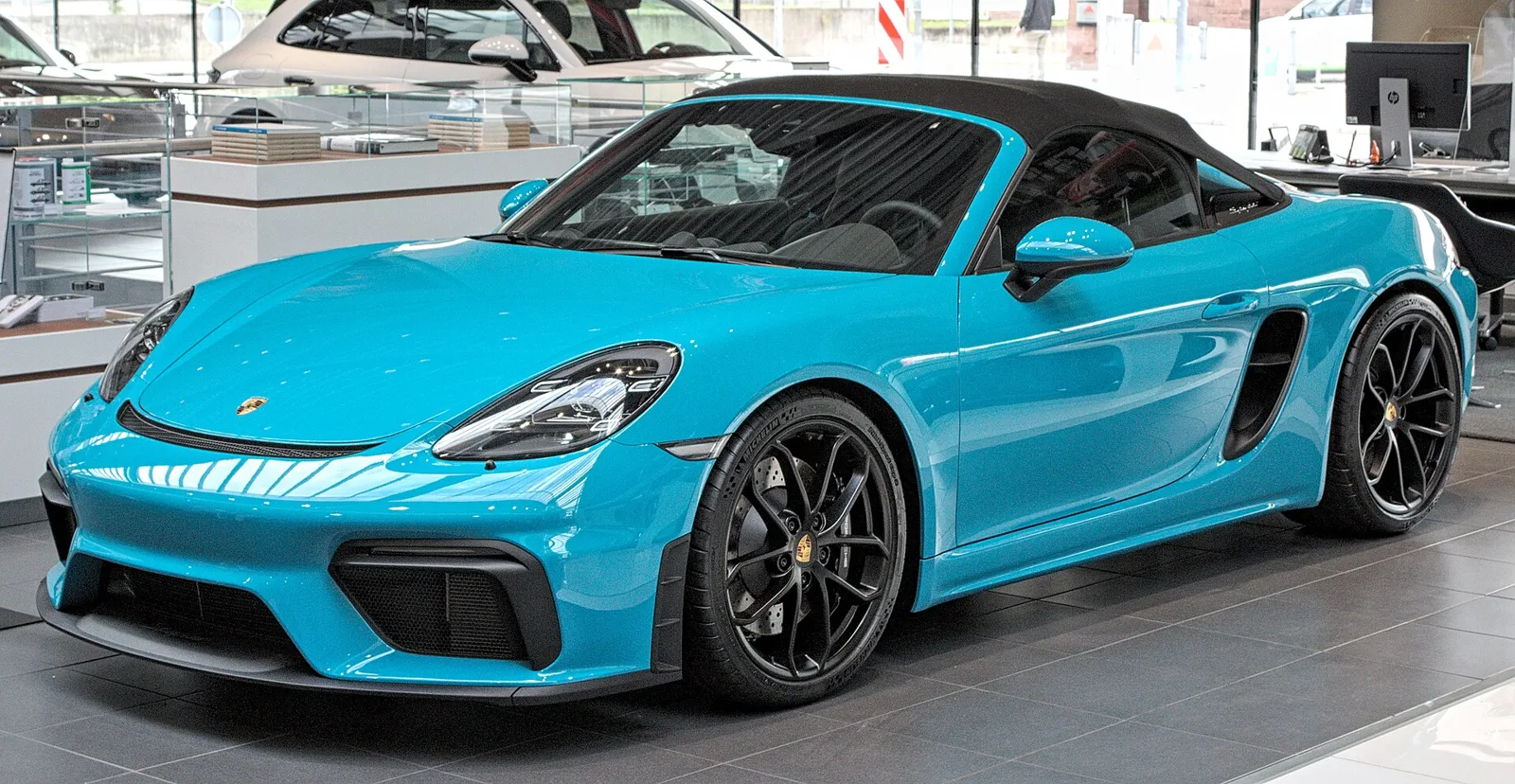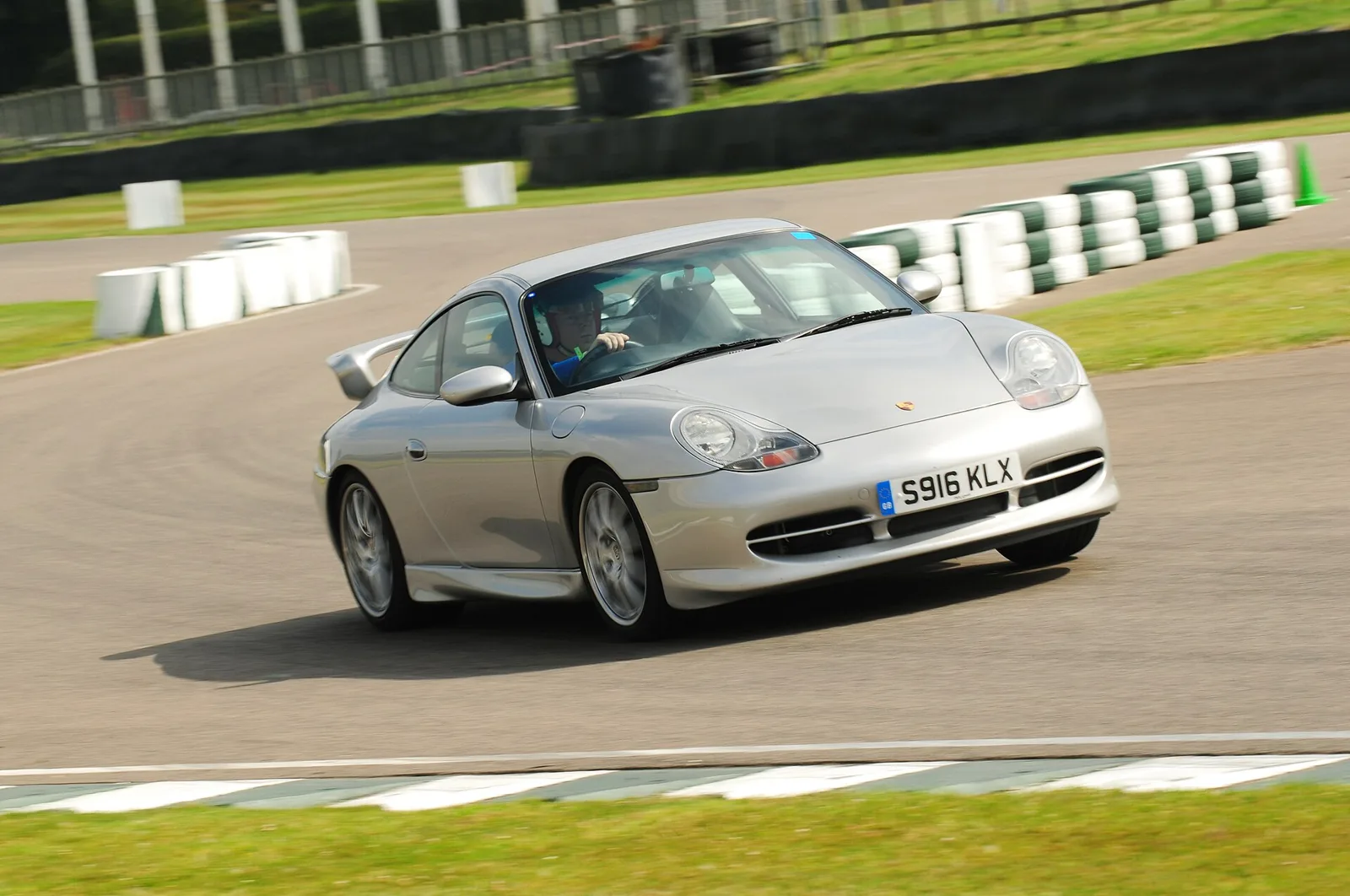
Built from 1997 to 2006, the 996 was the first 911 to abandon air cooling, and it spawned the Turbo, GT2 and GT3 variants that defined the era.
The Porsche 996 was the fifth-generation 911, built from 1997 to 2006. It was the first 911 with a water-cooled engine, and it spawned the Turbo, GT2 and GT3 models that stayed in production until 2006.
The Porsche 996 was the fifth generation of the 911 sports car, built from 1997 until 2006. It was the first 911 to use a water-cooled engine, and it had little in common with the car it replaced beyond its overall layout. The Turbo, GT2 and GT3 variants that followed made it one of the most discussed 911s of its era.
What is the Porsche 996?
The 996 is the fifth 911 generation, built by the German firm Porsche between 1997 and 2006. The 997 took over in 2004, although the Turbo S, GT2 and GT3 kept going until 2006.
The 996 was the first all-new chassis platform since the original 911. Its range ran from the base Carrera's 221 kW (300 PS; 296 hp) up to the GT2's 356 kW (484 PS; 477 hp). In engineering terms it was a sharp departure, leaving the original car's overall layout as the only common ground.
The first 911 to give up air cooling, and the car that built the Turbo, GT2 and GT3 legends of its decade.
Why did Porsche change the 911 for the 996?
Porsche was facing financial troubles in the 1990s, and rumours of a proposed takeover were spreading. The air-cooled flat-six was reaching the limits of its potential, as the earlier 993 had shown, and stricter emissions rules made a replacement necessary.
Porsche took the aid of Toyota, whose consultants helped overhaul the Zuffenhausen plant with mass-production techniques. The sharing of development with the entry-level Boxster also saved costs, and parts were interchangeable between the two models, which lowered maintenance costs.
The water-cooled engine was the most significant change from the classic 911. Tougher emissions and noise rules, buyers' demand for refinement and the wish for a high-performance four-valve engine all pointed the same way.
How was the 996 designed?
The 996 was designed by Pinky Lai under Porsche design chief Harm Lagaay, with the work running from 1992 to 2006. It was the first 911 that was completely redesigned, and it carried over little from its predecessor.
The body was new, and the car was 185 mm (7 in) longer and 40 mm (2 in) wider than the 993. Its chassis was 45% stiffer, formed from high-strength steel, and the car was 50 kg (110 lb) lighter despite its additional radiators and coolant.
The drag coefficient was Cd=0.30, the result of hours in the wind tunnel. The new fried egg headlamp covers replaced the old bug-eye lamps, and the design traced back to the 1997 911 GT1 race car.
The 996 retained only the front suspension, the rear multi-link suspension and a 6-speed manual transmission in revised form. Sharing development with the Boxster helped Porsche cut the development cost of the car by about 30%.
Which engine did the base Carrera use?
The base Carrera used a 3.4 litre flat-six that produced 221 kW (300 PS; 296 hp). The car was offered as a coupe or a cabriolet with rear-wheel drive, and later with four-wheel drive.
In 2000 power on the base Carrera rose to 224 kW (305 PS; 300 hp), although the car also gained weight. In 2002 the engine grew to 3.6 litres across the range, which added 11 kW (15 PS; 15 hp) to the naturally aspirated models.
How fast was the 996 Turbo?
The 996 Turbo introduced in 2000 used a 3.6 litre twin-turbocharged and intercooled flat-six rated at 309 kW (420 PS; 414 hp). It accelerated from 0-97 km/h (0-60 mph) in 4.2 seconds, with all-wheel drive as standard.
The engine was derived from the 1998 Le Mans winning 911 GT1 race car. Its torque reached 563 N m (415 lb ft), and it was available with a 6-speed manual or a 5-speed Tiptronic transmission.
What did the Turbo's upgrades bring?
The 996 Turbo debuted at the Frankfurt show in September 1999, and US sales began in 2000 as a 2001 model. Its bodywork was revised to fit 18-inch wheels and tyres and to feed air to three radiators at the front.
The X50 package, offered on the Turbo from 2002, included larger K24 turbochargers, intercoolers, a revised ECU and a quad-pipe exhaust. It raised power output to 331 kW (450 PS; 444 hp).
In 2003 Porsche North America restated the horsepower figures under SAE rules, so the Turbo was listed at 415 hp and the X50 option at 444 hp. The Turbo Cabriolet followed for the 2004 model year as the first mass-produced Turbo Cabriolet since the 1989 930 Turbo Cabriolet.
In 2005 the Turbo S arrived as a coupe or cabriolet, with the X50 option as standard, plus ceramic brakes and aluminium-faced instruments. It was essentially a Turbo with the X50 fitted from the factory.
What other body styles did the 996 get?
The Targa arrived in 2002 with a sliding glass roof system, the same approach used on the 993 it followed. Its rear glass hatch gave access to the storage compartment.
Also in 2002 the Carrera 4S was introduced. Its wide-body look was shared with the Turbo, along with the brakes and suspension. The base Carrera 4 Coupe in narrow body format ended production in 2001.
What made the GT2 special?
The GT2 was rear-wheel drive, which saved weight and avoided power losses through the transmission. It was built to compete in GT2 class racing, which restricted the use of all-wheel drive.
The GT2 produced 356 kW (484 PS; 477 hp) at 5,700 rpm and 640 N m (472 lbf ft) between 3,500 and 4,500 rpm. That was enough to reach 97 km/h (60 mph) in 3.9 seconds and a top speed of 315 km/h (196 mph).
The GT2 received a re-tuned version of the Turbo's twin-turbo engine, with larger turbochargers, intercoolers and reprogrammed engine control software. Bigger wheels and tyres came as standard, along with lightweight ceramic brakes.
The GT2 had no rear seat and no air conditioning, and it came with a factory-installed roll cage. Its fixed rear wing was made of CFRP on post-2003 cars, which was a concession to racing rules that usually outlaw adjustable aerodynamic parts.
How did the GT3 variants differ?
The GT3 was based on the standard Carrera and was stripped of much equipment for weight savings, with stiffer adjustable suspension and upgraded brakes. It used the bodyshell of the four-wheel-drive Carrera 4, with extra front-end stiffening. The first version, the Mk.I GT3, arrived in 1999 in all markets except North America.
The Mk.I used a naturally aspirated 3.6 litre flat-six rated at 265 kW (360 PS; 355 hp). The Mk.II, based on the second generation of the 996, was the first GT3 sold in North America and produced 280 kW (381 PS; 375 hp).
An Mk.II GT3 tested in 2004 accelerated from 0-97 km/h (0-60 mph) in 4.0 seconds and produced 1.03 g on the skidpad. That was the second highest figure ever recorded by a street-legal vehicle at the time.
How was the Turbo engine built?
The Turbo, GT2 and GT3 used the aluminium crankcase of the air-cooled 911 with its dry sump oiling system. The six Nikasil-lined cylinders were covered by water jackets, each one covering a bank of three cylinders.
That construction added water cooling to a crankcase designed for air-cooled cylinders. In the standard Carrera the cylinders and water jackets were cast together with the crankcase instead.
What were the 996 special editions?
Porsche celebrated the 911's 40-year history in 2003 with the slogan 40 Jahre 911, or 40 Years of the 911.
The 2000 Millennium Edition was based on the Carrera 4 coupe. It came in Violet Chromaflair paint with natural leather seats and dark burr maple trim, and it had polished turbo-look wheels.
The 40th Anniversary Edition for model year 2004 used the Turbo's front end and was offered only in GT Silver metallic paint. Its power rose to 254 kW (345 PS; 341 hp), and only 1,963 units were made to mark 1963, when the 911 first appeared.
What engine problems affected the 996?
Engines produced between 1998 and 2005 are known for several mechanical issues. These include rear main seal leaks, cylinder cracking, slipped sleeves, bore scoring and the intermediate shaft bearing.
The best-known problem was the IMS bearing, the focus of the Eisen class action lawsuit. Discovery in that case disclosed failure rates of up to 8%, though the problem is very rare, under 1%, in early MY98 models with a dual-row bearing.
Porsche redesigned the rear main seal, and the PTFE seal addresses most leaks. The Mezger engine designed by Hans Mezger for the GT3, Turbo and GT2 is not affected by these bearing problems.
Which 996 became a movie star?
Hollywood custom car builder Eddie Paul created a modified 996 Carrera for Pixar's 2006 Cars promotional tour. The blue car, called Sally, was built on a slightly shortened wheelbase.
Sally's windshield was tilted closer to vertical to fit the animated character's eyes, which added a few inches to the car's height. The vehicle is now held in the Porsche Museum in Stuttgart, Germany.
Because Sally was built for a promotional tour, it was never a production 996, even though it closely resembled a 2002 Carrera.
What are the key 996 figures?
| Specification | Detail |
|---|---|
| Production | 1997 to 2006, fifth generation 911 |
| Carrera base engine | 3.4 litre flat-six, 221 kW (300 PS; 296 hp) |
| Carrera 2000 power | 224 kW (305 PS; 300 hp) |
| Drag coefficient | Cd=0.30 |
| Turbo engine | 3.6 litre twin-turbo flat-six, 309 kW (420 PS; 414 hp) |
| Turbo torque | 563 N m (415 lb ft) |
| Turbo 0-97 km/h | 4.2 seconds |
| X50 Turbo | 331 kW (450 PS; 444 hp) |
| Mk.I GT3 | 265 kW (360 PS; 355 hp), 3.6 litre naturally aspirated |
| Mk.II GT3 | 280 kW (381 PS; 375 hp) |
| GT2 | 356 kW (484 PS; 477 hp) at 5,700 rpm, 640 N m |
| GT2 0-97 km/h | 3.9 seconds |
| GT2 top speed | 315 km/h (196 mph) |
| 40th Anniversary Edition | 254 kW (345 PS; 341 hp), 1,963 units |