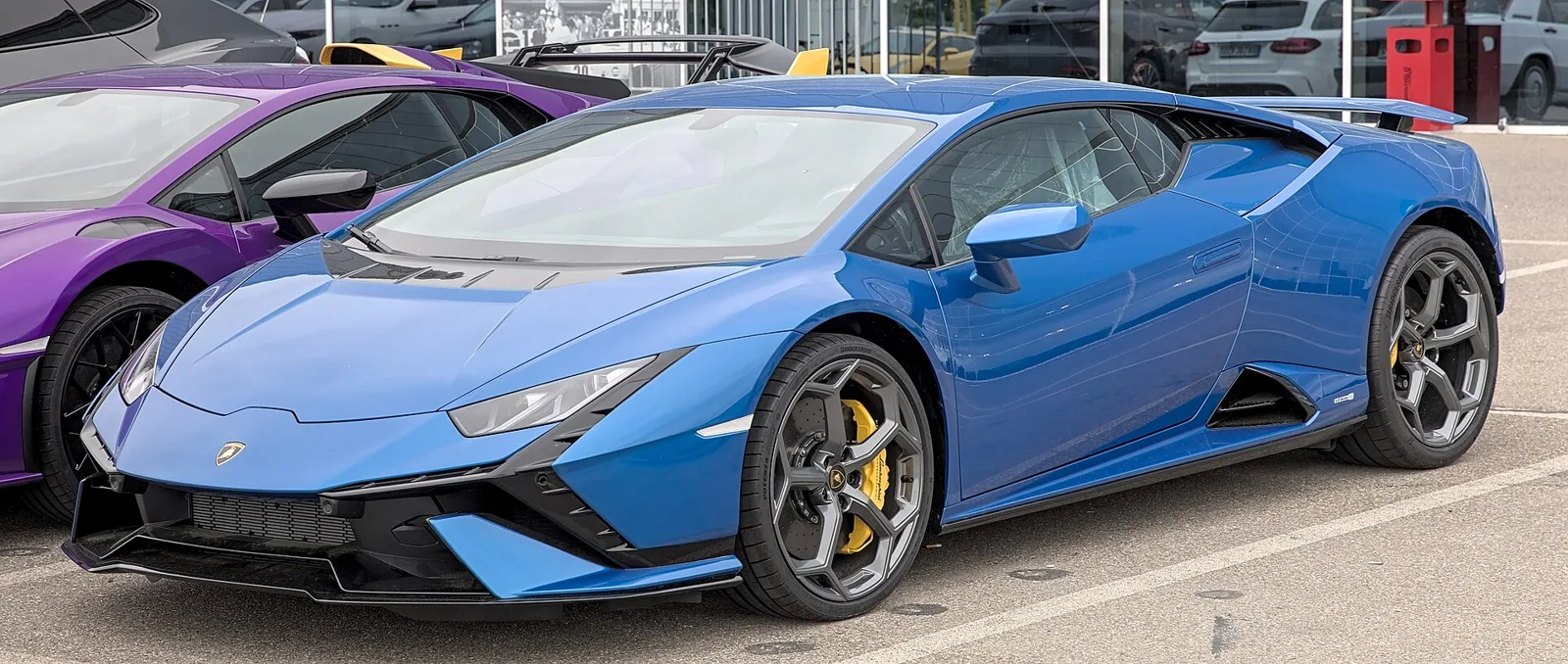
A mid-engined two-seater that kept a big atmospheric V10 to the end, spawned open-top, rear-drive, track and GT3 racing versions and ended with the off-road Sterrato.
The Lamborghini Huracan is a mid-engined two-seater that Lamborghini built from 2014 to 2024. It used a naturally aspirated 5.2-litre V10 and produced 449 kW (602 hp; 610 PS) in its first form, later rising to 471 kW in the Performante and Evo.
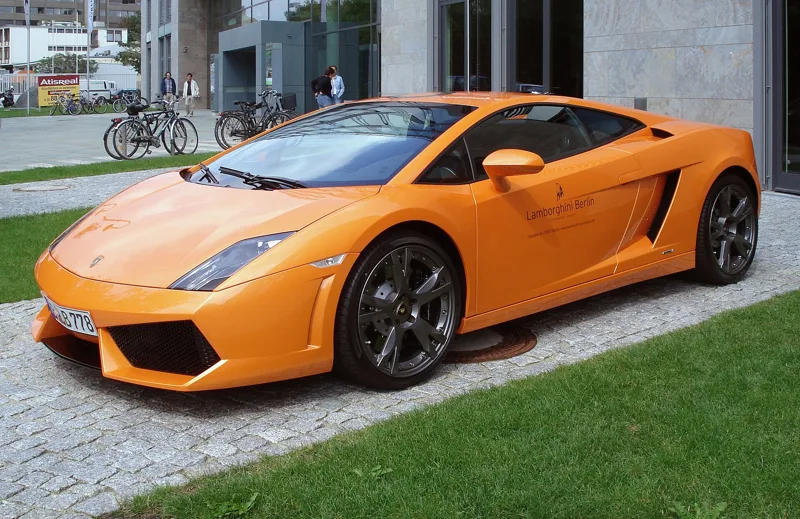
The Lamborghini Huracan was a mid-engined two-seat sports car that Lamborghini built from 2014 to 2024, replacing the Gallardo. It kept a naturally aspirated 5.2-litre V10 for most of its life, and it spawned open-top, rear-drive, track and GT3 racing versions.
This profile covers the car's origins, its engine and running gear, road performance, the Spyder and Performante models, the Evo update, the off-road Sterrato, the racing record and the lap time controversy. Metric figures come first, with imperial values in brackets.
Where did the Huracan come from?
The Huracan was revealed online in December 2013 and made its worldwide debut at the 2014 Geneva Auto Show. It went on sale in the second quarter of 2014 as the successor to the Gallardo, and its name, Spanish for hurricane, followed the company's habit of naming cars after fighting bulls.
The bull Huracan was known for its courage and fought in 1879. Historic Spanish fighting bulls have given their names to most Lamborghini models, and the Huracan continued that tradition.
The chassis was assembled by Audi at Neckarsulm in Germany, then sent to Sant'Agata Bolognese for final assembly. Within the first month of the preview period, the company took 700 orders, and more than 1,000 were registered before launch.
The Huracan's arrival marked the start of a family that would include coupe, convertible, rear-drive, track and racing models over a decade. The Huracan was succeeded by the Temerario, which was announced in 2024. Lamborghini's own statements placed the Sterrato as the last non-hybrid model to launch from the brand, so the Huracan's run closed with a petrol-only off-roader.
A naturally aspirated V10 two-seater that kept its character from the Geneva debut to the Sterrato finale.
What engine and running gear did the Huracan use?
The Huracan kept the 5.2-litre naturally aspirated V10 of the facelifted Gallardo, tuned to 449 kW (602 hp; 610 PS). The car was mid-engined for balance, with electronically controlled all-wheel drive and a seven-speed dual-clutch gearbox that was automatic only.
The engine used both direct and multi-point fuel injection, which was the first time that combination appeared in a V10. Its firing order is printed on a metal plate on top of the engine, as on other Lamborghinis.
Magnetorheological dampers changed the suspension very quickly, and the car shared components with the second-generation Audi R8 through the Volkswagen sports car technology the two models had in common. ANIMA, the mode selector, controlled the engine, transmission, steering, all-wheel drive and suspension together.
The car had full LED headlamps and an optional Lamborghini Dynamic Steering system, which changed the steering from comfortable to a racing feel. Its 12.3-inch TFT virtual cockpit came from parent company Audi.
How quick was the Huracan?
In road tests the LP 610-4 reached 97 km/h (60 mph) in 2.5 seconds and 300 km/h (186 mph) in 27.6 seconds. Its quarter mile took 10.4 seconds at 217 km/h (135 mph), and the maximum speed was 325 km/h (202 mph).
With a kerb weight of 1,553 kg (3,424 lb), the coupe delivered about 2.55 kg (5.62 lb) per horsepower. The drag coefficient of Cd=0.39 was not disclosed until 2021, which left the aerodynamic figures a mystery for several years.
The Spyder's 0-97 km/h time was 2.8 seconds in one comparison, 0.3 seconds slower than the coupe's measured time. Its extra chassis reinforcement made the convertible heavier, too.
What convertible versions did the Huracan get?
The Evo Spyder's canvas roof takes 17 seconds to fold and can operate at speeds up to 50 km/h (31 mph). The Spyder idea was first shown at the Frankfurt Motor Show, where it was revealed on 14 September 2015 with the coupe's V10.
The Spyder's dry weight of 1,542 kg (3,400 lb) was 120 kg (265 lb) more than the coupe, owing to the chassis reinforcement that replaced the roof's structural role. Top speed was claimed at 323 km/h (201 mph).
The LP 580-2 Spyder followed at the Los Angeles Auto Show in November 2016 with 427 kW (572 hp; 580 PS). Motor Trend recorded 0-60 mph in 3.2 seconds, and its top speed was 320 km/h (199 mph).
The Performante Spyder, unveiled at Geneva in 2018, matched the coupe's performance but added 125 kg (276 lb) of weight. Its 0-97 km/h sprint rose by a tenth of a second to 3.1 seconds.
What was the Huracan Performante?
The Performante was the track-oriented variant unveiled at the 2017 Geneva Motor Show. Its 5.2-litre V10 was tuned to 471 kW (631 hp; 640 PS) at 8,000 rpm, and it reached 0-100 km/h in 2.9 seconds, with a theoretical top speed of 325 km/h (200 mph).
Carbon fibre covered the bumpers and side skirts, and an adjustable carbon wing increased downforce. Weight dropped by 40 kg (88 lb) through forged aluminium and forged carbon fibre components, first used on the Sesto Elemento.
The chassis was stiffened by 10% with new springs, roll bars and bushings, and the magnetorheological suspension was reworked for a serious track experience. Lamborghini said its ALA active aerodynamic system delivered 750% more downforce than the standard car.
How did the Evo update change the Huracan?
The 2019 update renamed the car the Huracan Evo and gave it the Performante's engine, rated at 471 kW (631 hp; 640 PS) at 8,000 rpm. It added a more aggressive design, integrated aeroblades in the front bumper and a new ducktail spoiler.
The Evo reached 0-97 km/h in 2.9 seconds, 0-200 km/h in 9 seconds and a top speed of 325 km/h (202 mph). Its braking distance from 100-0 km/h measured 104 ft (32 m), and it gained rear-wheel steering and torque vectoring.
An 8.4-inch touchscreen ran the Lamborghini infotainment system and supported Apple CarPlay and Android Auto. The car used feed-forward logic that predicted the best driving mode from sensor data, and an Ego mode let the driver set their own preferences.
Which rear-wheel drive and track variants followed?
The LP 610-2 Evo RWD arrived in January 2020, replacing the LP 580-2. Its engine was rated at 449 kW (602 hp; 610 PS), and it reached 100 km/h in 3.3 seconds, slightly slower than the all-wheel-drive Evo. The STO and the Tecnica followed as track-focused cars.
The STO, short for Super Trofeo Omologato, had a taller rear wing, a roof snorkel and a shark fin device linking the two. It was rear-wheel drive with rear-wheel steering and CCMR brakes inspired by Formula 1, and it offered three modes for road, dry and wet use.
The Tecnica, unveiled on 12 April 2022, sat between the Evo RWD and the STO. It used the STO's naturally aspirated V10 and reached 100 km/h in 3.2 seconds. Its aerodynamic changes were said to increase downforce by 35 percent and cut drag by 20 percent.
What is the Huracan Sterrato?
The Sterrato was a production off-road variant that Lamborghini unveiled at Art Basel Miami on 30 November 2022, after a 2019 concept. It had 1.7 inches more ground clearance than the Evo, and it included a Rally mode for gravel, dirt and sand.
The concept had 47 mm (2 in) more ground clearance. The production car added wide fender flares with integrated air intakes, LED lights on the front bumper and Bridgestone all-terrain tyres.
Special versions included the Alpha, limited to 50 units in 2023, and the Ad Personam, limited to 12 units in four finishes. Total Sterrato production was 1,499 examples.
Did the Huracan have racing versions?
Yes. The Super Trofeo used a 5.2-litre V10 tuned to 456 kW (612 hp; 620 PS) and 570 N m (420 lb ft) for the single-make series, and the GT3 was developed with Dallara for GT racing.
The GT3 debuted at Monza in 2015, and it took the GTD class at the 2018 Daytona 24-hour race. That was the first time Lamborghini had won a 24-hour race.
The GT3 Evo followed in 2019 with 433 kW (580 hp; 588 PS). The GT3 Evo 2 arrived in 2022 and made its competition debut at the 2023 Daytona race, where it finished fourth in the GTD Pro class.
In June 2025 a GT3 Evo 2 won the 24 Hours of Spa for Lamborghini, its first overall race win in a major 24-hour event.
Did the Huracan hold a lap record?
Lamborghini's Performante prototype set a lap of 6:52.01 on the Nurburgring Nordschleife in October 2016, driven by Marco Mapelli. The time made it one of the fastest production cars around the track, and it was later beaten by the Porsche 991 GT2 RS. The Nordschleife is one of the most demanding circuits in the world, so lap times there attract close attention.
Critics questioned the record, pointing to a sped-up official video and doubts over the speeds shown. Lamborghini responded by sharing telemetry and saying the car ran Pirelli P Zero Trofeo R tyres, which were also specified for customers.
Lamborghini credited much of the result to its ALA active aerodynamic system, whose spoilers snap to a low-drag setting when the car is aimed forward. The Porsche 991 GT2 RS set 6:47.3 in September 2017, which put the Huracan just behind.
What are the Lamborghini Huracan specifications?
The table lists the main road cars and the GT3 Evo for comparison, with output and sprint figures. Where a sprint was measured or claimed on a different basis, the table states the basis so that figures are not mixed together.
| Model | Output | Sprint figure | Top speed |
|---|---|---|---|
| LP 610-4 coupe | 449 kW (602 hp; 610 PS) | 2.5 seconds to 97 km/h (road test) | 325 km/h (202 mph) |
| LP 580-2 | 427 kW (572 hp; 580 PS) | 3.4 seconds to 100 km/h (claimed) | 320 km/h (199 mph) |
| Performante | 471 kW (631 hp; 640 PS) | 2.9 seconds to 100 km/h (claimed) | 325 km/h (200 mph), theoretical |
| Evo | 471 kW (631 hp; 640 PS) | 2.9 seconds to 97 km/h | 325 km/h (202 mph) |
| GT3 Evo | 433 kW (580 hp; 588 PS) | Not given | Not given |
The figures show how the Performante and Evo share their engine, while the LP 580-2 gives up some output for a lower price.
Frequently asked questions
Did the Huracan ever offer a manual gearbox?
No. The gearbox was a seven-speed dual-clutch automatic, and no manual was offered. The modes changed how the gearbox responded to the driver's inputs.
What does LP stand for?
LP stands for Longitudinale Posteriore, which describes the longitudinal mid-rear engine position. The 610 in the coupe's name refers to its 610 metric horsepower.
How many seats does the Huracan have?
Two, as its layout makes clear. The car was built as a two-seater sports car, with the engine placed behind the cabin.
Was the Huracan used by police?
Yes. A Polizia variant was produced in 2014 for the Italian State Police, after a Gallardo used by the Polizia Stradale was destroyed on patrol duty.
What was the Avio?
The Avio was a 2017 limited edition inspired by Italian fighter jets and dedicated to the Italian Air Force. It was limited to 250 examples worldwide.