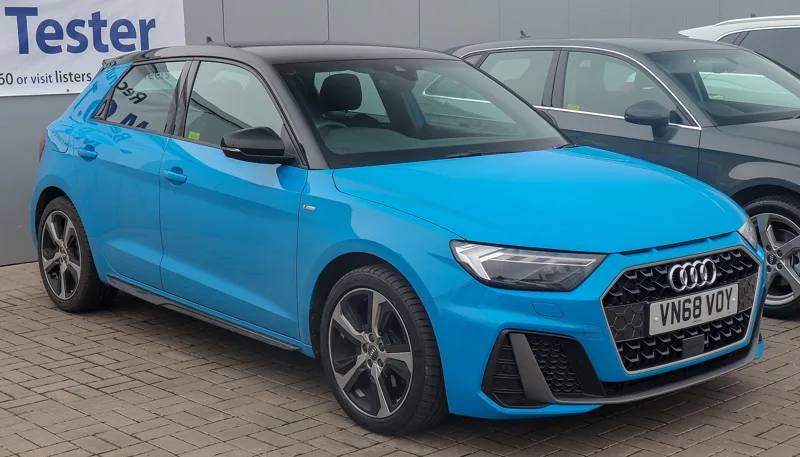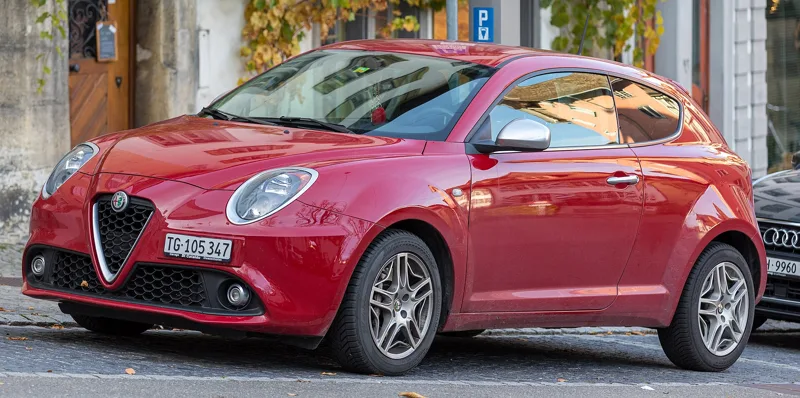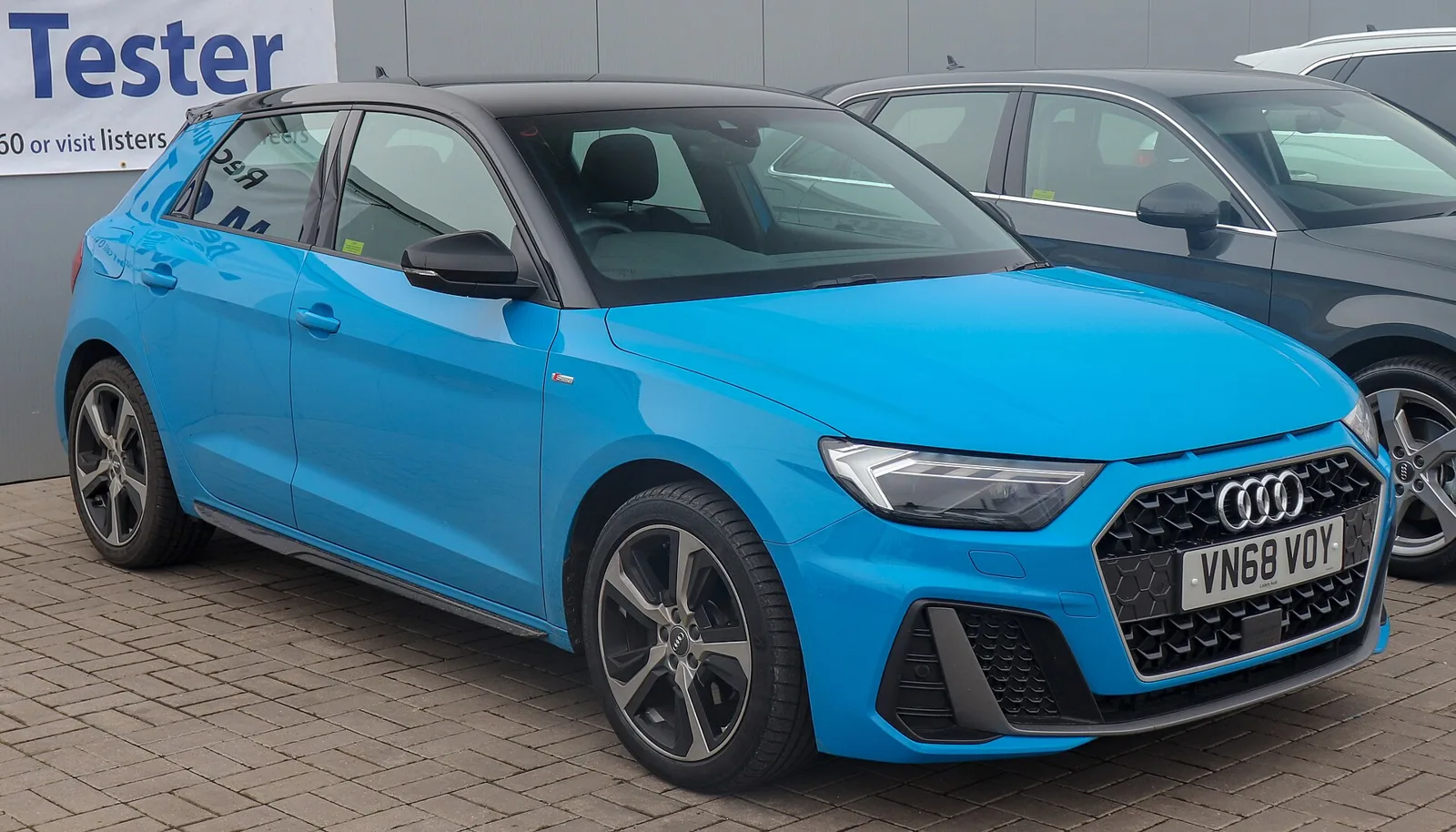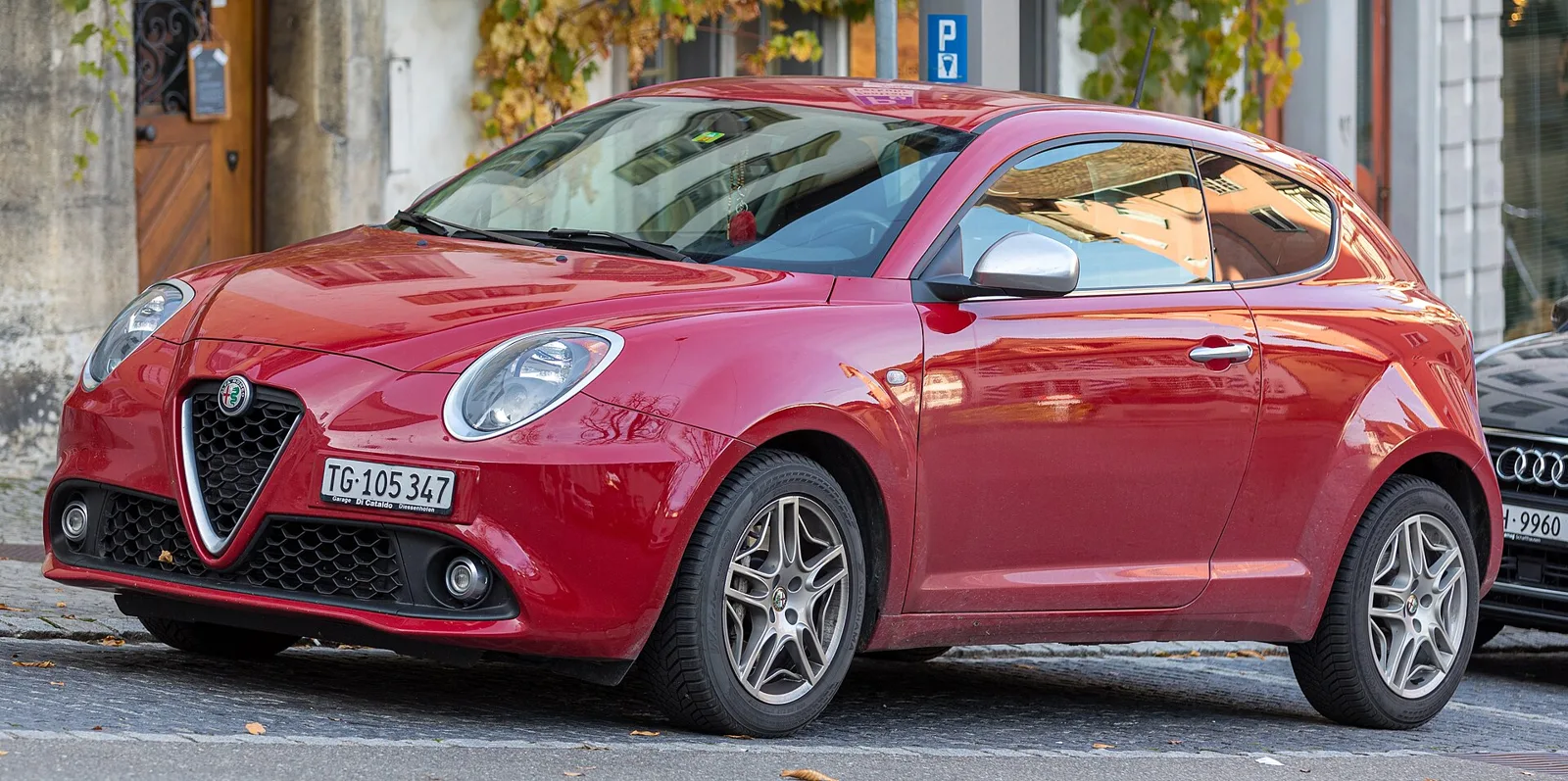
Italian character against German polish in the supermini class, from the MiTo's Quadrifoglio Verde to the A1's quattro and e-tron experiments.
The Alfa Romeo MiTo and Audi A1 were rival premium superminis built for urban buyers. The MiTo ran from 2008 to 2020 and sold 293,428 units, while the A1 launched in 2010 and reached 100,000 cars by June 2011.
The Alfa Romeo MiTo and Audi A1 both aimed at urban buyers in the supermini class, but they took different routes. The MiTo leaned on sporty MultiAir and TwinAir engines and a Quadrifoglio Verde hot version, while the A1 built its appeal on Volkswagen Group engineering, special editions and a series of electric experiments.
Both cars reached the end of their first runs around 2019, so they are best read as the small-car offers each brand made in the late 2000s and 2010s.
Who made the Alfa Romeo MiTo and the Audi A1?
The MiTo was built by Fiat Group Automobiles and sold under the Alfa Romeo marque from 2008 to 2020, with 293,428 units made at Fiat's Mirafiori factory. The A1 was an Audi model that went on sale in 2010 and was built at Audi's Brussels plant in Forest.
Centro Stile Alfa Romeo in Milan designed the MiTo, and the name combines Milano with Torino, where the car was assembled. Alfa positioned it as a sporty small car, while Audi called the A1 a luxury supermini. Audi's A1 used the Volkswagen Group PQ25 platform, also found under the SEAT Ibiza Mk4 and VW Polo Mk5, and Audi worked with SEAT during development.
Two premium superminis, one built on sporty MultiAir engines and the other on Audi's shared platform and quattro engineering.
What concepts came before each car?
Both makers previewed their superminis years ahead. Audi's metroproject concept appeared at the 2007 Tokyo Motor Show as a four-seat plug-in hybrid, while the MiTo made its public bow in 2008 at Castello Sforzesco in Milan, followed by an international showing at the British Motor Show that year.
Audi's concept line continued through the A1 Project Quattro and the A1 Sportback concept of 2008. The Sportback concept measured 3.99 m (157.09 in) in length and claimed an electric-only range of 50 km (31.07 mi).
The MiTo began life as Junior. In November 2007 Alfa ran a European naming contest in which the name Furiosa scored well in several countries, but the official name MiTo was announced in 2008.
How much room and what chassis did each supermini offer?
Boot capacity stood at 250 litres (8.8 cu ft), and the MiTo was front-wheel drive with three driving settings under the Alfa DNA system: Dynamic, Normal and All-Weather. A Q2 electronic differential on the front axle engaged in Dynamic mode to tighten cornering without losing traction.
The A1 used a MacPherson strut front suspension with a torsion beam rear. In the UK it was sold in SE, Sport and S line trims, with the Sport and S line adding sports seats, sports suspension and larger wheels.
Which engines did the MiTo offer?
The MiTo range ran from a power-limited 79 PS naturally aspirated engine, fitted at launch to meet Italian rules for novice drivers, up to a 170 PS 1.4-litre MultiAir Turbo. By model year 2014 it also included a 105 PS 0.9-litre TwinAir turbo petrol, 85 PS and 120 PS diesels and a 120 PS LPG option.
Two further engines arrived at the 2011 Frankfurt Motor Show: a 0.9-litre TwinAir and a low-emission 85 PS version of the 1.3 JTD diesel. The MultiAir engines introduced from September 2009 offered up to 10% more power and cut NOx emissions by up to 60%.
Audi's A1 engine line-up is documented less fully here, but its 1.4 TFSI petrol came in several outputs, including a 185 PS version and a 122 PS unit that went on sale as the 30 TFSI in China.
| Feature | Alfa Romeo MiTo | Audi A1 |
|---|---|---|
| Introduced | 2008 | 2010, Geneva Motor Show |
| Body | Three-door hatchback, single generation | Three-door at launch; five-door Sportback from November 2011 |
| Platform | SCCS, shared with Fiat Grande Punto | PQ25, shared with SEAT Ibiza Mk4 and VW Polo Mk5 |
| Production | 293,428 units at Mirafiori | 100,000th car on 23 June 2011, Brussels plant |
| Luggage | 250 litres (8.8 cu ft) | No figure given |
| Petrol engines | 0.9 TwinAir at 105 PS; 1.4 MultiAir from 70 PS to 170 PS | 1.4 TFSI at 122 PS and 185 PS; 1.6 TDI at 105 PS |
| Hottest production model | Quadrifoglio Verde, 170 PS, 7.3 seconds 0-100 km/h with TCT | Clubsport quattro is a one-off concept at 503 PS |
| Alternative fuel or electric | Dual-fuel LPG, range 1,200 km (750 mi); fuel cell test cars | A1 e-tron plug-in hybrid, 50 km (31 mi) electric range; production on hold |
| Safety | Seven airbags; good result in first Euro NCAP rear impact test | Front and side airbags, plus belt pretensioners and load limiters, standard |
| End of first run | Discontinued early 2019 | Three-door discontinued 2018; second generation 2019 |
How did the performance versions compare?
The Quadrifoglio Verde was the MiTo's headline model. Its turbocharged 1.4-litre MultiAir inline-four produced 170 PS, equal to 125 kW or 168 hp, at 5500 rpm, with a torque peak of 250 N-m (184 lbf-ft) arriving at 2500 rpm. Its output of 124 PS per litre led its class when the car arrived.
Fuel use was rated at 6 litres per 100 km (47 mpg-imp; 39 mpg-US) with CO2 of 139 g/km. From 2014 the TCT gearbox brought 0-100 km/h down to 7.3 seconds, and the car was renamed Veloce at the 2016 facelift.
Audi's answer was more about handling than headline outputs. The production A1 quattro was tested by Autocar on MIRA's wet handling track against a Nissan GT-R, and it recorded a lap more than five seconds faster. Autocar called the result a giant-killing one.
Most of Audi's extremes were one-offs or concepts, while the MiTo's hot versions reached production.
For the sporting extremes, the MiTo GTA prototype of 2009 promised 240 PS from a 1.8-litre turbo, with a top speed reaching 250 km/h (155 mph) and 0-100 km/h in 5 seconds. Audi's clubsport quattro one-off used a modified RS 3 engine rated at 503 PS (370 kW) and reached 0-100 km/h in 3.7 seconds.
Did either car go electric?
Audi went further. The A1 e-tron was a series plug-in hybrid with a 12 kWh lithium-ion battery that gave a maximum of 50 km (31 mi) before a 254 cc Wankel engine drove a generator. Audi put the production version on hold indefinitely in June 2012, and later reports said it had never been scheduled for production.
Alfa's electric story was based on hydrogen. Two MiTo Fuel Cell cars joined a hydrogen test programme in Europe, reaching 150 km/h (93 mph) and an NEDC range of 450 km (280 miles) on 700 bar tanks. The fuel cell MiTo paired a Nuvera stack with a compact lithium-ion battery to drive its electric motor.
Which special editions are most collectable?
Alfa built several small runs. The MiTo SBK of 2012 fitted titanium-finish 16-inch wheels and chrome trim for its spoiler and exhaust across 200 numbered cars, and the MiTo Racer, shown at the 2015 Geneva Motor Show, brought a checkered flag roof decal and 17-inch alloy wheels. The Edizione Sprint of 2009 was limited to 250 examples for Belgium, a 100-car Maserati Version was made for Maserati dealers in 2010, and the Quadrifoglio Verde 101 celebrated the company's 101st anniversary in 2012 with 101 cars.
Audi's most eye-catching special was a version of the 2011 A1 painted by Damien Hirst, which sold for 350,000 pounds. Samurai Blue, a Japanese edition inspired by the national football team, added a further 111 models in 2012.
How were the cars received?
Reviewers liked the MiTo's looks but were less convinced by its driving and build quality. What Car? found the styling distinctive and recommended the 1.4-litre turbo petrol over the 0.9-litre turbo, while calling the 1.3-litre diesel adequate. The RAC reported reliability at the lower end of acceptable, though it said the rustproofing was excellent.
The 2016 facelift reworked the nose with a fresh badge and lettering, and the trims were reset to MiTo, Super and Veloce.
The MiTo collected awards too, including a 2013 Bestes Auto des Jahres win in the import small cars category and the supermini category prize in the 2011 What Car? Reader Awards.
Audi's A1 was aimed at young, affluent urban buyers, and Audi called it a luxury supermini. Less reception detail survives for the A1 than for the MiTo.
How many did each car sell?
The MiTo ran to 293,428 units over its single generation. The A1 reached its 100,000th production car on 23 June 2011, less than a year after the car went on sale in late 2010. The five-door Sportback arrived in November 2011 and ran alongside the three-door until the first generation ended in 2018, before a second generation arrived in 2019.
Both plants are in major cities. Audi's Forest factory sits near Brussels, and the MiTo was assembled in Turin at the Mirafiori site.
Volumes alone do not settle which was better. The MiTo's figures reflect a longer production run in a single body style, while the A1 grew through a five-door Sportback and a second generation.
Which buyer suits each car?
The MiTo suits buyers who want Alfa's sporty character, from the hot Quadrifoglio Verde to the 0.9-litre TwinAir, or a dual-fuel LPG option. The A1 suits buyers who want Audi's quattro, a five-door Sportback body and the shared-platform engineering behind it.
Practicality settles one question here. The MiTo's boot is rated at 250 litres (8.8 cu ft), the one luggage figure this pairing can settle. The MiTo's engine list is the longer of the two, while the A1 brings the quattro option to the table.
Anyone wanting an electric or plug-in option in this period would have looked to Audi, since its A1 e-tron reached field testing and offered 50 km (31 mi) of electric range. Alfa's electric effort stayed in hydrogen test cars.
How did the two cars fare on safety?
The MiTo came with seven airbags as standard and earned a good result in the first Euro NCAP rear impact test, which covered whiplash. Audi's A1 was also assessed by Euro NCAP, and its specification included airbags at the front and sides, belt pretensioners and load limiters.
Only the MiTo's rear impact result is recorded here, so on safety the comparison rests on standard equipment for both cars.