Alfa's rear-transaxle saloon with its racing pedigree and Audi's Volkswagen-era compact, compared on engines, handling, design and the markets each sold into.
The Alfa Romeo Alfetta and Audi 80 were European saloons launched in 1972 and sold as rivals in the same class. The Alfetta used a rear transaxle and De Dion suspension, while the Audi 80 used MacPherson struts at the front and won the 1973 European Car of the Year title.
The Alfa Romeo Alfetta and the Audi 80 were both mid-sized European saloons that arrived in 1972 and were aimed at buyers who wanted more than a basic family car. The Alfetta had a rear transaxle and a racing pedigree, while the Audi 80 was only the second modern Audi developed entirely under Volkswagen ownership. Both sold in large numbers through the 1970s.
Were the Alfetta and the Audi 80 rivals?
Yes. When the Audi 80 was launched, it was positioned as a viable rival to the Opel Ascona and the Ford Taunus, and it was also pitched against more upmarket cars, including the Alfa Romeo Alfetta and the Triumph Dolomite. The two cars therefore shared a class.
The Alfetta was the more unusual machine. It introduced a new drivetrain layout to the marque, while the Audi 80 was a conventional design that marked a clean break from Audi's older Auto Union era. The comparison turns on those differences.
Two saloons that arrived together in 1972, one with a rear transaxle and a racing name and the other a front-drive car that won Europe's top award a year later.
Where did each car come from?
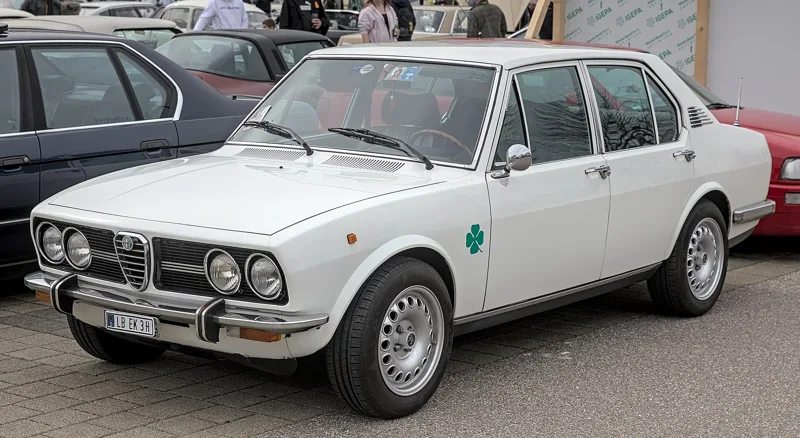
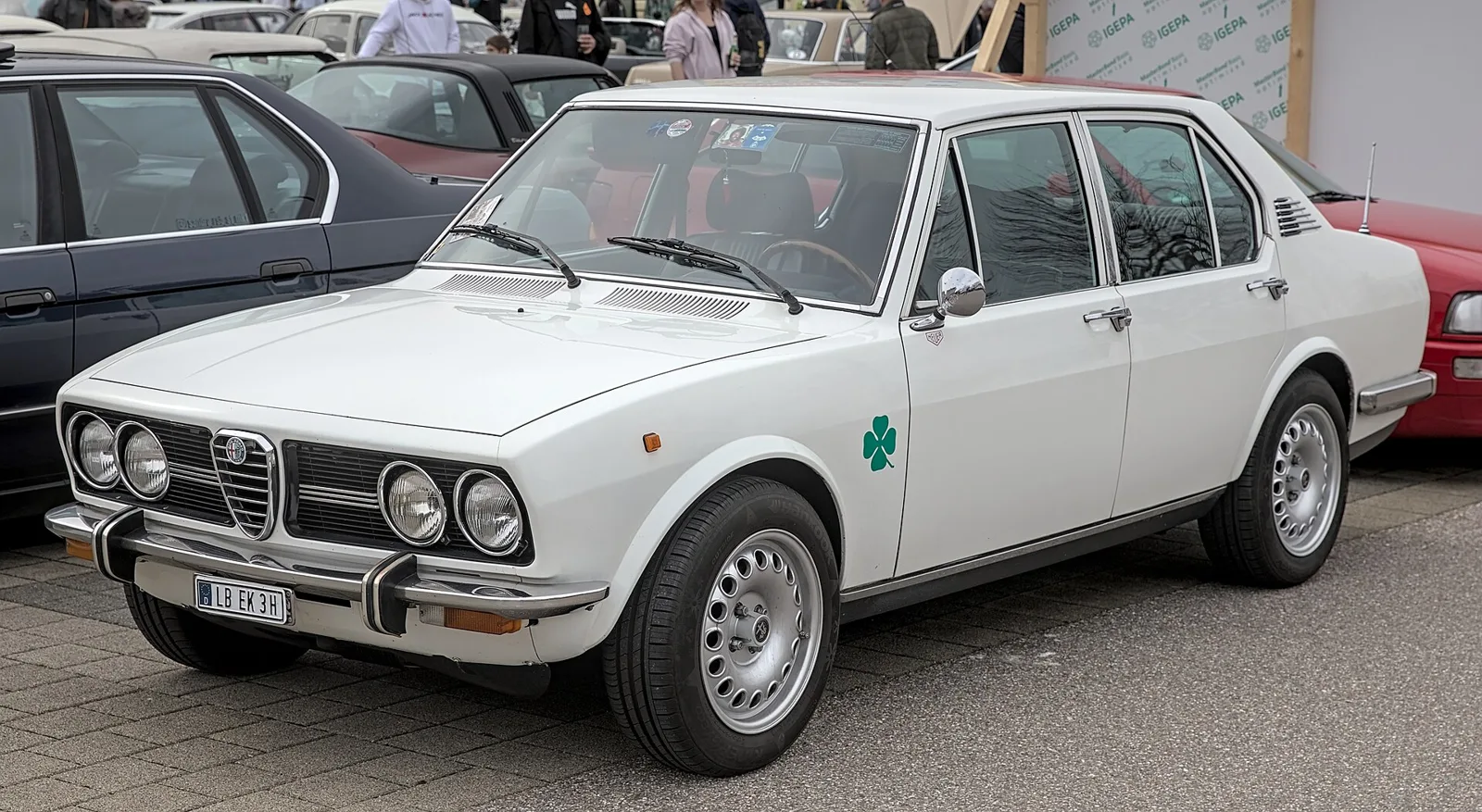
The Alfetta saloon launched in 1972 with a 1.8-litre four-cylinder engine as a three-box, four-door design penned in-house by Centro Stile Alfa Romeo. Its name meant little Alfa and came from the Alfetta Tipo 159, a Formula One car that used the same transaxle and De Dion arrangement at the rear.
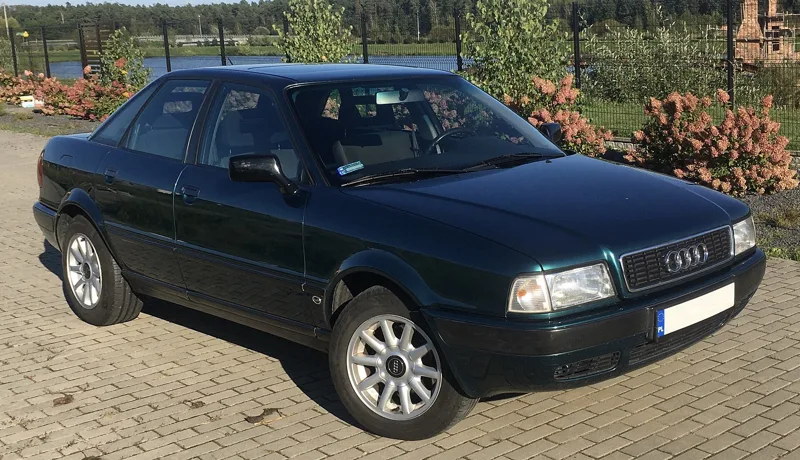
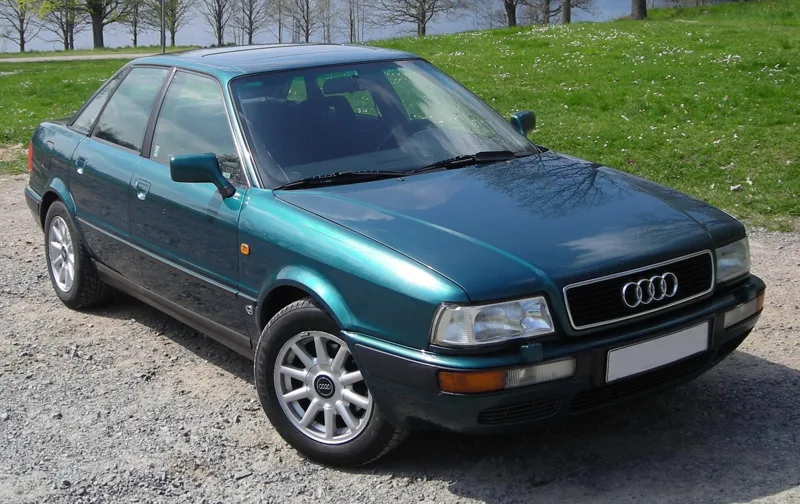
The Audi 80 took the place of several discontinued models, including the F103 series, and it was the first Audi 80 of the modern era. Its engineers left behind the Auto Union bodyshell and Mercedes-Benz engine of the earlier cars, and it used a range of new 1.3 and 1.5-litre SOHC inline-four petrol engines.
How do the specifications compare?
| Feature | Alfa Romeo Alfetta | Audi 80 (B1) |
|---|---|---|
| Production | 1972 to 1987; over 400,000 units in total | 1972 to 1978 in Europe; Fox in North America to 1979 |
| Body | Five-passenger saloon and fastback coupe | Two-door and four-door saloons; five-door Avant from 1975 |
| Layout | Front engine with rear transaxle and De Dion tube rear | MacPherson strut front suspension; C-section beam rear with trailing arms and a Panhard rod |
| Launch engine | 1.8-litre Twin Cam four with two double-barrel carburettors | 1.3-litre and 1.5-litre SOHC four from the EA827 family |
| Output range | 1,594 cc, 108 PS (DIN) in the 1.6; 130 PS (96 kW; 128 hp) in the 2000 L | 55 PS (40 kW; 54 bhp) to 85 PS (63 kW; 84 bhp); 100 PS (74 kW; 99 bhp) in the 80 GT |
| Diesel | 2.0-litre Turbo D at 82 PS (60 kW; 81 hp) | Not reported in the B1 generation |
| Coupe | GT and GTV, with 1.6 and 2.0-litre engines | 80 GT and GTE, with a 1.6-litre engine |
| Motorsport | Turbodelta: 400 cars for FIA Group 4 homologation | Not reported |
| Awards | Not reported | 1973 European Car of the Year, ahead of the Renault 5 and Alfetta |
| Official use | Police cars for the Carabinieri and Polizia di Stato | Not reported |
| Export markets | US Alfetta Sedan 1975 to 1977; Sport Sedan 1978 to 1979 | Fox in North America and Australia from 1973 |
| Sales | Nearly 450,000 Berlinas over 12 years | Not reported |
How did the two cars handle?
The Alfetta's handling was built around its layout. The clutch, transmission and differential sat at the rear for a more balanced weight distribution, with a De Dion tube and a Watt's parallelogram linkage that kept the rear wheels well located. Front suspension used torsion bars acting on the lower wishbones, and the car left the factory on Pirelli tyres.
The Audi 80's MacPherson strut front suspension and C-section rear beam were more conventional, and the car's coil springs and telescopic dampers kept the set-up simple. Its 1973 European Car of the Year win reflected the wider praise it received.
What engines did the Alfetta offer?
The Berlina started with a 1.8-litre Twin Cam four, and a 1,594 cc 1.6 was added at the 1975 Brussels Motor Show. The Alfetta 2000 arrived in 1977 at the Geneva show, longer by 10.5 cm (4.1 in) with a redesigned front end, and by July 1978 the 2000 L had 130 PS (96 kW; 128 hp).
Alfa's diesel was a Turbo D from late 1979, with a 2.0-litre engine by VM Motori producing 82 PS (60 kW; 81 hp). It was the first diesel engine in an Alfa Romeo passenger car, and Alfa marketed the Turbo D mostly in Italy and France, along with a few other European markets with a favourable tax structure. In 1981 the Alfetta CEM experimented with cylinder deactivation, and Alfa reported a 12 percent fuel saving over a fuel-injected CEM engine without it. A small series of 1,000 cars followed in 1983, with 991 built.
How did the Audi 80's engine line develop?
The B1 started with 55 PS (40 kW; 54 bhp) and 60 PS (44 kW; 59 bhp) 1.3-litre engines, with 75 PS and 85 PS 1.5-litre engines higher in the range. The 80 GT of September 1973 brought a 1.6-litre carburettor engine rated at 100 PS (74 kW; 99 bhp), and a 1976 facelift introduced a fuel-injected 80 GTE at 110 PS (81 kW; 108 bhp).
The Fox in North America began with a 1.5-litre engine rated at 55 hp (41 kW; 56 PS) and a four-speed manual. The 1.6 engine that followed was rated at 83 hp (62 kW; 84 PS), and emissions rules had reduced that to 78 hp (58 kW; 79 PS) by 1978.
How did the Alfetta's coupe and motorsport record develop?
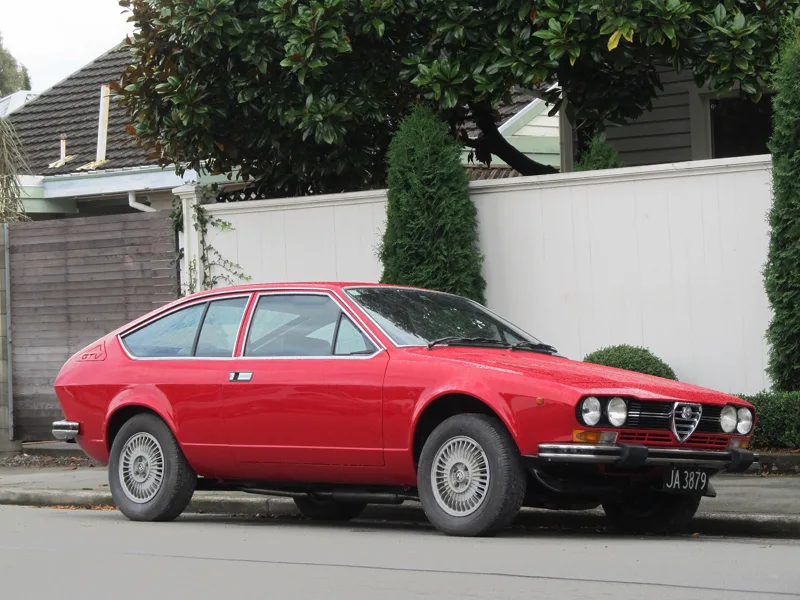
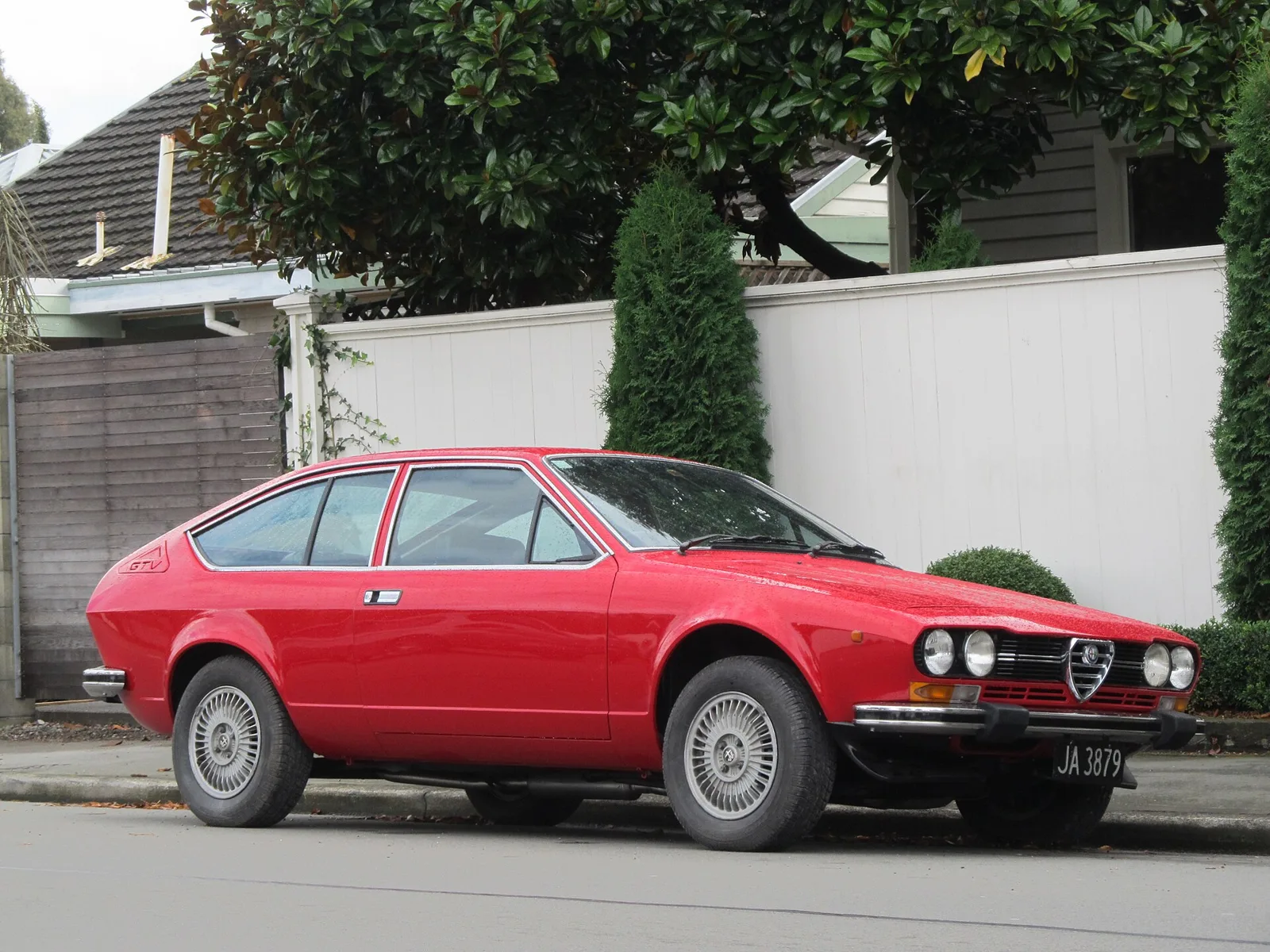
The Alfetta saloon was the base for the Alfetta GT, a two-door fastback designed by Giorgetto Giugiaro at Italdesign and introduced in 1974. It was first offered with the 1.8-litre Twin Cam, and from 1976 the range grew to a 1.6-litre GT and a 2.0-litre GTV, with the 1.8 discontinued.
The motorsport story came with the Turbodelta. Autodelta built a limited edition 2.0-litre turbocharged model of 400 cars for FIA Group 4 homologation, with a KKK turbocharger that lifted power to 175 PS (129 kW; 173 hp). It was the first Italian petrol production car with a turbocharger, and the Audi 80 range had no equivalent in that period.
The GTV's styling shared many features with the Montreal, including the scalloped bonnet line, the tail light clusters and the door handles. The GTV's track record in Europe came through that family resemblance as much as through its engines.
How did the B2 Audi 80 change the comparison?
The B2 Audi 80 arrived in September 1978 with a body by Giorgetto Giugiaro, and it was pitched to rival the BMW 3 Series rather than the Alfetta. The 80 moved from a mid-sized family car to a compact executive model, and Audi dropped the NSU brand after the Ro 80 ended its production.
In 1983 the 80 gained four-wheel drive, which was essentially an Ur-Quattro without the turbocharger, and a 1984 facelift produced the Audi 90 as a larger-engined version. The Alfetta Berlina went out of production at the end of 1984, after the larger Alfa Romeo 90 had debuted that April.
How did the Alfetta's trim and equipment change?
The Alfetta coupe kept its distinctive central tachometer, set directly in front of the driver. For 1981 the Alfetta '82 range brought richer standard equipment, black plastic rubbing strips and hubcaps across the range, and the 2000 wore a satin silver grille with a simulated mahogany steering wheel rim.
The Quadrifoglio Oro of July 1982 was the most fully equipped version. It had a trip computer, a check control panel and electrically adjustable seats, and it came only in metallic grey or brown with specific beige velour upholstery. The March 1983 facelift added an overhead console running the length of the roof on top-of-the-range cars.
What trims and body styles did the Audi 80 offer?
On the home market the first Audi 80 came as a two-door or four-door saloon in base trim, with the 55 or 60 PS engines called simply Audi 80 and 80 S. The L models, LS with the 75 PS engine, and the more luxurious GL with the 85 PS engine, were the next steps up.
The sporty 80 GT, a two-door only car, was added in September 1973. Later the GTE brought fuel injection and a 110 PS engine, and a five-door Avant estate appeared from mid-1975 in some markets. The Fox sold in North America came in all three body styles, and the late 1977 facelift added a large black grille with round headlights.
How did the Alfetta sell in South Africa and the United States?
South African Alfettas were first assembled at Rosslyn outside Pretoria in early 1973, alongside Datsuns, and from 1974 they were built at Alfa Romeo's own Brits plant. A 1600 model with single headlamps arrived there in mid-1976, and from October 1982 the Quadrifoglio Oro was sold there as the 159i.
In the United States the four-door Alfetta was sold as the Alfetta Sedan from 1975 to 1977, and a mildly restyled Sport Sedan followed in 1978 and 1979. The same design was offered in Italy as the Alfetta 2.0 LI America, while the Audi 80 reached North America as the Fox from 1973.
Which buyer suits which car?
The facts do not settle which car was better, because they reward different priorities. The Alfetta suits a buyer who wanted rear-transaxle balance, a Twin Cam engine and a fastback coupe with a racing family tree. The Audi 80 suits a buyer who wanted practicality and a range of economical engines from the new EA827 family.
The Alfetta's sales of nearly 450,000 Berlinas over 12 years are the clearest number the material offers for it, while the Audi 80's sales are not reported. Neither car's motorsport or sales record settles a verdict on its own.