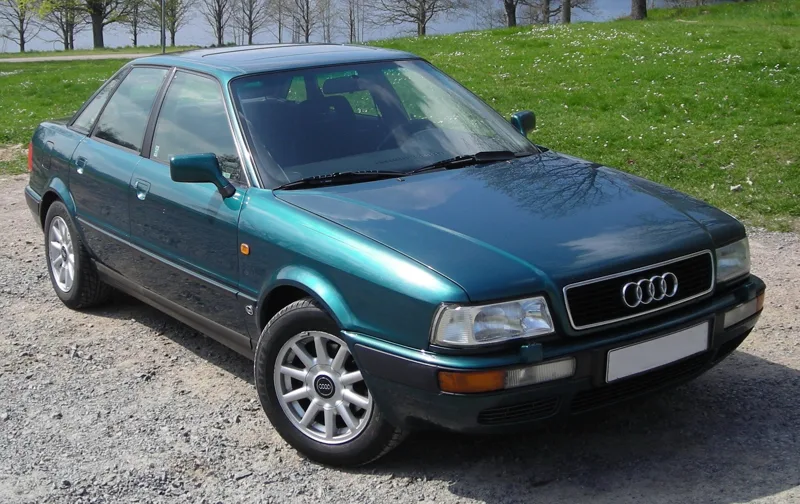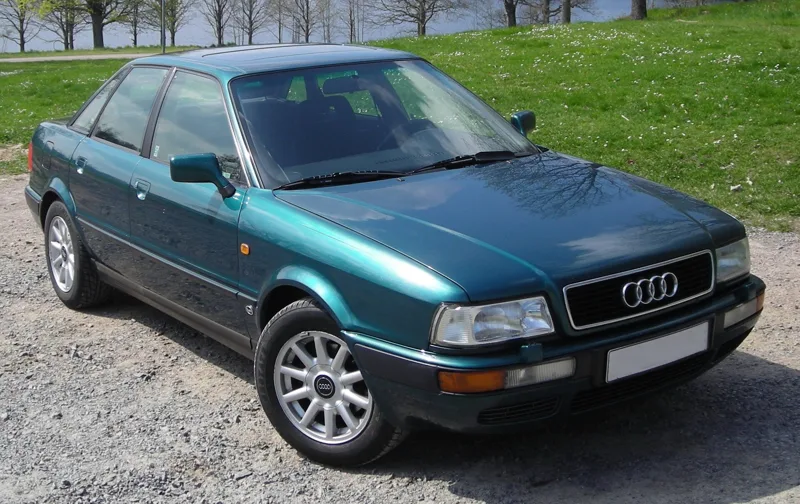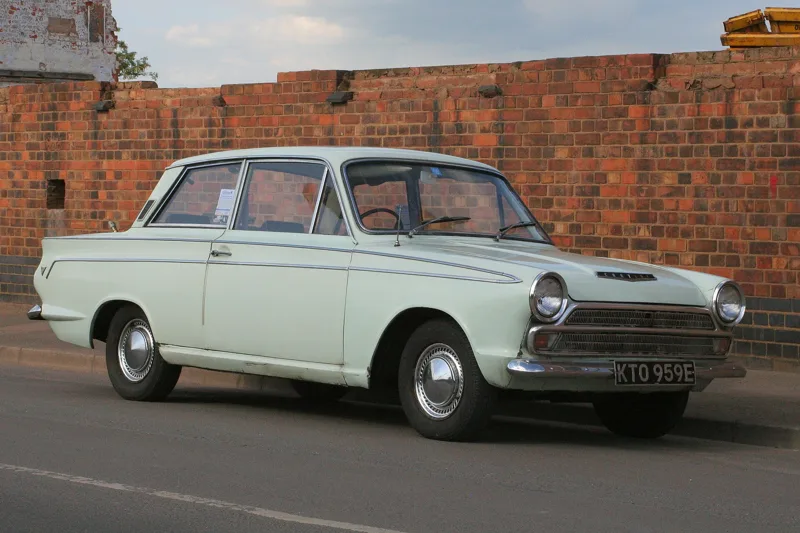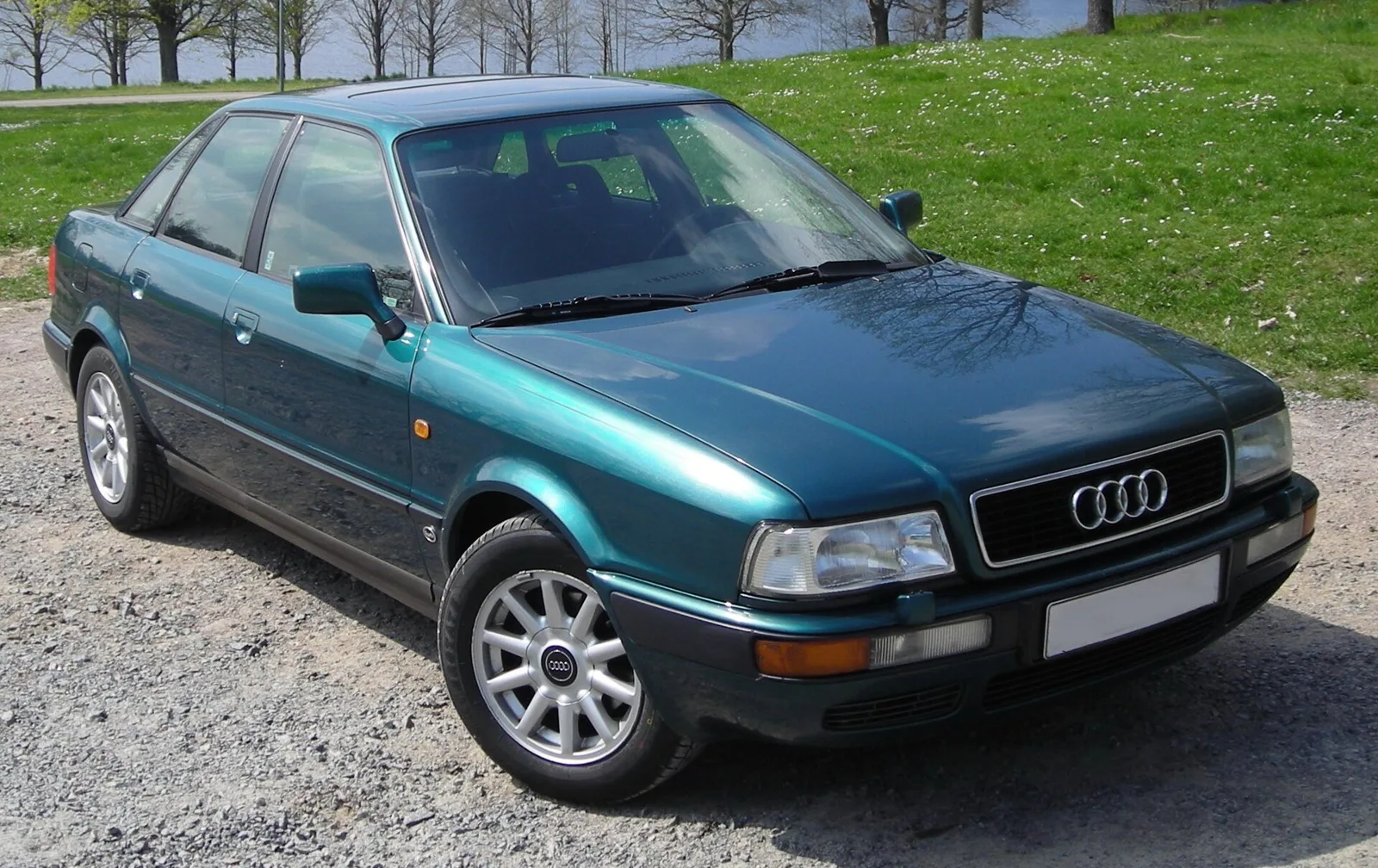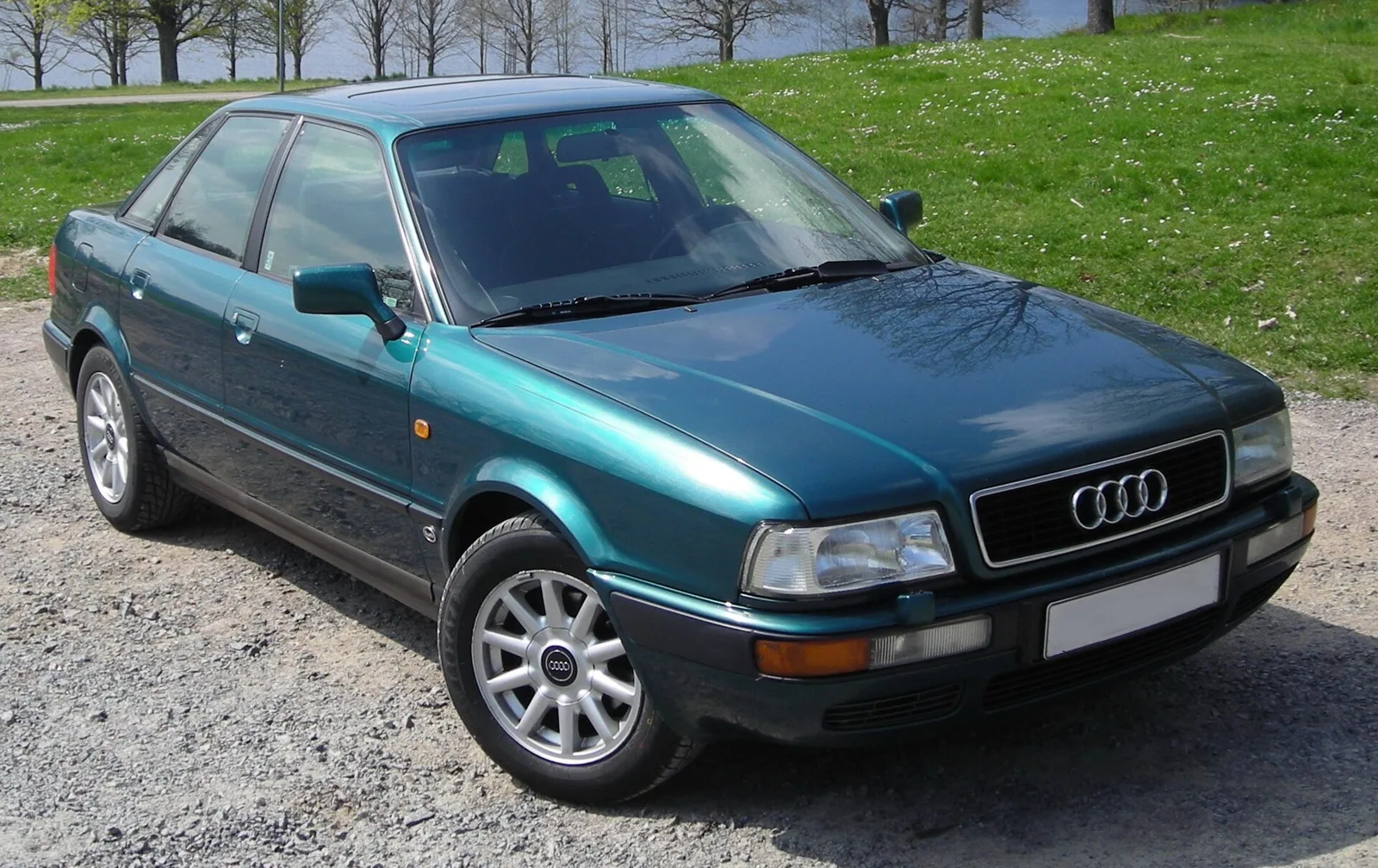
Volkswagen's Audi and Ford's British Cortina met in the family-saloon class of the early 1970s, and the Audi went on to win Europe's top award.
The Audi 80 and Ford Cortina were European family saloons that overlapped from 1972 to 1976. The Cortina was a British car from 1962 to 1982, while the Audi 80 B1 was a 1972 launch that won the 1973 European Car of the Year title.
The Audi 80 and the Ford Cortina were both European family saloons of the 1970s, and they met directly in the market. The Audi 80 B1 arrived in 1972, the same period in which the Cortina's Mark III was on sale. The Cortina was a British car built on a platform it shared with Ford's German Taunus, and it was sold until 1982.
Were the Audi 80 and the Cortina rivals?
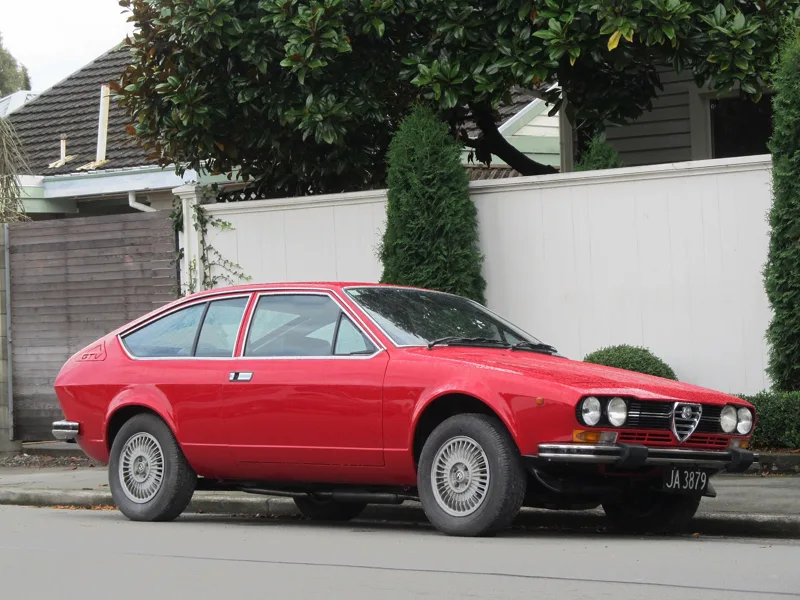
Yes. When the Audi 80 was launched, it was positioned as a viable rival to the Opel Ascona and the Ford Taunus, which was known as the Ford Cortina in the UK. The Audi was also pitched against more upmarket cars such as the Alfa Romeo Alfetta and Triumph Dolomite, which shows how the 80 was placed in the market.
The two cars overlapped from 1972 to 1976, when the Audi 80 B1 and the Cortina Mark III were both on sale. That overlap is the basis for this comparison, which uses the Cortina Mark III and the first-generation Audi 80.
A German compact saloon that won Europe's top award a year after launch, against a British family car that became the nation's best seller of its decade.
Where did each car come from?
The Audi 80 took the place of several discontinued models, including the F103 series, and it was only the second modern Audi developed entirely under Volkswagen ownership. Audi's chief engineer had disparaged the outgoing F103, which had an Auto Union bodyshell and a Mercedes-Benz engine, and the B1 broke cleanly from that inheritance.
The Cortina came from a project named Archbishop at Ford of Britain's Dagenham plant. Its chief designer, Roy Brown Jr., had designed the Edsel, and the car was launched on 20 September 1962 to sell in large numbers. It was built on rear-wheel drive, a choice that was made over the front-drive layout Ford of Germany used for the Taunus P4.
How do the specifications compare?
| Feature | Audi 80 (B1) | Ford Cortina (Mk III) |
|---|---|---|
| Production | 1972 to 1978 in Europe; Fox in North America to 1979 | 1970 to 1976, the TC generation |
| Body | Two-door and four-door saloons; five-door Avant from 1975 in some markets | Dual round headlights on the upmarket version; other body styles not reported here |
| Size | Not reported | 4 in (100 mm) wider than the Mk II, same overall length, wheelbase lengthened by more than 3 in (76 mm) |
| Front suspension | MacPherson strut | Double A-arm, which replaced a MacPherson strut layout |
| Rear suspension | C-section beam with trailing arms and a Panhard rod | Not reported |
| Engines | 1.3 and 1.5-litre SOHC fours; 1.6 from 1976 | Not reported |
| Output range | 55 PS (40 kW; 54 bhp) to 85 PS (63 kW; 84 bhp); 100 PS (74 kW; 99 bhp) in the 80 GT | Not reported |
| Fuel injection | 80 GTE fuel-injected 1.6 at 110 PS (81 kW; 108 bhp) | Not reported |
| Awards | 1973 European Car of the Year, ahead of the Renault 5 and Alfetta | Not reported |
| Design language | Audi 100 C2 style front after the 1976 facelift | Coke-bottle design language from Detroit, with fluted bonnet and beltline |
| Sister car | Passat-based Avant in some markets | Taunus TC, subtly different in appearance |
| North America | Fox from 1973 with 1.5 and 1.6-litre engines | Not reported for the Mk III; Mk II sold in the US from 1967 |
| Sales | Not reported | Mk II US sales: 16,193 in 1967; 22,983 in 1968; 21,496 in 1969 |
How did the Audi 80's engines develop?
The B1 started with new 1.3 and 1.5-litre SOHC inline-four engines, the first appearance of the EA827 family that is still used across the Volkswagen Group. The 1.3 was rated at 55 PS (40 kW; 54 bhp) or 60 PS (44 kW; 59 bhp), and the 1.5 at 75 PS (55 kW; 74 bhp) or 85 PS (63 kW; 84 bhp).
The sporty 80 GT of September 1973 used a 1.6-litre carburettor engine rated at 100 PS (74 kW; 99 bhp). A facelift in autumn 1976 raised the 1.6 engines to the 75 and 85 PS range and introduced the fuel-injected 80 GTE at 110 PS (81 kW; 108 bhp).
How did the Cortina's engines and Mk I and Mk II models work?
The first Cortina came with 1200 cc and, from early 1963, 1500 cc four-cylinder engines with a synchromesh gearbox. The Cortina Super used a five-bearing 1498 cc engine, and the GT was tuned to a claimed 78 bhp (58 kW; 79 PS) with lowered suspension. Those engines were pushrod designs later known as the pre-crossflow version.
The Mk I was launched a few weeks before the London Motor Show of October 1962 and was sold as the Consul Cortina until a modest facelift in 1964. The 1964 car advertised the Aeroflow through-flow ventilation and gained front disc brakes across the range. The second Cortina arrived on 18 October 1966, and it was 168 in (4,267 mm) long, shorter than before but with curved side panels that gave more interior space.
The Mk II was Britain's most popular new car in 1967, a goal Ford had chased since 1962. The Cortina 1600E followed at the 1967 Paris Motor Show. In the United States, Mk II sales were 16,193 in 1967, then 22,983 in 1968, 21,496 in 1969 and 10,216 in 1970, when the model was dropped.
How was the Mark III Cortina styled?
The Mark III was a major change, with Ford trying to unify its European operations. It combined the German Taunus and British Cortina platforms, with the internal name TC1 standing for Taunus-Cortina. Harley Copp, who engineered the first Falcon, was vice president of engineering when the car was developed, and it was the last European car he engineered before returning to Detroit.
The Mark III looked larger than the Mark II, but it had the same overall length and was 4 in (100 mm) wider, with a wheelbase lengthened by more than 3 in (76 mm). Its styling took cues from the Detroit coke-bottle design, with fluted bonnet and beltline elements similar to the Mercury Montego and Ford LTD. The Taunus TC was subtly different, with longer front indicators, different taillights and door skins.
How did the Audi 80's body styles develop?
The B1 was offered as a two-door or four-door saloon from its 1972 launch, and the two-door formed the base for the sporting 80 GT. The Fox sold in North America from 1973 came in all three body styles on offer there, with four-speed manuals or three-speed automatics.
The five-door Avant appeared from mid-1975 in some markets, including the United States and South Africa. It was effectively a rebadged Volkswagen Passat with Audi front panels, which made it a different kind of car from the saloons around it.
A sporty GTi package came in later years, and the B1 platform was dropped from European sale in 1978, although North American sales continued into the 1979 model year.
What sporting versions of the Cortina were built?
The Lotus variant came only as a two-door saloon, finished in white with a green flash running down each flank. Its 1558 cc twin-cam was Lotus-specific, derived from the Kent overhead-valve unit, and some panels were made of aluminium.
The Lotus later used an A-frame rear suspension, which proved fragile, so the model reverted to the standard semi-elliptical rear end. In the second generation Ford built the Lotus engine in-house, and the four-door 1600E of 1967 combined a lowered suspension with the GT 1600 Kent engine and a more luxurious trim.
Ford New Zealand made its own GTE, a four-door with a wooden dash, a vinyl roof and a blacked-out tail panel, because the GT and Lotus Cortinas were not assembled there. In South Africa a 3.0 L Essex V6 variant was sold as the Cortina Perana, and two similar models with 3.0 L and 2.5 L Essex engines later went on sale in Britain as the Savage and Cheetah.
How did the Mk II change the Cortina's reputation?
The second Cortina was launched on 18 October 1966 under the slogan that the New Cortina was more Cortina. It was designed by Roy Haynes and shared some styling elements with the third-generation US Ford Falcon, and its curved side panels added 2.5 inches (64 mm) of extra width and more interior space.
Reviews of the Mk II were favourable on both styling and performance. The car interrupted the long run of BMC's 1100 and 1300 as Britain's best-selling car in 1967, and the Cortina 1600E later came to be recognised as a classic, according to the author and Cortina expert Graham Robson.
Who designed the two families?
The Cortina's first chief designer was Roy Brown Jr., and the Mk II was designed by Roy Haynes.
On the Audi side, Giorgetto Giugiaro designed the body of the B2 Audi 80 that followed the B1. The B1 itself was the work of a team that broke from the Auto Union era, with new SOHC inline-four engines, and both families carried on for years after the period this comparison covers, the Cortina until 1982 and the Audi 80 until 1996.
Which buyer suits which car?
The facts do not settle which car was better, because the two were built for different markets and different tastes. The Audi 80 suits a buyer who wanted a European compact saloon with a 1973 European Car of the Year title behind it, a choice of economical engines and a fuel-injected GTE. The Cortina suits a buyer who wanted a British family car with a long record as the nation's best seller and a wide choice of body styles.
The Cortina's sales record in Britain is the clearest measure the material offers for it, since the car was the United Kingdom's best-selling car of the 1970s. The Audi's sales are not reported, so a sales verdict between the two cannot be reached. Both were built as practical family cars, so the choice comes down to preference between the two makers' approaches.