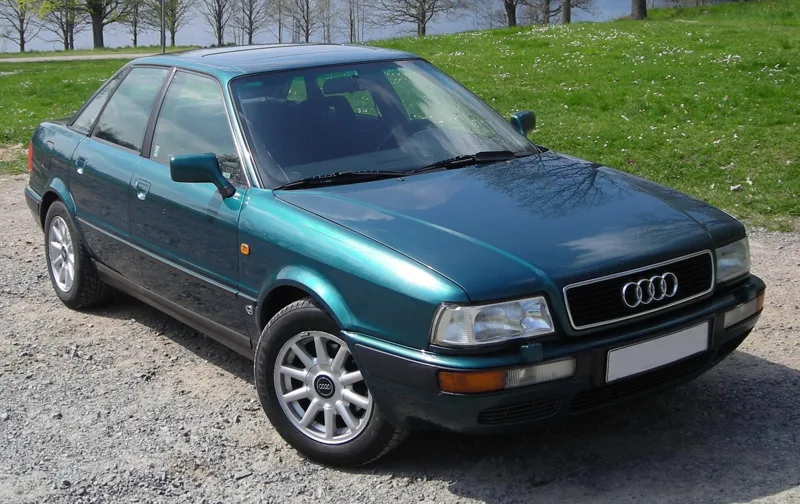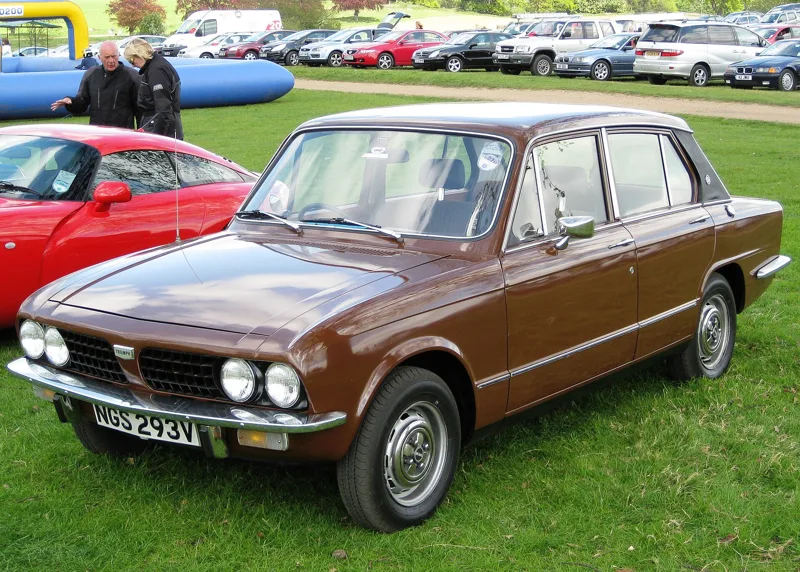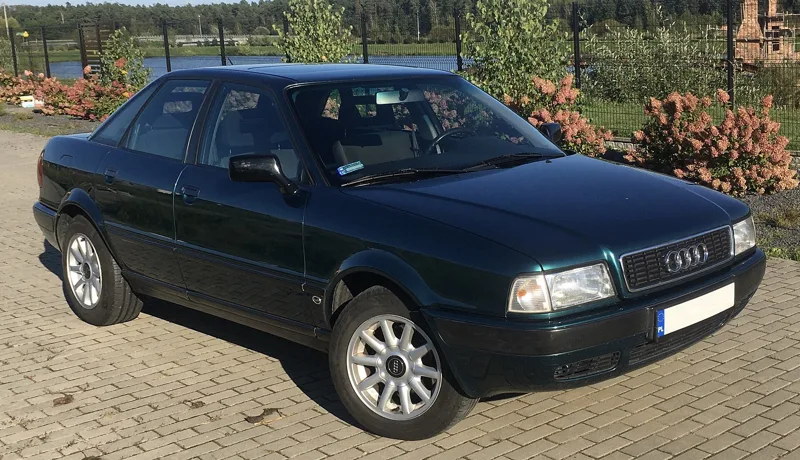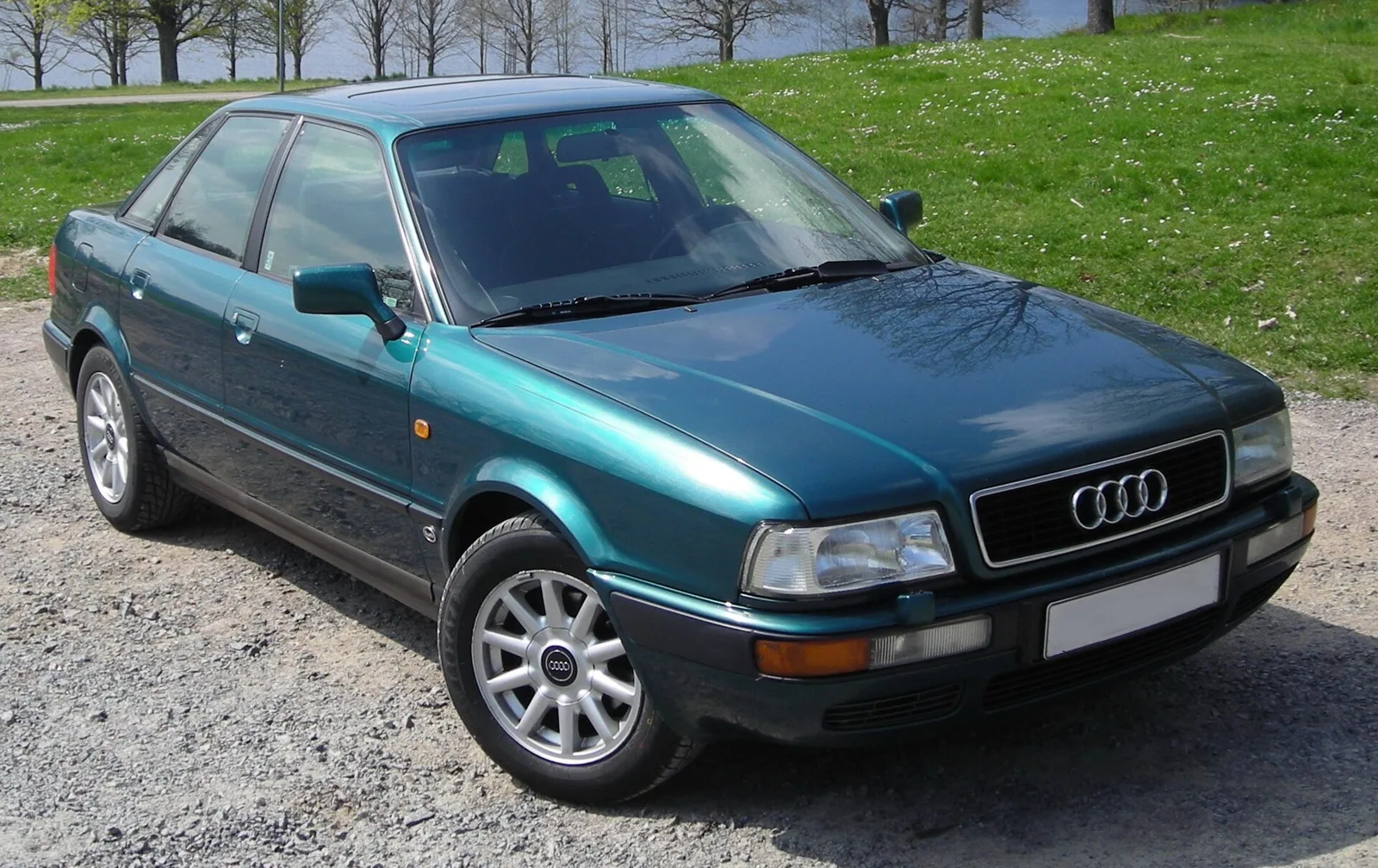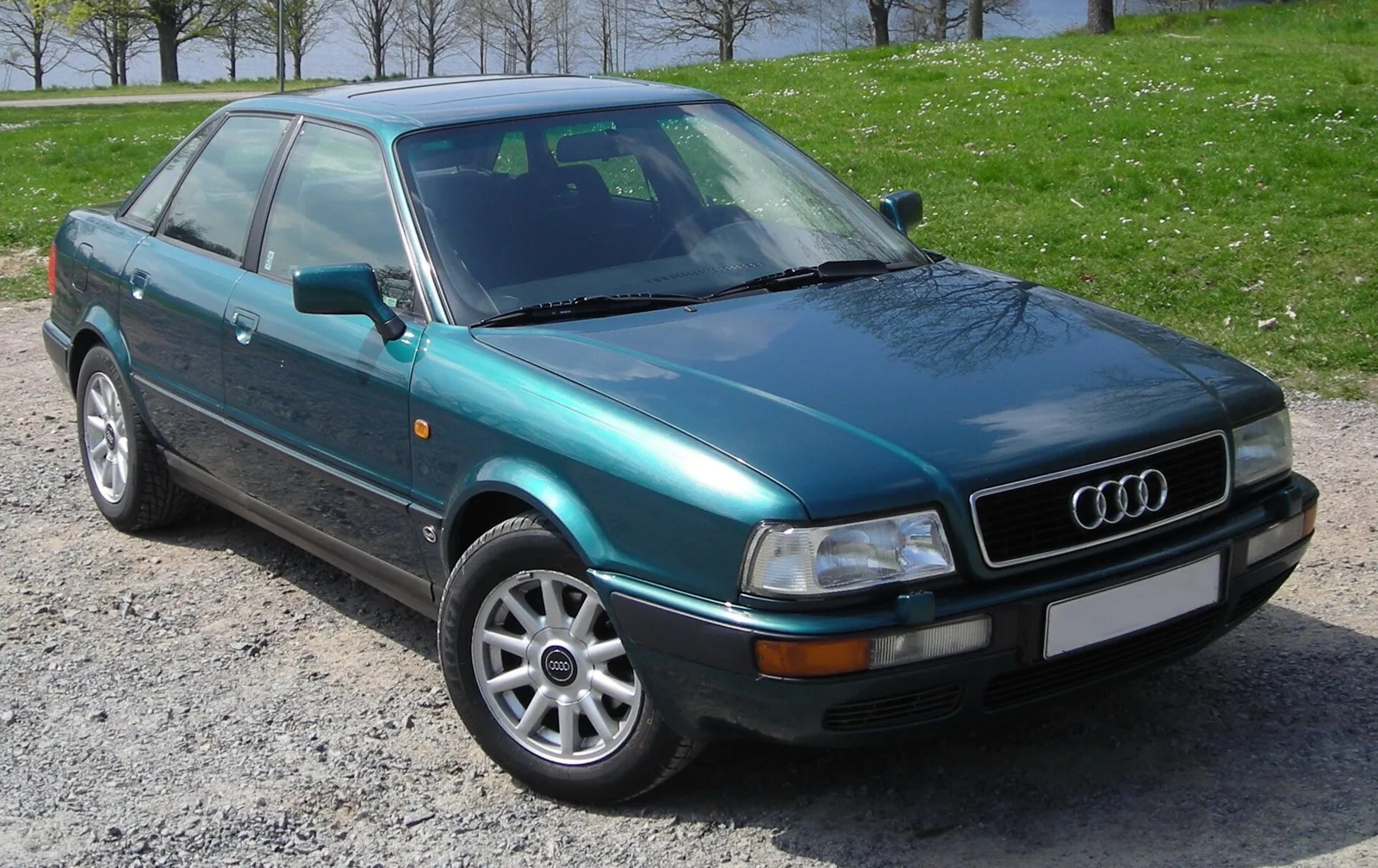
Audi's new B1 saloon and British Leyland's Triumph Dolomite were aimed at the same upmarket compact buyer, and the Dolomite Sprint's 16-valve engine gave the British car its reputation.
Two upmarket compacts from 1972 to 1978, one from German Volkswagen-era engineering and one from British Leyland. The Audi won the 1973 European Car of the Year title, while the Dolomite Sprint's 16-valve head gave Triumph a place in multi-valve history.
The Audi 80 B1 and the Triumph Dolomite were both aimed at the upmarket compact buyer of the early 1970s. The Audi arrived in Europe in 1972 as a two-door or four-door saloon, and the Dolomite went on sale in the same year from British Leyland's Triumph division at Canley, Coventry. Both were built for much of the decade.
Were the Audi 80 and the Dolomite rivals?
Yes. The Audi 80 was positioned as a rival to the Opel Ascona and the Ford Taunus, and it was also pitched against more upmarket offerings including the Alfa Romeo Alfetta and the Triumph Dolomite. That places the Dolomite directly in the Audi's sights, in the same upmarket compact space.
The Dolomite was aimed at the new compact performance-luxury sector and vied for sales against cars such as the BMW 2002 and the Ford Cortina GXL. The two cars overlapped from 1972 to 1978, which is the period this comparison covers.
A German saloon that won Europe's top award and a British sports saloon whose 16-valve engine gave it a place in motoring history.
How did the Dolomite come about?
The Dolomite was the final addition to Triumph's small-car range, a programme known as Project Ajax that began in 1965 with the Triumph 1300. The 1300 was designed as a replacement for the rear-wheel drive Triumph Herald and originally used front-wheel drive. A later model, the Triumph 1500 of September 1970, had a remodelled front and rear styled by Michelotti.
The Dolomite was unveiled at the London Motor Show in October 1971 as the successor to the upmarket front-wheel drive models, and it replaced the six-cylinder Triumph Vitesse. Industrial action delayed full production until October 1972. It used the longer bodyshell of the 1500 with most of the running gear from the rear-wheel drive Toledo.
How did the Audi 80 come about?
The Audi 80 B1 took the place of several discontinued models, including the F103 series, and it was only the second modern Audi developed entirely under Volkswagen ownership. Its engineers broke from the Auto Union era, which the chief engineer, Ludwig Kraus, had criticised for the F103's bodyshell and Mercedes-Benz engine.
The B1 introduced a range of new 1.3 and 1.5-litre SOHC inline-four engines, the first appearance of the EA827 family that is still used across the Volkswagen Group. It had a MacPherson strut front suspension and a C-section beam rear axle with trailing arms.
How do the specifications compare?
| Feature | Audi 80 (B1) | Triumph Dolomite |
|---|---|---|
| Production | 1972 to 1978 in Europe; Fox in North America to 1979 | October 1972 to August 1980 at Canley, Coventry |
| Body | Two-door and four-door saloons; Avant estate from 1975 in some markets | Small saloon; Sprint with black simulated leather roof and coachlines |
| Front suspension | MacPherson strut | Not reported |
| Engine | 1.3 and 1.5-litre SOHC fours; 1.6 from 1976 | 1,854 cc slant-four with overhead cam, 91 bhp (68 kW); Sprint 1,998 cc with 16 valves |
| Top output | 110 PS (81 kW; 108 bhp) in the fuel-injected 80 GTE | 127 bhp (95 kW) at 5,700 rpm in the Sprint |
| Torque | Not reported | 122 lb-ft (165 N-m) at 4,500 rpm in the Sprint |
| Performance | Not reported | 60 mph in just over 11 seconds on the 1,854 cc car; about 8.4 seconds for the Sprint; top speed 119 mph (192 km/h) |
| Price | Not reported | GBP 1,740 at the Sprint launch |
| Awards | 1973 European Car of the Year, ahead of Renault 5 and Alfetta | Cylinder head won a British Design Council award in 1974 |
| Motorsport | Not reported | Sprint engine made for motor sport; Australian Bathurst incident in 1976 |
| Production figures | Not reported | 5,446 Sprints in 1973; 4,232 in 1974; 1,240 in 1979; 493 in 1980 |
| Export | Fox in North America and Australia from 1973 | 620 Sprints exported to Australia from August 1975 to June 1976 |
Which engines did the Dolomite offer?
The Dolomite's first engine was a 1,854 cc slant-four, with an alloy overhead-cam head on an iron block that produced 91 bhp (68 kW). It was a version of the unit that Triumph also supplied to Saab for its 99 model, and it gave the car a sprightly performance.
The Dolomite Sprint arrived in June 1973, after a delay of a year. Its engine had 16 valves operated by a single camshaft, a capacity of 1,998 cc and bigger carburettors, which lifted output to 127 bhp (95 kW) at 5,700 rpm and 122 lb-ft (165 N-m) at 4,500 rpm.
The Audi 80's engines were smaller. The B1's 1.3 and 1.5-litre fours produced between 55 PS (40 kW; 54 bhp) and 85 PS (63 kW; 84 bhp), and the fuel-injected 80 GTE reached 110 PS (81 kW; 108 bhp) after the 1976 facelift. The Audi's sporting model was the 80 GT, which had a 1.6-litre carburettor engine at 100 PS (74 kW; 99 bhp).
Was the Sprint the world's first multi-valve production car?
Triumph claimed that the Dolomite Sprint was the world's first mass-produced multi-valve car. Other multi-valve engines, notably the Lotus 907, were built in volume, but they were not used in mass-production vehicles until after the Sprint. The cylinder head design won a British Design Council award in 1974.
The engine was originally meant to make 135 bhp, which is why the car was first called the Dolomite 135. Triumph changed the name to Dolomite Sprint, and the switch from SAE to DIN power measurement meant that the published figures ran about 5 per cent lower.
How did the Sprint perform and sell?
The Sprint reached 60 mph in about 8.4 seconds and had a top speed of 119 mph (192 km/h). It came with standard alloy wheels, a first for a British production car, along with a vinyl roof, a front spoiler, twin exhausts and lowered suspension, and it was launched at GBP 1,740.
Production fell steadily. Triumph built 5,446 Sprints in 1973, 4,232 in 1974, 3,589 in 1975 and 4,035 in 1976, then 2,554 in 1977, 1,352 in 1978, 1,240 in 1979 and 493 in 1980. The Audi 80's production figures are not reported here.
How did the Dolomite fare in Australia?
From August 1975 to June 1976, 620 Sprints were exported to Australia, all in Mimosa Yellow. They were priced above the Ford XB Falcon GT 351, and rivals included the Lancia Beta and the BMW 2002, which suggests how the Sprint was positioned in that market.
The Sprint also raced in Australia. At the 1976 Bathurst 1000 a Dolomite Sprint collided with Jack Brabham's Torana, and in 1977 the Confederation of Australian Motorsport refused to approve the Sprint's pistons, which kept it out of that year's race. Australian emission rules, ADR27A, came into effect in July 1976, and the car was not re-engineered for such a small market.
How was the Dolomite rationalised?
By the mid-1970s the range had grown complex. In 1976, with the manufacturer effectively nationalised and following the government's Ryder Report, Triumph rationalised the Dolomite into a 1300, a 1500, a 1500HL, an 1850HL and the Sprint. The 1300 used the 1,296 cc engine from the Herald and Spitfire, and the Sprint was the performance version with luxury trim.
Options included a limited-slip differential, overdrive and an automatic transmission on several models. Dealer-fitted tuning parts, including larger carburettors and competition camshafts, were also offered on the Sprint, and these were designed by the factory race team.
How did the Dolomite's styling and body develop?
The Dolomite took its styling from the 1500 and added some updates of its own, including a black painted rear panel, vinyl D-posts and new wheel trims. The Sprint kept the same basic shape, with a vinyl roof, a front spoiler and twin exhausts, and it gained a black simulated leather roof covering and contrasting coachlines.
The Audi 80 went through its own styling changes. The 1976 facelift brought square headlights in the style of the Audi 100 C2, and the 1977 facelift added a large black grille with round headlights. The Audi's body was a family of saloons in two and four-door forms, while the Dolomite's range was built on a longer bodyshell than the Toledo.
What changed on the Dolomite in the mid-1970s?
From May 1975 the Sprint's overdrive was fitted to third and fourth gear, which gave the car a six-speed gearbox, and tinted glass became standard. Body side trims, a plastic gearlever surround and a driver's door mirror were also added across the Sprint range.
Headrests became standard from March 1976, along with a radio and a laminated windscreen, and in 1979 a rear fog lamp was fitted to meet new UK legislation. Dealer-fitted special tuning packages remained available throughout the Sprint's life.
How did the Dolomite's last years compare with the Audi 80 B2?
The Audi 80 B2 was presented in September 1978, with its four-door sedan reaching European showrooms a few weeks later and fuel-injected GLE and two-door cars following in 1979. It was pitched to rival the BMW 3 Series, and it moved the 80 upmarket from the mid-sized family segment.
The Dolomite's production ran until August 1980, when the last cars left the line after a steady fall in Sprint output. The contrast is clear: the Audi continued into a new generation, while the Dolomite ended its run in 1980. Both cars therefore spanned the same middle years of the decade, and only one of them was replaced by a new generation.
Which buyer suits which car?
The facts do not settle which car was better, because the two cars rewarded different priorities. The Audi 80 suits a buyer who wanted a compact European saloon with a 1973 European Car of the Year title, economical engines and a fuel-injected GTE. The Dolomite Sprint suits a buyer who wanted a British car with a 16-valve engine, alloy wheels and a strong performance reputation.
Sales are where the two cars differ most clearly in the material. The Sprint's production is known year by year, while the Audi 80's is not reported, so no sales verdict is possible between them.