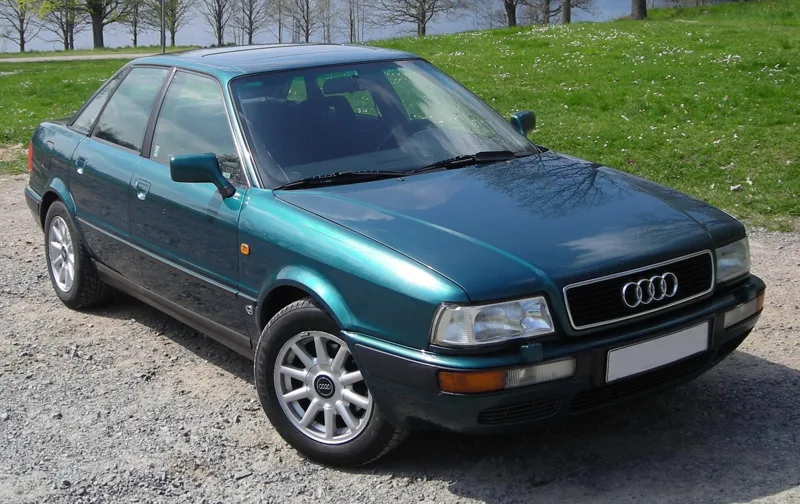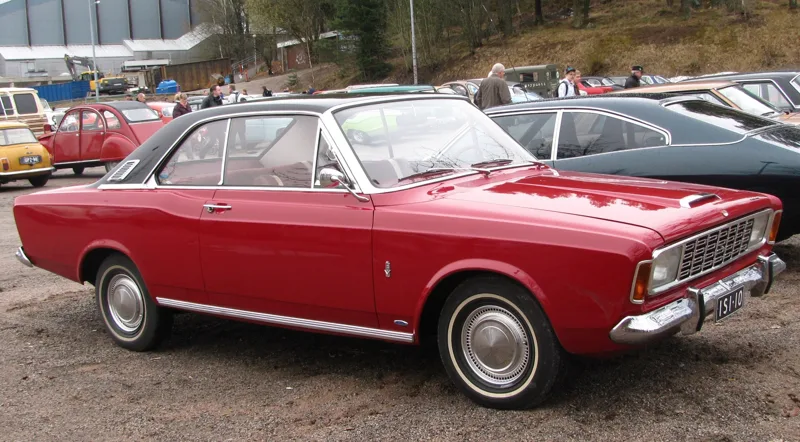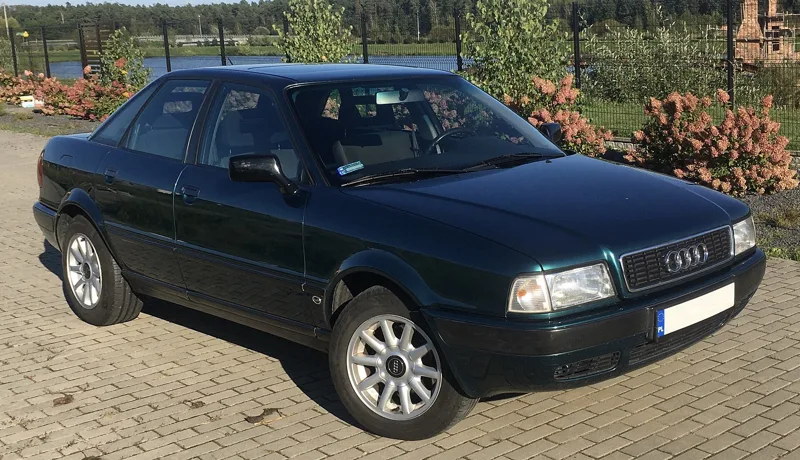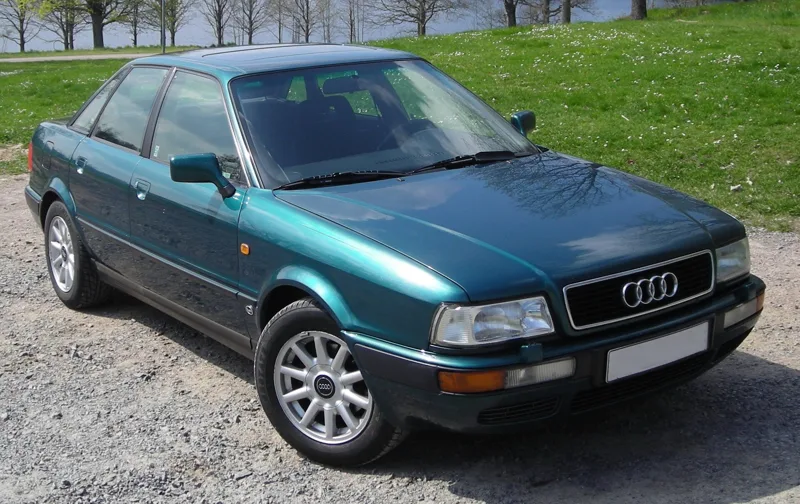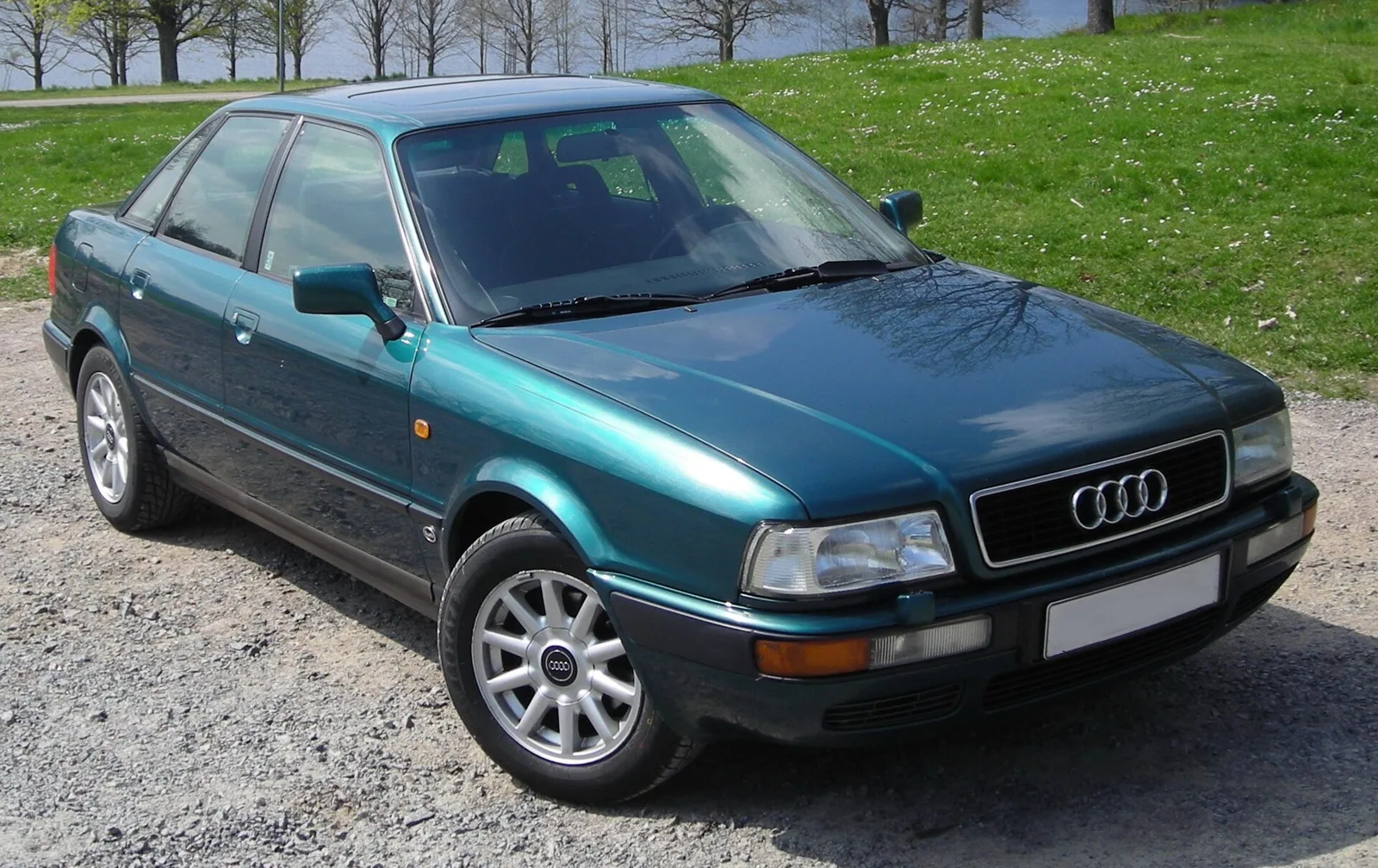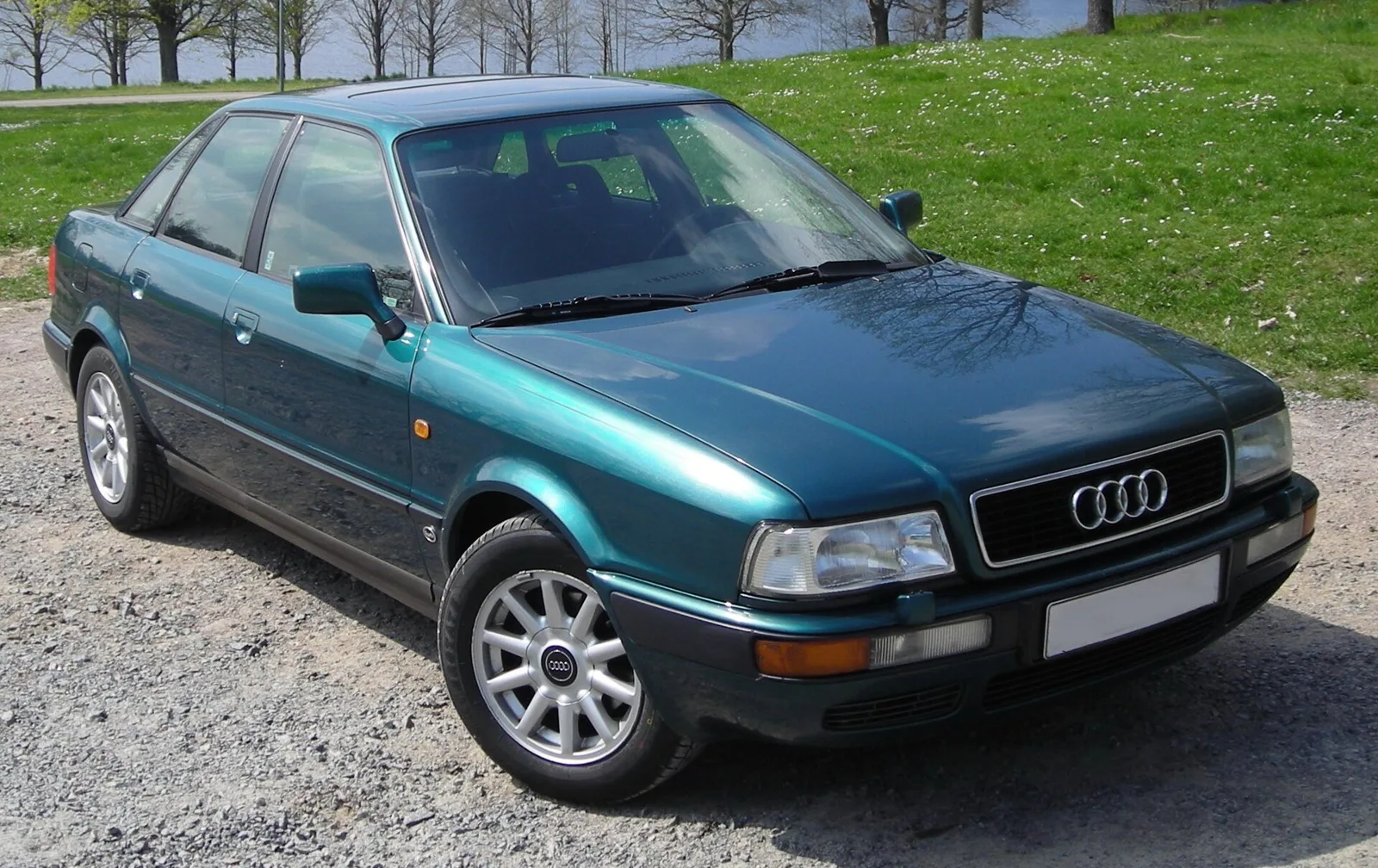
Audi's new B1 saloon and Ford Germany's Taunus TC met in the same market, with the Taunus carrying the Cortina family design and the Audi winning Europe's top award.
Europe's family-saloon buyers of the early 1970s could choose between the Audi 80 B1, which won the 1973 European Car of the Year title, and the Taunus TC, a German Ford built on the basis of the Cortina Mk III.
The Audi 80 B1 and the Ford Taunus TC were both family saloons from the early 1970s, and they competed in the same European market. The Audi was launched in 1972, and the Taunus TC arrived in 1970 as Ford Germany's new car, sharing its basis with the British Cortina Mark III. The Audi 80 B1 was replaced in 1978 and the Taunus line in Europe in 1982.
Were the Audi 80 and the Taunus rivals?
Yes. Audi saw the 80 as a practical challenger to the Opel Ascona and the Ford Taunus, the car that carried the Cortina name in Britain. Audi also pitched the car against more upmarket cars such as the Alfa Romeo Alfetta and Triumph Dolomite, so it sat between the mainstream family car and the premium saloon.
The two cars overlapped from 1972 to 1978, when the Audi 80 B1 and the Taunus TC family were both on sale in Europe. The comparison therefore uses the first-generation Audi 80 and the TC version of the Taunus.
A German Ford with Cortina roots and an Audi that won Europe's top award a year after launch, both aimed at the same family saloon buyer.
Where did each car come from?
The Taunus name dates from 1939, when Ford Germany introduced a car named after the Taunus mountain range. From 1952 to 1968 every German Ford carried the Taunus name, and the M suffix was said to stand for Meisterstueck, a word another German carmaker had already registered. The model line ran through many generations until 1994, and the post-war cars were the G73A, of which 76,590 were built after the earlier G93A. In some export markets the name was used as the brand, where British and North American Fords were also sold.
The Audi 80 came from Audi's wish to replace several discontinued models, including the F103 series, and it was only the second modern Audi developed entirely under Volkswagen ownership. Its new 1.3 and 1.5-litre SOHC four-cylinder engines were the first appearance of the EA827 family.
How do the specifications compare?
| Feature | Audi 80 (B1) | Ford Taunus (TC) |
|---|---|---|
| Production | 1972 to 1978 in Europe; Fox in North America to 1979 | 1970 to 1975, then the TC2 to 1979 in Europe |
| Body | Two-door and four-door saloons; five-door Avant from 1975 | Two-door and four-door saloons; five-door estate, called the Turnier; fastback coupe from 1970 to 1975 |
| Basis | New Audi design with the EA827 engine family | Shared with the Cortina Mk III; different door skins and rear wing pressings |
| Front suspension | MacPherson strut | Not reported |
| Engines | 1.3 and 1.5-litre SOHC fours; 1.6 from 1976 | Not reported |
| Output range | 55 PS (40 kW; 54 bhp) to 85 PS (63 kW; 84 bhp); 100 PS (74 kW; 99 bhp) in the 80 GT | Not reported |
| Fuel injection | 80 GTE with a fuel-injected 1.6 at 110 PS (81 kW; 108 bhp) | Not reported |
| Awards | 1973 European Car of the Year | Not reported |
| Export markets | Fox in North America and Australia from 1973; Avant in the US and South Africa | Argentina from 1974 to 1984; Turkey built the Otosan Taunus to 1994 |
| Motorsport | Not reported | Ford 20M RS won the 1969 Safari rally |
| Successor | B2 Audi 80 from September 1978 | Replaced in Europe in 1982 by the Ford Sierra |
How did the two cars engineer their suspension and layout?
The Audi 80 used a MacPherson strut at the front and, at the rear, a C-section beam located by trailing arms and a Panhard rod, with coil springs and telescopic dampers. The layout was modern for a compact of its day.
The Taunus TC was a close relation of the Cortina Mk III, built under the auspices of Ford of Europe, with most of its major components and key bodyshell parts identical to the British car. The TC2 that followed from late 1975 was almost identical to the Cortina Mk IV, apart from regional trim and specification differences.
What engines did each car offer?
The Audi 80's first engines were 1.3 and 1.5-litre SOHC fours. The 1.3 was rated at 55 PS (40 kW; 54 bhp) or 60 PS (44 kW; 59 bhp), while the 1.5 was rated at 75 PS (55 kW; 74 bhp) or 85 PS (63 kW; 84 bhp). The 80 GT of September 1973 brought a 1.6-litre carburettor engine at 100 PS (74 kW; 99 bhp).
The Taunus's engine history was longer. Early models used a side-valve engine carried over from the first Taunus series, and the 15M moved to an overhead-valve design similar to the British Ford Consul engine. The V4 engine became the base unit for the M-series from late 1964, and the 20M and 26M used the Ford Cologne V6, which was basically the same design as the V4 with two extra cylinders.
How did the Taunus earlier generations shape the TC?
The Taunus began in 1939 as the G93A, a development of the Ford Eifel with a 1172 cc four-cylinder engine in a longer chassis and a streamlined body. Production resumed in November 1948, and 7,128 pre-war cars were made before 76,590 post-war G73A models followed.
From 1952 the M-series carried the Taunus name on the 12M, 15M, 17M, 20M and 26M. The 1962 12M P4 introduced front-wheel drive, and the TC of 1970 replaced the P6. The 17M P2 of 1957 was nicknamed the Baroque Taunus for its American-style tailfins, while the P3 of 1960 earned the nickname Taunus Badewanne for its streamlined form.
How did the Taunus perform in motorsport?
The 20M RS was the sporting Taunus of the late 1960s. Ford entered three of them in the 1968 London-Sydney Marathon, drawn from Germany and Belgium, and one won the 1969 Safari rally. The 20M RS Coupe was built on the P7b body, and it was the last specifically German Ford before the Consul and Granada replaced it in 1972.
The Audi 80 has no matching motorsport record here. Its sporting models were the 80 GT and the GTE, which were road cars rather than competition machines. The Taunus and its Cortina cousin shared much of their engineering, which made the late-1960s sporting story a family affair.
How did the Audi 80's styling and body evolve?
Early B1 models looked very similar to their European counterparts, apart from the larger bumpers that US rules required. The 1977 facelift added a big black grille and round twin headlights, and the wraparound turn signals used elsewhere were omitted.
The Fox came in all three body styles on offer in North America, with four-speed manuals or three-speed automatics. The Audi 80 was sold in Europe with the same basic body, and its Avant estate variant was a different proposition, since it shared its front panels with the Audi name but the body came from the Passat.
What did the Taunus P6 and later saloons offer?
The Taunus P6 came from 1966 to 1970 with new bodies while the engines and platform carried on. The 12M 1.2-litre was rated at 45 PS (33 kW), the 12M 1.3 at 50 or 53 PS (37 or 39 kW), and the 15M 1.5 at 55 or 65 PS (40 or 48 kW). The 15M 1.7 reached 70 or 75 PS (51 or 55 kW), and the car was replaced by the Taunus TC in 1970.
The larger P7 and P7b models brought the 20M 2.3-litre at 108 PS (79 kW) and the 26M 2.6-litre at 125 PS (92 kW). The 26M was the top-of-the-line version, with dual headlights, power steering and the most luxurious trim, and it was introduced in 1969.
How did emissions rules change the Audi 80's power?
The first Fox ran a 1.5-litre engine rated at 55 hp (41 kW; 56 PS) and a four-speed manual. The 1.6-litre engines that followed were rated at 83 hp (62 kW; 84 PS), but tightening emissions rules brought that figure down to 78 hp (58 kW; 79 PS) by 1978.
The B1 platform was dropped from European sale in 1978, while North American cars continued into 1979. The B2 that followed was presented in September 1978, and its four-door sedan began deliveries a few weeks later in Europe.
What became of the Taunus after the TC?
The TC2 began production in late 1975 for the 1976 model year, and the Cortina Mk IV was its close relative, with regional variations. The TC3 followed from 1979 and carried the line until 1982 in Europe, when the Ford Sierra replaced it.
The Taunus had a longer life beyond Europe. It was produced in Argentina from 1974 to the end of 1984, when production was sold to Turkey, where the Otosan Taunus continued until 1994.
What came after the Audi 80 B1?
The B2 80 was designed by Giorgetto Giugiaro and was pitched upmarket, away from the mid-sized family segment and towards a compact executive model. The Passat took over the estate role, so the B2 had no Avant.
Four-wheel drive arrived in 1983 with the 80 quattro, essentially an Ur-Quattro without the turbocharger and with saloon bodywork. A 1984 facelift added the Audi 90 as a larger-engined version, with two five-cylinder petrol engines of 2.0 and 2.2 litres in its range.
Which buyer suits which car?
The facts do not settle which car was better, because the two suited different buyers. The Audi 80 suits a buyer who wanted a modern compact saloon with MacPherson struts, economical SOHC fours and a fuel-injected GTE, and who valued the 1973 European Car of the Year title. The Taunus TC suits a buyer who wanted a German Ford with the family design of the Cortina, a choice of saloon, estate or fastback, and a wide range of Taunus engines.
Neither car's sales are reported here, so a sales verdict cannot be reached. Both cars were built in large numbers across Europe, and both were replaced by new designs, the Audi 80 B2 in 1978 and the Ford Sierra in 1982.