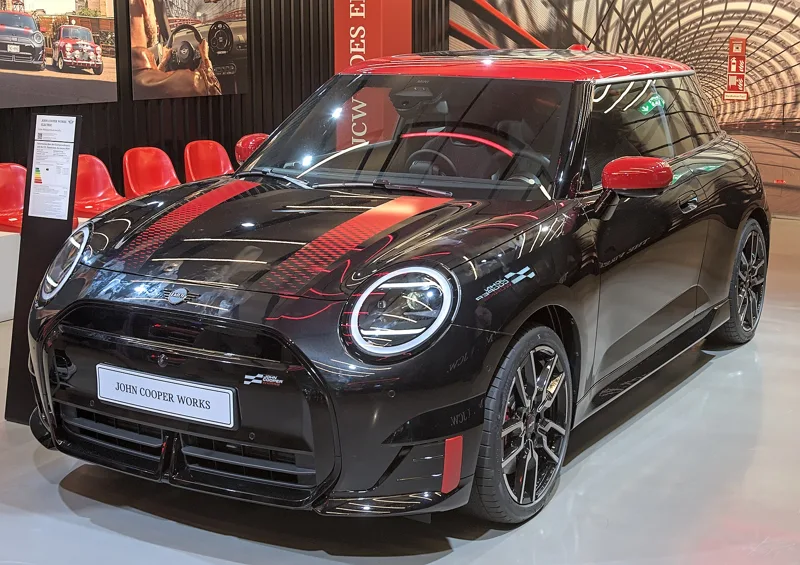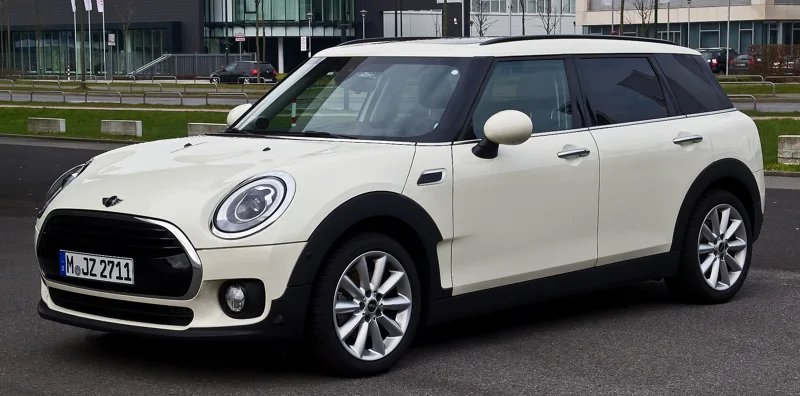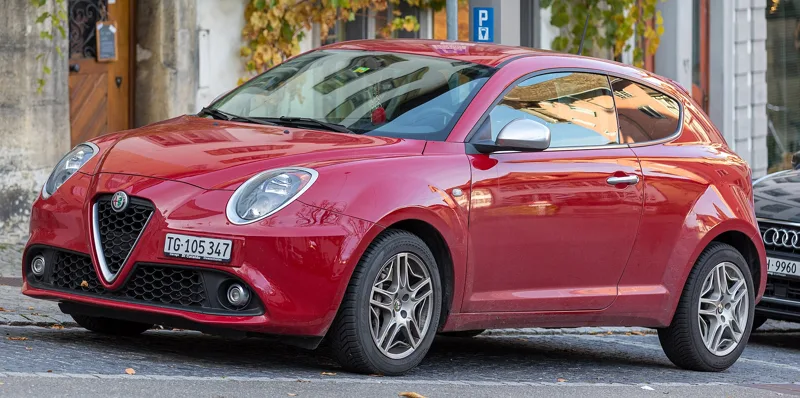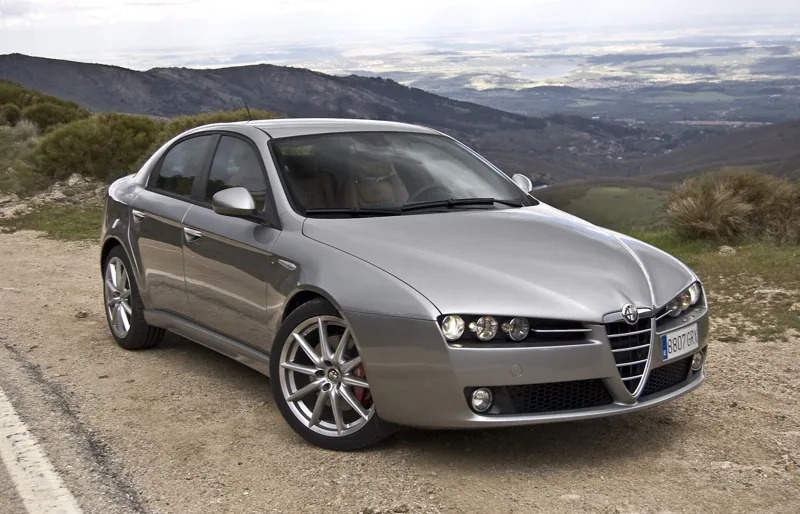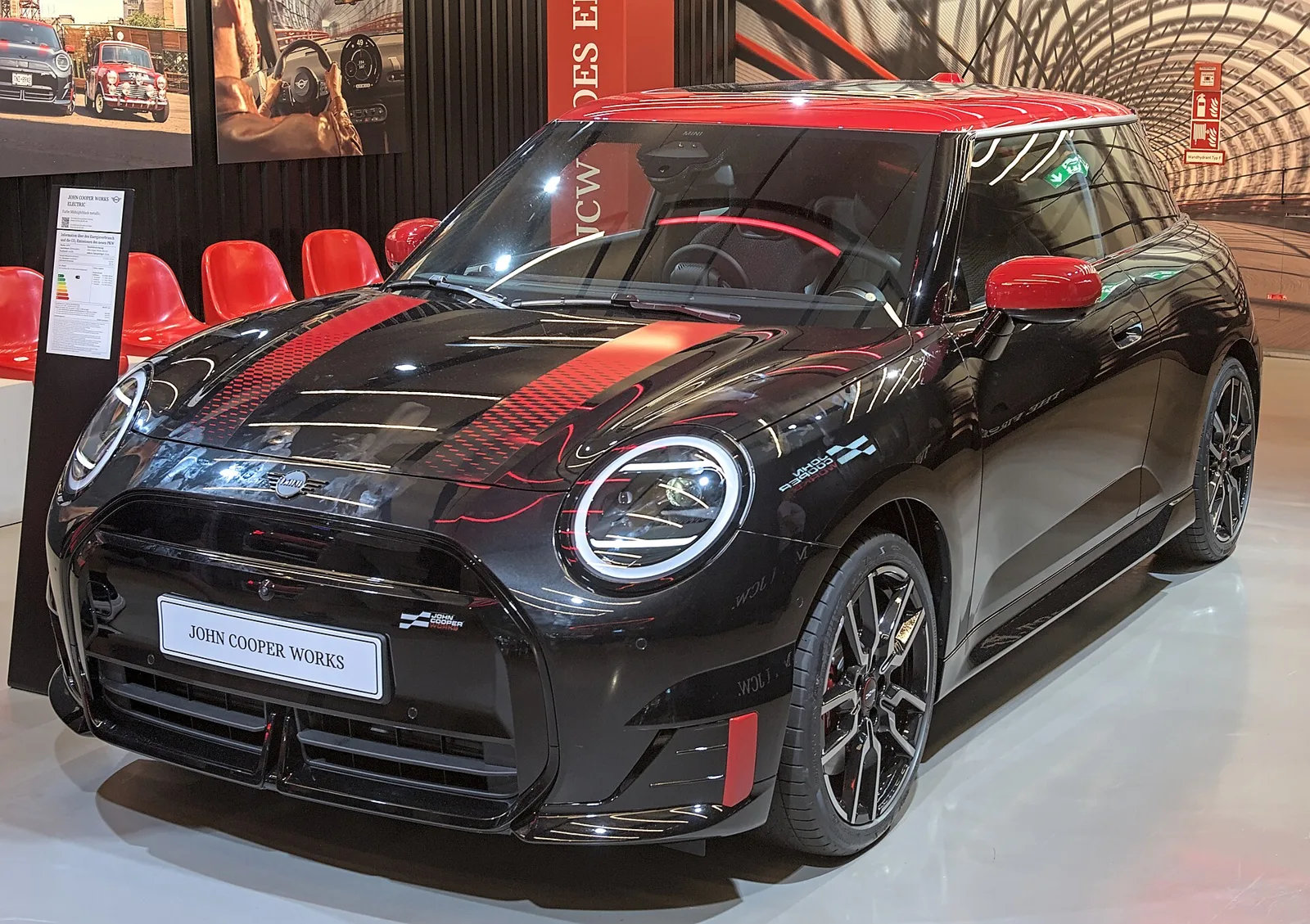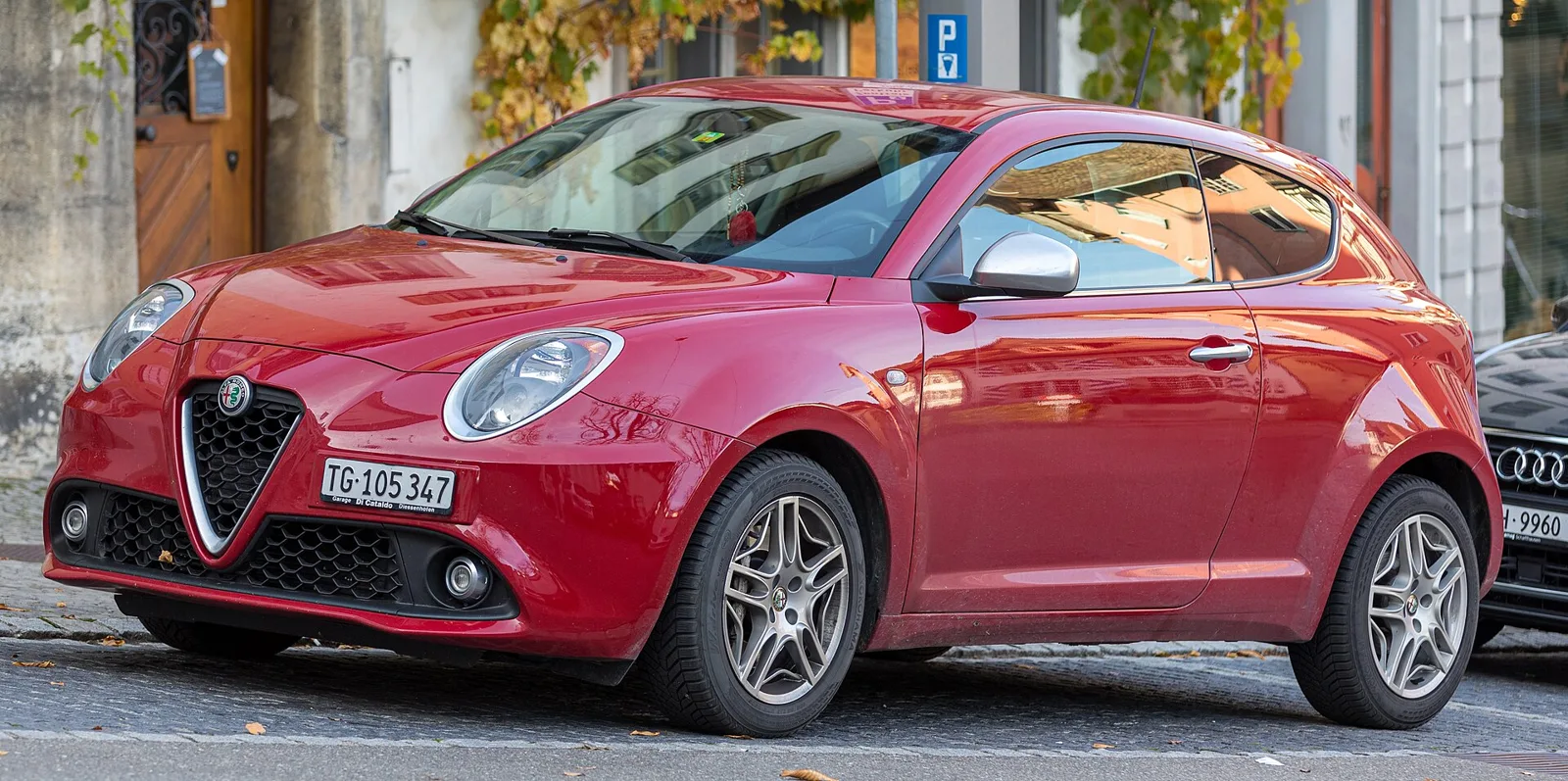
Alfa's Italian supermini against BMW's reborn Mini, from the Cooper S and John Cooper Works kits to the MiTo Quadrifoglio Verde and the Mini's electric generations.
The Alfa Romeo MiTo and Mini Hatch were rival small cars for urban buyers. The MiTo was a single-generation Alfa built from 2008 to 2020, while the Mini began production in 2001 and grew into four generations.
The Alfa Romeo MiTo and the Mini Hatch were rival small cars aimed at urban buyers who valued character as much as frugality. The MiTo appeared in 2008 with Alfa's sporting pitch, while the Mini had already spent seven years building a retro-styled following by then.
Both shared a front-engined, front-wheel-drive layout and a three-door hatchback core, which made them natural competitors. Their paths split after launch: the Mini expanded into a family of bodies and generations, while the MiTo stayed a single generation with one main body.
Where did each car come from?
The MiTo was an Alfa Romeo sold from 2008 to 2020 and built by Fiat Group Automobiles. The Mini began life as a Rover Group concept shown in 1997 and reached production in 2001 under BMW ownership, which makes its history more tangled.
Alfa's car took its name from Milano and Torino, the city where Centro Stile Alfa Romeo drew it and the city where it was assembled. Fiat's Mirafiori factory built 293,428 units across that single generation.
The Mini's path ran through several hands. Rover Group showed the hatch concept at the 1997 Frankfurt Motor Show, and BMW took over the whole project in 1999 and kept it when Rover was sold in 2000. Rover had wanted a plain economy car, whereas BMW pushed for a small sporting car.
Production later moved from Rover's Longbridge site to BMW's Cowley plant in Oxford. Frank Stephenson shaped the Mini's look, and a well-known anecdote describes how he fixed a missing exhaust on the full-size clay model with a beer can, a fix the board liked enough to keep.
Production began on 26 April 2001, and the car reached showrooms in July, initially only as a three-door hatch.
Two small cars with strong identities, one built around sporting Alfa engines and the other around a retro Mini that grew into a family.
How did each car get its name?
The MiTo was provisionally called Junior, and a public naming contest across Europe in November 2007 saw the name Furiosa score well in several countries before MiTo was chosen in 2008. The Mini also went by several names, among them Cooper, Hatch, Hardtop, One and John Cooper Works versions.
The MiTo name blends Milano and Torino, and it also nods to mito, the Italian for myth or legend. Alfa offered a Spider or a mountain bike to the winner from each country in its contest.
Mini's naming shifted by market. The hatch was called Hardtop in the US, which reflected local habits rather than any difference in the car itself.
How big were the early Minis?
The 2001 Mini hatch was 3.63 m (143 in) long, 19% longer than the 1959 original at 3.05 m (10.0 ft). The 2002 five-door reached 3.98 m (157 in), about 21% more than the first Mini estate.
The first hatch was 58 cm (22.8 in) longer than the 1959 model, yet it was still considered very compact.
The MiTo's overall length is not given, so the size contest rests on the Mini figures alone. Both cars targeted the compact end of the market, but the Mini's retro proportions set it apart from the more conventional MiTo profile.
What engines did the MiTo and early Mini use?
The MiTo's petrol range began with a power-limited 79 PS naturally aspirated unit and reached a 170 PS 1.4-litre MultiAir Turbo. Early Minis relied on Tritec engines, a Brazilian-built family developed jointly by Chrysler and BMW.
By model year 2014 the MiTo also offered a 105 PS 0.9-litre TwinAir turbo, diesels at 85 PS and 120 PS, and a 120 PS LPG option. The Mini One D took a Toyota diesel instead, while the supercharged Cooper S moved its battery to the rear, which left no space for a spare wheel and meant run-flat tyres.
| Feature | Alfa Romeo MiTo | Mini Hatch |
|---|---|---|
| Launch | 2008 | Production from 26 April 2001 |
| Generations | One, built 2008 to 2020 | Four, with the fourth launched in 2024 |
| Body styles | Three-door hatchback | Three-door hatch and convertible; five-door from the third generation |
| Engines | 0.9 TwinAir at 105 PS; 1.4 MultiAir from 70 PS to 170 PS | Tritec petrol in the first generation; Prince engine from the second |
| Diesels | 1.3 JTDm at 85 PS; 1.6 JTDm at 120 PS | Mini One D with Toyota diesel; Cooper D from April 2007; Cooper SD 2.0 L from January 2011 |
| Hot model | Quadrifoglio Verde at 170 PS, 7.3 seconds 0-100 km/h with TCT | John Cooper Works GP Kit at 218 PS (215 bhp; 160 kW) |
| Luggage | 250 litres (8.8 cu ft) | No figure given |
| Electric or fuel cell | Two fuel cell test cars; LPG dual-fuel version | Mini E trials in 2009; Mini Electric in 2019; Cooper E/SE in 2023 |
| Where built | Mirafiori, Turin | Cowley, Oxford; Born in the Netherlands for some models |
Which hot models stand out?
The Quadrifoglio Verde was the MiTo's sharpest model, with a 1.4-litre MultiAir inline-four making 170 PS, which is 125 kW or 168 hp, at 5500 rpm. Its 124 PS per litre was the best in its segment when the car was new.
The Mini's answer was the John Cooper Works GP Kit of 2006, a hand-finished run built by Bertone in Italy, with 2000 cars planned for the model year. Only 459 were sold, and the car dropped its rear seats and much of its sound deadening to save weight.
The GP Kit's output was quoted at 218 PS, equal to 215 bhp or 160 kW, arriving at 7100 rpm, with a torque peak of 250 N-m (184 lb-ft) reached at 4600 rpm. Compared with a Cooper S it shed around 40 kg (88 lb).
The two hot models took different routes. Alfa chased output per litre, while Mini chased lightness, which makes for a neat contrast between two small performance cars.
Both were limited efforts rather than mainstream volume cars, and both show how a small car can be pushed toward performance with modest hardware.
How did the Mini's generations evolve?
The first Mini generation carried the model codes R50, R52 and R53, and it was facelifted in 2004 alongside the arrival of the convertible. The second generation followed in 2006, and the third reached showrooms in 2014 after production began in 2013. The first-generation facelift of 2004 changed mostly the nose and the steering wheel, alongside improved equipment.
The naturally aspirated Cooper was the R50, the supercharged Cooper S was the R53, and a soft-top R52 convertible was built between 2004 and 2008. Detroit and Geneva were the stages for the second-generation convertible, which the brand labelled a 2009 model-year car.
The second generation came on a re-engineered platform and used the Prince engine, which was also shared with PSA Peugeot Citroen. Diesel Cooper D models arrived in April 2007, the economical First version followed in 2009, and Cooper SD 2.0 L diesels appeared in January 2011.
The third generation added a five-door body style to the three-door and convertible line-up, and the fourth generation, launched in 2024, saw the hatch renamed Mini Cooper.
Did either brand go electric?
The Mini went electric in stages, from the Mini E field-trial cars of 2009 to the Cooper E/SE of 2023. The MiTo's route ran through hydrogen test cars and an LPG option instead.
Trials came first with the Mini E in 2009. A production electric Mini arrived in 2019 as the Mini Electric, and in 2023 the Cooper E/SE took over on its own purpose-built electric architecture.
Alfa's electric effort ran through two fuel cell MiTo test vehicles in a European hydrogen programme, which reached 150 km/h (93 mph) and an NEDC range of 450 km (280 miles).
Where were the two cars built?
The MiTo came out of Mirafiori in Turin, while the Mini's production centred on Cowley in Oxfordshire, with some models also built in Born, Netherlands.
The three-door F56 was shared with VDL Nedcar in Born from July 2014 until February 2024, and the F57 convertible was assembled exclusively there between 2015 and 2024.
Since late 2023 the electric Mini Cooper has been built in China at a joint venture in Zhangjiagang, Jiangsu. From 2024 all combustion hatches and convertibles were centred at Oxford.
Which car's family grew bigger?
The Mini became a family of models. The Clubman came in 2007, the Countryman followed in 2010, and the Paceman arrived in 2012 with the Aceman in 2024, each adding a different body style to the marque.
The MiTo stayed in one body style and one generation, so the contest is between a single hatch and a multi-body brand that kept growing. By the time the MiTo was dropped in 2019, the Mini line had already reached its third generation.
How did the Mini reach overseas markets?
The Mini reached Japan from March 2002, sold through BMW dealerships and Yanase outlets, and it met Japan's dimension rules. Australia and the US offered only the Cooper and Cooper S in the first generation.
In Japan the retro look suited a moment when local manufacturers were offering their own retro-styled cars.
The Cooper name traces back to John Cooper and the Cooper Car Company, and the John Cooper Works range carried that heritage further with tuning options and a higher-spec Cooper S Works. A race-prepared Cooper S3 with rear-wheel drive competed in the Belcar championship from 2002.
How did reviewers and buyers respond?
What Car? praised the MiTo's look as distinctive, yet marked down the way it drove and how it was built. It recommended the turbocharged 1.4-litre petrol over the 0.9-litre turbo and called the 1.3-litre diesel adequate.
In March 2017 an Alfa executive said the MiTo and Giulietta would continue for the foreseeable future, yet the MiTo was discontinued in early 2019.
The RAC reported reliability at the lower end of acceptable, although it praised the rustproofing. Those verdicts set the car's strengths in styling and engines against its weaker points on finish and reliability.
Reviewer verdicts for the Mini are thin in this pairing, so its success is best judged by how steadily the line grew, from the hatch to five doors and a family of bodies. The run from the 2001 hatch to the 2024 Mini Cooper spans more than two decades.