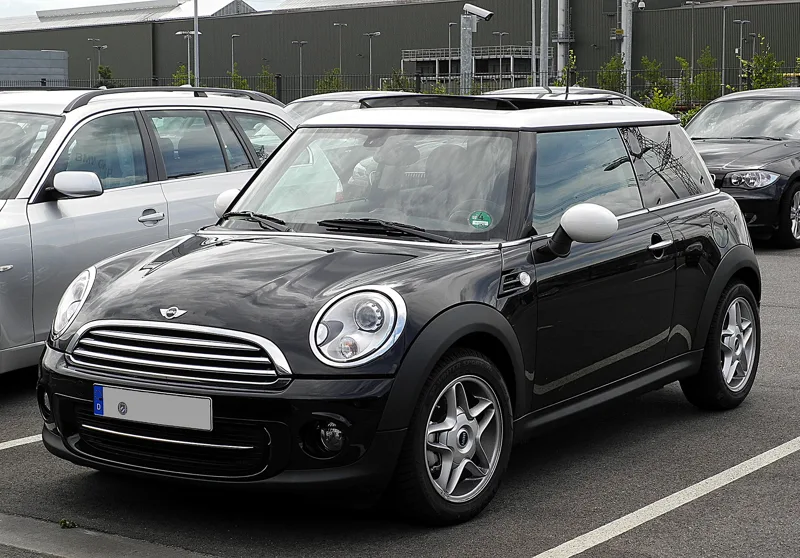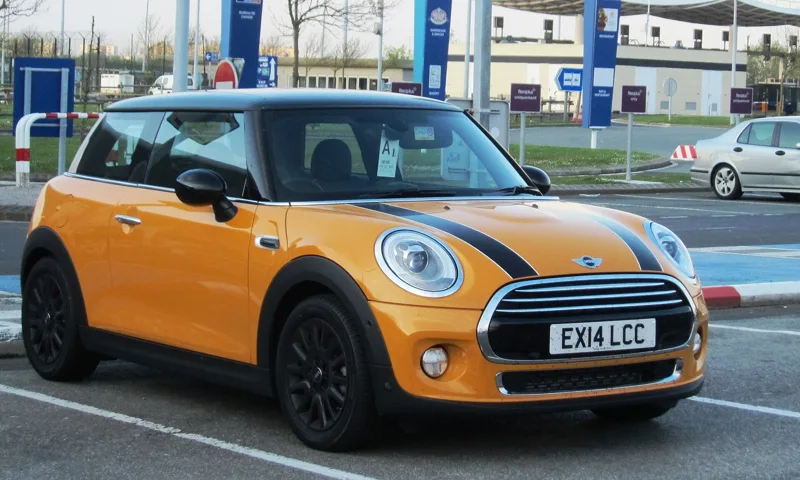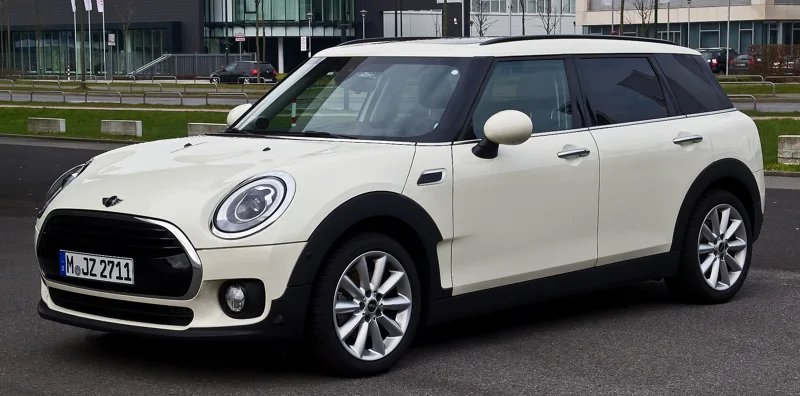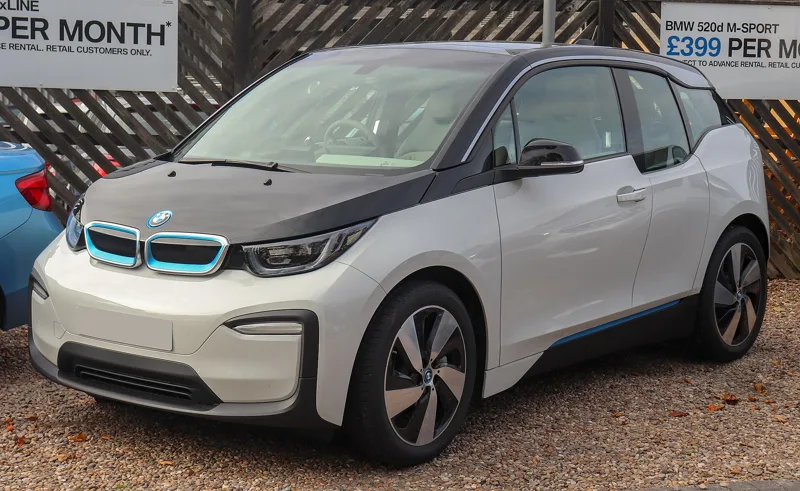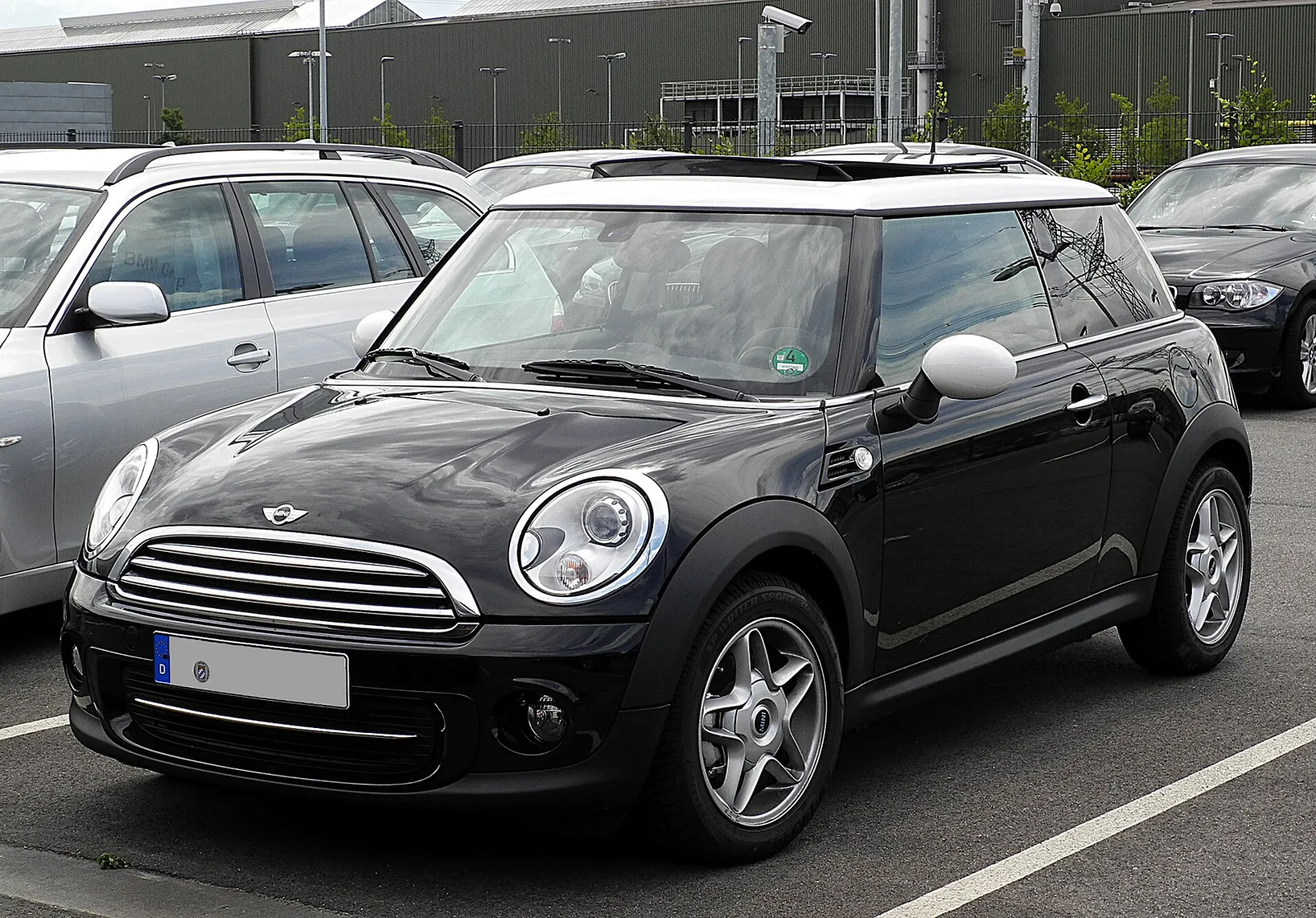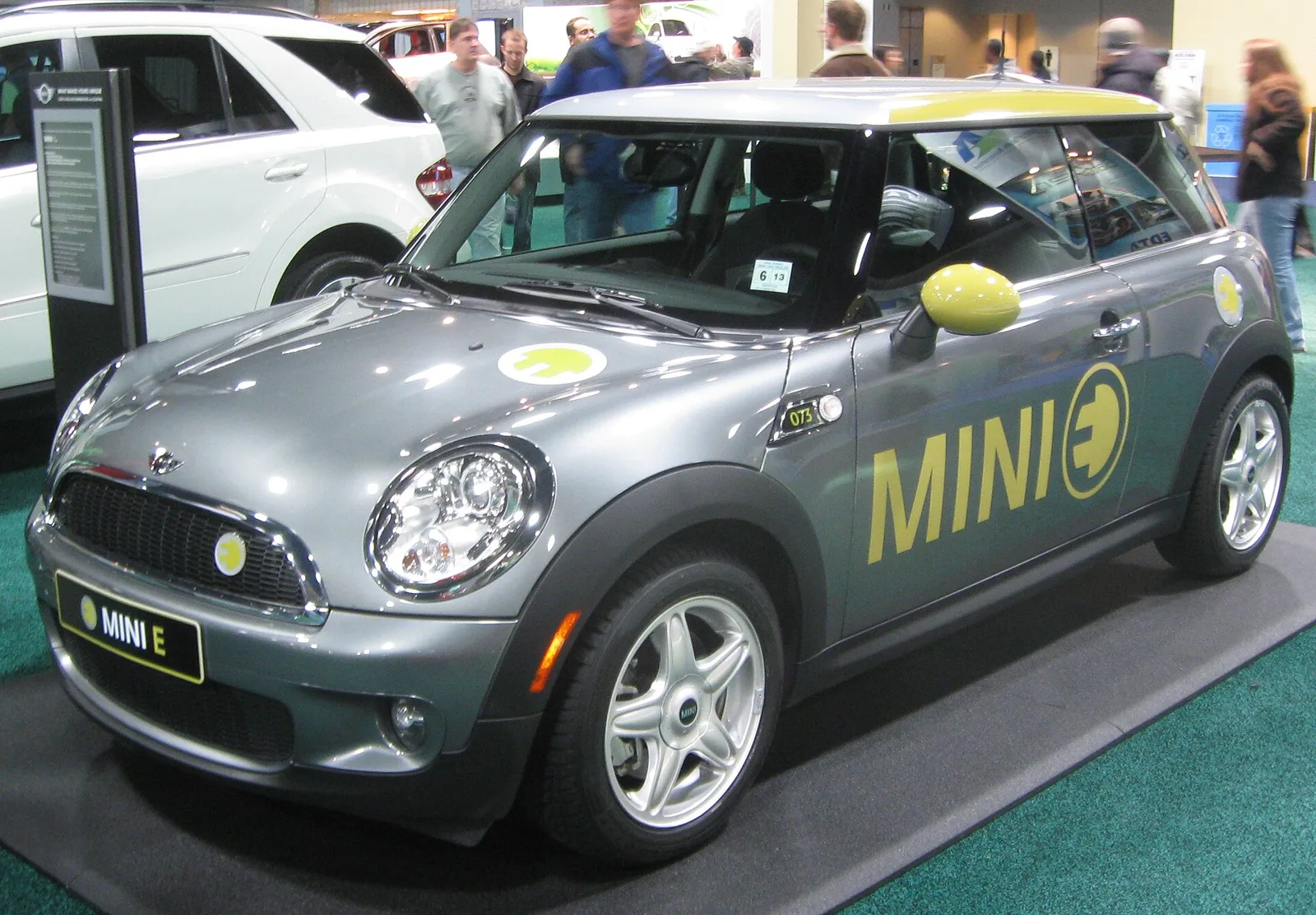
BMW's converted Mini Cooper, leased to private drivers in several countries, and the trial data behind its later electric models.
The Mini E was a converted Mini Cooper hatchback that BMW i built for electric field trials. Its 150 kW motor and 35 kWh battery gave a range of 251 km (156 miles) under optimal conditions, and the programme ran with private drivers across several countries from 2009 to 2011.
The Mini E started life as a Mini Cooper hatchback that BMW i converted into a battery-powered demonstrator. BMW ran field trials with private drivers in the United States, Britain, Germany, France, Japan and China between 2009 and 2011. The programme led on to the BMW i3 urban electric car.
BMW engineers, two university research teams and the drivers themselves recorded how the cars were used. Those records give an unusually detailed picture of early electric car ownership, from range worries to home charging habits.
What was the Mini E and why was it built?
Shown first at the 2008 Los Angeles Auto Show, the Mini E was a battery-electric version of the Mini Cooper hatchback. BMW built it to test electric powertrain technology under the Mini brand, and to meet new California rules that required carmakers to offer zero emission vehicles.
All Mini E cars were equipped much like a standard Mini Cooper hatchback. The most visible change was the battery pack, which replaced the rear seat and took up most of the cargo area.
Participants joined online surveys and discussions, and took the car to a local dealership whenever it needed work. Cars were offered on a three-year limited lease only, and at the end of it they went back to BMW.
A converted Mini hatchback that let real owners test electric motoring across several countries.
Where was the Mini E trialled?
The Mini E was trialled in the United States, Britain, Germany, France, China and Japan, with the largest programme in the US. BMW offered 450 cars there. The US trial began first, in June 2009, and the European and Asian trials followed later.
Germany was assigned 100 trial vehicles. Berlin testing started in June 2009, and a second phase put 70 vehicles with private customers and fleet users in March 2011. Munich testing began in September 2010 with a lease of 400 euros (about US$517) a month.
In France, field testing in Paris used 50 units from 2010. China started field testing in Beijing on 22 February 2011, and Japan ran a field trial in Tokyo during 2011.
How much power and range did the Mini E have?
Power came from a 204 PS (150 kW) asynchronous motor fed by a 130 MJ (35 kWh) lithium-ion pack. BMW rated the car at 251 km (156 miles) under optimal conditions, and the US Environmental Protection Agency certified 160 km (100 miles) of range.
The motor sat in the former engine bay and drove the front wheels. It produced 220 N-m (160 lbf-ft) of torque, while the battery pack weighed 259 kg (572 lb).
BMW estimated normal driving range at 175 km (109 miles) in the city and 154 km (96 miles) on the highway. The EPA rated the car at 34 kWh per 100 miles and at 2.4 L/100 km (98 mpg-e) combined.
What were the Mini E specifications?
| Specification | Detail |
|---|---|
| Motor | Asynchronous electric, 204 PS (150 kW) |
| Torque | 220 N-m (160 lbf-ft), front-wheel drive |
| Battery | Lithium-ion, 130 MJ (35 kWh), 259 kg (572 lb) |
| Top speed | 153 km/h (95 mph), electronically limited |
| 0-100 km/h | 8 seconds (0-62 mph) |
| Range, optimal conditions | 251 km (156 miles) |
| Range, EPA certified | 160 km (100 miles) |
| Energy use, EPA combined | 34 kWh per 100 miles |
| Fuel equivalent, EPA combined | 2.4 L/100 km (98 mpg-e) |
| Charging | 20 hours at 120 V, 12 A; 3.5 hours at 240 V fast charge |
| Build | Mini Cooper hatchback with the battery in place of the rear seat |
The car reached 100 km/h (62 mph) from rest in 8 seconds, and electronic limiting held the top speed at 153 km/h (95 mph).
How long did the Mini E take to charge?
A Mini E could be charged from a 120-volt supply at 12 amps, which took about 20 hours, or from a 240-volt supply. The 240-volt fast-charge system took 3.5 hours, and drivers set the charge rate from the instrument panel before charging began.
The US trial used a 240-volt home wall box rated at 32 amps. The lease included installing the charging station at the driver's home.
Most drivers charged only two or three times a week, and in Berlin the average car remained stationary for over five hours during 80% of its charges.
How did the US lease programme work?
The US programme put 450 Mini Es into the hands of private lessees from June 2009: 250 in Los Angeles and 200 in New York/New Jersey. Monthly payments were US$850 for a year, covering collision coverage, maintenance and a home charger installed.
Demand far exceeded supply, with 9,500 people signing up for the 450 cars.
In May 2010 BMW offered a renewal for another year at US$600 a month. BMW said half of all lessees agreed to extend.
How did the UK trial work?
The UK trial ran from December 2009 to March 2011. Private users were given 40 Mini E cars for two six-month periods. Each driver paid 330 pounds sterling a month, which covered VAT, insurance, servicing and upkeep, and the lease data was collected electronically.
Oxford Brookes University analysed the trial, in which 40 cars were driven by 62 public drivers and 76 pool drivers. Together they covered 415,380 km (258,105 miles) across the two periods.
After March 2011 the 40 cars were kept on the road for promotional work. They also formed part of BMW Group UK's fleet of 4,000 low-emission vehicles for the London 2012 Olympic Games.
What did drivers and researchers find?
Early applicants tended to be well-educated, comfortably off men over 35 with a taste for new technology, and most drivers kept the Mini E as a second car. Drivers found range and charging limits far less of a problem than they had expected before the trials.
BMW's engineers said the range and charging issues were felt only in a few specific cases. The UC Davis Plug-in Hybrid and Electric Vehicle Research Center published a consumer study in May 2011, based on surveys and interviews with more than 120 families.
The study ran from June 2009 to June 2010, and its findings on daily distance were striking. 95% of respondents drove fewer than 130 km (80 miles) a day, and 71% drove fewer than 64 km (40 miles). Respondents reported that the Mini E covered 90% of their daily driving needs.
Respondents were also positive about home charging and future buying. 99% found home charging easy to use, and 71% said they were more likely to buy an electric vehicle than a year earlier. Only 9% said they were less likely, and 88% were interested in a battery or plug-in hybrid within five years.
The Oxford Brookes research found that 84% of UK respondents said low temperatures affected range. Daily journeys averaged 47.8 km (29.7 miles), against 42.6 km (26.5 miles) for the control cars.
How did the Mini E drive?
The Mini E used a drive-by-wire accelerator with a soft start, which stopped the motor from burning out when pulling away from a standstill. Its regenerative braking captured as much energy as possible and began as soon as the accelerator was released.
The regenerative braking was built into the accelerator pedal, so easing off slowed the car sharply, as if the brake had been pressed. Most drivers found it hard to master at first.
Drivers who stuck with it could control almost all acceleration and braking with one pedal. The display showed how much energy they had recovered, and the Oxford Brookes research found that one week was enough to adapt to charging, range, regenerative braking and low noise.
Low running noise was another concern. 56% of UK respondents wanted drivers to pay more attention, while 28% wanted a warning noise below 20.1 km/h (12.5 mph).
Did the Mini E set any records?
Yes. In April 2010 Thomas Jager drove the Mini E around the Nurburgring Nordschleife, making it the first electric car to lap the circuit in under 10 minutes. In May 2010 Mini E No. 466 covered 237.1 km (147.3 miles), the longest electric car trip at the time.
Penn State University hosted the 21st Century Automotive Challenge on 23 May 2010. At the event Mini E No. 466 took the longest-trip mark, then won the efficiency competition after crossing three mountain ranges in the rain.
What electric Minis came after the trial?
The Mini E trial was followed in January 2012 by the BMW ActiveE trial, and the programme's last phase led to the BMW i3. In 2019 BMW announced a mass market Mini Electric, while outside BMW several firms offered electric conversions of the Mini.
Nevada's Hybrid Technologies began production of an all-lithium electric Mini Cooper. That conversion had a top speed of about 130 km/h (80 mph), and the company claimed a range of up to 190 km (120 miles) on a single charge.
EVTV converted a 2009 Mini Cooper Clubman and documented the work. The conversion stored 40.3 kWh for a range of 201 km (125 miles).
CravenSpeed of Portland, Oregon offered a conversion kit for 2002-2006 Mini hatchbacks. It gave about 80 km (50 miles) of range and kept the rear seats and cargo room untouched.
What happened to the cars after the trials?
When the trials ended, drivers returned their cars to BMW. Those cars were then sent to museums, shipped to German labs for testing, or dismantled and crushed. Others went to technical colleges and museums, where they were displayed or taken apart for study.
The 40 UK cars were the exception, because they stayed in use for promotional work after March 2011.
Why does the Mini E still matter?
The Mini E mattered because BMW gathered real-world data from owners, and the programme led directly to the BMW i3. The research covered range, charging habits and driver attitudes in detail, and it came from university teams as well as BMW's own engineers.
The most useful lesson was about habits rather than hardware. Drivers covered short daily distances, charged at home and adapted within a week, which suggested that many buyers could live with a car of limited range.
The trials also exposed real weaknesses. Cold weather cut range, public charging was scarce, and the battery pack took away the rear seats and most of the cargo space.