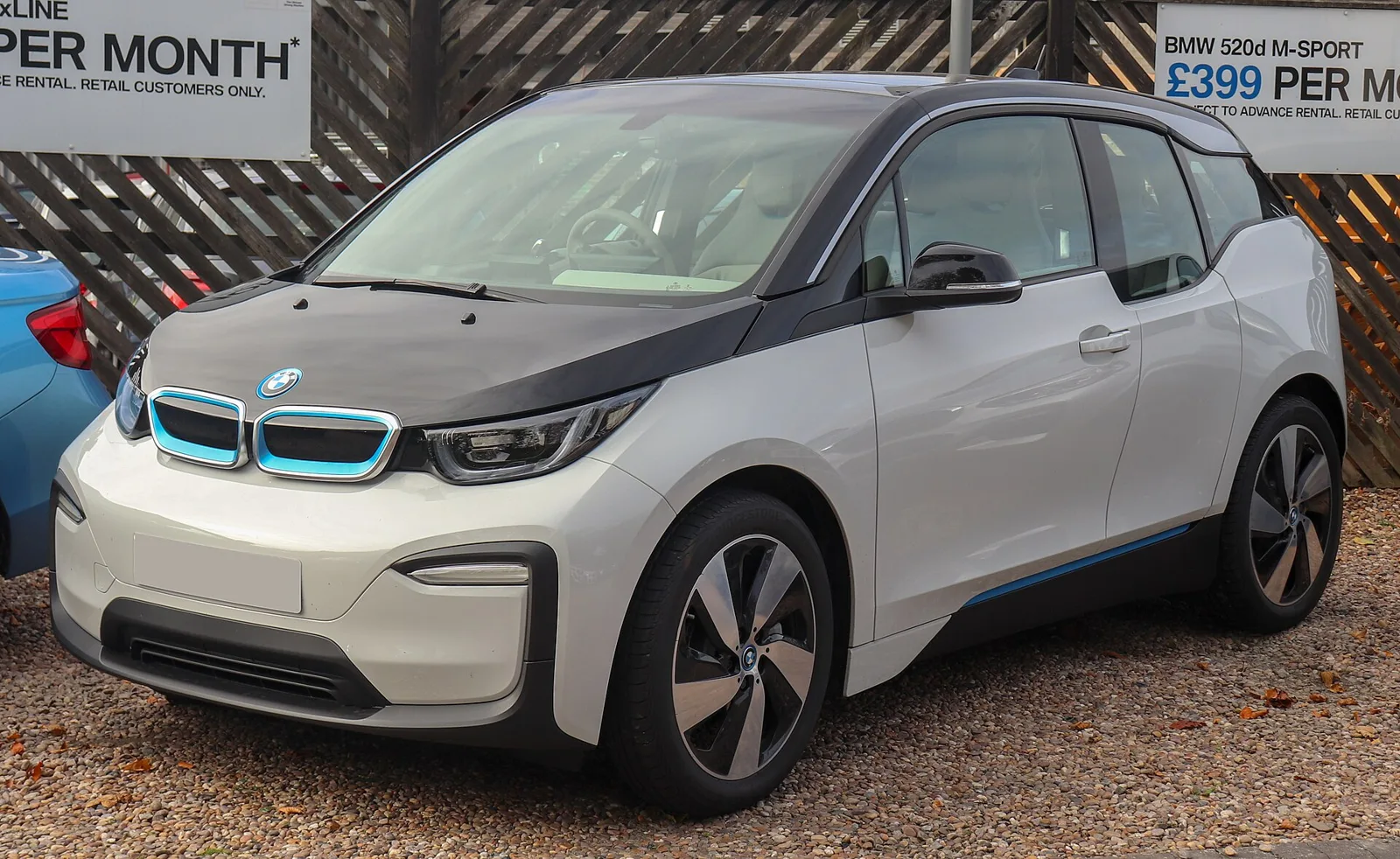
A carbon fibre passenger cell on an aluminium drive module, a Leipzig launch in 2013 and a range extender option that lasted until 2022.
BMW's i3 was an electric five-door hatch built in Leipzig from 2013 to 2022. Its body mixed carbon fibre with aluminium, and an optional petrol range extender extended its reach. Some 250,000 cars were built before production closed in July 2022.
The BMW i3 was BMW's first mass-produced zero emissions car, a high-roofed five-door hatch built in Leipzig. Its passenger module used carbon fibre reinforced plastic on top of an aluminium drive module. Production ran from September 2013 to July 2022 under the BMW i sub-brand.
What was the BMW i3 built from?
The i3 used a passenger cell made of carbon fibre reinforced polymer, bonded to an aluminium drive module that carried the battery, motor and suspension. BMW described it as the first mass-production car with most of its body and internal structure in that material.
Carbon strands were produced at a new plant in Moses Lake, Washington, chosen for its hydroelectric power. The fibres were woven into fabric in Germany, laid up using resin transfer moulding, and assembled into the passenger cell at Leipzig.
The finished pieces were bonded together by 173 robots at Leipzig, using adhesives rather than welds.
Hemp fibres in the door panels reduced each panel's weight by about 10%, and the dashboard used wood from certified European forests. Olive-leaf tanned leather was an option, which reflected BMW's wider environmental goals for the car.
A clean-sheet electric hatch built around carbon fibre, with a range extender for drivers who needed one.
How far could the BMW i3 go?
At launch the 60 Ah battery gave an EPA range of 130 km (81 mi) and a combined rating of 124 MPGe. The 94 Ah battery raised the EPA range to 183 km (114 mi) for 2017, and the 120 Ah battery reached 126 mi (203 km) battery-only for 2019.
The launch battery was cut to 16 kWh from the ActiveE's 30 kWh to save weight. BMW still aimed for a similar range, which meant the i3 was built around careful energy use rather than a large pack.
Charging was up to 11 kW AC on most European models. A 50 kW DC option brought the 60 Ah version from 0 to 80% in under 30 minutes, which made fast top-ups on public chargers practical for a city car.
Eco Pro+ mode trimmed the top speed to 90 km/h (56 mph) to stretch the range. In normal driving the car was capped at 150 km/h (93 mph), which kept it well suited to urban and suburban use.
What was the i3 REx range extender?
The REx option added a 647 cc two-cylinder petrol engine from the BMW C650 GT scooter, producing 34 hp (25 kW). It was an emergency backup to reach the next charger, and its 9 L (2.0 imp gal; 2.4 US gal) tank could be filled through a second filler door on the right front fender.
US models had a software limit on fuel capacity. The restriction existed because the car had to remain classed as a range-extended battery-electric vehicle in California, where the petrol range could not outstrip the electric range.
Later models changed the picture. From the 2017 model year the larger battery meant the electric range exceeded the petrol range, so BMW removed the restrictions and unlocked the full tank for later US cars. BMW dropped the REx version in Europe when the bigger battery arrived in 2019.
The REx engine was not meant for long journeys. Its job was to keep the battery from running flat in the middle of a trip, and the car's electric drive remained the primary way it moved.
How many BMW i3s were sold?
Global sales passed 250,000 by the end of 2022, and production finished in July 2022. Germany was the biggest market with 47,536 units through December 2021, followed by the United States with 45,098 units. Norway was another major market, with 28,605 registrations through January 2022.
Early output was slow. Production averaged 70 cars a day in February 2014, about half the planned rate because carbon parts had a high defect rate. BMW later raised output above 120 cars a day by October 2017.
Sales milestones came steadily. Global sales passed 10,000 in September 2014, 25,000 in May 2015 and 50,000 in July 2016, and cumulative sales reached 150,000 by mid 2019.
The 100,000th i3 was built at Leipzig in late October 2017, and the 200,000th followed on 15 October 2020. Those figures show how the plant ramped up once the carbon supply problems were addressed.
Why did BMW end i3 production?
BMW announced in June 2021 that i3 sales in the United States would end after the 2021 model year. Production of all i3 models was scheduled to end in July 2022, with the BMW iX1 set to succeed the car in some markets and the Leipzig plant retooled for the updated Mini Countryman.
US production ended in July 2021 and Australian models were discontinued at the end of 2021. The company also discontinued 3G cellular services for US cars from February 2022.
The last ten cars built were special i3s HomeRun Editions. Their production closed the car's run and marked the end of the first mass-produced BMW electric hatch.
What are the BMW i3 specifications?
The table lists the core figures for the launch battery, the 2017 and 2019 batteries and the i3s. Figures are kept on the version they belong to, because the REx and battery-only ranges differ. Each row names the battery or model it applies to, so readers can compare variants without confusion.
The i3s variant added power, a lowered sport suspension, wider tyres on model-exclusive wheels and a SPORT drive mode. The figures for that version sit on their own rows in the table.
| Specification | Detail |
|---|---|
| Type | Five-door high-roof electric hatchback |
| Production | 2013 to 2022, Leipzig |
| Motor | 125 kW (168 hp) synchronous permanent magnet |
| Top speed | 150 km/h (93 mph) |
| Unladen weight | 1,195 kg (2,635 lb) at launch |
| Launch battery (60 Ah) | 22 kWh gross, 19 kWh net |
| 2017 battery (94 Ah) | 33 kWh, 27.2 kWh net; 183 km (114 mi) EPA |
| 2019 battery (120 Ah) | 42.2 kWh; 126 mi (203 km) battery-only EPA |
| EPA range, 60 Ah | 130 km (81 mi) |
| i3s power and torque | 181 hp (135 kW); 199 lb ft (270 Nm) |
| Combined economy, 60 Ah | 124 MPGe (1.90 L/100 km; 149 mpg imp) |
| Euro NCAP | Four stars |
| Total built | 250,000 |
What was the i3's design philosophy?
BMW treated the i3 as a clean-sheet project. With no combustion engine at the front, the designers could rethink the layout of the car, and they chose a carbon fibre passenger cell to cut weight while keeping rigidity high. The approach gave the car a look that was unlike its petrol-engined rivals.
The cabin used a different approach too. There was no central tunnel, no floor-mounted gear lever and no centre console to clutter the space, and the front seats were built to open up the interior.
Pedal behaviour was another area of focus. The accelerator also acted as the main brake in traffic, because lifting off recovered energy into the battery. Lessons from the Mini E trials shaped that approach, since drivers there tended to rely on the regenerative effect.
BMW learned from the Mini E and ActiveE pilot fleets, which were tested in Asia, Europe and the United States. Those trials helped set the battery size and the charging pattern for the production car.
How did the i3 compare with other electric cars?
The i3 ranked third among electric cars sold worldwide from 2014 to 2016. It was also the third best-selling all-electric car in 2016, behind only the Nissan Leaf and the Tesla Model S. Rankings like these gave the model visibility in a market where few rivals had reached volume.
More than 65,000 units had been sold worldwide by 2016, which gave BMW a useful base of real-world data for later electric models.
For a time the US EPA rated the all-electric i3 as the most fuel-efficient vehicle sold in the country, until the Hyundai Ioniq Electric took the title in November 2016.
Those rankings helped BMW argue that a dedicated electric model could sell in volume, even though early sales were slower than the company had hoped.
Who bought the BMW i3, and where?
Germany, the United States and Norway were the largest markets. Norway had the highest per-capita penetration of the i3 in the world, and the car topped new passenger car sales there in November 2016. Those markets shaped the car's sales pattern more than any other single factor.
Its first retail deliveries in Europe took place at a launch in November 2013, and the first US customer took delivery in May 2014.
US sales ended in July 2021 after the model year closed, which left the American owner base as a smaller but loyal group.
How did the i3 suit everyday driving?
BMW designed the i3 for urban and suburban use, where most journeys are short and charging happens at home. The car's range suited commuting, and its one-pedal style of driving made stop-start traffic easier to manage. Those design choices kept the car practical for the trips it was built to make.
BMW's research into commuting patterns from its ActiveE and Mini E trials shaped the battery size. Engineers wanted a car that would not need charging every night, which kept the pack smaller and the car lighter.
Home charging was the expected route, with wall sockets and wallboxes supplying power. The i3 could take AC charging at up to 11 kW on most European models, and public DC charging was available as an option.
Eco Pro and Eco Pro+ modes stretched the range by changing accelerator mapping. Eco Pro+ also limited heating and air conditioning to save energy.
For longer journeys, BMW offered a flexible mobility programme that provided a conventional BMW car on a set number of days each year, which reflected the car's focus on city use.
After the i3, BMW replaced the car in the United States with the iX and i4 from 2022, a sign that the company had moved its electric line-up toward larger and more conventional body styles.
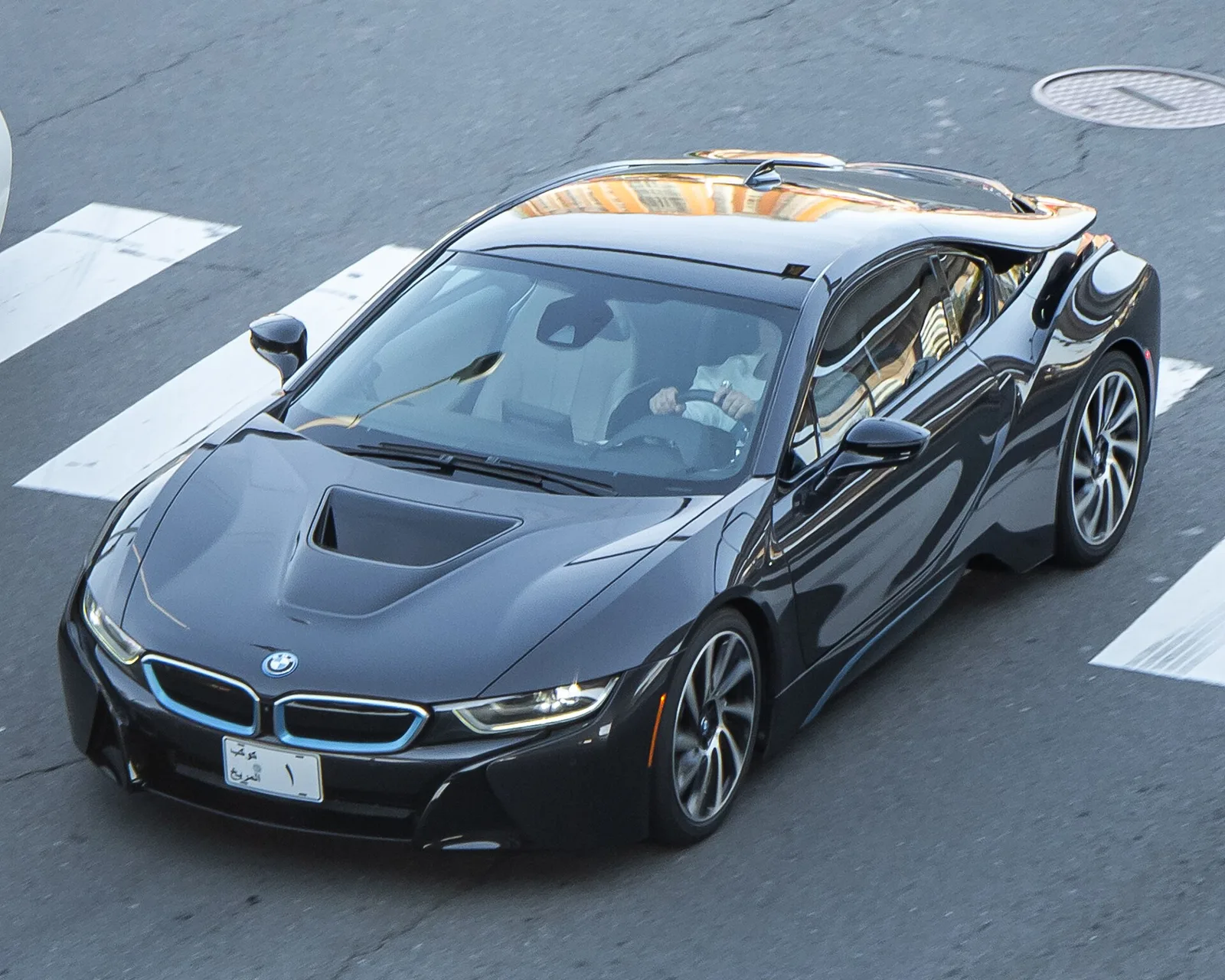
The i3 was one of the first two models of the BMW i sub-brand, alongside the plug-in hybrid i8. The sub-brand was launched in February 2011, giving the i3 a clear place in the company's wider electrification plans.
The i3 drove its rear wheels through a single-speed transmission, which kept the drivetrain simple and reduced the number of moving parts compared with a conventional car. That simplicity suited an electric hatchback designed around urban use.
Frequently asked questions
What did the i3 cost when it launched?
In the United States it started at US$42,275 before incentives, and the range extender added US$3,850. Those were launch prices, and government incentives could reduce the cost further.
How heavy was the later i3?
The 2017 model with the 94 Ah battery had an unladen EU weight of 1,320 kg (2,910 lb). With the range extender it rose to 1,440 kg (3,170 lb), reflecting the extra engine and fuel.
Did the i3 win awards?
Yes. It won UK Car of the Year 2014, the 2014 World Green Car of the Year and an iF Gold award for its sustainable design. In Australia Wheels magazine named it Car of the Year for 2014.
Was the i3 safe?
Euro NCAP awarded the i3 four stars, lower than the five-star ratings of several plug-in rivals including the Nissan Leaf and Chevrolet Volt. Those rivals were among the best-selling plug-in models of the period.
.jpg)