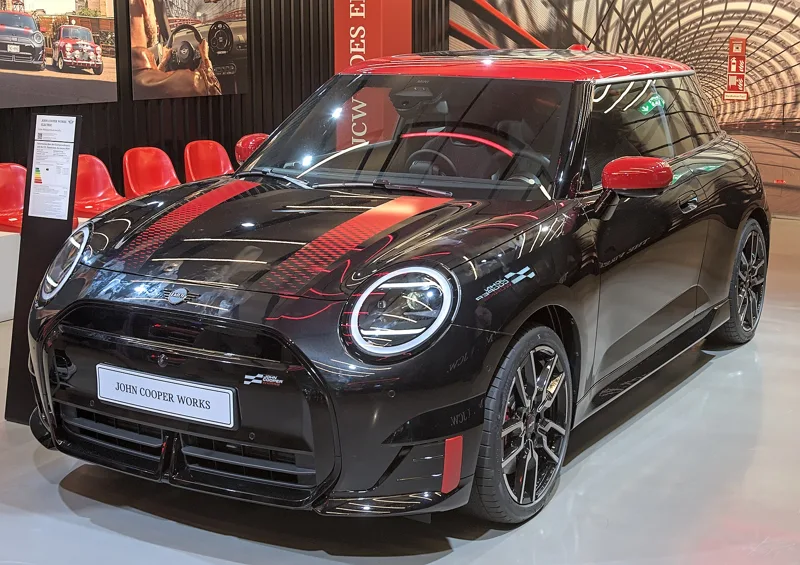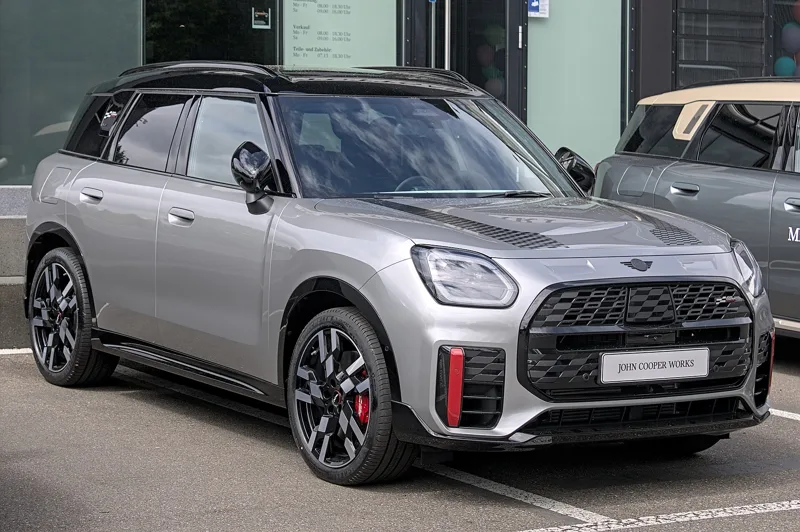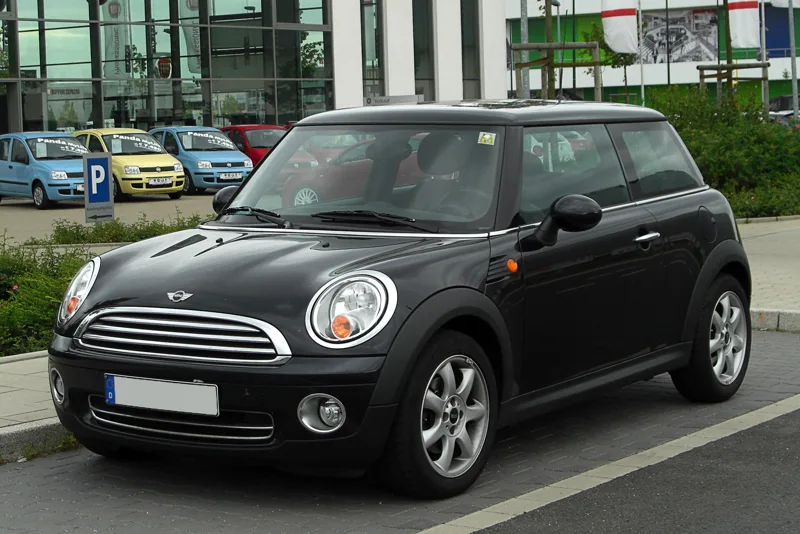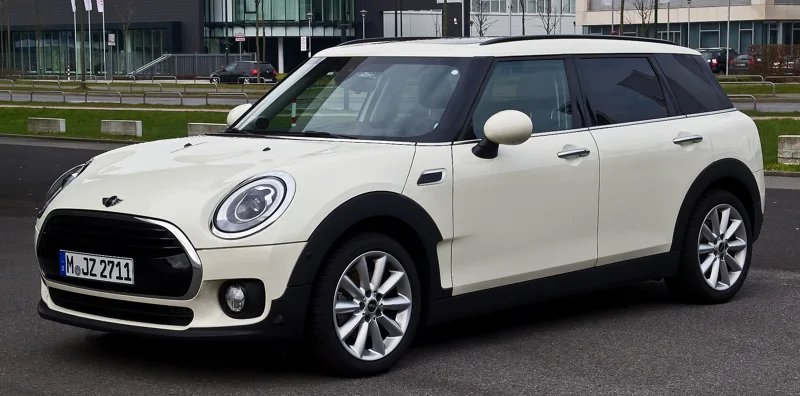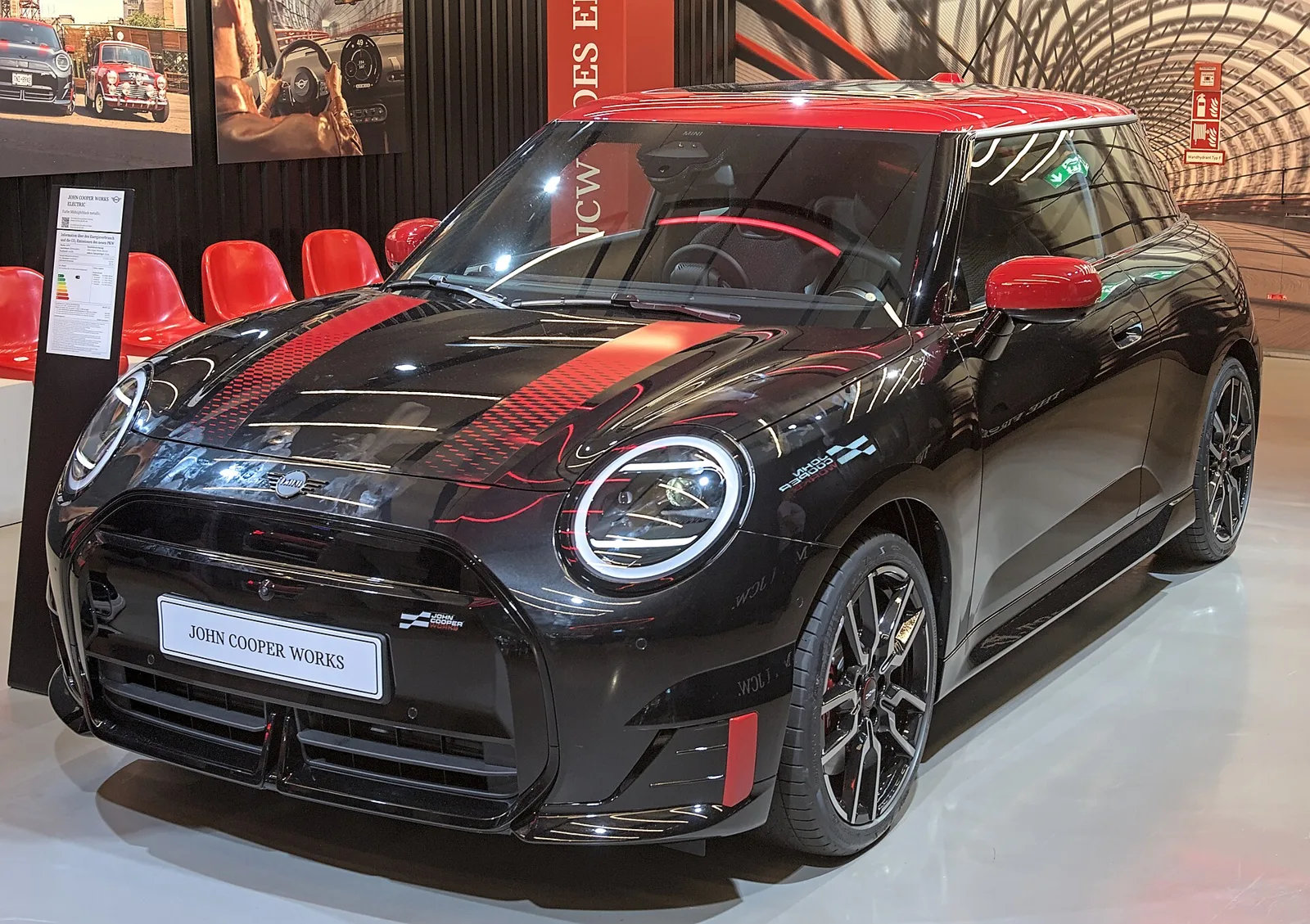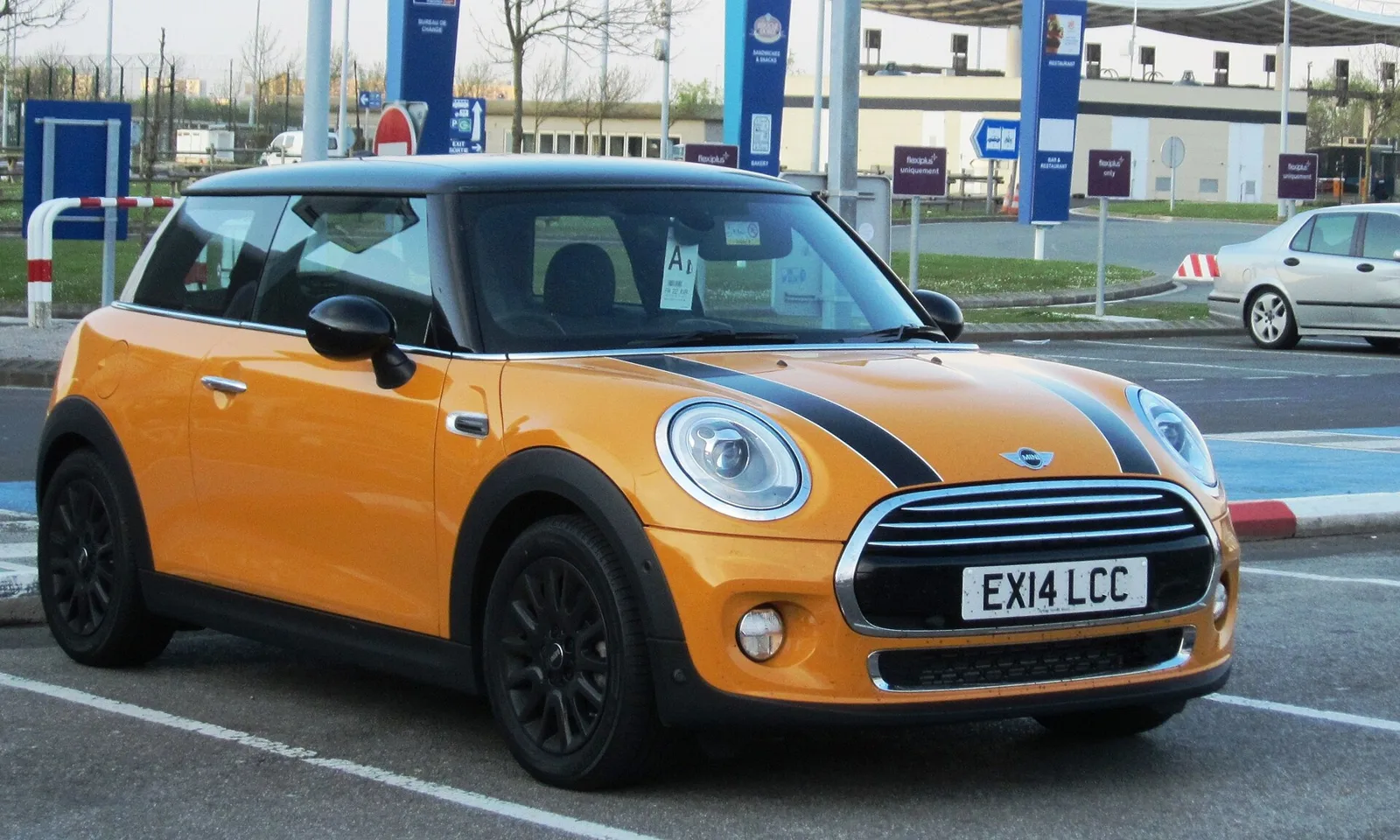
The third-generation Mini that carried the Union Jack lights, a John Cooper Works GP, an electric Cooper SE and a racing family.
The Mini F56 was the third-generation Mini hatch, unveiled in November 2013 and built in Oxford. It produced electric variants from 2020 with the Cooper SE, and the racing cars based on it include the Mini Challenge JCW Class. A further racer, the electric LRT NXT1, serves a junior cup.
The Mini F56 is the third generation of the British small car within BMW's Mini range. It was unveiled in 2013, with a five-door version following in 2014 and a convertible in 2016, and it went electric in 2020 with the Cooper SE. Its engines, body and trim were revised several times before its successor was presented in 2024.
When did the F56 arrive, and what came after it?
The third-generation Mini was unveiled at the LA Auto Show in November 2013 under the internal codes F55, F56 and F57. It was built in Oxford, as its predecessor had been, and VDL NedCar in Born joined production from July 2014. Facelifts followed in January 2018 and March 2021.
The successor was presented in 2024 as a three-door (F66), a five-door (F65) and a convertible (F67). It shares the same platform, and its look echoes the electric Mini J01, which Great Wall Motor helped develop.
A third-generation Mini that carried Union Jack lights and a racing family, then went electric with the Cooper SE.
How did the F56 body change over its life?
Thanks partly to a smoothly panelled floor, the drag coefficient fell to 0.28, or 0.31 on the MINI Cooper S. The car presents 2.07 square metres of frontal area. Both the grille and the rear lights grew, and in the LED headlights the daytime running light became a 4/5 ring around the dipped beam.
BMW replaced the central speedometer with a multimedia system and integrated Ambilight. The colour shifts with the situation: a green gradient when start-stop is active, and an orange one when the radio volume is raised.
Which body styles and variants were added?
A five-door version with the internal F55 code arrived in October 2014. The relatively unsuccessful Coupe and Roadster were dropped in 2015 without replacement, and the Mini Cabrio (F57) followed in March 2016. Its optional Mini Yours treatment placed a Union Jack design across the whole horizontal roof area.
Euro NCAP gave the 2014 three-door four out of five stars, and later years carried on at that level. The engines all come from BMW's new modular family and meet the EU6 standard, and that family also includes three-cylinder petrol and diesel engines.
What was the suspension layout at the front?
The front uses a single-joint strut axle, where each wheel hangs on a MacPherson strut and a wishbone. Unlike the more expensive models, the lower wishbone is not split into two separate link rods. The swivel bearing is aluminium, while the track control arm and subframe are made of high-strength steel.
The rear is a space-saving multi-link axle in lightweight construction. Dynamic Damper Control, an adjustable damping system, was available at extra cost on every model.
What changed in the 2018 facelift?
The 2018 update raised injection pressure in the three-cylinder engines, improving efficiency and torque. Their cover became carbon-fibre-reinforced plastic, which saves weight and makes use of trim offcuts from the i models. A seven-speed dual-clutch gearbox became available at extra cost.
Diesel variants were revised in March 2018 to cut harmful emissions, and from July 2018 every petrol Mini carried a petrol particulate filter (OPF). Diesels were dropped in June 2019, after their share had fallen to at most 13% for the five-door.
LED lighting, still optional and available in matrix form, now has fully closed LED rings at the front. The tail lights include LED elements shaped like half a Union Jack, and that design is also available as an illuminated dashboard element.
Was there a John Cooper Works GP model?
A three-door John Cooper Works GP, limited to 3,000 units, was shown at the LA Auto Show in November 2019. A concept of the same name had appeared two years earlier, and the production car was meant to succeed the 2013 John Cooper Works GP.
The concept, based on the F56 and presented at the International Automobile Exhibition in Frankfurt in September 2017, carries the number 0059 on its flanks. That is a reminder of the first production year of the original Mini, and its tail lights recall the Union Jack.
How did the Mini Cooper SE work?
The Mini Cooper SE, delivered from spring 2020, produced 135 kW (184 PS; 182 hp). It borrowed its motor technology from the BMW i3, but its battery came from the Chinese manufacturer CATL. The 32.6 kWh pack sits in a T-shape in the floor and is liquid-cooled.
The battery adds 145 kg (320 lb) over the Cooper S with a petrol engine and automatic transmission, although its placement gives a more balanced weight distribution. Two recuperation settings are available. Climate control with a heat pump, LED headlights, navigation and animated instruments come as standard, and four trim levels, from S to XL, are offered.
In 2020 the E-Mini ranked among Germany's ten top-selling electric cars, logging 1,560 registrations from January to July.
How was the Mini facelifted in 2021?
Mini presented a further facelift in January 2021, and the market launch followed two months later. The trim strip around the radiator grille now runs lower and is extended in black, and tail lights in Union Jack design became standard. A roof with an individual colour gradient, called Multitone Roof, was offered on request.
The LED headlights could be specified with matrix function, so bad-weather light replaces fog lamps. Inside, the big round dial in the centre of the dashboard gave way to an 8.8-inch touchscreen operated by swiping, and the air vents became plainer without chrome.
The trim levels first used on the electric model were carried over to the combustion cars, under the names Essential, Classic, Yours and John Cooper Works.
What special editions were built?
The Resolute Edition, from February 2022, came in Rebel Green with a white roof and had no chrome. Its light surrounds and door handles were bronze, and it had checked seat covers inside. For the 2023 24-hour race at the Nuerburgring, Mini built the 1to6 Edition.
The 1to6 Edition was based on the John Cooper Works, limited to 999 units, painted black and available only with a manual gearbox. In 2021 the fashion designer Paul Smith designed a minimalist Mini Electric called the Mini Strip.
In February 2023 the Mini Electric debuted as a convertible limited to 999 units, and the SE Cabrio followed in spring 2023.
Mini F56 specifications
| Specification | Detail |
|---|---|
| Generation | Third, internal codes F55, F56 and F57 |
| Unveiled | LA Auto Show, November 2013 |
| Built at | Oxford; VDL NedCar in Born from July 2014 |
| Drag coefficient (cw) | 0.28; 0.31 on the MINI Cooper S |
| Frontal area | 2.07 square metres |
| Cooper SE output | 135 kW (184 PS; 182 hp), from spring 2020 |
| Cooper SE battery | 32.6 kWh, CATL, T-shape in the floor |
| Electric weight penalty | 145 kg (320 lb) over the Cooper S |
| Euro NCAP | Four out of five stars, 2014 three-door |
| Mini Challenge JCW Class | 2.0-litre turbo, around 275 PS (202 kW; 271 hp) |
| LRT NXT1 racer | Liquid-cooled electric motor, around 180 kW (241 hp) |
Which concept cars came before production?
The Mini Superleggera Vision, a two-seat electric roadster, was shown at the Concorso d'Eleganza on Lake Como in 2014. Mini built it with the body builder Superleggera. The John Cooper Works GP Concept followed in September 2017, based on the F56.
How did the F56 perform in motorsport?
The best-known racer is the Mini Challenge JCW Class, a car based on the F56 with a 2.0-litre turbo engine producing around 275 PS (202 kW; 271 hp) and a sequential six-speed gearbox. It has been the most powerful class in the Mini Challenge since 2015.
The Mini Challenge is regarded as a breeding ground for touring car racing, and since 2020 it has appeared as part of the supporting programme of the British Touring Car Championship. The Mini JCW Team also runs the F56 in the TC America Series, while private firms such as Gigamot and Seikel Motorsport prepare customer racers.
Since 2023 the F56 has also been the base of the fully electric NXT Gen Cup. The LRT NXT1, developed by Lestrup Racing Team, uses a liquid-cooled electric motor of around 180 kW (241 hp). The series is marketed as the first purely electric junior touring car cup, and it appears within the DTM.