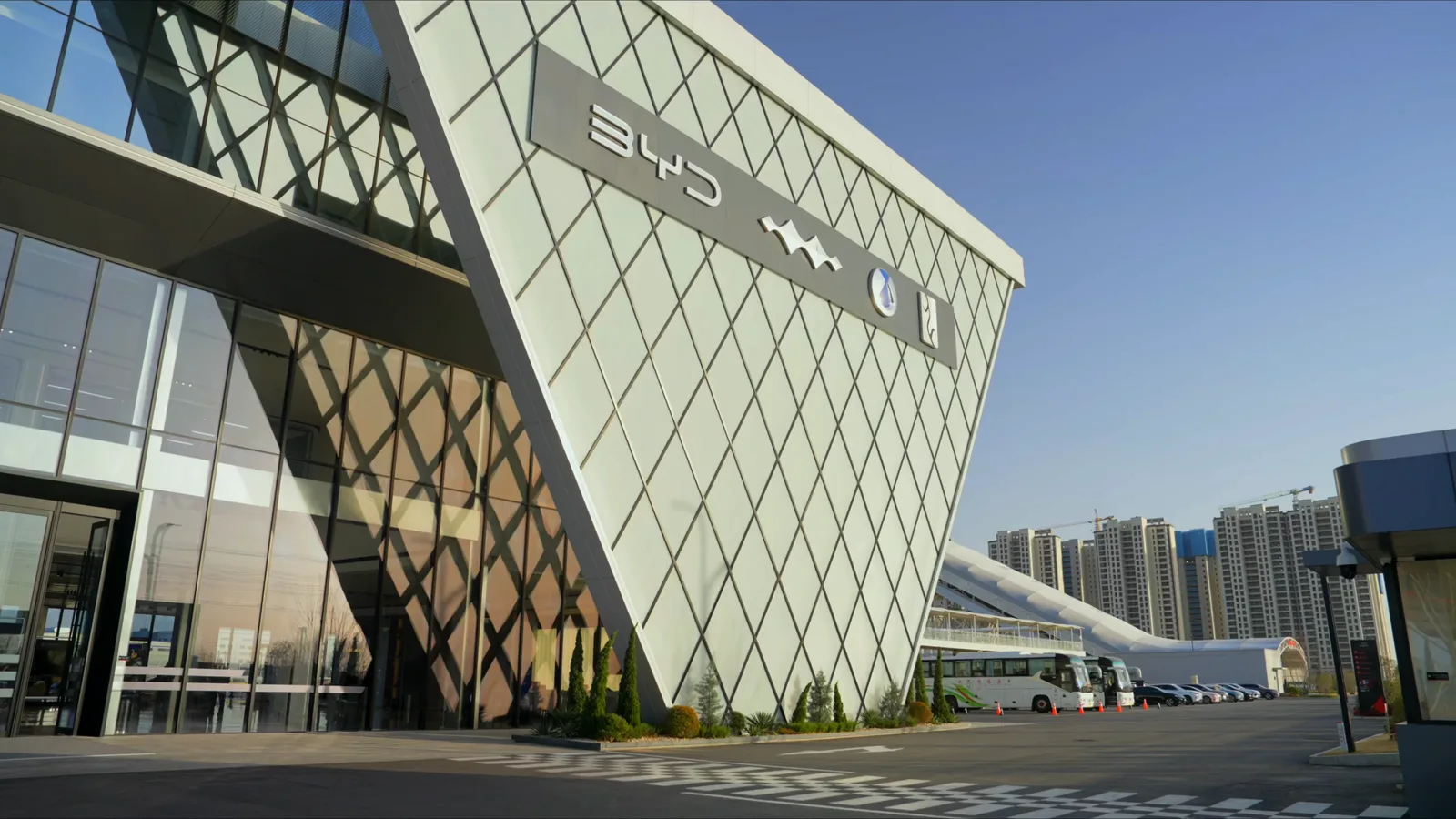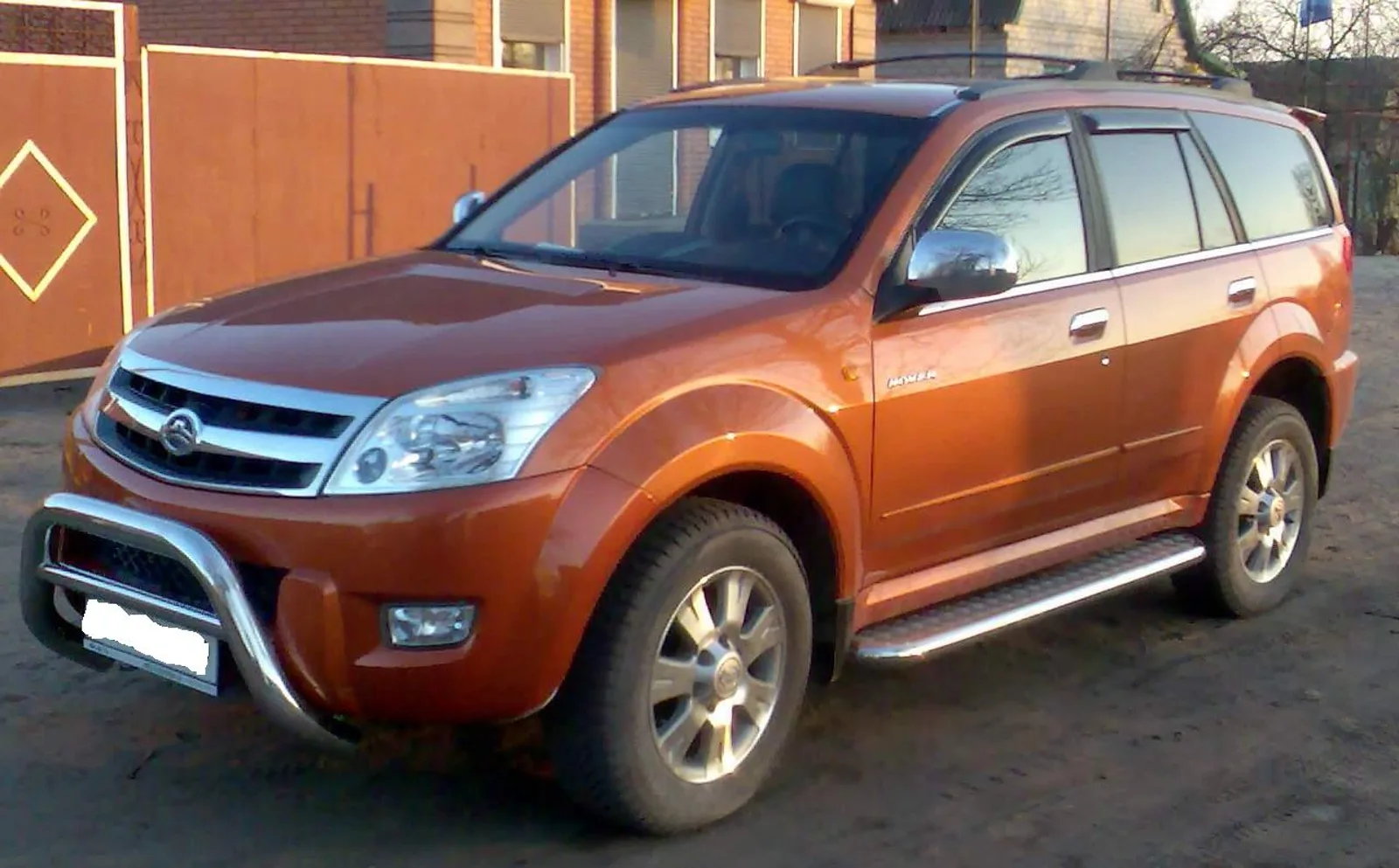
A 1976 Hebei repair workshop that grew into Haval, Wey, Ora and Tank, with plants in China, Thailand, Brazil and Russia.
GWM, formerly Great Wall Motor, is a Chinese manufacturer based in Baoding, Hebei. Founded from a repair workshop, it is best known for Haval SUVs and now also sells Wey, Ora and Tank models, along with pickups. It sold 1.23 million vehicles worldwide in 2024.
GWM, known until 2020 as Great Wall Motor, is a Chinese carmaker based in Baoding, Hebei. It grew out of a 1976 repair workshop for farm vehicles and now sells SUVs, pickups, premium crossovers, electric cars and off-road models. In 2024 the group sold 1.23 million vehicles worldwide.
Its brand family covers Haval, Wey, Ora and Tank, with pickups sold under the GWM name and touring motorcycles from Souo. The Haval H6 crossover did more than any other single model to lift the business during the 2010s.
Where did Great Wall Motor begin?
Great Wall Motor grew from a repair workshop in Baoding, Hebei, founded in 1976 by Wei Deliang. By 1984 the business was turning out its own small trucks and a large SUV, both derived from the Beijing BJ212, and Wei Deliang renamed it Great Wall Industry Company.
Wei Deliang died in a car accident in 1989. The cooperative then reverted to local community ownership, and the township council went looking for a new director to run a business that was short of skilled technicians and carrying some debts.
Wei Jianjun, Wei Deliang's nephew, applied for the job at the age of 26 because it gave him a chance to pursue his interest in cars. He had been working in his father's metal construction business, and he left it when he was appointed director in July 1990 for a five-year term.
From a Hebei repair workshop to a family of SUV, electric and off-road brands, built on the success of the Haval H6.
How did Wei Jianjun turn the company around?
Wei Jianjun began by designing passenger cars and, working with his team, learnt automotive engineering from scratch. By 1993 the company was producing cars adapted from the Nissan Cedric and the Toyota Crown, which carried the labels CC1020 and CC1020S. Every early model taught the team something new about building a car.
New national rules forced the company to stop making sedans by the end of 1994. Wei Jianjun turned to pickups instead, using the Toyota Hilux as the basis for a new model. Launched in 1996, the Great Wall Deer was priced competitively and had a good reputation for quality, and its success made the company China's leading pickup producer.
The first pickups were exported to the Middle East in October 1997, which marked the start of the group's export work.
What changed after the 1998 privatisation?
The 1998 privatisation produced a new holding company, Great Wall Motor Group Co. Ltd., and gave Wei Jianjun a 25% stake. Within three years the Wei family had raised its stake to 56%, while Nandayuan Township kept the remainder. The company widened its pickup range with the Sailor and SoCool and added SUVs such as the Safe, Sing and Pegasus.
A supply shock in 1999 pushed the company towards making its own engines. Its sole engine supplier had teamed up with the rival Brilliance Auto, so Wei Jianjun set up the Great Wall Internal Combustion Engine Company, which he controlled through a 51% stake. Over the following years he assembled a group of holding companies to make automotive parts.
Why did the Haval H6 change the business?
The Haval H6 crossover, shown at the 2010 Guangzhou Auto Show, was the breakthrough. It was not a direct copy of a rival's model, and its roomy cabin and solid construction appealed to Chinese middle-class families, particularly in cities and along the coast.
The H6 led China's SUV segment for 103 consecutive months, roughly eight years. Net profit rose sevenfold in five years, and by 2016 the company was producing more than one million cars a year for the first time. Haval had been spun off as a standalone SUV-only brand in March 2013, and sedans and hatchbacks were gradually phased out.
By 2024 more than 4 million H6 vehicles had been sold worldwide. By 2018 there were at least ten H6 derivatives, with other Haval models placed both above and below the original in the range.
Which brands does GWM sell today?
GWM sells through a group of brands, each with a defined role. Haval makes SUVs, Wey takes the premium crossovers, Ora covers electric cars, Tank handles luxury off-road vehicles, and the GWM badge is used for pickups. Since November 2023 the group has presented them under the One GWM strategy for export markets.
| Brand | Role | Launched or changed |
|---|---|---|
| Haval | SUVs | Standalone brand from March 2013 |
| Wey | Premium crossovers and SUVs | Launched April 2017 |
| Ora | Electric cars | Launched August 2018 |
| Tank | Luxury off-road vehicles | Independent from March 2021 |
| GWM | Pickup trucks and the master brand | Core brand, later repositioned towards pick-ups |
| Souo | Touring motorcycles | Established 2024 |
| Confidence | High-end luxury | Planned for 2026 |
Two smaller names sit alongside them. Souo is a motorcycle brand, and Confidence is a planned high-end luxury label for 2026. A further electric marque, Sar, was founded in 2021 but cancelled in March 2023 without selling a single vehicle.
Why were Tank and Ora created?
Tank began as a sub-brand inside Wey and was spun off in March 2021 because its styling and brand proposition differed too much. Ora was launched in August 2018 as the electric marque, and the name stands for open, reliable and alternative.
The first car, the Ora iQ, met with only modest results and was aimed at female buyers. The Ora Black Cat, first known as a different model name, went on to dominate small electric car sales. The name Ora also pays tribute to the mathematician Leonhard Euler.
Tank vehicles are body-on-frame SUVs built on the Tank platform. The group's own offroad tiering places the Wey Lanshan as an urban SUV, the Haval Big Dog as a general off-roader and the Tank 500 Hi4-T as a strong off-roader.
Where does GWM build its cars?
GWM runs ten full-process plants in China and three overseas factories in Thailand, Brazil and Russia. Its primary base is in Baoding, and the Taizhou plant in Jiangsu became the group's eighth vehicle assembly facility in China when it opened in November 2020.
The Taizhou site cost 8 billion yuan (about $1.22 billion) and has annual capacity of 100,000 vehicles. Its first product was the Ora Good Cat. The group also builds cars through third-party factories, assembling models from knock-down kits in several markets, including Pakistan and Ecuador.
Does GWM do its own engineering?
Yes, although early component design leaned heavily on foreign technical help. R&D started in 1998, and a technical centre in Baoding began construction in 2010. Engineering offices later followed in Yokohama, Bangalore and Munich, and the Munich office was tied to the BMW partnership.
Named suppliers include Autoliv, Delphi Automotive, BorgWarner, Robert Bosch, Brose, Ricardo, TRW Automotive and Valeo, covering power units, gearboxes, locks and airbags. As of 2009 a few models carried Mitsubishi engines and Siemens electronics, both made in China.
The Munich office opened in 2021 and was set up to hire up to 300 people in design and engineering. Its work covers vehicle integration, component development, electric power systems, smart driving and connected-vehicle services.
Why did GWM close its European office?
GWM opened a Munich headquarters in November 2021 to expand sales in Europe under the Wey and Ora brands. In May 2024 it announced that the office would close by 31 August 2024 because sales in the region were low. European operations would then be controlled directly from China.
Europe was never a large market for the group. It sold 6,300 vehicles there in 2023, around 2% of its overseas sales. Its export story began in 2006, when it offered small vans and sent 500 Haval CUVs to Italy in September 2006, the first large shipment of cars from a privately owned Chinese company to Europe.
GWM also assembled cars in Bulgaria. Working with Litex Motors, it opened a plant at Bahovitsa, near Lovech, in February 2012, with capacity for 2,000 cars a year from kits. Its first product there was the Voleex C10, and later output added the Hover 6 SUV and the Steed 5 pick-up. By mid-2016 the company had 14 dealerships in 12 Bulgarian cities.
How did Russia change GWM's position?
The Tula plant began work in June 2019, building Haval F7 and H9 vehicles. After global manufacturers withdrew from Russia following its invasion of Ukraine, GWM's sales rose sharply, and in the first nine months of 2023 it sold over 84,500 vehicles there.
Haval accounted for most of that volume, with 73,600 cars, including 36,400 locally assembled Haval Jolion units. About 40% of the group's Russian unit sales were imports, while the remaining 60% came from vehicles assembled locally in Tula.
Because of this continued business, Ukraine's National Agency on Corruption Prevention lists GWM among International Sponsors of War. The company's Russian expansion therefore remains a sensitive part of its international story.
Did GWM ever enter India?
GWM came close, but the plan never got off the ground. In January 2020 it agreed to buy one of two General Motors India plants at Talegaon, Maharashtra, and proposed a US$1 billion investment to start making cars in 2021. In July 2022 the company cancelled the plan after regulatory approvals failed.
The cancellation was a result of the Indian government's stance on Chinese investment, which was taking shape against the background of the Sino-Indian border dispute. The episode shows how political conditions can shape an export strategy as much as product plans do.
What is GWM's Brazil plant?
GWM started operations in Brazil on 18 August 2021 by buying a former Mercedes-Benz plant in Iracemapolis, Sao Paulo. The site was designed for 100,000 vehicles a year and was expected to create nearly 2,000 local jobs, supplying Brazil and the rest of South America.
Details were presented on 27 January 2022, with a planned R$10 billion investment and ten models, most of them hybrid SUVs and pickups. Production at Iracemapolis was scheduled to begin in July 2025.
How has GWM expanded in Southeast Asia?
GWM first planned a Thai factory in 2013 with an investment of $340 million, but scrapped the idea in early 2014. The plan became real in 2020, when General Motors agreed to sell its Rayong plant to GWM, with production starting in the first quarter of 2021.
The Rayong plant has capacity of 80,000 units a year. In January 2024 it began building the Ora Good Cat, its first electric vehicle. The group entered Malaysia in July 2022, with sales starting in November that year, followed by the Philippines in April 2023 and Indonesia in August 2023.
In Malaysia GWM introduced its first pickup, the Cannon Ultra, in May 2023. In Indonesia it sold hybrid and electric Haval, Tank and Ora models from March 2024, through a joint venture distributor set up with Inchcape and Indomobil.
How has GWM fared in Australia?
Great Wall vehicles reached Australia in 2009 through an independent distributor, Ateco. A factory-backed distribution operation followed in May 2016, when the Haval brand launched there, and that move gave the company direct control over how its cars were sold. By October 2021 Australia had become GWM's largest export market.
The early years brought a problem. A 2012 recall in Australia reached close to 25,000 vehicles from Chery and Great Wall after asbestos was discovered in gaskets for the engine and exhaust, while the consumer watchdog found that newly imported stock was unaffected.
In 2021 GWM Haval sold 18,384 units in Australia, placing it 14th overall and ahead of Honda. As of 2023 the Australian range included SUVs, pickup trucks and electric vehicles.
What happened at the Dakar Rally?
Great Wall raced the Dakar Rally between 2010 and 2014. Its first entry, car number 389, was a modified Haval H3 that finished 33rd. The team's best results came in 2012 and 2013, when it placed sixth in each event.
The following year the team finished 22nd as car number 373. In 2014 it competed with the new Haval H8 and finished eighth. From 2015 the company stopped entering the event but kept racing in domestic rallies.
What is the GF supercar?
GF, short for Great Faith, is a V8 supercar that Great Wall announced at Auto China 2026. Its planned 4.0-litre twin-turbo V8 is meant to make it China's first Group GT3 model, placing it in a class with the Ferrari SF90 Stradale and Toyota GR GT.
Former McLaren Automotive chief engineer Adam Thomson is overseeing the development. The project marks a sharp change of direction for a group known for SUVs and pickups, and the car is still a plan rather than a product on sale.
Has GWM faced copying accusations?
Yes. Nissan considered a lawsuit in 2003 over the Sing SUV, which it said copied the Paladin. Fiat's claim over the Peri succeeded in a 2008 Turin court, but a Chinese court in Shijiazhuang rejected a copyright case, saying buyers would not be confused.
The group defended its early range as a way of catching up with international rivals. Several models mirrored foreign designs: the Florid resembled the Toyota ist, the Sailor echoed the Nissan Frontier, the Coolbear closely mirrored the original Scion xB, and the original Hover looked like the Isuzu Axiom. In Italy the Peri was barred from sale.
What is the Guiyuan platform?
Guiyuan is GWM's platform, launched in January 2026 at Baoding. It follows a one vehicle, multiple powertrains approach that can take a plug-in hybrid, a conventional hybrid, a battery electric unit, a fuel cell or a combustion engine. The idea is that one design can be built with whichever drive system a market needs.
The platform combines the Coffee EEA 4.0 electrical backbone with an AI operating system, a dual VLA large model and a bionic motion control system. Coffee Pilot Ultra belongs to the same software family, which also includes the Coffee AI and Coffee OS names.
How did the BMW joint venture work?
GWM and BMW Group set up Spotlight Automotive in November 2019 to develop and build battery electric Mini cars in China. The joint venture built a Zhangjiagang plant in Jiangsu between 2020 and 2022, and the first Mini Cooper SE (J01) left the line on 14 October 2023.
The two companies had signed their first agreement in 2018. The Munich office was also used to provide services to BMW's R&D, sales and management teams, so the relationship reached well beyond the factory floor.
Who leads Great Wall Motor?
Wei Jianjun has led the business since his appointment as director in July 1990 and remains chairman. The group's headquarters is still in Baoding, Hebei, where the company began. Wang Fengying was chief executive from 2003 to 2022, and Mu Feng has held the post since 2022.
Before taking over Great Wall, he had co-founded Taihang Dongwei Automotive Suspension with his father in 1989, a firm that designed vehicle suspension systems.