Great Wall's compact crossover, launched at the 2011 Shanghai Auto Show, grew into hybrid, plug-in and AWD versions sold in many markets.
This Great Wall compact crossover, launched at the 2011 Shanghai Auto Show, came with front or four-wheel drive. It led China's SUV segment for years, grew into a family of hybrid, plug-in and AWD models, and remains one of the brand's most important vehicles.
Sold since 2011, the Great Wall crossover known as the H6 grew through three generations and into hybrid and plug-in variants. It is the best-selling vehicle the company has made, and it has been exported to many markets across Asia, Europe, Oceania and Mexico.
What is the Haval H6?
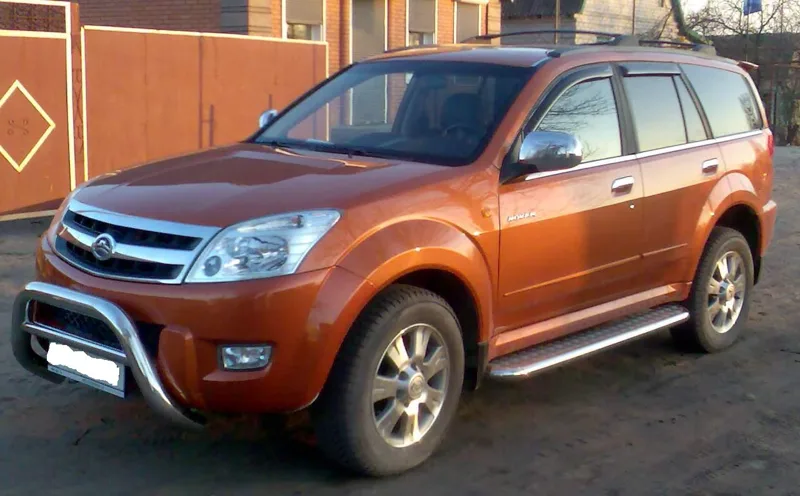
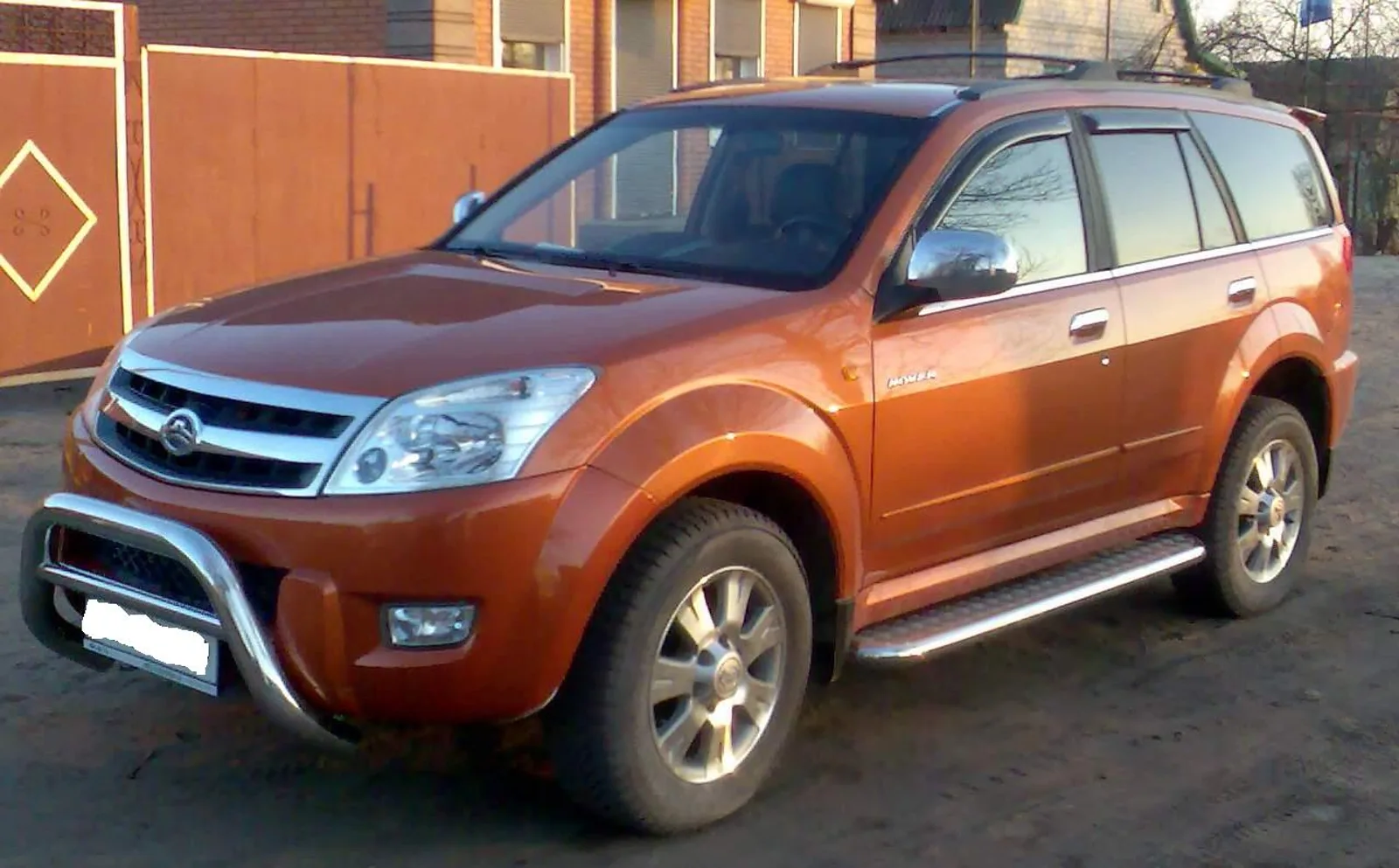
The Haval H6 is a compact crossover SUV produced by Great Wall Motor under the Haval marque since 2011, when it was introduced at the Shanghai Auto Show. It was offered with both front-wheel drive and four-wheel drive, and it succeeded the Great Wall Pegasus in the company's range.
The car began life as the Great Wall Haval H6 before the name moved to the new Haval brand, with a redesign along the way. Its long run made it the company's most important model in China.
As of 2024 Great Wall had sold more than four million H6 models globally, making it the all-time best-selling GWM vehicle.
A Great Wall crossover that led China's SUV segment for eight years and grew into a hybrid and plug-in family.
Where did the first-generation H6 come from?
The first-generation H6 was launched at the 2011 Shanghai Auto Show, and it succeeded the Great Wall Pegasus. Mass production began at the new Great Wall plant in Tianjin in February 2011.
Assembly also took place from knock-down kits at the Litex Motors factory in Bahovitsa, Bulgaria. Those cars were exported to other European Union markets, which gave the H6 a foothold in Europe early on.
In November 2015 the one millionth H6 rolled off the Tianjin line, roughly four years and three months after launch.
What was in the first-generation H6?
Under the bonnet the first-generation car offered a 1.5-litre turbo with 150 horsepower (112 kW; 152 PS), alongside a 1.3-litre turbo rated at 138 horsepower (103 kW; 140 PS). Turbocharged petrol and common rail diesel engines were offered, and the emissions met the Euro V standard.
The top trim included airbags, a parking sensor and reversing camera setup, a 7-inch touch screen with a DVD multimedia system, and 17-inch aluminium wheels. Buyers could also specify a 10-way adjustable driver's seat, heated front seats, leather trim, a power sunroof and automatic headlights.
The chassis used MacPherson strut independent front suspension, with independent rear suspension and torsion bar springs. Four-wheel drive came from a BorgWarner system, and the car used traction control from Bosch and a Honeywell turbocharger.
How did the first-generation H6 do in reviews and tests?
China-NCAP awarded the H6 five stars out of five in April 2012. The tests covered a full-wrap frontal impact at 50 km/h (31 mph), an offset frontal impact at 56 km/h (35 mph) and a side impact at 50 km/h (31 mph).
The Italian magazine Al Volante praised the comfortable and spacious interior, the generous equipment and the low price compared with European, Korean and Japanese rivals. It criticised the gearbox, the weak diesel at low revs, the rear visibility and the rigid plastic dashboard.
The luggage compartment was another strong point. Load space grew from 28.5 cu ft (808 litres) to 71 cu ft (2,010 litres) with the rear seats folded, which made it the biggest in its class.
How did the H6 lead the market in China?
Since its introduction the H6 led the SUV segment in China for 103 consecutive months, or around eight years. December 2016 brought a single-month record of 80,495 sales in China, a mark that still stands.
The H6 Coupe followed on from the Haval Coupe C concept shown at the 2014 Beijing Auto Show. Unveiled at the 2015 Shanghai Auto Show, it was the production version and sat slightly higher in the market despite smaller dimensions than the regular car.
What changed in the second-generation H6?
The second generation arrived in 2017 on the same platform as its predecessor. The first-generation low-end versions continued as a budget model below it, and the second generation shared its underpinnings with the WEY VV5.
At launch it came in two variants, the Blue Label and the Red Label, distinguished mostly by the colour of the Haval badge and by different grilles, bumpers and lights. The duo-label strategy was dropped in 2020 with a black label, while the Red Label styling remained the one still on sale.
Power came from a 2.0-litre turbo borrowed from the WEY 02, producing 197 horsepower (147 kW; 200 PS). A restyled Red Label coupe arrived in 2018, and a China-Chic special edition in March 2021 reached 100 km/h in 7.6 seconds.
What was the third-generation H6?
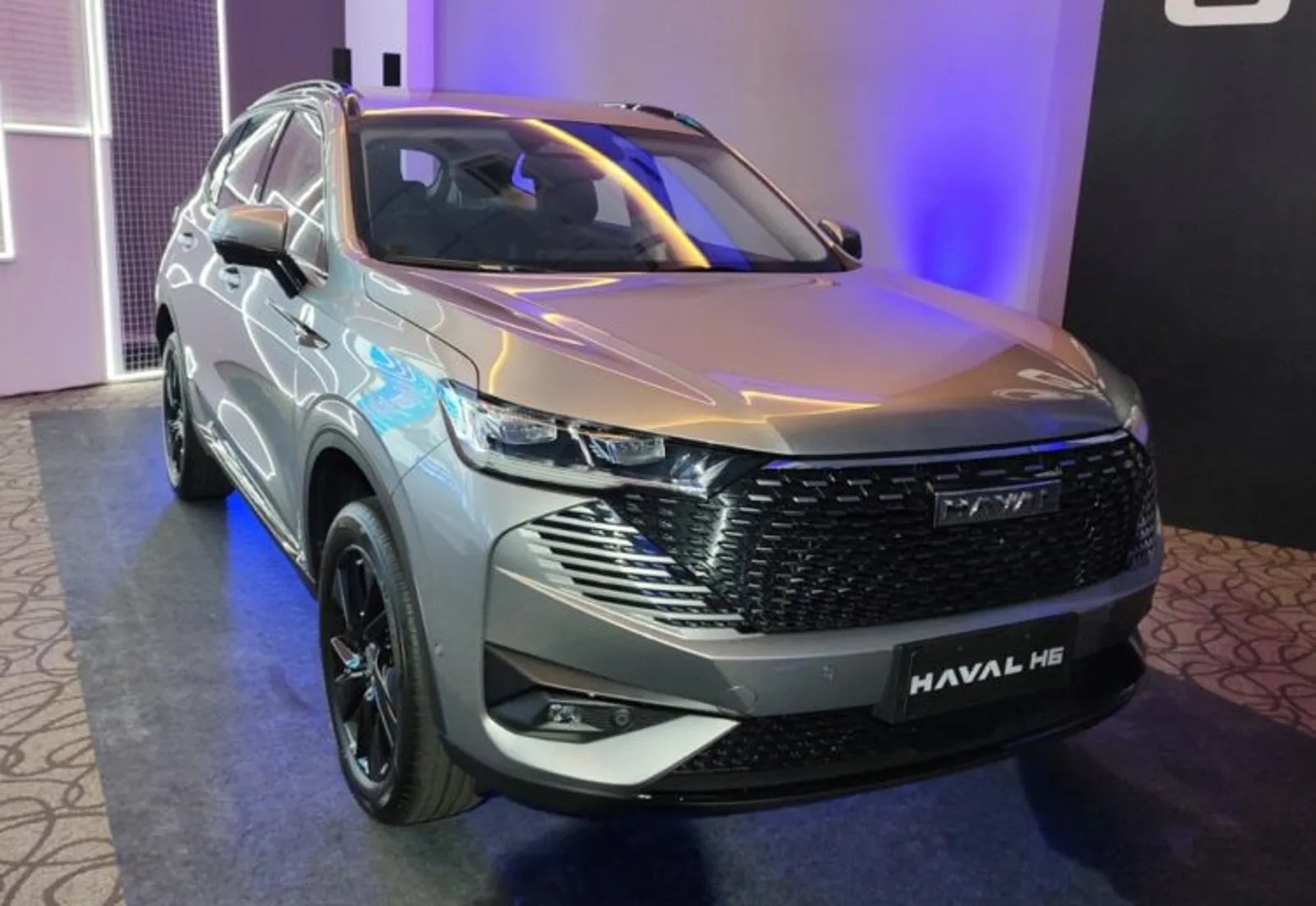
The third-generation H6 debuted at the Chengdu Motor Show in 2020, and Haval opened pre-sales in July 2020. It was the first Haval model built on the Lemon platform.
The 1.5-litre turbo was an upgraded version of the current engine, with 169 hp (126 kW; 171 PS) and 285 N-m (210 lb-ft) of torque. The new 2.0-litre turbo from GWM reached 38% thermal efficiency and delivered 224 hp (167 kW; 227 PS), with 385 N-m (284 lb-ft) of torque.
Both engines drove through a 9-speed dual-clutch transmission.
What variants came with the third generation?
The third generation spawned several variants, from special editions to new body styles and drivetrains. Each one tweaked the design or added a new powertrain for a particular market.
A 5G Edition shown at the 2021 Shanghai Auto Show used 5G internet from China Mobile, with facial recognition and over-the-air updates. The Supreme+ Edition followed at the 2021 Chengdu Auto Show as a 10-year anniversary model.
The H6S fastback was unveiled in August 2021, and the H6 Vance was offered in Brunei in June 2022 with custom bumpers, skirts and a rear spoiler.
The hybrid H6 HEV debuted at the 2021 Bangkok International Motor Show. It used a 1.5-litre turbo GW4B15 producing 123 kW (165 hp; 167 PS) and 285 N-m, plus a 130 kW (174 hp; 177 PS) electric motor and a 7-speed DCT. Together they gave a combined 243 PS (179 kW; 240 hp).
A petrol plug-in hybrid, the PHEV, debuted at the 2021 Motor Expo in Thailand in December 2021 and was officially launched in China on 28 September 2022.
What did the 2024 facelift and the H6L bring?
A reworked facelift arrived in China in April 2024 after earlier images in 2023 suggested a version that never reached the market. The front was redone with vertical LED daytime running lights, and the rear light bar gave way to conventional taillights, and the overall length grew to 4703 mm, while width, height and wheelbase stayed the same.
Inside, the facelift had a redesigned centre console, a 50W wireless charger, memory seats and a column-style drive selector. A 14.6-inch infotainment screen ran Coffee OS 3.0, and higher trims offered a redesigned two-spoke steering wheel.
The facelift PHEV launched first in Lahore, Pakistan on 16 August 2025. Its intelligent AWD variant added a rear motor using GWM's Hi-4 drivetrain, bringing combined output to 268 kW (360 bhp) and 760 Nm, and it claimed a combined range of more than 1,000 km. The Hi-4 AWD accelerates from 0 to 100 km/h in 4.8 seconds using launch control.
The longer H6L was introduced in November 2025 and shares most of its exterior with the Xiaolong Max. Its 2.0-litre turbo produces 175 kW (235 hp; 238 PS) and 385 N-m, with a 9-speed dual-clutch transmission and 0 to 100 km/h in 7.2 seconds.
How was the H6 sold outside China?
The H6 reached Australia on 9 April 2021 with three trims, Premium, Lux and Ultra, all using a 2.0-litre turbo petrol engine. All-wheel drive was offered only on the top trim, and the HEV powertrain was added to Ultra in April 2022.
The facelifted Australian H6 arrived on 1 July 2025. The Premium trim was dropped and a plug-in hybrid option went onto the Ultra, making it the first plug-in hybrid from Great Wall sold in Australia. The H6 GT followed on 6 July 2022 with Lux and Ultra trims.
South Africa received the H6 on 7 June 2021 with Premium, Luxury and Super Luxury trims. The facelift came on 19 June 2025, and a plug-in hybrid for the Ultra Luxury trim was added in March 2026.
Pakistan's Sazgar began selling the H6 in 2021 in a joint venture with Great Wall, first as an imported vehicle and then assembled locally from August 2022. The hybrid became the first hybrid electric vehicle assembled in Pakistan in November 2022.
Other launches followed in Thailand on 28 June 2021, Indonesia from 21 March 2024, Malaysia on 9 October 2024, the Philippines on 11 April 2023, Vietnam on 2 August 2023 and Mexico on 8 September 2023. Each launch brought local trims and drivetrains, so the same H6 name covers quite different cars from one market to the next.
Did the H6 HEV set a range record?
Yes. The H6 HEV was officially listed in the ASEAN Records for the longest range on a single tank of fuel. Thirty-eight H6 HEV owners crossed the 1,000 km (620 miles) mark without refuelling, and the longest verified distance was 1,242 km (772 miles).
According to GWM Malaysia, the feat made the H6 the first hybrid SUV in the ASEAN region to reach that milestone through real-world driving. The company presented it as proof that the hybrid could cover everyday distances without a fuel stop.
What are the Haval H6 specifications?
| Specification | Detail |
|---|---|
| Class | Compact crossover SUV, front-wheel or four-wheel drive |
| First generation engines | 1.5-litre turbo, 150 hp (112 kW; 152 PS); 1.3-litre turbo, 138 hp (103 kW; 140 PS) |
| Second generation engine | 2.0-litre turbo, 197 hp (147 kW; 200 PS) |
| Third generation, 1.5-litre | 169 hp (126 kW; 171 PS), 285 N-m (210 lb-ft) |
| Third generation, 2.0-litre | 224 hp (167 kW; 227 PS), 385 N-m (284 lb-ft), 38% thermal efficiency |
| Hybrid system | 243 PS (179 kW; 240 hp) combined, 1.5-litre GW4B15 with 130 kW electric motor |
| Transmission | 9-speed dual-clutch; 7-speed DCT in the hybrid |
| Cargo capacity | 808 litres (28.5 cu ft) minimum; 2,010 litres (71 cu ft) with seats folded |
| Facelift length | 4703 mm, same width, height and wheelbase |
| H6L 0-100 km/h | 7.2 seconds, 175 kW (235 hp; 238 PS) |
| Hi-4 AWD PHEV | 268 kW (360 bhp), 760 Nm, 19.09 kWh LFP battery |