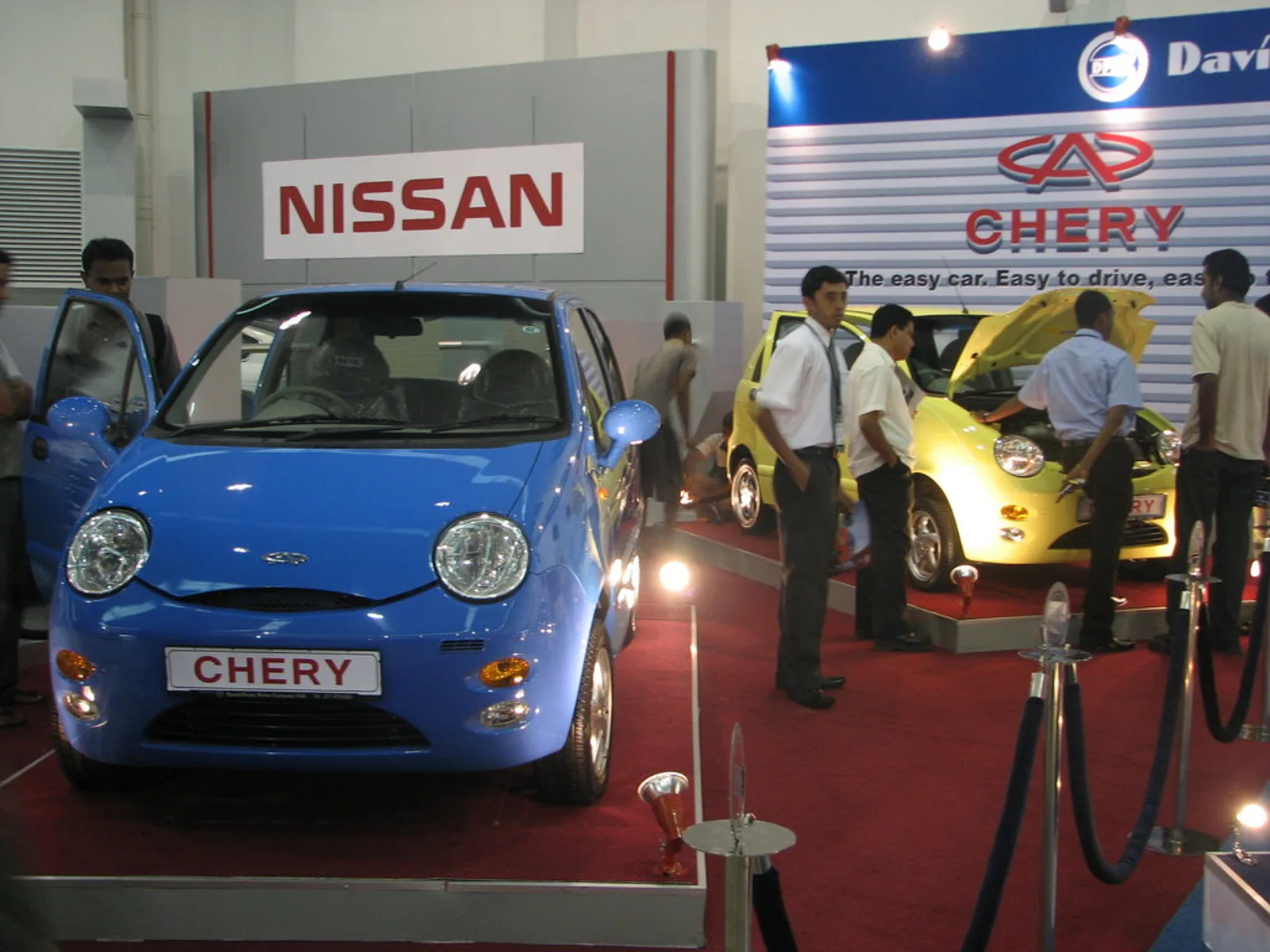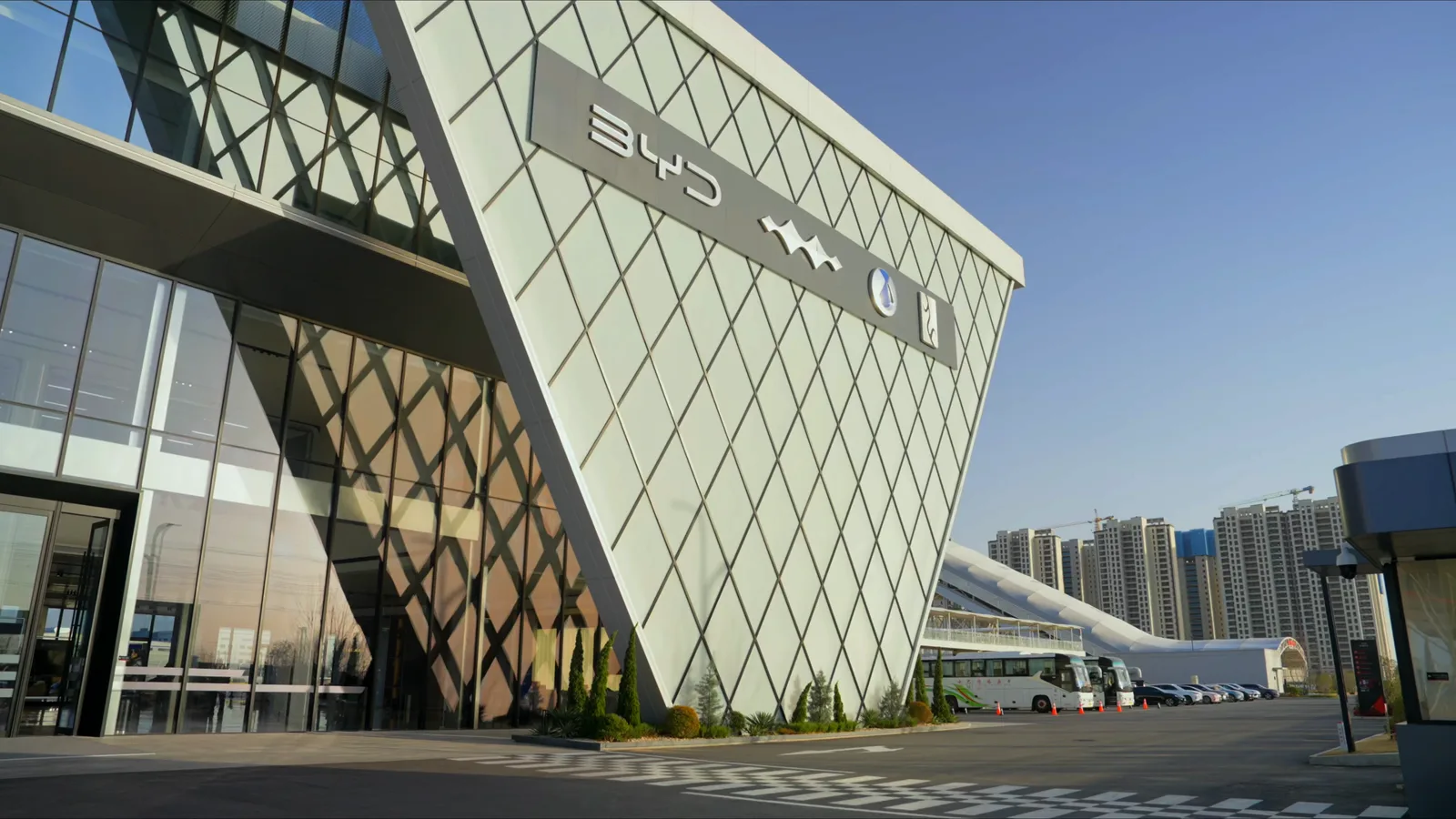
MG's Australian sales quadrupled between 2020 and 2023, and four Chinese groups with very different owners now compete for the same buyers.
Four Chinese-owned groups lead the Australian conversation: MG, run by state-owned SAIC; BYD, the car arm of a listed battery maker; Chery, backed by the Anhui and Wuhu governments and private investors; and GWM, listed in Hong Kong and Shanghai. MG's local sales rose fourfold in three years on pricing.
A British badge founded in Oxford in 1924 is now owned by a Chinese state-owned company based in Shanghai, and in Australia its sales quadrupled between 2020 and 2023, a rise credited to attractive pricing. That badge is MG, and it is only one of several Chinese-owned names now sitting on Australian showroom floors.
Which Chinese car brands are sold in Australia?
Four groups stand out. MG sits inside SAIC Motor. BYD began as a battery maker. Chery is owned by regional governments and investors. Great Wall Motor, known as GWM, grew out of a pickup workshop. Each has taken a different route, and the ownership details matter because they differ sharply from one badge to the next.
| Brand | Who owns it | Global sales quoted | Overseas angle |
|---|---|---|---|
| BYD | BYD Company, a publicly listed group | 4,272,145 in 2024 | Nearly 77 percent of 2025 sales came from China |
| MG | SAIC Motor, a Chinese state-owned carmaker | About 840,000 in 2023 | 88 percent sold outside China |
| Chery | Governments of Anhui and Wuhu, employees and private companies | 2,806,393 in 2025 | Exports were 52 percent of 2023 sales |
| GWM | Listed in Hong Kong and Shanghai; chairman Wei Jianjun | 1.23 million in 2024 | Brands include Haval, Wey, Tank, Poer and Ora |
A British-sounding badge, a Chinese state-owned parent and a showroom in Sydney: ownership is the first thing to check.
How did MG climb so fast in Australia?
The MG story begins with a collapse. MG Rover collapsed into administration in 2005, owing more than 1.4 billion pounds. Nanjing Automobile Corporation bought the marque, the Longbridge plant and the tooling that year for 53 million pounds (US$97 million), beating the bigger SAIC Motor to it. SAIC gained control in December 2007 when Nanjing merged into it.
Today MG cars are designed and developed by SAIC and built mainly in China, with additional production in Thailand, India, Indonesia and Taiwan. British assembly at Longbridge ended on 23 September 2016. Since 2019 MG has been the biggest exporter from China among single-brand carmakers, and in 2023 it sold approximately 840,000 vehicles worldwide, with 88 percent of them outside its home market.
What carried it? Growth came from a wider dealer network and a run of new electric models, and the MG4 EV, launched in 2022 as the company's first ground-up electric design, drew wide praise from the press. The MG ZS is the best-known product: 201,874 petrol ZS units left China in 2023, plus 49,418 of the electric version, and cumulative ZS sales reached 999,612 by December 2023. In 2025 Autocar named MG its best manufacturer, citing quality, affordability and new design appeal.
One detail worth knowing before you buy. In most markets outside the UK and Europe, MG cars carry a 'Brit Dynamics' emblem as part of a campaign built around British engineering, styling and driving feel. Design and development, however, now happen mostly in China, and the current-generation HS is a rebadged Chinese-market Roewe RX5.
How did BYD go from batteries to the world's biggest EV maker?
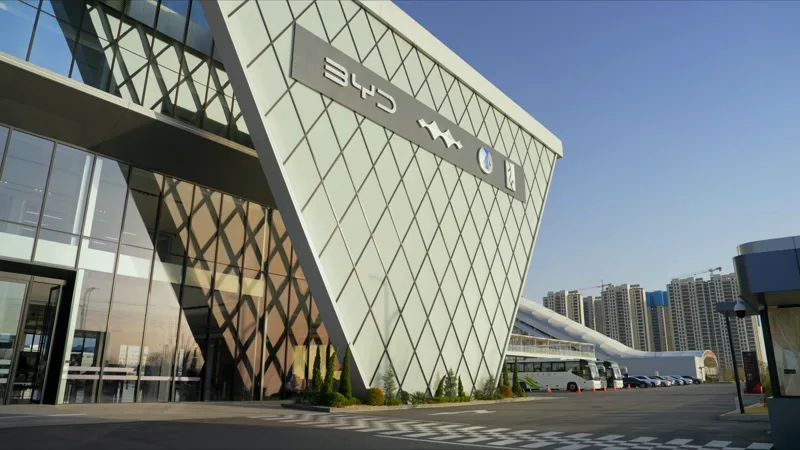
BYD Company was founded in 1995 to make batteries. In January 2003 its founder, Wang Chuanfu, bought a struggling carmaker, Xi'an Qinchuan Automobile, from Norinco, a state-owned defence group, for HK$269 million in return for a 77 percent stake, gaining manufacturing know-how and a production licence that was hard to obtain. BYD's first mass-produced passenger car, the F3, began rolling out on 16 April 2005 at 73,000 yuan (about US$10,000), and it resembled the Toyota Corolla at a lower price. Early growth came from reverse engineering and tight cost control, and the F3 has been called a copycat Corolla; Wang answered that the company used only non-patented technologies.
Electrification came early. BYD launched the F3DM plug-in hybrid in 2008 and the e6 battery electric car in 2009. But for years it leaned on state money. In 2016 it took in roughly US$1 billion of subsidies for new energy vehicles, more than its net profit for the year, and the Rhodium Group puts total state backing from 2015 to 2020 at about US$4.3 billion. When subsidies shrank between 2017 and 2019, profit fell sharply, and in 2019 net profit dropped to 1.6 billion yuan.
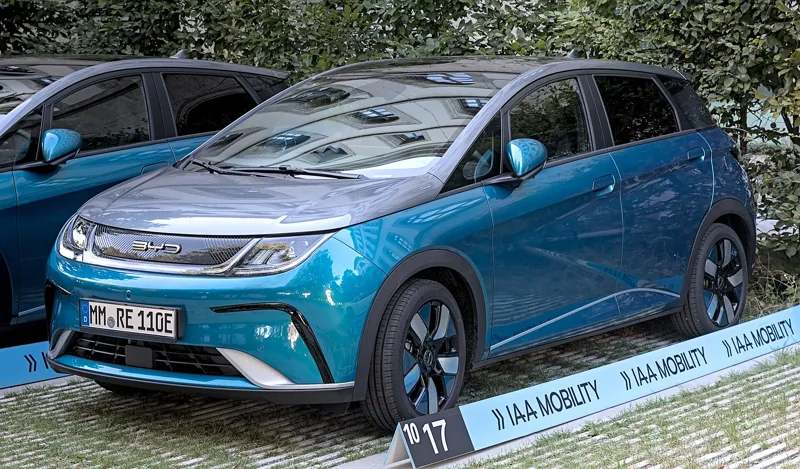
Then the market turned. BYD sold 427,302 vehicles in 2020 and 4,272,145 in 2024, a ten-fold rise, as new energy vehicles went from 5.8 percent of China's vehicle sales in 2020 to 27.5 percent in 2022. The Han sedan, the first car with the Blade battery, went on sale in July 2020. BYD took its cars abroad from 2021, targeting Europe, Southeast Asia, Oceania and the Americas, and in 2022 it stopped making purely petrol and diesel cars.
The company stresses vertical integration. Most components are claimed to be made inside the group, and its battery arm, FinDreams Battery, was the world's second-largest maker of EV batteries behind CATL as of 2024. BYD became China's best-selling car brand in 2023, passing Volkswagen. In 2025 it passed Tesla to become the largest maker of electric cars, and it moved ahead of Ford into sixth place for total car sales. Even so, nearly 77 percent of its 2025 sales came from China.
Who owns Chery, and why is it everywhere?
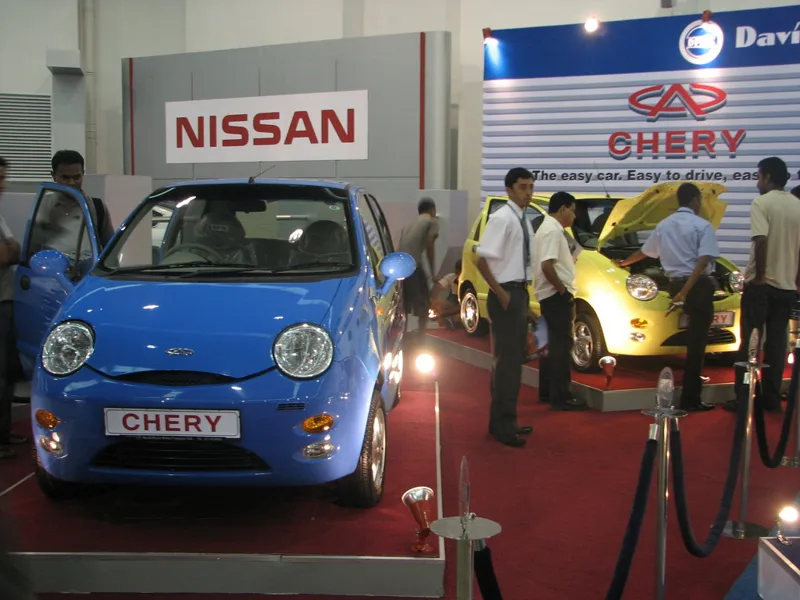
Chery was founded on 8 January 1997 by officials from the city of Wuhu in Anhui province. Its chairman, Yin Tongyue, was appointed technical director in 1996. Until 2025 it was a subsidiary of Chery Holding, owned by the Wuhu city government. Following its Hong Kong listing on 25 September 2025, which raised about US$1.2 billion at HK$30.75 a share and valued the company at nearly US$23 billion, ownership is shared among the governments of Anhui and Wuhu, its employees and several private companies. The 'Chery Group' name used since the listing is a marketing concept rather than a legal entity.
Chery has pushed overseas harder than most rivals. It began exporting in 2001 and has led all Chinese-brand passenger car exporters since 2003. Exports climbed from 269,154 in 2021 to 451,337 in 2022 and 937,148 in 2023, which was 52 percent of its sales. A 2021 plan called Double 50 aimed at 500,000 exports and US$5 billion in export revenue by 2025; the 2023 figure beat the vehicle target by a wide margin. It re-entered Australia in 2023, after briefly selling cars here in the early 2010s.
The group runs a crowded stable. As of 2024 it had nine active brands, among them Exeed for premium cars, Jetour for SUVs, iCar for electric SUVs, Luxeed with Huawei, and Omoda and Jaecoo for export markets.
What is GWM, and where do Haval and Poer fit?
GWM, trading as Great Wall Motor, began as a farm-vehicle repair workshop in Baoding, Hebei, in 1976. Wei Jianjun took over as director in 1990, and the Great Wall Deer pickup of 1996 made the company China's leading pickup producer. It was privatised in 1998 and became the first private Chinese auto manufacturer to list publicly, in Hong Kong on 15 December 2003, followed by a Shanghai listing on 28 September 2011. The group sells under GWM, Haval, Wey, Tank, Poer and Ora, and sold 1.23 million vehicles in 2024.
GWM products were first available in Australia in 2009. The Haval H6, introduced at the 2010 Guangzhou show, changed the company: unlike much of its earlier output, it was not a direct copy of a rival's car. It led China's SUV segment for 103 consecutive months, and by 2024 GWM had sold over 4 million H6 cars worldwide. In November 2023 GWM announced a 'One GWM' strategy that makes GWM a master brand and relegates Haval, Ora and Wey to sub-brands. Rear badges began switching from Haval to GWM in mid-2024, beginning with the 2024 Haval Jolion sold in Australia.
Why are Chinese brands growing so quickly?
Several threads run through all four stories. Price comes first: MG's Australian surge is credited to attractive pricing, and Chery and GWM both built early reputations on undercutting established rivals. Second, exports are central rather than an afterthought, with 88 percent of MG sales and 52 percent of Chery's 2023 sales coming from outside China. Third, battery and component control gives BYD a cost position others struggle to copy.
State support also plays a part, at least for BYD. Heavy reliance on subsidies is documented before 2020, yet the sales surge after 2020 was partly attributed to rising demand for new energy vehicles in China rather than subsidy alone. And several brands built their first products by copying. Chery's Fengyun used an unlicensed copy of a SEAT Toledo bodyshell, and Chery settled a General Motors lawsuit out of court in late 2005. GWM's Peri was banned from sale in Italy after Fiat's complaint, though a Chinese court rejected Fiat's case there.
Are Chinese cars reliable?
The quality record is mixed. Owners complained about quality and durability on Chery's early QQ. BYD dealers withdrew from major Chinese cities in 2010 after rapid expansion, and the company's emphasis on output over quality made matters worse; it then spent three years on quality, dealer management and branding. On the positive side, Chery's A3, styled by Pininfarina, became in 2007 the first Chinese-developed car to earn five stars in China NCAP testing. The Haval H6 won buyers with above-average build quality. In 2025 Autocar praised MG's quality, and Carbuyer named the MG ZS hybrid its best hybrid car.
Behind the headline sales numbers, BYD has also faced criticism over aggressive price reductions, labour issues and environmental concerns.
What stands in the way of these brands?
Growth has not been a straight line. GWM closed its European headquarters in Munich by 31 August 2024 after selling just 6,300 vehicles in Europe in 2023, 2 percent of its overseas sales, and now runs the region from China. It cancelled an Indian investment plan in July 2022 after failing to win regulatory approval. Chery's two attempts to enter the United States, with Visionary Vehicles from 2004 and with HAAH Automotive from 2020, both collapsed. BYD's quick rise left it with dealer troubles in 2010, when it lowered its yearly target from 800,000 vehicles to 600,000 and reached only 517,000.
Dependence on the home market is another limit. BYD took nearly 77 percent of its 2025 sales in China, so its global ambitions rest on a base that is still mostly domestic.
What does this mean for a buyer in Australia?
Check who is behind the badge, because it changes. A Haval may now be badged GWM. A British-sounding MG is SAIC-owned and mostly Chinese-built. Chery may be marketed under 'Chery Group', which is not a legal entity, and has different export brands such as Omoda and Jaecoo. Treat each as a separate company with its own history, track record and ownership.
Check also what is under the bonnet. Chery has made its own ACTECO engines since 2006, after working with the Austrian firm AVL, while as of 2009 some GWM models still used Mitsubishi engines. BYD says it makes most of its components in-house. A brand that builds its own key parts controls cost and quality more directly.
Where this goes next
BYD's founder set a goal in 2008 for the company to become the largest car manufacturer in the world by 2025, a target not yet met on total sales, since BYD sat sixth in 2025 after overtaking Ford. In January 2026 GWM launched its Guiyuan platform, which is built to carry five powertrain types, from plug-in hybrid and hybrid to battery electric, fuel cell and petrol. Chery, newly listed, already runs export brands such as Omoda, Jaecoo, Lepas, Exlantix and Aiqar, and it beat its own Double 50 export target in 2023. MG renewed the MG3, HS and ZS in 2024 and put the Cyberster roadster on sale the same year.