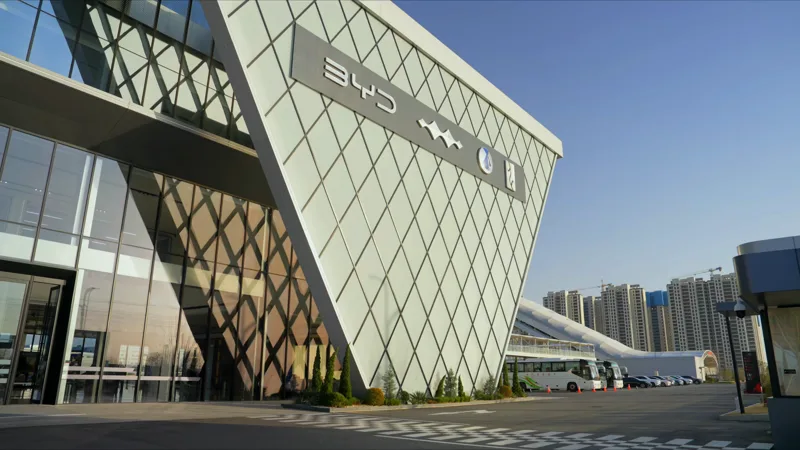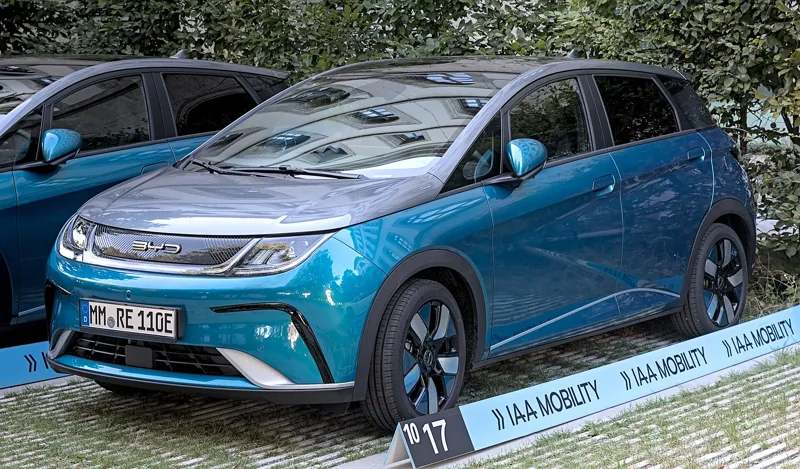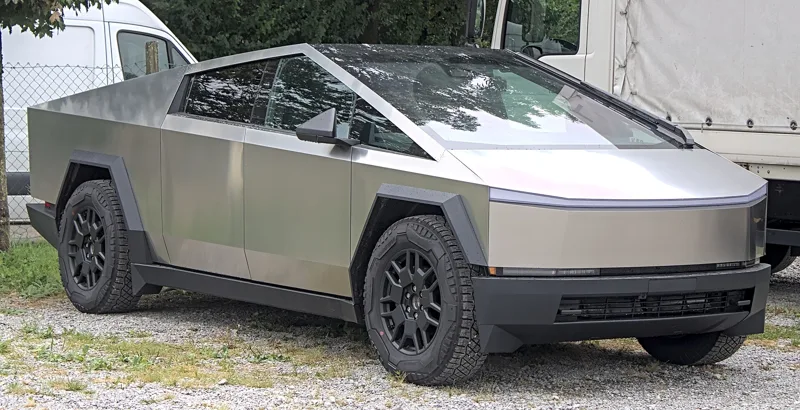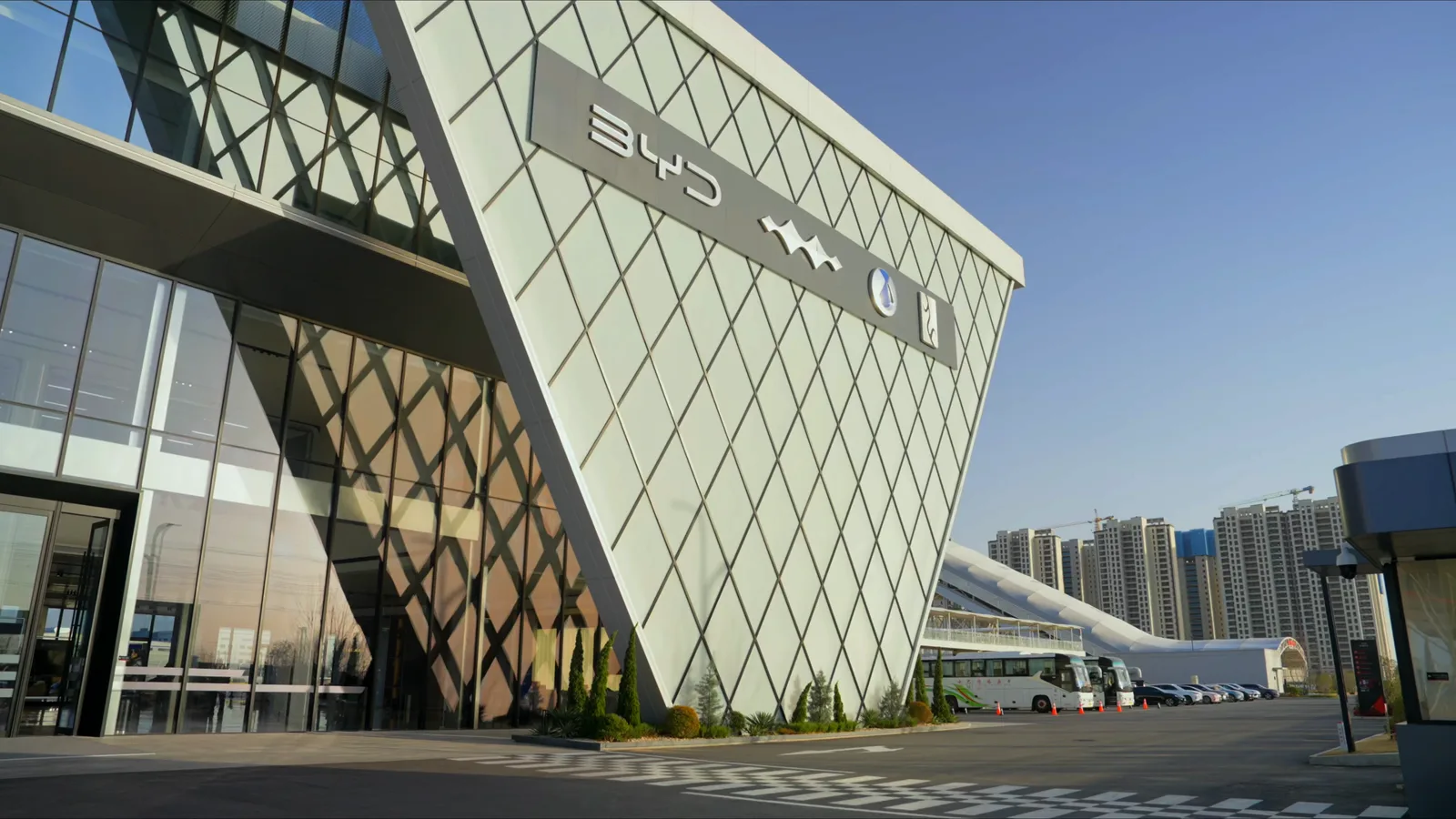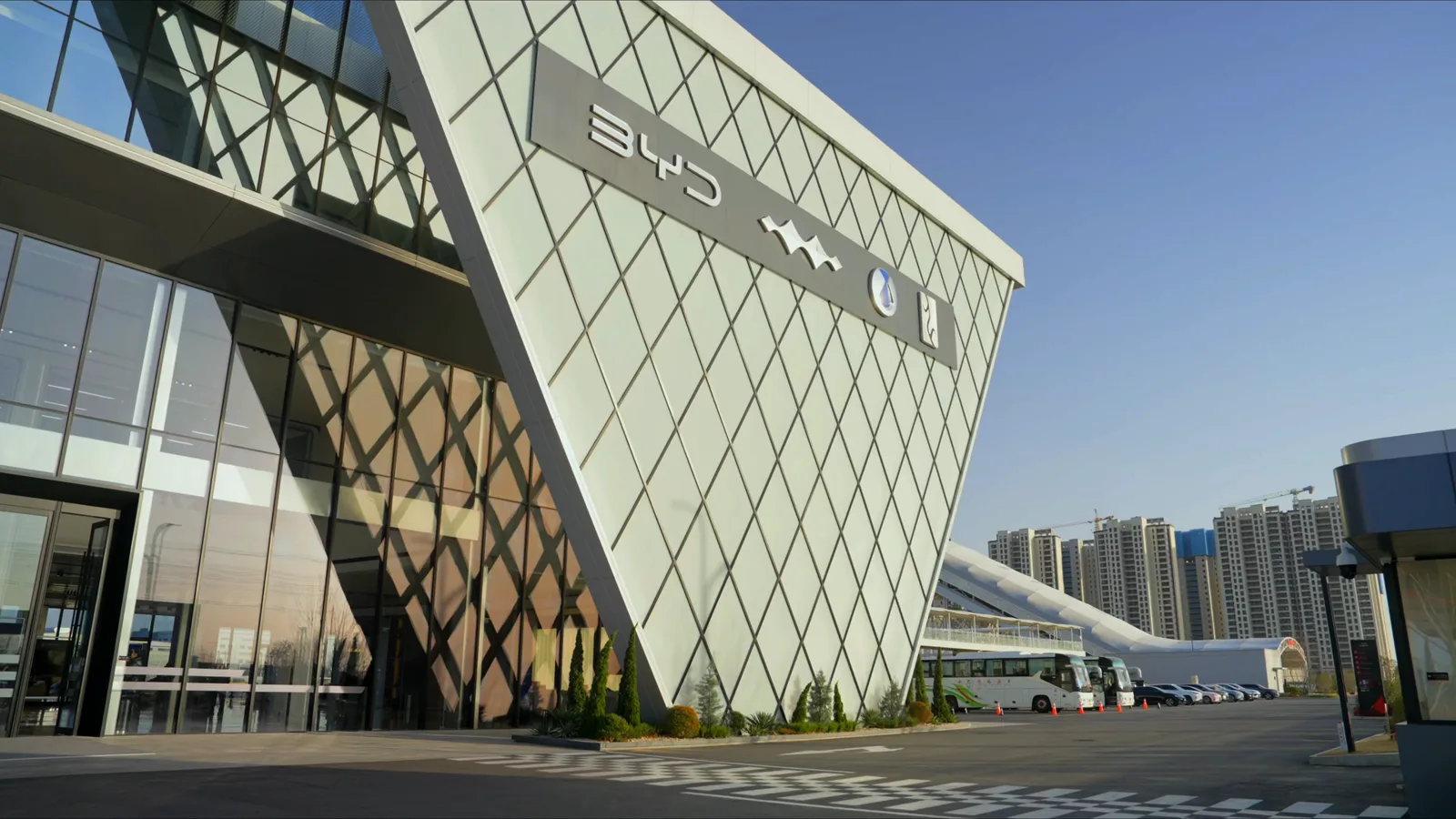
A battery maker that sold 427,302 cars in 2020 and 4,272,145 in 2024 passed Tesla in 2025 to become the biggest EV maker worldwide, but the comparison hides important details.
BYD passed Tesla in 2025 to become the biggest EV maker worldwide, after sales rose ten-fold from 427,302 in 2020 to 4,272,145 in 2024. Its edge is vertical integration, including its own batteries. Its totals include plug-in hybrids, while Tesla sells only battery cars and has led on market value since 2020.
BYD sold 427,302 vehicles in 2020. Four years later it sold 4,272,145, a ten-fold jump, and in 2025 it passed Tesla to become the biggest maker of electric cars worldwide. The company behind those numbers began as a battery maker.
How did a battery maker become a car company?
BYD Company was founded in 1995 to make batteries. In January 2003 its founder, Wang Chuanfu, bought a struggling carmaker, Xi'an Qinchuan Automobile, from Norinco, a state-owned defence group, paying HK$269 million for 77 percent of it. Shareholders were unhappy, because the share offer document had not mentioned the plan. Wang wanted to build battery-powered cars, and the purchase also handed BYD manufacturing know-how and a car production licence that was hard to obtain at the time.
The first BYD-designed car, codenamed 316, was rejected by dealers for its looks and scrapped, which wrote off 100 million yuan of development spending. The next attempt worked. The F3 sedan went into production on 16 April 2005 at 73,000 yuan (about US$10,000). It looked like a Toyota Corolla and cost less, and more than 63,000 sold in its first year. Early growth leaned on reverse engineering and tight cost control, and the F3 has been called a copycat of the Corolla; Wang said BYD used only non-patented technologies.
Electrification came early. The F3DM, shown at the Geneva Motor Show in March 2008, was billed as the first production plug-in hybrid, and the e6 battery car followed in 2009. In 2008 Wang also set two goals: top spot in China by 2015 and the title of biggest carmaker on earth by 2025.
BYD's totals include plug-in hybrids; Tesla sells only battery electric cars. The difference matters when you compare them.
What went wrong before BYD took off?
The road was not smooth. In 2010 dealers withdrew from major Chinese cities after rapid expansion, a narrow model range and internal competition, and BYD's emphasis on output over quality made matters worse. It lowered its production target from 800,000 vehicles to 600,000 and still reached only 517,000. It then spent three years on quality, dealer management and branding.
Subsidies also shaped the company. In 2016 it took in roughly US$1 billion of state money for new energy vehicles, which was more than its net profit that year, and the Rhodium Group puts total state backing from 2015 to 2020 at about US$4.3 billion. When support was cut between 2017 and 2019, profit fell for three years running, to only 1.6 billion yuan in 2019. Wang said the aim in that period was simply to survive.
What changed after 2020?
China's car market shifted towards electric power. New energy vehicles made up 5.8 percent of China's vehicle sales in 2020 and 27.5 percent in 2022, while another measure shows plug-in vehicles rising from 6.3 percent in 2020 to 47.9 percent in 2024. In 2025, 51 percent of vehicle sales in China were electric. China now accounts for more than 70 percent of global electric vehicle production and 67 percent of global sales as of 2024, and it exported more than 2.62 million electric vehicles in 2025.
BYD rode that wave with a product that fitted it. The Han sedan, the first BYD to use the Blade battery, went on sale in July 2020 in plug-in hybrid and battery electric forms. Overseas expansion started in earnest from 2021, aimed mainly at Europe, Southeast Asia, Oceania and the Americas, beginning in Europe with Norway. In 2022 BYD stopped making purely petrol and diesel cars. By 2023 it was China's best-selling car brand, ahead of Volkswagen, which had held that position since China opened its car industry.
What is vertical integration, and why does it matter?
Imagine a baker who also mills the flour, grows the wheat and builds the ovens. That baker is less exposed when flour prices jump, and can tune every step. BYD works the same way. Most components in its cars are claimed to be made inside the group, from the battery and electric motor to the electronic controls.
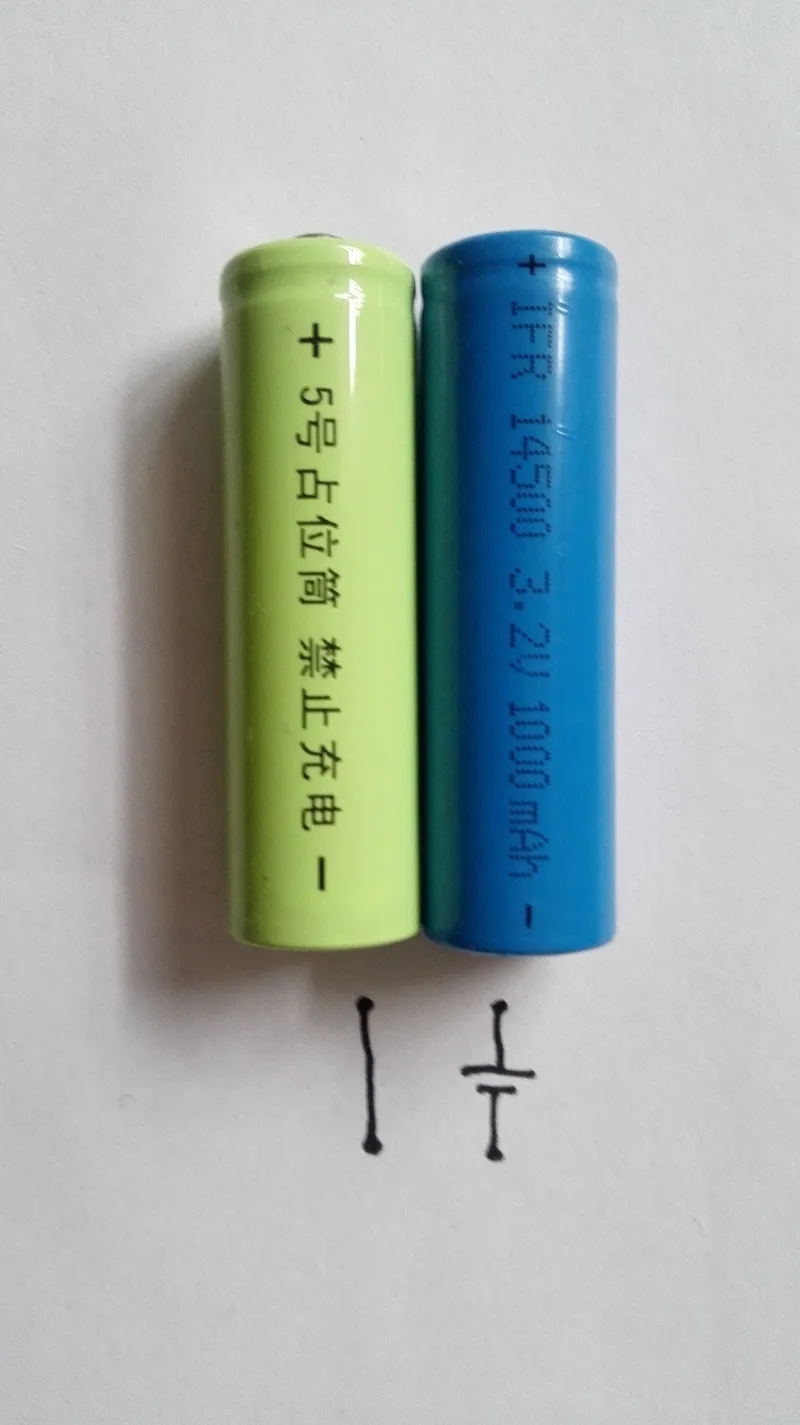
The battery is the part that counts. Batteries make up about one third of the cost of an electric car, so controlling them controls the bill. BYD's battery arm, FinDreams Battery, was the world's second-largest maker of EV batteries as of 2024, behind CATL, and it specialises in lithium iron phosphate (LFP) cells such as the proprietary Blade battery. In 2021 CATL held a 32.6 percent share of EV battery output, while BYD had 8.8 percent.
| Measure | BYD | Tesla |
|---|---|---|
| Origin | Battery maker founded in 1995; car arm created in January 2003 | Incorporated in July 2003 as Tesla Motors |
| What it sells | Battery electric and plug-in hybrid cars, plus buses and trucks | Battery electric cars, plus energy storage and solar products |
| Best-known mass-market models | Qin, Han | Model 3, Model Y |
| Sales figure quoted | 4,272,145 vehicles in 2024 | 17.6 percent of the battery electric market in 2024 |
| Company value | Third most valuable car maker | Most valuable automaker since July 2020 |
| Dependence on home market | Nearly 77 percent of 2025 sales came from China | Gigafactories in Shanghai, Berlin and Texas |
How did Tesla get here, and where is it still ahead?
Martin Eberhard and Marc Tarpenning incorporated Tesla Motors on 1 July 2003. Elon Musk led its first funding round in February 2004 and became chairman. The Roadster arrived in 2008, the Model S in 2012, the Model X in 2015, the Model 3 in 2017 and the Model Y in 2020. The Model 3 drew more than 325,000 paid reservations within a week of its April 2016 announcement, then ran into what the company called production hell, when heavy use of robots slowed output. By the end of 2018 the problems had been solved, and the Model 3 was the best-selling electric car worldwide through 2018 to 2021.
Tesla still holds several records. The Model Y is the best-selling all-electric car in history, with an estimated 3.4 million sales as of September 2024, and the Model 3 follows with over 2.6 million. The Wuling Hongguang Mini EV had sold around 1.4 million by May 2024. In 2024 Tesla led the battery electric market with a 17.6 percent share. Since July 2020 it has ranked as the most valuable automaker anywhere, and its market value passed US$1 trillion again between May 2025 and July 2026.
Its charging plug has also won the argument in North America. From May 2023 to February 2024, nearly every big EV maker selling in North America said it would adopt Tesla's NACS charging standard by 2025, a move expected to bring Tesla steady recurring income. Tesla's Gigafactory in Shanghai, begun in January 2019, was the first car plant in China with no local partner.
But the lead has slipped. By the end of 2025, Tesla had lost its status as the world's leading maker of electric vehicles, which is the title BYD claimed.
Is BYD really bigger than Tesla?
It depends what you count. BYD's headline totals include plug-in hybrids, which still burn petrol, alongside battery electric cars. Tesla sells only battery electric vehicles. In China as a whole, 40 percent of EV sales in 2024 were plug-in hybrids and 60 percent were battery cars. A claim like 'BYD sells more electric cars than Tesla' depends on whether hybrids are included.
The valuation story points the other way. BYD ranked third among carmakers by market capitalisation, while Tesla has led the list since 2020. And BYD relies heavily on China: nearly 77 percent of its 2025 sales came from there. In total car sales, BYD moved past Ford into sixth place in 2025, short of Wang's original aim of the top spot by that year.
What stands in the way for each company?
BYD has drawn criticism over alleged aggressive price cuts, labour problems at its plants and assorted environmental worries. Its past dependence on subsidies is documented. And it competes in a crowded field. One estimate counted 500 Chinese electric car makers in 2019 and just 100 by 2023; another found as many as 300 makers, domestic and foreign, offering electric cars in China in 2023. SAIC Motor sits alongside BYD at the top of the plug-in table, while Stellantis took about 20 percent of Leapmotor for 1.5 billion euros in October 2023 and Volkswagen paid US$700 million for 4.99 percent of XPeng in July 2023.
Tesla has its own trouble. It has faced lawsuits, boycotts, government scrutiny and criticism over whistleblower claims, safety defects that led to dozens of recalls, and Musk's statements, including promises on its driver-assistance technology. By February 2025 its sales in Europe and its share price had fallen sharply, a drop many linked to Musk's political activity, and by 7 March its stock had fallen for seven weeks in a row, the longest losing streak in 15 years as a public company. In April 2024 it had already announced layoffs of 10 percent of staff.
What does the BYD and Tesla contest mean for car buyers?
Competition is the clearest gain. Two companies with different strengths are pushing each other: BYD on battery cost and model range, Tesla on software and its charging network. In a 2024 ranking of long-range Chinese EVs, the BYD Han EV was listed at 684 km (425 miles) on a 100 kWh battery against 602 km (374 miles) for the Tesla Model S, though ranges depend on the test used and the two cars are not directly comparable.
Check whether the model you are looking at is a battery electric car or a plug-in hybrid. Look at the battery chemistry and who makes it. And look at the charging plug and network, because the plug a car carries decides which fast chargers it can use.
Where this goes next
BYD's overseas push, which began in 2021, continues in Europe, Southeast Asia, Oceania and the Americas, and its high-end brands Denza, Fangchengbao and Yangwang sit alongside the main BYD range. BYD took control of Denza in 2021 with a 90 percent stake, and Mercedes-Benz withdrew from the venture in September 2024.
Tesla has signalled plans beyond conventional cars. In October 2024 it showed concept versions of two autonomous vehicles, the Cybercab and the Robovan, and said both would be part of a ridehailing service called the Tesla Network. It announced a Gigafactory in Mexico in March 2023, though groundbreaking has been delayed. In November 2025 it approved a pay package worth US$1 trillion for Musk, to be paid over 10 years only if he meets specific goals.
In China, the industry that produced BYD is still consolidating, and the country's electric vehicle exports passed 2.62 million in 2025. Whether the next headline reads BYD overtaking Tesla in battery cars alone, or Tesla regaining the title, is still open.