A Shenyang minibus maker that grew into a passenger car brand through joint ventures with BMW and Renault, then faced a parent bankruptcy in 2020.
Brilliance is the brand of Huachen Automotive Group, a Chinese holding company based in Shenyang and founded under chairman Yang Rong. Much of its output and profit has come from joint ventures, especially BMW Brilliance. The group's finances came under strain after 2019, and its parent entered bankruptcy in November 2020.
Brilliance is a Chinese car brand whose maker, Huachen Automotive Group, is headquartered in Shenyang. The group began as a government-owned factory and became known for minibuses before its passenger cars took shape through joint ventures. Its most valuable asset has been its share of BMW Brilliance, which builds BMW cars in China.
Where did the Brilliance company come from?
The group traces its roots to a factory owned by the Chinese government. Under founding chairman Yang Rong it became one of the leading minibus makers between 1991 and 2002.
Its main business is making and selling passenger cars under the Brilliance name. Its products also include microvans and automotive components.
A minibus maker from Shenyang built its passenger car business around a BMW venture, and that venture now carries most of its profit.
How did Brilliance grow in the 1990s?
In the 1990s under Yang Rong, Brilliance rose to become China's largest automaker. That growth ran through a structure of subsidiaries and listed companies that held the group's interests in one place and in a clearly defined way.
The subsidiary Brilliance China Automotive Holding Limited was set up in Bermuda on 9 June 1992. That year it also registered in Hong Kong as a foreign company. At first it held a 40 percent stake in Shenyang Jinbei Coach Manufacturing, while the rest was owned by Shenyang Jinbei Automotive Company Limited.
The ratio was later changed to 51 percent for Brilliance China Auto and 49 percent for Shenyang Jinbei Automotive. The American depositary shares of Brilliance China Auto began to float on the New York Stock Exchange in 1992 under the ticker NYSE:CBA.
The company intended to delist from the New York exchange in 2007, and the delisting was completed in 2009.
How did the Hong Kong listing change the group?
In 1999 most of the group's assets moved into the subsidiary, and its shares began trading on the Hong Kong exchange, run by Hong Kong Exchanges and Clearing, under the code SEHK:1114.
As of 31 December 2019, Huachen Automotive Group, which is the Brilliance Auto Group, owned 42.32 percent of the listed company as its largest and controlling shareholder.
The group also had another listed associate, Shenyang Jinbei Automotive Company Limited, which was quoted on the Shanghai Stock Exchange. As of 31 December 2019, the group owned 24.38 percent of that company through an intermediate holding, again as its largest and controlling shareholder.
What was the Shenyang Jinbei link?
Shenyang Jinbei Automotive had been listed since 1992. The two were separate conglomerates, and FAW Group acquired control of Shenyang Jinbei Automotive in 1995.
Shenyang Automobile Industry AMC agreed to acquire a 29.91 percent stake from FAW Group in 2000. The Brilliance Auto group had planned to inject that stake into the main listed company in 2003, but the deal collapsed.
Shenyang Jinbei Automotive has not held the controlling interest in Shenyang Jinbei Coach Manufacturing since 1992. That coach company was the predecessor of Brilliance Jinbei, which later became Renault Brilliance Jinbei.
In April 2018 Brilliance Auto Group acquired Shenyang Automobile Industry AMC directly from the Shenyang Municipal People's Government, which had full control of the Jinbei stake held by the AMC. That purchase tied the Jinbei holdings more closely to the group.
How did Yang Rong's era end?
In 2001 Forbes reported that Chairman Yang Rong was China's third-richest businessman. The same year Shenhua Holdings agreed to acquire the Jinbei shares held by Shenyang Automobile Industry AMC, a deal that was later revised. Brilliance Auto eventually acquired the stake in 2003.
Yang made a failed bid to locate a Brilliance factory in Ningbo, a coastal city near Shanghai. The governor of Liaoning province, Bo Xilai, demanded that the factory be sited in Liaoning, and Yang refused. Bo was later convicted of bribery, corruption, abuse of power and embezzlement, and given a life sentence.
In 2002 Bo seized Yang's stake of $700 million in Brilliance and had an arrest warrant issued against him. Yang left China in July 2002, and he has lived in exile in the United States since then. Wu Xiao-an took over as chairman in 2002.
How did BMW become central to Brilliance?
A 2003 agreement brought BMW-branded sedans into production in China, with Brilliance Auto as the partner.
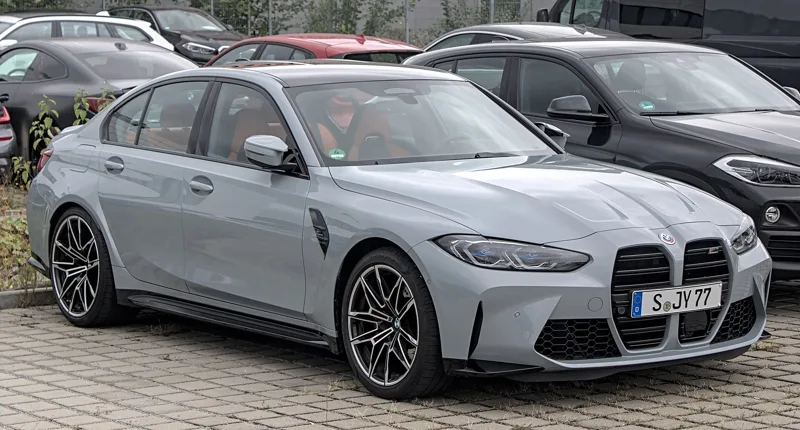
The BMW Brilliance venture was originally a 50:50 joint venture. In October 2018 BMW took it over by acquiring an additional 25 percent of the available shares. Brilliance Auto still holds 25 percent of BMW Brilliance, and as of 2022 BMW held 75 percent. As of 2022 BMW held 100 percent of the shares in Brilliance Motor, the unit that had produced Brilliance-branded cars and was sold to BMW.
By 2010 the joint venture was making the BMW 3 Series and BMW 5 Series, and it had plans to introduce the BMW X1 by 2012. Locally produced engines were slated to appear in some offerings from 2011, and the joint venture planned to raise total production capacity to 300,000 by 2013.
What was the Brilliance motorsport plan?
In 2005 Brilliance planned an entry into the newly formed FIA World Touring Car Championship. The programme was an attempt to put the brand in front of international audiences through racing.
The Brilliance WTCC programme did not make the grid, and the plan went no further. The brand's presence in motorsport therefore remains limited to that announced intention, with no race results to show for it.
How large was Brilliance's production?
By 2010 the group and its subsidiaries could build 800,000 vehicles a year, and capacity has been added since. Output reached almost 650,000 vehicles in 2012, the eighth-biggest total among Chinese vehicle makers that year.
Roughly 70 percent of production was consumer sedans. From 2009 to 2011 the group was the eighth-largest automaker in China, which placed it among the country's larger producers during those years.
BMW-branded autos were made at a production base in Shenyang, completed in 2004, and ongoing construction raised that base's capacity to 200,000 units a year by 2012. An engine-making base is located in Mianyang, Sichuan province.
How did Brilliance's own cars sell?
In 2013 a total of 188,143 Brilliance marque vehicles were sold in China. That made it the 25th largest-selling car brand in the country and the 10th largest-selling Chinese brand in the same year.
The group's own brands did not generate its profits. In recent years the brands have been in a state of loss, and the majority of profits came from BMW Brilliance, which left the group dependent on that partner.
Why did Brilliance leave the European market?
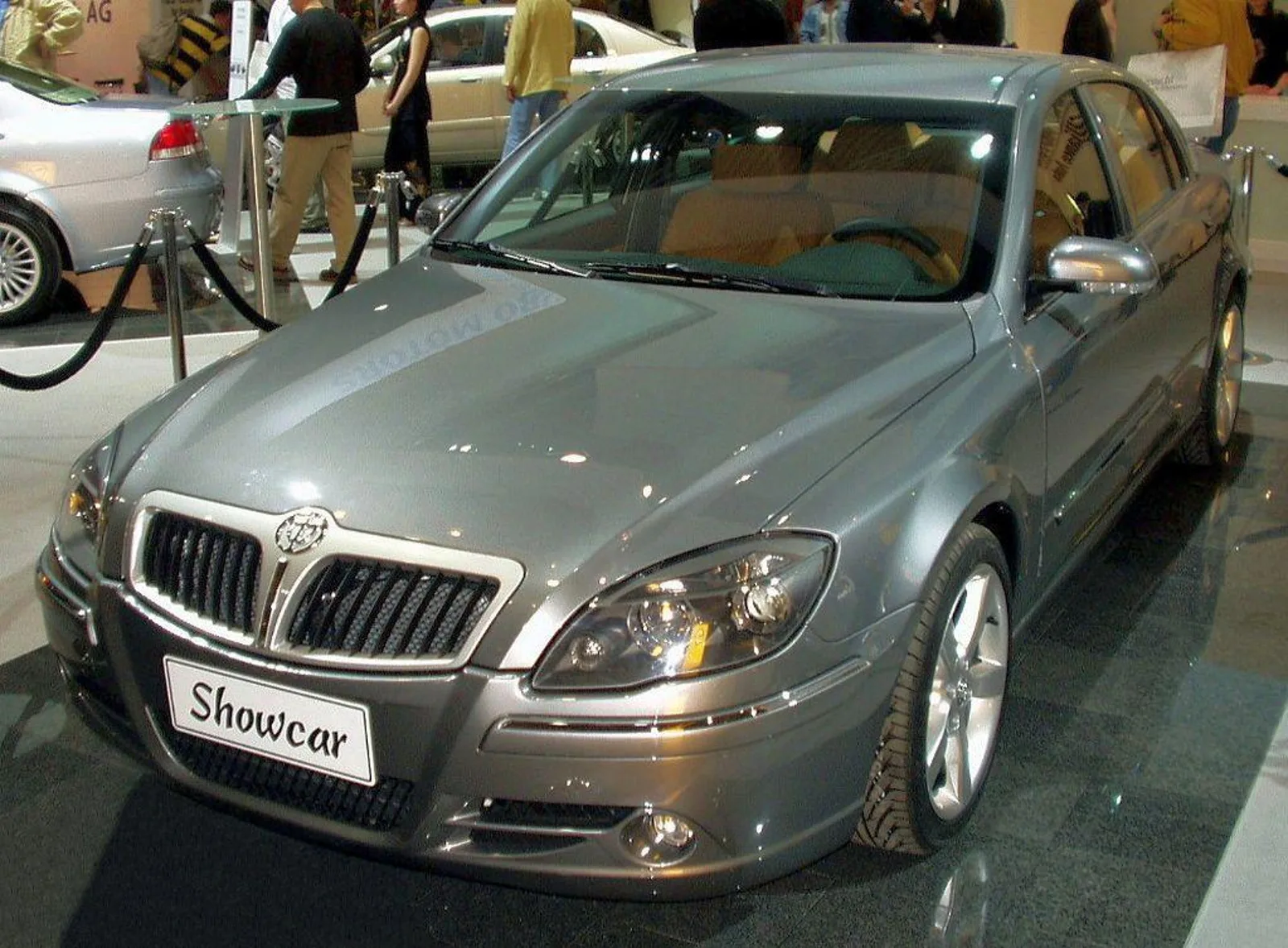
In 2007 the Brilliance BS6 sedan performed poorly in a crash test conducted by the German automobile club ADAC, earning only one out of five possible stars in the Euro NCAP rating. The company redesigned the car, changing at least sixty components, and the revised model earned three stars in a test by Spain's Idiada.
The revised car cost a good deal more. The importer, HSO Motors, failed in November 2009, and Brilliance then tried to sell the car alone. High prices and buyer reluctance after the crash results meant exports to Europe ended in April 2010, with no near-term plan to resume.
What joint ventures did Brilliance form after 2010?
In 2012 Brilliance Auto Group formed the joint venture Brilliance Shineray in Chongqing with Shineray Group, to produce SWM and Jinbei brand automobiles. Shineray Group owned 80 percent of that venture as of 2019, while the rest belonged to a company outside the group that the group guaranteed for some debt. Its key models are the SWM G01, the SWM X7 and the SWM X3, and SWM now makes a range of crossovers and compact MPVs.
The group also created Xinchen China Power Holdings Limited in 2013.
In 2017 Brilliance Auto formed the joint venture Renault Brilliance Jinbei with Renault. Brilliance acquired the remaining 39.1 percent stake in Brilliance Jinbei from its sister company Shenyang Jinbei Automotive, and then re-sold a 49 percent stake to Renault. Jinbei had previously sold licensed Toyota and General Motors designs. The venture makes light commercial vehicles under the Jinbei, Huasong and Renault names, and the Jinbei name reaches back to the earlier Shenyang operation.
The Huasong brand, created from 2014 to 2020 by Brilliance Auto, specialised in vans. Brilliance Xinri New Energy Automotive was founded in October 2018, and its first-stage plant was completed and put into operation in December 2020. Its Huasong 7 model was among the group's early van products.
In 2015 Brilliance announced joint production with SAIPA of Iran, to build the H300 and H200 models under the local Saipa brand name.
How did the 2019 and 2020 results look?
In 2019 Brilliance Auto's net profit was RMB 7.626 billion. Without the profits of BMW Brilliance, the figure would have been a loss of RMB 1.334 billion. That gap showed how much the group relied on the BMW venture.
The first half of 2020 brought Brilliance Auto net profit of RMB 4.045 billion, though BMW Brilliance alone contributed RMB 4.338 billion. In late August 2020 the domestic rating agencies Dagong International and Oriental Jincheng placed Brilliance bonds on watch.
By late September Brilliance's credit rating began to be downgraded, and by late October it had been reduced from AAA to A+. The downgrades came as the group's debt ratio remained high.
What happened after the 2020 bankruptcy?
The parent of Brilliance Auto entered bankruptcy administration in November 2020 and defaulted on corporate bonds worth more than CNY6.5 billion. Subsidiaries including Brilliance Auto itself, along with the joint ventures, were not affected by that administration.
On 12 January 2021 the Shanghai exchange publicly condemned the group, its chairman and the official responsible for information disclosure.
In June 2023 Brilliance Group said it had identified Shenyang Automobile as a potential investor in the reorganisation. Shenyang Automobile is wholly owned by Shenyang Cairui Investment, and the actual controller is the Shenyang State-owned Assets Supervision and Administration Commission. Caisheng Investment and Shenyang Metro Operation each hold 50 percent of Shenyang Cairui Investment, which wholly owns Shenyang Automobile.
If the reorganisation goes ahead, the controlling authority of Brilliance Auto would move from the Liaoning Provincial commission to the Shenyang Municipal commission. On 15 September 2023 a FAW Car vice president was also placed under disciplinary review, in a separate matter.
Who led Brilliance over the years?
| Role | Name | Years |
|---|---|---|
| Chairman | Yang Rong | 1992 to 2002 |
| Chairman | Wu Xiao-an | 2002 to 2023 |
| Chairman | Zhang Yue | 2024 to present |
| CEO | Qi Yumin | 2006 to 2019 |
| CEO | Yan Bingzhe | 2019 to 2024 |
| CEO | Zhang Yue | 2024 to present |
Brilliance has moved from a Shenyang minibus maker to a major partner in a global premium carmaker, and then to a group whose finances came under strain. Its future rests on the reorganisation and on the value of its BMW Brilliance stake.