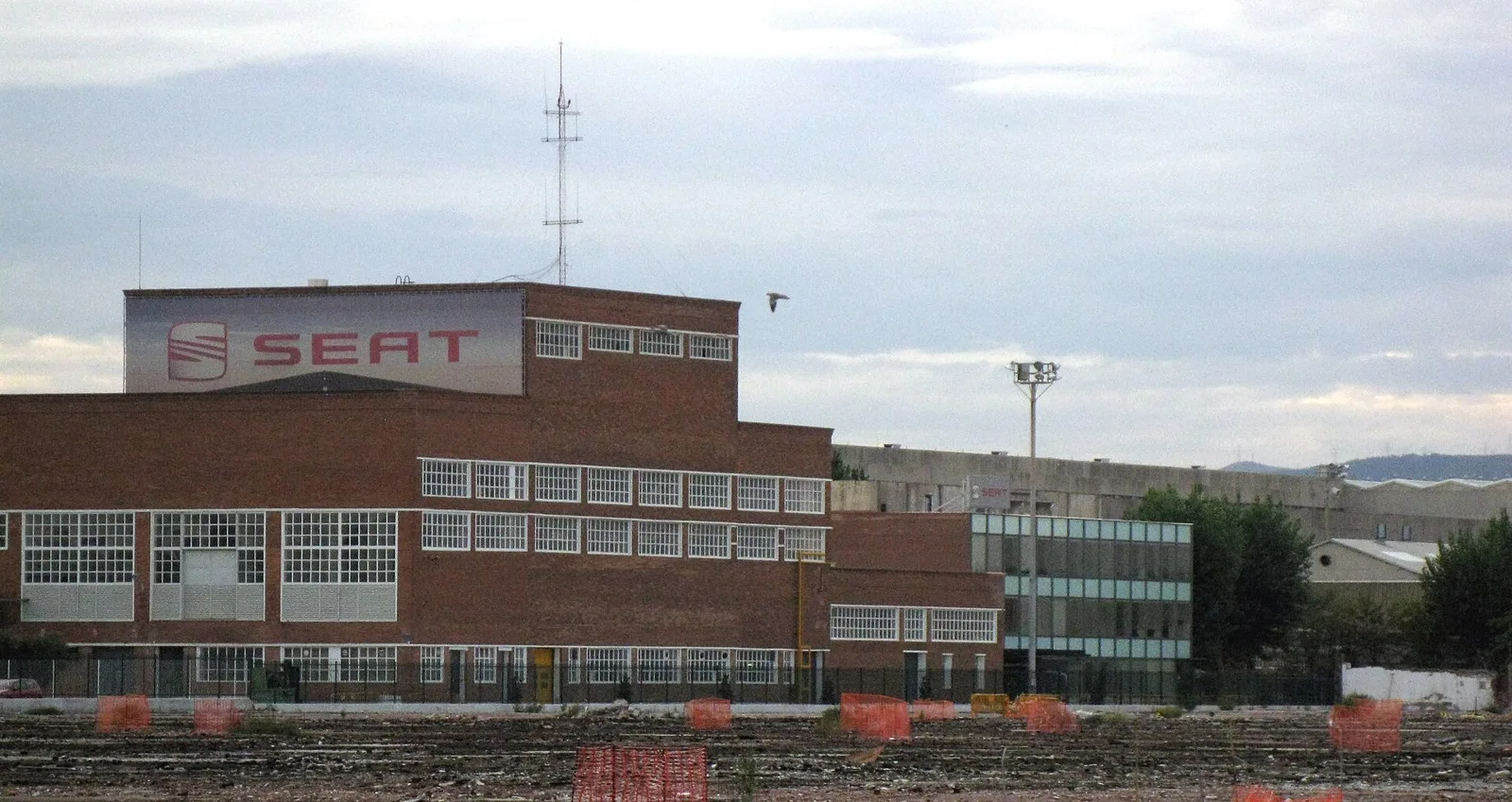
Spain makes cars mostly under foreign badges, Sweden watched its two famous marques change hands, and the Czech Republic rebuilt Skoda after communism.
Spain mass-produces cars mainly through foreign makers plus SEAT, now part of Volkswagen. Sweden grew around Volvo and Saab, both later sold abroad. The Czech Republic grew around Skoda, revived by Volkswagen after 1989, with Toyota and Hyundai plants adding to the output.
Spain builds more vehicles than any European country except Germany, some 2.38 million in 2024, yet it has only one mass-market carmaker that designs its own models, and that company belongs to Volkswagen. The Spanish car industry is a giant that mostly wears other people's badges.
Sweden and the Czech Republic reached the same crossroads by different routes. Sweden produced two of Europe's best-known marques, Volvo and Saab, and then watched foreign owners take both. The Czech Republic had Tatra as a luxury marque, a planned economy and a long wait for a Skoda, then rebuilt its biggest brand under German ownership.
Why the Spain car industry is bigger than its brands
The Spanish car industry generated 10 per cent of the country's gross domestic product in 2023 and 18 per cent of its exports. Nine multinational brands operate there. Mercedes-Benz builds in Vitoria and Ford's plant at Almussafes is its biggest in Europe. Stellantis has three plants: Figueruelas, Vigo and Villaverde in Madrid.
Renault has factories in Palencia and Valladolid and a transmission plant in Seville, SEAT works from Martorell and Volkswagen from Pamplona. Smaller Spanish names such as Spania GTA, Hurtan, IFR Aspid, Sunred, Tauro Sport Auto and Tramontana exist, but none is a mass producer.
From La Cuadra to the SEAT 600
Spain's carmaking began in luxury. Emilio de la Cuadra started a Barcelona firm in 1898 to build electric cars, and it became Hispano-Suiza after a change of owner. The company made hand-built racing models as well as a mass-produced range, and a factory outside Paris followed in 1911. Its H6 series was among the first cars with power-assisted brakes, and roughly 2,350 of the H6B and H6C were made up to 1933. Skoda built about 50 H6Bs under licence between 1924 and 1927, an early link between two of the industries in this story.
American makers arrived in the 1920s with assembly plants fed by imported parts. Ford opened in Cadiz in 1920 and General Motors in Malaga in 1927. The Civil War of 1936 to 1939 then broke the momentum, and a decade of economic isolation made recovery slow.
Local firms reappeared in the mid-1940s. Enasa, a state-owned conglomerate built from the remains of Hispano-Suiza, made trucks and buses under the Pegaso name and also about a hundred Z-102 sports cars in the 1950s. Those cars had independent suspension on all four wheels, a five-speed gearbox and supercharged engines, with bodies from Touring, Saoutchik, Serra or Enasa itself.
Three countries, three very different answers to the question of who owns the badge.
How SEAT put Spain on wheels
The turning point was an industrial policy launched in the 1960s. From 1958 to 1972 the sector expanded by a compound 21.7 per cent a year. There were 72,000 private cars in Spain in 1946 and 1 million by 1966, a pace of growth with no equal anywhere in the world.
SEAT was the vehicle for it. A state holding company, the Instituto Nacional de Industria, and six Spanish banks founded the firm in 1950 with help from Fiat. Its first model, the 1400, appeared in 1953. The car that put families on the road was the SEAT 600, with more than 794,000 built between 1957 and 1973. For many working-class households it was the first car they owned and, by the end, the first second car for many more.
SEAT built its millionth car in 1968 and passed 14 million by 2003. Up to 1981 most of its cars looked like Fiats, and the 1982 Ronda was the first made without Fiat's help. The Giugiaro-styled Ibiza of 1984 was the first all-new product after the split. Volkswagen took SEAT on as a subsidiary in 1986, and the company later reached British showrooms, where it sold just under 6,000 cars in 1986 and peaked at more than 45,000 in 2013.
Other Spanish makers took different roads. Authi, formed in 1965 with the British Motor Corporation, built Minis and Austins until SEAT bought it in 1976. Barreiros began with diesel engines in 1954, built the Dodge Dart under licence from 1963 (17,589 between 1965 and 1977) and passed to Chrysler Europe in 1969. The tiny Biscuter of 1953 had a single-cylinder 197 cc engine and no doors, windows or reverse gear.
Sweden car industry: two marques and the trucks behind them
Sweden's industry is as much about lorries as cars. Volvo Cars and Saab Automobile are the passenger-car names, but AB Volvo and Scania are two of the largest truck makers in the world. Around 85 per cent of Swedish passenger cars and 95 per cent of heavy vehicles are sold outside the country. In 2011 the sector employed around 110,000 people and its export earnings of 150 billion SEK made up 12 per cent of Sweden's total. In 2009 Sweden built 128,738 passenger cars and 27,698 heavy vehicles.
Steam cars, trucks and a bank-backed Volvo
The first Swedish car was a steam carriage built by the brothers Jons and Anders Cederholm in 1891-92. Vabis in Sodertalje had a petrol-engined car from 1898 and went into production in 1902, the same year Scania in Malmo, a bicycle maker, began building cars and trucks. The two merged in 1911 as Scania-Vabis. After a bankruptcy in 1921 it dropped passenger cars, and a big bus order from the postal service helped it recover.
Volvo began assembling passenger cars and light trucks at Gothenburg in 1927, with financing from the ball-bearing maker SKF. Car output stayed limited for years while the trucks kept the company in profit. Saab came later: a military aircraft maker looking for a civilian product, it began making a small front-wheel-drive car with a two-stroke engine in Trollhattan in 1949. The shape owed something to the aircraft side of the business.
Rallying made both names abroad in the 1960s. Saab's rally successes with Erik Carlsson, at events including the Monte Carlo and the RAC, opened the British market, though the US and Britain stayed nearly the only export markets, which proved fatal for Saab's volumes.
Volvo and Saab at their peak
The 1970s and 1980s were the high point for the two brands. Volvo's 200 series saloons and estates ran from 1974 to 1993, and the 300 series hatchback launched in 1976 became the best-selling foreign car in Britain in 1982. The 700 series arrived in 1982 to take on BMW and Mercedes-Benz. Saab launched the 900 in 1979 and strengthened its position with the larger 9000 in 1985.
How Volvo, Saab and Koenigsegg changed hands
Both firms felt too small after the 1973 oil crisis. A merger plan in 1977 collapsed because of resistance from Saab-Scania's shareholders. In 1989 General Motors became Saab's partner, with Investor AB and GM each owning half of the new Saab Automobile. A Volvo merger with Renault in 1993 also failed, though Volvo took control of Renault's truck division and Renault became a major shareholder.
In 1999 Volvo sold its car division to Ford. It planned to use the money to buy Scania, but European Union competition rules blocked that. Volkswagen later bought Volvo's Scania shares and has been majority owner since 2008.
The crisis of 2008 to 2010 ended Swedish ownership of the car brands. Ford sold Volvo Cars to Zhejiang Geely Holding Group in 2009, making it the first western carmaker owned by a Chinese company. General Motors had put Saab up for sale in 2008, the Swedish supercar maker Koenigsegg was the first prospective buyer, and Spyker Cars completed a purchase in 2010. That arrangement collapsed into bankruptcy within two years, and NEVS announced in 2012 that it had bought what remained, with rights to the Saab name from Saab AB.
Meanwhile a small supercar sector appeared. Koenigsegg was founded in Angelholm in 1994 and delivered its first car in 2002 and its hundredth vehicle in 2013. It currently builds models including the Jesko, Gemera and CC850. In the 1990s Josse Car of Arvika built some 40 Indigo 3000 roadsters, mostly from Volvo parts.
The Czech car industry: from steam carriage to Skoda Czech Republic
The Czech lands claim an early place in motoring. In 1815 the Prague watchmaker Josef Bozek presented a self-propelled steam carriage with a two-cylinder engine, a vehicle second only to Nicolas-Joseph Cugnot's steam machine. In 1897 Nesselsdorfer Wagenbau, the predecessor of Tatra, produced the Prasident, the first factory-built petrol car in the Czech lands.
Laurin and Klement began in Mlada Boleslav in 1895 as a bicycle maker and built its first car, the Voiturette A, in 1905. Praga began car production in 1909 with the Charon and merged with CKD in 1927. Skoda Works acquired Laurin and Klement in 1925, and the car arm became Skoda Auto. The Tatra badge first appeared on vehicles in 1919.
War, a planned economy and the Favorit
The occupation turned Czech factories towards weapons. Skoda Works built 7,052 cars in 1939 and 683 in 1944, only 35 of them passenger cars. Allied air forces bombed its plants. Tatra had sued Volkswagen in 1938 over the Beetle's debt to its T97, a case that was dropped after the invasion and revived after the war. Volkswagen settled in 1965 by paying 3 million Deutsche Marks.
From 1948 to 1989 the Communist Party ruled and the car industry was nationalised. Tatra was made the luxury brand for party officials, and a decision of the trading bloc COMECON told it to concentrate on trucks. Skoda Auto was split off in 1948 as the maker of affordable cars, yet waiting lists were sometimes three years long. Exports took priority because hard currency bought Western technology: about two-thirds of production was exported in the 1950s and about a third in the late 1980s.
The Felicia opened Western markets to Skoda in 1959, but its reputation abroad stayed poor until the Iron Curtain lifted. The 1980s Favorit, developed with the Italian designer Bertone, had a government deadline of two and a half years. It reached showrooms before it was fully sorted, early quality problems followed, and the cost pushed Skoda into heavy debt.
Volkswagen, Toyota and Hyundai after 1989
Volkswagen bought into Skoda in 1991, paying DM 620 million for a stake of around 30 per cent. It raised its holding in 1994 and 1995 and took full ownership in 2000. Skoda built 172,000 cars in 1991 and 1,004,800 in 2020.
Other makers followed. Toyota Peugeot Citroen Automobile started building cars in Kolin in 2005, with Toyota putting the overall investment at 1.3 billion euros. Toyota took full ownership in 2021 and renamed the plant Toyota Motor Manufacturing Czech Republic, ending Peugeot production there that had run from 2005 to 2021. Hyundai arrived in Nosovice, its first European plant, in a CZK 34.4 billion investment that was the largest foreign direct investment the country had seen to that point. Tatra stopped making passenger cars in 1997 and was sold in 2001.
Suppliers matter just as much. In 2025 members of the industry association reported sales of CZK 599.5 billion and employed 78,944 people. Continental's tyre plant at Otrokovice is its largest in Europe, with capacity of around 21.5 million tyres a year, and AGC's glass factory near Bilina turns out about 32 million pieces of automotive glass annually. BMW opened a 600-hectare test ground near Sokolov in 2023 for automated driving and parking functions.
Three European car producers side by side
| Country | Anchor brands | Ownership story | Output and export weight |
|---|---|---|---|
| Spain | SEAT, founded 1950 | Volkswagen Group subsidiary since 1986 | 2.38 million vehicles in 2024; industry is 18% of exports (2023) |
| Sweden | Volvo Cars, Saab | Volvo Cars to Geely in 2009; Saab remains to NEVS in 2012 | 128,738 passenger cars in 2009; about 85% sold abroad |
| Czech Republic | Skoda Auto, Tatra trucks | Volkswagen sole owner since 2000 | About 1.45 million passenger cars in 2025; about 92.5% exported |
What this means for buyers and drivers
A badge says less about where a car is made than it used to. A Mercedes-Benz built in Vitoria, a Ford from Almussafes and a Hyundai from Nosovice all come from European factories, and the SEAT in the next driveway is a Volkswagen Group product. Volvo's identity is Swedish but its owner is Chinese, and the Skoda that once carried a poor reputation is now the Czech Republic's largest passenger-car manufacturer, with its development work in Mlada Boleslav.
For used-car shoppers the history helps decode the older metal. A SEAT built before 1982 may be a Fiat in all but name, a Volvo 300 was Britain's best-selling foreign car in 1982, and the Saab 900 was launched to compete with conventional family cars and the BMW 3 Series.
Electric plans in the Czech Republic and Sweden
Aisin is putting money into electric drive units for BMW at Pisek, with production scheduled to begin in 2027. NEVS said in 2012 that it intended to build an electric car on the Saab 9-3 platform in Trollhattan. The Swedish start-up Uniti raised funds by crowdfunding in 2016 and planned a lightweight electric city car with a 300 km range, to be built in Sweden at 50,000 cars a year, though these remain plans rather than production figures.