One is owned by a charity, one began with brake linings and one in a rented garage; all three supply the carmakers whose badges you recognise.
Bosch, Valeo and Magna are automotive suppliers that design and build systems and components for other brands' cars. Bosch covers ignition, braking and electronics, Valeo covers lighting, wipers, thermal and driver-assistance systems, and Magna covers seating, bumpers, transmissions, cameras and contract vehicle assembly.
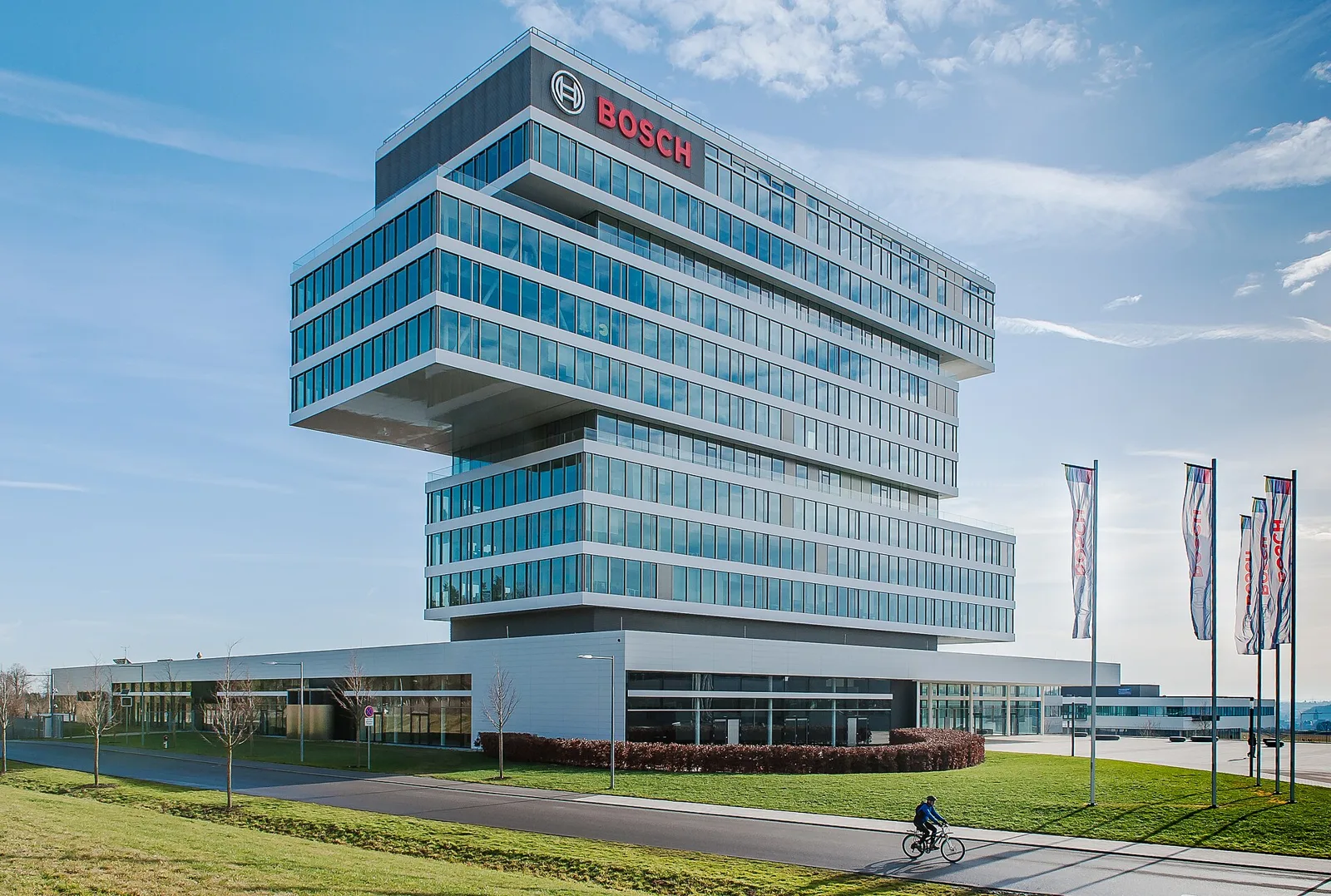
The largest car supplier in the world is owned almost entirely by a charity that has no voting rights. Robert Bosch Stiftung holds 94 percent of the German group Bosch, but carries no voting rights, and its dividends fund work on health and social causes that have nothing to do with cars. The business itself has been in cars since 1897, and it shares its industry with two other names that most drivers never see on a bonnet: Valeo of France and Magna of Canada.
What does a car supplier actually make?
The badge on the grille belongs to the carmaker. A good deal of what sits behind it belongs to somebody else. Suppliers design and build the systems, assemblies, modules and components that a manufacturer then fits to its own cars, and the three companies here cover a wide spread. Bosch makes everything from ignition and braking technology to semiconductors. Valeo supplies lighting, wipers, cooling, powertrain parts and driver-assistance systems to carmakers and to the replacement market. Magna builds seats, bumpers, transmissions, cameras and electronics for a customer list that runs from General Motors, Ford and Stellantis to Tata Motors, Tesla, Toyota, Volkswagen, Mercedes and BMW.
Magna's customer list shows how this works: it supplies carmakers that compete with each other for the same shoppers, so the maker of a part is not always the brand on the bonnet.
The badge on the grille belongs to the carmaker; a good deal of what sits behind it belongs to somebody else.
Who is Bosch, and what does it make for cars?
Robert Bosch opened a workshop for precision mechanics and electrical engineering in Stuttgart on 15 November 1886. It was a poor place to start an electrical business, because the city had no public electricity supply and the company came close to bankruptcy until a decision in 1893 to build a power station. Four years after that, in 1897, Bosch began fitting magneto ignition devices to automobiles. In 1902 chief engineer Gottlob Honold unveiled a high-voltage magneto ignition with a spark plug.
Cars made the company. Its first factory, in Stuttgart, opened in 1901 with a workforce of 45, and the payroll passed 1,000 by 1908. It made its 100,000th magneto in 1906 and introduced an eight-hour day for workers in the same year. Branches went up in London in 1898, followed a year later by Paris, Vienna and Budapest, and the first factory outside Germany opened in Paris in 1905. Before the First World War it earned 92 percent of its sales outside Germany. It then lost most of its foreign holdings, US factories included, and spent the interwar years rebuilding in South America and Asia.
The product list kept growing. Electric horns arrived in 1921, windscreen wipers in 1926 and the direction indicator, known as the trafficator, in 1927. Robert Bosch led the diesel injection pump project himself, and it entered production in late 1927. Away from cars, the company built its first electric drill and its first car radio in 1932, and a household refrigerator in 1933. Like most German businesses of the era it had links to the Nazi Party. The Hildesheim factory supplied starter elements for all new German tanks in the last years of the war, and the company used as many as 20,000 forced labourers in its plants.
The post-war story is one of recovery and a steady move into electronics. After a downturn in 1966 the company chose decentralisation, diversification and expansion overseas, and put money into research on chip technology, electronic fuel-injection control and anti-lock brakes. In 1978 Bosch and Mercedes-Benz jointly launched an electronically controlled anti-lock braking system in the S-Class, one of the first of its kind to reach series production. In the 2000s the company developed an electric hydraulic brake and common rail fuel injection with piezo-injectors, and a digital car radio with a disc drive.
How Bosch is organised and what it has bought
Bosch splits its work into four sectors: mobility, consumer goods, industrial technology, and a fourth for energy and buildings. In the 21st century it ranks as the world's biggest automotive supplier, and that weight has a cost, because its finances are often pushed around by trends in the car industry. In 2025 it reported a substantial fall in profitability that it put down to a drop in global sales of German cars. In 2009 it spent about 3.6 billion euros on research and development, and it publishes approximately 3,900 patents a year.
Several of its purchases and sales reshaped the car side. In 2012 it sold the foundation brakes arm to KPS Capital Partners, and that business became Chassis Brakes International. In 2015 it took complete ownership of the steering joint venture ZF Lenksysteme, which had been shared 50/50 with ZF Friedrichshafen, and it bought Seeo, a young company developing solid-state lithium-ion cells. In June 2021 it opened a semiconductor plant on which it spent 1.2 billion US dollars, its largest-ever investment in a single project, and in April 2022 it bought the vehicle automation start-up Five.ai.
Valeo: from brake linings to driver assistance
Valeo began in 1923 in Saint-Ouen, near Paris, as the Societe Anonyme Francaise de Ferodo, distributing brake linings and clutch facings under licence from Ferodo. It started producing clutches in 1932, the year it listed on the Paris Stock Exchange. Braking systems followed in 1961, thermal systems in 1962 and lighting and electrical systems in the 1970s and 1984. In May 1980 the company took the name Valeo, which is Latin for I am well.
Growth abroad came in stages: Spain and Italy first, then Brazil in 1974, the United States in 1980, Tunisia in 1984, South Korea and Turkey in 1988, Mexico in 1989, China in 1994 and India in 1997. By the end of 2018 it was working in 33 countries. Acquisitions include the German suppliers Peiker and Spheros in 2015 and FTE automotive in 2017. In the early 2000s it produced parking assistance systems using ultrasonic sensors, and in 2017 it unveiled a low-voltage prototype electric vehicle in Las Vegas, at the Consumer Electronics Show.
Today Valeo is organised in four business groups. Comfort and Driving Assistance Systems covers advanced driver-assistance technology, and Powertrain Systems covers powertrain components and vehicle electrification. Thermal Systems makes engine cooling equipment, and Visibility Systems makes windscreen wipers and lighting. A fifth activity, Valeo Service, sells original equipment spares to carmakers and replacement parts to the independent aftermarket.
Valeo by the numbers
The figures it publishes show a company that grew quickly. Between 2009 and 2018 staff rose from 45,000 to 113,600, and sales rose from 7.5 billion euros to 19.1 billion, with strong growth in China. Sales climbed 4% in 2018 alone. A sizeable share of sales goes into research and innovation, and 17,900 people work in R&D. It was France's leading patent filer in 2016 and 2017.
In 2018 the four groups were close to level in their contribution to sales. Visibility Systems brought in 29 percent, Powertrain and Thermal Systems 26 percent each, and Driving Assistance Systems 19 percent. Original equipment sales by destination came 46 percent from Europe and Africa, 32 percent from Asia, 20 percent from North America and 2 percent from South America.
Valeo's own plan, announced in November 2025 and called Elevate 2028, sets targets for the years ahead: steadily rising profit from 2022 onwards, more cash generation from 2025 onwards and a return to sales growth from 2027 onwards, with a fuller commitment to electrified, safer and software-defined cars. The company has also faced a legal reckoning from its past. In 2006, after a procedure lasting a decade, the company and its directors were indicted, along with its medical service, over its former use of asbestos, which is said to have caused the deaths of hundreds of employees over many years. A national agreement with the French government followed in April 2009, and the group has secured four former industrial sites.
Magna: from a rented garage to the largest supplier in North America
Frank Stronach founded Multimatic Investments in 1957 in a rented tool-and-die garage in Toronto. Its first car industry contract, in 1959, was for metal sun visor brackets for General Motors. By the late 1960s it ran eight plants. It went public in 1969 by merging with Magna Electronics, which made aerospace, defence and industrial components, and it became Magna International in 1973. A profit-sharing and employee equity programme arrived in 1974, and by 1981 the company had sold its aerospace and defence businesses to concentrate on cars. In the 1990s it moved major systems into independent, publicly traded companies and expanded in Asia.
Magna now calls itself the largest automotive parts maker in North America by original equipment sales, and the third largest in the world. Its headquarters are in Aurora, Ontario, with United States operations run from Troy, Michigan, and a European head office in Vienna. It has 158,000 employees working in 342 manufacturing operations, plus 91 centres for product development, engineering and sales, across 27 countries. Swamy Kotagiri took over as chief executive in January 2021 from Donald Walker, who had been with the company since 1987. As of 2024 it is built from seven groups: Magna Steyr, Magna Seating, Cosma, Magna Exteriors, Magna Powertrain, Magna Electronics and a unit for mechatronics, mirrors and lighting.
The company runs under a corporate constitution that requires agreement from management, shareholders and employees before it can be changed. It hands 10 percent of pre-tax profit to employees, an arrangement Stronach called a fair enterprise system.
What Magna builds, from seats to lidar
The company has worked with carmakers on stow-into-floor minivan seats, reaction injection moulded bumpers and driver-assistance features such as blind-spot detection and lane departure warning. It began designing rearview cameras for Hummers in 2005, at a time when no federal rule required them, and had a 350,000-unit contract by 2007. In 2018 it introduced an Icon radar system aimed at helping carmakers reach Level 5 autonomy, and automatic emergency braking. It is also known for lightweighting, the use of new materials to cut vehicle mass. Goldman Sachs forecast in 2017 that worldwide revenue from automated features built by suppliers like Magna would grow at a compound annual rate of 42 percent across the decade ahead.
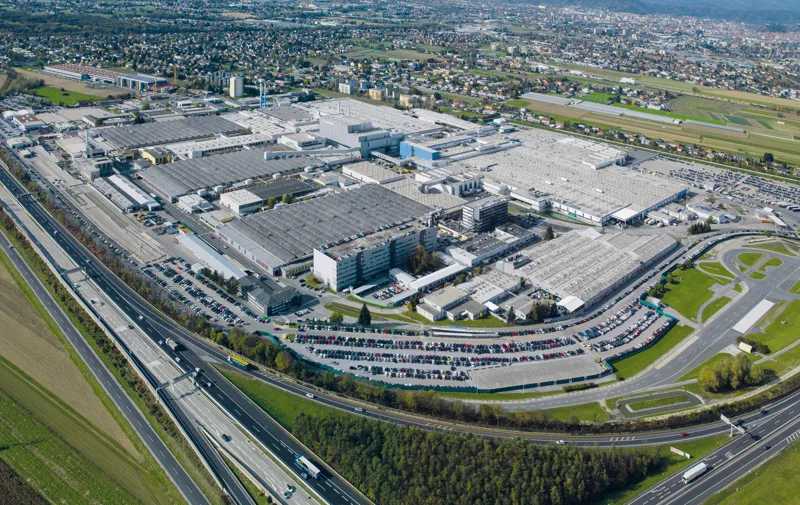
Contract manufacturing is part of the offer. Magna has partnered with BMW to build electric cars under contract, and it is working with Ineos on an electric version of the Grenadier off-road vehicle, due to start production in Graz, Austria, in 2026. In February 2021 the governor of Michigan announced that it planned a plant in St. Clair, costing 70 million dollars and creating over 300 jobs, to make battery housings for the 2022 GMC Hummer electric pickup.
The deals that reshaped Magna
Acquisitions and disposals show where it wants to be. In 2004 it bought 80 percent of New Venture Gear and combined it into Magna Powertrain, taking full ownership in 2007 and closing the operation in August 2012. In 2005 it bought the convertible roof systems supplier CTS from Porsche, and it privatised three spun-off companies, Tesma, Decoma and Intier, at an expected cost of 1.3 billion Canadian dollars. In July 2015 it paid 1.9 billion dollars for the transmission maker Getrag, a purchase intended to build growth in China. Samsung SDI agreed in February 2015 to buy the battery pack business of Magna Steyr for 120 million dollars, and in August the same year the interiors division went to Grupo Antolin, a sale covering 36 plants and 12,000 employees, around 10 percent of the global workforce, and sales of 2.4 billion dollars in 2014.
The recent purchases lean towards electronics and safety. In 2018 it acquired the German motion-control software developer Haptronik, the Italian lighting maker OLSA and the Spanish seating company Viza Geca, and it teamed up with Innoviz Technologies on solid-state lidar for BMW Group. It bought Boston start-up Optimus Ride in January 2022, with more than 120 employees, and in December that year it bought SSW Partners' Veoneer Active Safety arm for 1.52 billion US dollars.
Three suppliers side by side
| Company | Founded | Headquarters | First work for the car trade | Ownership |
|---|---|---|---|---|
| Bosch | 1886 | Gerlingen, Germany | Magneto ignition fitted to automobiles from 1897 | 94 percent held by a charitable foundation |
| Valeo | 1923 | France | Brake linings and clutch facings distributed under licence | Listed on the Paris Stock Exchange |
| Magna | 1957 | Aurora, Ontario | Metal sun visor brackets for General Motors, 1959 | Public since 1969 |
What it means if you are buying or driving a car
The practical point is that safety and comfort technology often has the same origin whichever badge you choose. The anti-lock brake that arrived in a Mercedes S-Class in 1978 was a joint project with Bosch. Magna's camera, radar and lane-departure work goes to many makers, and Valeo's wipers, lighting and thermal systems are sold to carmakers around the world. Valeo's service arm also supplies the independent aftermarket.
The three firms also depend heavily on the carmakers they serve, and that shows in their results. Bosch said its 2025 profits fell because of weak German car sales. In the early 1990s a slump in the European car industry and fierce price competition between suppliers forced it to cut working hours for 20,000 employees in Germany, and about 13,000 took early retirement or termination agreements.
Plans at Valeo, Magna and Bosch for 2026 to 2028
Valeo's Elevate 2028 plan points to growth in China, India and North America and a focus on electrified, safer, software-defined cars. Magna's Ineos Grenadier work is scheduled to reach production in Graz in 2026. Bosch has said it intends to move into fresh fields, biomedical engineering among them, and it was certified carbon neutral across more than 400 sites in the first quarter of 2020.