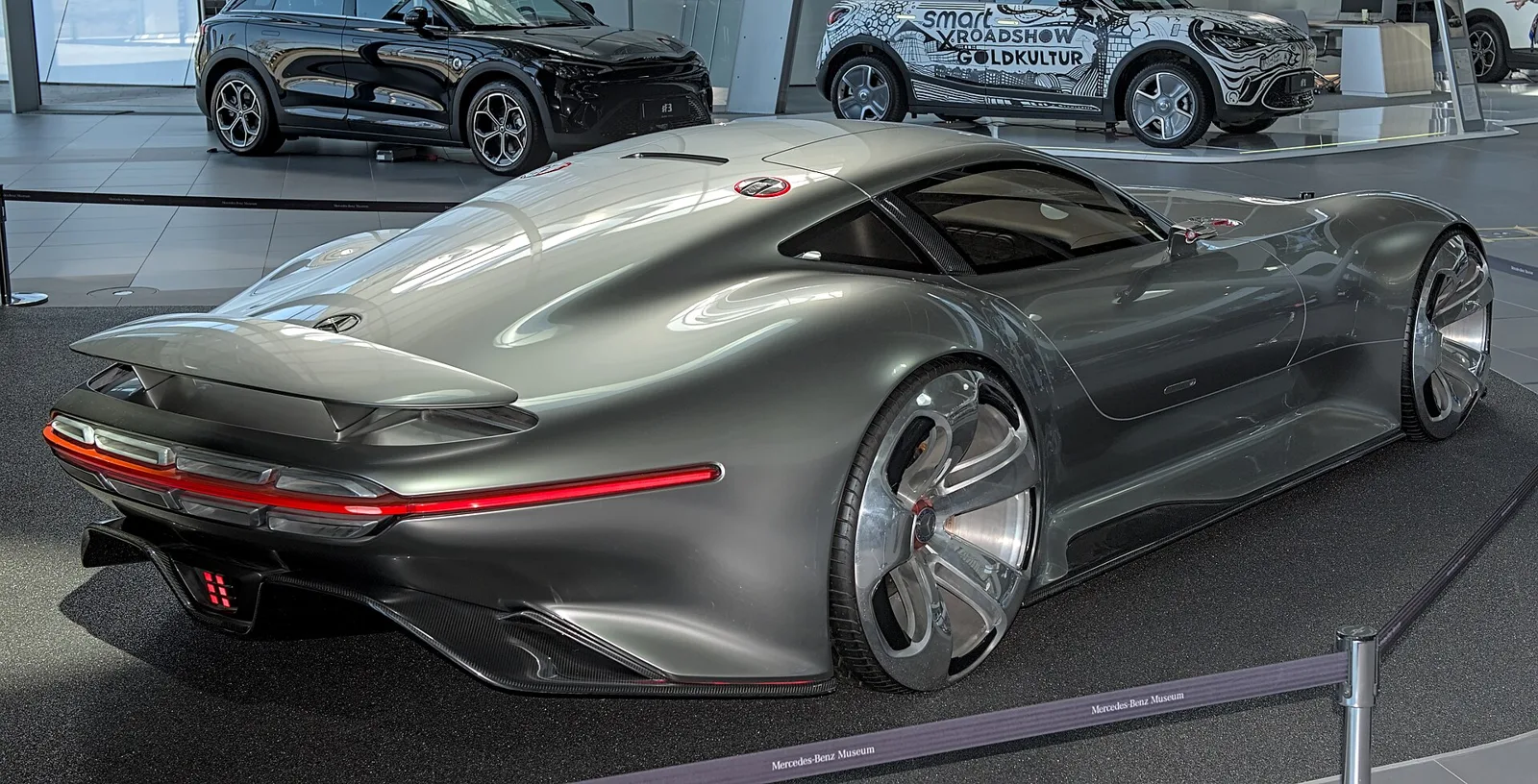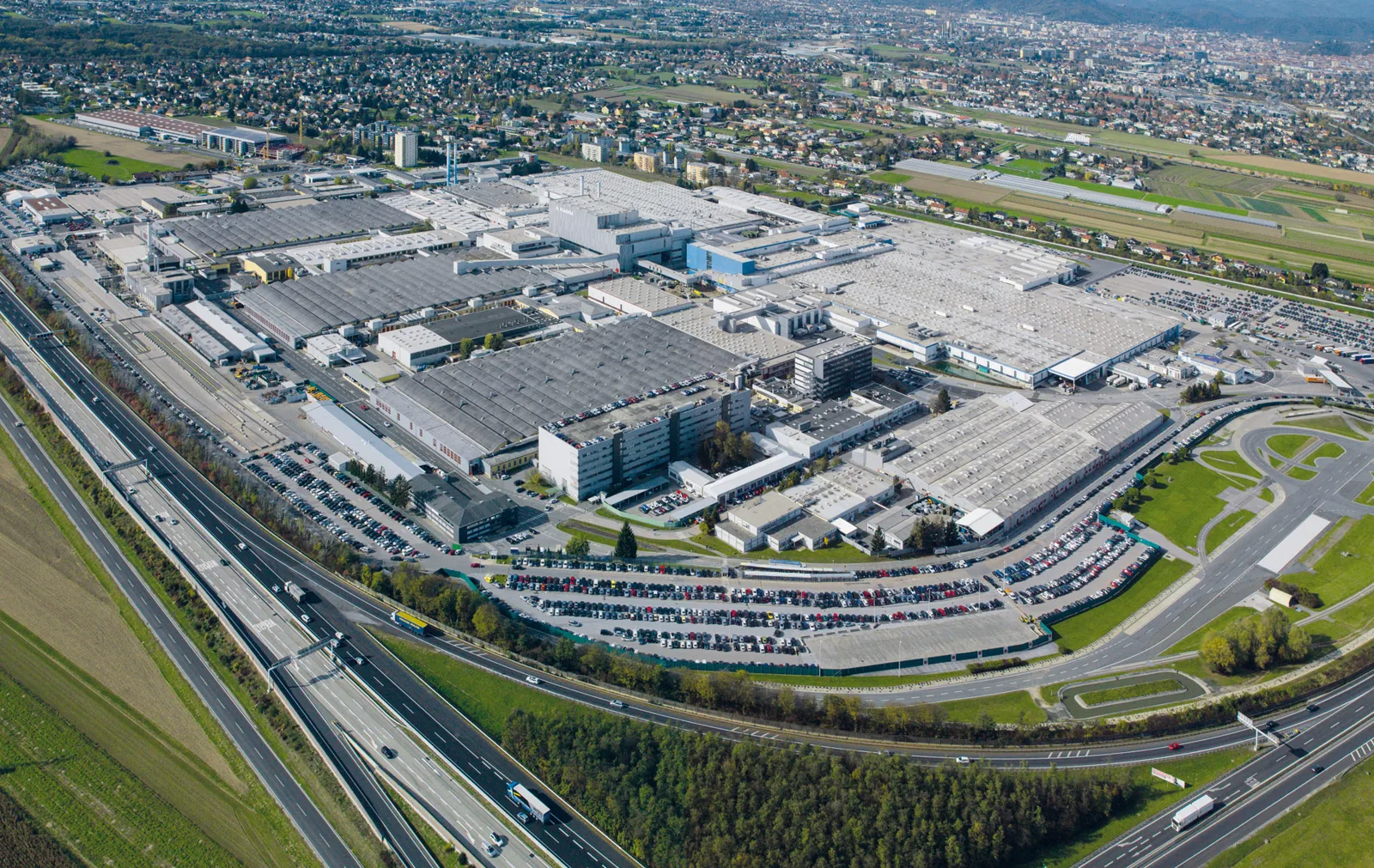
Three European factories with no badge of their own have assembled Mercedes, BMW, Jaguar, Saab, Porsche and Mini models, and all three have faced cancelled contracts.
Magna Steyr in Austria, Valmet Automotive in Finland and VDL Nedcar in the Netherlands build and engineer cars under contract for brands such as Mercedes-Benz, BMW, Jaguar, Saab, Porsche and Mini. Magna Steyr is the largest, and VDL Nedcar stopped car production in 2024.
The Toyota GR Supra, the BMW Z4 and the Mercedes-Benz G-Class have something unexpected in common: all three have been assembled by a company that has no car badge of its own. Magna Steyr, based in Graz, Austria, does not sell cars under its own name. It develops and builds them for other people, and it is the largest firm in the world doing so.
What is contract car manufacturing?
A contract manufacturer designs, engineers or assembles vehicles that carry someone else's badge. The customer owns the brand and the customer relationship, and the contractor owns the factory and the production know-how. Magna Steyr works precisely this way, which is why it is not classed as a marque. As of 2018 its annual production capacity was approximately 200,000 vehicles.
Three European names show how varied the business can be. Magna Steyr is the engineering-heavy one. Valmet Automotive, in Finland, combines factory work with roof and kinematic systems. VDL Nedcar, in the Netherlands, was a big volume plant until its last contract ran out in 2024.
The badge on the bonnet tells a buyer who sells the car, not always who built it: a Mini Convertible came from Born, a Jaguar I-Pace from Graz.
Who is Magna Steyr?
Magna Steyr Fahrzeugtechnik is a subsidiary of Canadian group Magna International and grew out of the Steyr-Daimler-Puch group. Magna bought a majority shareholding in Steyr-Daimler-Puch three years before the present company was formed in 2001. In 2002 it took over Daimler's Eurostar vehicle assembly plant, and its main car production is still in Graz.
In the second quarter of 2015 it sold its battery pack business to Samsung SDI for about $120 million.
The engineering side matters as much as the assembly line. Magna Steyr engineered the 4Matic all-wheel-drive system used by Mercedes-Benz and was the only builder of E-Class 4Matic models between 1996 and 2006. It did a large share of the development of the BMW X3, then built every first-generation example (model code E83), and it assembled early Aston Martin Rapides. It has also developed cars for other manufacturers, including the Audi TT, the Fiat Bravo and the Peugeot RCZ.
Which cars does Magna Steyr build?
The Mercedes-Benz G-Class has been in Graz since 1979 and is still there. The current Graz line-up also includes the W Motors Fenyr SuperSport, built since 2019, plus Aion and XPeng models: the Aion UT and V and the XPeng G6 and G9 began in 2025, with the XPeng P7+ and G9L following in 2026.
Recent years read like a catalogue of other people's showrooms:
- BMW 5 Series, from March 2017, built alongside the BMW Group's own plant in Dingolfing, Germany.
- Jaguar I-Pace, the first battery-electric Jaguar, announced in December 2016 and built from early 2018 to 2024, plus the E-Pace crossover from 2017 to 2024.
- BMW Z4 from 2018 and Toyota GR Supra from 2019, both listed as running to 2026.
- Fisker Ocean, announced in October 2020, with Magna International taking a 6% ownership interest in Fisker Inc. It was built from 2022 to 2024.
- Mercedes-Benz SLS AMG, with its painted aluminium body, from 2009 to 2014, and the Mini Countryman and Paceman between 2010 and 2016.
Older work goes back much further. Graz turned out Puch 500 small cars from 1957, the Haflinger from 1959 and the Pinzgauer from 1971, and later built a Chrysler Voyager, Jeep Grand Cherokees and a Saab 9-3 Convertible. Beyond whole cars, the company has made parts: the vario-roof for the Mercedes-Benz SLK, with more than 500,000 produced since 1996, and the Opel Astra TwinTop folding roof between 2005 and 2010. Its rear differential has also gone into the Fiat Panda 4x4.
Some projects are partial. Magna Steyr expertise also went into the Ineos Grenadier 4x4, where the Magna Powertrain subsidiary worked on chassis and suspension, yet the finished car comes from the old Smartville factory in Hambach, France. Sony's Vision-S concept, shown in January 2020, was a joint effort with Magna Steyr in both development and construction.
What happens when a contract is cancelled?
Porsche announced in June 2008 that Magna Steyr would build the Boxster and Cayman from 2012. The deal was cancelled in December 2009, and the work went to Karmann, a German assembler that had recently been taken over by Porsche's parent company, Volkswagen.
A more recent blow came when Fisker cancelled the orders for the Ocean. Around 500 employees at the Graz main plant had to be laid off.
What are the Magna Steyr MILA concept cars?
MILA stands for Magna Innovation Lightweight Auto, the brand Magna Steyr uses for its technology and research. The concepts are a way of showing what the engineers can do, and several have appeared at motor shows.
The first, a one-seater sports car, was presented at the Frankfurt IAA in 2005. A CNG-powered prototype was built in 2006, and a two-seater called the Mila 2 followed. The Mila Future, at Geneva in 2007, was a sculpture with four roof options. At Geneva in 2008 came the Alpin, a small off-roader seating three plus one with an unusual mid-engine layout. It measured 3,540 mm long, 1,703 mm wide and 1,750 mm high and used a 1.0-litre (999 cc) three-cylinder engine in CNG or petrol form, the petrol version weighing 906 kg (1,997 lb).
Later concepts pushed on towards electrification and low weight. The Mila EV, a plug-in electric design on a modular lightweight platform, was shown at Geneva in 2009, and the Mila Aerolight, a CNG-powered compact four-seater, in 2011. The Mila Coupic of 2012 combined three ideas in one: an SUV coupe that can become a pick-up or a convertible.
The MILA Blue is a lightweight natural-gas car with CO2 emissions of less than 49 g/km, and a weight saving of 300 kg (661 lb) against typical CNG cars in the A segment. The MILA Plus, introduced at Geneva in 2015, is a plug-in hybrid sports car in lightweight aluminium with recyclable materials. It weighs 1,520 kg (3,351 lb), can cover 75 km (47 mi) on electric power alone and emits 32 g/km of CO2.
What does Valmet Automotive build?
Valmet Automotive has turned out more than 1.9 million vehicles at its Uusikaupunki headquarters in Finland. Its work falls into two business lines, Manufacturing and Roof and Kinematic Systems, and its customers in contract manufacturing have included Mercedes-Benz, Porsche, Saab, Opel and Fisker. It has made electric vehicles since 2009.
The story began in 1968 as Saab-Valmet, a partnership between Finland's Valmet and Sweden's Saab-Scania. For the first eleven years the plant assembled only Saabs. Between 1979 and 1985 it also built Talbots, 31,978 of them, though the Talbot run is also dated 1979 to 1987.
What Valmet really wanted was the compact Simca-Talbot Horizon. The French firm, however, insisted it also assemble the larger and slow-selling 1307. The contract allowed for exports if parts from the thirty local suppliers were sold on to Talbot's main plants. Within half a year of production starting, domestic parts content had risen to thirty percent.
Ownership shifted many times. Valmet became sole owner in 1992 and the firm took the name Valmet Automotive in 1995. Metso owned it from 1999 to 2010, after which Tesi (Finnish Industry Investment) and Pontos Investments together bought 34% of the company. CATL took a 23.08% stake in January 2017. As of August 2025 the Finnish state held 79% and Pontos 21%.
Which cars has Valmet Automotive built for other brands?
The Saab list is long, running from 1969 to 2003 and covering the 95, 96, 99, 90, 900 and 9000 as well as the 9-3 Convertible and the 9-3 Viggen. Long-wheelbase Finlandia versions of the 99 and 900 were popular as executive cars with Finnish municipal and national governments and big industrial companies.
Other brands followed: the Opel Calibra from 1991 to 1997, the Lada EuroSamara from 1996 to 1998, and the Porsche Boxster and Cayman between 1997 and 2011. An electric golf car, the Garia, and an electric car, the Think, were built from 2009 to 2011, and the Fisker Karma from 2011 to 2012.
Mercedes-Benz models fill the current line. Daimler and Valmet announced the A-Class agreement in July 2012 and production began in August 2013. A GLC contract was announced in November 2015 and production started in February 2017, ending in 2022. The Mercedes-AMG GT 4-Door Coupe followed from 2023.
Two projects for start-ups never reached customers in volume. Valmet was selected in July 2021 to build the Lightyear 0, produced it briefly from November 2022, and the project was cancelled in January 2023. A contract for the Sono Motors Sion, announced in 2022, was also cancelled before the car went into production.
What are Valmet Automotive roofs, kinematics and batteries?
Valmet Automotive acquired Karmann's roof business in 2010 and kept running its Osnabrueck site in Germany and Zary site in Poland. In 2016 the roof unit grew to include kinematic systems, which cover spoilers that cut fuel consumption and extend electric range, and also charging flaps for electric vehicles. Customers include Mercedes-Benz, BMW, Mini, Bentley, McLaren and Porsche.
The EV Systems unit was renamed IONCOR in 2024. Its battery plant in Salo, Finland, started building 48-volt systems in volume in 2019 and added high-voltage batteries in the summer of 2021. A second plant opened in Uusikaupunki in September 2021, building high-voltage packs under the same roof as vehicle production. A third, in Kirchardt, Germany, was under construction and due to open in 2022.
What happened to VDL Nedcar in Born?
VDL Nedcar, in the Dutch province of Limburg, was the biggest car factory in the Netherlands, with capacity for 240,000 vehicles a year. It closed in March 2024 because its contract with the BMW Group was not renewed. Location helped: the site connects directly to the Rotterdam, Zeebrugge, Antwerp and Hamburg ports and sits near barge and rail terminals.
The factory opened in 1967 under the former Van Doorne's Automobiel Fabriek (DAF), which Volvo took over in the early 1970s. The Dutch government rescued it when money trouble threatened closure early in the 1990s. A three-way arrangement linking the Dutch State, Volvo and Mitsubishi Motors started in August 1991, and Volvo Car B.V. was formally renamed Netherlands Car B.V. in 1996. The state sold its stake in 1999, leaving Volvo and Mitsubishi with 50 percent each, and Mitsubishi bought out Volvo in March 2001.
Survival was in doubt from the start of that year, when Mitsubishi's then chief operating officer, Rolf Eckrodt, said capacity had to climb to 280,000 for the plant to be economically viable. The last Volvos were built in 2004. From 2004 to 2012 the plant built the Mitsubishi Colt, and until mid-2006 its sister car, the Smart Forfour. Workers took industrial action in 2005 over the Forfour's end. European versions of the Mitsubishi Outlander moved there from Japan in 2008. In 2011 the factory made 4.3% of Mitsubishi's global output, and in 2012 Mitsubishi announced it was ending car production in the country.
The Dutch industrial group VDL bought the plant in December 2012 and renamed it VDL Nedcar. Talks with BMW led to certain Mini models being built there from 2014, and the BMW X1 (F48) followed in 2017, with output split with the BMW Group's Regensburg plant. The Mini Convertible, built from 2015 to 2024, was assembled at no other factory.
Why did VDL Nedcar close and what happens to the site?
In October 2020, VDL Nedcar revealed that BMW Group would place no follow-up order for the Mini Countryman, leaving it to look for another manufacturer to fill the capacity. In June 2021 the US start-up Canoo said it would use VDL for the first run of its Lifestyle Vehicle from 2022, as an interim measure while it built its own factory in Oklahoma.
The final car off the line, a Mini convertible in silver-grey, was finished on 16 February 2024, two weeks before BMW's contract ended. It is uncertain whether car production will ever start there again.
A different future has been floated. After the Netherlands expanded its defence budget following the Russian invasion of Ukraine, member of parliament Silvio Erkens of the VVD suggested in 2024 that the site could make defence materiel, and the Ministry of Defence later said it was in talks with VDL. On 2 July 2025 the ministry approved turning the site into a military drone factory.
How do Magna Steyr, Valmet Automotive and VDL Nedcar compare?
| Maker | Base | Scale | Customers | Status |
|---|---|---|---|---|
| Magna Steyr | Graz, Austria | Capacity of about 200,000 vehicles a year (2018) | Mercedes-Benz, BMW, Jaguar, Toyota, Aston Martin, Fisker | Still building the G-Class, with Aion and XPeng models added in 2025 and 2026 |
| Valmet Automotive | Uusikaupunki, Finland | Over 1.9 million vehicles built | Saab, Talbot, Porsche, Opel, Mercedes-Benz, Fisker | Building Mercedes-AMG models, and moving into defence vehicles and coaches |
| VDL Nedcar | Born, Netherlands | Capacity of 240,000 vehicles a year | Volvo, Mitsubishi, Smart, Mini, BMW | Car production ended in 2024, with a drone factory approved in 2025 |
What do these contract factories have in common?
A buyer cannot always tell from the badge where a car was made. The Mini Convertible of 2015 to 2024 came from Born, a Jaguar I-Pace from Graz, and a Mercedes-AMG GT 4-Door Coupe from Uusikaupunki.
Another pattern shows in the customer lists: new and small brands lean on existing plants. Fisker used both Graz and Uusikaupunki. Lightyear and Sono Motors signed with Valmet. Canoo booked VDL as a stopgap. Established names use contractors too, as BMW did when it shared 5 Series output between Graz and Dingolfing and X1 output between Born and Regensburg.
The last pattern is risk. When a contract ends, a plant has to find work or shut. Fisker's cancellation cost 500 jobs in Graz, Lightyear and Sono contracts were cancelled, and BMW's decision not to renew closed the factory in Born.
What are Valmet, VDL Nedcar and Magna Steyr doing next?
Valmet Automotive announced a new strategy in September 2025 to offer its expertise beyond the car industry. It plans to make 6x6 vehicles for the Finnish defence company Patria from 2026, and from 2026 to build Volvo Bus single-deck coaches in Uusikaupunki in cooperation with Carrus Delta. IONCOR is set to become a subsidiary of the state-owned Finnish Minerals Group, and the Finnish state is to become the majority owner of Valmet Automotive, with Pontos staying on as a minority owner.
For VDL Nedcar, the Dutch Ministry of Defence approved the drone-factory plan in July 2025. At Magna Steyr, listings show the G-Class continuing, with the Aion and XPeng cars arriving from 2025 and 2026.