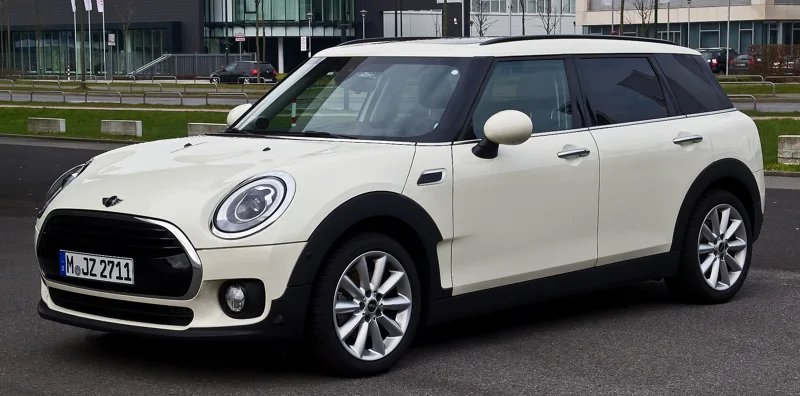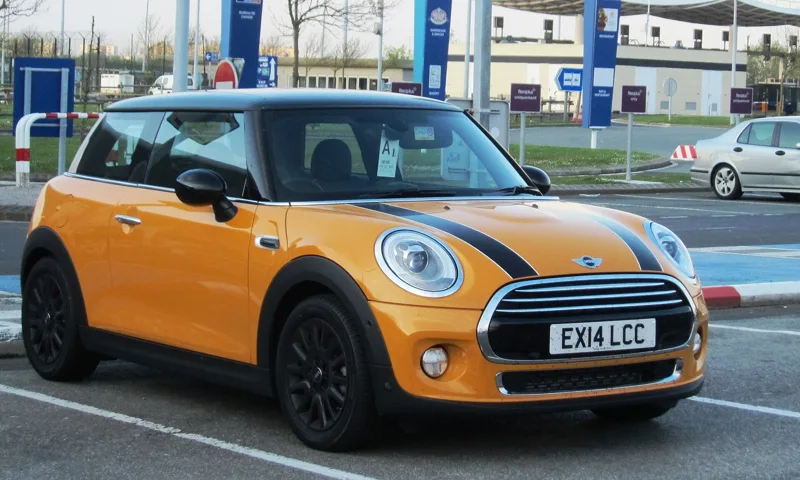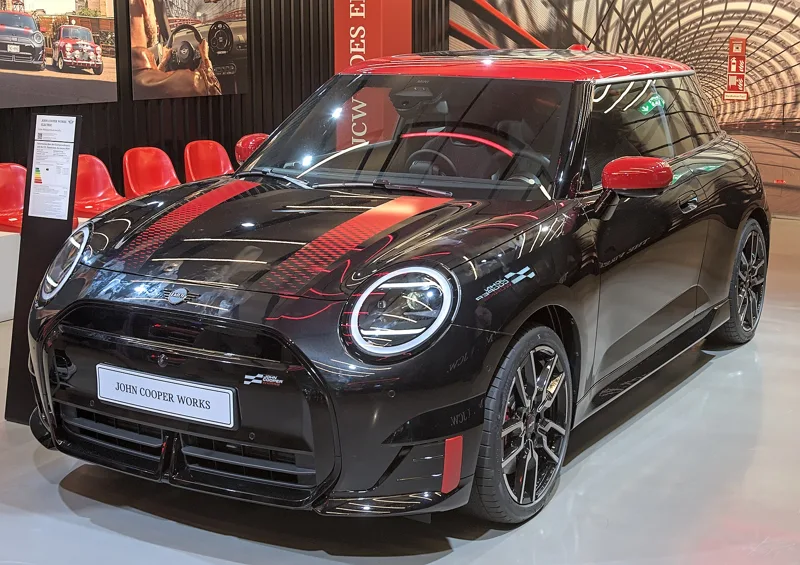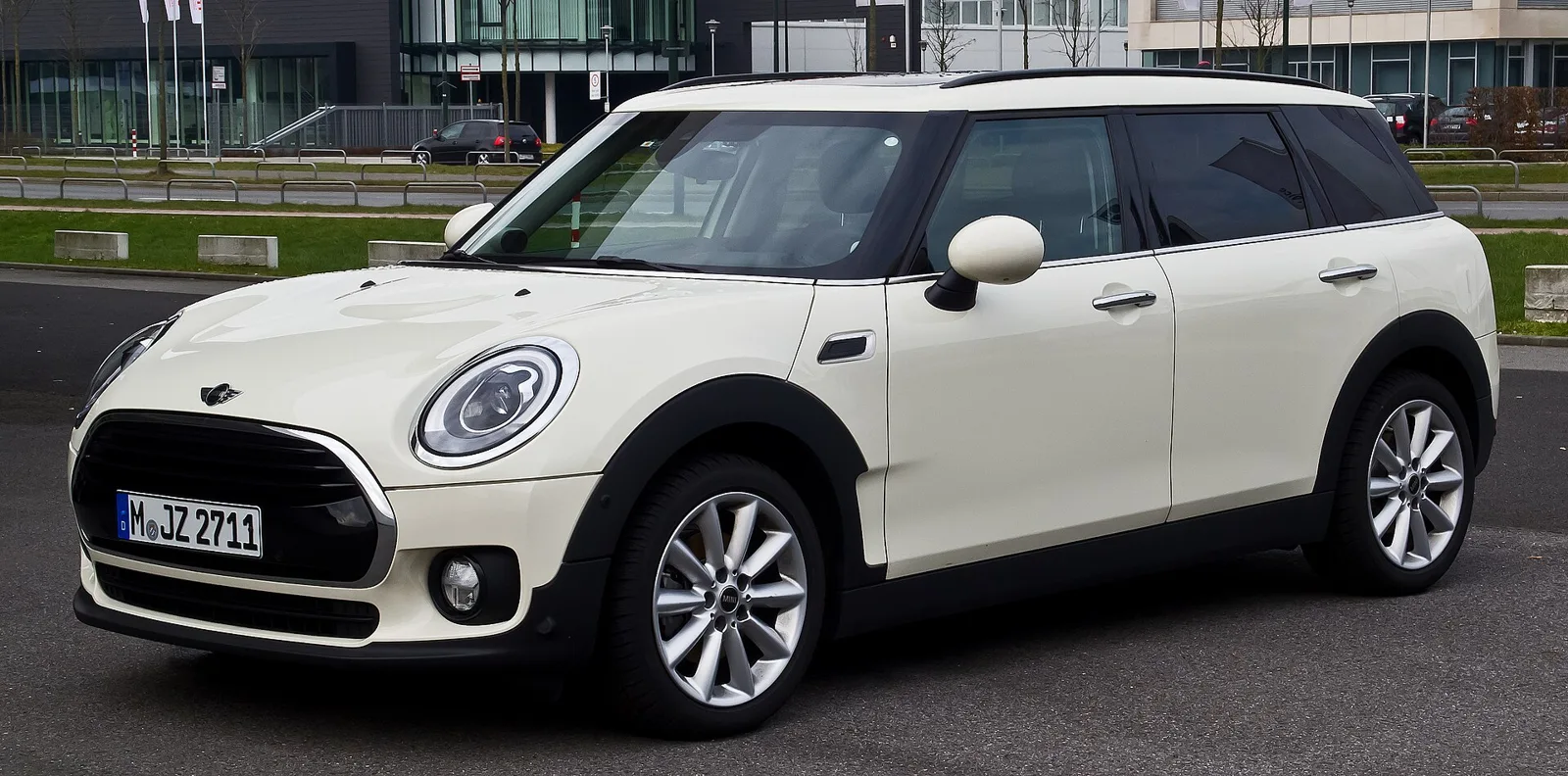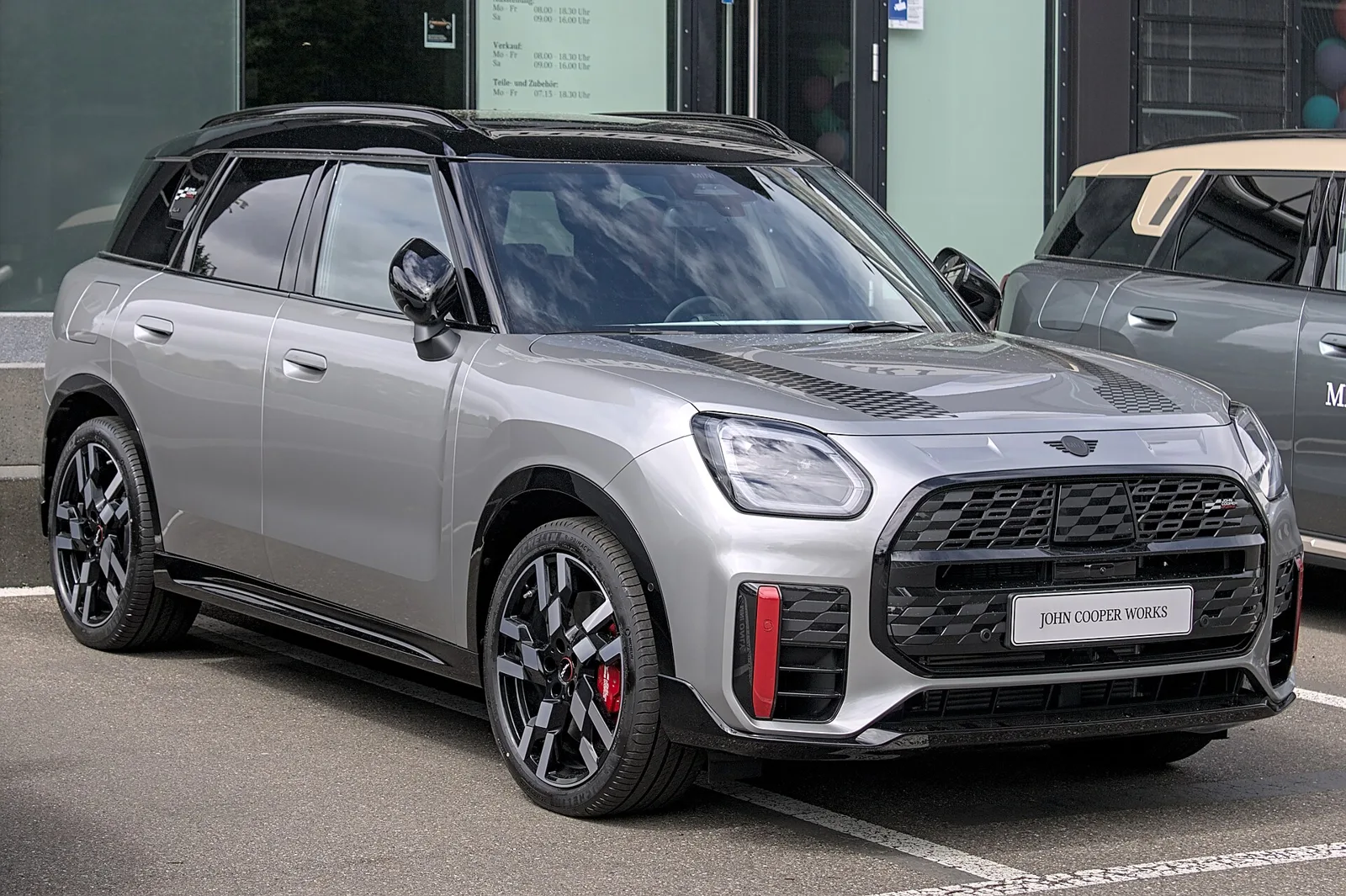
The family-sized Mini that tested the brand's small-car identity, won sales records in its first years and went on to rally, Dakar and hill-climb glory.
Launched by BMW in 2010 as the first Mini-branded crossover, the Countryman later moved through second and third generations. It came with petrol, diesel, plug-in hybrid and John Cooper Works versions, and it raced in the World Rally Championship and the Dakar Rally.
The Mini Countryman is a compact crossover SUV and the first vehicle of its type that BMW launched under the Mini name. It arrived in 2010, was given a facelift in 2014 and returned as a second generation in 2017, before a third generation followed in 2023.
Where did the Countryman come from?
The Countryman was previewed by the Mini Crossover Concept, which carried four doors and four seats and was shown at the 2008 Paris Motor Show. The concept set the basic shape that the production car later followed, which went on to have five doors.
A further study, the 2010 Mini Beachcomber Concept, took the idea in another direction. It had no doors and no conventional roof, and it featured ALL4 all-wheel drive and off-road wheels. It appeared at the North American show that year.
The production car's debut came at Geneva in 2010, where it appeared as a five-door crossover. Its styling tracked the concept closely, and British showrooms received the car from 18 September 2010.
A family-sized Mini that divided critics, outsold its siblings and then took its badge into the World Rally Championship and the Dakar Rally.
Which versions did the first Countryman offer?
The first car came in petrol and diesel models, and the mix varied by market. The range ran from the Cooper S down to the One D, with ALL4 variants of the Cooper S and the Cooper D. The United States and Russia were among the markets without the One versions or any diesel.
The line gained Cooper SD and Cooper SD ALL4 variants, plus automatic diesel versions of the Cooper D, from spring 2011. A Cooper ALL4 model followed in July 2013, extending the all-wheel drive choice.
The 2012 revisions brought EU6 emissions compliance for the One and Cooper models, along with a new clutch lining and updated software to cut stalling problems. These revised cars reached showrooms in November 2012.
How did the ALL4 all-wheel drive system work?
ALL4 relied on an electro-hydraulic differential mounted on the final drive of the transmission, which split power between the axles. In everyday driving, as much as half the engine's output could head rearward, and the system could shift that split as conditions changed.
In what Mini called extreme conditions, up to 100 percent of the power could be sent to the back wheels. The term was never defined precisely.
What did the Countryman John Cooper Works offer?
The first-generation John Cooper Works was a derivative of the Cooper S ALL4. Output rose to 218 PS (160 kW; 215 hp), with torque of 280 Nm (207 lb ft) and a peak of 300 Nm (221 lb ft) on overboost. The steering, suspension, wheels and appearance were also changed.
US cars made 260 Nm (192 lb ft) of torque and 211 PS (155 kW; 208 hp), with an overboost reading of 280 Nm (207 lb ft). They went on sale in July 2012 as 2013 model year cars.
How was the 2014 facelift changed?
The modest update debuted at the New York show in 2014 and reached showrooms in July 2014. It reshaped the hexagonal radiator grille, added underride guard parts for the Cooper S ALL4 and offered more body colours. The update left the engines unchanged.
All variants carried over. In the US the range included the Cooper, Cooper S, Cooper S ALL4 and John Cooper Works with ALL4, with a six-speed manual or an optional six-speed automatic gearbox. The Centre Rail was removed from the rear seats for the 2014 US model year, although it remained in the front.
How did the Countryman sell in its early years?
Within Mini's line-up the Countryman took second place to the Hardtop in popularity. Its first-year sales beat the combined totals of the Clubman, Convertible and Coupe by almost half, and around a third of the Minis sold in the US in 2011 were Countryman models.
The trend continued in 2012, when almost one in three Minis sold, both in the US and globally, was a Countryman. By the end of 2013 the Countryman accounted for 31 percent of total US sales for the Mini brand.
In 2012 worldwide sales reached 102,000 units, with 21,012 of those sold in the US. The 250,000th Countryman was built at Magna Steyr's Graz plant in March 2013.
Did critics approve of the Countryman?
Not all of them did. The Pulitzer Prize winning automotive writer Dan Neil argued in a March 2011 review that the car had jumped the shark, pushing the Mini ethos beyond what made sense for the brand. The review's headline asked BMW what part of Mini it had failed to grasp.
Neil's central complaint was that a longer, wider and taller car had abandoned the brand's core idea of excellent handling in a small package. The sales figures that followed were a sharp counterpoint to the argument.
How safe was the Countryman?
The Countryman earned five stars from Euro NCAP in November 2010. The second generation earned the same rating in May 2017. Euro NCAP scores run from zero to five stars, so both results were the top available, and both ratings came from the same testing body.
What changed in the second generation?
Mini revealed the second generation at the Los Angeles show in November 2016. European sales opened in February 2017, and other markets followed in March, with the Cooper and Cooper S offered in front- or all-wheel drive, which formed the core of the launch range.
In June 2017 the Cooper S E ALL4 plug-in hybrid joined the range. Measured against the first car, the new model was 203 mm (8.0 in) longer and 25 mm (0.98 in) wider. The Cooper used a turbocharged three-cylinder engine, while the Cooper S used a 2.0-litre turbo four.
How does the Cooper S E plug-in hybrid work?
The Cooper S E paired a 134 hp (100 kW) three-cylinder petrol engine with an electric motor rated at 65 kW (88 PS; 87 hp). The system delivered 221 hp (165 kW) and 385 Nm (284 lb ft) of torque in total.
The 7.6 kWh lithium-ion battery sat in front of the motor beneath the rear seat, Electric driving reaches up to 40 km (25 mi), and the car's top speed was 126 km/h (78 mph). A 240-volt socket took 3 hours and 15 minutes to charge the battery, and NEDC fuel use was rated at 2.10 L/100 km (112 mpg-US; 135 mpg-imp).
What was the second-generation John Cooper Works?
Mini brought back the John Cooper Works badge for this generation, based on the Cooper S. Its turbocharged 2.0-litre four received a heat-resistant turbocharger and an extra intercooler, producing 228 bhp (170 kW; 231 PS) and 350 Nm (258 lb ft) of torque.
The JCW reached 100 km/h from rest in 6.5 seconds, and it could be ordered with a six-speed manual or an eight-speed automatic. The automatic offered Normal, Sport and Eco modes. US fuel economy was 20 mpg-US in the city and 29 mpg-US on the highway with the manual, and 22 mpg-US in the city and 30 mpg-US on the highway with the automatic.
Summer 2019 brought an updated JCW, unofficially dubbed the JCW 306. Its output rose to 306 PS (225 kW; 302 hp), and it reached 100 km/h in 5.1 seconds.
What changed in the 2020 facelift?
The 2020 update gave the Countryman a sportier look, with switchback LED daytime running lights and indicators, tail-lights styled after the Union flag, and a fresh interior. It also received redesigned 18-inch alloy wheels, a revised grille and new front and rear bumpers.
What is the third-generation Countryman?
The third-generation Countryman was unveiled on 1 September 2023, with both battery electric and combustion powertrains. Four trim levels were offered: Essential, Classic, Favoured and JCW. Production of the combustion versions began in November 2023, and the electric Countryman followed in March 2024.
The JCW model pairs a turbo 2.0-litre four with ALL4 all-wheel drive. The car is the first from Mini to adopt the brand's Charismatic Simplicity design language, while keeping the core styling cues of its predecessors.
How does the third-generation Countryman differ inside?
The interior was simplified, with fewer buttons and a single centrally mounted 9.4-inch (24 cm) OLED touchscreen running MINI OS 9. The screen can also be operated by the MINI Intelligent Personal Assistant, and it offers eight configurable Experience Modes.
Textile surfaces in a dual-tone design now cover the interior, a first for the model. Chrome decorative trim was left out for environmental reasons, and the car uses the UKL2 platform that BMW shares with the X1.
The car is also the first in the range to offer Level 2 driver assistance, which allows semi-automated driving up to 60 km/h (37 mph).
Did the Countryman race?
Yes. Plans to race a Countryman in the World Rally Championship surfaced in July 2010, with the car set to enter from 2011 and run a full season from 2012. The rally car was developed with Prodrive from early 2009, using a 1.6-litre turbocharged four from BMW Motorsport.
The works crew first tested it at the 2011 Rally d'Italia Sardegna. After one season Mini stepped back from the works effort, yet the car kept competing and took wins at the 2012 Qatar International Rally and the 2014 Barum Czech Rally Zlin.
The All4 also made its mark in the Dakar Rally. Stephane Peterhansel drove one to victory in 2012, and the team from X-raid won the 2013 event. Nani Roma took the car category at the 2014 Dakar, and a later win in 2015 gave the car four consecutive Dakar titles.
Other results followed in the Abu Dhabi Desert Challenge, where the team won five times from 2011. A Countryman-based entry finished third overall at the 2013 Pikes Peak International Hillclimb with 900 bhp, and Jean-Philippe Dayraut took the Andros Trophy ice racing title in 2013 and 2014 at the wheel of a Countryman.
Where was the Countryman built?
The first generation was mainly produced in Graz, Austria, by Magna Steyr under contract. That made it the first BMW-era Mini built entirely outside the UK. In 2013 assembly expanded to Chennai in India, Kulim in Malaysia and Rayong in Thailand.
The second generation has been built at VDL Nedcar in Born, the Netherlands, since November 2016. Third-generation cars have come from BMW's Leipzig plant in Germany since early 2024.
What are the Mini Countryman specifications?
| Specification | Detail |
|---|---|
| Launch | 2010, unveiled at the Geneva Motor Show; UK sales from 18 September 2010 |
| Generations | First (2010), second (2017), third (2023) |
| Second-generation size | 203 mm (8.0 in) longer and 25 mm (0.98 in) wider than the first |
| First-generation JCW | 218 PS (160 kW; 215 hp), 280 Nm (207 lb ft), overboost 300 Nm (221 lb ft) |
| Cooper S E plug-in hybrid | Three-cylinder petrol plus 65 kW (88 PS; 87 hp) motor; 221 hp (165 kW) system output |
| Cooper S E battery | 7.6 kWh lithium-ion; all-electric range up to 40 km (25 mi) |
| Cooper S E top speed | 126 km/h (78 mph) |
| Second-generation JCW | 228 bhp (170 kW; 231 PS), 350 Nm (258 lb ft), 0 to 100 km/h in 6.5 seconds |
| JCW 306 | 306 PS (225 kW; 302 hp), 0 to 100 km/h in 5.1 seconds |
| Euro NCAP | 5 stars in November 2010 and May 2017 |
| Third-generation display | 9.4-inch (24 cm) OLED touchscreen, MINI OS 9 |
| Driver assistance | Level 2, semi-automated driving up to 60 km/h (37 mph) |