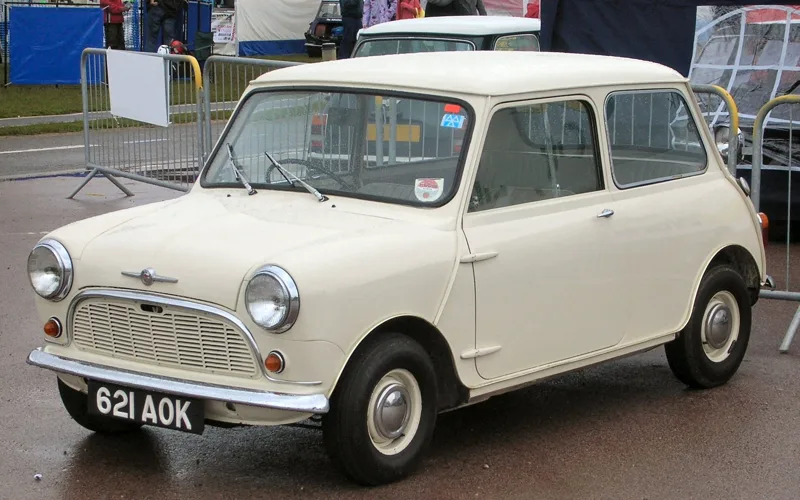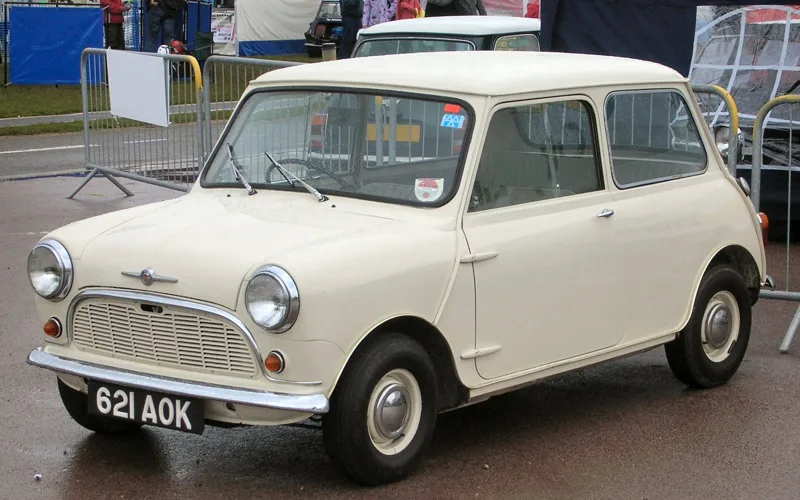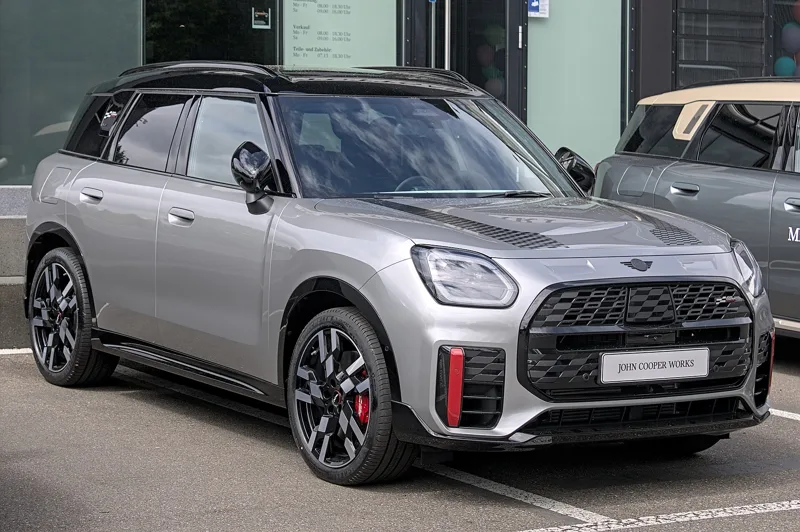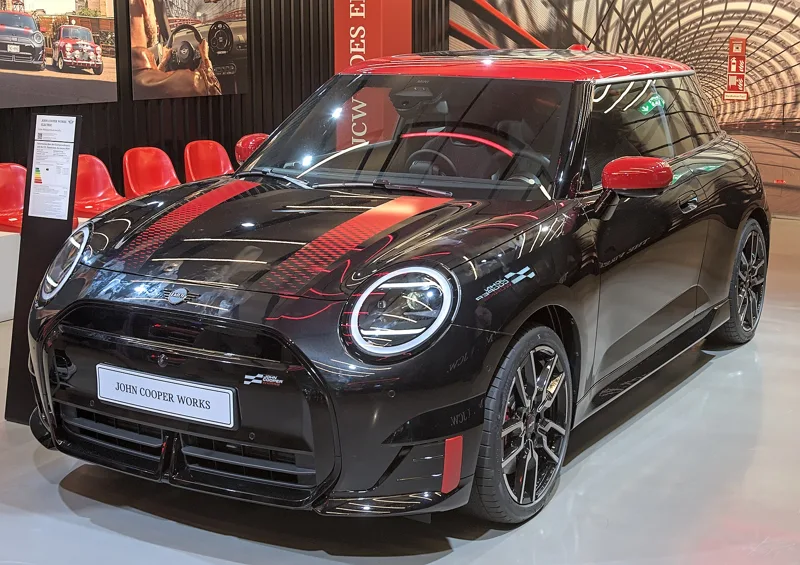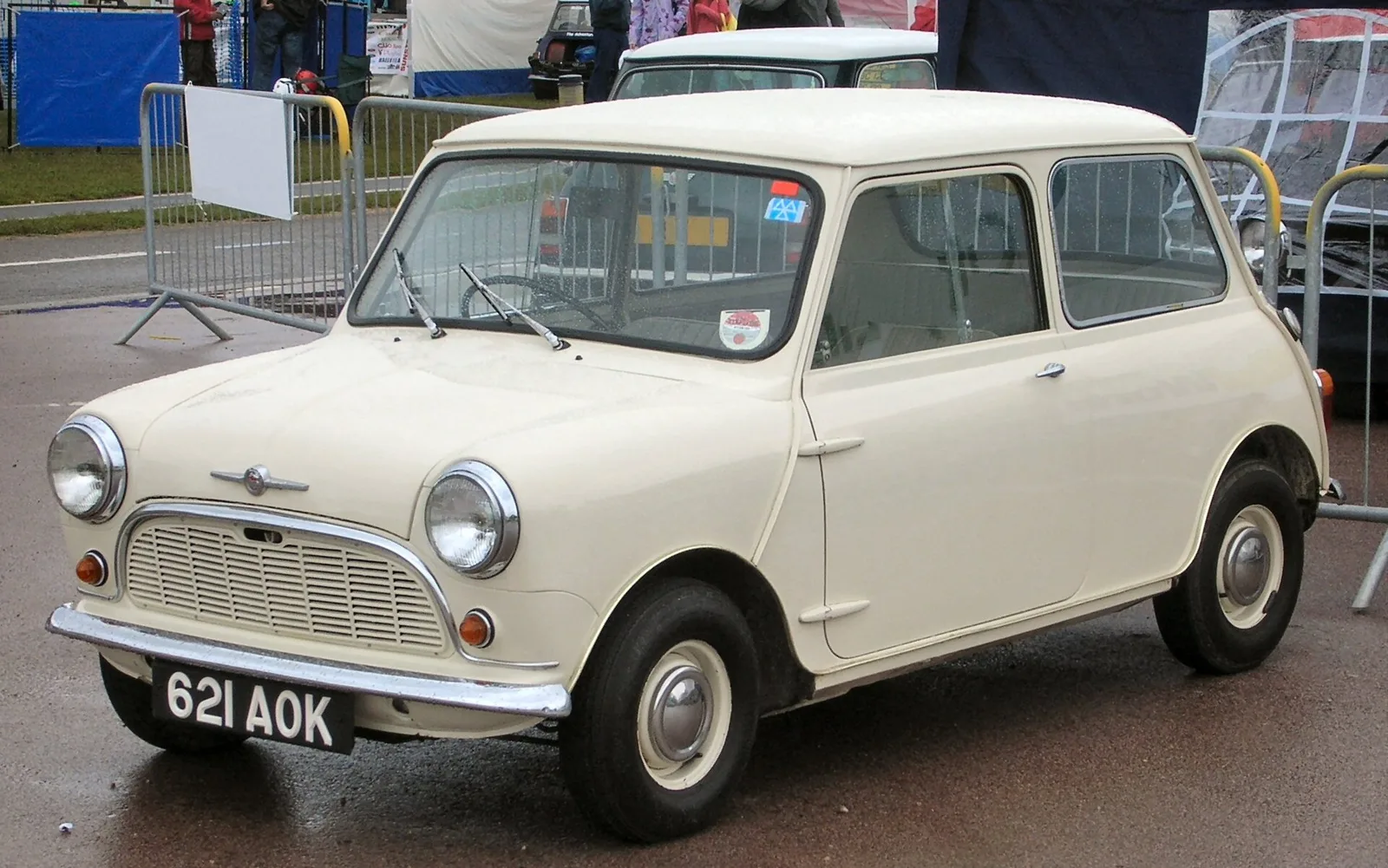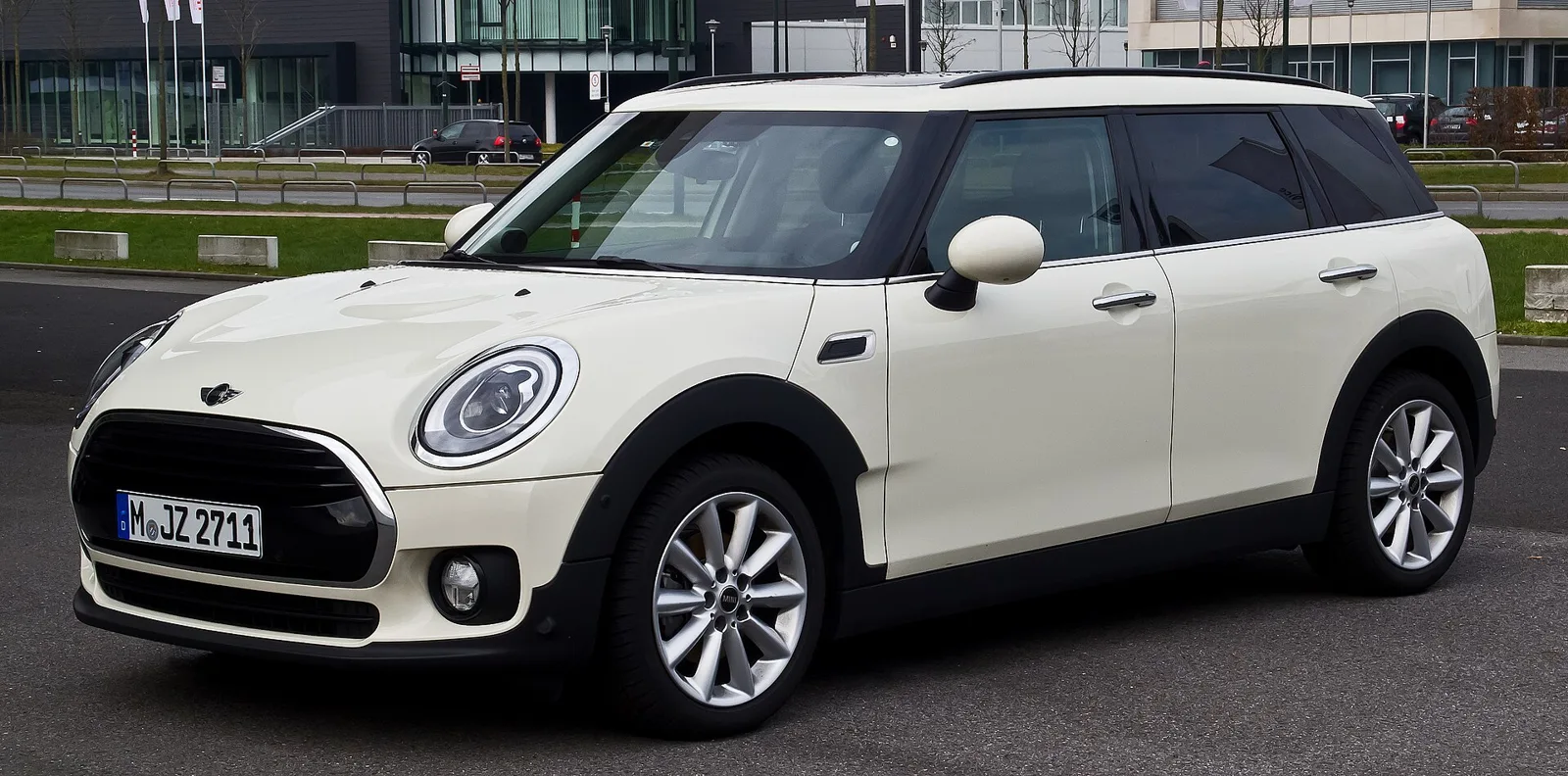
From a 1959 space-saving classic to a BMW-era range of hatches, convertibles and crossovers, the Mini name has changed hands and continents while keeping its shape.
Mini is a British small-car brand owned by BMW since its 1994 purchase of the Rover Group. The name appeared in model names from 1959, and the original two-door car sold about 5.3 million units. BMW's current Mini line spans hatches, convertibles and crossovers.
Mini is a British car brand that has belonged to BMW since 1994 and has been marketed by it since 2000. Its roots lie in the small car launched in 1959, and the name has stood alone as a brand since 1969. Today the range runs from the Cooper hatch to the Countryman and Aceman crossovers.
When did Mini become a brand in its own right?
Mini became a marque in its own right in 1969, when the separate Austin Mini and Morris Mini names were dropped in favour of Mini alone. BMW bought the brand in 1994 when it acquired the Rover Group, and it has marketed Mini since 2000. The name now sits on a range of small cars built in several countries.
The word Mini had appeared in car model names since 1959. The original car was made by the British Motor Corporation, which became British Motor Holdings in 1966. That group merged with Leyland Motors in 1968 to form British Leyland, and Rover, which later owned the brand, was sold to British Aerospace in 1988.
A 1959 space-saving classic that became a BMW-era range of hatches, convertibles and crossovers.
How did the original Mini change small cars?
The original two-door Mini, launched in August 1959, used a front-wheel-drive layout that gave 80% of the floor area to passengers and luggage. Sir Alec Issigonis designed it for BMC. It influenced a generation of car makers and was voted the second most influential car of the 20th Century in 1999, behind the Ford Model T.
Production spread well beyond England. The car was built at Longbridge and Cowley, at a factory in Sydney, and later in a number of other countries. Early cars were sold under the Austin and Morris names until the brand change of 1969.
Sporting versions carried the Cooper name, from the partnership with racing team owner John Cooper. The Mini Cooper S won the Monte Carlo Rally in 1964, 1965 and 1967. Its 1966 placings were later disqualified over a headlamp dimming circuit, which cost the team a result it had seemed to win.
Why did BMW buy the Mini brand?
BMW bought the Rover Group in 1994 and with it the Mini name. BMW's own standards demanded rear-wheel drive and traditional character in any compact, but the Mini marque was not bound by them. BMW saw a chance for a competitively priced yet premium small car, and that idea shaped its plan for the premium 1 Series and a mid-range Mini.
Rover had been working on a successor too. The ACV30 concept, shown at the 1997 Monte Carlo Rally, took its name from Anniversary Concept Vehicle, with the 30 standing for the years since a Mini first won the rally. Two Spiritual concepts followed months later, but none of these reached production.
In 1998 BMW began the production car. It chose a design from 15 full-sized studies. Five came from BMW Germany and five from BMW Designworks in California, while Rover supplied four and an Italian studio supplied one. The winner came from BMW Designworks and was led by the American designer Frank Stephenson.
How did the new Mini launch in 2001?
The new Mini Hatch/Hardtop reached showrooms in July 2001 and sold strongly from the start. It was built at the former Morris Motors site at Cowley, Oxfordshire, which BMW redeveloped as Plant Oxford. The last original two-door Mini, the 5,387,862nd, had been built at Longbridge in October 2000.
That final car was a red Cooper Sport, driven off the line by the singer Lulu. It now sits at the Heritage Motor Centre in Gaydon, beside the first Mark I ever made.
What were the classic Mini Marks?
The classic two-door Mini went through seven marks. Mark I launched in August 1959, and Mark III arrived in 1969 with larger doors and concealed hinges. Mark VII, launched in 1996, was the final version, adding twin-point injection, a full-width dashboard and a driver's airbag.
- Mark I, launched in August 1959, with exterior door hinges and a moustache grille
- Mark III, 1969, with a modified bodyshell and winding windows
- Mark IV, 1976, with a front rubber-mounted subframe and twin stalk indicators
- Mark V, 1984, with 8.4-inch (210 mm) brake discs and plastic wheel arches
- Mark VI, 1990, with engine mounts moved forward to take 1,275 cc units
- Mark VII, 1996, the final original two-door Mini
Which Mini models has BMW launched?
BMW's Mini range began with the Hatch/Hardtop in 2001, followed by the Convertible in 2005, the Clubman estate in 2008 and the Countryman crossover in 2010. Two-seat Coupe and Roadster models came in 2012, the Paceman in 2013, and a third-generation hatch in 2014.
The Clubman is 240 mm (9.4 in) longer overall than the hatch, with a stretched wheelbase and twin rear 'barn doors' in place of a single hatch. The Countryman, announced in January 2010, was the first Mini crossover and the first five-door of the BMW era, with ALL4 four-wheel drive on offer.
The Coupe was revealed in June 2011 as the first two-seat Mini, with a three-box layout that separated engine, passengers and luggage. The John Cooper Works version reached 62 mph (100 km/h) from rest in 6.4 seconds, with a top speed of 149 mph (240 km/h).
What changed with the second-generation Mini?
The second-generation hatch arrived in November 2006 on a re-engineered platform, with a Prince engine shared with PSA Peugeot Citroen and built at Hams Hall in Warwickshire. Although it looked similar, its overall length grew by 60 mm (2.4 in) to meet new safety rules.
A diesel Cooper D arrived in April 2007, and the Mini First launched in the UK in 2009 as a low-cost, petrol-only model with less power.
How many Minis have been sold?
About 5.3 million original two-door Minis were sold, making it the most popular British car of all time. Under BMW, worldwide sales reached 301,526 vehicles in 2012, with the United States the largest market at 66,123 units.
Annual figures climbed from 188,077 deliveries in 2006 to 232,425 in 2008, and 216,538 cars were delivered in 2009. Worldwide sales rose 22% in 2011 to 285,000 cars. The Countryman alone sold 102,250 units in 2012.
Where are Minis built today?
Mini cars are built at Plant Oxford in Cowley, with engines from the Hams Hall plant near Birmingham and body pressings from Swindon. The Countryman is also assembled outside the UK under contract, in Austria, Germany and the Netherlands.
Plant Oxford employs 4,000 associates and produces up to 800 cars a day, or about 240,000 a year. Its bodyshop holds 429 robots, and final assembly fits 2,400 components for the many variants. Swindon, which makes doors and sub-assemblies, has 1,000 employees and 135 welding robots.
From 2024 all combustion-engined Cooper hatch and convertible production is centred at Oxford. Mini production in the Netherlands ended on 16 February 2024.
Did Mini race in rallies?
Yes. Mini's rally reputation rests on the Cooper S, and the brand returned to the World Rally Championship in 2011 and 2012. Prodrive prepared the Countryman WRC cars after the programme was announced on 27 July 2010.
The factory team ran a reduced programme in 2011 before its funding was cut, and Prodrive continued to build the cars and self-funded a smaller effort in 2012.
Did Mini build electric cars?
Yes. The Mini E was a front-wheel-drive electric version unveiled in 2008 with 204 PS (150 kW; 201 hp), a range of 240 km (150 mi) and a top speed of 152 km/h (94 mph). BMW leased 450 cars to private users in Los Angeles and the New York area.
More than 40 cars went to UK private users in a trial, and the Mini E programme was part of BMW's wider electric testing. On 30 March 2021 Mini announced the fully electric Pacesetter, which serves as the Formula E safety car.
What awards has the Mini won?
The original Mini was named Car of the Century by Autocar magazine in 1995 and European Car of the Century in a 1999 internet poll. The BMW-era Mini Cooper won North American Car of the Year in 2003, and the Cooper S was named Top Gear's Small Car of the Year in 2006.
In 2013 the 1.6-litre TwinPower Turbo engine won International Engine of the Year for the third time in a row in its class. Dr Alex Moulton, who designed the original suspension, was a sharp critic of the later car's size, noting that it weighed about the same as an Austin Maxi.
What engines did the classic Mini use?
The classic Mini used the A-series engine, which first came as an 848 cc unit before 997, 998, 1071 and 1275 cc versions followed. Cooper models kept a remote shift, while non-Cooper cars used a 'magic wand' gear selector. An automatic four-speed gearbox arrived in 1965.
The original Mini also spawned an estate, a van, a pickup and the Mini Moke. The estate and two-seat van arrived in 1960 on a longer wheelbase, and the pickup followed in 1961.
How did Mini market its cars?
Mini's advertising has leaned on playful campaigns. Butler, Shine, Stern and Partners produced the Hammer and Coop video series in 2007, and Crispin Porter and Bogusky made the film Counterfeit Mini Coopers as part of the same effort.
Has Mini faced criticism?
Yes. US regulators ordered BMW to lower the fuel economy ratings of four 2014 Mini Coopers after EPA tests did not match the automaker's own submissions. Critics also questioned the brand's direction with the Countryman.
The Pulitzer Prize-winning journalist Dan Neil argued that the Countryman pushed the marque beyond relevance, making a car so long, wide and tall that it abandoned the brand's core idea of sharp handling in a tiny size.
Mini at a glance
| Specification | Detail |
|---|---|
| Marque status | In its own right from 1969 |
| BMW ownership | Acquired in 1994 through Rover Group; marketed since 2000 |
| Original production | 1959 to 2000, two-door car |
| Original sales | About 5.3 million |
| Global sales in 2012 | 301,526 vehicles |
| Main UK plant | Plant Oxford, Cowley; up to 800 cars a day |
| Netherlands production | Ended 16 February 2024 |
| Current models | Cooper, Countryman and Aceman |