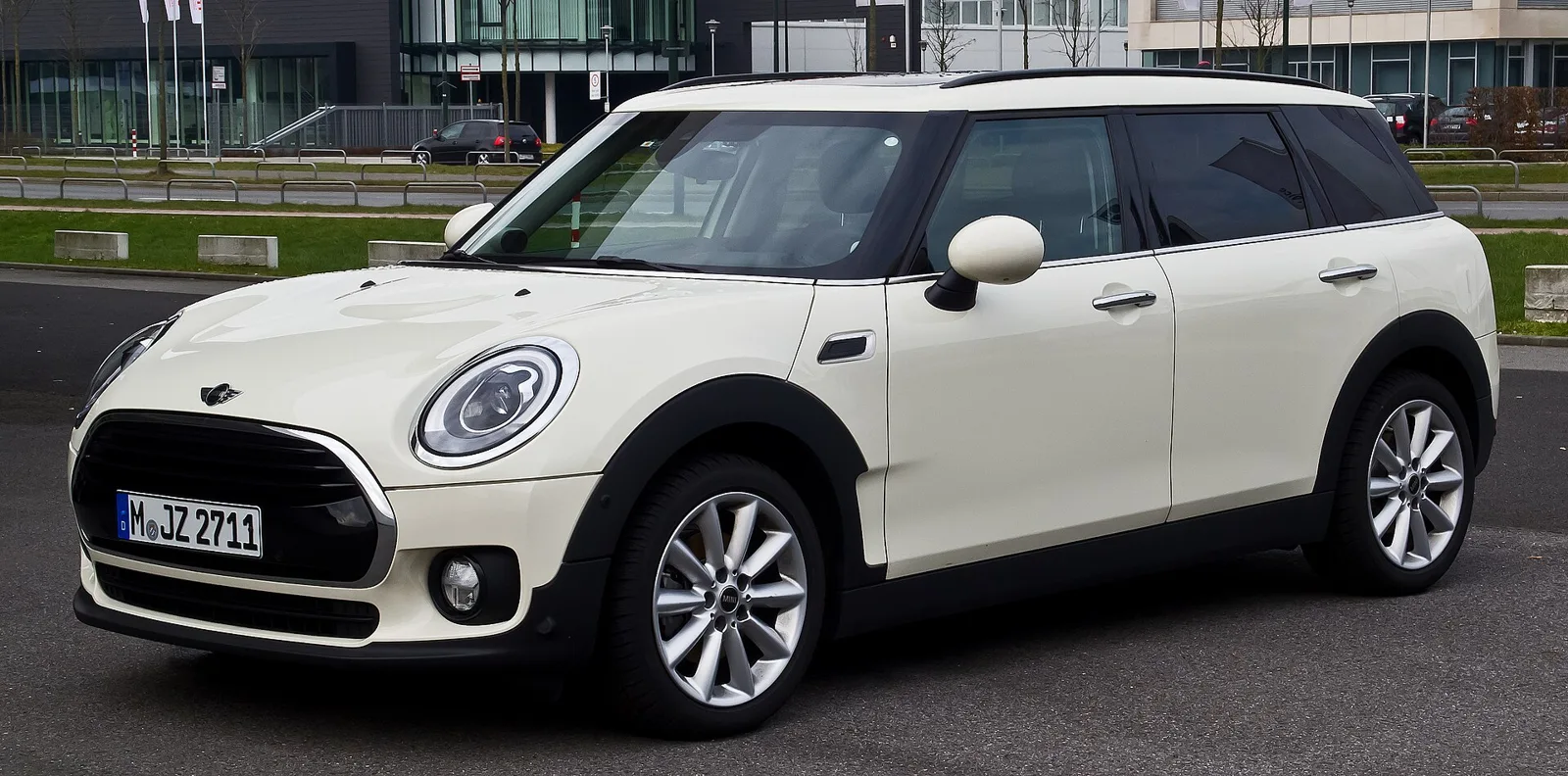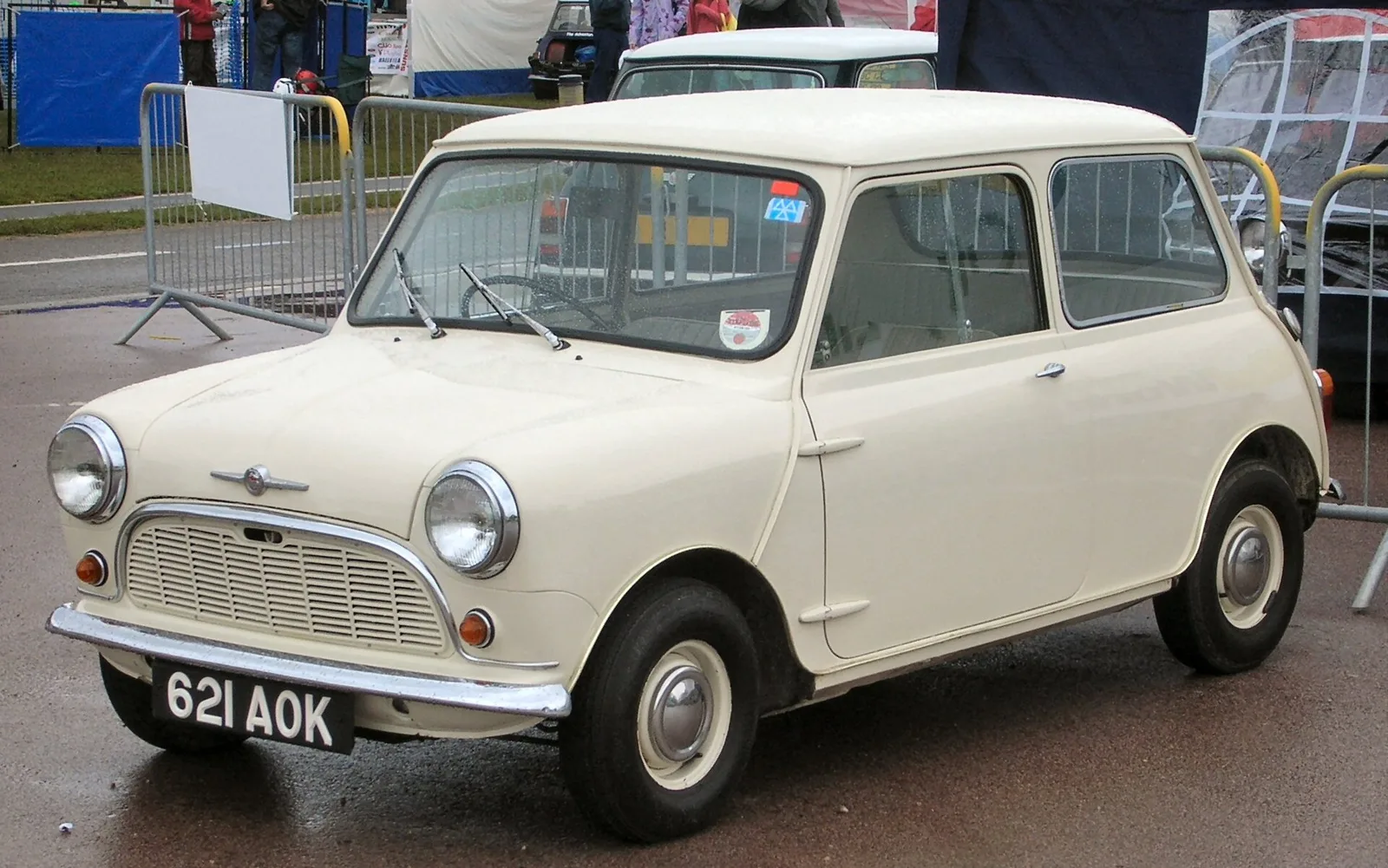
A fuel crisis, a boss who hated bubble cars and a sideways engine produced the best-selling British car in history.
The classic Mini was a small British car designed by Alec Issigonis for BMC and announced on 26 August 1959. Its sideways engine and front-wheel drive freed 80% of the floor for people and luggage. About 5.38 million were built before production ended in October 2000, and BMW revived the name in 2001.
The brief for the classic Mini was almost insultingly small: a box 10 feet long and 4 feet wide and high, with 6 of those feet for passengers. Alec Issigonis, the engineer handed that box, delivered a car that made the sideways engine and front-wheel drive the template for small cars.
Why was the original Mini built?
The 1956 Suez Crisis brought petrol rationing back to Britain. Sales of large cars slumped, and German bubble cars, odd little machines that were rare on British roads until then, suddenly sold well. Leonard Lord, who ran the British Motor Corporation (BMC), took the trend as a personal insult.
Lord reportedly loathed the bubble cars so much that he swore to clear them from the streets with a "proper miniature car" of BMC's own. He set three conditions. The car had to fit inside that 10 x 4 x 4 foot box (3.0 x 1.2 x 1.2 m), passengers had to occupy 6 feet (1.8 m) of the length, and, to keep costs down, the engine had to be one BMC already made.
Issigonis was already on the payroll for something grander. He had returned to BMC at the end of 1955 to design a family of three cars, coded XC/9001 for a large comfortable model, XC/9002 for a medium one and XC/9003 for a small town car. The smallest was the lowest priority, even though it interested him most. When Lord's revised requirements arrived in October 1956, work on the big car stopped and XC9003 jumped the queue.
A small group built it fast. Alongside Issigonis worked John Sheppard, Jack Daniels, Chris Kingham, Charles Griffin, Vic Everton, Ron Dovey, Dick Gallimore and George Cooper, and by July 1957 they had a running prototype. Its orange paint earned it the name "Orange Box". Lord approved the car for production on 19 July, and the project took the official number ADO15.
He wanted the first impression to be that it could only be a Mini.
Who was Alec Issigonis?
Sir Alexander Arnold Constantine Issigonis was born on 18 November 1906 in the Ottoman port of Smyrna, the only child of a wealthy shipbuilding engineer. As British subjects, the family was evacuated to Malta by the Royal Navy in September 1922, and he and his mother reached the United Kingdom in 1923. He died on 2 October 1988.
He studied engineering at Battersea Polytechnic in London and failed his mathematics exams three times, later calling the subject the most uncreative one a person could study. From about 1930 he raced a supercharged Austin Seven, then built a radical special finished in 1939, the Lightweight Special, made of plywood laminated in aluminium sheeting with rubber springs cut from catapult elastic. The whole car weighed 587 lb, of which the engine accounted for 252 lb.
His career moved from Humber to Morris Motors in 1936, where he worked as a suspension designer. Towards the end of the war he began the postwar car codenamed Mosquito, which became the Morris Minor and stayed in production from 1948 until 1971. At Alvis from 1952 he drew an all-aluminium V8 saloon, which cost more than the firm could afford to build.
Colleagues nicknamed him "the Greek god". Oddly, he was proudest of the Morris Minor and of the Austin 1800, not the Mini, which he regarded as a spartan design next to them. The honours stacked up regardless: a CBE and the title Royal Designer for Industry in 1964, a Fellowship of the Royal Society in 1967, and a knighthood on 22 July 1969.
How did the Mini fit so much into ten feet?
By turning the engine sideways. The ADO15 used BMC's four-cylinder A-Series engine, but mounted it across the car with a four-speed gearbox tucked into the sump, sharing the engine's oil, and drove the front wheels. Because the drivetrain sat in a tight bundle at the nose, 80 per cent of the floorpan could be given over to passengers and luggage.
Think of it as packing a suitcase by putting the bulky items together in one corner. The clutch fed power into a set of gears on the end of the crankshaft, and those gears produced the shrill transmission whine the Mini became known for. The radiator went on the left-hand side, with its fan reversed to blow air out, which saved length but meant the radiator breathed air already warmed by the engine.
Almost every small front-wheel-drive car since has copied the layout in some form, typically with the gearbox housed separately instead of sharing the sump oil. The Honda N360 of 1967, the Nissan Cherry of 1970 and the Fiat 127 of 1971 all followed it.
Wheels, doors and bins
Issigonis specified 10-inch (254 mm) wheels, so Dunlop had to develop new tyres. He actually asked for 8-inch (203 mm) wheels first, and Dunlop refused. The two sides settled on 10 inches.
Inside, every centimetre was scrutinised. Sliding windows made single-skin doors possible, giving more elbow room at lower cost. A brace across the door frame became a deep storage bin in each door, and Issigonis said he sized them to hold a bottle of vermouth and two of gin, the proportions of his favourite dry martini. More bins sat beside the rear seats, and early cars could be ordered with wicker baskets shaped to slide under the seats.
The boot lid hinged at its lower edge, so the car could be driven with it open to carry bulky items. The number plate swung down on its own hinge to remain visible, a feature dropped once someone discovered exhaust fumes could leak into the cabin with the boot open. The rear parcel shelf stiffened the body, although it ruled out ever fitting a hatchback.
Seams on the outside
The body is a monocoque with its welded seams left visible outside, along the A and C pillars and between body and floor. Turning the seams outwards gave the front occupants extra width, and external door and boot hinges saved a little more cabin space.
The design had a bonus for factories abroad. With the seams acting as guides, panels almost aligned themselves, so a car could be assembled with hardly any jigs from knock-down kits in countries with basic industry. The panels could be stacked flat for shipping. In the first months of production, though, welding every structural panel to the top of a single floor pressing let water into the cabin, and that was quickly changed.
Early prototypes were fully unitary, and they cracked under the loads the suspension produced. Steel subframes carrying the drivetrain and suspension, at the front and rear, solved the problem. They also meant that any body shape that could accommodate the subframes was possible, which is how the estate, van and pick-up arrived.
What made the Mini handle like a go-kart?
The answer is rubber and wheel placement. Alex Moulton, a friend of Issigonis, designed a suspension that used compact cones of solid rubber in place of conventional springs. The cones saved room in the cabin, needed no maintenance and became stiffer as they were compressed, so the car rode small bumps smoothly but resisted roll and pitch on rougher surfaces.
Rubber cones also coped with a big swing in weight. An empty Mini weighed about 600 kg (1300 lb), while a fully laden one weighed just over 1000 kg (2240 lb), an increase of 70 per cent. Put a wheel at each corner of such a short, stiff car and the handling felt like a go-kart, even if the ride was raw and bumpy and the woven-webbing seats did little to soften it.
The suspension Issigonis wanted was different. He and Moulton had been working on an interconnected fluid system, taking inspiration from the Citroen 2CV but adding roll stiffness it lacked. Development time ran out. The Hydrolastic system debuted on the Morris 1100 in 1962, and the Mini only received it in 1964. The Mark III dropped it again in 1969 and returned to rubber cones as a cost saving.
Too fast for its own good
Prototypes used a 948 cc A-Series engine that gave a top speed of about 80 mph (129 km/h), far more than the price and purpose of the car required. The engine was cut to 848 cc with a shorter stroke, which took power from 37 down to 33 bhp. The body was also widened by 2 inches (5.08 cm) over the XC9003 prototype, which helped stability and roadholding at the cost of a little top speed. The finished ADO15 managed 75 mph (121 km/h), still quicker than many economy cars of the time.
How did the Mini reach the public in 1959?
BMC showed the production Mini to the press in April 1959. By August several thousand cars were ready, and the car was announced on 26 August 1959, with some 2,000 examples already shipped abroad and displayed that day in almost 100 countries.
Two badges carried it. The Morris version was the Mini-Minor, a play on the successful Morris Minor, since "minor" is Latin for "lesser" and the new car was lesser still. The Austin version was the Austin Seven, recalling the small Austin 7 of the 1920s and 1930s. The Austin Seven became the Austin Mini in 1962, and in 1969 Mini became a marque in its own right.
The original car measured 3,054 mm (10 ft 0.25 in) long, 1,422 mm (4 ft 8 in) wide and 1,397 mm (4 ft 7 in) high, on a wheelbase of 2,032 mm (6 ft 8 in), and weighed about 590 kg (1,290 lb) unladen. Its first engine was 848 cc. The Dewar Trophy, an award from the Royal Automobile Club, went to BMC and Issigonis in 1959 for the car's design and production. A 2-seater van and an estate on a longer wheelbase followed in 1960, and a pick-up in 1961.
How did the Mini Cooper win Monte Carlo?
The Mini Cooper and Cooper S were the sporty versions, named after the racing team owner John Cooper, whose partnership with the company produced them. They proved successful in both circuit racing and rallying, and the Monte Carlo Rally is where they made their name.
In 1966 the Mini was disqualified after the finish, together with six other British entrants, including the first four cars across the line, under a ruling over headlamps and spotlights.
The Coopers differed from standard Minis in small ways. They had a remote gear-change selector, whereas the ordinary cars had a four-speed box with a "magic wand" selector and no synchromesh on first gear. An automatic four-speed option appeared in 1965.
How long did the original Mini stay in production?
Four decades, almost without a break. From 1959 into 2000, an estimated 5.38 million Minis of all kinds left factories, and the final one, the 5,387,862nd, was a red Cooper Sport finished at Longbridge in October 2000. The singer Lulu drove it off the line, and it now sits at the Heritage Motor Centre in Gaydon beside the first Mark I ever made.
| Version | Launched | Main changes |
|---|---|---|
| Mark I | 1959 | External door hinges, sliding glass, 848 cc engine at first, with 997, 998, 1071 and 1275 cc units added later |
| Mark II | 1967 | Minor modifications |
| Mark III | 1969 | Larger doors with concealed hinges, winding windows, rubber cones replace Hydrolastic |
| Mark IV | 1976 | Front rubber-mounted subframe, twin stalk indicators |
| Mark V | 1984 | 8.4-inch (210 mm) brake discs, plastic wheel arches |
| Mark VI | 1990 | 1,275 cc engines, single-point fuel injection from 1991, 998 cc units dropped |
| Mark VII | 1996 | Twin-point injection, front-mounted radiator, full-width dashboard, driver airbag |
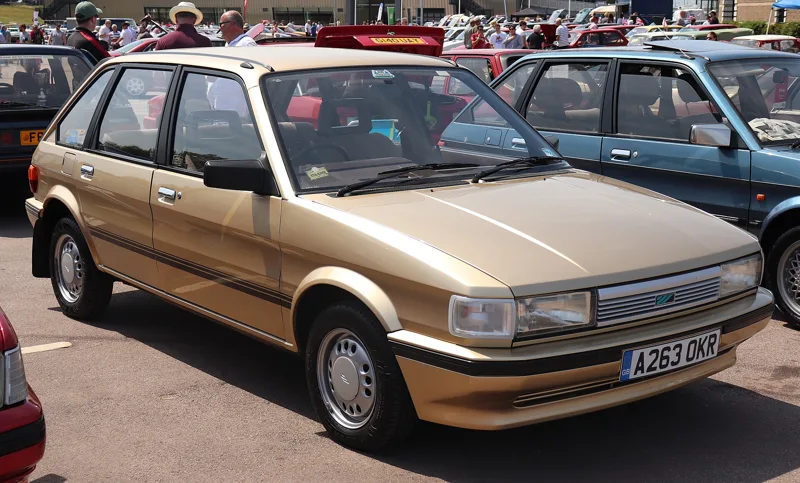
The Mini was built at Longbridge in Birmingham, beside BMC's headquarters, and at the former Morris plant at Cowley, where production ended with the Mark III in 1969. A Sydney factory at Victoria Park and Zetland made it too, and later Spain, Belgium, Italy, Chile, Malta, Portugal, South Africa, Uruguay, Venezuela and Yugoslavia joined in. When British Leyland launched the Austin Metro in 1980 as its follow-up, the Mini simply outlasted it.
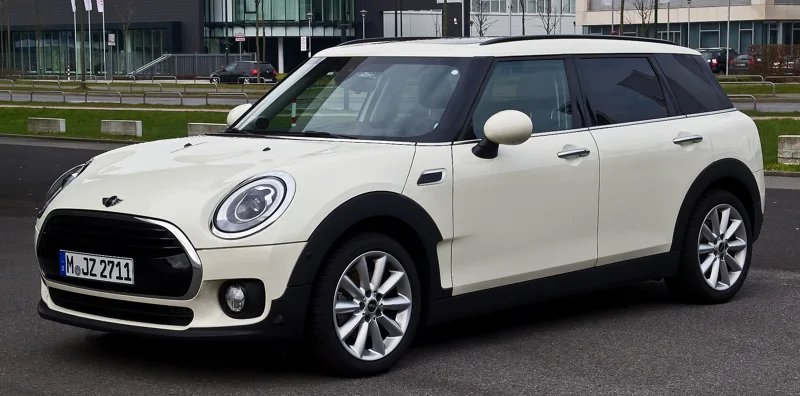
The family stretched well beyond the saloon, to the Clubman, the estate, the van, the pick-up and the Mini Moke, a jeep-like buggy first meant for military use that later gained cult status. By the 1990s Rover Group, heir to BMC, was able to register the Mini's shape as a trademark. A 1999 vote named it the 20th century's second most influential car. Only the Ford Model T beat it, while the Citroen DS and Volkswagen Beetle finished behind.
How did BMW revive the Mini name?
BMW bought the Rover Group from British Aerospace in early 1994, and with it the Mini. It wanted a compact model without giving up BMW's usual rear-wheel-drive rules, and the Mini badge, which carried no such baggage, looked like the route to a competitively priced premium small car. Rover was working on its own successor at the same time. Its ACV30 concept, shown at the 1997 Monte Carlo Rally, took its name from the 30 years since a Mini first won there, and used a rear-mounted MG F engine. Months later came the Spiritual and Spiritual Too concepts, which stayed on the show stand.
BMW began the real project in 1998. It picked a design from 15 full-sized studies: five from BMW in Germany, five from its Designworks studio in California, four from Rover and one from an outside studio in Italy. The winner was by the American designer Frank Stephenson, who led the team in Munich that developed the car. Rover's parallel effort in England had already been dropped in 1995. Stephenson told Autocar he wanted the first impression to be that "it could only be a Mini".
The new Mini reached showrooms in July 2001 and sold strongly from the start, built at the old Morris site in Cowley, now called Plant Oxford. The range opened with the One, Cooper and Cooper S, and the Cooper S and John Cooper Works versions carried a supercharger until the second generation switched to a turbocharger. Engines at first came from the Tritec plant in Brazil, co-developed by Chrysler and BMW, and in August 2006 BMW said future engines would be built in the UK. The last car of that first generation was the Cooper S with the John Cooper Works GP Kit, a limited run of 2,000 cars.
Investment followed the sales. BMW announced 100 million pounds for the Oxford plant in February 2005, creating 200 jobs and lifting output by 20 per cent, and another 500 million pounds in the UK over three years in June 2011, as the range grew to seven models.
Where this goes next
In July 2017 BMW said an electric Mini would be built at Cowley from 2019, and also in China. In September 2023 the company announced plans to invest hundreds of millions of pounds to prepare Cowley for a new generation of electric cars, but in 2025 that plan was paused. From 2024, production of the combustion-engined Cooper hatch and convertible is centred at Oxford.
The current Mini range includes the Cooper hatch and convertible, the Aceman and the Countryman.