Volkswagen once recalled 11 million cars over emissions software. A software-defined vehicle is built so that kind of fix can arrive wirelessly, and so can new features, new risks and a new kind of control.
A software-defined vehicle is a car whose core functions run in software rather than fixed hardware, so it can be updated over the air. On the PwC scale a car counts as one from Level 3, when an operating system and wireless updates arrive.
When Volkswagen called back 11 million vehicles over a flaw in its emissions control software, every one of those cars needed a trip to a dealership. A software-defined vehicle is built so that a fix of that kind can arrive wirelessly instead.
What is a software-defined vehicle?
A software-defined vehicle, or SDV, is a car that carries out its core functions in software rather than in dedicated hardware. Features run from update capability up to AI control, and they can be changed after the car leaves the factory. The idea moves motoring away from pure mechanical engineering and towards the car as a platform for software products.
Think of the gap between a mechanical alarm clock and a smartphone. The clock does one job until it wears out. The phone does whatever its latest software allows. On this view software now represents the majority of the value added in a car, and the engineering effort follows the money.
A wireless fix takes the dealership visit out of the recall, but the same wireless door has to be guarded.
How did cars turn into computers?
Microprocessors entered cars out of necessity. Catalytic converters demanded control of exhaust aftertreatment, and airbags needed logic to prevent injury, with airbags commonplace in the US by 1974. Once a few processors were in, more followed, and engineers began linking them together.
By 1986 the CAN bus had become the standard way to connect sensors and controllers, and that integration let the 1990s deliver new driver assistance systems. Then, in 1996, the standardised OBD-II diagnostic socket appeared. It also opened the door to chip tuning, which is a software update done by an outsider, usually called remapping.
The weakness was the layout. Functions were originally spread across many components from several suppliers, each carrying its own code. In 2012 Tesla began pulling those functions together and coined the phrase "software-defined" to describe the result, borrowing it from SDR. The characteristics of an SDV were defined differently in the years that followed.
Then the institutions stepped in. In 2024 the European Commission began an initiative called SDVoF, which stands for software-defined vehicle of the future. The industry association Verband der Automobilindustrie (VDA) started a project named S-CORE, for Eclipse Safe Open Vehicle Core. Together they pointed towards a cross-manufacturer approach with five readiness levels for the SDV.
Why do electric cars keep coming up?
The move to software-defined cars correlates with mass production of electric cars. An electric car has fewer mechanical parts that add value, and its large battery can supply the energy that computing for self-driving demands. Both push a maker's investment towards IT rather than towards the powertrain.
The link is not strictly required, though. A car with an engine can be software-defined too. The correlation comes from where development money goes, and a shift of that kind changes decisions at the top of a company. Heavy spending on IT has also produced productivity paradoxes in other industries before.
What are the levels of a software-defined vehicle?
PricewaterhouseCoopers defined levels from 0 to 5, running from a car that is almost entirely mechanical to one that is part of a wider ecosystem. A car counts as software-defined from Level 3 onwards, once it has its own operating system and can be updated over the air.
| Level | Name | What defines it |
|---|---|---|
| 0 | Mechanically controlled vehicle | Mostly mechanical; electronics appear only in individual parts, the engine control unit being one |
| 1 | E/E controlled vehicle | Several electronic control units (ECUs) run specialised embedded software |
| 2 | Software controlled vehicle | Components share control buses at several megabits a second; workshops still do updates, apart from non-safety-critical areas such as infotainment |
| 3 | Partial software defined vehicle | A car operating system sits on one tightly integrated system on a chip (SoC), using software modules and APIs; bug fixes and improved features arrive over the air |
| 4 | Full software defined vehicle | A multi-gigabit network separates software from hardware, so code can move to a different chip; new functions can be added to a car already sold |
| 5 | Software defined ecosystem | Enough computing power for AI control (SAE J3016 automation); links to plugged-in components and smartphones through standard protocols |
The real dividing line is the update. At Level 2 a visit to the workshop is still the normal route for anything that matters. By Level 4 the software no longer cares which chip it sits on, rather as an app does not care which phone it is installed on, and a car that is already on the road can pick up functions it did not have when it was sold.
Why would a carmaker want to fix cars over the air?
Because the alternative is expensive for everyone. Beyond the Volkswagen emissions recall, other makers have called cars back over software faults in braking or airbag systems, and every affected customer had to travel to a dealership. Wireless updates remove that trip, which lowers warranty costs for the maker and downtime for the owner.
There is a competitive side as well. Over-the-air delivery lets a company push out new features and bug fixes faster, which makes its cars more attractive and speeds up product improvement for buyers. Improvements to a car's driver assistance systems can arrive this way too, and those can improve safety.
Scale matters for a plain reason. Wireless distribution can reach more cars, cost less per car, and raise the share of owners who actually install the update.
How does a car receive an over-the-air update?
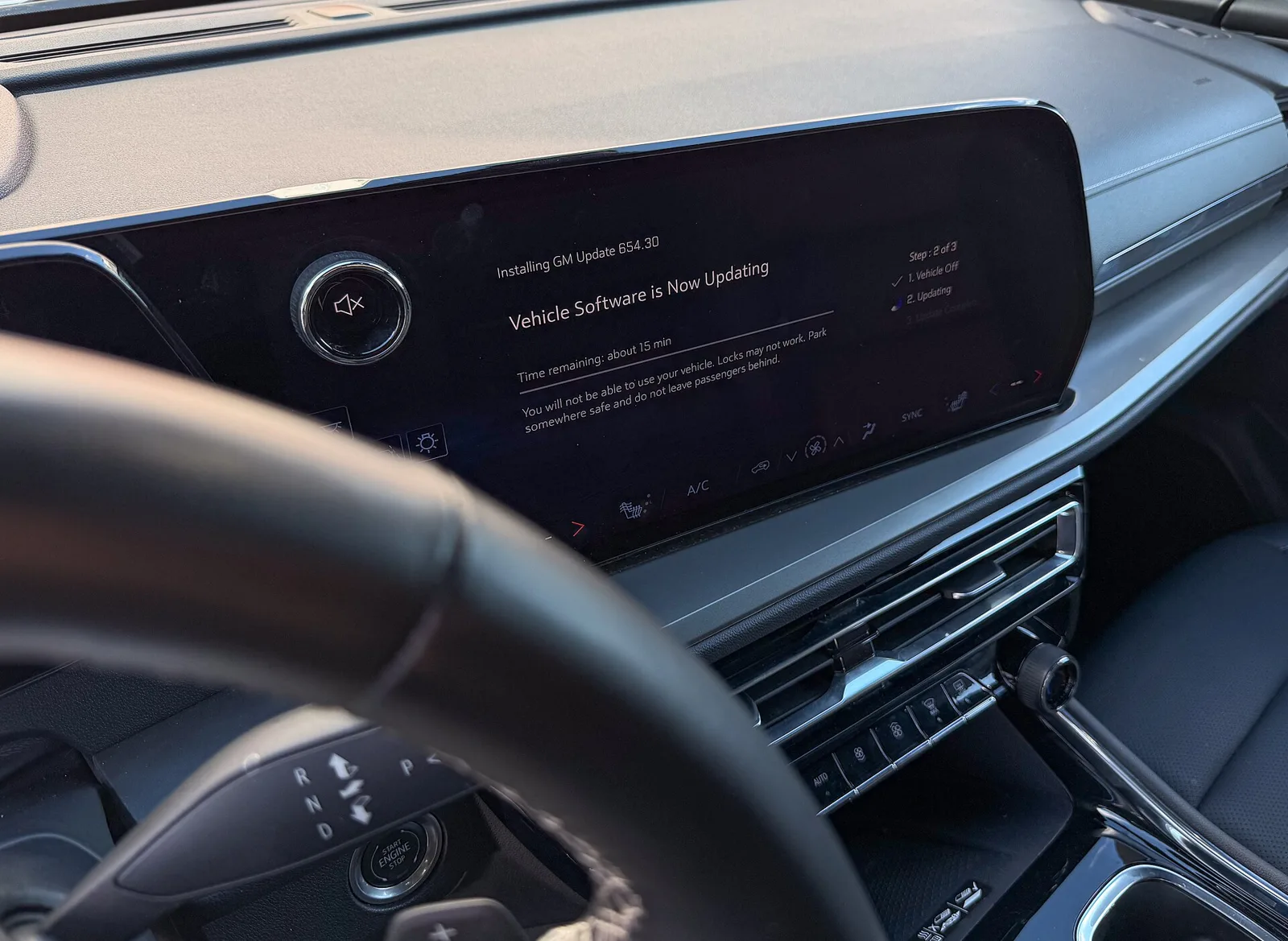
A car downloads updates through cellular networks, in much the same way a smartphone does. Its telematic control unit handles the download and the installation. Before it starts, the car confirms that the update is authentic; it cannot be driven while the update is installing, and verifies the integrity of every affected system when it is done.
What can be updated is a long list: the infotainment system, the navigation map, the telematic control unit itself and the electronic control units, which are the onboard computers behind most of what a car does. In the wider industry the car version is sometimes called firmware over-the-air, or FOTA.
Before wireless delivery, embedded devices could only be reprogrammed by a technician with physical access, using a JTAG connector or a wired link such as USB or a serial port. The cable has now gone.
The files are kept as small as possible. Instead of sending a complete new version of the firmware, the maker compares old and new, produces a delta through a process called diffing, and the car applies only the difference. It is like sending an editor's list of corrections rather than reprinting the whole book. Smaller files save energy, network use and storage space.
Phones show one trick that cars can borrow. Since Android 8.0, updates follow an A/B partition scheme: the new version is written to a spare partition while the phone carries on as normal, and the phone swaps over at its next reboot, which shortens the time taken to install.
Who decides whether you get the update?
The distributor does. In over-the-air systems generally, the company sending updates can decide whether users may decline them, and it may choose to disable certain features on a device until an update is applied. Users may also have no way of reverting an update once it is installed.
Phones illustrate how much the pipeline matters. Apple distributes iOS updates exclusively, which brings wide availability, and major releases are usually installed on 60 to 70 per cent of iPhones within a few months. Android is different. Updates depend on the device maker and sometimes the wireless carrier rather than Google, and that produced inconsistent availability and what is known as Android fragmentation. Google later cut into the problem with Project Treble in 2017 and Project Mainline in 2019, the second letting it deliver security patches through the Play Store without a full system update.
Cars add a layer that phones lack: data. The wireless connection and the need to manage many variants of the same software lead to wider use of telemetry. Sending that data to a fleet management system can raise efficiency and vehicle longevity, and automated feedback to the manufacturer speeds up changes to the product. Car sharing and Mobility-as-a-Service let many people use a pool of vehicles, and a driver's personal settings can follow them from one car to another. The cost is complexity, because data protection and privacy requirements are demanding.
What can go wrong with remote updates?
The main risk is security. Hackers could exploit a flaw in the update process to seize control of a car from afar, and flaws of this kind have been found in the past. Many manufacturers responded by setting up vulnerability disclosure programmes, also known as bug bounty programmes.
Attacks aimed at over-the-air systems include spoofing, tampering, replay attacks, privilege escalation, denial of service, leakage of information and repudiation. Two scenarios are spelled out. In a "flashing fail" a hacker interrupts an update that is under way, which may damage the car's computers and cause faults further down the line. In "arbitrary flashings" the attackers fool the car into accepting a hostile update.
The defences are built into the architecture. Security-critical subsystems require rigorous signature verification, so a chain of trust has to be designed in from the early stages of the product. Different security zones inside the vehicle are joined by gateways, and software modules with different priorities are isolated from one another. An infotainment app store is meant to be open to users, but it must not interfere with the driving functions, and a voice command is one route by which it might.
What is Android Automotive, and who is using it?
Android Automotive is a dashboard operating system built on Android, and its code is open source. Google and Intel introduced it in March 2017 together with carmakers such as Volvo and Audi. Unlike Android Auto, it is a complete system that lives on the car's own hardware and does not lean on a smartphone.
Beyond messaging, navigation and music, it also aims to run car-specific functions, the air conditioning among them. To talk to in-vehicle networks such as the CAN bus, it uses the Vehicle Hardware Abstraction Layer, which bridges the car's hardware and its software.
Because the code is open, a maker can use it without Google Automotive Services, the car equivalent of the apps and services Google offers on phones, including Maps, Assistant and the Play Store, which makers can license. Volvo, Renault, Ford and GM use Android Automotive with those services. The announcements came in a steady run:
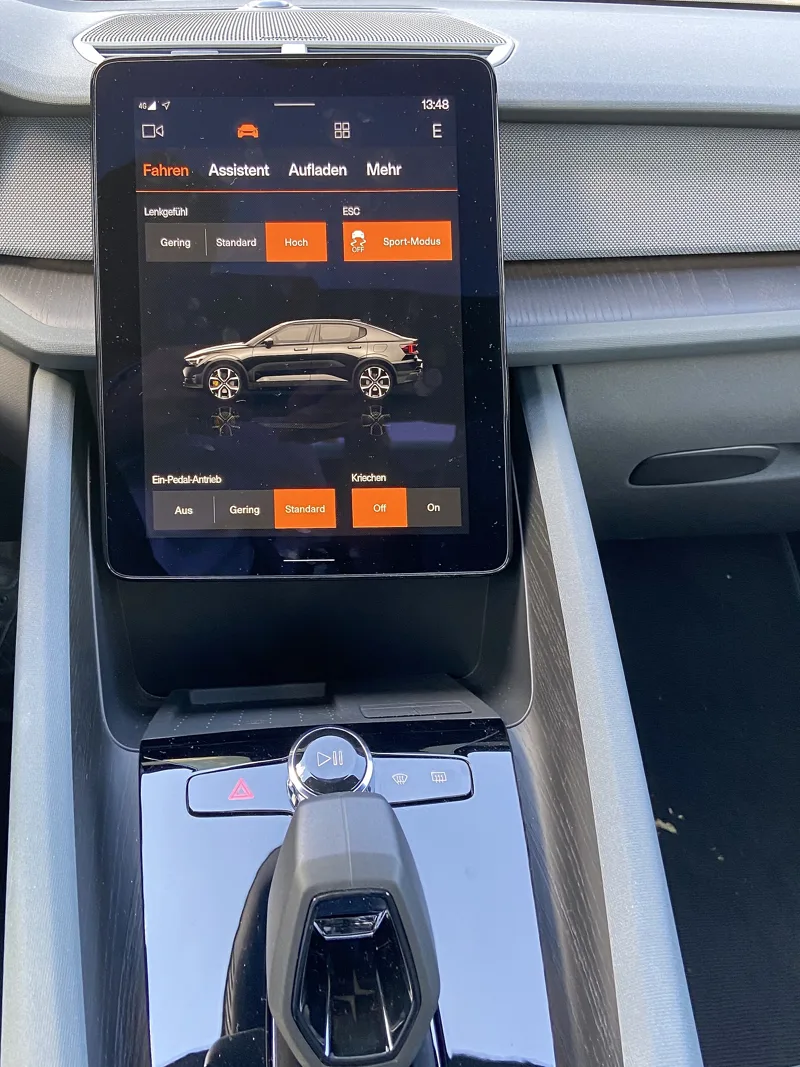
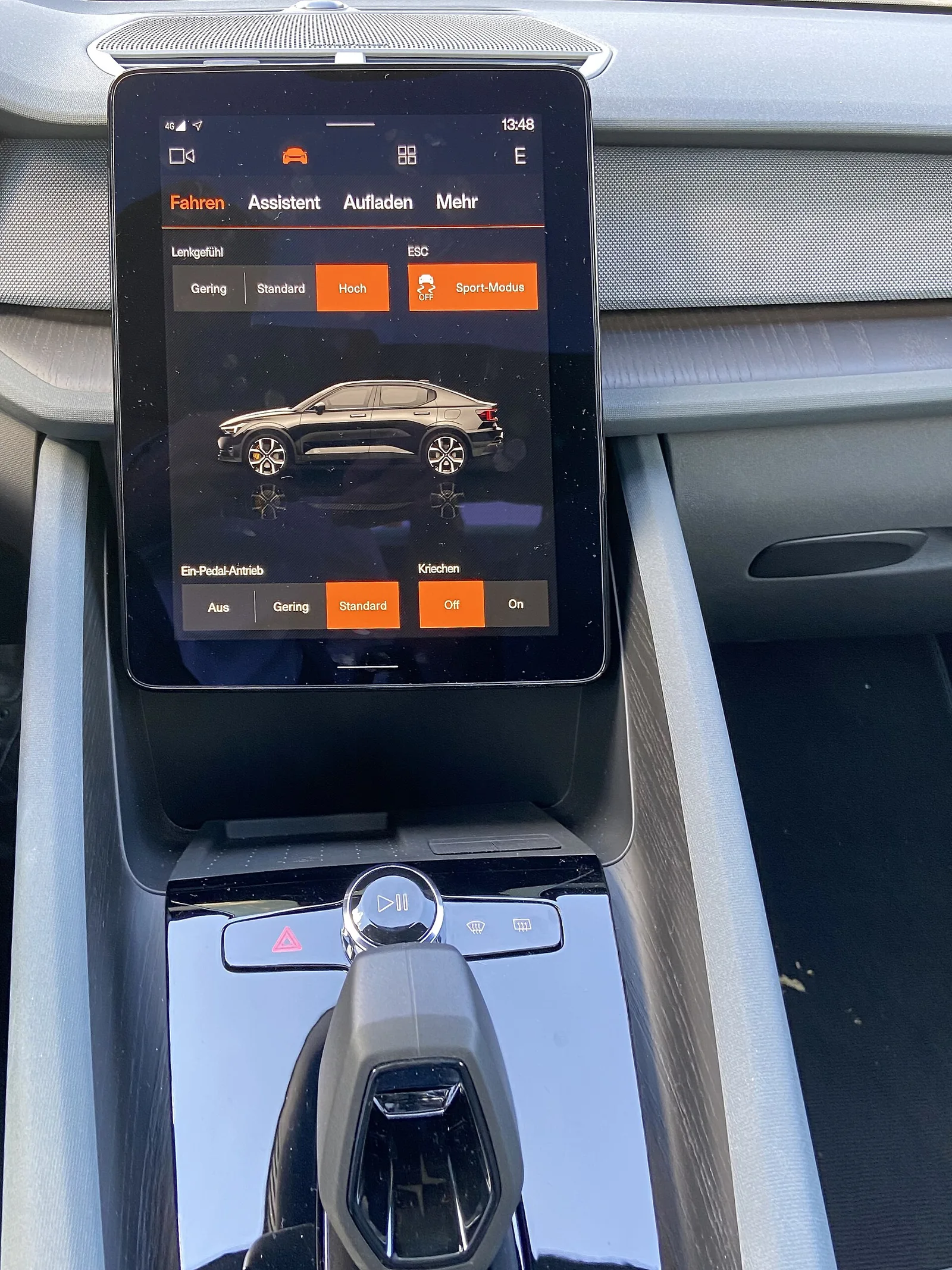
- February 2018: Polestar announced the Polestar 2 as the first car to carry Android Automotive built in. It has been on sale since July 2020.
- September 2018: the Renault-Nissan-Mitsubishi Alliance revealed a partnership to put it in group vehicles from 2021.
- September 2019: General Motors said it would use it for infotainment from 2021.
- July 2020: Stellantis announced it would adopt it, then revoked that announcement in 2022. Some of its cars, such as the 2021 Dodge Durango and Chrysler Pacifica, already use Uconnect 5, which is based on it but runs without Google's services.
- February 2021: Ford announced a partnership with Google covering Ford and Lincoln vehicles from 2023.
- May 2021: Lucid Motors confirmed that the Lucid Air runs on it, without Google's services.
- September 2021: Honda said it would use it from 2022.
- June 2022: BMW said it would integrate it into certain models from March 2023. In January 2023 it revealed that BMW Operating System 9 would be based on it, without Google's services and with the Aptoide app store.
- March 2023: the Volkswagen Group said its future One.Infotainment system would be based on it, using the open-source version, with an app store developed with Harman International.
- June 2023: Polestar said it intended to use the Meizu Flyme Auto system, not Android Automotive, in cars destined for China.
- October 2023: Porsche announced a collaboration to bring it, with Google's services, to future vehicles.
What does this mean if you are buying or driving one?
First, the level matters. A car at Level 3 or above can receive bug fixes and improved features wirelessly, so a software fault need not mean a day without the car. At Level 4 it can gain functions it did not have when you bought it.
Second, the maker holds many of the cards. It can decide whether you may decline an update, it may disable certain features until you install it, and you might not be able to undo it. A car also cannot be driven during the installation, so timing is something to plan.
Third, the electronics behind the dashboard are doing more work than before. The powerful processing units mean even small models can carry many advanced driver assistance systems, sometimes with more than twenty functions, and those systems need AI to perceive the road around the car. Data about how you use the car flows back to the maker, and privacy rules around that flow are complicated.
Where does the software-defined car go next?
The industry is still agreeing on what the term means. The 2024 European Commission and VDA projects aim at a shared, cross-manufacturer approach, and at the top of the PwC scale sits Level 5, where AI control and links with smartphones and other plugged-in components are part of the design, with software developed along product cycles and versioning schemes.
On the infotainment side, adoption of Android Automotive has continued. Android Automotive OS 14, introduced in May 2023, let navigation apps work with the gauge cluster and added multi-screen support for driver and passengers. In December 2024 Hyundai Motor Group announced it had adopted the system. In July 2025 Mazda revealed the all-new 2026 CX-5 as its first model with Google built-in, and during 2025 BYD updated the infotainment of selected international models to include Google built-in, which brought Google Maps and the Google Play Store to those cars directly.