At 20,000 rpm a valve opens and closes 166 times a second. A camless engine gives each valve its own actuator, and its timing becomes a matter of software.
A camless engine opens its poppet valves with electromagnetic, hydraulic or pneumatic actuators instead of cams, so lift and timing can change valve to valve and cycle to cycle, even switching a cylinder off. Makers claim large gains in economy and emissions, but no production road car engine uses it yet.
At 20,000 RPM, an engine's valves open and close 166 times every second. Before the FIA restricted them, Formula 1 engines ran beyond that speed with a conventional camshaft and made over 330 bhp/L (250 kW/L) without turbochargers. A camless engine throws the camshaft away and moves each valve with its own actuator, which gives engineers a freedom of timing a cam can never offer.
What is a camless engine?
In a camless or free-valve piston engine the poppet valves are moved by actuators, electromagnetic, hydraulic or pneumatic, and not by cams. An actuator can both open and close a valve, or it can open one that a spring or other means closes again.
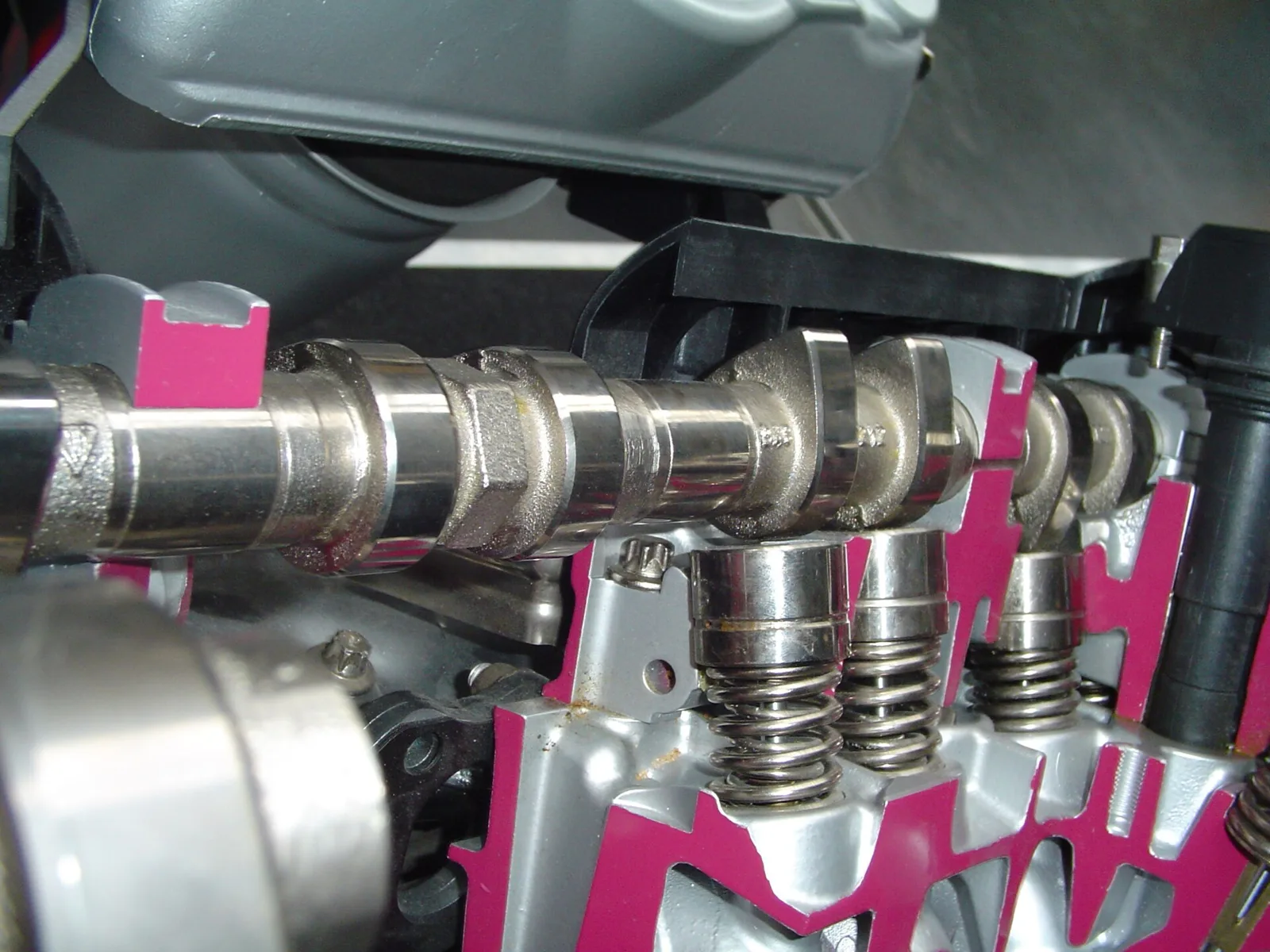
The conventional alternative is the camshaft, which normally has one lobe for each valve, and each lobe fixes the valve's duration and lift. Many modern engines can shift the camshaft's timing, a technique known as camshaft phasing, but changing lift and duration in a running engine is harder. A few makers fit several lobes to each valve, but that is still a compromise, since only a handful of profiles are available at any moment.
A camless engine has no such limit. Lift and timing can be changed freely from one valve to the next and from one cycle to the next. It allows several lift events in a single cycle, or none at all, which switches the cylinder off entirely. With fuel injection and exhaust timing controlled directly by the engine control unit, they can be adjusted continuously.
Give every valve its own actuator and timing becomes a line of software, not a lump of metal.
What does a poppet valve have to do?
The valve at the centre of the debate is the poppet valve, also called a mushroom valve. It controls the timing and quantity of petrol or vapour flowing into or out of an engine, and it is used in most piston engines for the intake and exhaust gases passing between the cylinder head and the combustion chamber.
Its anatomy is simple. A plug, usually a disk, sits on the end of a shaft called the valve stem, and the working face of the plug is typically ground at a 45 degree bevel to seal against a matching seat in the rim of the opening. The stem slides through a valve guide that keeps it in line. Pressure on either side of the valve can help or hinder it: pressure pushing on an exhaust valve helps hold it shut, while the lower pressure on an intake valve helps it open.
A poppet valve differs from slide and oscillating valves because it lifts away from its seat at right angles to the port, rather than sliding or rocking across it. Its main advantage is that nothing moves along the seat, so the seat needs no lubrication. Poppet valves are best known from internal combustion and steam engines, and the Presta and Schrader valves on tyres count as poppet valves too. The name shares its origin with puppet: it comes from the Middle English popet, meaning a youth or doll, and was applied to marionettes, which move bodily in response to remote linear motion, as the valve does.
Materials and wear
Valves in everyday production engines are solid steel alloy, though a few are hollow and packed with sodium to move heat better. Aluminium cylinder heads are common now; they shed heat well but call for steel inserts as valve seats. The stem runs in a clearance of 0.4 to 0.6 mm (0.016 to 0.024 in), so a rubber valve stem oil seal is fitted to keep oil out of the intake manifold and the combustion chamber. Worn guides or faulty seals often show up as a brief blue puff from the exhaust when manifold vacuum climbs, as it does when the throttle snaps shut.
Early valves wore quickly, so regular valve jobs were needed to regrind them, and from the 1920s petrol contained lead additives to prevent knock and to lubricate the valves. Better materials changed that: stainless steel valves and stellite or inconel seats let many industrialised countries drop leaded petrol by the mid-1990s. At the extreme end of performance some exhaust valves are cooled with sodium. Hollow inside, they hold a charge of the metal, which liquefies at modest temperatures and convects heat away from the hot head towards the stem.
How valves have been opened
Engines from the 1890s and 1900s had an automatic intake valve that suction in the cylinder pulled open and a light spring shut, while only the exhaust valve needed mechanical drive, since it had to open against cylinder pressure. Valve float capped how fast they could run, so from about 1905 mechanically driven inlet valves spread through vehicle engines. Mechanical drive usually means a push on the end of the stem, with a spring bringing the valve back to its seat.
At high revs the valvetrain is too heavy for the spring to shut the valve in time, and the valve floats or bounces. Desmodromic designs add a second rocker arm that closes the valve by force, replacing springs, and are sometimes chosen for engines that rev hard. In most mass-produced engines the camshaft acts through go-betweens, among them pushrods, roller rockers and lifters, and the profile of each cam decides both lift and the moment of opening.
The layout of the valves has changed too. Early flathead engines placed the valves beside the cylinders, which gave cheap construction but a twisting path for the gases that limited engine speed and could overheat the block under sustained load. Overhead valve engines, with both valves above the cylinder, largely took over between 1904 and the late 1960s or early to mid 1970s, and overhead camshaft engines largely replaced those between the 1950s and the 1980s. Most overhead camshaft engines add a second intake valve and a second exhaust valve to each cylinder, giving a four-valve head.
What stops a camless engine matching a camshaft?
The answer is force and stiffness. A conventional camshaft can generate extremely high forces, and a modern valvetrain has very high stiffness, so the position of the valve is controlled accurately and consistently. That allows very high valve acceleration and lift, while keeping clearances between valves, and between valve and piston, very small even at very high engine speed.
The Formula 1 figures are the benchmark. With a conventional camshaft and mechanical valve actuation, those engines ran at over 20,000 RPM, and each litre of displacement yielded over 330 bhp (250 kW) without forced induction. It is extremely unlikely, according to one account, that such speed and output could be achieved with camless valve actuation.
What could freedom over timing deliver?
Fewer moving parts is one possible gain. Without a camshaft, the follower, rocker arms or pushrods may be replaced by an actuator system, and with no chain linking crankshaft and camshaft the engine can be lighter, with fewer points of failure. The parasitic load of driving the camshaft is lower as well.
Emissions are the bigger prize. A camless engine can control combustion more precisely and so burn all the hydrocarbons more completely. If the computer notices that some fuel is going unburnt, it can relax the valve timing at once so that a cylinder receives less. It can adjust valve timing, height and the fuel-air mixture continuously to suit the speed and torque load, and when it senses a high level of NOx or SOx it can alter the timing to make the exhaust hotter or cooler. As the engine is governed electronically and not mechanically, new emission rules can be met by an update, with no mechanical changes. Fuel staging, in which injection is timed for the fullest possible burn, can trim NOx further.
Christian von Koenigsegg says his PHEA camless technology makes a pre-catalytic converter unnecessary, since controlling the exhaust cycle can bring the ordinary catalytic converter up to working temperature fast.
The claimed numbers
| Measure | Claimed change against a similar traditional engine |
|---|---|
| Size | 50% smaller, including a height lower by 50 mm (2.0 in) |
| Weight | 30% lighter |
| Power and torque | 30% higher |
| Fuel economy | 30% better |
| Emissions | 50% lower |
These figures belong to FreeValve, the Swedish designer of the Qamfree engine, which the Chinese maker Qoros displayed in a Qoros 3 hatchback at Guangzhou in 2016. The designer quotes an output of 170 kW (230 hp), with torque of 320 N m (240 lb ft), for its turbocharged 1.6-litre (98 cu in) unit. Koenigsegg adds that the Qamfree is built on a Qoros engine already in existence, designed in Germany and Austria some years before.
Who is building camless engines?
Many have tried. Camless valve trains have been investigated by Renault, BMW, Fiat, Valeo, General Motors, Ricardo, Ford, Jiangsu Gongda Power Technologies, and FreeValve, which is a sister company of Koenigsegg. Lotus Engineering produced an electro-hydraulic valve actuation system in the late 1980s, growing out of its work on active suspension. Some of the systems can be bought, though none yet sits in a production road car. In spring 2015 Christian von Koenigsegg told reporters that his company's technology was getting ready for fruition.
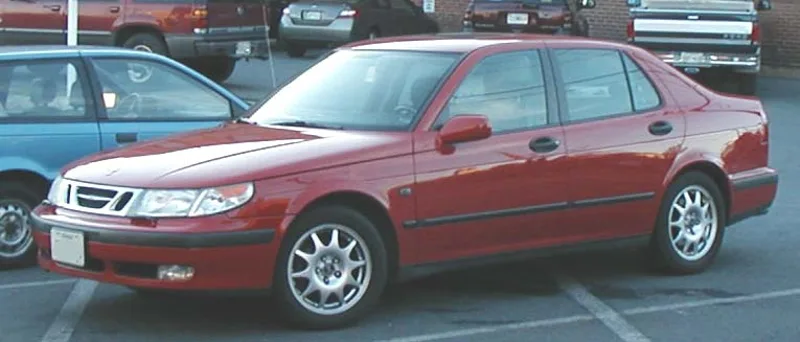
Britain's Camcon Technology is working on a camless engine for passenger cars, built around its proprietary Intelligent Valve Actuation system. Camcon worked with Jaguar Land Rover to fit the system to an Ingenium 2.0-litre four-cylinder petrol engine, and the two published results jointly at the 2017 Aachen Colloquium. In Sweden, Freevalve AB, formerly Cargine and a sister company to Koenigsegg Automotive, is building a camless system on top of an existing SAAB car engine, and in April 2016 Qoros presented a concept car that used the Freevalve technology.
The Koenigsegg Gemera
Koenigsegg announced its first four-seater, the Gemera, in March 2020, with a 2.0-litre inline-three, sequentially turbocharged, working alongside three electric motors. Two of the motors, each making 600 bhp (450 kW), sit on the rear wheels, and a third, attached to the engine crankshaft, makes 400 bhp (300 kW). The petrol engine, which Koenigsegg calls the Tiny Friendly Giant or TFG, is rated at 600 bhp and uses camless Freevalve technology; it works with the crankshaft motor to drive the front wheels. By July 2024, though, every customer car was due to get a twin-turbocharged 5.0-litre V8 instead.
What this means for a driver
Today the valves in a road car are still poppet valves worked by cams, and an owner meets their wear in familiar ways: oil seals and valve guides that let blue smoke through when worn, and valve float at high revs. The camless route offers a different promise, an engine whose breathing is set by software, which can switch off a cylinder entirely and can take on new emission rules by an update.
Where this goes next
The next steps are those already named. Camcon and Jaguar Land Rover published results on the Ingenium engine in 2017, Freevalve AB is developing its system on a SAAB engine, and Koenigsegg's own plan for the Gemera has shifted, with customer cars now set to use a V8 as of July 2024. Camless valve actuation remains unlikely to match the 20,000 RPM of the old Formula 1 engines, and the gains described in size, weight, fuel economy and emissions are those its makers claim.