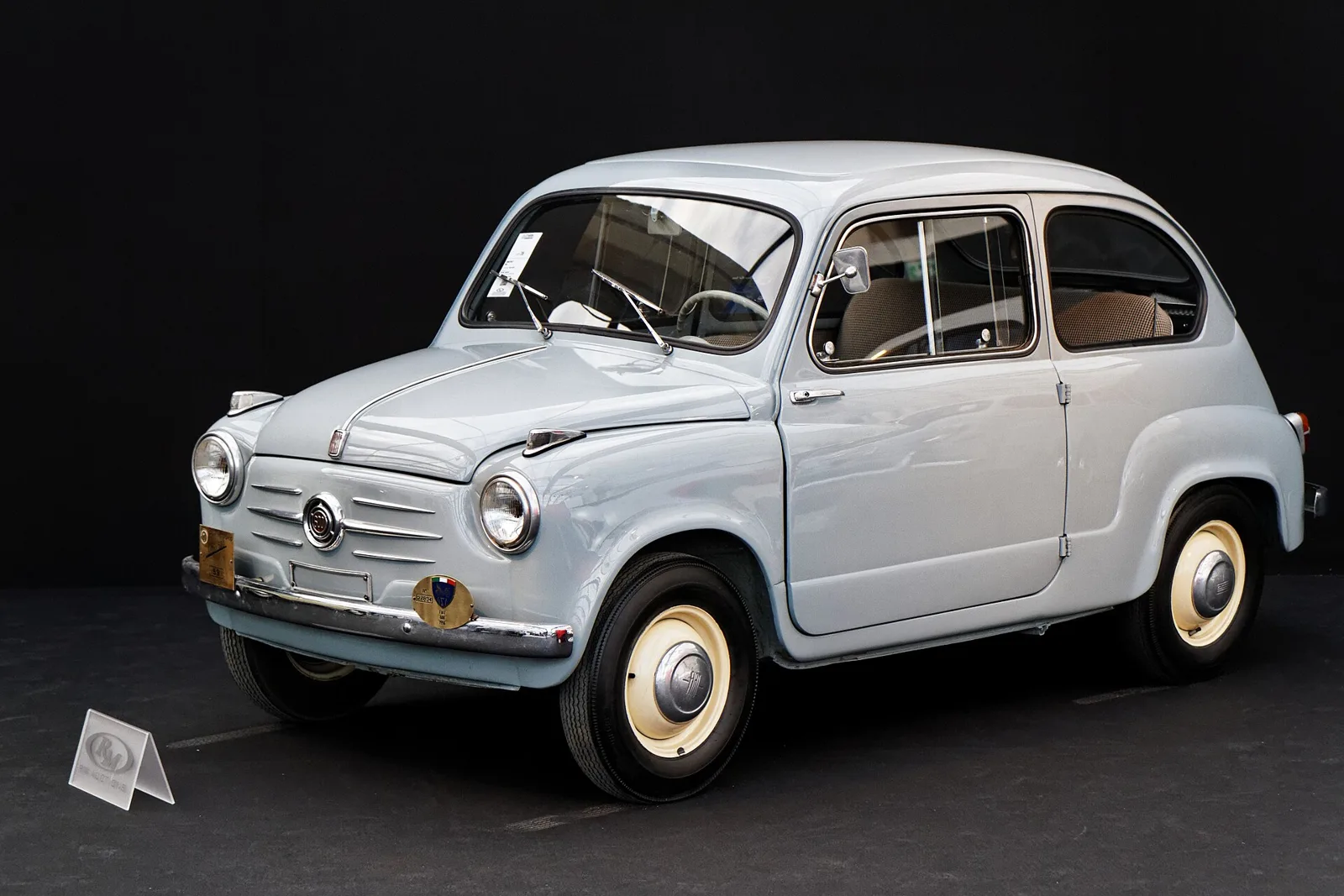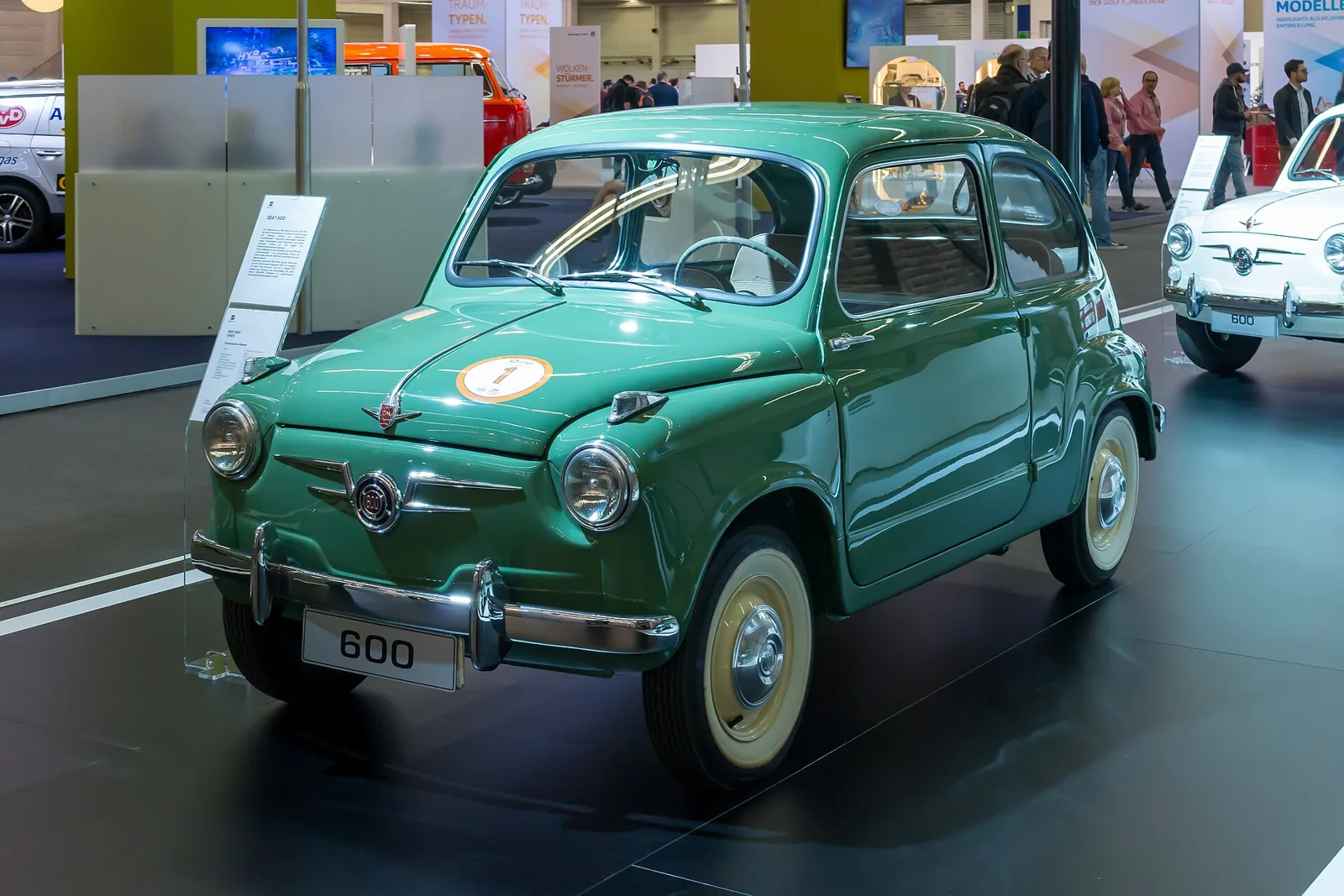
Built in Barcelona from 1957 to 1973, the rear-engined SEAT 600 was a licensed Fiat design that became a pop icon of Spain's economic boom.
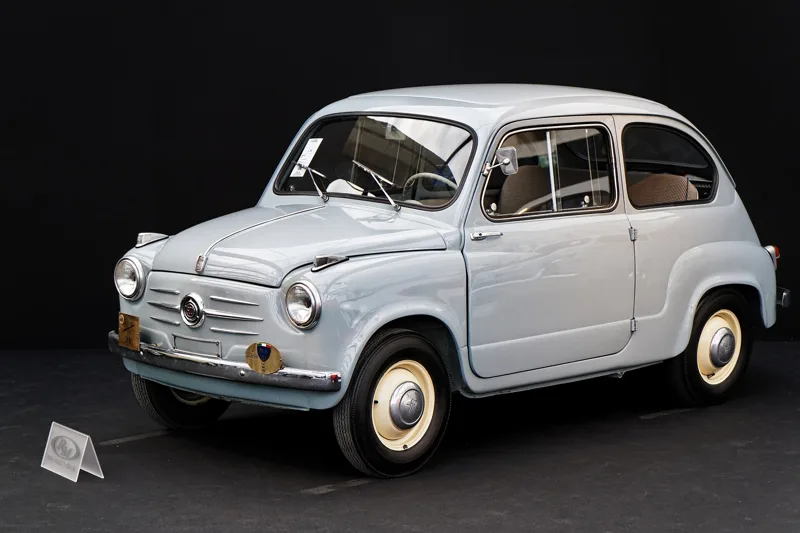
The SEAT 600 was a rear-engined city car built by Spanish maker SEAT from 1957 to 1973. It was a licence-built Fiat 600 and became one of the most popular cars in Spain, with 797,319 units made in Barcelona. It was succeeded by the SEAT 133 in 1973.
The SEAT 600 was a small rear-engined saloon that SEAT built in Barcelona from 1957 to 1973. Its design came from Fiat, and its cheap, simple format made it the car that many Spanish households bought first.
Where did the SEAT 600 come from?
The SEAT 600 was a licence-built version of the Fiat 600, which Dante Giacosa had designed and which Fiat launched in 1955. SEAT itself was formed in 1950 as a joint venture between a state holding agency, six Spanish banks and Fiat. Nearly every SEAT model until 1982 was based on a Fiat design.
Fiat cars were first imported into Spain, but SEAT soon began building its own version at the Zona Franca factory in Barcelona. The first car left the line on 27 May 1957, and sales to the public started on 24 June 1957. The launch price was 65,000 pesetas (390.66 euros) before taxes.
Demand outran supply almost at once. The sales department was said to hold pending orders equal to four years of production, so SEAT introduced a down payment on every order, a practice that lasted for several years.
A licensed Fiat design that carried a country's first generation of car owners onto the road.
How did the SEAT 600 reach Spanish families?
The SEAT 600 reached ordinary families through a combination of price, finance and sheer availability. SEAT cut its price to 63,000 pesetas in 1964 and kept that level until 1969, and it created the Fiseat customer finance company in 1967 to make instalment buying simpler.
The results were striking. The car was Spain's best-selling model in 1958-1966 and again in 1968, and by 1971 one in every four cars on Spanish roads was a SEAT 600. Before March 1958, buyers were required to visit the plant or one of seven subsidiaries, and from then on units were delivered to the buyer's own province.
Buyers could personalise the car with chrome hubcaps, spoked wheels, roof racks and other accessories, which made up for the limited storage space.
Which versions of the SEAT 600 were built?
The SEAT 600 was built in several series, each with its own identifying features. The first and second were the original 600 and the 600 D, and the later cars moved to conventional doors, bigger headlamps and a revised dashboard.
- 600 (1957-1963), unofficially known as the 600 N, with suicide doors and chrome overriders added in 1958
- 600 D (1963-1970), with front position lights under the headlamps and a key-operated ignition in the dashboard
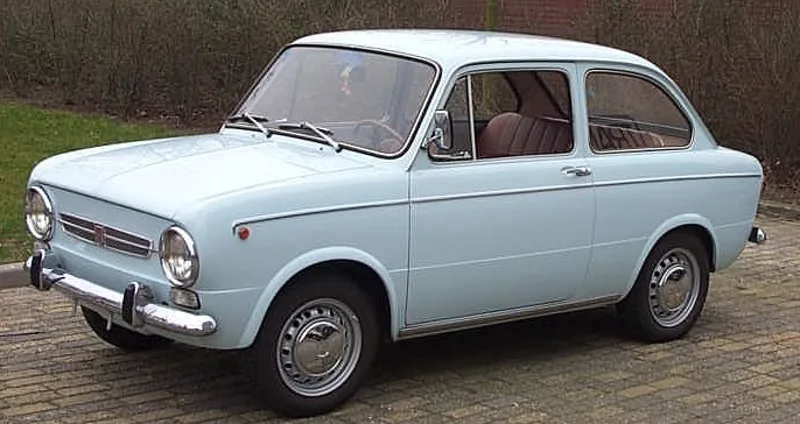
- 600 E (1969-1973), with conventional doors, a stronger locking system and a luminous water temperature gauge
- 600 L and 600 L Especial (1972-1973), the final run, with a triangular vent in the C-pillar
A fixed-profile convertible with a sliding canvas roof arrived in July 1958, and a commercial van body with no rear seat followed in February 1961.
What was the SEAT 800?
The SEAT 800 was a four-door version of the 600 D, built from October 1963 to May 1967 with sales starting in January 1964. It had front suicide doors and conventional rear doors on a shared B-pillar, and it was a Spanish development with no Fiat counterpart.
Body modification and painting were carried out at Carrocerias Costa in Tarrassa before the cars returned to SEAT for mechanical fitting and finishing. A total of 18,200 SEAT 800s were built in 42 months, and the model found a niche as a microtaxi in cities such as Madrid, Bilbao and Valladolid.
How did the SEAT 600 perform?
The SEAT 600 was technically basic. Its water-cooled inline-four began at 633 cc, producing 21.5 hp (16 kW), and it later grew to 767 cc with 32.5 hp (24 kW). The table below sets out the core figures for the two main engine stages.
| Specification | Detail |
|---|---|
| Layout | Rear-engined, rear-wheel drive, two-door four-seat saloon |
| Length | 3.322 m (10.90 ft) |
| Early engine | 633 cc inline-four, 21.5 hp (16 kW) |
| Later engine | 767 cc inline-four, 32.5 hp (24 kW) peaking at 4600 rpm |
| Transmission | Four-speed manual, no synchro on first gear |
| Brakes | Hydraulic drum brakes on all four wheels |
| Tyres | 5.20 R12, 12 in x 5.2 in (300 mm x 130 mm) |
| Launch price | 65,000 pesetas (390.66 euros) before taxes |
Performance was modest, which was part of the appeal for buyers who wanted cheap motoring. Competition-prepared cars were a different matter, with SEAT 850 or 1430 engines tuned to 110 bhp (82 kW) and capable of 200 km/h (120 mph).
Why did SEAT 600 production end?
SEAT 600 production ended on 3 August 1973, and weak passive safety was one of the main reasons. Its thin and weak B-pillars lacked the space and solidity needed for robust seat belt anchors. Stricter passive safety requirements exposed this weakness.
Overheating was the car's most persistent fault. The engine was water-cooled with a radiator that had little exposure to the air, and a weak belt drove both the water pump and the fan. Overloading or slow driving often caused the engine to boil over, and neither seat belts nor side mirrors were fitted as standard.
The model was replaced by the SEAT 133, the company's first in-house design, which was a modernised derivative of the SEAT 850. The 133 was less successful than the car it replaced.
Assembly did not end with the last Spanish car. SEAT shipped 171,500 units in complete knock-down form afterwards, so the car continued to be assembled overseas.
What derivatives came from the SEAT 600?
Several companies built versions of the 600 using SEAT parts. Most were produced by Siata Espanola, the Spanish branch of Siata, at its factory in Tarragona. The standout was the Siata Formichetta, a panel van based on the 600 D, of which about 6,700 units were made between 1961 and 1966.
- Siata Ampurias: a three-box saloon with two suicide doors, of which 24 were built in 1960
- Siata Patricia: a nine-seater beach car with no doors, of which six were made on demand
- Siata Tarraco: a sporty saloon with conventional doors, 598 units built in 1960-1971
- Siata Turisa: a two-seat sporty convertible, 228 units built in 1960-1962
- Siata Minivan: a small van offered for cargo, passenger or mixed use, built in 1967-1972 and continued by Motor Iberica until 1980
Counting every version and name, about 22,700 Siata minivans were produced. The carbody maker Manufacturas Railly (MARSA) also developed a SEAT 600 Multiple, a four-door six-seat MPV, but only about twenty were sold between 1960 and 1962.
How did the SEAT 600 become a pop icon?
The SEAT 600 became a pop icon because it was the first car that ordinary households could afford in the years between the mid-1960s and the early 1970s. Its place in the economic boom of 1959 to 1973 made it a symbol of a changing country, and it still attracts enthusiasts today.
The car appeared in Spanish cinema, including the 1958 film Ya tenemos coche, in which a family struggles to buy one. Later period series, such as Cuentame como paso, used it to depict the era, with a SEAT 800 as the family's first car. Its nicknames, pelotilla and ombligo, reflected how common it was.
Monuments to the car stand in Fuengirola, Churriana de la Vega and Martos. In September 2017, SEAT gathered 787 SEAT 600s at the Circuit de Barcelona-Catalunya, a world record for the greatest number of SEATs of any model in one place, beating the 344 set in 2016.