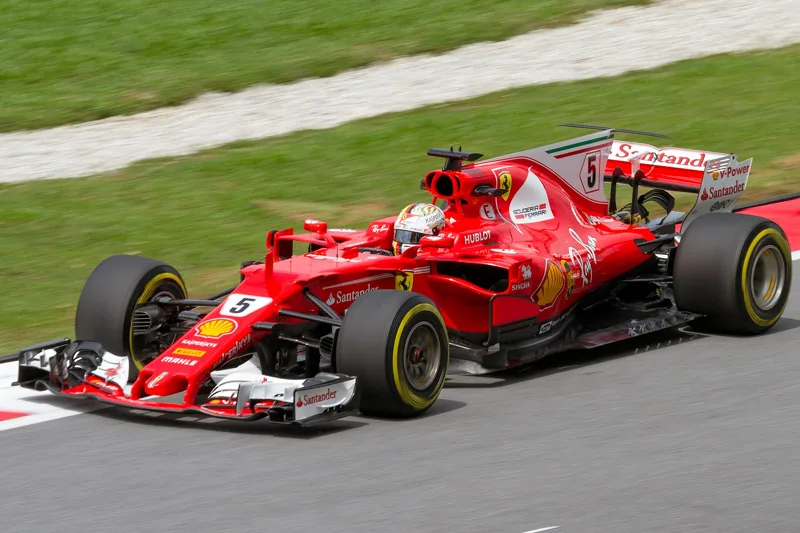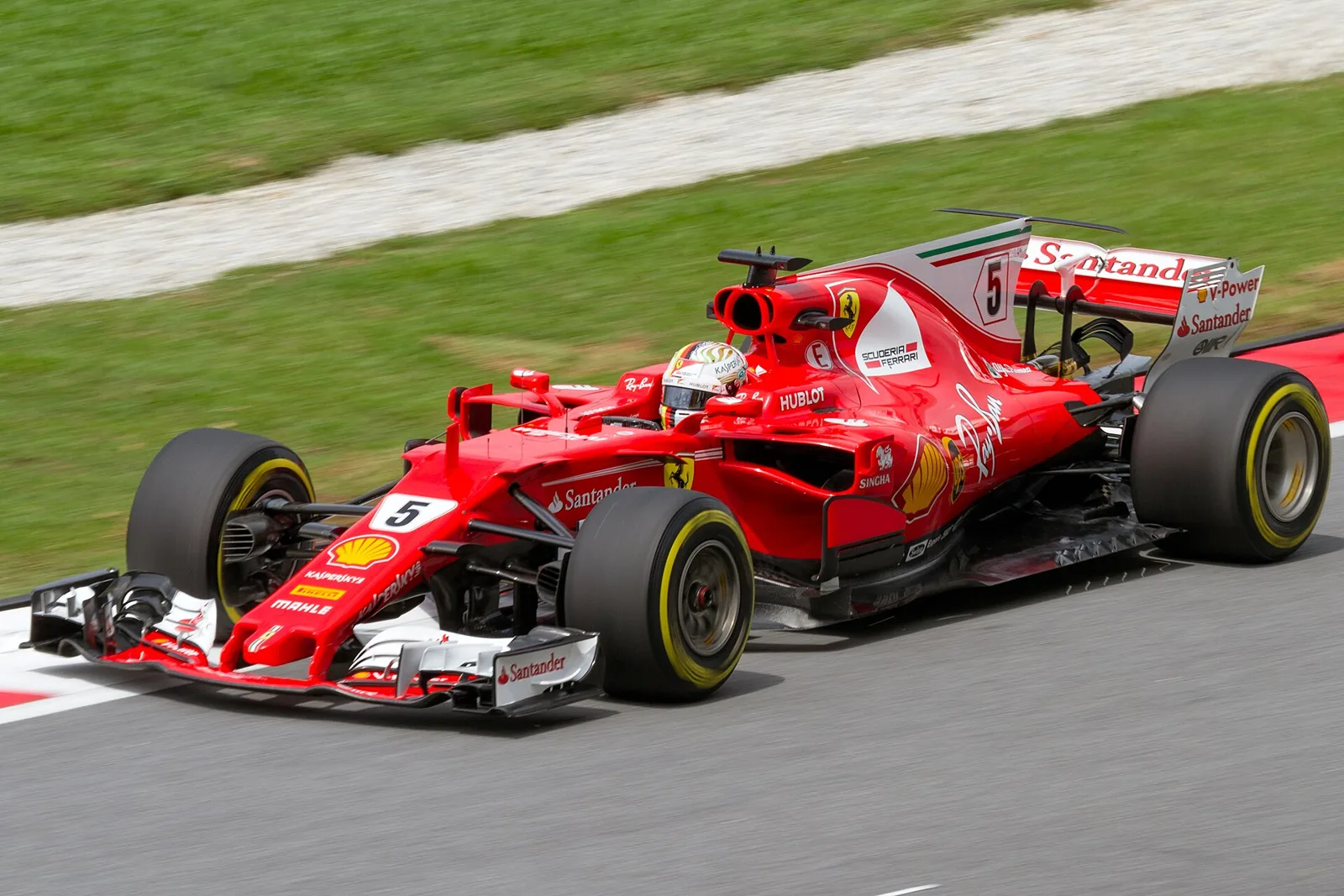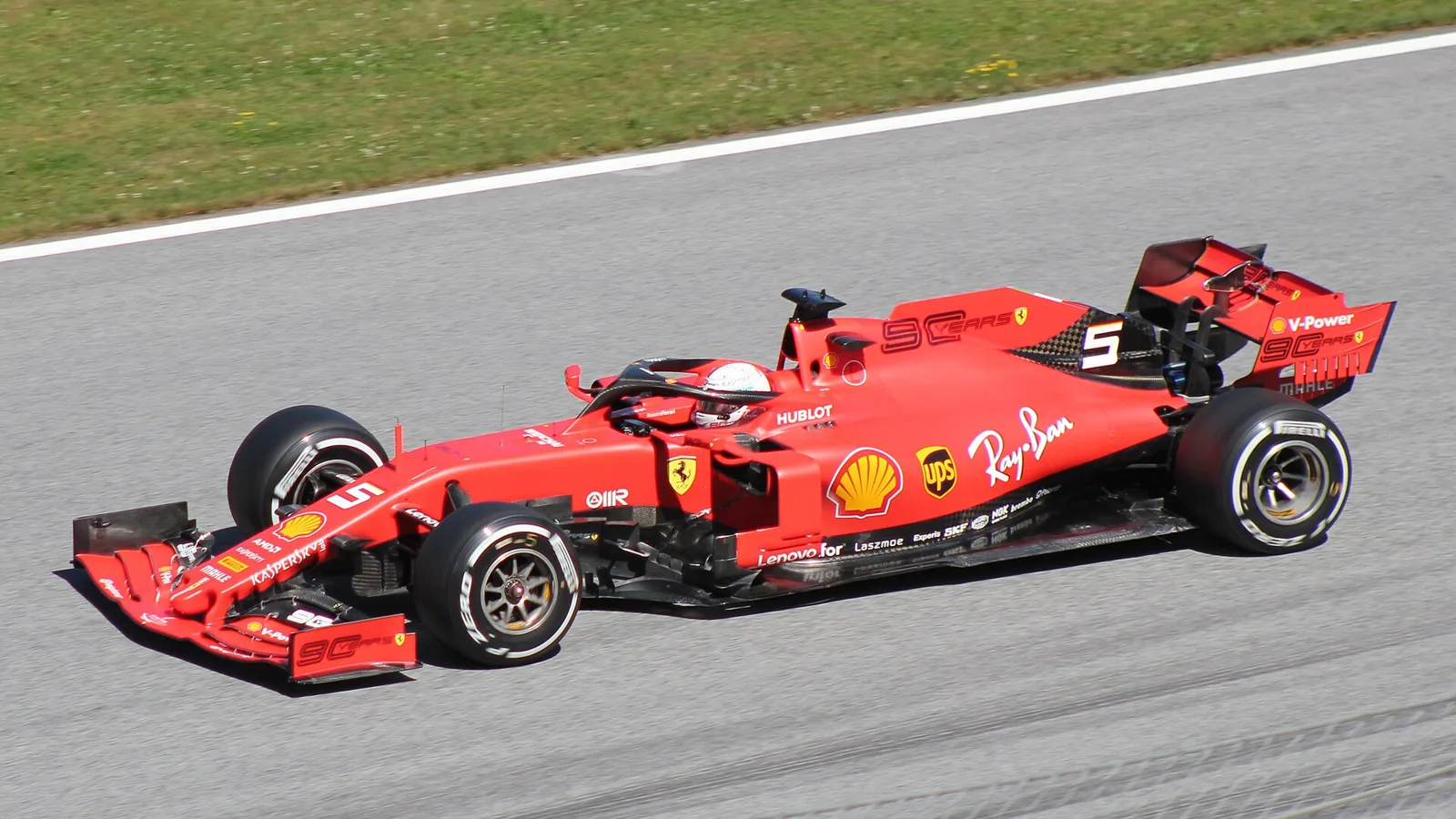
A matte red Ferrari with a bold front wing, two drivers who came close to the title and a season that ended under a fuel-flow cloud.
The Ferrari SF90 was Scuderia Ferrari's 2019 Formula One car, also called Project 670, driven by Sebastian Vettel and Charles Leclerc. It gave Leclerc his first wins for the team in Belgium and Italy, and it was later the centre of a power unit controversy.
The Ferrari SF90, also called Project 670, was the team's car for the 2019 Formula One World Championship. Sebastian Vettel and Charles Leclerc drove it in every race, and Leclerc claimed two Grand Prix wins in the middle of the season. Strong straight-line speed made the car a genuine contender for a spell, but a fuel-flow dispute over its power unit later clouded the year.
How was the SF90 designed?
Binotto, Cardile, Montecchi and Sanchez were the chassis designers, and Corrado Iotti led the powertrain. Ferrari named the car to celebrate its 90th anniversary, and Vettel called his own car Lina. Leclerc was making his Ferrari debut and partnered the four-time world champion, a pairing that gave the team two drivers capable of race wins.
A matte red car, six pole positions and a power unit row that cast a shadow over Ferrari's 2019 season.
How did the SF90 differ from the car before it?
The 2019 rules forced a simpler front wing and a higher, wider rear wing. Ferrari answered with a radical front wing that tapered down from the centre toward the endplates, while Mercedes and Red Bull chose conventional designs. Ferrari's load sat in the middle of its wing, which made downforce more predictable but lower in total.
Ferrari also shrank the engine cover relative to the SF71H to save weight, switched to a matte finish and reworked the cooling. The engine cover inlet became smaller and triangular, while the radiator inlets grew. The rear bodywork was also remodelled, which was meant to add rear aerodynamic performance.
An anonymous aerodynamicist suggested that Ferrari had to enlarge its barge boards to make up for the front wing, which in turn left the rear with less downforce than the front. That combination was expected to produce a car prone to oversteer.
How did the SF90 look in pre-season testing?
The first test brought two upgrades. Ferrari redirected air from the side pods out behind the base of the halo, giving extra downforce in the centre of the car and more control over the airflow to the rear wing. The wheel rims were also redesigned with holes that moved heat away from the tyres.
After a week of running the SF90 had covered plenty of laps, and both drivers said they felt comfortable with it. It finished eighth and ninth on the harder, slower tyres, but adjusted lap times suggested it would have been fastest on equal rubber.
How did the 2019 season start for Ferrari?
The Ferraris lined up third and fifth in Australia and finished fourth and fifth, lacking the pace of the two Mercedes and Max Verstappen's Red Bull. In Bahrain they locked out the front row, with Leclerc setting a track record. Leclerc's engine problem then cost him the win.
In China Leclerc was asked to let Vettel through so that Vettel could pursue a different strategy against Verstappen, and Leclerc finished fifth. In Azerbaijan the Ferraris seemed to have the edge in straight-line speed, but Leclerc crashed in qualifying and started tenth. He recovered to fifth and set the fastest lap, while Vettel climbed onto the podium the following day.
What happened in Europe and Canada?
Spain produced fourth for Vettel and fifth for Leclerc. Monaco brought Ferrari's best result of the season to that point, second for Vettel, while Leclerc qualified 16th after a strategy error and retired with a puncture. In Canada Vettel took pole and Leclerc was third behind Hamilton, but the race ended in controversy.
Vettel and Hamilton battled for the lead, and when Vettel left the track on lap 48 and rejoined ahead of Hamilton, the stewards penalised him for rejoining dangerously. Ferrari appealed, but the FIA upheld the decision, and the team lost a race it had been in position to win.
France and Austria brought Leclerc podiums. Vettel started ninth in France with an engine issue and finished fifth, while Leclerc took his second career pole in Austria before Verstappen pushed him wide into the runoff area.
Britain was harder. Vettel fell to 16th after a clash with Verstappen, and Leclerc claimed his fourth straight podium. In Germany Vettel recovered from 20th to second in a rain-hit race, but Leclerc crashed out. Hungary followed, with both Ferraris roughly a minute behind winner Hamilton, Vettel third and Leclerc fourth.
Why did Ferrari win in Belgium and Italy?
The car suited Spa and Monza, so Ferrari went into both races as favourites. Leclerc won both, taking his debut win in Belgium and then the Italian Grand Prix, with Mercedes second and third within a second on each occasion. Vettel was fourth in Belgium and 13th in Italy after colliding with Lance Stroll.
Singapore brought new floor fins and a revised nose, and the team qualified 1-3. Vettel won from pole-sitter Leclerc, giving Ferrari a 1-2 finish that was the first since Hungary in 2017, and Vettel's first win since Belgium in 2018. Russia saw another 1-3 in qualifying, but a non-standard Mercedes strategy and a safety car period left Leclerc as the only Ferrari on the podium.
Japan's front row was Ferrari's, with Vettel setting a track record in qualifying. The race began badly: Vettel lost out to Bottas, and Leclerc collided with Verstappen at turn 1. Race control eventually told Ferrari to bring Leclerc in for a front wing repair. He finished eighth, moved up to sixth after the Renault cars were disqualified, while Vettel held on to second.
How did the closing rounds go?
Mexico saw Leclerc on pole after Verstappen was penalised for ignoring yellow flags. Vettel finished second and Leclerc fourth as Mercedes ran a different plan. In the United States Vettel dropped five places on the first lap, retired on lap 9 with a suspension failure, and Leclerc salvaged fourth, 50 seconds behind Bottas.
Brazil was the low point. Vettel started on the front row for a fourth straight race, while Leclerc started 14th after a grid penalty and worked through the field. On lap 65 the two Ferraris made contact, leaving both out of the race. For the first time since the 2017 Singapore race, Ferrari scored nothing.
Leclerc finished third in Abu Dhabi. The FIA then looked at his car's fuel load, and Ferrari was fined 50,000 euros for an inaccurate declaration, although Leclerc was not disqualified.
What was the power unit controversy?
Ferrari's straight-line speed stood out between the Belgian and Mexican Grands Prix, when the team won six consecutive poles and scored its only race wins of the year. Red Bull then questioned the FIA about a device that sidestepped the fuel flow sensor. The FIA answered with a technical directive before the United States Grand Prix, ruling that such systems were not permitted.
Ferrari's form faded from then on, and it did not take another pole or race win in the season. Hamilton said the team had lost power after the directive, and Verstappen accused Ferrari of cheating. The FIA closed its inquiry into the 2019 Ferrari 064 engine before the 2020 pre-season tests ended, reaching a private settlement with the team.
The other teams were shocked by that outcome and urged full disclosure. The FIA said it was not fully satisfied with the legality of the unit, but decided not to take further action because the matter was complicated and risked lengthy legal cases.
Livery and later use
The satin red finish with black accents drew on the cars of 1983 to 1996. The team used the 90th anniversary logos at most races, and Mission Winnow logos at others because tobacco advertising had been outlawed. Niki Lauda's name appeared on the sidepods at Monaco, and the 1000th Grand Prix logo was shown at the Chinese Grand Prix.
A modified SF90 later helped test 2022 tyre compounds, following the 2021 finale in Abu Dhabi.
2019 season at a glance
| Measure | 2019 Ferrari result |
|---|---|
| Pole positions | Six consecutive between Belgium and Mexico |
| Race wins | Three: Leclerc (Belgium and Italy) and Vettel (Singapore) |
| Singapore | Vettel won, with a 1-2 finish |
| Japan finish | Vettel second, Leclerc sixth after promotion |
| Brazil | Both cars retired, no points |
| Abu Dhabi | Leclerc third, Ferrari fined 50,000 euros |
How did Azerbaijan qualifying go wrong?
Leclerc crashed heading into the castle section during qualifying in Azerbaijan. The stoppage and the drop in track temperature that followed favoured Mercedes, who locked out the front row, while Vettel salvaged third for Ferrari.
The race was still a promising one for Ferrari, which had looked strong in free practice with a clear straight-line advantage. Vettel took a podium the following day, and Leclerc recovered from tenth to finish fifth, setting the fastest lap on the way.
How did the car's form change during the year?
The car's form improved noticeably after its first twelve races, when Ferrari's straight-line speed became a real strength. That period, between the Belgian and Mexican Grands Prix, produced the team's best results and set up the questions about its power unit that followed.
Singapore brought new fins under the car and a revised nose, aimed at adding downforce. Russia repeated the 1-3 qualifying pattern, which showed the gains had held. The rear wing and bodywork remained areas of development through the rest of the season.
How did Canada's penalty stand up on appeal?
Ferrari pressed its case after the stewards penalised Vettel for rejoining dangerously. The team argued the decision was wrong, but the FIA said the team had not supplied enough new evidence, so the penalty stood and the points were lost.
Abu Dhabi also changed the grid. Valtteri Bottas took a grid penalty, which moved Vettel and Leclerc each up one place. Leclerc took the final podium spot, and Vettel finished fifth.
What happened in Brazil before the collision?
Vettel ran in third for most of the Brazilian race, not really challenging the leaders Hamilton and Verstappen. The contact with Leclerc came as Leclerc worked his way forward from 14th, which left both Ferraris out of the race.
Germany looked promising for pole, but the race was rain-affected and the car's competitiveness was tested in changing conditions.