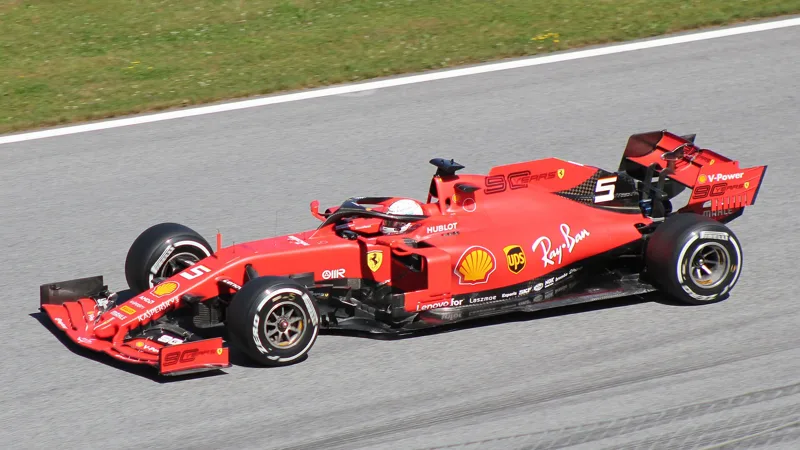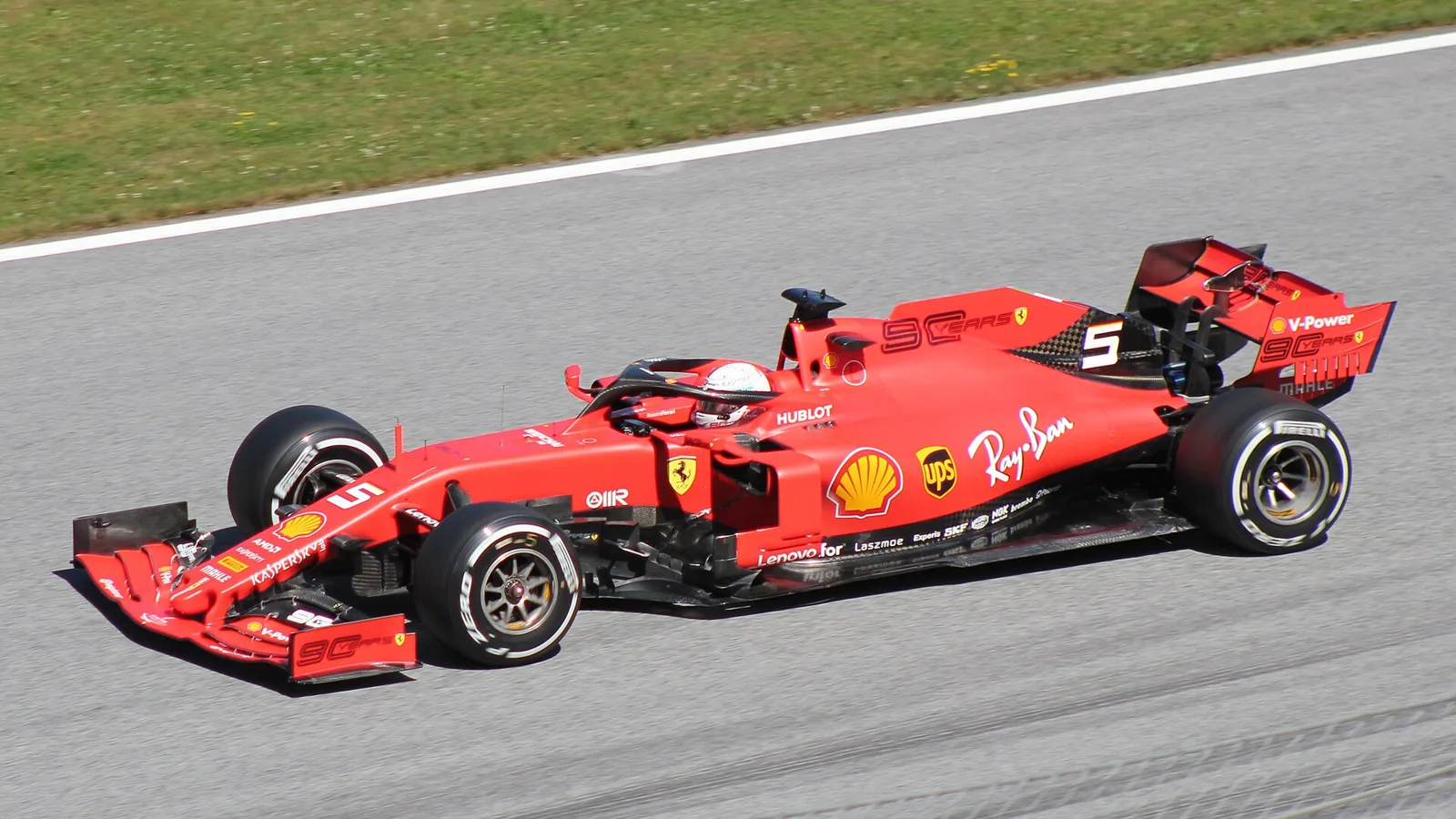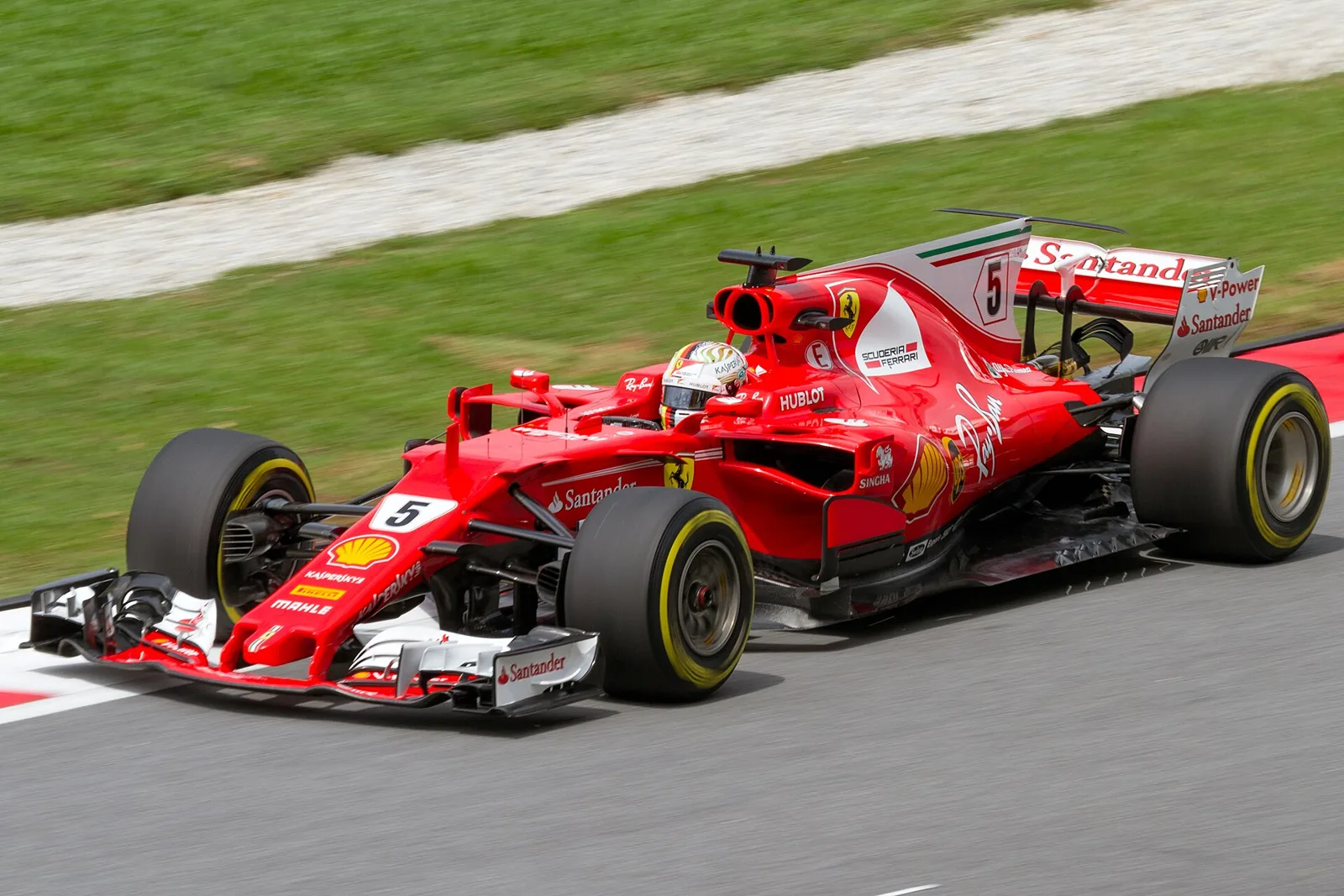
A shark-finned Ferrari that won in Australia and Bahrain, carried Vettel through Europe before a title race slipped away in Mexico.
Built for 2017, the SF70H carried Sebastian Vettel and Kimi Raikkonen. It won the season's opening race in Australia and several more, but Mercedes took the Constructors' Championship that year, and the car was quick over much of the season.
The Ferrari SF70H was the Scuderia Ferrari Formula One car for the 2017 season, driven by Sebastian Vettel and Kimi Raikkonen. It made its competitive debut at the Australian Grand Prix, where Vettel won and Raikkonen finished fourth. The car was quick for much of the year, but Mercedes took the Constructors' Championship.
What was the Ferrari SF70H?
The SF70H was the car Scuderia Ferrari built for the 2017 Formula One season. It took its name from Ferrari's 70th anniversary as a manufacturer, and Vettel gave his car the nickname Gina, in line with his habit of naming his cars after women. The car's first race was a winning one, and it set the tone for the season.
Shark fin, strong starts and a title fight lost in Mexico: the 2017 SF70H in one line.
How was the SF70H designed?
Binotto and Byrne led the chassis design with others, and Corrado Iotti led the powertrain work. The car revived the shark fin, last seen on the F10 in 2010, and its nose cone inlets returned to a layout last seen on the F2008 of 2008.
How did the SF70H start the 2017 season?
The car was fast in pre-season testing and carried that form into Melbourne. Vettel qualified second, splitting the two Mercedes cars, and took the lead on lap 17 with a pit stop. He won ahead of Lewis Hamilton and Valtteri Bottas, which ended a wait for Ferrari that dated back to Singapore in 2015.
China was harder. Both Ferrari drivers qualified in the same positions as in Australia, but the race began in semi-dry conditions. A Virtual Safety Car period, followed by a crash from Antonio Giovinazzi, cost Vettel his place. He fought back to second, while Raikkonen struggled with understeer all weekend and finished fifth.
In Bahrain Vettel qualified third and then took the lead through a series of pit stops to win the race for the third time there. It was his second win in the first three races, while Raikkonen finished fourth. Russia then brought Ferrari a front-row lockout, but Bottas beat both cars to his first career win, and Raikkonen finished third.
How did Ferrari fare in the European rounds?
Ferrari had a strong run through Europe, with Monaco as the highlight. Raikkonen took pole there by 0.043 seconds, and Vettel won the race, Ferrari's first win in the principality since 2001. That result took his lead in the Drivers' Championship to 25 points.
Other rounds were less kind. In Spain a first-corner clash ended the races of Raikkonen and Verstappen, and Hamilton won after a side-by-side incident with Vettel. In Canada Vettel lost half of his front wing and finished fourth. In Azerbaijan he received a 10-second stop-go penalty after steering into Hamilton under the safety car, and Raikkonen retired on lap 46.
The middle of the season brought the Austrian and British rounds. Vettel finished 6 tenths of a second behind Bottas in Austria, and a late tyre-pressure problem dropped Raikkonen from second, but Vettel's identical fault let him regain the podium. Vettel won Hungary by 12.462 seconds from Bottas, yet Ferrari still trailed Mercedes by 39 points in the Constructors' Championship.
At Belgium Vettel qualified second and pushed Hamilton hard, but he could not get past. Raikkonen recovered to fourth after a 10-second penalty for ignoring yellow flags. At home in Italy the team struggled in the wet qualifying session, and Vettel took the final podium place with a damage-limitation drive.
What went wrong in Asia?
Asia exposed the car's weak points. Vettel took pole at Singapore by over three tenths of a second from Verstappen, but the first wet-dry night race ended in a chain reaction at the first corner. Vettel tried to hold off Verstappen, Verstappen tried to evade him, and Raikkonen ran into both. It was the first time both Ferrari drivers had been out on lap one of a race in Formula One history.
Malaysia brought more problems. Vettel's power unit issues forced an engine change and a last-place start, and Raikkonen missed pole by less than half a tenth, then never started after being shoved off his grid slot. Japan was no better, as Vettel retired after four laps with a faulty spark plug and Raikkonen started tenth after a five-place penalty for damaging his gearbox.
How did the final rounds decide the standings?
In Austin Vettel finished second, Raikkonen claimed a late podium place, and Verstappen's five-second track-limits penalty helped Ferrari reach a double podium. Mexico was the decisive weekend. Vettel took pole by less than a tenth of a second, but he collided with Hamilton at turn 3, and Hamilton finished ninth to win his fourth title. Raikkonen was third.
The last two races gave Ferrari some consolation. Vettel won at Interlagos after passing Bottas at the start, and Raikkonen finished third. In Abu Dhabi Vettel was third behind Bottas and Hamilton, and Ferrari finished second in the Constructors' Championship, while Vettel and Raikkonen finished second and fourth in the Drivers' Championship.
Season summary
| Round or measure | Result |
|---|---|
| Australia | Vettel 1st, Raikkonen 4th |
| Bahrain | Vettel 1st, his second win in three races |
| Monaco | Vettel 1st, first Ferrari Monaco win since 2001 |
| Hungary | Vettel 1st, 12.462 seconds ahead of Bottas |
| Mexico | Vettel pole, collision with Hamilton |
| Brazil | Vettel 1st, Raikkonen 3rd |
| Drivers' Championship | Vettel 2nd, Raikkonen 4th |
| Constructors' Championship | Second |
Livery and sponsorship
The 2017 season was Santander's final year as sponsor before it returned in 2022, after a run that began in 2010. For the Italian Grand Prix, the team marked its 70th anniversary with the logo on the engine cover, a fitting touch for a car named after that milestone.
How close were the qualifying battles?
Qualifying was close throughout the year. In Spain Vettel was 0.051 seconds behind Hamilton, and Raikkonen was 0.290 seconds off pole in fourth. In Monaco Raikkonen beat Vettel to pole by 0.043 seconds, and Vettel was just 0.002 seconds ahead of Bottas for third.
In Hungary Vettel took pole, with Bottas half a second adrift and Hamilton seven-tenths back.Vettel's pole at Singapore came over three tenths of a second clear of Verstappen, and Raikkonen's Malaysian grid spot was less than half a tenth from pole.
How did the championship gap move through the year?
The gap swung throughout the season. Vettel led by 13 points after Russia, with about a fifth of the year gone, and by 25 points after his Monaco win. Mercedes built an eight-point constructors' lead after Canada, which grew to 55 points at the halfway point after the British Grand Prix.
After Hungary Ferrari sat 39 points behind Mercedes in the constructors' standings, and Vettel led Hamilton by 14 points. By Italy the constructors' gap had widened to 62 points. After Asia Vettel trailed Hamilton by 59 points, while Mercedes led the constructors' table by 145.
Vettel's title route at Mexico needed a result of second or better, with Hamilton languishing at tenth or lower. Vettel collided with Hamilton at turn 3, and Hamilton still finished ninth, which was enough to take the title.
How did strategy shape the Monaco result?
Strategy often decided races. At Monaco the team kept Vettel out for extra laps on fresh supersofts, and he came in ahead of Raikkonen to win from the front. Afterwards there was speculation that Ferrari had put Raikkonen on the slower strategy so that Vettel could gain more points from Hamilton's low finish.
How did the Asian rounds leave Ferrari?
The Asian rounds cost the team heavily in both championships. Ferrari lost a great deal of ground, and Vettel's three-point deficit to Hamilton became a 59-point gap in just three races while Mercedes extended its constructors' lead to 145 points.
What went wrong in Hungary, Austin and Canada?
Hungary had a scare before the race. A hydraulic problem on Vettel's car needed a quick fix on Sunday morning, and a steering wheel issue later reportedly slowed his pace, which let the Mercedes cars close in during the race.
In Austin the team changed Vettel's chassis after a problem in Friday's second practice had limited him to only 11 laps. Vettel then tried an alternative two-stop plan, but Hamilton's pace proved too strong.
In Canada Verstappen made slight contact that damaged Vettel's front wing. After a safety car period Vettel had to pit and drop to last, then fought back past the two Force Indias of Perez and Ocon to finish fourth.
How did the Azerbaijan and Spanish races unfold?
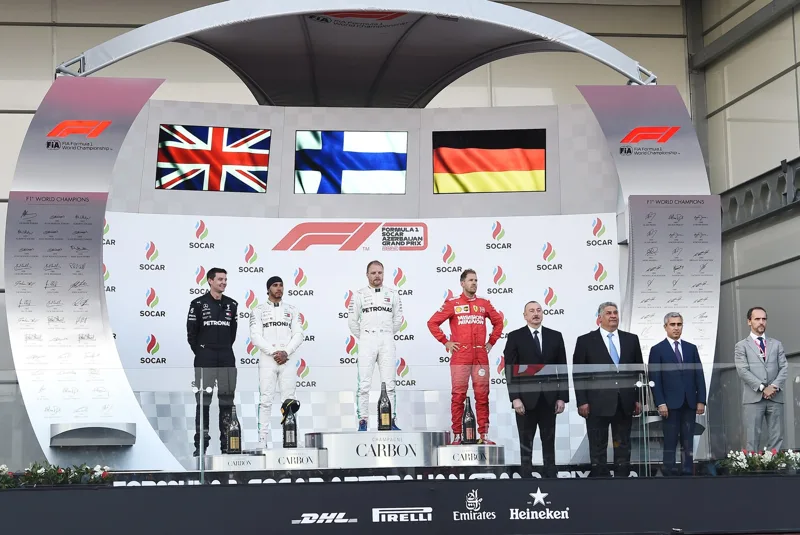
In Azerbaijan Vettel received three penalty points on his licence. He later admitted his mistake, apologised to Hamilton and the FIA, and avoided a possible race ban, while Raikkonen collided with Bottas on the opening lap.
In Spain Bottas clipped the inside kerb at the first corner and hit Raikkonen, who in turn hit Verstappen. Bottas was able to continue, while Raikkonen and Verstappen were out. Monaco then gave Raikkonen his first pole since the 2008 French Grand Prix.
Who were Ferrari's main rivals in 2017?
Mercedes provided the toughest opposition. Hamilton and Bottas were the Mercedes pair, and Hamilton went on to take the title at the end of the year. Bottas's first career win in Russia showed that the Mercedes pair could beat Ferrari on any given weekend.
Red Bull's Max Verstappen also caused trouble for Ferrari, often at the start of races. His moves at the first corners in Canada and at the United States Grand Prix cost Ferrari track position, and his penalty in Austin helped put Ferrari back on the podium.
How did the car perform in the warm and cold races?
Monaco showed the car at its strongest, with Vettel converting that form into a win.
At Italy the team was helped by engine penalties for both Red Bulls, which promoted the Ferrari drivers to fifth and sixth on the grid.