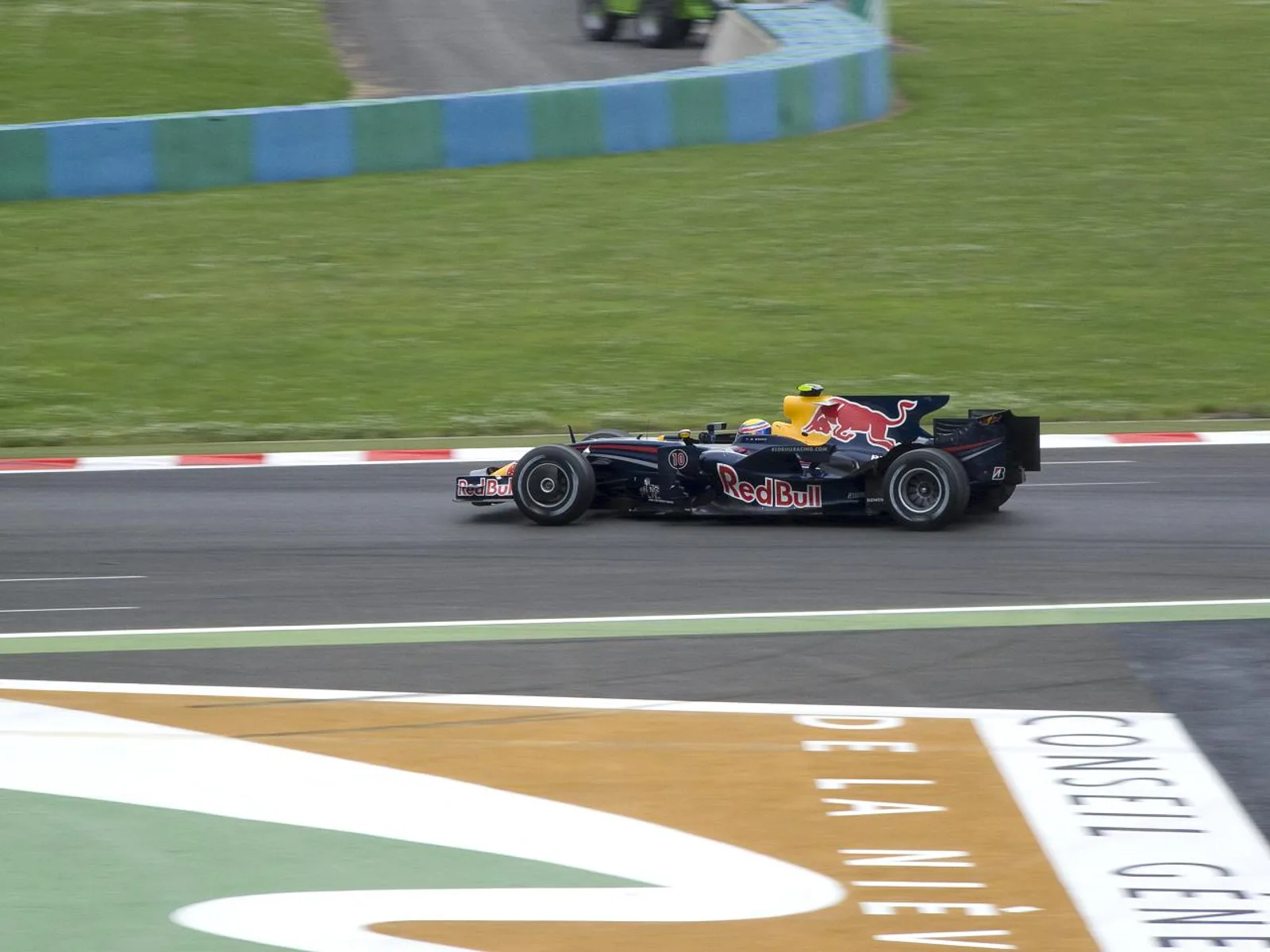
A broken exhaust pipe cost Raikkonen the win, Hamilton started 13th after a grid penalty, and Massa moved to the top of the Drivers' Championship.
The 2008 French Grand Prix was held on 22 June 2008 at the Circuit de Nevers Magny-Cours and was the eighth race of the season. Felipe Massa won for Ferrari from second on the grid, with Kimi Raikkonen second and Jarno Trulli third for Toyota. It was the last French Grand Prix for a decade.
Felipe Massa won the 2008 French Grand Prix after Kimi Raikkonen's exhaust pipe broke and cut the power from his Ferrari. It was a race of pit-stop timing and grid penalties, and it lifted Massa to the top of the Drivers' Championship for the first time in his career.
Why did Ferrari look strong at Magny-Cours?
Ferrari had won seven of the previous ten races held at Magny-Cours, so the team arrived with a strong record at the circuit. Its drivers had the front row, with Raikkonen on pole and Massa alongside him.
The championship was tight. Before the race Kubica led the Drivers' Championship on 42 points, with Hamilton and Massa on 38 points each. In the Constructors' Championship Ferrari led with 73 points, and BMW Sauber were three points behind on 70.
The circuit's own future was in doubt. In March 2007 the French federation stated that it intended to rest Magny-Cours from the world championship for 2008. The race went ahead in 2008 regardless, but it was dropped from the 2009 calendar, and the French Grand Prix did not return until 2018 at Paul Ricard.
A broken exhaust pipe at half distance handed Massa the lead, and the win that followed.
Why did Hamilton start 13th?
Hamilton and Rosberg were each given ten-place grid penalties after the Canadian Grand Prix, when Hamilton's collision with Raikkonen in the pit lane was followed by Rosberg hitting Hamilton. That penalty dropped Hamilton to 13th on the grid, and Rosberg was pushed to the back.
McLaren's chief executive Martin Whitmarsh thought the penalty was severe. He pointed to Monaco, where Raikkonen had crashed into the back of Adrian Sutil and no penalty had been given. Rosberg said the penalties were deserved.
Heikki Kovalainen was given a five-place grid penalty for blocking Mark Webber in qualifying, and Rubens Barrichello took a five-place penalty for a gearbox change. Barrichello's penalty meant he started 20th, one place behind Rosberg.
What did practice and qualifying look like at Magny-Cours?
In the first practice Massa was fastest, with Hamilton and Kovalainen next. The afternoon session was run in very hot conditions, and Alonso set the fastest lap ahead of the two Ferraris. The heat caused plenty of cars to run off the road and slide through the gravel, and a new system designed to limit speeds in potentially hazardous situations was tested at the end of that session.
Piquet led the final practice session, with Webber next quickest and Vettel third. As in the rest of the season, the McLaren and Ferrari drivers ran heavier fuel loads for the final part of qualifying.
Raikkonen took pole at 1:16.449, Ferrari's 200th pole position, and it was the last pole he would win until the 2017 Monaco Grand Prix, 129 races later. Massa qualified second, and Alonso third after Hamilton's ten-place penalty moved him to 13th. Trulli took fourth, and Kovalainen started tenth after a five-place penalty for blocking Webber.
Kubica, Webber, Coulthard, Glock and Piquet completed the top ten. Heidfeld was 11th, Vettel 12th and Bourdais 14th. Barrichello was also penalised five places for a gearbox change, and Button qualified ahead of him, Fisichella and Sutil. The cars that failed to reach the final part were allowed to refuel before the race, which gave them a lighter car than the top ten.
How did the race unfold?
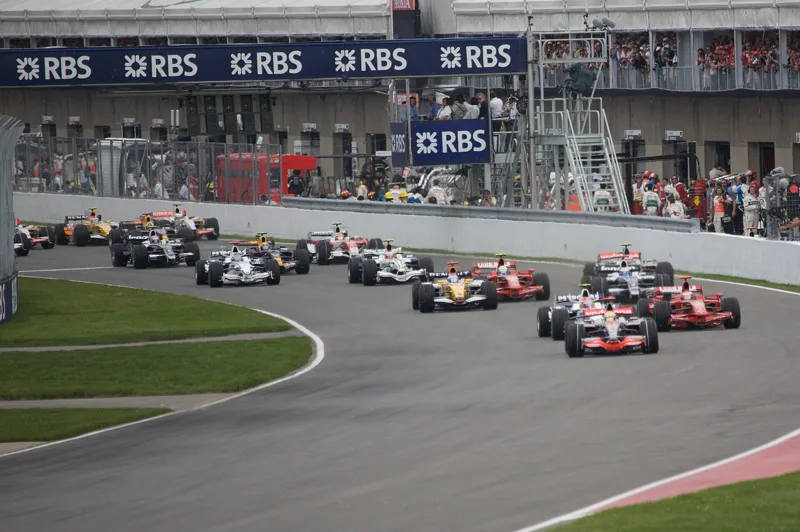
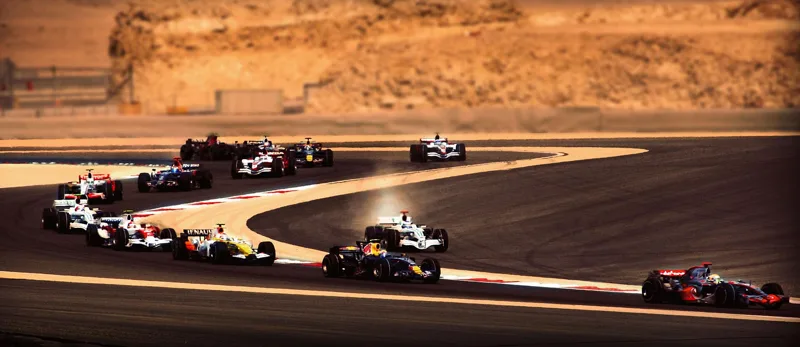
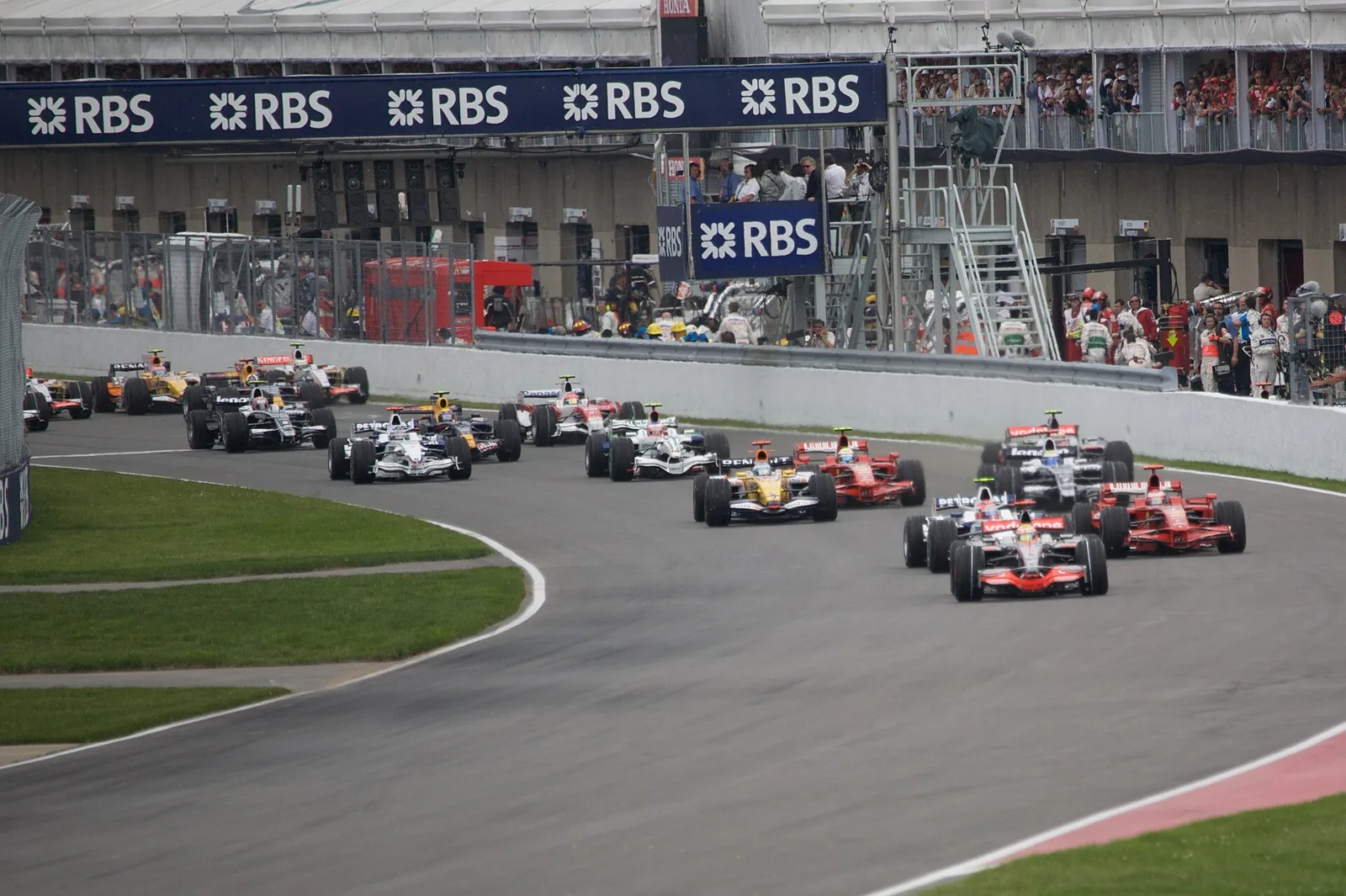
Raikkonen and Massa made clean starts from the front row. Alonso, who started third, was passed by Trulli and Kubica, then repassed Kubica at the hairpin. Glock made a good start, taking sixth after passing Webber. Hamilton, starting 13th, moved to 10th by the end of the first lap.
Going into the first corner Button touched Bourdais, which damaged the Honda's front wing. On lap five Button was forced to make an unscheduled stop, and that dropped him to the back of the field. He was lapped by several drivers because of the damage, and he eventually retired on lap 17.
Hamilton was given a drive-through penalty on lap 13 for cutting a corner on lap one. He took it straight away and rejoined in 13th.
On lap 16 Raikkonen set the fastest lap of the race, a 1:16.630, and he pushed his lead over Massa. By lap 30 Raikkonen led Massa by 6.6 seconds, while Trulli was more than half a minute behind in third.
How did Button's race end so early?
That early contact left the Honda's front wing damaged. He could not continue at the front of the field, and on lap five he was forced into an unscheduled pit stop that sent him to the back.
The damage left Button lapped by several drivers. He retired on lap 17, having been unable to recover from the early contact, and the Honda team's race ended with him.
What broke Raikkonen's race?
The right exhaust pipe on Raikkonen's car failed before half distance, sapping power on the straights. Massa caught him and passed him on lap 39. After the race Raikkonen said the broken pipe had cut his power on the straights.
The exhaust pipe later came off completely, but Raikkonen continued at similar lap times. Massa had a 10-second lead over his teammate by lap 46, and Massa pitted on lap 54 to emerge 13.4 seconds ahead of Raikkonen.
Kovalainen made up several places through the stops. Light rain started on lap 55, but it never became a problem for the drivers.
Key moments in the race
| Lap | Event |
|---|---|
| 1 | Raikkonen and Massa hold the front; Button touches Bourdais |
| 5 | Button makes an unscheduled stop and drops to the back |
| 13 | Hamilton takes a drive-through penalty for cutting a corner |
| 16 | Raikkonen sets the fastest lap of the race, 1:16.630 |
| 17 | Button retires after being lapped |
| 30 | Raikkonen leads Massa by 6.6 seconds |
| 39 | Massa passes Raikkonen |
| 54 | Massa pits and emerges 13.4 seconds ahead of Raikkonen |
| 70 | Massa wins, nearly eighteen seconds ahead of Raikkonen |
What did Ferrari and BMW Sauber bring to the race?
Ferrari arrived with a long record of success at Magny-Cours. Its drivers were a clear first and second on the grid for much of the weekend, which made the stakes high for the team.
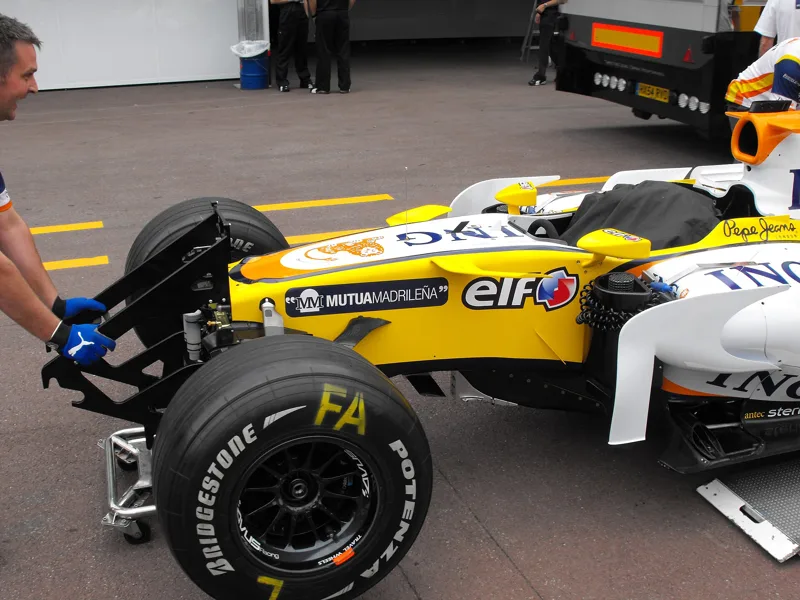
BMW Sauber had won its first race the week before in Canada, and both Ferrari and BMW Sauber revised their front wings for the French round. BMW brought both the new wing and the one it had used previously, but chose the revised version for its better downforce. Ferrari changed its nose hole, a feature first used at the Spanish Grand Prix that channelled airflow to create more downforce.
How did the podium come together?
Massa won, with Raikkonen nearly eighteen seconds behind. Trulli retained third, his first podium since the 2005 Spanish Grand Prix, and it was Toyota's first podium since the 2006 Australian Grand Prix. Kovalainen was fourth, with Kubica, Webber and Piquet behind him.
Piquet took his first ever points in Formula One at Magny-Cours. Glock, Vettel and Heidfeld came in the middle of the order, with Hamilton and Coulthard nearby, and Alonso ahead of the lapped Barrichello, Nakajima, Rosberg, Bourdais, Fisichella and Sutil at the back.
Massa's win moved him into the lead of the Drivers' Championship, with Kubica second, two points behind him. Ferrari increased its lead in the Constructors' Championship to 17 points over BMW Sauber, with McLaren a further 16 points behind in third.
How did Piquet Jr. score his first points?
Piquet Jr. was in his first season in Formula One and had scored no points before the French race. He finished seventh, behind Kovalainen, Kubica and Webber, to take his first ever points.
It was a modest result, and it was his first ever points.
What did the drivers say after the race?
Massa was delighted, and said the win had come his way because Raikkonen had a problem with his car. He was delighted with the result, which he said had gone his way.
Raikkonen said he was disappointed because he had hoped to win. The broken exhaust pipe cut the power on the straights, and he said he had to look on the bright side, because eight points were still a good amount for the team.
Trulli said the race had been hard and tough, and that he had to fight for the podium. Hamilton called his drive-through penalty an extremely close call, and said he had been on the outside and could not turn in without risking both cars.
How did the other teams see the weekend?
After BMW Sauber's victory at the previous race, Mario Theissen said the package had not worked perfectly over the whole weekend. Heidfeld called the result disappointing. Alonso said he was disappointed by his poor start to the race.
Christian Horner, Red Bull's director, said the team's problems lay in the bad starts its drivers had made. Button, who retired, said he had a good start and was alongside Bourdais before their collision.