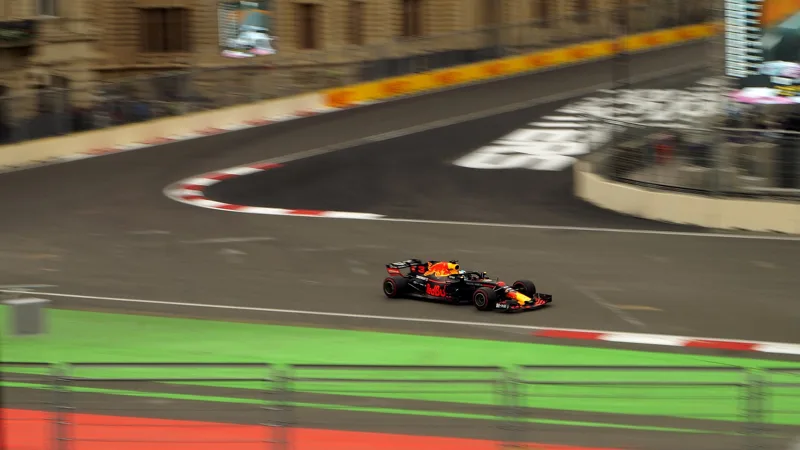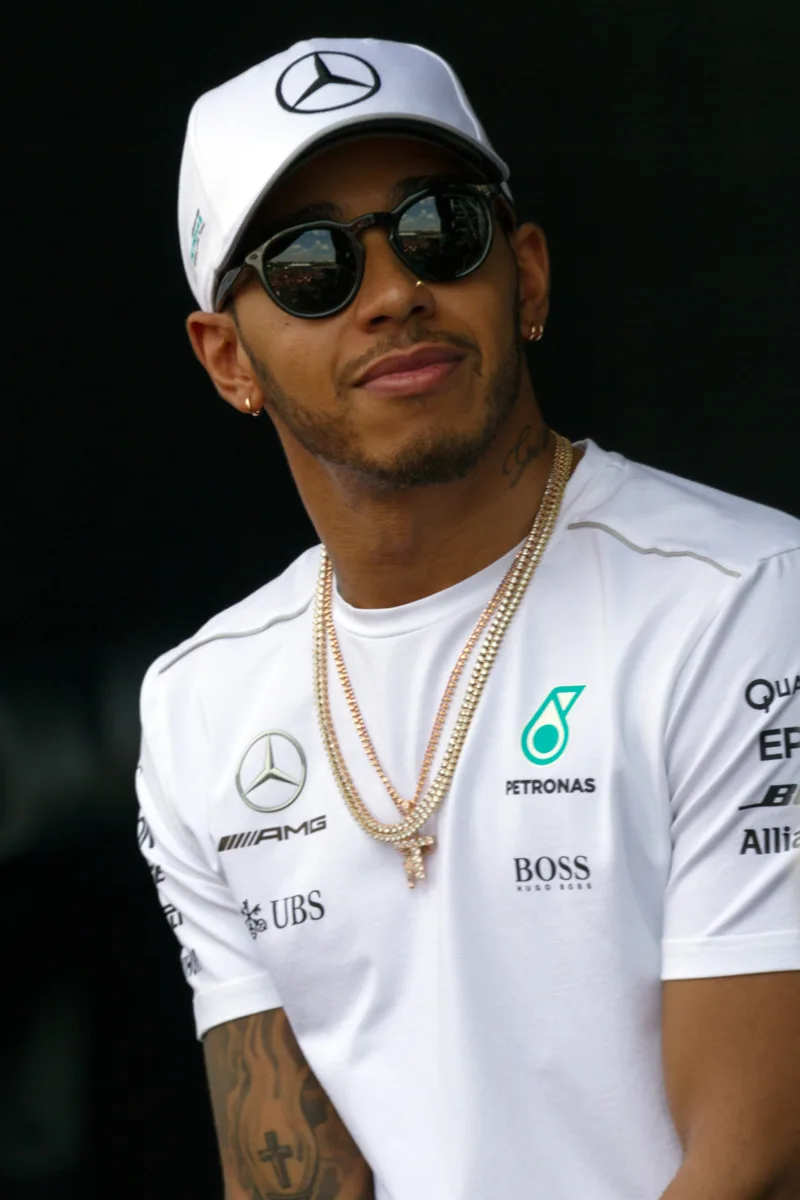
A rain-hit German Grand Prix, a pit-lane abort that earned a reprimand and a Mercedes one-two from the back of the grid.
The 2018 German Grand Prix took place at the Hockenheimring on 22 July 2018, and Lewis Hamilton won it from 14th on the grid. Vettel, who had led from pole, crashed out in light rain, leaving Bottas second and Raikkonen third.
Lewis Hamilton won the 2018 German Grand Prix from 14th on the grid, with Valtteri Bottas second and Kimi Raikkonen third, after Sebastian Vettel crashed out while leading in the rain. The result put Hamilton ahead of Vettel in the drivers' table and moved Mercedes above Ferrari in the constructors' standings.
Why was the 2018 German Grand Prix important?
The race was run on 22 July 2018 as the 11th round of a 21-race season, and it marked the 77th German Grand Prix. It was the 63rd time the event had counted towards the World Championship since the first championship season in 1950.
It was Germany's first round since 2016, and the event was staged at the Hockenheimring, close to the town of Hockenheim in Baden-Wurttemberg.
Several teams brought updates. Ferrari fitted a new exhaust system and rear wing, Renault introduced a revised front wing, while Williams brought an upgraded aero package.
Before the race Vettel led the drivers' table by eight points from Hamilton. Ferrari held a twenty-point lead over Mercedes in the constructors' standings, so the weekend had real stakes for both teams.
No stand-in drivers were used for the race itself. Nicholas Latifi and Antonio Giovinazzi did take part in the first practice session, in place of Esteban Ocon for Force India and Marcus Ericsson for Sauber.
Hamilton won from 14th on a rain-hit day at Hockenheim, after Vettel crashed out and a pit-lane abort earned only a reprimand.
What tyres did Pirelli bring to Hockenheim?
Pirelli brought medium, soft and ultrasoft compounds for the weekend. The ultrasoft gave the most grip but wore fastest, while the medium lasted longest and offered the least grip. Intermediate and full wet tyres were also available for light and heavy standing water.
The tyre rules shaped qualifying. Any driver who reached the final session had to start the race on the tyres used for their fastest Q2 time, and every driver who reached Q3 had set that time on ultrasofts.
How did the practice sessions set up the weekend?
Three practice sessions were held: two 90-minute sessions on Friday and a 60-minute session on Saturday before qualifying. Ricciardo was fastest in the first session for Red Bull, and Verstappen topped the second, with Hamilton a close second in both.
Hamilton looked strongest over a single lap, but a mistake cost him the fastest overall time across the first two sessions. Red Bull had the best race pace, roughly 0.2 seconds quicker than Mercedes and Ferrari, although the team could not complete a long run on ultrasofts.
Verstappen lost thirty minutes of running in practice, which limited his preparation. Haas were judged the fourth-strongest team over one lap, ahead of Sauber.
Hamilton played down his advantage and pointed to Ferrari as his most likely challenger. Verstappen said Red Bull could fight for the win, while Hulkenberg reported a hard day with tyre blistering. Williams ran an upgraded front and rear wing in practice and then kept the new specification for the rest of the weekend.
Final practice took place in heavy rain, so only nine drivers set a lap time. Leclerc was quickest in his Sauber, ahead of Ericsson and Williams' Sergey Sirotkin.
How did qualifying end with Vettel on pole?
Sebastian Vettel took pole in 1 minute and 11.212 seconds. Bottas lined up second, two-tenths behind him, and Raikkonen was third in the other Ferrari.
Qualifying began under overcast skies, with an air temperature of 21 degrees C (70 F) and a track at 27 degrees C (81 F). Humidity was high, and the track was dry enough for slicks but still damp in places, so the drivers expected a lot of track evolution. Rain was also possible later in the session.
Raikkonen set the fastest time in the first part of qualifying. Ocon, Gasly, Hartley, Stroll and Vandoorne were eliminated in the bottom five.
Hamilton had a time good enough to reach Q2, but a hydraulics fault left him unable to change gear. He was told to pull over and protect the power unit.
About eight minutes into the second session, Ericsson spun at the Sachs curve and left gravel on the track. Red flags followed after several drivers complained, and seven minutes of the session remained once the gravel was cleared.
When the session ended, Alonso, Sirotkin, Ericsson, Hamilton and Ricciardo had taken 11th to 15th and were out. Neither Hamilton nor Ricciardo took part in the final shootout, and Ricciardo had an impending grid penalty that would send him to the back anyway.
Which penalties and placings shaped the grid?
Vettel's pole was followed by Bottas and Raikkonen, with Verstappen fourth and Magnussen and Grosjean fifth and sixth. Those two Haas results were the best qualifying finish in the team's history.
Leclerc started ninth after brake trouble in qualifying. Ocon began 15th after getting only one dry session in practice, and Ericsson had been disappointed after spinning in Q2, having hoped to reach the top ten.
Penalties also changed the grid. Ricciardo was docked 20 places for going over his power unit element allowance, and Gasly lost 30 places for the same reason.
Vettel said his lap was among the best moments of his Formula One career, and pole made him the favourite for the race. Toro Rosso, meanwhile, believed they had some of the strongest long-run pace in the midfield after a disappointing qualifying.
What happened at the start and in the first half of the race?
The race began on a dry track, with rain forecast later on. Vettel led through turn 1 from Bottas and Raikkonen, and Raikkonen made the first stop on lap 14, switching to soft tyres. Vettel and Bottas came in on laps 24 and 28.
Ricciardo retired on lap 29 with what proved to be a power loss, but his car was recovered quickly and the rhythm of the race did not break. Verstappen made his first stop on the same lap.
On lap 29 Raikkonen led, with Vettel, Hamilton (who had yet to make his compulsory stop) and Bottas behind him. Vettel began to complain of overheating tyres, and by lap 39 Raikkonen had been told to let his team-mate through.
Why did the weather and tyre calls turn the race?
Rain began on lap 44. Alonso and Leclerc switched to intermediates the following lap, while Gasly fitted full wet tyres, and all three later admitted in interviews that the calls were mistakes.
Vettel's race soon fell apart. On lap 46 he clipped the kerb at the last corner, shedding a little of his front wing, and on lap 52, braking into turn 12, he locked the rear brakes and went straight into the barriers.
His crash brought out a safety car so that his car could be recovered. Bottas responded by pitting, but Mercedes had not got the tyres prepared in time, and he stood in his pit box for almost 20 seconds, when a stop usually takes two to three seconds.
Hamilton was also called in. He began to enter the pit lane, then aborted the stop after a miscommunication with his engineer and rejoined the track by cutting across the pit entry line.
Raikkonen pitted on the following lap for ultrasofts. The race resumed on lap 58 with Hamilton leading Bottas and Raikkonen, and Bottas attacked for the lead before he was told to hold position.
How did the finish play out?
Hamilton won from 14th on the grid, with Bottas second and Raikkonen third. Sainz crossed tenth on track, but a 10-second penalty for passing under safety car conditions sent him back to 12th.
Alonso retired with mechanical problems, but he was classified because he had covered more than 90% of the race distance. Vandoorne also finished the race, although his weekend was a difficult one.
Hulkenberg finished fifth, his best result of the season, and Renault were pleased overall. Grosjean moved up from tenth to sixth late on, having swapped between intermediates and slicks in the rain, while Magnussen finished eleventh.
Verstappen finished fourth, Perez seventh and Ocon eighth from 15th on the grid. Gasly finished 14th after a poor strategy call, and Leclerc came last of the finishers in 15th, while Ericsson scored points for Sauber.
Race result highlights
| Finish | Driver | Notes |
|---|---|---|
| 1st | Lewis Hamilton (Mercedes) | From 14th on the grid; reprimanded but kept the win |
| 2nd | Valtteri Bottas (Mercedes) | Stationary for almost 20 seconds during the safety car stop |
| 3rd | Kimi Raikkonen (Ferrari) | Pitted for ultrasofts under the safety car |
| 4th | Max Verstappen (Red Bull) | Fourth at the finish |
| 5th | Nico Hulkenberg (Renault) | Best finish of his season |
| 6th | Romain Grosjean (Haas) | Climbed from tenth in the closing laps |
| 7th | Sergio Perez (Force India) | Force India's strong result |
| 8th | Esteban Ocon (Force India) | Started 15th on the grid |
| 11th | Kevin Magnussen (Haas) | Finished behind his team-mate Grosjean |
| 12th | Carlos Sainz (Renault) | Dropped from tenth by a 10-second penalty |
| 14th | Pierre Gasly (Toro Rosso) | Poor strategy call |
| 15th | Charles Leclerc (Sauber) | Last of the finishers |
| Classified | Fernando Alonso (McLaren) | Retired; classified after more than 90% of the distance |
| Retired | Sebastian Vettel (Ferrari) | Crashed on lap 52 at turn 12 |
| Retired | Daniel Ricciardo (Red Bull) | Power loss on lap 29 |
Who was penalised after the race, and why?
About 90 minutes after the finish, Hamilton was called to the stewards for crossing the pit entry line when he aborted his stop on lap 53, a move the sporting code prohibits. He received a reprimand and kept his win.
The stewards said the manoeuvre did not put anyone in danger and was carried out safely, so a reprimand reflected the offence. Hamilton had not been disqualified, and the result stood.
Hamilton called the win a dream and said it could be a turning point in his title campaign. Vettel accepted that the crash was his own fault, but said Ferrari still appeared to have the quickest car, a view Mercedes team principal Toto Wolff also noticed.
What did the midfield teams take from the race?
Haas had mixed fortunes. Grosjean and Magnussen switched between intermediates and slicks during the rain, and Grosjean climbed to sixth while Magnussen finished eleventh. Team principal Guenther Steiner seemed neither pleased nor disappointed with the outcome.
Force India were very pleased, with Perez seventh and Ocon eighth. Hartley was happy with his result after a hard first half of 2018, and Toro Rosso's team boss Franz Tost said the weekend gave the team optimism for future races.
Williams and McLaren had bad weekends. Both Williams cars retired, the second and third retirements for that car in the season, while Alonso retired with mechanical problems. McLaren's sporting director Gil de Ferran said the car and both drivers could have finished in the points.
How did the championship change after Hockenheim?
Hamilton took the drivers' lead from Vettel, while Bottas overtook Ricciardo for fourth. Perez climbed to tenth from twelfth, Sainz dropped two places, and Grosjean rose to 13th, pushing Gasly and Leclerc down to 14th and 15th.
Mercedes moved above Ferrari to top the constructors' table, and Hamilton moved above Vettel in the drivers' table. Ericsson took 17th place from Stroll, and the rest of the order held.
Why does the 2018 German Grand Prix still matter?
The win from 14th on the grid moved Hamilton ahead of Vettel and Mercedes ahead of Ferrari in the standings. It came after Vettel's crash, and it showed how quickly the order could change in changing rain and tyre calls.
The race also ended Germany's absence from the calendar, since the last German Grand Prix had been held in 2016.