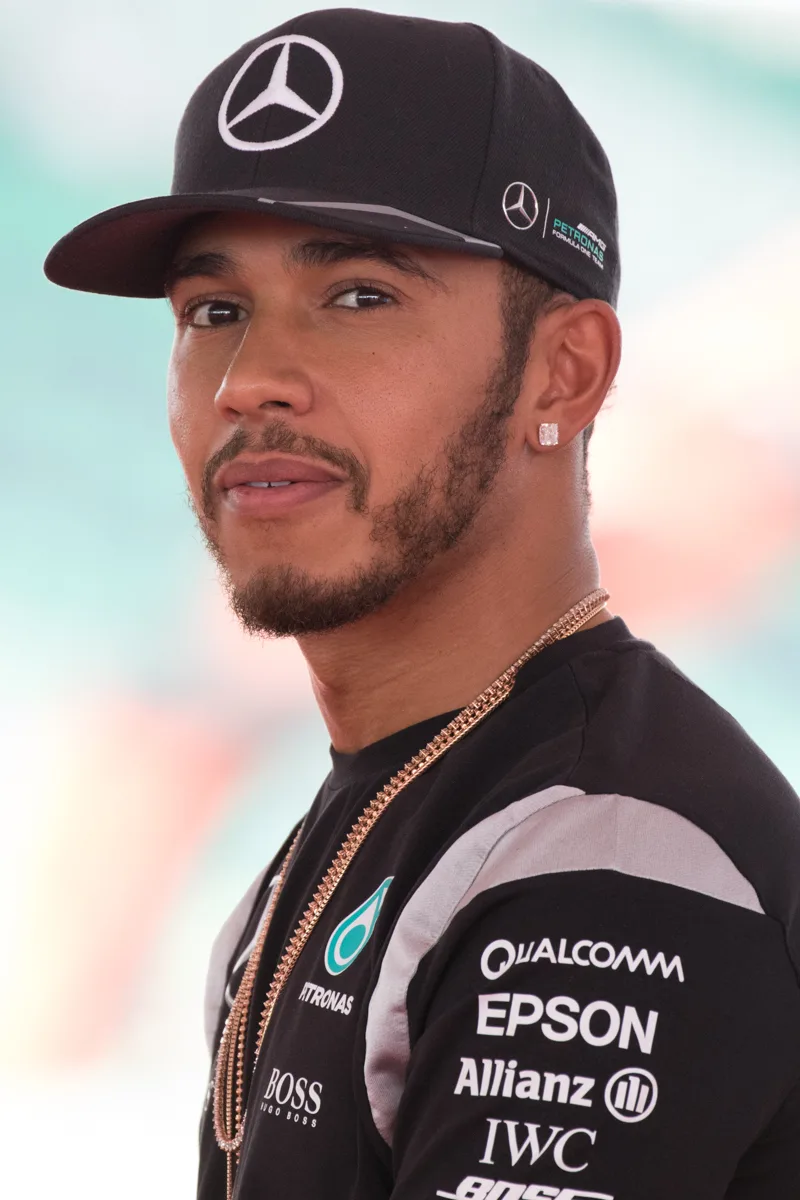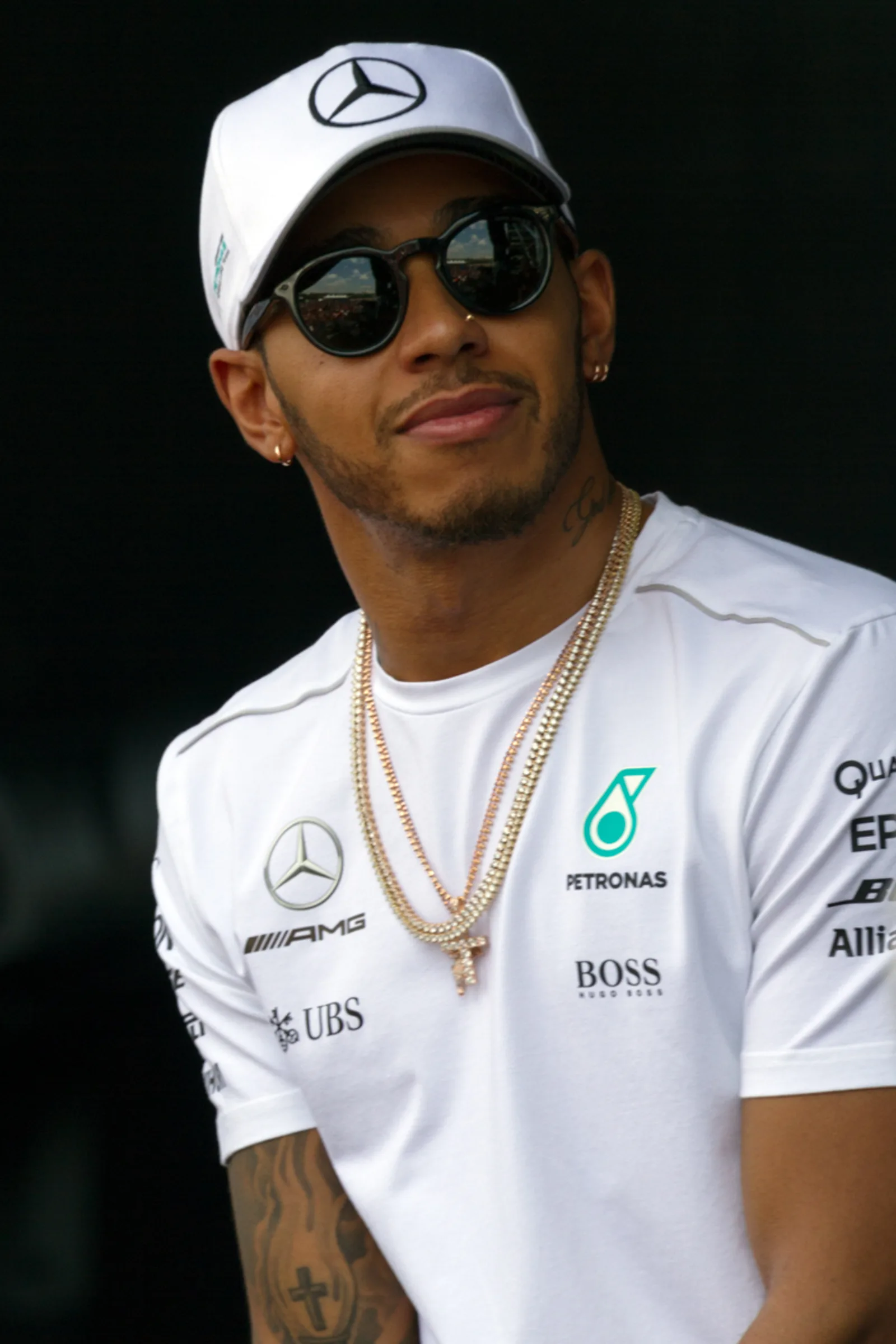
Two four-time champions, five lead changes and a new halo cockpit device, with Lewis Hamilton clinching his fifth title in Mexico.
Hamilton won his fifth world title in Mexico, ahead of Vettel, the runner-up who finished 88 points behind. Mercedes took its fifth straight constructors' crown at the following race, and the year introduced the halo cockpit device.
The 2018 FIA Formula One World Championship was the 69th running of the title, and it was contested over twenty-one Grands Prix. Lewis Hamilton clinched his fifth World Drivers' Championship at the Mexican Grand Prix, and Mercedes secured its fifth consecutive constructors' title at the following race. The season was a head-to-head battle between two four-time champions, Hamilton and Sebastian Vettel.
Journalists and fans called the year the Fight for Five, because it was the first time two quadruple world champions had competed for a fifth title. The lead changed hands five times across the season, and the sport also introduced a new cockpit protection device, the halo, as part of a planned rollout.
What happened across the 2018 season?
Vettel led the championship at the halfway point after the British Grand Prix, by eight points, and the year turned on the second half of the calendar. Hamilton overhauled him in the second half of the year and clinched the title in Mexico, with Vettel finishing runner-up, 88 points behind, and Kimi Raikkonen third overall.
The opening round set the tone. Vettel won the Australian Grand Prix for Ferrari, using a virtual safety car period, triggered by Romain Grosjean's stricken Haas, to pass Hamilton. Raikkonen finished third in the other Ferrari, and McLaren ended the first race of its partnership with Renault with a fifth and a ninth place.
Vettel then won from pole in Bahrain, holding off a late charge from Valtteri Bottas. Ricciardo won China on a two-stop strategy, breaking the pattern of Ferrari and Mercedes dominance, and Hamilton took his first win of the year in Azerbaijan, which also gave him the championship lead.
The European rounds were defined by the lead changes. Hamilton won in Spain, while Ricciardo took Monaco with Vettel second and Hamilton third. Vettel won Canada to take the lead by one point, and Hamilton won France, his third win of the season, with Vettel fifth after a first-corner crash with Bottas.
The mid-season saw Mercedes and Ferrari trade wins. Verstappen won Austria, Vettel won Britain, and Hamilton won Germany in a Mercedes one-two with Bottas. Hamilton then won Hungary, and Vettel won Belgium, so the two title rivals split the wins through the middle of the year.
Two four-time champions fought for a fifth title, and Hamilton settled it in Mexico.
Which teams and drivers changed for 2018?
McLaren ended its Honda partnership, citing repeated failures to supply a reliable and competitive power unit, and signed a three-year deal for Renault engines. Toro Rosso parted ways with Renault to become the first full-works Honda team in the sport's history, and Red Bull loaned Carlos Sainz Jr. to Renault's works team.
Sauber renewed its Ferrari tie-up, moving to up-to-date power units after running year-old units in 2017, and Alfa Romeo became the team's title sponsor. No Honda-engined car scored a podium that season, a sign of how difficult the Honda programme had become.
The biggest team story was Force India. The team entered administration on 27 July 2018, during the Hungarian weekend. A consortium led by Lawrence Stroll bought the racing assets through Racing Point UK Ltd, and the original team was excluded from the Constructors' Championship because it could not take part in the remaining races.
The new Racing Point Force India team was allowed to join from the Belgian Grand Prix, but it began with zero points in the Constructors' Championship. The chassis had been homologated under the Force India name, so that name stayed on the entry, and its drivers, Sergio Perez and Esteban Ocon, kept the points they had scored. Its drivers kept the points they had scored in the Drivers' Championship, and the other teams agreed to let Racing Point keep the prize money that Sahara Force India had earned in earlier years.
Driver changes were just as notable. Toro Rosso signed Pierre Gasly and Brendon Hartley full-time, with Hartley becoming the first full-time New Zealander in Formula One since Denny Hulme in 1974. Charles Leclerc replaced Pascal Wehrlein at Sauber, and Felipe Massa retired, with Sergey Sirotkin taking his seat at Williams.
Daniil Kvyat left the Red Bull driver programme and took a development role with Ferrari. The moves reflected a wider pattern in which teams were reshuffling their junior drivers as the grid settled around the new rules.
What calendar and rule changes shaped the 2018 season?
The calendar changed in several places. The French Grand Prix returned to Paul Ricard for the first time since 2008, and the Azerbaijan Grand Prix was brought forward to April. The German Grand Prix returned after a one-year absence at the Hockenheimring, while the Russian Grand Prix moved to September to fill the gap left by the Malaysian race.
The Malaysian Grand Prix had been part of the championship from 1999 to 2017, and its removal reshaped the calendar. The timing of European races also changed, with most starting ten minutes past the hour so that broadcasters could carry pre-race coverage.
Sporting rules tightened the penalty system. A driver who changed a power unit component was still subject to a five- or ten-place grid penalty, but a second component change sent the driver to the back of the grid. Stewards gained the power to penalise improper race starts even when the automated detection system did not trigger.
Power unit rules were rewritten. Each power unit component was counted separately, so each driver could use up to three engines, three MGU-H units and three turbochargers, along with two MGU-Ks, two energy stores and two sets of control electronics. Oil burning was limited to 0.6 litres per one hundred kilometres, down from 1.2, and active control valves were banned.
The FIA also banned shark fins and T-wings, which had been used to generate extra aerodynamic benefit. Customer teams were required to receive an identical specification of power units, after Mercedes' works team was seen to have engine settings that its customers did not.
Why was the halo introduced?
The halo was introduced after a run of serious open-wheel accidents in which tyres or debris had hit drivers' heads. The FIA tested several solutions and settled on a wishbone-shaped frame mounted above and around the driver's head, anchored to the monocoque in front of the cockpit.
Seventeen crashes were studied, and the halo was judged likely to have prevented injuries in fifteen of them. For the other two, Jules Bianchi's fatal accident among them, it would not have prevented harm, but it would not have worsened the outcome either. The device was then scheduled for other open-wheel series, with 2020 set as the deadline for all FIA-sanctioned categories.
Teams had to meet new structural tests. The minimum weight of the chassis rose to 734 kg (1,618.2 lb) to accommodate the halo, and a static load test fired a tyre at the crash structure, which had to remain intact. Teams were also required to buy pre-fabricated halo models from approved suppliers rather than developing their own.
Tyres were adjusted as well. Pirelli added the hypersoft, the softest of its nine compounds, and the superhard, the hardest. The hypersoft debuted at the Monaco Grand Prix, and the hard compound changed to ice blue. For Spain, France and Britain, Pirelli reduced tread depth by four-tenths of a millimetre to combat blistering on new asphalt.
Which races shaped the title fight?
The title fight was decided in the second half of the year, after the points lead had changed hands five times. Hamilton's Italian win gave him his sixth victory of the season, and his string of wins across Singapore, Russia, Japan and Brazil put him in command.
Singapore was a track where Mercedes had traditionally struggled, but Hamilton took pole and won the race, with Vettel third behind Verstappen, while in Russia Bottas obeyed team orders and let Hamilton overtake him on lap 26. Japan followed with a Hamilton win from pole, leading every lap.
The United States Grand Prix produced a record. Raikkonen won, his first win in 114 Grands Prix, which set a new record. Hamilton's position was still in doubt, because he needed to outscore Vettel by eight points or more to win the title that day.
In Mexico, Hamilton finished fourth, which was enough to secure his fifth title, while Verstappen won by 17.3 seconds. Ferrari needed to outscore Mercedes by 13 points in Brazil to stay in the constructors' fight, and Hamilton won there after Verstappen spun, which sealed Mercedes' fifth consecutive constructors' title.
| Grand Prix | Winner | Note |
|---|---|---|
| Australia | Sebastian Vettel | Virtual safety car gave the lead |
| Bahrain | Sebastian Vettel | Held off Bottas |
| China | Daniel Ricciardo | Two-stop strategy |
| Azerbaijan | Lewis Hamilton | First win of the year |
| Spain | Lewis Hamilton | Hamilton ahead of Bottas |
| Monaco | Daniel Ricciardo | Vettel second, Hamilton third |
| Canada | Sebastian Vettel | Took the lead by one point |
| France | Lewis Hamilton | Third win of the season |
| Austria | Max Verstappen | Verstappen win |
| Britain | Sebastian Vettel | Vettel win |
| Germany | Lewis Hamilton | Mercedes one-two |
| Hungary | Lewis Hamilton | Hamilton win |
| Belgium | Sebastian Vettel | Vettel win |
| Italy | Lewis Hamilton | Sixth win of the season |
| Singapore | Lewis Hamilton | Vettel third behind Verstappen |
| Russia | Lewis Hamilton | Bottas let him through |
| Japan | Lewis Hamilton | From pole, leading every lap |
| United States | Kimi Raikkonen | First win from his 114th start |
| Mexico | Max Verstappen | Won by 17.3 seconds; Hamilton fourth |
| Brazil | Lewis Hamilton | Verstappen spun |
| Abu Dhabi | Lewis Hamilton | Vettel second |
Who won the 2018 Drivers' Championship?
Lewis Hamilton won his fifth World Drivers' Championship, clinching it in Mexico. Vettel finished runner-up, 88 points behind, and Raikkonen third. The title was the result of consistent points across the calendar rather than a single decisive race. Hamilton's form in the second half of the year turned a close contest into a clear win, and his early points kept him in touch with Vettel throughout.
Hamilton's fifth title placed him alongside the sport's most successful champions, while Vettel's season showed how close the fight had been. The final rounds decided the constructors' title too, with Mercedes finishing 84 points ahead of Ferrari.
What the 2018 season left behind
The season ended with Mercedes' fifth consecutive constructors' title, and Ferrari's second place showed the team had a strong car but not quite enough to win the battle. Red Bull Racing finished third, 152 points behind Ferrari, which showed how far the team had fallen behind the leaders.
The halo became the most visible safety change of the year. Its introduction marked the first stage of a rollout that would extend the device across FIA-sanctioned open-wheel series by 2020, and the change set a new standard for cockpit protection.