A hatchback pair launched in 1994 and 1995, a coupe from Bertone in 2003 and a big saloon in 2004: what each Alfa Romeo was for and how it changed.
The Alfa Romeo 145 and 146 were small hatchbacks built from 1994 to 2000. The 159 was a large saloon and estate built from 2004 to 2011, and the GT was a Bertone-styled coupe built from 2003 to 2010. Together they covered Alfa's compact, family and sports lines.
Alfa Romeo gave the 159 styling details said to make it look bigger to American buyers, then never sold the car in the United States. Between 1994 and 2011 that saloon and its siblings, the 145, 146 and GT, held the small-hatchback, family and coupe slots in the range, each one riding on Fiat Group or General Motors underpinnings.
What were the Alfa Romeo 145 and 146?
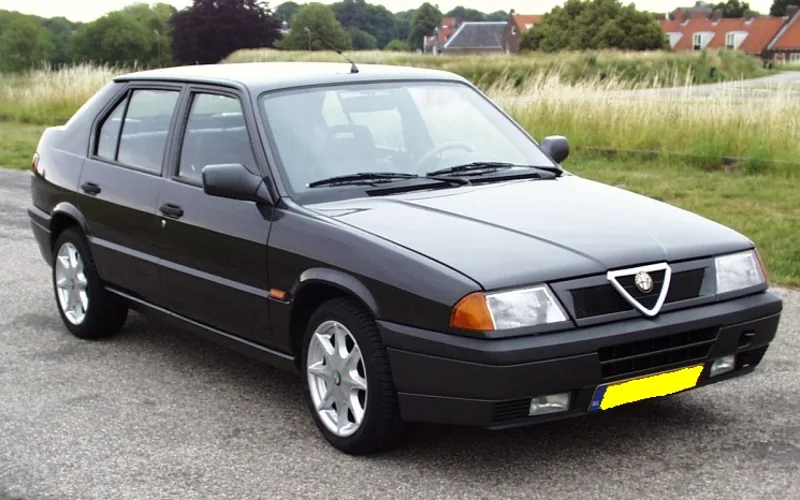
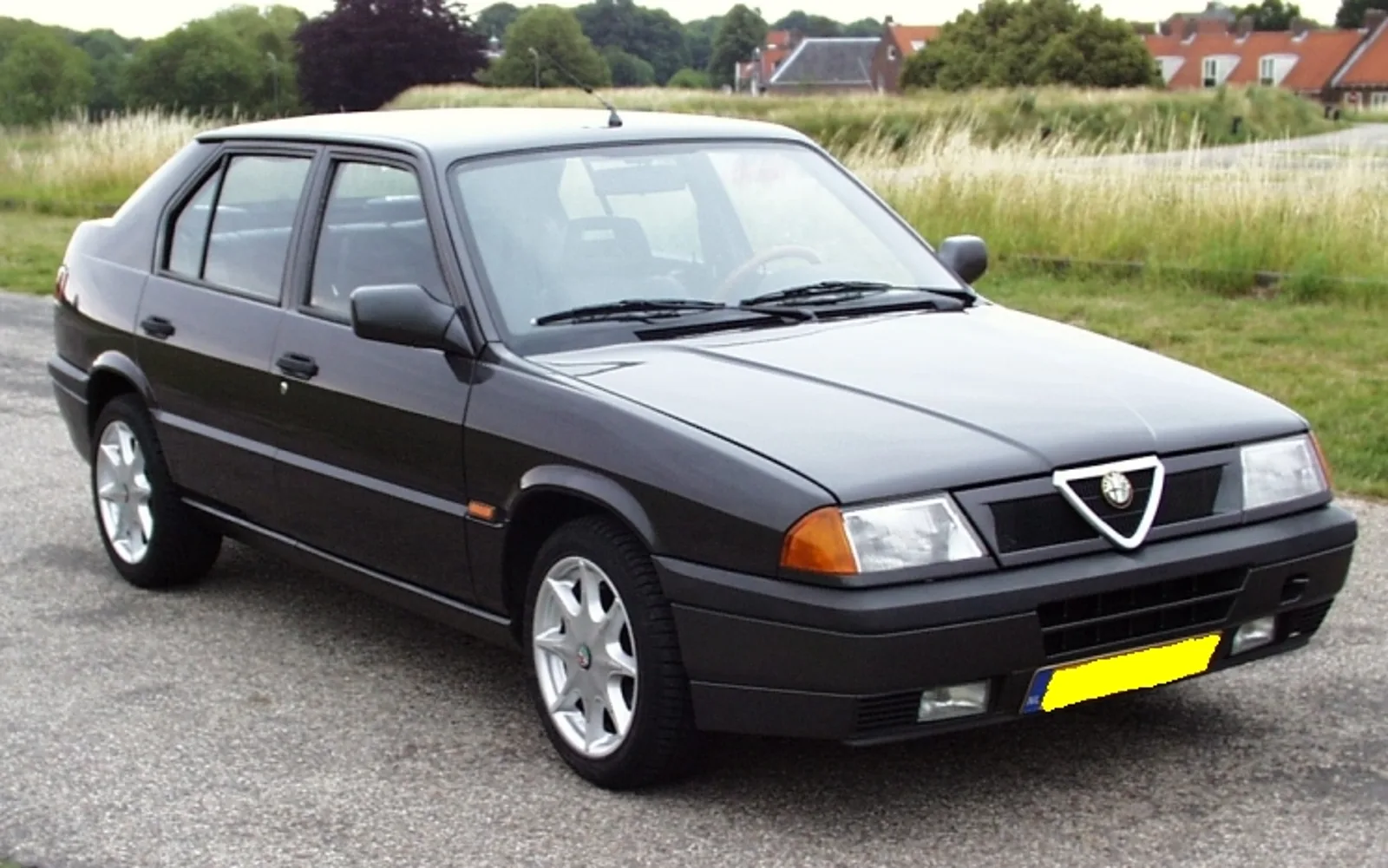
The Alfa Romeo 145 and 146 were small family cars built between 1994 and 2000. The 145 was a three-door hatchback shown at the 1994 Turin Motor Show, and the 146 was a five-door that arrived in 1995 to replace the Alfa Romeo 33. Production reached 221,037 145s and 233,295 146s.
Both came out of one project, Tipo 930, which took four years to develop as a replacement for the ageing 33 in a crowded family hatchback market. The 145 appeared first, on a static display stand at Turin in April 1994, with Paris following in July. A European sales launch had been pencilled in for 9 September. It slipped to October.
The 146 started later and was always meant to be a different car. Work began in April 1992, derived from the 145 and intended to be sold beside it. Alfa gave it a more traditional look and aimed it at the people who had owned the outgoing 33. It premiered at the Bologna Motor Show in November 1994 and went on sale in May 1995. From the B-pillar forwards the two cars share their exterior and interior parts, so the difference lies mostly in the roofline and the tail.
Four cars, three body styles, and platforms borrowed from Fiat and General Motors.
What did the 145 and 146 have under the bonnet?
At launch both cars offered a 1.9-litre turbodiesel inline four and the horizontally opposed petrol engines carried over from the 33, in 1.3 and 1.6 eight-valve forms and a 1.7 with sixteen valves at the top of the range. Buyers chose between a base trim and a better-equipped L, for Lusso.
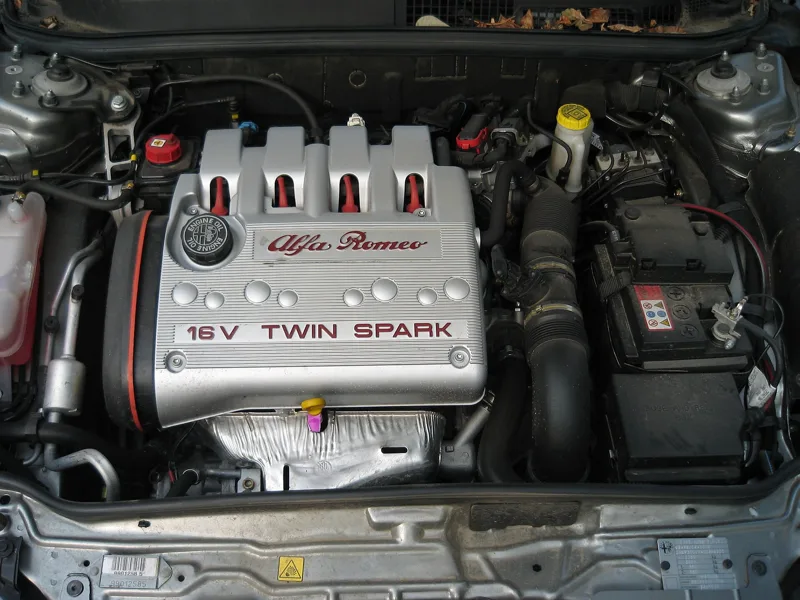
That mixture of old and new engines explains the most unusual feature of the platform. The cars rode on the Fiat Group's Tipo Due architecture, a unibody with MacPherson struts at the front and trailing arms at the rear, and it was designed to take two quite different engine layouts. The older flat-four petrol units sat longitudinally, hanging out ahead of the front axle with the gearbox pointing back towards the cabin, just as they had in the 33 and the Alfasud. The diesels and the later Twin Spark engines sat across the car in the conventional way, with the gearbox at the left.
Think of a flat engine as a boxer with his gloves out to either side. Its cylinders lie on their sides, which keeps the engine low and wide. A transverse engine is more like someone standing square on to you, compact from front to back and easier to package. Alfa had to engineer for both. Every engine fed a five-speed manual gearbox, and the steering was rack and pinion with hydraulic assistance as standard.
How did the 145 and 146 range grow?
Alfa added its sporting flagships a year after launch, fitting the two-litre sixteen-valve Twin Spark engine from the 155. The 145 became the Quadrifoglio, called the Cloverleaf in Britain, and the 146 became the ti. Each had its own trim, richer than the L cars, with ABS, a leather-wrapped steering wheel and gear knob, and Momo sport seats.
The 145 Quadrifoglio appeared at the Frankfurt Motor Show in September 1995 and went on sale in October, with body-coloured side skirts, green cloverleaf badges and five-hole alloys. The 146 ti followed in February 1996 with painted skirts, a boot spoiler and twelve-hole wheels. Both two-litre cars had stiffer suspension, uprated disc brakes all round and wider, lower-profile tyres. They also had a quick steering rack, shared with the 155, GTV and Spider, which sharpened the response but cost them a tighter turning circle.
The flat-four engines left in January 1997, replaced by 1.4, 1.6 and 1.8 versions of the Twin Spark. The 1.8 took on the stiffer chassis, steering and brakes fitted to the top models, along with the option of the sport seats. Left-hand-drive cars got a new dashboard, a new air conditioning system and an upholstered insert, while right-hand-drive cars kept the old dashboard.
In September 1997 came the Junior, a trim for young buyers that put the sporting looks and chassis of the flagships on the cheapest 1.4 powertrain, with the 1.6 added later. It wore the Quadrifoglio side skirts with Junior badges, its own 15-inch alloys and the stainless exhaust tip from the ti. By March 1998 the 1.8 and 2.0 Twin Spark engines received the changes first seen on the 156. Variable-length intake manifolds added 4 to 5 PS and brought peak torque in about 500 rpm lower down the rev range.
What changed in the 1999 restyle?
Alfa Romeo used the March 1999 Geneva Motor Show to present a restyled line-up for both cars. The headline change was under the bonnet: a new common rail direct injection 1.9 turbodiesel, the JTD, replaced the older 1.9 TD. Outside, the cars gained body-coloured bumpers with round fog lights and narrow protective strips.
Inside there was new upholstery and chrome vent surrounds, and optional side airbags joined the standard driver airbag and the optional passenger airbag. The Junior was dropped in favour of a pack sport, which bundled side skirts, a rear spoiler, alloys, a leather wheel and sport seats, all standard on the two-litre cars. A pack lusso added a leather wheel, velour upholstery and mahogany wood trim.
The all-new 147 was officially launched at the Paris Motor Show in September 2000, and during 2000 it took over from both cars. With acclaimed front-end styling and better quality, it was a far bigger commercial success than the 145 or 146 had been.
What was the Alfa Romeo 159?
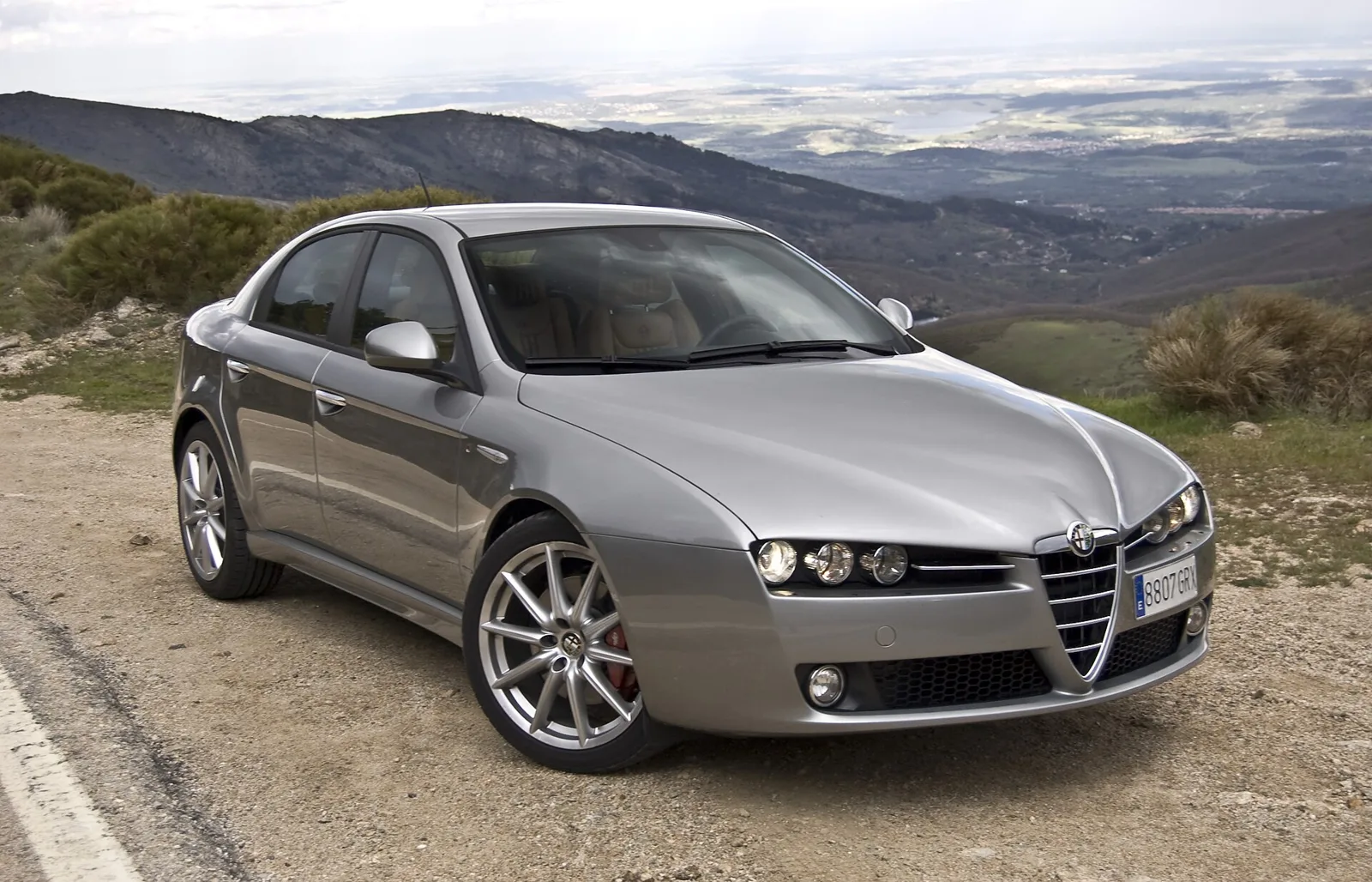
The Alfa Romeo 159, Type 939, was a big family car aimed at the compact-executive class, built between 2004 and 2011 as a four-door saloon and a five-door estate. It was introduced at the 2005 Geneva Motor Show to replace the 156, and 247,661 were made before production ended in November 2011.
It rode on the GM/Fiat Premium platform, which it shared with the Brera coupe and the Spider, and with the Kamal and Visconti concepts. That platform was fundamentally designed for a larger class of car than the 159 was meant to be, and the late move to it left the saloon heavier than it should have been, a problem the Brera and Spider shared. It also made the 159 physically bigger than its predecessor: 225 mm (8.9 in) longer and 85 mm (3.3 in) wider than the 156. Many 156 owners were put off by that growth and did not see the 159 as a direct replacement.
The car did collect credit. It took third place in the 2006 European Car of the Year contest, and the new platform gave it a high level of passive safety. Seven airbags were standard, with knee airbags as an option, and the seats were built to limit whiplash. It performed well in rear-end crash tests and passed the Euro NCAP safety tests. It also took design awards from Auto Bild and Fleet World Honours in 2006.
Who styled the Alfa Romeo 159?
Giorgetto Giugiaro designed the 159 with help from the Centro Stile Alfa Romeo. The nose carries the traditional V-shaped grille and cylindrical headlight clusters, and the front was influenced by the 2002 Brera Concept, also Giugiaro's work. Fiat asked him to carry that design over to its future saloon.
A high waistline rises towards the rear pillar. Several details were supposed to make the car look larger, apparently to attract American buyers, although the 159 never went on sale in the United States. Centro Stile's own exterior proposals from 2001 were rejected, but its interior was developed further. The cabin recalls the 156, with deeply recessed instruments angled towards the driver. Alfa wanted the 159 to take on BMW, Mercedes-Benz and Audi more directly, so it used higher-quality interior materials.
How did the 159 line-up develop?
Trim levels depended on the market. Most markets listed four, Progression, Distinctive, Exclusive and Turismo Internazionale (TI), while British buyers had Turismo, Lusso and TI. The Blue&Me infotainment system was among the options. A Sportwagon estate was shown at the Geneva Motor Show in March 2006, the same year an automatic gearbox arrived for the 2.4 JTDM diesel and was soon offered on more of the range.
In 2007 a four-wheel-drive diesel was introduced and the 2.4 diesels were raised to 210 PS (154 kW; 207 hp), with the TI trim returning as an option. For the 2008 model year, lighter aluminium components in the dashboard, instruments and elsewhere cut the kerb weight by 45 kg (99 lb). A front-wheel-drive 3.2 V6 reached 250 km/h (155 mph), and every variant now had Alfa's electronic Q2 limited-slip differential.
The 2009 model year brought the TBi, a turbocharged 1,742 cc petrol engine with direct injection and variable valve timing on both the inlet and exhaust cams. It was rated at 200 PS (147 kW; 197 hp) and 320 Nm (236 lbf ft) and was due to replace the GM-derived 2.2 and 1.9 JTS units. A new 170 PS (125 kW; 168 hp) JTDm diesel arrived the same year. In Britain the 159 was discontinued on 8 July 2011.
How did the 159 put its power down?
The 159 came with front-wheel drive or the Q4 four-wheel-drive system, which was offered on the 3.2-litre petrol and the 2.4-litre diesel. Q4 uses a Torsen Type-C arrangement, with the front and centre differentials housed in one unit, so the drive can be shared between the front and rear axles.
Most models used a six-speed manual, though the 1.8 made do with five speeds. A six-speed automatic called Q-Tronic, built around an Aisin AW unit, was available on the 1.9 and 2.4 diesels and the 3.2 petrol, and the Selespeed automated manual was sold with the 2.2 petrol in some markets. Every petrol engine except the 1.8 used direct injection, which Alfa labelled JTS, while the JTD diesels used common rail injection.
The 159 also went racing in a modest way. It entered the Bathurst 12 Hour for production cars in 2007, 2009 and 2010 with the 2.4 JTDM diesel, and it won the Alternative Energy Class each time.
What was the Alfa Romeo GT?
Type 937, the Alfa Romeo GT, was a sports car built between 2003 and 2010, and the final series-production Alfa that Bertone designed. Alfa launched it at Geneva in March 2003, began production on 28 November 2003 and reached 80,832 units, assembled at Pomigliano d'Arco alongside the 147 and 159.
It sat on the Fiat C-platform that also underpinned the 156, 147, Lancia Lybra and the Fiat Bravo, Brava, Marea and Multipla. Bertone had wanted to assemble the car at its own factory. Fiat, Alfa's parent, refused, and the GT went to Pomigliano instead. The body was a coupe in the classic mould, but it used a two-door hatchback layout, and a full rear bench gave it five seats instead of a 2+2 arrangement. Alfa advertised it as a practical sports car, and the luggage space bears that out: 320 L (11 cu ft), growing to 905 L (32 cu ft) once the rear seats are folded.
Most of the mechanical parts came straight from the 156 and 147, including the double-wishbone front suspension and an independent rear with MacPherson struts plus parallel arms and reaction rods. The dashboard layout, climate control and electrical system were the 147's, and the bonnet, mirrors and front wings, taken from the 147 GTA, were shared too. Alfa positioned the GT as a sports car in the range, beside the Brera, a coupe based on the newer 159.
What engines and brakes did the GT use?
The GT shared most of its engines with the 156. Buyers could choose a 1.8 TS or a 2.0 JTS petrol, a 1.9 MultiJet turbodiesel in 150 PS (110 kW; 148 hp) or 170 PS (125 kW; 168 hp) form, or the 3.2 V6 petrol. The V6 was quoted at 240 PS (177 kW; 237 hp), slightly below the 250 PS (184 kW; 247 hp) of the 156 GTA.
The standard brakes were 284 mm (11.2 in) ventilated discs at the front and 276 mm (10.9 in) at the rear, with 330 mm (13.0 in) ventilated discs at the front of the 3.2 V6. ABS, electronic brakeforce distribution and brake assist were part of the package, along with Alfa's version of electronic stability control and traction control. The Q2 system arrived later. It is a limited-slip differential, which stops one driven wheel spinning uselessly when it loses grip. Alfa says it reduces wheel spin and torque steer and helps tame the understeer front-wheel-drive cars tend to show in corners.
Power steering, a trip computer and dual-zone climate control came standard, with cruise control and six airbags, with sensors to judge which should fire for a passenger. Options included reverse assist, heated seats, leather, a ten-CD changer, satellite navigation and automatic wipers.
Which special-edition GTs did Alfa build?
Alfa Romeo built several special GTs as production wound down, each aimed at a particular market. The cloverleaf model of 2008 was a limited edition with lowered suspension, a body kit and 18-inch alloys, available only in black, Alfa red or blue, and its production ended on 16 June 2010.
Britain received a Special Edition 1.9 JTDm that had to be preordered. Unofficially it was called the quadrifoglio verde, and it had leather and the Q2 system as standard. Dutch dealers alone sold the Run Out Edition, a black 2.0 JTS built in a run of 12, with a Bose audio system connected to USB and Bluetooth, painted calipers and grey leather.
The Centenario was a 100th anniversary edition of 130 units, 100 for Australia and 30 for South Africa, painted Rosso Alfa, Atlantic Blue, black or Ice White. Those GTs were equipped with the 3.2 V6 and a six-speed manual. France had a different Centenario, with a rear-view camera, Blue&Me and the 1.9 JTDm 16V. The last GT to be made was the Quadrifoglio Oro for Japan, limited to 60 cars with the 2.0 JTS, Selespeed gearbox, red instruments and red paint.
What happened to the open GT?
Bertone designed a soft-top GT Cabrio Concept in 2003, a four-seat open version of the coupe, and it was shown publicly on 6 April 2011. Bertone hoped to build it at its own plant. Alfa chose differently, and the next open-top Alfa Romeo was built by Pininfarina on the Brera coupe as its base.
That decision ultimately contributed to the bankruptcy of Bertone, which Fiat bought and restructured into its own operations. The coupe itself was well received for its attractive styling. In 2004 voters in the L'Automobile piu Bella del Mondo awards named it the most beautiful coupe in the world, and it won the Design Trophy from the French magazine L'Automobile.
How the four cars compare
| Model | Built | Body | Units |
|---|---|---|---|
| Alfa Romeo 145 | 1994 to 2000 | Three-door hatchback | 221,037 |
| Alfa Romeo 146 | 1995 to 2000 | Five-door hatchback | 233,295 |
| Alfa Romeo 159 | 2004 to 2011 | Four-door saloon and five-door estate | 247,661 |
| Alfa Romeo GT | 2003 to 2010 | Two-door hatchback coupe | 80,832 |