Alfa's dual-ignition fours ran from 8-valve 75s to 16-valve 156s, with variable cam timing and intake tricks that set them apart on the road.
Alfa Romeo's Twin Spark name refers to engines with two spark plugs per cylinder, used in its road cars. The family ran from 8-valve units in the 75 and 164 to 16-valve engines in the 145, 156 and 147, with variable cam timing and intake systems added along the way.
Alfa Romeo's Twin Spark engines carry two spark plugs per cylinder, a feature that gave the family its name. They appeared in cars from the 75 onwards, with 8-valve versions first and 16-valve engines later, and each generation added its own variable timing and intake systems. The result was a long-running family of fours that enthusiasts still discuss at length.
What is the Alfa Romeo Twin Spark engine?
Today the term Twin Spark usually refers to the dual-ignition engines fitted to Alfa Romeo road cars. The name describes the ignition arrangement rather than a single block or head, so it covers several generations. The earliest examples were 8-valve units, and the later ones moved to 16 valves with a different construction.
The family began life in motorsport. Alfa Romeo first used Twin Spark technology in a Grand Prix car in 1914, and later racing cars used the same principle to extract more power from their engines. Dual ignition on road cars came later, when the company applied the idea to its production models.
Two plugs per cylinder gave Alfa's fours their name, and variable timing gave them their character.
How do the 8-valve and 16-valve Twin Spark engines differ?
The 8-valve unit grew out of Alfa's Twin Cam design, with an aluminium block and head and wet iron liners. Its camshafts were driven by a single duplex timing chain. The 16-valve engines were part of Fiat's Pratola Serra modular family, and they used a heavier cast-iron block with an alloy head and belt-driven camshafts.
Both types are twin-cam inline fours, and both use two plugs per cylinder. On the 8-valve engine the plugs could be arranged symmetrically, which allowed a shorter flame front and less ignition advance. The 16-valve engine had to squeeze its second plug into a tight gap beside the valves.
How did the 8-valve engine use its two plugs?
On the 8-valve engine the two spark plugs fire at the same moment and sit symmetrically around the line through the intake and exhaust valves. Because the flame front travels a shorter distance, less ignition advance is needed, and leaner mixtures can be tolerated for better fuel economy.
The design left no room for a central plug, because the 2-valve arrangement used a large 44 mm inlet valve on the 2.0 litre. Later 8-valve models adopted the wasted spark system, which pairs one coil with two plugs in opposite-phase cylinders, as Ford's EDIS system also does.
How did the 16-valve engines fire their plugs?
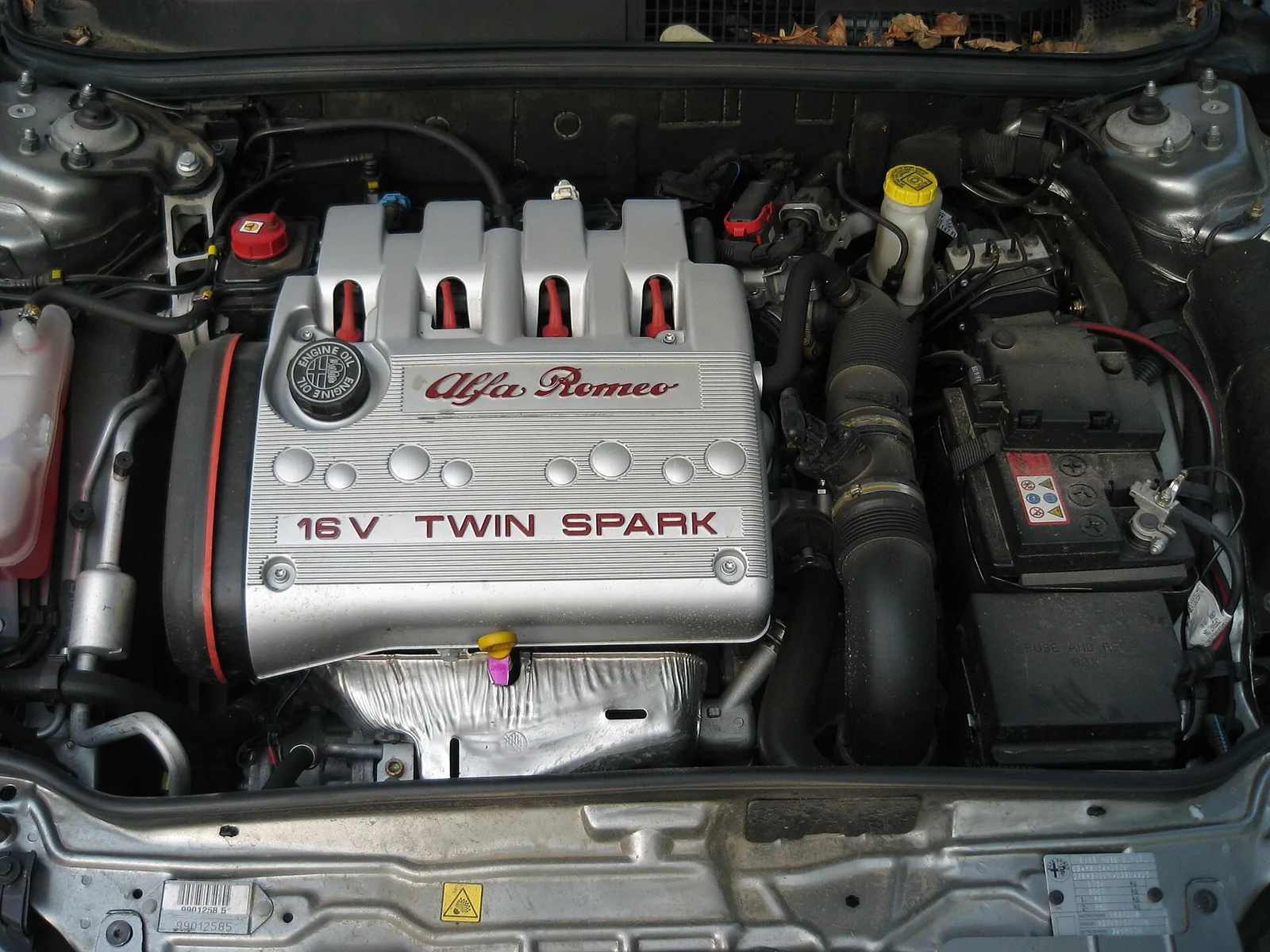
On the 16-valve engine one spark plug sits in the centre of the cylinder, as is usual in multi-valve engines, while a smaller plug sits at the margin of the combustion chamber, beside the intake and exhaust valves. The second plug has only a marginal effect on maximum power, but the engine idles smoothly in very lean conditions, up to 18:1 air-fuel ratio.
The early CF1 and CF2 engines used coil over plug ignition in which each coil fired its own plug and a plug in the cylinder on the other side of the crankshaft. In that set-up one coil could still serve a plug in the cylinder on its exhaust stroke, which is a wasted spark arrangement. The CF3 engines of 2001, which met Euro 3 standards, moved to four coils that each fire both plugs in one cylinder.
Engineers judged the second plug mainly by its effect on efficiency at light load, where a faster and more complete burn helps most.
The CF3 layout had a practical benefit. Each coil only fires once every 720 degrees of crankshaft rotation, which doubles its saturation time, reduces coil load and improves spark quality at high rpm. Some Bosch management systems could also advance and retard timing in individual cylinders on this design.
What variable systems did the Twin Spark engines use?
Later 1.8 and 2.0 litre Twin Spark engines combined a camshaft phase variator with a variable intake length control, which Alfa called the modular inlet manifold. The Bosch Motronic engine management unit controlled both systems in response to engine speed, load and throttle position, so they worked together rather than separately.
At maximum torque speed, the inlet cam is advanced by 25 degrees and the inlet ducts take the long route. At maximum power speed the cam returns to its normal position and the short ducts are used. Advancing the inlet cam opens the intake valves earlier, which begins the filling process sooner and increases valve overlap for better scavenging.
The variator returns to its retarded state at higher revs, where the inlet gas dynamics change. Short inlet ducts are tuned to a higher frequency, so the system matches its tuning to the engine's speed at each point in the range.
Tuned intake runners depend on pressure waves set up by the opening and closing of the inlet valves. Each runner acts like a velocity stack that reflects a positive pressure wave back toward the valve, helping the cylinder fill. Because the rpm band of that effect depends on runner length, switching between two lengths broadens the range and flattens the torque curve.
Why did the variator and the intake cause trouble?
The 16-valve variator is one of the weaker areas of the design. It is prone to wear or jamming, and the first sign is a slight loss of performance along with a diesel-type rattle from the top of the engine. The symptoms appear at start-up and gradually last for longer as the variator wears.
The advice was to have the variator changed at the 36,000 mile (60,000 km) cambelt service, whatever its apparent condition. Replacement parts carry a different part number and are more reliable. The earlier 8-valve engine used a different variator system, so the problem was less common there.
The same family of variator appears in many Fiat and Lancia engines, including the five-cylinder unit in the Lancia Kappa, some Fiat Bravo and Marea engines, and the Fiat Barchetta, Coupe and Stilo. Owners of those cars will recognise the same symptoms, so the advice on servicing carries across the group.
The inlet trumpet at the end of the intake pipe, often called the cone by enthusiasts, is another point of discussion. Some owners remove it to improve airflow, but the trumpet is designed to reduce turbulence and fuel metering problems, and removing it can reduce efficiency.
What should a buyer check on a Twin Spark?
A buyer should first confirm the engine type. A Twin Spark has two spark plugs in each cylinder, and the 16-valve engine has four valves per cylinder, so the cylinder head shows which version the car has. Ask for a full service history as well, and look for oil leaks around the cam covers and the timing area. The plugs are due for replacement every 100,000 km (62,000 mi), so the service record should show when they were last changed.
The variator deserves close attention. Listen for the diesel-type rattle at start-up and ask whether the variator was replaced at the 60,000 km (36,000 mile) cambelt service. A slight loss of performance can also point to a worn variator, so a test drive and a check of the paperwork are both worthwhile.
What were the Twin Spark engine specifications?
| Engine | Layout | Output | Typical cars |
|---|---|---|---|
| 1.7 L (1,748 cc) | 8-valve | 84 kW (114 PS; 113 bhp) at 6,000 rpm | Alfa Romeo 75 |
| 1.8 L (1,773 cc) | 8-valve | 98 kW (133 PS; 131 bhp) at 6,000 rpm | Alfa Romeo 75 and 164 |
| 2.0 L (1,962 cc) | 8-valve | 109 kW (148 PS; 146 bhp) at 5,800 rpm | Alfa Romeo 164 and 155 |
| 1.4 L (1,370 cc) | 16-valve | 76 kW (103 PS; 102 bhp) at 6,300 rpm | Alfa Romeo 145 and 146 |
| 1.6 L (1,598 cc) | 16-valve | 77-88 kW (105-120 PS; 103-118 bhp) at 5,600-6,200 rpm | Alfa Romeo 145 and 146 |
| 1.7 L (1,747 cc) | 16-valve | 103-106 kW (140-144 PS; 138-142 bhp) at 6,500 rpm | Alfa Romeo 155 and 166 |
| 2.0 L (1,969 cc) | 16-valve | 110-114 kW (150-155 PS; 148-153 bhp) at 6,400 rpm | Alfa Romeo 156 and 147 |
How did Twin Spark engines develop over time?
The Twin Spark idea was not new when it reached road cars. Alfa used the technique on a Grand Prix car in 1914, and in the early racing cars of the same era it helped extract extra power from the engine. Dual ignition came to Alfa's road cars later, and it reached models including the 75.
Later generations kept the same idea but changed the details. The CF1 and CF2 16-valve engines used coils that each fired a plug in one cylinder and a plug in another, while the CF3 of 2001, which met Euro 3 emissions standards, used four coils that each fired both plugs in a single cylinder.
The next generation, the JTS, dropped the second plug and added direct injection. That change marked the end of the Twin Spark layout, and it shows how the family moved as emissions rules and fuel economy goals became stricter.
When new, the Twin Spark engines were noted for their high efficiency, which showed in the brake mean effective pressures they produced on the piston crowns. Those figures were a large part of why the 16-valve family was admired.
Which cars used the Twin Spark engine?
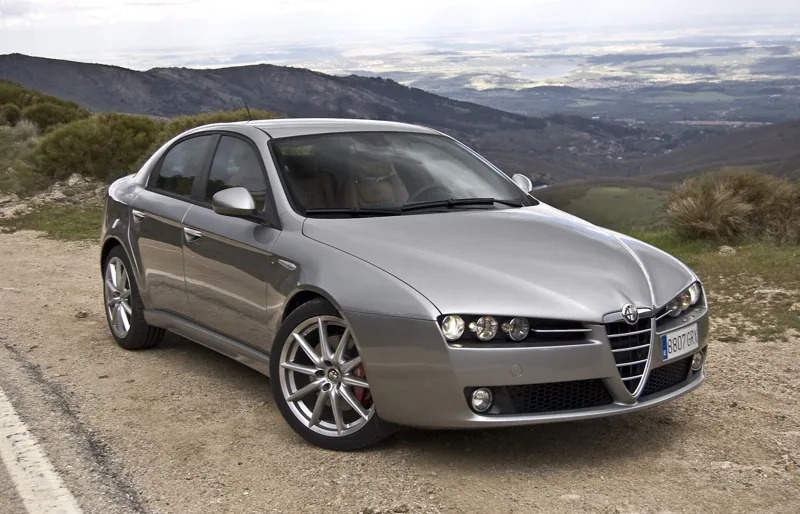
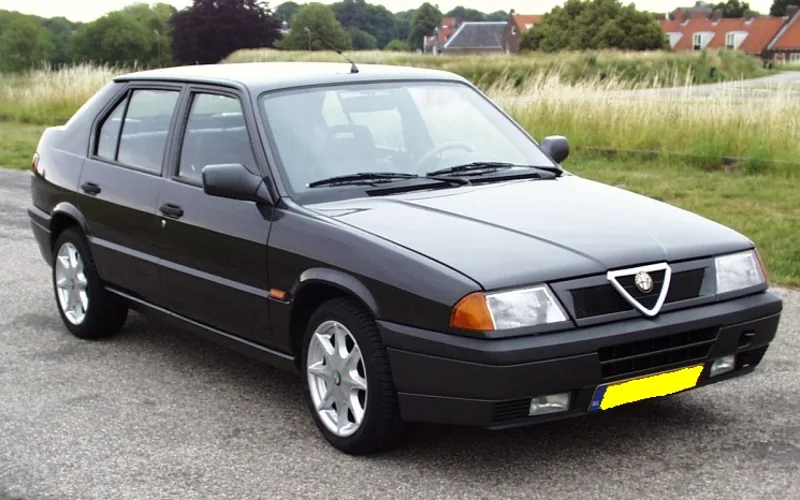
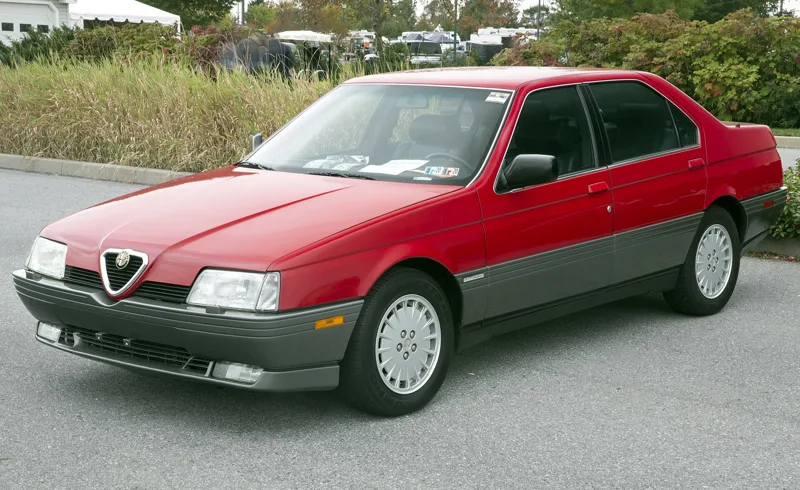
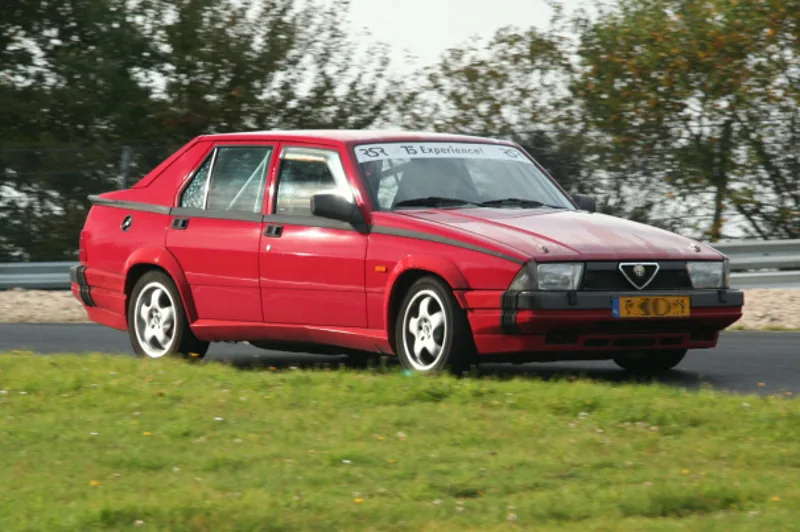
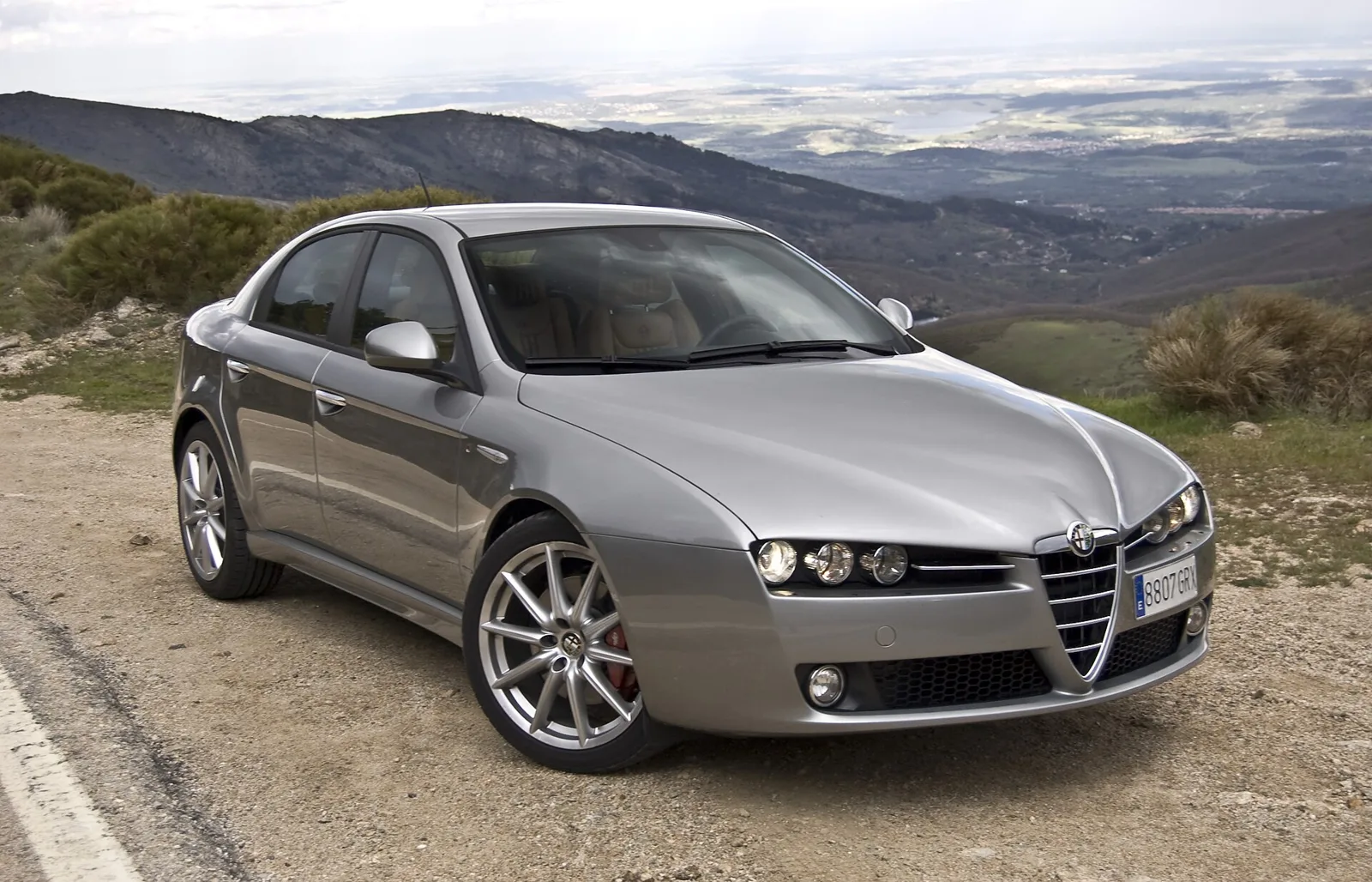
The 8-valve Twin Spark was fitted to the Alfa Romeo 75, the 164 and the 155. Sixteen-valve versions went into the 145, 146, 155, 156, 147 and 166, along with the GTV, the Type 916 Spider and the GT. The GT and the 156 were among the most widely recognised models carrying the engine.
The later JTS engines lost the second plug in favour of direct injection, so the Twin Spark name stops at the 16-valve generation. Anyone looking for a Twin Spark should check the cylinder head for the second plug and the valve count before buying.