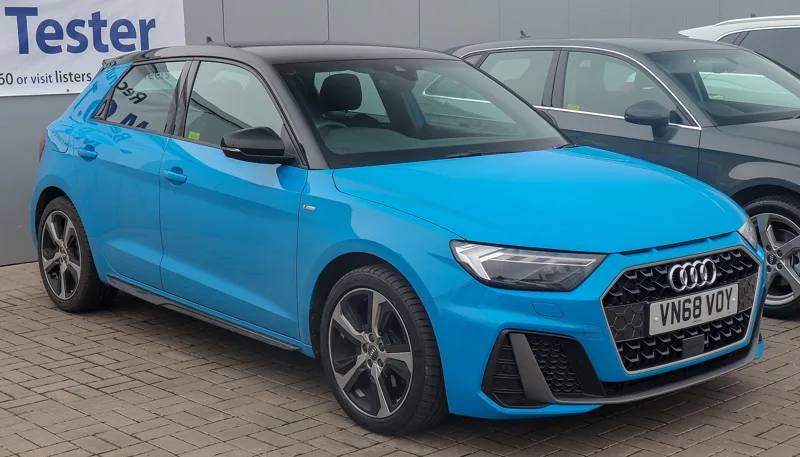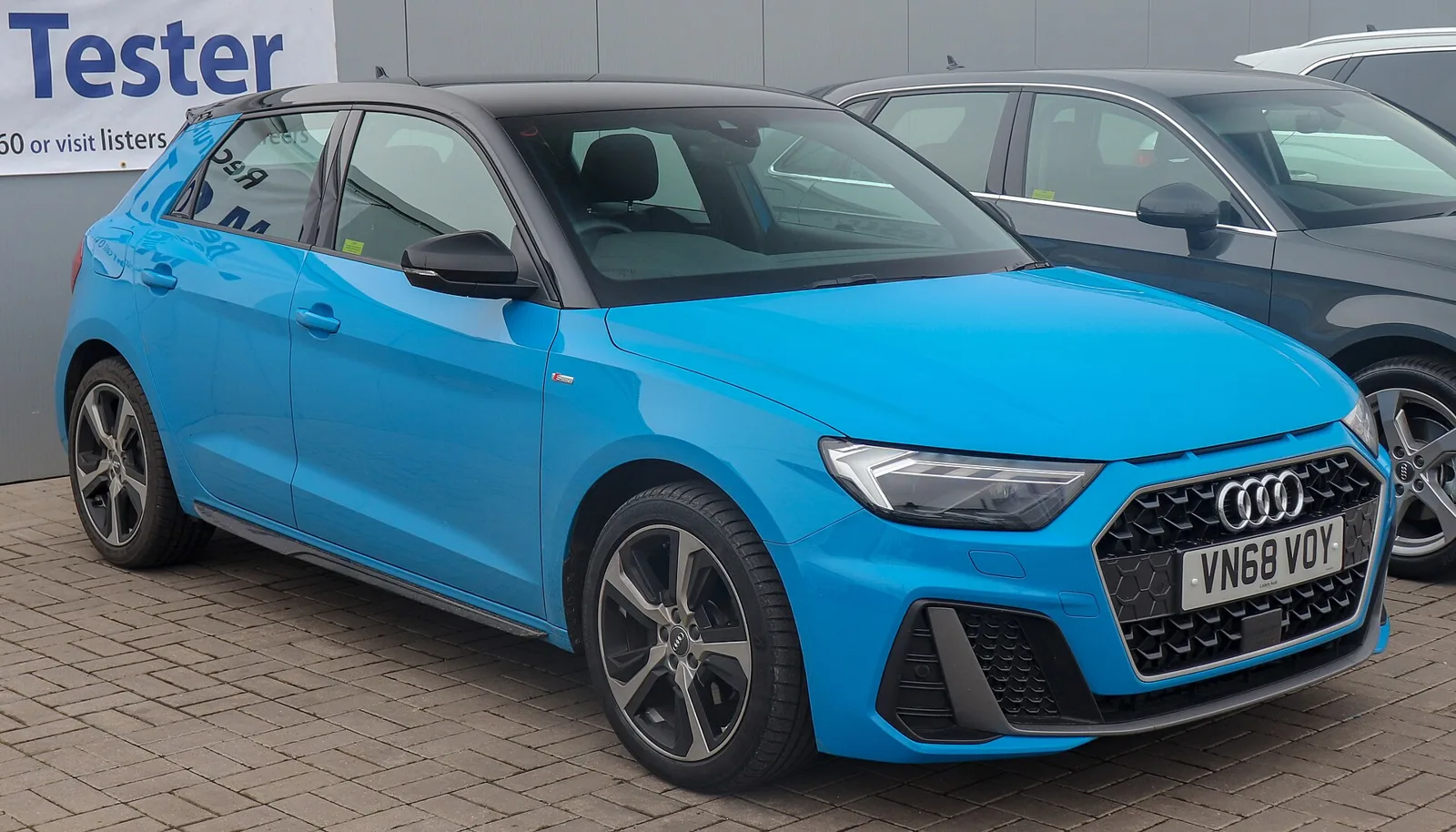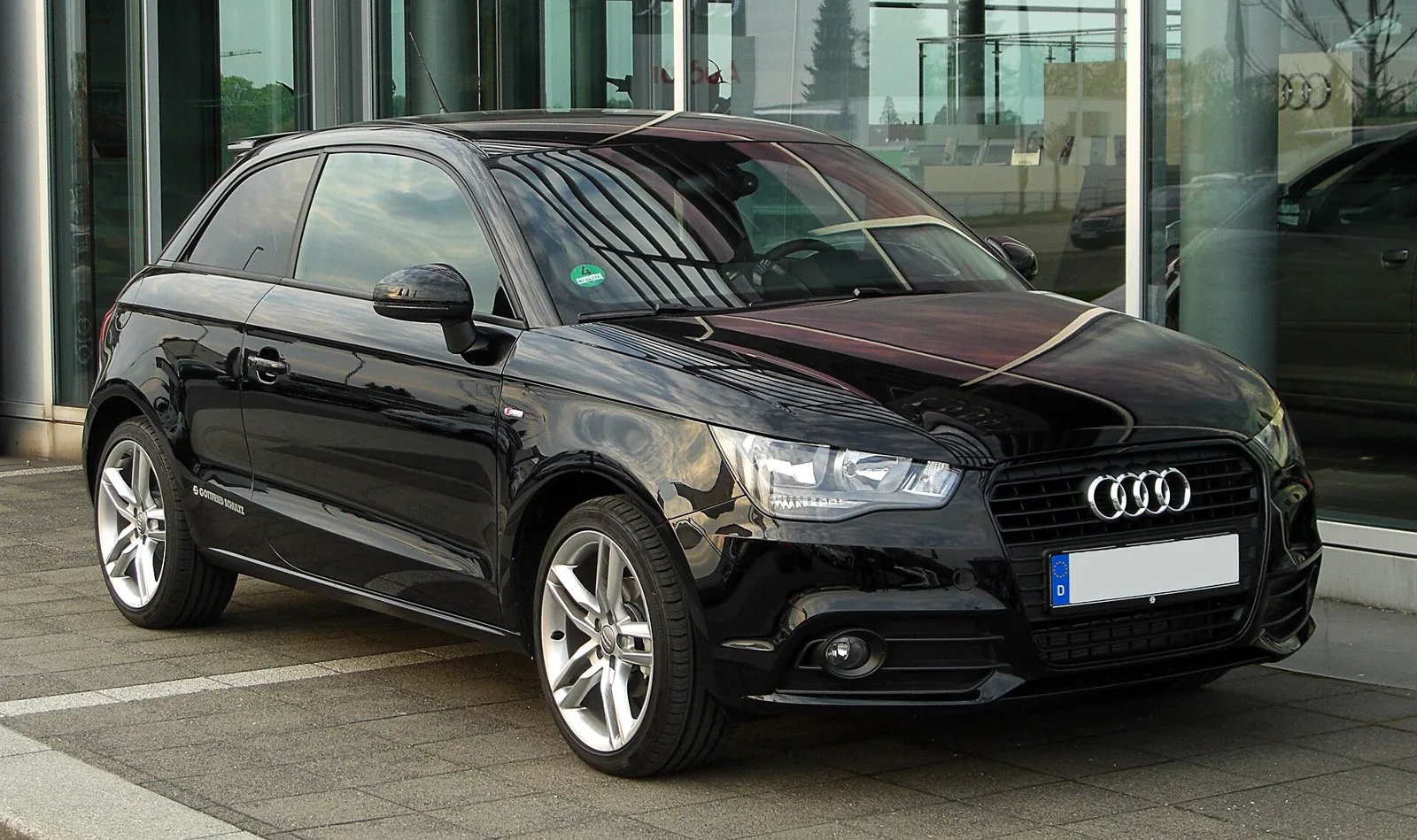
The 2010 to 2018 small car from Audi, with a limited quattro, an e-tron whose launch was postponed indefinitely and the S1 as the most powerful regular variant.
The Audi A1 8X is a small car from Audi AG built from 2010 to 2018 on the PQ25 platform shared with the Seat Ibiza. It came as a three-door hatchback and five-door Sportback, with engines from 1.0 litres, including the 170 kW S1, and it spawned the limited quattro special.
The Audi A1 8X was a small car from Audi AG built between 2010 and 2018. A three-door design study was shown in Tokyo in 2007, and the car went on sale on the PQ25 platform it shared with the Seat Ibiza and the VW Polo V, and grew a five-door Sportback, a limited quattro special and a performance S1. A planned electric version had its launch postponed indefinitely.
Where did the A1 come from?
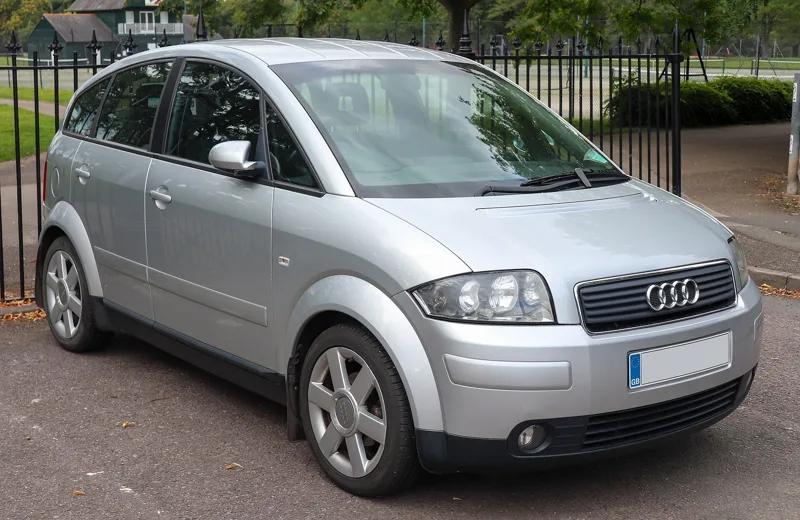
The A1 had a long line of predecessors. The Audi 50 was built from August 1974 to July 1978 and was sold as the VW Polo from March 1975, which makes it the ancestor of the A1. The independently developed Audi A2, slightly smaller, followed from November 1999 to July 2005, and the A1 arrived five years after the A2's production ended.
The A1 was formally presented at the Geneva Motor Show on 4 March 2010, and the first deliveries took place in September 2010.
Technically the car rode on the PQ25/A05 platform, introduced in 2008 with the Seat Ibiza, type 6J. The same platform underpinned the VW Polo V.
A design study shown in Tokyo came before a small car that added a limited quattro, a performance S1 and a Sportback body.
How did the design develop before production?
A three-door design study named Audi Metroproject quattro appeared at the 2007 Tokyo Motor Show. Before it was shown in Europe it was renamed Audi A1 project quattro. In October 2008 a five-door Audi A1 Sportback Concept was shown at the Mondial de l'Automobile, and its shape resembled that of the Audi A3.
The production car likewise carries the Audi Singleframe radiator grille as its design feature. On the A1 the upper corners of that grille are cut off. A sheet-metal edge runs all the way round the car, which Audi calls the Tornado line.
Xenon lighting came with LED daytime running lights, and the tail lamps, integrated into the tailgate as on the Audi Q5, also used LED technology. At German launch, though, the xenon headlamps and the LED tail lamps were available only as special equipment, in various light packages.
What body styles were offered?
At first the A1 was offered only as a three-door hatchback. The five-door Sportback followed on 11 February 2012, having been orderable from mid-November 2011 and officially shown at the Tokyo Motor Show. The Sportback is slightly wider, and its C-pillar was moved rearward to give rear passengers more headroom. Its length stays the same as the hatchback's.
The boot holds 270 litres and grows when the rear seat backrest folds down.
What did the 2015 facelift change under the bonnet?
The January 2015 facelift brought Euro 6 emissions compliance to every engine. The 1.0 TFSI ultra and 1.4 TDI ultra three-cylinder engines entered the A1 for the first time. The twin-charged 1.4 TFSI, rated at 136 kW (182 hp), made way for the 1.8 TFSI at 141 kW (189 hp).
A new electromechanical power steering system was introduced at the same time. The trim lines were also restructured, with A1, A1 design and A1 sport replacing the earlier names.
What came on each trim line?
Attraction was the base model. It had steel wheels, a dynamic chassis, a radio and CD system, electrically adjustable exterior mirrors and manual air conditioning, but no fog lamps. Ambition added 16-inch cast aluminium wheels, a sports chassis, fog lamps, aluminium interior trim, sports seats and a sport leather steering wheel. S line was built on Ambition and brought 17-inch wheels, an S line sports chassis, S line sports seats, an LED interior lighting package and a black roof lining.
After the facelift the entry A1 came with 15-inch steel wheels and a three-spoke sport steering wheel. A1 sport and A1 design both used 16-inch aluminium wheels, and Audi drive select was fitted to the sport version from 85 kW.
Extra-cost items included bi-xenon headlamps with LED daytime running lights, front and rear parking sensors, a high-beam assistant and an automatically dimming rear-view mirror. The multimedia options ran to an MMI infotainment and navigation system with a 6.5-inch TFT colour screen, or a surround sound system with 465 watts of output.
How safe was the A1?
In the Euro NCAP crash test of November 2010 the A1 scored 90 per cent for occupant protection, 79 per cent for child protection and 49 per cent for pedestrian protection. The JNCNAP test of 2011 gave it an overall rating of four stars.
What was the quattro special?
In autumn 2012 Audi offered a limited A1 quattro, capped at 333 examples, and about a third of the special series was ordered from Switzerland. The turbocharged two-litre petrol unit gave up to 188 kW (256 PS; 252 hp).
Fitted as standard were all-wheel drive, xenon lighting, Nappa-leather sports seats, 18-inch white-painted wheels and an infotainment centre with navigation and a WLAN option. The model was sold solely as a three-door, finished only in black and white. In Germany it listed at 49,900 euros.
What did the S1 add?
Apart from the limited quattro, the S1 was the most powerful A1 variant. Offered from summer 2014 and based on the 2015 facelift, it came as a three-door or Sportback. Its 2-litre TFSI produced a maximum of 170 kW (231 PS; 228 hp), and quattro all-wheel drive was standard.
A four-pipe flap exhaust and modified front and rear bumpers set it apart from the other A1 models.
Was there an electric A1?
Audi planned an electric version, the A1 e-tron, with a range of 50 km from 2012, but any market launch was postponed indefinitely. Its electric motor was rated at 75 kW (102 PS; 101 hp) and delivered a maximum torque of 240 Nm (177 lb ft).
Under sustained load, output falls to 45 kW (61 PS; 60 hp). The car was expected to accelerate from 0 to 100 km/h in 10.2 seconds and reach a top speed of 130 km/h (81 mph). Power went through a single-speed gearbox.
A lithium-ion battery sits in front of the rear axle and can be supported while driving by a 15 kW (20 hp) rotary engine under the boot. That range extender adds a further 200 kilometres. Connected to a 400-volt supply, the battery could be fully recharged in three hours, and fuel use would be two litres of Super per 100 kilometres.
What was the chassis like?
The PQ25 chassis used MacPherson struts and wishbones at the front, and a compound-link rear axle at the rear, except on the quattro. Rack-and-pinion steering had electric power assistance, and hydraulic disc brakes sat on all four wheels, with a brake booster and anti-lock braking.
Start-stop and regenerative braking came as standard on most models. The exceptions were the 1.4 TFSI, at 185 PS (136 kW; 182 hp), and the 1.6 TDI with S tronic, at 90 PS (66 kW; 89 hp).
A supercharged 1.4-litre (85 cu in) TFSI with 103 kW (140 PS; 138 hp) and cylinder deactivation was offered for the A1 and Sportback. From late April 2012 the 2.0 TDI, rated at 105 kW (143 PS; 141 hp), could also be ordered on the Sportback. It had been available on the two-door since August 2011.
How many A1s were built and sold?
Published totals differ. One reckoning gives about 878,300 vehicles built from 2009 to 2018, while another puts production at about 909,000 when it stopped in 2018. Audi had expected to sell 50,000 cars in 2010 and built that many.
Series production of 500 vehicles a day had been planned at the Brussels plant from autumn 2009. Of the 50,000, 28,000 could be registered, and 40 per cent of the German registrations went to dealers or to Audi itself. BMW sold 42,000 Mini units in the same period, and by September 2010 just over 2,000 A1s had been sold in Germany.
Audi's financial report for the first half of 2011 counted 63,518 A1 sales out of 660,446 Audi cars in total, with 140,699 Audi cars sold in China including Hong Kong. The interim statement for the third quarter reported 88,784 deliveries in the first nine months of 2011, against 7,411 the year before.
Audi aimed for 120,000 units worldwide in 2011 and planned to bring the A1 to China. The Chinese version has not been allowed to be produced since 1 January 2018, because its fuel consumption figures were too high.
Sales stagnated at 64,413 in the first half of 2012, compared with 63,106 in the same period a year earlier, despite new markets and the five-door Sportback. According to the Federal Motor Transport Authority (Kraftfahrt-Bundesamt), 192,525 A1 and S1 cars were newly registered in Germany from 2010 to 2017.