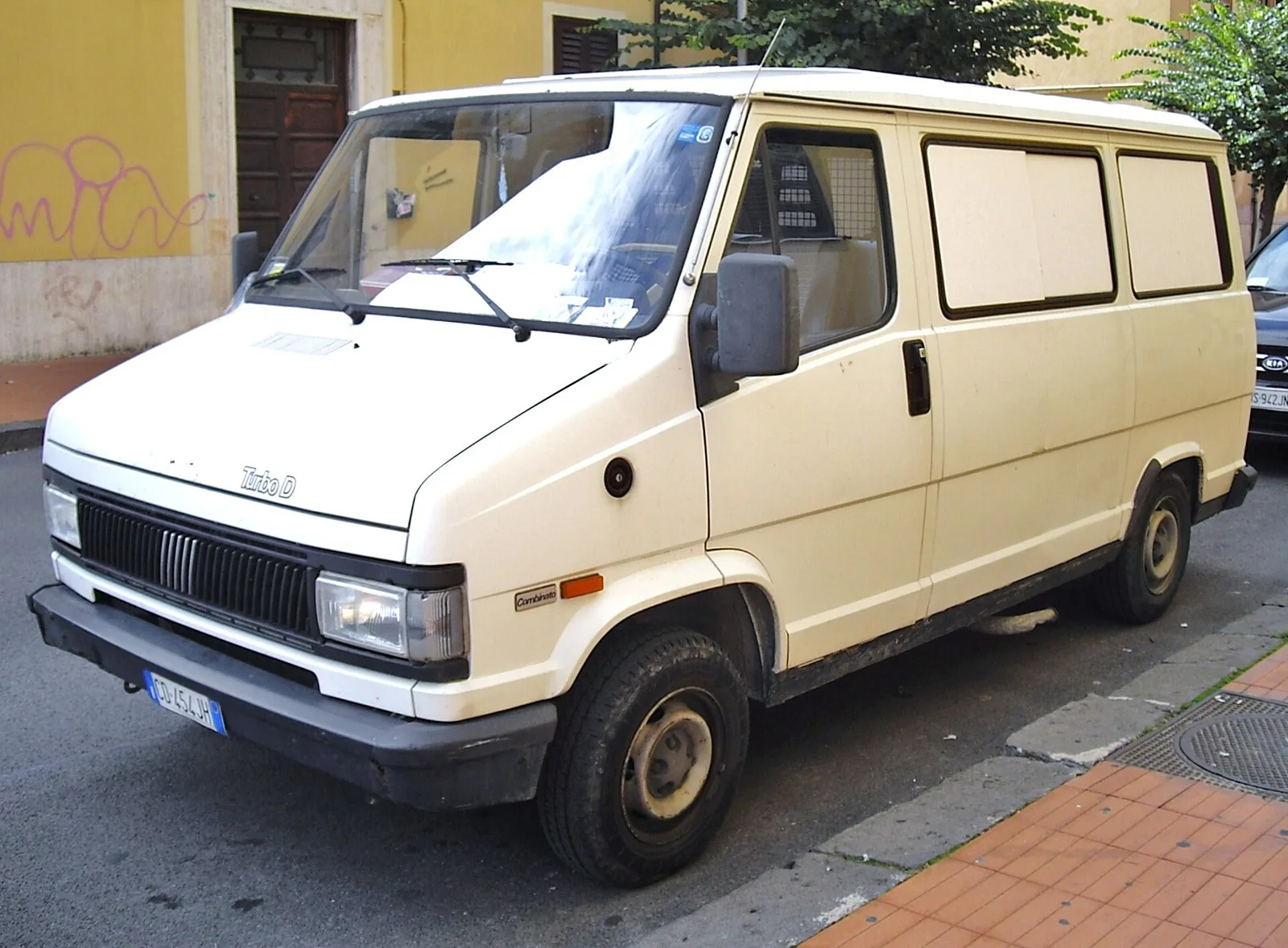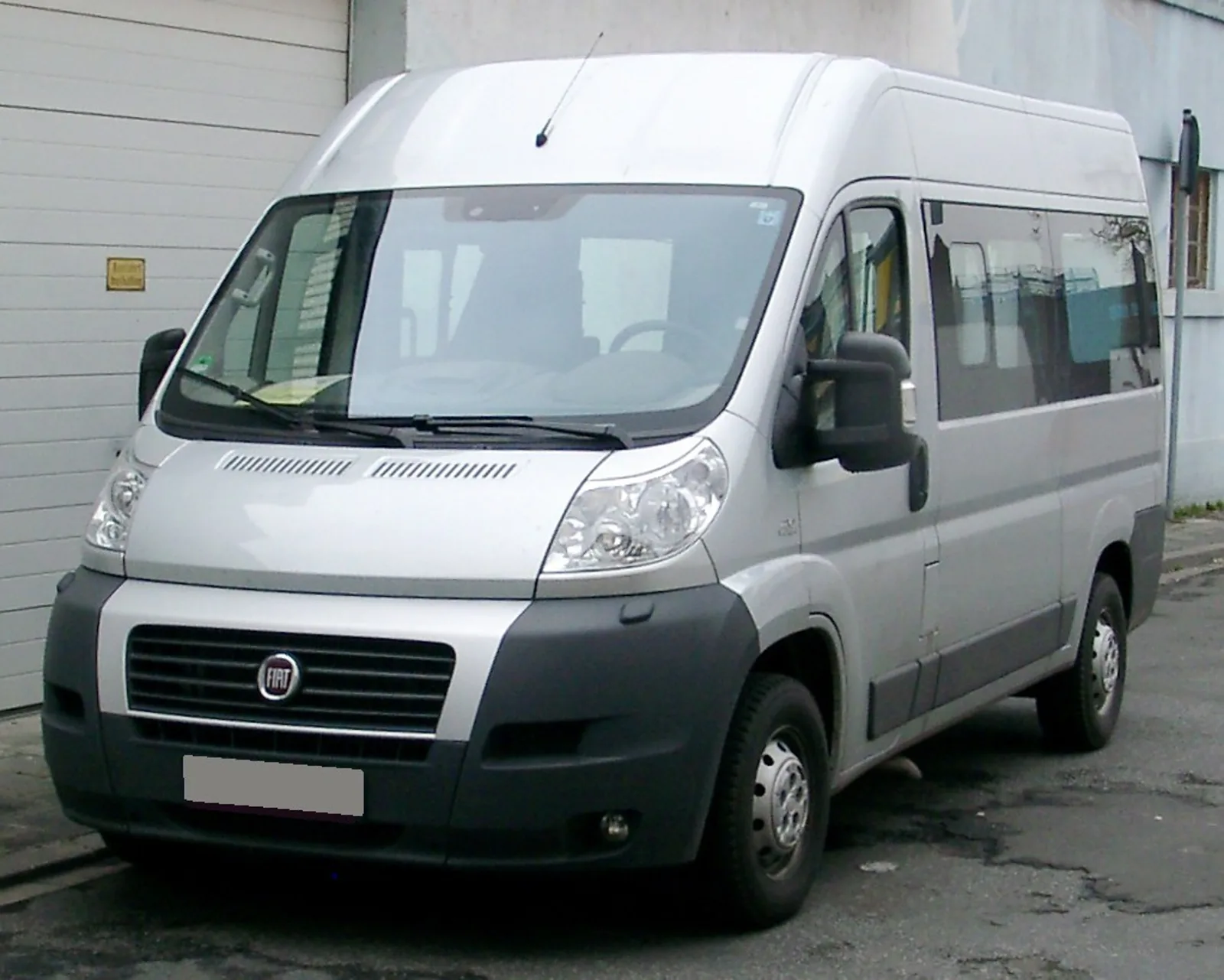
The third-generation Ducato, on sale since 2006 and built for Europe at one Italian plant, became the van under many badges and the base of most European motorhomes.
Presented in May 2006, the Ducato III is a light commercial van whose European range comes from a single Italian plant. It is sold under many brands, gained electric versions in 2019 and 2021, and has become the base for most European motorhomes.
The Fiat Ducato III is a light commercial vehicle that Fiat Professional and PSA presented together in May 2006. Its European range is built at the SEVEL Sud plant in Atessa, Italy, and it is also sold under Peugeot, Citroen, Ram, Opel, Vauxhall, Toyota and Iveco badges, and it became the base for most European motorhomes.
Where did the third-generation Ducato come from?
The third generation was presented by Fiat Professional and PSA together in May 2006, under the factory code Fiat X/250. The whole European range is made at one plant dedicated to these vehicles, in Atessa, Italy, and it runs from bare chassis-cabs to vans, ambulances, tippers and minibuses.
The Ducato also had a heavier Maxi version at Fiat, with a maximum authorised weight of 4 tonnes. It came as a flatbed carrying 2 tonnes or as a van of 17 m3.
The same van spread well beyond the Fiat badge. The French PSA versions were the Citroen Jumper and Relay II and the Peugeot Boxer and Manager II. Later the Ram ProMaster arrived in 2014, followed by the Opel Movano C and Vauxhall Movano C in 2021, the Toyota Proace Max in 2023 and the Iveco eSuperJolly in 2025.
Almost every European motorhome maker builds its living module on the same Fiat van.
Which engines did the 2006 Ducato use?
The first engines were a 2.3-litre Fiat FPT diesel and a 3.0-litre IVECO F1A diesel. The 3.0 unit also powered every 3.0 HDi 157 PS model in the PSA versions, while PSA's own vans used a 16-valve 2.2-litre diesel designed by the PSA-Ford partnership.
The 100 PS version was the best seller in France. Fiat also offered an armoured version of the Ducato III.
How did the 2014 restyle change the van?
The restyle was shown to the press on 12 May 2014. It changed the front end, added LED headlights and fitted a three-part front bumper that limits repair costs after minor collisions, a choice that followed insurers' recommendations. The wheels became 16-inch light-alloy units, and the cabin was reworked with three trim levels.
Fiat claimed lower fuel use from new 2.0 Multijet 115 PS, 2.3 Multijet 130 and 150 PS, and 3.0 Multijet 180 PS engines, the last fitted with a Comfort Matic gearbox. The structure used very high-strength steels to meet tougher rules in Russia, Australia and Brazil, and it was identical from the 2.5-tonne to the 4.4-tonne versions.
Standard equipment included electronic stability control with an anti-rollover system, load recognition, an anti-skid system with Hill Holder, and electronic brake assistance. The Servotronic system came on every model except those fitted with the 2.0 Multijet.
Why did AdBlue separate Fiat and PSA engines?
Fiat's Euro VI diesels still did not need AdBlue injection, while the PSA versions did once they met Euro 6. From July 2019 Fiat's new engines, all based on the 2.3 JTDm, were rated at 120, 140, 160 and 180 DIN PS.
PSA vans moved to a 2.2 BlueHDi of 120, 140 and 165 PS, which still needs AdBlue. When the Euro 6d standard was due, the outputs stayed the same, but the PSA engines grew from 2.0 to 2.2 litres of displacement.
How did the first electric Ducato work?
The 2019 electric version came from PSA. It produced 120 PS and offered a choice of batteries, 37 or 75 kWh, under the floor. The battery pack weighed about 450 kg, and the top speed was limited to 100 km/h.
The conversion was carried out in Turkey by a subcontractor and was relatively craft-based. Converted vans kept the rev counter and fuel gauge of the combustion versions, minus their needles.
In March 2021 Fiat Professional launched a new E-Ducato, with electrification handled in-house by Fiat FPT instead of the subcontractor. It produces 90 kW (122 PS DIN) with 280 Nm of torque, comes with 47 or 79 kWh batteries, and reaches up to 360 km on its lightest version.
Key specifications at a glance
| Specification | Value | Notes |
|---|---|---|
| Third generation | Presented May 2006 | Factory code Fiat X/250 |
| Engines at launch | 2.3-litre Fiat FPT; 3.0-litre IVECO F1A | PSA versions used a 2.2-litre diesel |
| Maxi version | 4 tonnes maximum authorised weight | Flatbed with 2 tonnes payload; 17 m3 van |
| Electric, 2019 | 120 PS | 37 or 75 kWh batteries; 100 km/h limit |
| Electric, 2021 | 90 kW (122 PS DIN), 280 Nm | 47 or 79 kWh; up to 360 km |
| Electric payload | 1,950 kg | Load volume 10 to 17 m3 |
| Motorhome base | 3.5 or 4.4 tonnes; 5.0 tonnes twin-axle | Ducato S8 chassis |
| Motorhome gearbox | Nine-speed automatic | 6 to 7.8 l/100 km |
Why is the Ducato the motorhome base of choice?
Fiat has been the main supplier of motorhome chassis since 1980, and the Ducato covers 70 to 75% of the European market, depending on the year. Almost every motorhome maker uses the Fiat Professional van for its living module.
The Ducato S8 base uses a lowered, robust Special Camper chassis. It comes with a maximum authorised weight of 3.5 or 4.4 tonnes (the Ducato Maxi), or 5.0 tonnes on a twin-axle chassis from a third-party builder, and a 2.3-litre engine in 120, 140, 160 or 180 DIN PS.
Torque of 320 to 400 Nm arrives at only 1,500 rpm, and the CO2 emissions run 7% below the average of its rivals. A nine-speed automatic with a hydraulic torque converter keeps consumption to 6 to 7.8 l/100 km, and the air suspension levels itself.
Which connected features does the motorhome Ducato offer?
The motorhome package includes a Full Digital Cockpit, which alerts the driver from satellite navigation through to driver-assistance systems. Its screens are 10 inches, and the infotainment system integrates smartphones wirelessly. The Series 8 of 2022 brought in all the driver aids and a more ergonomic dashboard with a 10-inch multimedia screen.
- Keyless entry and start for the cab and boot doors, with an electric parking brake to save space in the cab.
- A dedicated wireless charging compartment, double USB-A and USB-C ports and a 230 V socket.
- Adaptive cruise control with Stop and Go, lane keeping, traffic jam assistance and road sign recognition.
- Three packs, Easy, Business and Lounge, with remote control, a voice assistant, a vehicle health app, live traffic and radar information, and a Wi-Fi access point for up to eight devices.
- My Alert, which warns the owner of an attempted theft and calls for assistance.
Where is the Ducato built?
The range offers more than 2,500 combinations of versions, and as is customary at Fiat, the Ducato is built in several world regions depending on economic macro-zones.
Production for Europe, Africa and the Middle East is concentrated at the SEVEL Sud Val di Sangro plant in Atessa, Abruzzo. The plant celebrated its 7 millionth Ducato on 22 September 2022, and more than 7 million have been built there in 40 years.
Brazil built Latin American vans at the Sete Lagoas plant until 2022. Since 2013 the Ducato has been sold in the NAFTA market, and since 2022 only the plant at Saltillo, Mexico, has built the Ducato III for North and South America. For the Russian market only, production takes place at a plant in Elabuga, and for the Turkish market at a plant in Bursa.
Whatever the place of production, the components all come from the Val di Sangro plant. The Ducato and its related industries account for 10% of the total gross domestic product of the Abruzzo region.
What changed for the Ducato after 2021?
In summer 2021 Stellantis launched replacements for the Opel and Vauxhall Movano, which moved from the Renault Master base to the Ducato. The same year the new Fiat logo appeared on the Ducato, but the electric vans of the former PSA Group had not yet received the technical update that Fiat Professional had adopted.
From 2024 Stellantis group brands and Toyota's versions shared equipment and one engine family: a Fiat-origin turbo-diesel of 2.2 litres, or an electric unit with more power. All models gained an aerodynamic grille.
Toyota's Proace City and Proace II received a facelift in November 2023, and the Proace Max arrived as a new derivative of the Ducato.