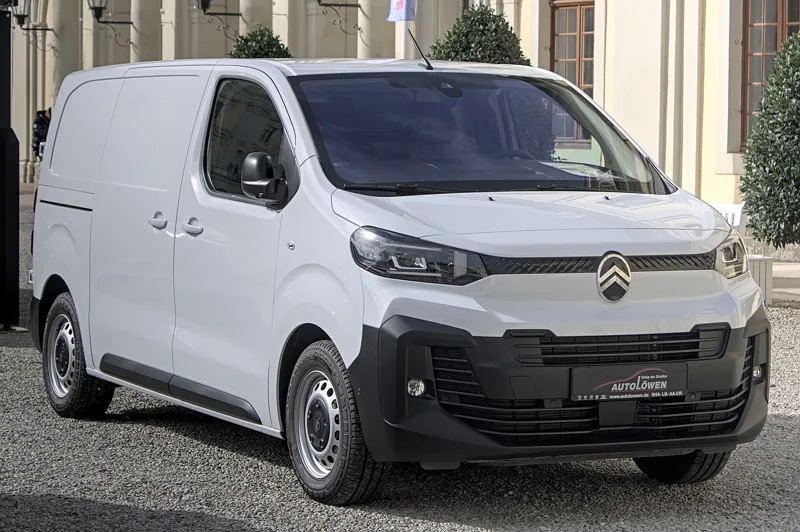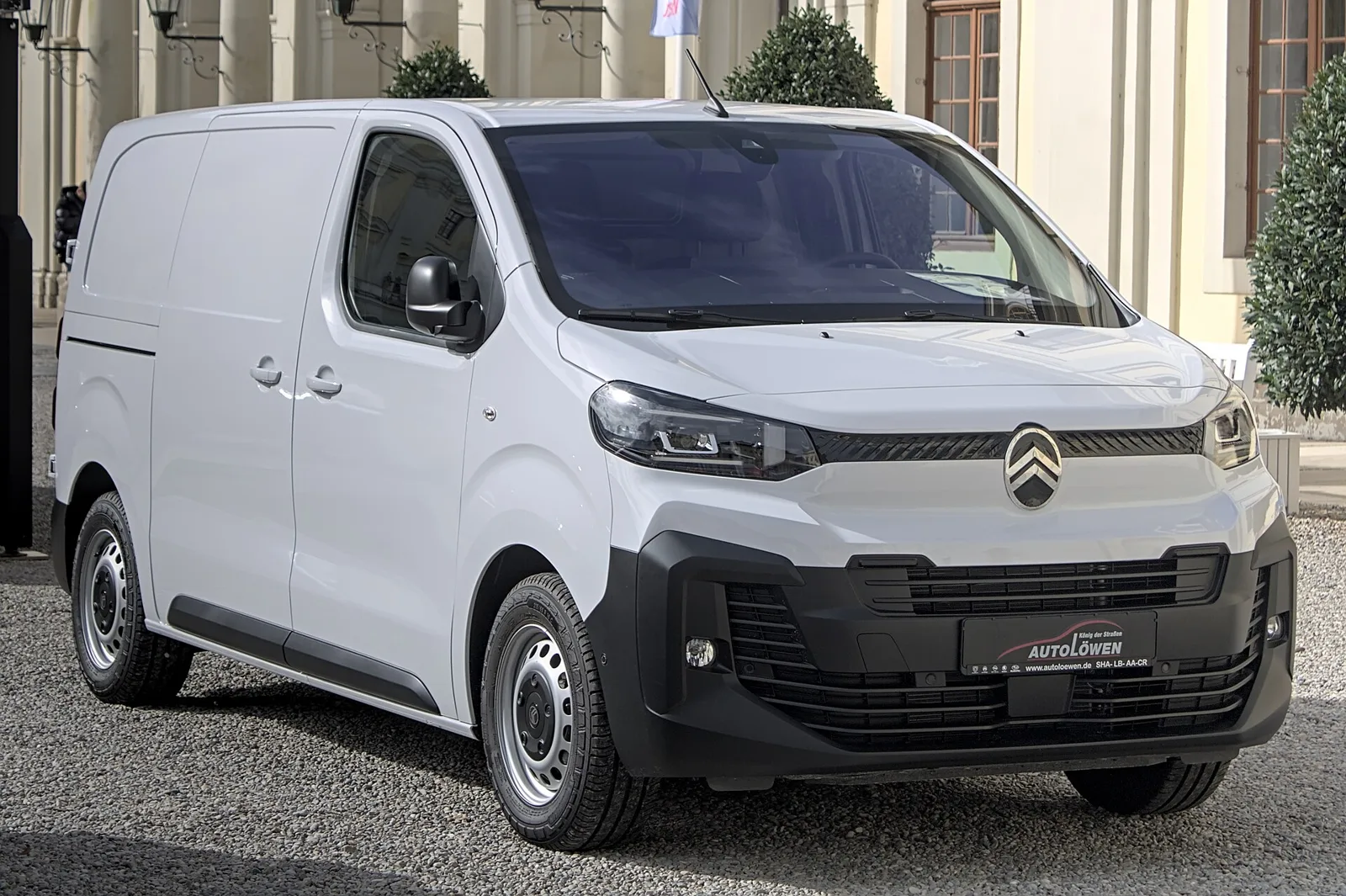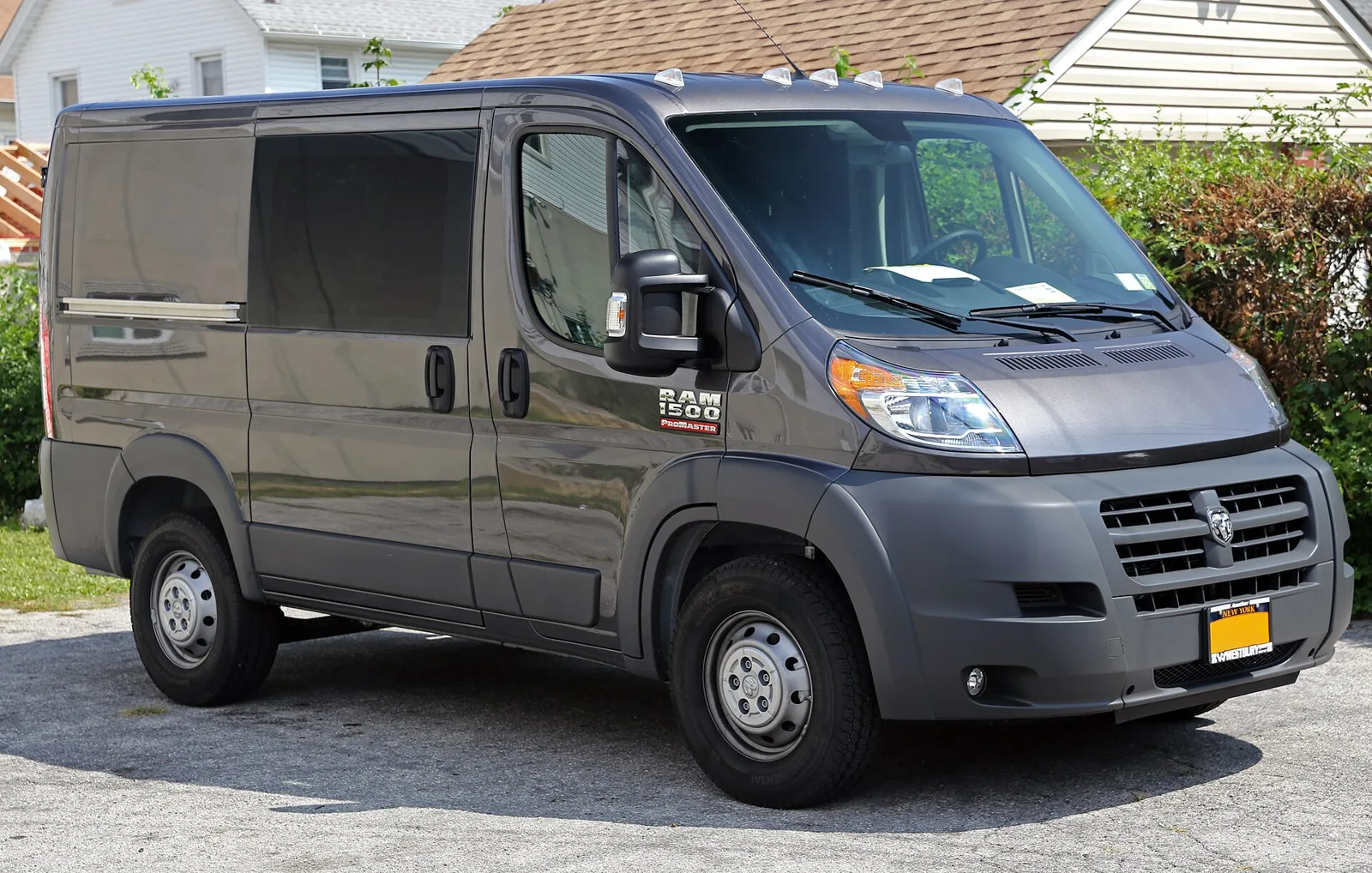
A van built by Fiat and PSA in Italy since 1981, sold in North America as the Ram ProMaster and now offered in electric and hydrogen forms.
The Ram ProMaster is the North American name for the Fiat Ducato, a light commercial van first launched in 1981. It was jointly developed by FCA Italy and PSA and mainly built by Sevel, and it reached North America in 2014 as a 2014 model.
Few vans have carried as many names as the Ducato. Built in Italy since 1981, it passed through Fiat, Citroen, Peugeot and Talbot badges before Ram showrooms sold it as the ProMaster in 2014.
Where did the Ducato come from?
The Ducato was developed through a collaboration between Fiat and PSA Peugeot Citroen, with work starting in 1978. The vehicles were built at Sevel plants in Atessa and Pomigliano d'Arco, and the design was launched in 1981 as a joint product.
Sevel is a joint venture between the two groups and builds most of the vans. Output later spread to Brazil, Turkey, Mexico and Russia, and more than 3.5 million Ducatos have now been produced.
The name comes from the ducat, an old coin. The Ducato was the third Fiat light commercial vehicle named after ancient coinage, following the Fiorino and the Marengo.
A Fiat and PSA van that spent three decades as a European workhorse before Ram sold it in North America as the ProMaster.
What did the first generation offer?
The first-generation Ducato came with 1.8 and 2.0 litre petrol engines or a 1.9 litre diesel, in base, S and SX trims. Its variants were named for carrying capacity, from the Ducato 10 at 1.0 tons to the Ducato Maxi 18 at 1.8 tons.
Campervan makers loved the first generation. The Mk1 was a popular base for conversions, and from 1990 Fiat offered those builders a platform developed for the purpose.
The Ducato also grew out of an earlier partnership. The collaboration of Fiat and PSA had already produced the Fiat 242 and Citroen C35 from 1974, so the engineering relationship was well established before the 1981 launch.
Electric ideas arrived early as well. In August 1992 some Ducatos were built as the Ducato Elettra, with 28 six-volt batteries generating 168 volts DC and 160 amperes, a 3190 kg maximum gross weight, a 750 kg payload and a range up to 70 kilometres.
Which other badges carried the van?
The Citroen C25 and Peugeot J5 were 2.5 tonne vans built from October 1981 until 1993, while the Alfa Romeo AR6 was a Ducato in Alfa clothing, offered only in Italy. The Talbot Express was sold only in the United Kingdom from 1982 to 1994.
The AR6 was built at the Sevel Campania plant at Pomigliano d'Arco until 1 January 1986, when Alfa Romeo left the commercial van business. Ducato production at Pomigliano continued until 1994.
The Talbot Express was the last Talbot-badged vehicle produced, and the UK version became a popular base for motorhome conversions. Peugeot's J5 sold reasonably well in France but little elsewhere, because the Ducato was stronger in most European markets.
Fiat used the Talento name in 1981 for a short-wheelbase Ducato. The name returned in 2016 on a rebadged Renault Trafic.
How did the second generation change?
The second generation of the Ducato appeared in 1993, and Peugeot renamed the J5 as the Boxer while Citroen rebranded the C25 as the Jumper. Engines ranged from a 2.0 petrol to the 2.8 JTD, and the 2.5 diesel gave way to a 2.8 L Iveco/Sofim unit in 1998.
The 2002 facelift also reshaped the engine line around JTD diesels, and the 2.5 diesel disappeared.
The range was split by use. The Goods Transport offered a 12 m3 payload and four engine choices, the Passenger Transport carried six to nine people on a 2.3 litre JTD 16v rated 110 bhp, and the Combi mixed both roles for up to nine occupants.
A 2002 facelift brought a revised grille and bump mouldings, and the weight designations changed to Ducato 29, Ducato 30, Ducato 33 and Ducato Maxi 35. Output passed the three-millionth vehicle on 15 December 2005, and then climbed to nine vehicles a day.
What changed in the third generation?
The third-generation Jumper and Relay appeared in September 2006 as a 2007 model. The Boxer followed, and the Ducato came later as a 2008 model. Weights rose again, with Ducato 30, Ducato 33, Ducato Maxi 35 and Ducato Maxi 40 designations, the last rated at 4 tonnes.
The van came with three wheelbases, roughly 118, 136 and 159 inches long, and it was built in several body lengths. Mexico has built Ducato-based models since November 2007, with over 30 models marketed as the Fiat Ducato and the Peugeot Manager.
How did the ProMaster reach North America?
From October 2013 Ram Trucks sold the Ducato as the ProMaster across Canada, Mexico and the US. Chrysler had no large van in the market after its 2009 bankruptcy, so the ProMaster filled a clear gap.
Dodge had covered the same niche with a Mercedes-Benz Sprinter-based van from 2003 to 2009, and earlier with the Dodge Ram Van. Traditional commercial vans on this market were heavy body-on-frame designs based on pickups, so the ProMaster was a different kind of product.
The ProMaster is built at FCA's Saltillo plant in Mexico. Traditional commercial vans there are body-on-frame vehicles based on pickup trucks, whereas the ProMaster uses a unibody and front-wheel drive, which gives it a lower floor and easier cargo loading.
The most significant change for North America was the 3.6 L 24-valve V6 Pentastar, offered with a six-speed automatic as standard equipment.
Which engines and gearboxes did the ProMaster use?
The ProMaster's standard engine is the 3.6 L Pentastar V6. From the 2021 model year it works with a nine-speed automatic instead of the earlier six-speed. A 3.0 L EcoDiesel inline four was offered from 2014 to 2016 but was later dropped.
The 2019 update changed the front to a RAM-lettered grille and removed the diesel option, which left the V6 as the only engine. A touchscreen became standard so the van met rearview camera rules.
For 2021 Ram added blind spot monitoring with rear cross-path detection, a forward collision warning with emergency brake assist and an optional 9.2-inch digital rearview mirror.
What sizes and layouts does the ProMaster come in?
The three wheelbases measure 118 inches, 135.8 inches and 158.9 inches, or 3,000, 3,450 and 4,040 mm. Body lengths run from 195 inches (5,000 mm) to 250 inches (6,400 mm). Only the low and medium roof heights are offered.
Panel vans come in every size. Chassis-cab and cutaway versions are limited to the 136-inch and 159-inch wheelbases. A window van exists only on the longest wheelbase, 159 inches (4,000 mm), with a 99-inch (2,500 mm) roof.
What do the electric and hydrogen versions bring?
The E-Ducato was launched in April 2021, co-developed with DHL. The 2021 version used a 47 or 79 kW-hr battery, with an estimated 280 km (170 mi) under the WLTP cycle for the larger pack.
For 2024 the E-Ducato and the ProMaster EV both use a 110 kWh pack driving a motor rated 201 kW (270 hp). The ProMaster EV is planned to reach 174 mi (280 km) around town and can take a 150 kW Level 3 DC fast charge.
The E-Ducato offers cargo volumes of 10 to 17 m3 and a payload of up to 1,950 kg. Its traction motor peaks at 90 kW, roughly 120 hp, with 280 N m of torque, and an optional port takes power at up to 50 kW DC.
Hydrogen is also in the picture. The hydrogen van pairs a 110 kW motor with a 45 kW fuel cell, and its expected range is above 500 km. European sales were due from 2025.
Why do motorhome builders favour the Ducato?
Around two-thirds of motorhomes in Europe use the Ducato as their base, which makes it the most common motorhome platform there. The French company Dangel converts 4WD versions using a central viscous coupling.
Talbot Express vans sold in the UK still command many thousands of pounds as motorhome conversions, even though they are more than thirty years old. That contrasts with the values of the commercial van versions.
How did the 2023 facelift change the ProMaster?
For 2023 the ProMaster was given another facelift, bringing its look into line with the post-facelift Ducato models, and the front end was redrawn to match European counterparts. The same year brought a third super-high roof on the longest wheelbase, and the EV went on sale.
The 2022 changes brought a new dashboard for both the Ducato and the ProMaster. The ProMaster also took the 948TE nine-speed automatic as standard, while the Ducato offered it as an option, and the Pentastar was revised.
The Ducato's diesel became a 2.2L unit from the Pratola Serra family, sold as Multijet 3. From 2024 the European vans switched to a 2184 cc Euro 6e engine offered in 120, 140 and 180 PS versions.
Which other automakers sell the Ducato platform?
Several rebadged versions share the Ducato platform. Opel and Vauxhall sell it as the Movano from 2021, replacing a van that had been based on the Renault Master from 1998 until 2021, and Toyota began selling the Proace Max in 2023.
Stellantis brands sell electric versions as well. The Peugeot e-Boxer, Citroen e-Jumper, Opel and Vauxhall Movano-e and Toyota Proace Max Electric all received the 2024 drivetrain, with its 110 kWh battery and 200 kW motor.
Toyota and Stellantis also planned a Toyota-badged large van on the Ducato platform for mid-2024, which extended a partnership that began in 2012.
What safety rules shaped the ProMaster's equipment?
Rearview cameras became mandatory for vehicles rated at 10,000 lb (4,536 kg) gross vehicle weight or less that were made after April 2018. That is why the five-inch touchscreen radio became standard on the ProMaster for 2019.
The 2021 update added blind spot alerts and an emergency braking aid, alongside the optional 9.2-inch digital rearview mirror.
Ram ProMaster specifications at a glance
| Specification | Detail |
|---|---|
| Class | Light commercial van, Fiat Ducato platform |
| First launch | 1981, as the Fiat Ducato |
| North America | Ram ProMaster from May 2014, as a 2014 model |
| Engine | 3.6 L 24-valve Pentastar V6 |
| Transmission | Six-speed automatic; nine-speed from 2021 |
| Wheelbases | 118, 135.8 and 158.9 inches (3,000, 3,450 and 4,040 mm) |
| Body lengths | 195-inch (5,000 mm) to 250-inch (6,400 mm) |
| Roof heights | 89-inch (2,300 mm) low; 99-inch (2,500 mm) medium |
| EV battery | 110 kWh with a 270 hp (201 kW) motor |
| Total built | More than 3.5 million Ducatos since 1981 |