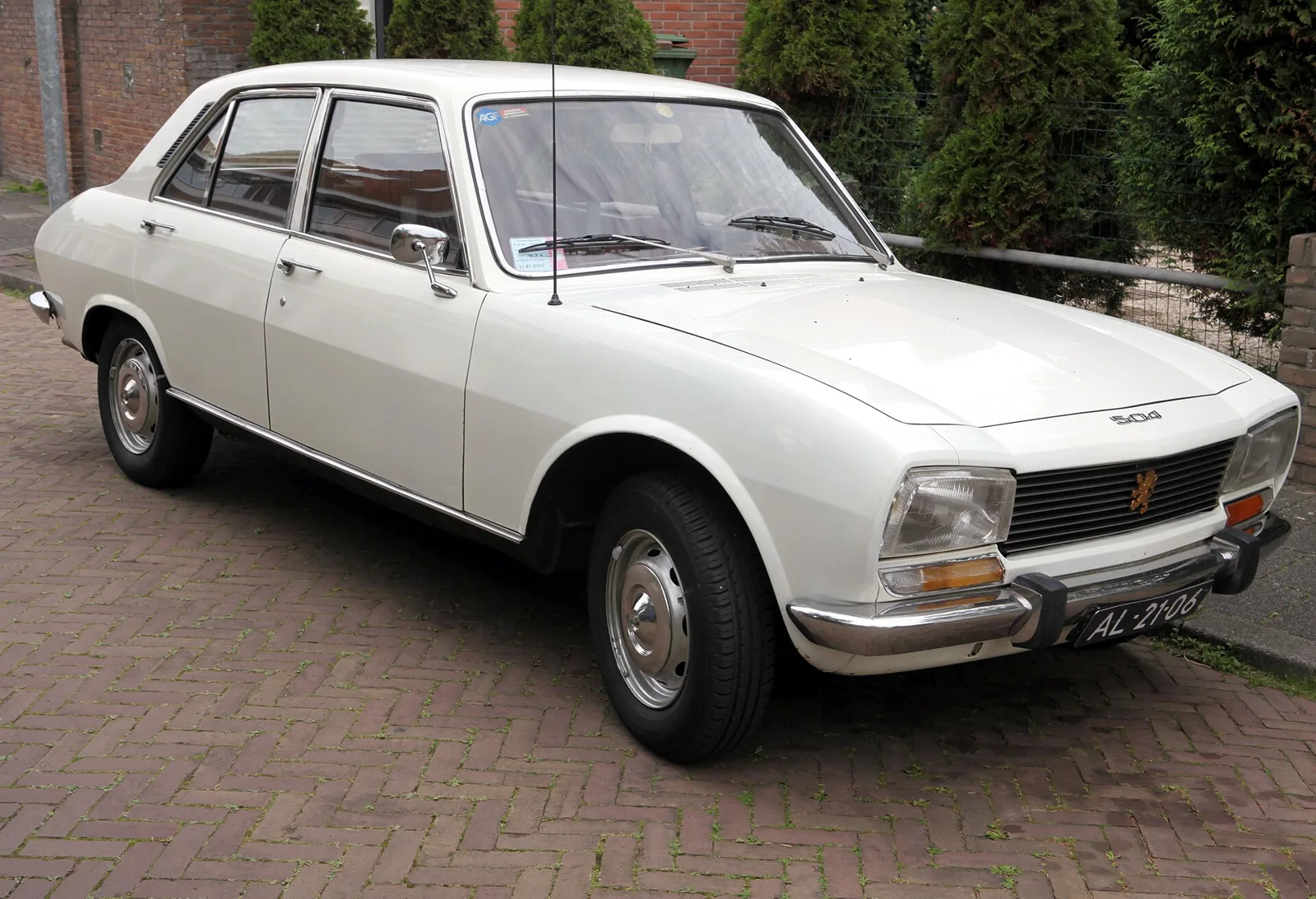
A rugged flagship saloon with a torque tube driveshaft, a V6 coupe that raced in rallies and a pickup that worked for decades.
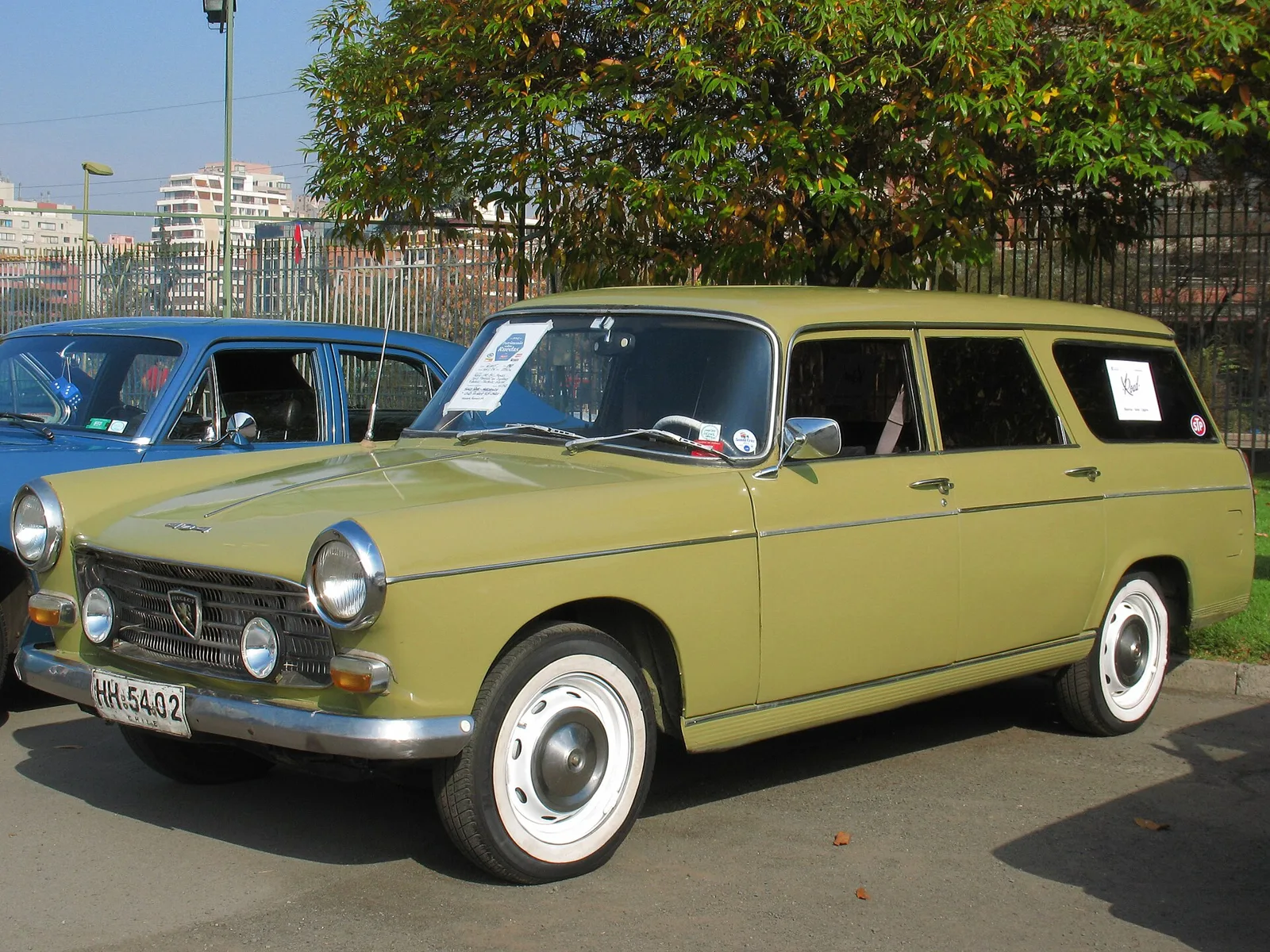
The Peugeot 504 was a mid-size, rear-wheel-drive car that Peugeot built in Europe from 1968 to 1983, with saloon and wagon bodies plus coupe, cabriolet and pickup variants. It won the 1969 European Car of the Year award and became a long-lived workhorse in Africa and Latin America.
Few flagship saloons of the late 1960s were built as tough as the 504. Its torque tube driveshaft, long suspension travel and high ground clearance made it a favourite on poor roads, and its licensed production ran far longer than the European line.
Where did the Peugeot 504 come from?
The 504 debuted as Peugeot's flagship at the 1968 Paris Salon, with a public debut on 12 September 1968. A press launch planned for June had been deferred by three months, and production started late because of the political and industrial disruption that hit France in May 1968.
Aldo Brovarone of Pininfarina styled the sedan, while Franco Martinengo at the same studio styled the coupe and cabriolet. The wagon and pickup were designed in-house at Peugeot, which gave the range a mix of outside and home-grown design work.
The 504 took the 1969 European Car of the Year title, a result that reflected the car's overall package.
A rugged rear-drive flagship that won European Car of the Year, raced in rallies and kept working long after Europe moved on.
What made the 504's chassis different?
The 504 used a torque tube driveshaft, enclosed in a rigid tube that was fixed at each end to the gearbox and the differential. This arrangement relieved drive torque reactions, and it helped the car stay composed over rough ground with long suspension travel.
Disc brakes covered all four wheels at launch, and the instrument panel carried a brake pad wear warning light, which was a notable innovation for the period. Rack and pinion steering completed the front end.
At the front the car used MacPherson struts, while coil springs did most of the work at the rear. Sedans and coupes used semi-trailing arms, whereas wagons and pickups kept a simpler live rear axle for load-carrying duty.
Gearboxes were a BA7 four-speed manual or a ZF three-speed automatic. Engines were Indenor diesels in 1948 cc, 2112 cc and 2304 cc sizes, and the combination of diesel and automatic was unusual at the time.
The first gearbox was a column-mounted four-speed manual. The ZF three-speed automatic arrived in February 1969, and in September 1969 its selector moved from the steering column to the floor.
Which engines did the 504 offer?
The 504 started with a carburettor 1,796 cc four rated 60 kW (82 PS; 81 hp) DIN, and fuel injection raised that to 71 kW (97 PS; 96 hp). A larger 1971 cc engine offered 68 kW (93 PS; 92 hp) with a carburettor and 76 kW (104 PS; 103 hp) with injection.
The 2112 cc diesel rated 48 kW (65 PS; 64 hp) was introduced at the 1970 Paris Salon. A 2304 cc diesel rated 51 kW (70 PS; 69 hp) later powered the GLD, and the 2.3-litre engine was offered with an automatic transmission for saloons.
The V6 PRV engine was a 2664 cc unit developed with Renault and Volvo. It gave the coupe 100 kW (136 PS; 134 hp) and a top speed of 186 km/h (116 mph), and later the injected V6 made 106 kW (144 PS; 142 hp) with a five-speed manual.
The 1973 range leaned toward economy. The L used a 1796 cc engine at 58 kW (79 PS; 78 hp), the L automatic produced 60 kW (81 PS; 80 hp), and the LD diesel rated 41 kW (56 PS; 55 hp) joined them. The 2.3-litre diesel reached the GLD Break and the Familiale Diesel in September 1977.
The Commerciale diesel produced 39 kW (53 PS; 52 hp) in 1970 and reached a top speed of 118 km/h (73 mph), which was modest even by the standards of the period.
How many Peugeot 504s were built?
More than three million 504 passenger cars were built in Europe. Licensed production added 27,000 cars in Kenya and 425,000 in Nigeria, and manufacturing continued into 2006 under knock-down kit arrangements. The model's life outside Europe therefore lasted considerably longer than its European career.
Coupe and cabriolet production ended in August 1983 after 31,163 examples had been built. About 27,000 of those had been built by Pininfarina by 1977, which shows how much of the two-door output came from Turin for much of the run.
Production in Europe was pruned back in 1979 with the launch of the Peugeot 505. The last European-made example left the line in 1983, although the pickup stayed on sale in Europe until 1993.
By December 2015, 197 examples were still in use in Britain, a small number for a car that had once been so common on European roads.
Argentina and China extended the model's life too. The Argentine sedan was built until 1999, while Chinese pickup production in Guangzhou ended in 1997 when the joint venture folded.
What were the 504 Coupe and Cabriolet like?
The coupe and cabriolet had a 190 mm shorter wheelbase than the saloon, and their bodies were built by Pininfarina in Turin before final assembly at Sochaux. Their mechanical parts were largely shared with the saloons until the V6 arrived.
The V6 coupe gained a five-speed manual transmission and Bosch K-Jetronic fuel injection, with power raised to 106 kW (144 PS; 142 hp). The V6 cabriolet was discontinued after only 970 examples had been built in three years.
Pininfarina also developed a shooting brake, the Riviera, which was first shown in September 1971. Peugeot declined to put it into production, so it remained a one-off.
What did the 504 Pickup offer?
The 504 Pickup arrived in September 1979 for the 1980 model year, replacing the 404 pickup. It carried 1,100 kg (2,400 lb) of cargo in European trim, and the African-market version was rated at 1,250 kg (2,760 lb).
Converting the monocoque body into a load-carrying version had taken a full decade of work. Dangel then added a four-wheel-drive pickup in July 1981, and about 5500 of the Dangel 4x4 pickups were built until 1994.
A chassis cab was offered as well, and Bimobil built a demountable camper weighing about 450 kg (992 lb). Around 300 were built, which made the camper a niche conversion for the chassis. Its weight of about 450 kg (992 lb) was a significant addition for the chassis.
Trim levels evolved over time. The GR of 1982 added chrome touches, and the model was renamed Confort in 1987 in France.
How did the 504 perform in rallying?
The 504 V6 coupe won outright at the 1978 Safari Rally and took the top two places at the 1978 Bandama Rally. Coupes also won several non-championship events, mostly in Africa, including the 1979 Tour du Maghreb and the 1981 Rally Kenya.
The V6 coupe was campaigned in the World Rally Championship, mainly on long-distance rallies that suited its long suspension travel and high ground clearance. Those qualities mattered far more on rough stages than outright sprint speed. A tough chassis was therefore worth more to a rally driver than raw power.
Coupes also won the 1976 Bandama Rally, and the 1980 and 1981 Rally Zaire events fell to the same car. The record was built on endurance rather than on a single headline result. Several different rallies, across different years, contributed to that reputation.
Did the 504 play a part in politics?
Iran's president auctioned his 1977 504 in 2011, and the final bid reached $2.5 million in March 2011. Sri Lanka had also bought many 504s for the 1976 Colombo summit of the Non-Aligned Movement.
The car was white with a sky-blue interior and had covered 37,000 km since new. A bid of $1 million came in during January 2011, soon after the car was put up for auction.
Auction proceeds were intended for the Mehr housing project, which tied the sale to a public purpose. The episode kept the 504's name in the news long after production had ended.
Where else was the 504 built?
In Australia the car was first released in 1969 and assembled by Renault Australia. In 1981 the 504 GL retailed for AUD $11,000.
In Argentina, SAFRAR began production in 1969. Sevel took over at El Palomar in 1980, and the sedan was built until 1999, with the last new cars sold in 2000.
The Argentine sports version, the 504 TN, ran from 1977 to 1978 with an 81 kW (110 PS; 108 hp) engine. In China the 504 was produced as a pickup by Guangzhou Peugeot Automobile Company.
What are the Peugeot 504 specifications?
| Specification | Detail |
|---|---|
| Type | Mid-size, front-engine, rear-wheel drive |
| Production | 1968 to 1983 in Europe; more than three million built |
| Debut | 12 September 1968, Paris Salon |
| Carburettor engine | 1,796 cc, 60 kW (82 PS; 81 hp) DIN |
| Injected engine | 1,796 cc, 71 kW (97 PS; 96 hp); later 1971 cc at 76 kW (104 PS; 103 hp) |
| Diesel | 2112 cc, 48 kW (65 PS; 64 hp); 2304 cc, 51 kW (70 PS; 69 hp) |
| V6 coupe | 2664 cc PRV, 100 kW (136 PS; 134 hp), 186 km/h (116 mph) |
| Gearbox | BA7 four-speed manual or ZF three-speed automatic |
| Suspension | MacPherson struts front; coil springs rear |
| Pickup payload | 1,100 kg (2,400 lb); 1,250 kg (2,760 lb) for Africa |
| Coupe and cabriolet total | 31,163 examples, production ended August 1983 |
.jpg)