One 1978 agreement between FIAT and PSA produced a van sold under five brand names, from Italian production in 1981 to the British Talbot Express.
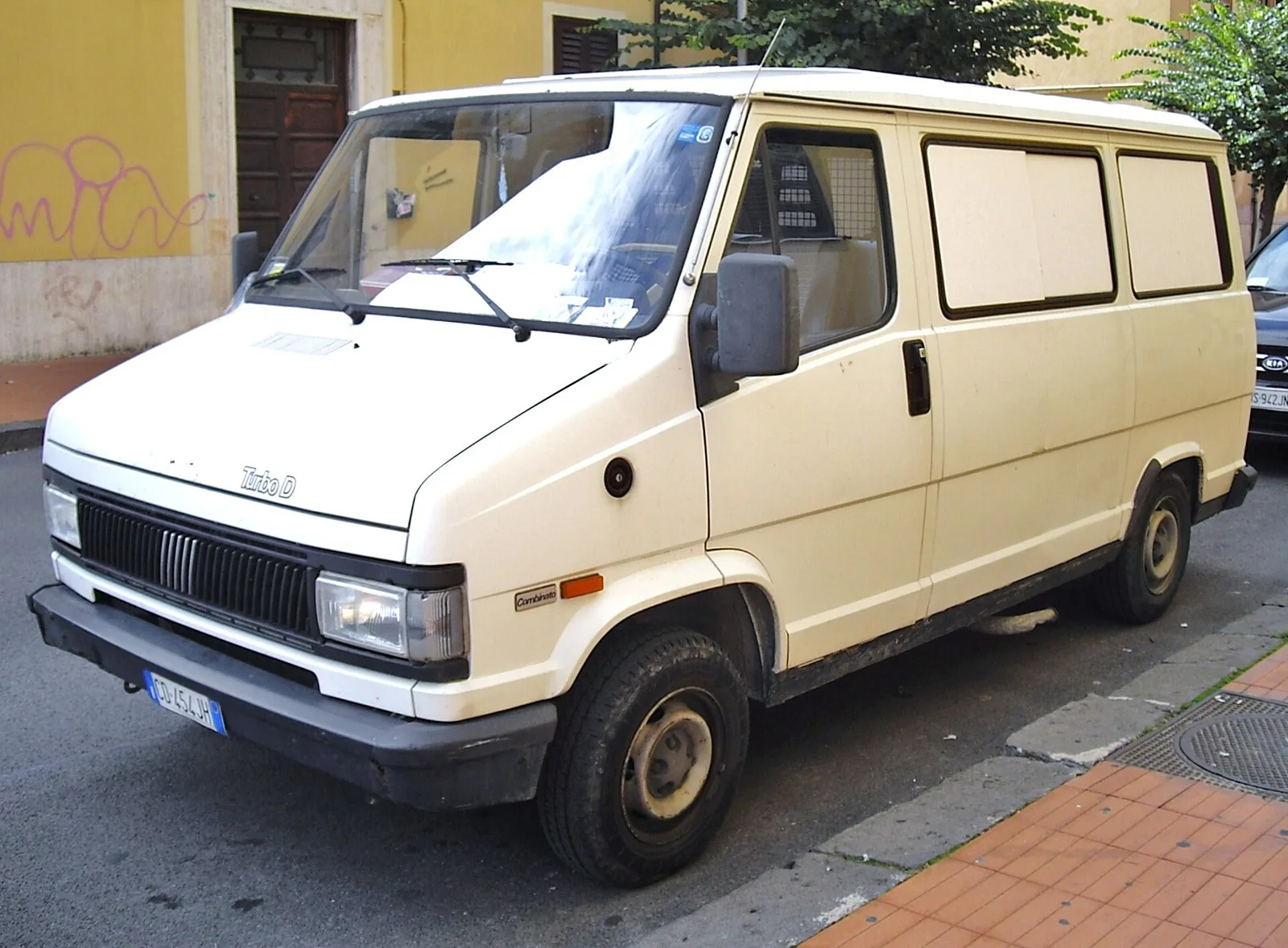
The FIAT Ducato I was a light commercial van built under a 1978 agreement between FIAT and PSA. Italian production started in late 1981 near Atessa, and the design was sold under the Alfa Romeo, Citroen, Peugeot and Talbot badges as well as FIAT's own.
Five brands sold the same van: FIAT, Alfa Romeo, Citroen, Peugeot and Talbot. The design came from a 1978 agreement between FIAT and PSA, and series production of the FIAT Ducato began on 23 October 1981 at a purpose-built plant in Atessa, Italy.
Each badge was aimed at a particular market. Alfa Romeo sold the AR.6 in Italy, Citroen and Peugeot covered France, and Talbot sold its Express only in Britain. The vans shared one body design, so a Citroen C25 and a Talbot Express were close relatives.
Why did FIAT and PSA build a van together?
Citroen needed a modern van to replace its ancient Type H, and Peugeot had only the J7 to offer in the commercial range. Michelin had already worked with FIAT on cost-saving designs, including the FIAT 242 and its Citroen C35 twin from 1974. In 1978 the two commercial vehicle divisions joined forces.
The background starts with a deal that fell through. In the late 1960s Gianni Agnelli, head of FIAT, was about to buy Citroen from Michelin, using a company called PARDEVI as a springboard. The French government approved the project, then vetoed it. Citroen was eventually handed to Peugeot, after Renault had categorically refused and Peugeot, which did not want it either, was pressed into taking it.
Peugeot, which by then owned Citroen, had only the J7 in its van range. That model succeeded the D4 of 1950, inherited from Chenard and Walker, whose production ceased in 1965. Peugeot then turned to FIAT to design a modern van.
The joint company, SEVEL, was founded in Italy to build the new van. Its plant at Val di Sangro, in Atessa, in the Abruzzi region on the Adriatic side, was built for that purpose. The name stands for Societa Europea Veicoli Leggeri, or European Light Vehicles.
One van, five badges, and a separate story in each market.
How did the Ducato I range grow?
Series production began on 23 October 1981 at 350 vehicles a day. A second line at the former Alfa Romeo V.I. plant in Naples started in January 1982. By 1989 the range had reached 150 versions, and a short-wheelbase model called Talento had arrived.
The first series, coded Tipo 280, received a light facelift in 1983. The grille gained more pronounced edges around the light units and, most visibly, the FIAT logo with five chrome bars in its centre. That logo had first appeared on the Panda Super and Ritmo II in 1982.
In 1989 the Ducato I entered phase 2. The Ducato 10, 13, 14 and 18 Maxi carried payloads of 1 tonne, 1.3 tonnes, 1.4 tonnes and 1.8 tonnes. Body styles ran from chassis-cabs and vans to platform cabs, camper chassis and construction tippers.
What changed in the 1990 facelift?
The mid-1990 facelift, coded ZFA 290, refined both the front and the cabin. The logo and grille became finer, the indicators moved beside the headlamps, and the mirrors grew larger with a double mount. Inside, the fittings were redone and the dashboard gained a fuller frame.
- Door cut-outs were dropped to improve the view in the mirrors.
- A larger fixed triangular glass replaced the quarter-light.
- The instruments were made more functional.
Citroen C25 and Peugeot J5 design
The C25 succeeded the 1,000 kg (2,205 lb) version of the Type H, and its 2.5-tonne gross vehicle weight gave the van its name. The C25 and J5 were nearly identical, with their grilles reversed relative to each other. The first C25s used oval headlamps from the Citroen Ami 8, set low and deep in the grille. Later examples took rectangular lamps from the third-generation Peugeot 104, the same units the J5 carried, though on the J5 they sat high.
In February 1982 the range added a minibus and a glazed van, and some models were built on a ladder chassis.
Key specifications
| Engine | Years | Power | Torque |
|---|---|---|---|
| SOFIM 8140, 2,499 cc (152.5 cu in) diesel, AR.6 | From 1982 | 72 PS DIN (53 kW; 71 hp) | - |
| U25/651, 2,500 cc (152.5 cu in) diesel, C25 and J5 | From 1981 | 75 PS DIN (55 kW; 74 hp) at 4,100 rpm | 147 Nm (108 lb ft) at 2,000 rpm |
| U25/661, 2,500 cc (152.5 cu in) diesel, C25 and J5 | From 1983 | 73.5 PS DIN (54 kW; 72 hp) at 4,250 rpm | 149 Nm (110 lb ft) at 2,250 rpm |
| U25/673, supercharged diesel, C25 and J5 | From July 1987 | 96 PS DIN (71 kW; 95 hp) at 3,700 rpm | 210 Nm (155 lb ft) at 2,000 rpm |
| FIAT-SOFIM 8144.61, 2,428 cc (148.1 cu in) diesel | 1989 to 1991 | 72 PS DIN (53 kW; 71 hp) at 4,200 rpm | - |
| FIAT-SOFIM 8140.61, 2,499 cc (152.5 cu in) diesel | 1981 to 1989 | 72 PS DIN (53 kW; 71 hp) at 4,000 rpm | - |
| SOFIM 8140.27 turbo, 2,499 cc (152.5 cu in) diesel | 1989 to 1994 | 92 PS DIN (68 kW; 91 hp) at 3,800 rpm | - |
Which engines went into which badge?
The FIAT Ducato, Talento and AR.6 used only FIAT and FIAT-SOFIM diesels, while the Citroen, Peugeot and Talbot versions used PSA engines. Every petrol engine was a PSA unit and fitted to all models. Unlike France and Britain, petrol versions were hardly sold in Italy at all.
What engines did the C25 and J5 use?
The C25 and J5 used PSA inline four-cylinder engines. Their petrol versions derived from the 1.8 L and 2.0 L units of the Peugeot 504, while the 2.5 L diesel came from the Citroen CX's M-series engine. A 1.9 L naturally aspirated diesel, the XUD9, arrived in December 1987.
In 1983 the same 2.5 L diesel was renamed U25/661, with its output reduced to 73.5 PS DIN (54 kW; 72 hp) at 4,250 rpm and 149 Nm (110 lb ft) of torque at 2,250 rpm. Supercharging only came in July 1987, with the U25/673 rated at 96 PS DIN.
The engine sat transversely with a four- or, more often, five-speed gearbox, also taken from the CX. The front wheels had independent McPherson-type suspension, and the rear axle was rigid, located by longitudinal leaf springs. The gear lever sat on the steering column, and the handbrake was to the left of the driver's seat.
From summer 1987 the Turbo D arrived with larger wheels and a 95 PS (70 kW; 94 hp) diesel, up from 75 PS (55 kW; 74 hp). A permanent four-wheel-drive option, with an 80% front and 20% rear split and a viscous coupling, joined the catalogue in January 1989. It was developed with an outside company.
The Talbot Express in Britain
Peugeot sold the Ducato as the J5 under the Talbot name, and only in Britain, given the brand's importance across the Channel. The Talbot Express was presented a year after the FIAT Ducato and competed with the Ford Transit. It had a very long floor-mounted gear lever, because Peugeot never made a proper right-hand-drive adaptation, and it stayed on sale in Britain until 1995.
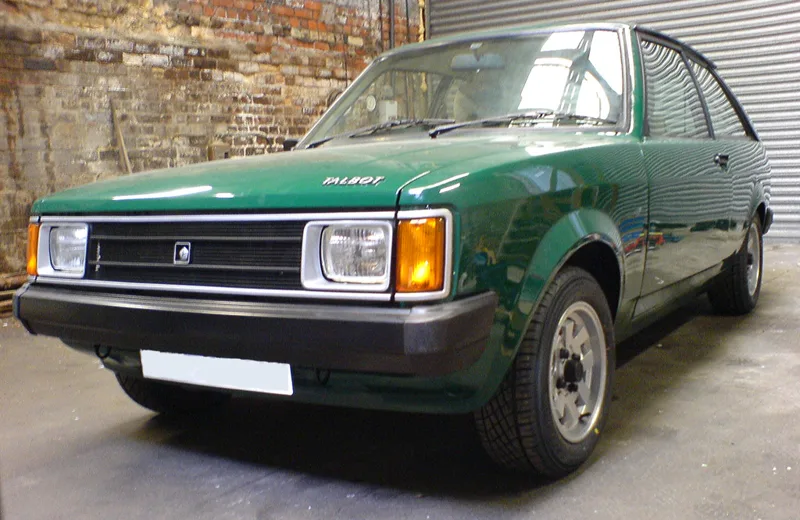
The Talbot name had a long history before the van. It began in 1902 with the Franco-British company Clement-Talbot, passed through the STD Motors group in 1920, and in 1935 the Rootes Group bought the London factory. PSA revived the brand in 1979, after Chrysler's European operations had gone to PSA in 1978. The Talbot brand was finally dropped in 1994.
What replaced the first-generation models?
The C25 and J5 were replaced in 1994 by the second-generation Ducato, sold as the Jumper and Boxer. Production of Alfa Romeo-badged vans stopped in 1993, after FIAT had taken over Alfa Romeo in 1986, and the Naples line ran until June 1994. The FIAT-badged third generation then reached France.
The 1991 facelift came before that change. The C25 and J5 gained dropped door glass, a grille that widened to the sides, and headlamps placed at mid-height. Only the badge position differed between them, with the C25's sitting off-centre.
Variants and special bodies
- Talento, the short-wheelbase version from 1989, also sold as the Ducato 10 on some export markets.
- Minibus and glazed van, added to the C25 and J5 range in February 1982.
- Ladder-frame chassis variants in the early range.
- Camper chassis and construction tipper versions.
- An electric J5 rated at 58.5 PS (43 kW; 58 hp), shown in 1991 for fleets.
- A range of 150 versions by 1989, while the widened common range later included no fewer than 500 variants.
Production figures
The Naples plant, a former Alfa Romeo V.I. works in Campania, built the AR.6, the right-hand-drive Talbot Express and, from 1989, the first-generation FIAT Talento. Its line ran until June 1994.
Published figures from CCFA and OICA data cover the SEVEL plant at Atessa and the former Alfa Romeo plant in Naples, which ran until June 1994. Figures for 1981 to 1983 are unknown, so the published picture starts after that period.