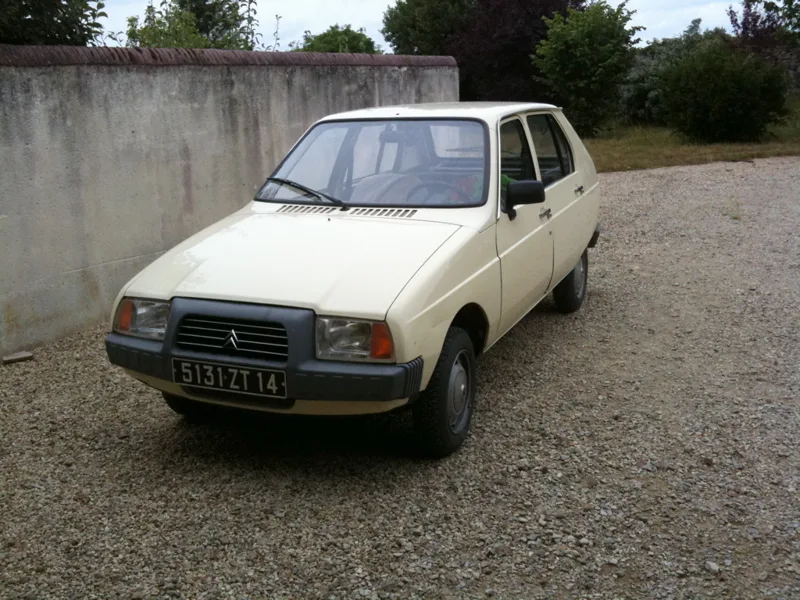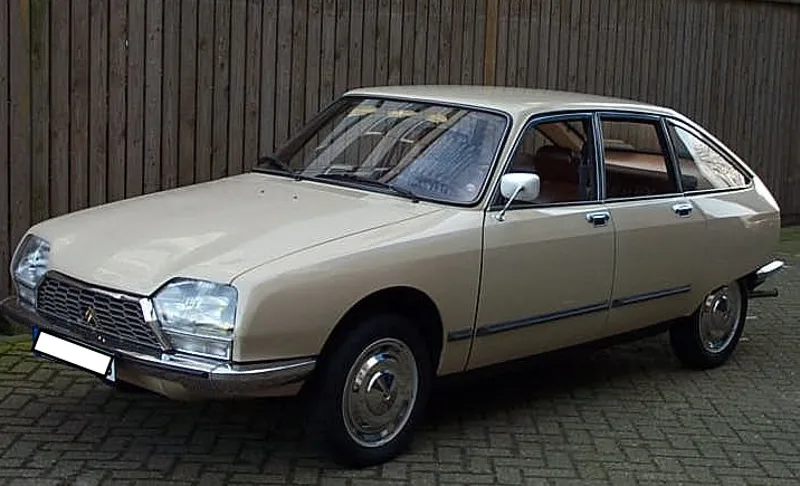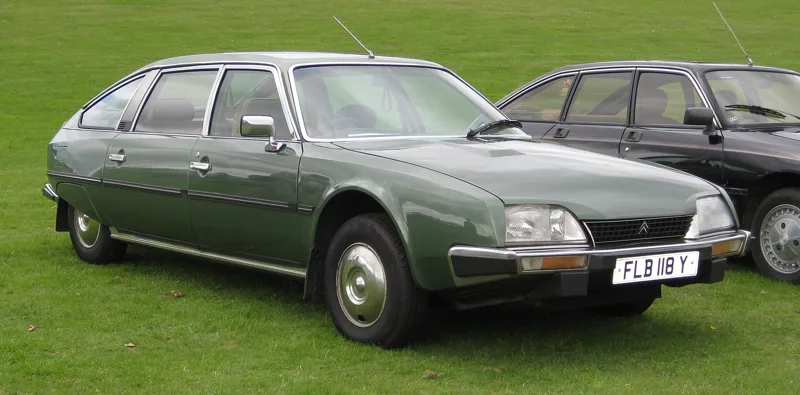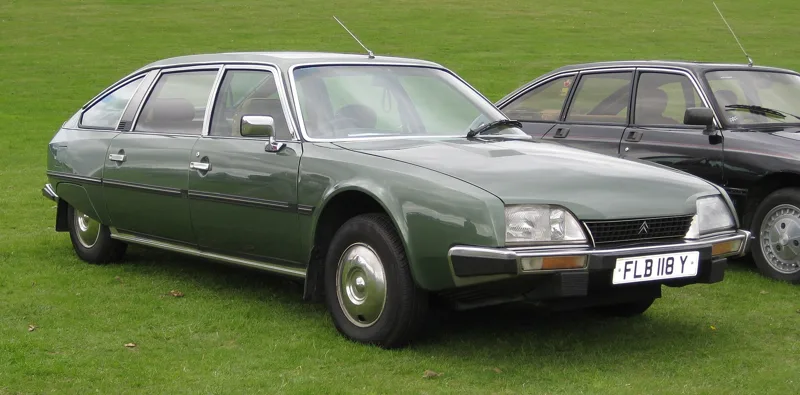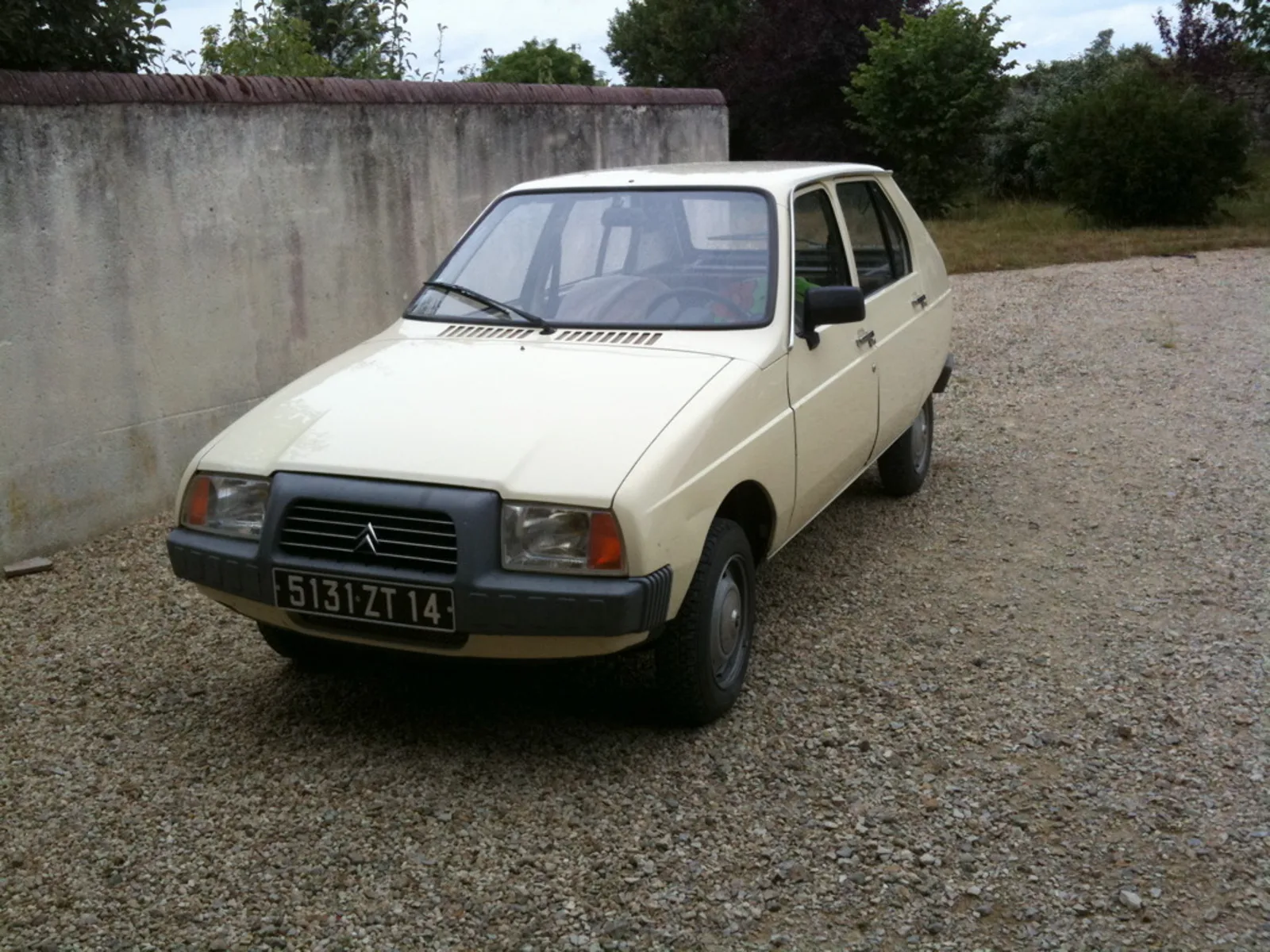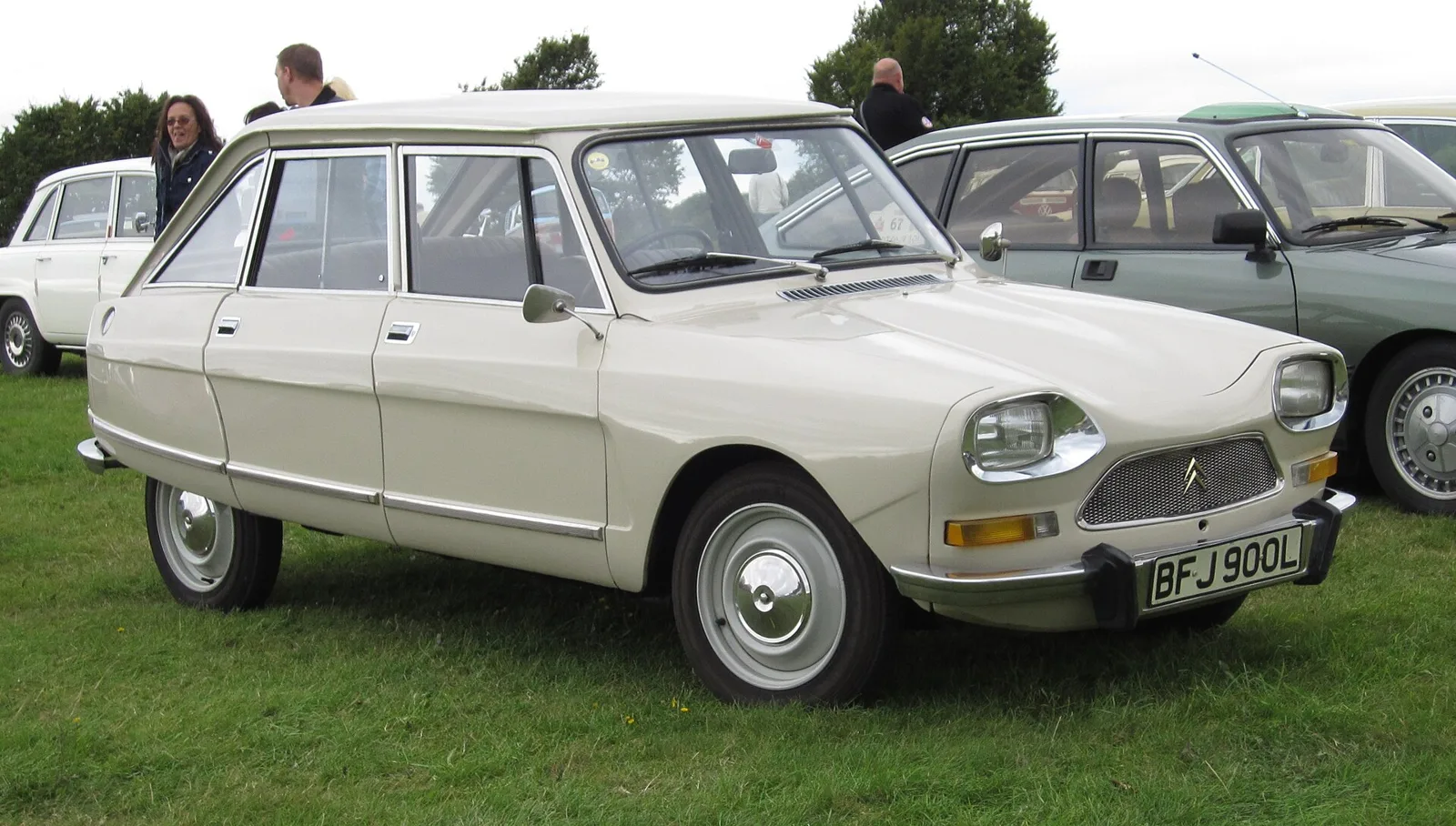
A revised Ami 6 with a fastback tail and two extra side windows, a Citroen GS engine in its Super version and 800,775 built.
Built by Citroen from 1969 to 1979 as the successor to the Ami 6, the Ami 8 had a fastback tail, a 602 cc air-cooled twin and a Super version with a Citroen GS engine. Citroen built 800,775 cars in total, and output peaked at 111,627 by the end of 1970.
The Citroen Ami 8 was a lower-mid-range car built between 1969 and 1979. It took the Ami 6's place in the price list, keeping the same platform, independent suspension and two-cylinder engine, while giving the body a new fastback tail and extra side windows. Citroen built 800,775 of them.
Citroen did not want to upset its own president, who disliked hatchbacks and found them too close to commercial vehicles. That is why the Ami 8 had a rear door hinged at the base of the window rather than a true hatch.
Why did Citroen replace the Ami 6?
Renault had launched the R6 in 1968, a larger and more comfortable derivative of the R4, and it competed directly with the Dyane. Citroen decided in the second half of the decade to update the Ami 6, which sat above the 2CV and Dyane pair and was losing sales as its design aged.
The job was quick, because the Ami 8 was essentially a revision of the existing car. The design department, led by Robert Opron, took up the last work of Flaminio Bertoni, who had died in 1964, and redrew the rear of the car despite the reluctance of the president, Pierre Bercot.
Hatchbacks were starting to spread at the time, with the Simca 1100 and the Autobianchi Primula, and Renault was extending the idea up the market with the Renault 16. The Ami 6 Break had also produced a sales surge after its August 1964 launch, which showed that buyers were drawn to practicality.
A revised Ami 6 that kept its chassis, gained a fastback tail and found 800,775 buyers.
How did Citroen launch the Ami 8?
Citroen named the new car Ami 8 to link it with the Ami 6, and it staged the debut across several weeks. In February 1969 wordplay posters across France aroused curiosity without revealing the car, and on 11 March it was presented at the Geneva Motor Show.
The same day, the Citroen leadership met in Lyon and showed the car to dealers across France. Posters revealing the definitive car went up between 12 and 15 March, radio advertising began on 17 March, and the first cars reached showrooms so that buyers could see them for themselves.
The launch campaign was considered finished by the start of April. Some French magazines of that period were printed in more than one million copies, which gave the advertising a wide reach.
What changed in the Ami 8's design?
Citroen tried to hide the family resemblance, but the Ami 8 was in effect a revised and corrected Ami 6. The most visible change was at the back, where the earlier unconventional tail gave way to a fastback, a shape that was more practical and less daring.
The rear lights were new, square and small, and the bumpers, front and rear, carried rubber-covered guards. A housing for the number plate light sat between the rear guards. The rear pillar took a more conventional line, which helped boot capacity.
At the front, a new trapezoidal grille and a bonnet with a stronger concave shape changed the look, and the headlamps were no longer overhung by the ridge that once ran from the bonnet to the wings. Removing that ridge cleaned up the nose.
The side glass went from two windows to three, giving eight windows in total when the rear window and windscreen are counted. That brought more light into the cabin and better visibility when manoeuvring. The cabin itself was larger, especially at the rear, and the dashboard and instrument panel were padded to soften the effect of an impact.
How did the Ami 8's engine and chassis work?
The Ami 8 kept the Ami 6's structure, with a platform chassis onto which the body was bolted. Its suspension used independent wheels, coil springs, horizontal compensating springs, hydraulic telescopic front dampers and inertia rear dampers, plus an anti-roll bar at the front. The handling that had won over more than a million Ami 6 customers stayed unchanged.
The four-drum brakes were unchanged, with the front drums mounted inboard at the exit of the differential and the rear drums fixed to the wheel hubs. The steering also came from the Ami 6, but it was lower-geared.
The engine was the same air-cooled flat-two as before, with aluminium alloy heads and overhead valves. Its capacity was 602 cc (36.7 cu in), and the output was 35 PS SAE (26 kW; 35 hp), or 32 PS DIN (24 kW; 32 hp) on the DIN rating.
What were the Ami 8 engine and specification figures?
| Version | Engine | Output | Top speed |
|---|---|---|---|
| Ami 8 two-cylinder | 602 cc (36.7 cu in) air-cooled flat-two | 35 PS SAE (26 kW; 35 hp), or 32 PS DIN (24 kW; 32 hp) | 115 km/h (71 mph) |
| Ami 8 Super | 1,015 cc (61.9 cu in), Citroen GS unit | 53.5 PS DIN (39 kW; 53 hp) | 140 km/h (87 mph) |
The four-speed manual gearbox used a single dry plate clutch, and a centrifugal clutch gearbox was available as an alternative.
How did the Ami 8 range grow after 1969?
At launch the Ami 8 came in Confort and Club trims, and the Club added reclining front seats, a carpeted floor and chrome window surrounds. In September 1969 the Break arrived, replacing the Ami 6 estate, and the Service replaced the commercial Ami 6 Service.
Both the Break and the Service had a true hatch, which made it easier to load luggage, goods and work equipment. The Service lacked rear doors and could be ordered with a glazed or a sheet-metal rear body.
Autumn 1969 brought front disc brakes, with a revised braking system and new rear wheel cylinders for the drums. Engine lubrication improved in November 1970, and by the end of that year 111,627 cars had been produced, the peak of the Ami 8's output.
Hydraulic telescopic dampers reached the rear axle in September 1971. The grille gained a gold logo in 1972, and a single-spoke steering wheel with polyurethane foam padding arrived in January 1973.
Why was the Ami Super built?
The Ami Super arrived in early 1973. Citroen had seen good sales of the Ami 8, including in Italy, but the two-cylinder engine was modest, so it fitted the 1,015 cc engine from the Citroen GS, which produced up to 53.5 PS DIN (39 kW; 53 hp).
The Super had a reinforced chassis, stiffer suspension, an anti-roll bar on the rear axle and iodine headlamps. Its floor-mounted gear lever came from the GS transmission, which made the version easy to recognise. It was offered as a saloon, a Break and a three-door Service.
What happened to the Ami 8 in its final years?
Between late 1973 and early 1974 the two-cylinder cars took the Super's dashboard, and the Club trim disappeared, leaving only the Confort. A year later the direction indicators changed from orange to white. The Super itself was dropped in March 1976, after failing to win the success Citroen hoped for, possibly because of its high price.
In 1976 the Service was renamed the Enterprise, the whole range moved to dual-circuit brakes, and the Break's rear bench became foldable. That September the suspension changed to independent axles without the horizontal compensating springs. The decline set in from there.
Only 31,997 Ami 8s were sold by the end of 1977. Production ended in July 1978, and three months later the Citroen Visa took its place. The Ami 8 Break carried on for a further year, until September 1979. In all, 800,775 Ami 8s were built, 44,820 of them Supers.
What was the M35?
The M35 of 1969 was a special version of the Ami 8. It looked much like a coupe version of the saloon, but underneath it was a substantial departure: a new chassis with hydropneumatic suspension and a single-rotor Wankel engine of 497 cc (30.3 cu in) producing 49 PS (36 kW; 48 hp).
Heuliez coachbuilt just 267 numbered examples. Citroen gave them to selected customers to test the Wankel engine. The company had a strong belief in the rotary engine, and in 1967 it had founded Comotor with NSU to make Wankel engines.
The M35 never went into series production, but the testing supported the GS Birotor of 1973 and an experimental helicopter with a rotary engine.