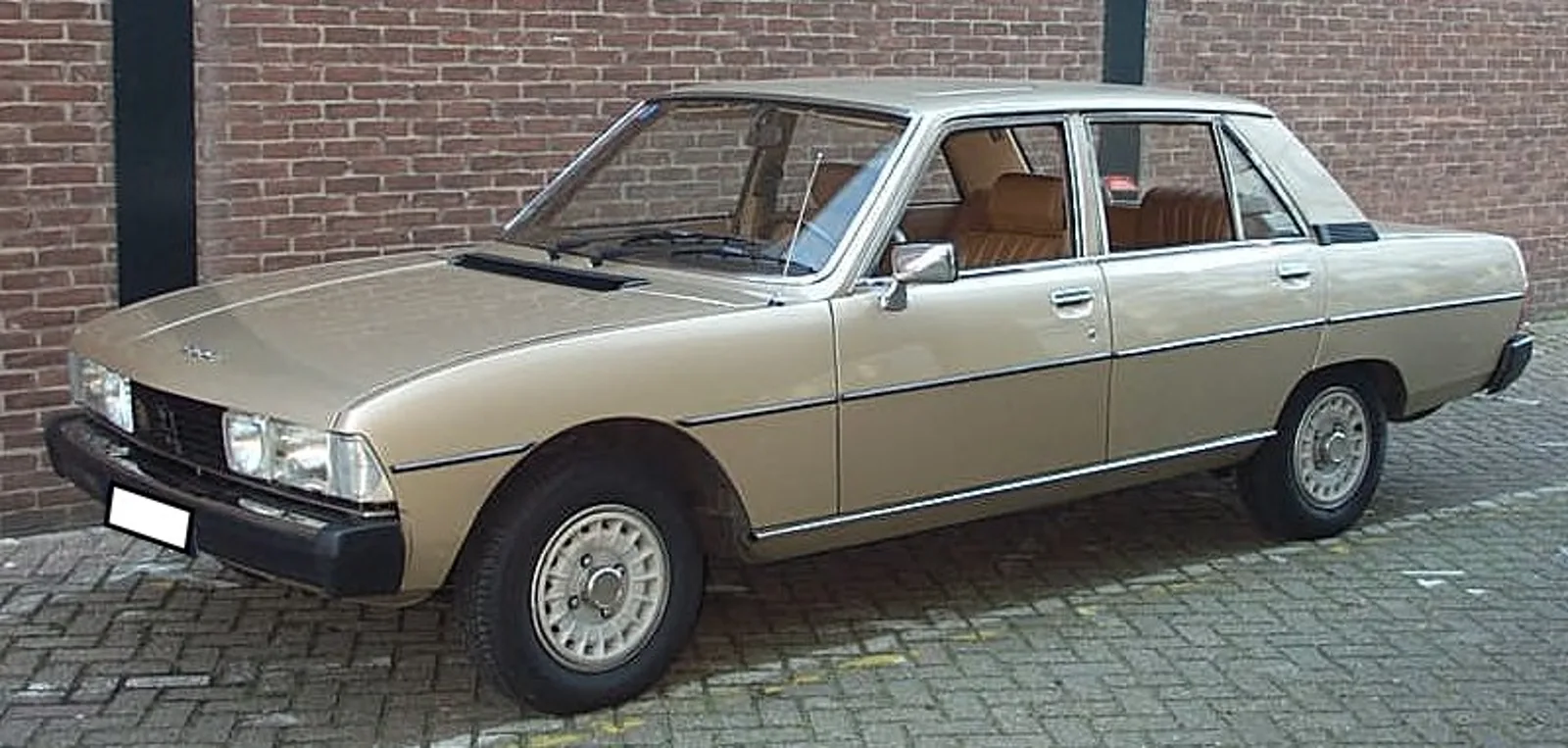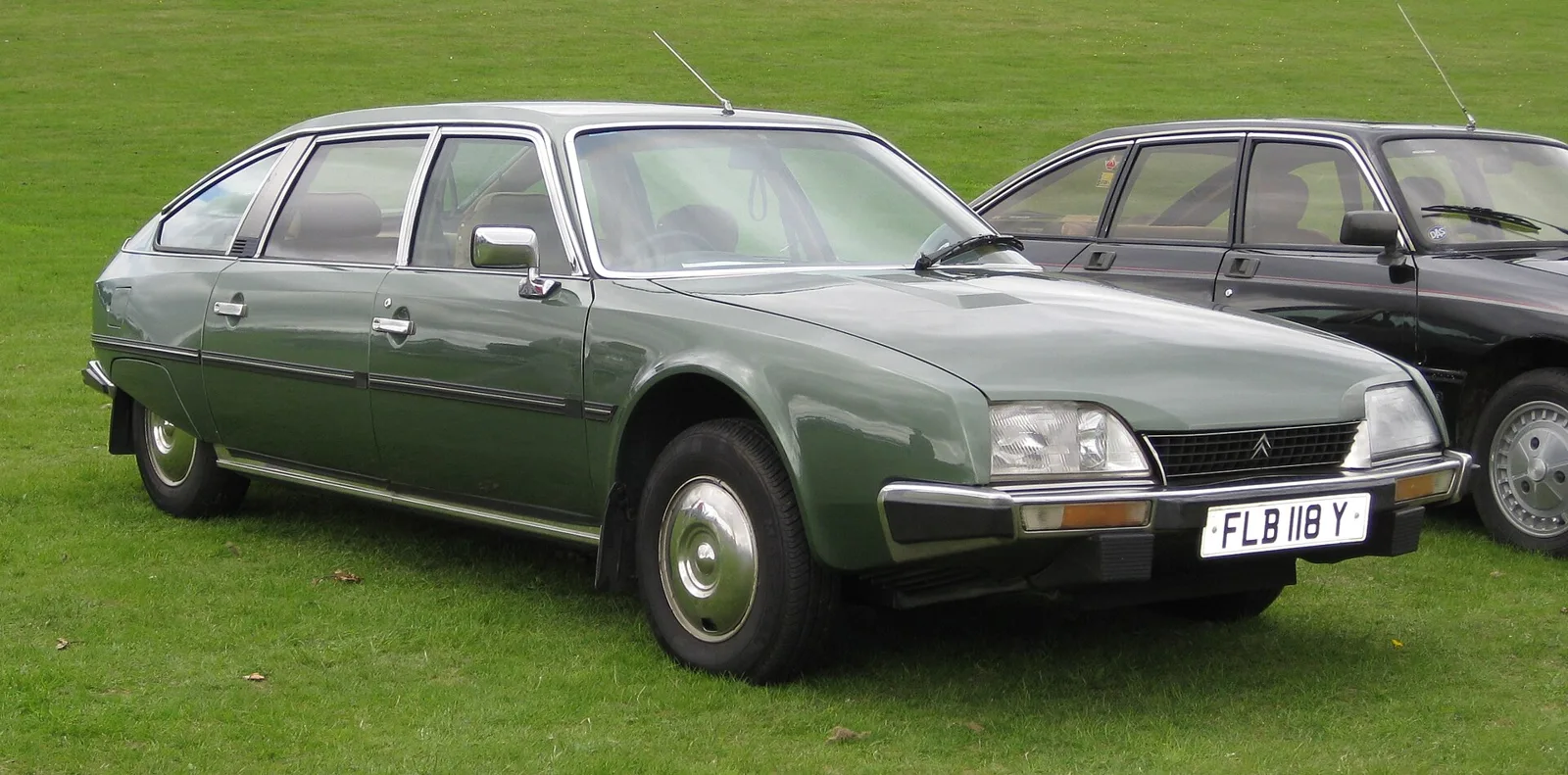
A hydropneumatic Citroen flagship that sold over a million cars set against a Pininfarina-styled Peugeot V6 that did not: origins, engines, ride, sales and the buyer each suited.
The Citroen CX and Peugeot 604 were both 1970s executive cars from one group, but they took different paths. The CX was built from 1974 to 1991 and sold 1,170,645 cars. The 604 was built from 1975 to 1985, with a 2.7-litre V6, and sold 153,252 units.
The Citroen CX and the Peugeot 604 were both executive cars from the same French group in the 1970s, and they competed for the same wealthy French and European buyers. The CX arrived first in 1974 and became one of the most successful Citroens of its era. The 604 followed in 1975 as Peugeot's first large luxury saloon in decades, with a Pininfarina body and a V6 engine.
This comparison covers why the two were rivals, how each came about, their design and ride, their engines and performance, their sales and reputations and which buyer each car suited on the facts available.
Why were the Citroen CX and Peugeot 604 rivals?
They were rivals because both were large executive cars sold to the same class of buyer. The parent company PSA Peugeot Citroen was fielding three cars in the executive segment at once, the Peugeot 604, the Talbot Tagora and the CX, all competing for the same limited financial resources.
That internal competition weakened the group's position. The effort spread across three cars left PSA with little margin to make any of them a clear leader, and the group later retreated from the segment for a time.
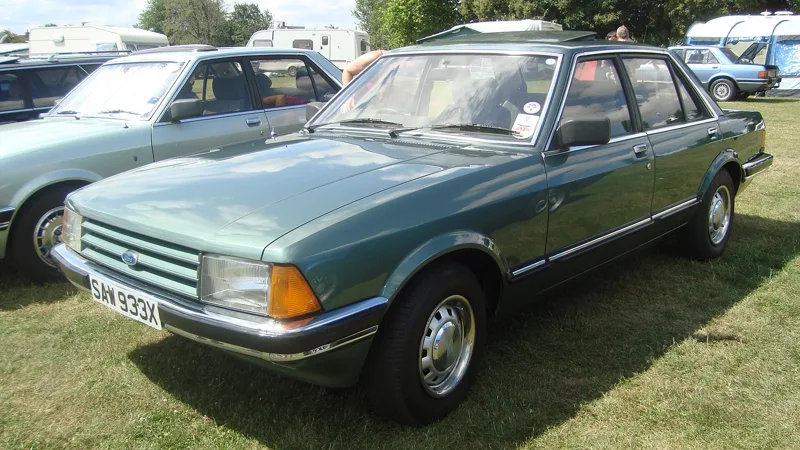
Outside the group the picture was different. German manufacturers had built an unassailable position in the executive class by the late 1970s and early 1980s, and British price lists set both French cars beside the BMW 520 and Ford Granada.
One car carried Citroen's hydropneumatic legacy to over a million buyers; the other was Peugeot's V6 answer that sold 153,252 cars.
How did the two cars come about?
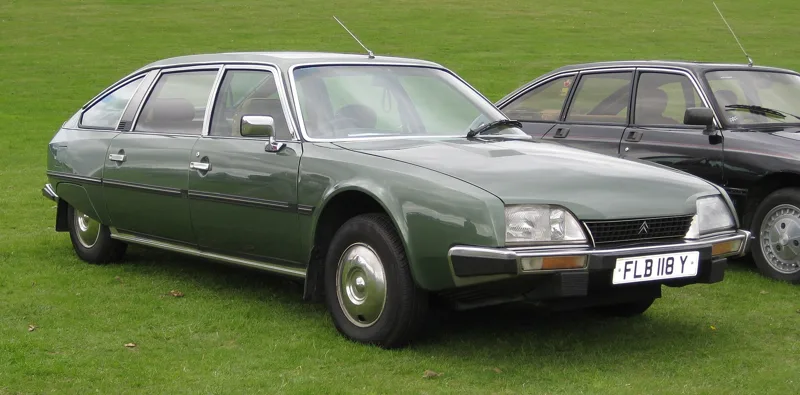
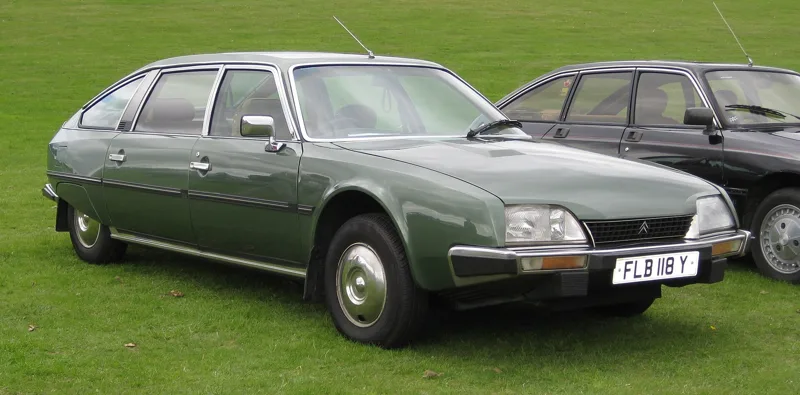
The CX was launched at the 1974 Paris Motor Show, and its design by Robert Opron resembled the earlier GS. It was rushed to market, and some very early cars had no power steering. Right-hand drive production was not possible until well into 1975.
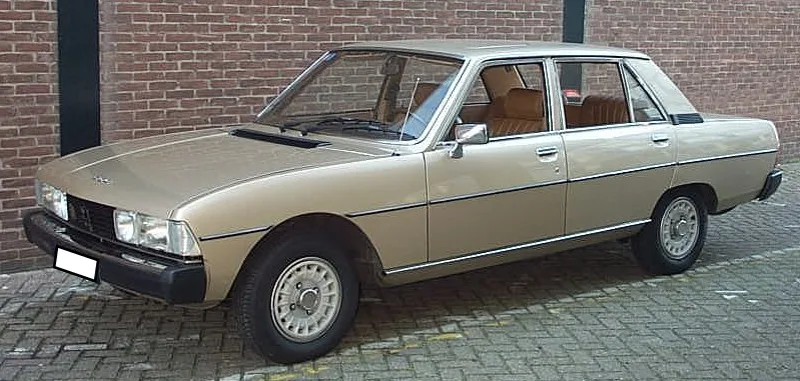
The 604 was unveiled at the Geneva Motor Show in March 1975, with styling by Pininfarina. It was based on the principles of the Peugeot 504, using the 504's bulkhead, doors and part of its floorpan, and sales began in September 1975.
The 604 was Peugeot's first large luxury saloon in about forty years, the last having been the short-lived 601 of 1934. It was also developed alongside Renault and Volvo for its V6, which shows how the group drew on partners for big engines.
The CX was the final successful model of the big Citroen era that began in 1934. Enthusiasts have described it as the last real Citroen before Peugeot took control of the company in 1976, and it was voted European Car of the Year for 1975. The 1985 Series 2 changes created initial interest from press and public, but they did little to revive sales.
How did the two cars ride and drive?
The CX's suspension was its signature. It used Citroen's hydropneumatic self-levelling system, improved from the DS, and its design allowed the car to soak up large undulations while damping rough surfaces. Rolls-Royce used the constant ground clearance principle under licence on the Silver Shadow.
The CX also had a low drag coefficient of 0.36, which the car's name referred to, and its transverse engine layout saved space and cut cabin noise. Its controls were unusual, with no steering column stalks and turn signals that did not cancel themselves.
The 604 inherited a damped and supple ride from the 504. Its steering was highly rated, and its doors were unusually wide, which made entry and exit easy. Its handling was praised as good, and the car was positioned as a spacious limousine for its role.
The 604 did not have the CX's hydropneumatic suspension in most versions, which was a clear difference in character. Where the CX hovered over bumps, the 604 relied on a more conventional damped ride built on the 504's principles.
What engines did the two cars use?
The CX's early engines were four-cylinder units. The Normale had 1,985 cc and 102 PS (75 kW), and the CX 2200 had a twin-carburettor 2,175 cc unit with 112 PS (82 kW). The 1979 Douvrin engine, developed with Renault, produced 106 PS (78 kW) and made the CX 2000 the first French petrol car able to reach Marseille from Paris on one tank.
The CX GTi of 1977 had Bosch L-Jetronic injection and 128 PS (94 kW), and the GTi Turbo of 1985 to 1989 offered 168 PS (124 kW) and a top speed above 220 km/h (137 mph). The 1984 Turbo-D 2.5 was quoted at up to 195 km/h (121 mph), which made it the fastest diesel sedan of its time.
The 604's main engine was a 2.7-litre PRV V6 with 144 PS (106 kW), developed with Renault and Volvo. Many 604s were sold with that V6, and the car also used a turbodiesel from 1979. The turbodiesel began as an 80 PS (59 kW) 2,304 cc unit, which was later upgraded to 2.5 litres and 90 PS.
Autocar's 1981 long-term test of the 604 turbodiesel estimated fuel consumption at 32.5 miles per gallon (8.7 litres per 100 km). The magazine described it as a fine, friendly car and an effortless long-distance machine, though the diesel took some practice to start in cold weather. The same test praised the velour seats for comfort but warned that they were vulnerable to burns and soiling, a small but telling point about interior materials.
The 604 range grew over its life. The TI brought Bosch K-Jetronic fuel injection and a five-speed manual in 1977, the STi arrived in 1981 with Michelin tyres, and a 2.8-litre GTi appeared in 1984. Heuliez also built 124 long-wheelbase limousines from 1978 to 1984, each with two extra movable seats.
How did the cars handle sales and reputation?
The CX was a strong seller at first. More than 132,000 were built in 1978, and it found customers beyond the loyal DS base. Its sales peaked at about four years old, in 1978, and it sold 1,170,645 cars across its life from 1974 to 1991.
The CX later acquired a reputation for high running costs, and that perception cut sales over time. Its standard components, such as steel, door hinges and electrics, proved more troublesome than its advanced systems, and construction quality improved too slowly to remove the perception.
The 604 was a commercial failure despite good reviews. It sold 153,252 units, half the total of the V8 Rover 3500 and an eighth of the CX. Peugeot made a profit on each car, mostly because of shared tooling with the 504, but the car ended without an immediate successor.
The 604 was also hit by timing. It arrived during the recession that followed the 1973 energy crisis, and the Peugeot 505 launched in 1979 halved its sales. By 1985 only 581 were built in a single year, and the last one left the line that year.
The CX also had a motorsport life. It was entered in rallies such as the Tour du Senegal and the Paris-Dakar, winning five events outright. In the 1977 London-Sydney Marathon, Paddy Hopkirk drove a CX 2400 from behind in a come-from-behind sprint to finish third.
The CX was finally replaced by the XM in May 1989. The XM shared its chassis with the Peugeot 605, kept self-levelling hydropneumatic suspension and offered a hatchback body, but it carried little design from the CX. Its total sales of 333,000 were less than a third of the CX's figure, though twice those of the 604.
The boot question followed the 604 through its life. Figures ranged from 356 to 501 litres, and Peugeot claimed 498 litres. Autocar called the boot really capacious in 1975 at 699 litres, while Motor called it only average in 1976, and the matter was never settled.
Which buyer suits each car?
On the facts given, the CX suits a buyer who wants a French executive car with a distinctive ride, hydropneumatic suspension and a long production run. The 604 suits a buyer who wants a Pininfarina-styled saloon with a V6 or diesel, a comfortable ride and a more conventional character.
A buyer who valued a distinctive ride, a striking design and a strong sales record would look at the CX. Its aerodynamic shape, its unusual controls and its suspension made it a car with a clear identity, which is why enthusiasts still discuss it.
A buyer who wanted a more traditional saloon with a V6 and wide-opening doors would look at the 604. Its Pininfarina design and its diesel options gave it a clear appeal for a particular kind of executive buyer.
Neither car is shown to be better across the board. The CX has the far larger sales figure and the more distinctive engineering, while the 604 has the V6 and the more conventional saloon character. The better choice depends on whether the buyer values a radical ride or a settled executive saloon.
Specifications at a glance
| Feature | Citroen CX | Peugeot 604 |
|---|---|---|
| Production | 1974 to 1991 | 1975 to 1985 |
| Cars built | 1,170,645 | 153,252 |
| Design | Robert Opron, Kammback rear | Pininfarina |
| Suspension | Hydropneumatic self-levelling | Conventional damped ride from the 504 |
| Drag coefficient | 0.36 | No figure given |
| Launch engine | 1,985 cc four, 102 PS (75 kW) | 2.7-litre PRV V6, 144 PS (106 kW) |
| Diesel | Turbo-D 2.5, up to 195 km/h (121 mph) | Turbodiesel 80 PS, later 90 PS |
| Top performance | GTi Turbo, 168 PS (124 kW), over 220 km/h (137 mph) | No figure given |
| Price at launch | No figure given | US$10,990; GBP 4,785 in the UK |
| Awards | European Car of the Year, 1975 | No figure given |
| Boot | No figure given | Figures from 356 to 501 litres, official 498 litres |