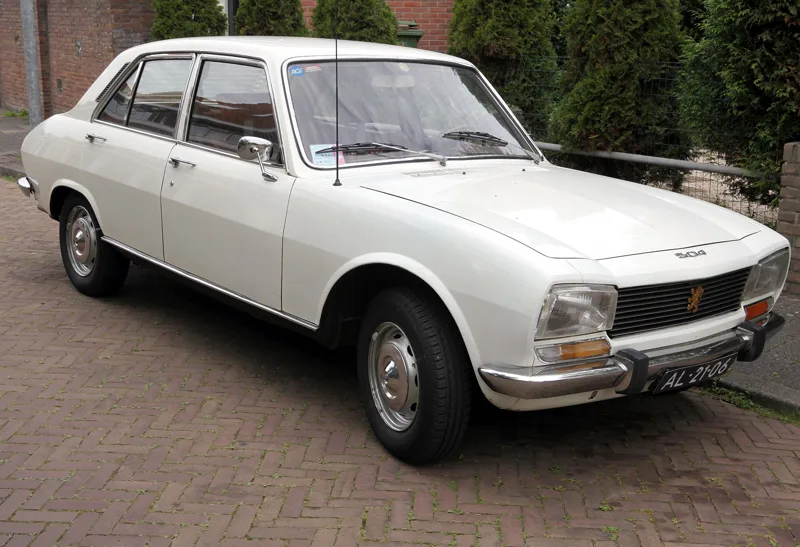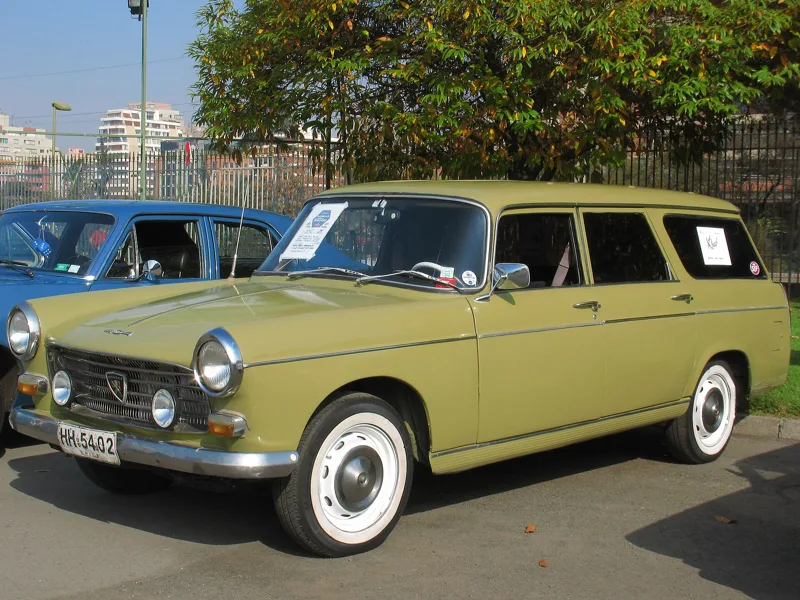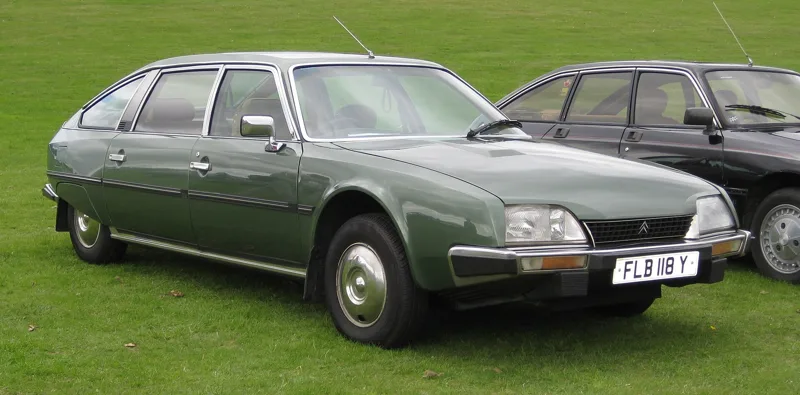
A 1975 French executive car with a V6, an early turbodiesel and a celebrated ride, which still failed to find enough buyers.
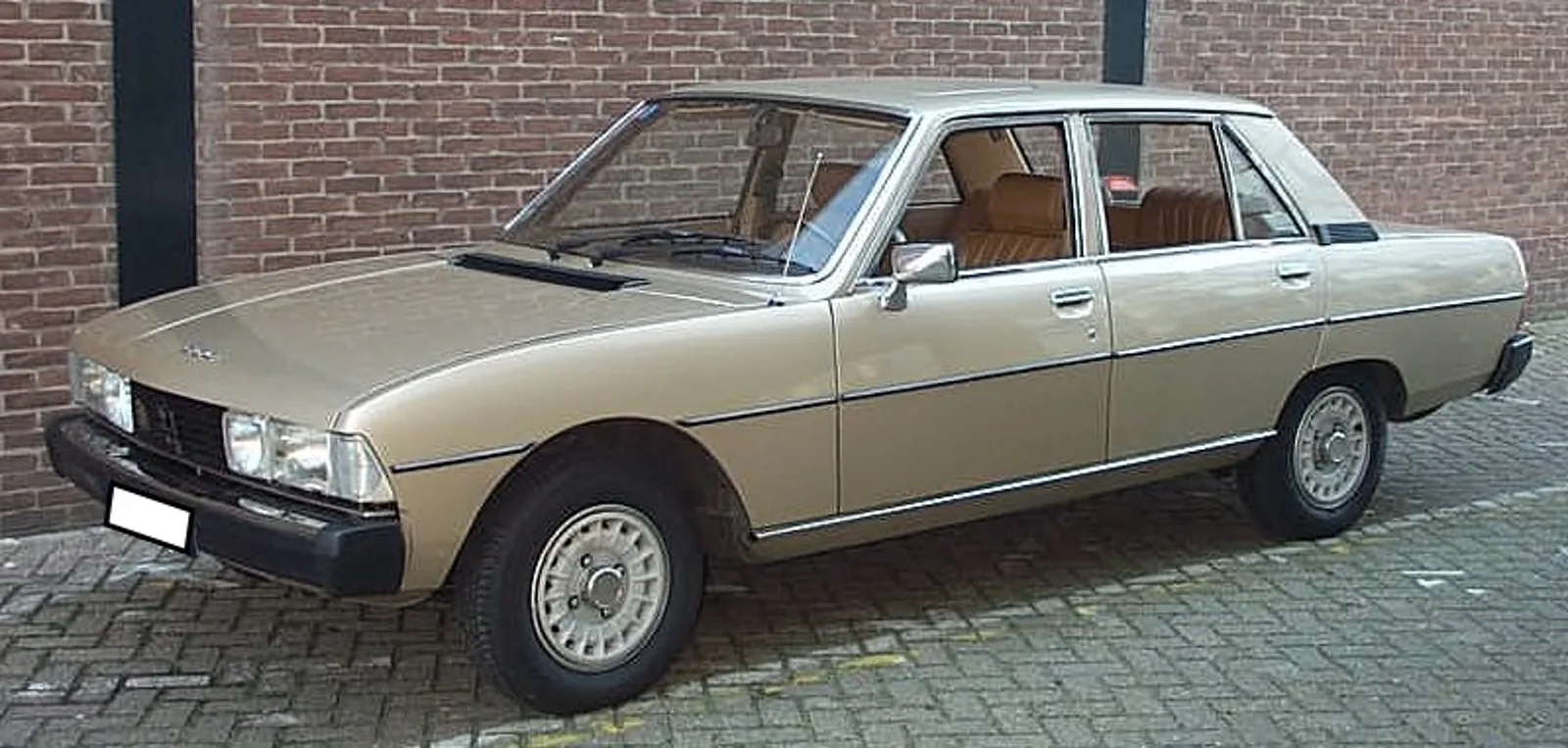
Launched in 1975, the 604 was a Pininfarina-styled executive saloon that shared its bulkhead and doors with the 504. A 2.7 litre V6 and a later turbodiesel powered it, and reviewers praised its ride quality while buyers stayed away in large numbers during its decade on sale.
The Peugeot 604 was a large executive saloon that Peugeot built in France from 1975 to 1985, with a production run of 153,252 cars. It was the company's first large luxury saloon in about forty years, and it was engineered around a bulkhead, doors and floorpan carried over from the 504.
When did the Peugeot 604 arrive, and who styled it?
The 604 made its debut at the Geneva show in March 1975, and Pininfarina styled its formal, handsome body. Sales began that September, and the first cars reached showrooms in a single SL specification. A Danish review in 1976 described the styling as having a calm elegance.
The styling was praised for being restrained and dignified rather than flamboyant. Its formal lines suited the car's role as a limousine for executives, and the proportions were applauded by reviewers who compared it with the rest of the luxury market.
The car was based on the principles of the 504. It used that car's bulkhead, its doors and part of its floorpan, which gave the 604 a familiar structure while the body above it grew larger and more refined. Peugeot presented the car as its entry into a segment it had neglected for decades.
Launch pricing reflected the car's ambitions. In the United States it cost US$10,990, and in Britain it sold for GBP 4,785. That put it above the BMW 520 at GBP 4,399 and the Citroen CX Pallas at GBP 4,361, although the Ford Granada 3000 GL was cheaper at GBP 3,485.
Peugeot's reasoning was based on the growing affluence of the French market. The company believed buyers could support a car priced above the 504, and the 604 was the answer to that belief. The last large Peugeot saloon had been the 601 of 1934, which made the 604 a long-awaited return to the top of the range.
A ride equal to a Jaguar's, a Pininfarina body and a turbodiesel ahead of its time, yet still not enough buyers.
What was the 604 built on and what engines did it use?
The 604 used the PRV V6 family of engines in 2.7 litre and 2.8 litre form, while its diesel options came from the Indenor range. A 2.5 litre diesel replaced the original 2.3 litre unit in 1983, which gave the range a more usable torque curve.
The 144 PS (106 kW) 2.7-litre V6 was the launch engine, developed alongside Renault and Volvo. It delivered a flexible character, and the reviewer from Car magazine found it could rev to surprisingly high speeds without complaint, which made the engine one of the car's strongest features.
The early six-cylinder cars used carburettors, and some reviewers criticised the tri-choke Solex arrangement for leaving a mid-range flat spot. Fuel injection arrived on the TI in September 1977, with Bosch K-Jetronic, and that car was judged the more refined of the two petrol versions.
US cars received a larger 2849 cc engine, although it produced no more power than the European unit. In 1984 the GTi brought a 2.8-litre engine to the range, replacing the 2.7-litre STi and adding capacity without changing the fundamental character of the V6.
Automatic gearboxes were sourced from General Motors at first, but from January 1981 they came from ZF in Germany. The GM units had been built in Alsace, and the change reflected the restructuring of supply that many manufacturers were undertaking at the time.
Why did the 604 sell so poorly?
The 604 was a critical success and a commercial failure. It launched into a recession caused by the 1973 energy crisis, its production was far below rivals such as the Rover 3500, and the cheaper 505 took many of its buyers in 1979.
Contemporary journalists blamed the conservative styling, the thin engineering novelty, the car's modest pace and its reputation for rust. Some argued that the timing was poor, because the energy crisis had made large-engined cars unpopular in France, and Renault's six-cylinder saloon had reached the market only months earlier.
Peugeot still made a profit on each car, largely because the 604 shared tooling and engineering with the 504. Even so, production fell after 1979, when the 505 arrived and a second oil crisis hit. Sales had been strong for only a few years after launch, and the decline was steady from then on.
The German makers were a further problem. The BMW 5 Series of 1974 had entered a new segment for its maker with relatively good build quality, and German brands built an unassailable position in the executive class through the late 1970s and early 1980s. France's makers found it hard to compete there.
PSA went the other way and created a third competitor, the Talbot Tagora, rather than concentrating its resources on the 604 successor. The move left the executive segment without a French car that could challenge the Germans in the way the 604 had hoped to.
How did the 604 change during its life?
The 604 changed steadily through its decade, with new engines, trim levels and a series of facelifts. Its life ran from the single-specification SL of 1975 to the final cars sold until November 1985, when production finally stopped.
The 604 was launched in March 1975 as the SL with a single specification. In 1977 the US received a carburetted V6 SL with twin rectangular headlights and larger bumpers. The fuel-injected TI with a five-speed manual followed in September 1977, and it became the more popular petrol choice among enthusiasts.
For the 1979 model year the 604 D Turbo appeared, entering production in February 1979. It could be ordered with a four-speed or five-speed manual, or with the GM three-speed automatic. The 1979 cars also received a square petrol filler cap in place of the earlier round one.
The 1980 facelift brought a new rear-view mirror, the removal of the bonnet badge, orange indicators and a revised plastic dashboard and gear lever. A limited Grand Comfort edition offered power windows and locks, a sunroof and tinted glass, but US sales faded away during 1980.
The STi model, introduced in 1981, came with Michelin TRX tyres and alloy wheels. Total body immersion anti-corrosion treatment was introduced across the range, and the turbodiesel was exported to the United States, where it replaced the absent V6 entirely.
The carburetted entry-level SL was dropped in 1982, and the TI and GRD Turbo left the range in 1983. That left the STi and SRD Turbo until the GTi and the GTDT diesel arrived in 1984. US sales ended after 1984, and production stopped in November 1985.
The French coachbuilder Heuliez also produced long-wheelbase limousines, with 124 cars built between 1978 and 1984. Each carried two extra movable seats, which made the car a practical choice for buyers who needed more room for passengers.
Was the 604 the first turbodiesel car in Europe?
The 604 is noted as the first production turbodiesel car sold in Europe, arriving in 1979 with an 80 PS engine. Mercedes-Benz had sold its 300 SD turbodiesel in North America since 1977, but the Peugeot brought the technology to European showrooms in volume.
The engine was an Indenor diesel with a turbocharger, designated XD2S, producing 80 PS (59 kW) from 2,304 cc. It was reliable, but cold starts were a notable weakness, and some owners parked the car on a hill to help it fire up. Changes to the glow plugs and compression later made starting easier.
The tall inline four was tilted at 20 degrees to fit beneath the low bonnet. Sometime in 1983 it was upgraded to a 2.5 litre unit, the XD3S, which produced 90 PS (66 kW) at 4,150 rpm and could reach 165 km/h (103 mph) with the manual gearbox.
The engine was later fitted with electronic fuel injection, becoming the XD3T with 95 PS (70 kW) at the same engine speed. US and Canadian turbodiesels usually came with a three-speed ZF automatic, which reduced the top speed to 158 km/h (98 mph), although some five-speed cars were sold in those markets.
Edward Eves wrote up a long stint with the turbodiesel for Autocar in 1981. Fuel use was put at 32.5 miles per gallon (8.7 litres per 100 km), and the car's mileage built up to 24,000 miles in a year. The reviewer found the start-up routine little different from that of a petrol car.
How big was the 604's boot?
Claims for the 604's boot varied widely, from 356 litres to 501 litres, and Peugeot's official figure was 498 litres. The disagreement persisted through the car's road-test career, and it became one of the odd features of its reputation among enthusiasts.
Several figures appeared in period reviews, including 385, 402, 413 and 462 litres. Motor's 1976 test found its testers could fit 356 litres of luggage, and the magazine described the boot as only average. Other reviewers were far more generous about the same compartment.
Autocar disagreed in 1975, calling the luggage area really capacious at 699 litres. Its 1977 long-term test found the boot one of the largest its author could remember, and it praised the depth of the compartment for swallowing awkward loads without difficulty.
What Car? called the boot simply vast in 1980. In 1981 Edward Eves described it as huge, with four feet of usable width along with 33 inches of fore and aft space. Autocar added in 1982 that full-size suitcases could be packed upright, which settled the question for that magazine at least.
How did critics rate the 604 when it was new?
Critics rated the 604 highly for ride quality, and Car magazine said its suspension beat the 1980 Mercedes S-Class W126 and matched a Jaguar. Motor was less enthusiastic, calling the car a middle of the road product even while praising its comfort.
Car's August 1975 review described the car as well thought out and well developed, and it praised the suspension refinement and the flexibility of the engine. Criticisms included weak airflow from some vents, a lack of lumbar support in the front seats, brake fade and the absence of central locking.
In November 1975 Car tested the 604 against the BMW 528 and the Jaguar XJ 3.4. The Peugeot proved faster through corners, quieter and more comfortable, and the magazine thought its roadholding matched the Jaguar in the dry and beat it in the wet.
Motor's review of the SL with a four-speed manual praised the ride and interior, but it criticised the refinement, the ergonomics and a lack of power below 2,500 rpm. The luggage capacity was quoted at 12.6 cubic feet, equal to 357 litres.
Motor Trend tested the car after its April 1977 American launch and called the rack-and-pinion steering of surpassing excellence. The magazine also rated the braking as excellent, with a deceleration of 0.875 g, although it found the performance short of the car's other strengths.
What Car? compared the 604 Ti with the Vauxhall Royale, the Ford Granada and the Renault 30 TX in 1980. The Peugeot had the highest top speed at 119 mph, the best 0-60 time at 9.7 seconds and the lowest price at GBP 9,258, yet the Royale was judged the more rounded design overall.
What are the Peugeot 604 specifications?
| Specification | Detail |
|---|---|
| Type | Large executive saloon, front engine, rear-wheel drive |
| Production | 1975 to 1985; 153,252 built |
| Launch | Geneva Motor Show, March 1975; sales from September 1975 |
| Petrol engines | 2.7 L and 2.8 L PRV V6 |
| Launch output | 144 PS (106 kW) from the 2.7-litre V6 |
| Diesel engines | 2.3 L XD2S (80 PS; 59 kW), 2.5 L XD3S (90 PS; 66 kW), XD3T (95 PS; 70 kW) |
| Diesel fuel use | 32.5 mpg (8.7 litres per 100 km) in Autocar's 1981 test |
| Top speed | 119 mph for the 604 Ti in What Car? testing; 165 km/h (103 mph) for the 2.5-litre diesel |
| Boot | 498 litres official; period reviews ranged from 356 to 501 litres |
| Launch price | US$10,990; GBP 4,785 in the UK |
| Limousine | Heuliez long-wheelbase version, 124 built, 1978 to 1984 |