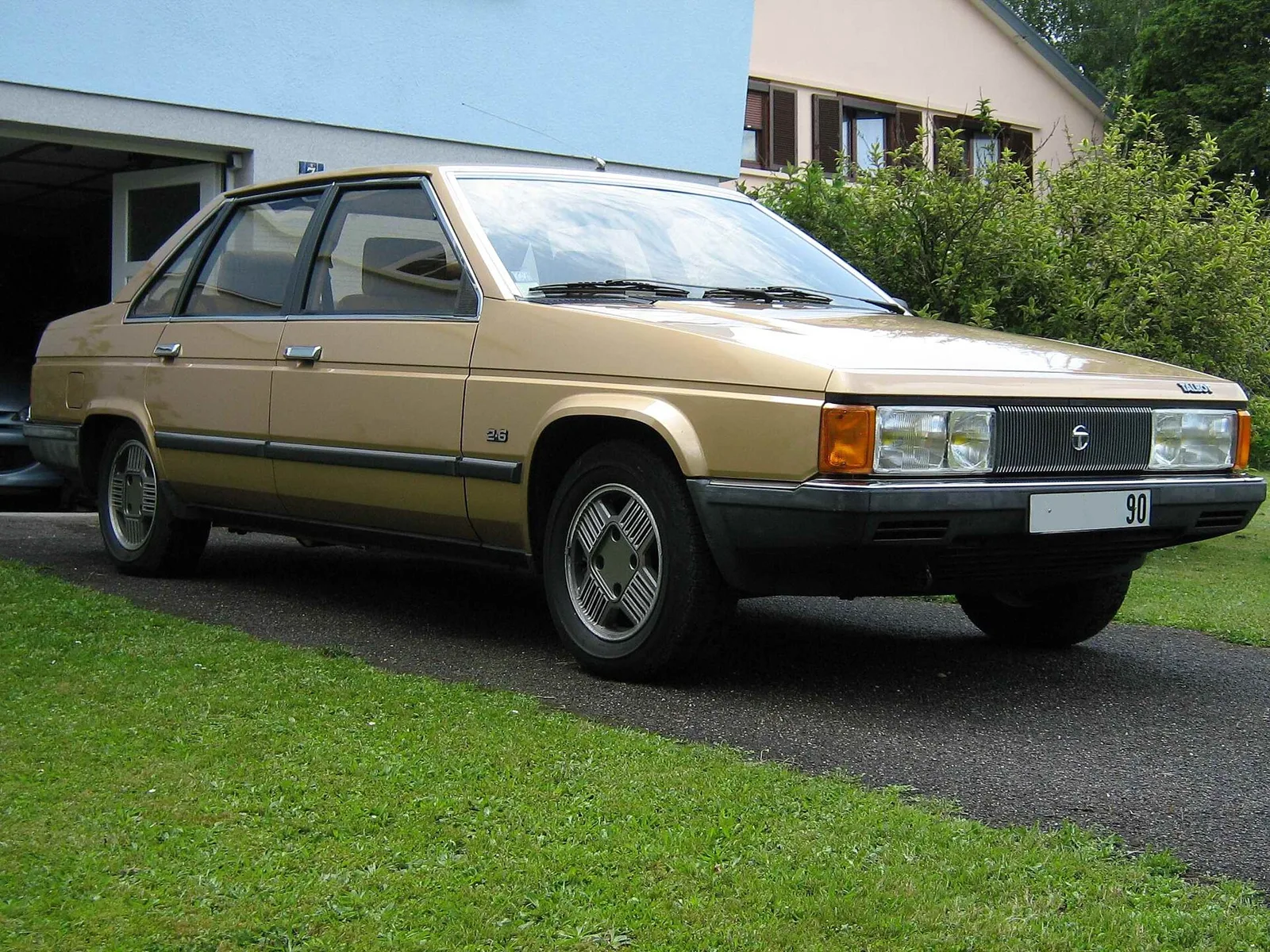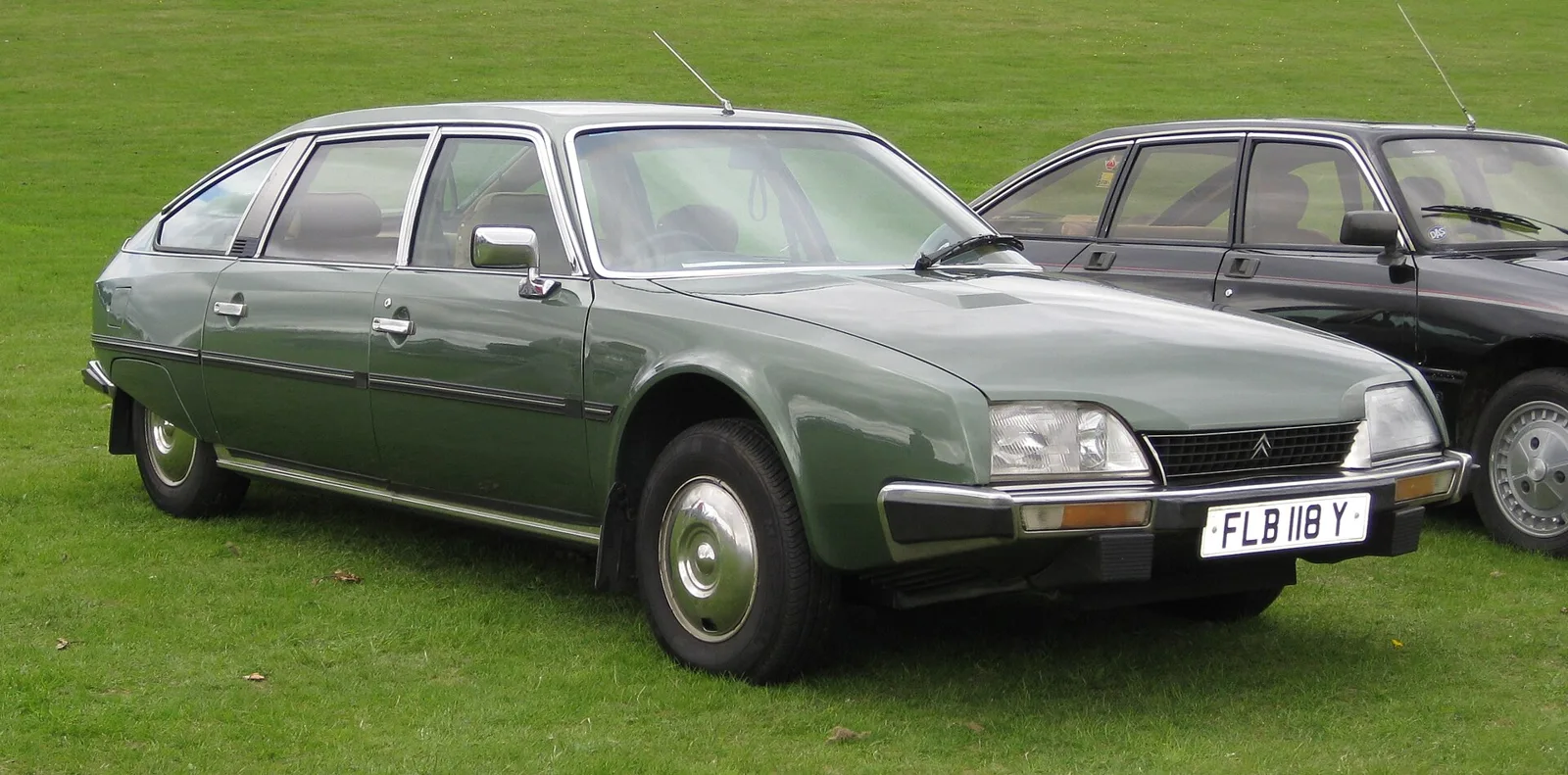
A hydropneumatic Citroen that sold over a million cars set against the Talbot Tagora, a late executive car from the Chrysler Europe takeover that sold fewer than 20,000: origins, engines, reviews and the buyer each suited.
The Citroen CX and Talbot Tagora were executive cars from one French group, but they had very different fates. The CX was built from 1974 to 1991 and sold 1,170,645 units. The Tagora was launched in 1981 and was cancelled in 1983 after fewer than 20,000 were built.
The Citroen CX and the Talbot Tagora were both large executive cars from the same French group, and they shared a market and a parent company. The CX arrived in 1974 with hydropneumatic suspension and became a huge success. The Tagora was the car that PSA inherited from the Chrysler Europe takeover, and it was launched in 1981 to replace the Chrysler 180.
This comparison covers why the two were rivals inside one group, how each came about, their design and engines, the reviews each received, their sales and which buyer each car suited on the facts available.
Why were the Citroen CX and Talbot Tagora rivals?
They were rivals inside the same company. PSA was fielding three cars in the executive segment, the Peugeot 604, the Talbot Tagora and the CX, all competing for the group's scarce financial resources. The overlap helped weaken PSA's position in the segment, and the group's retreat from it was partly a result of that spread.
The Tagora was priced to overlap with high-end Peugeot 505 and low-end Citroen CX models. It was also comparable to the Renault 20 and Ford Granada, so the car sat in a crowded middle ground rather than a clear place of its own.
The CX was the group's most distinctive executive car. The Tagora, by contrast, was a late arrival whose development had been planned for another company, which made the two cars hard to position as complements to each other.
One car sold over a million across its life; the other was a late, conventional rival that sold a fraction of the CX's figures.
How did the two cars come about?
The CX was launched at the 1974 Paris Motor Show, and its design by Robert Opron resembled the GS. It was rushed to market and some early cars had no power steering. The CX won the European Car of the Year title in 1975, and it found customers beyond the DS's loyal base.
The Tagora began as Chrysler Europe's C9 project in 1976. Its aim was to replace the unsuccessful Chrysler 180, and its technical development stayed in France while its styling was carried out in the UK. An early proposal for its name was Simca 2000.
Chrysler Corporation approved the car on the assumption that Chrysler Europe would sell 60,000 a year, which was about a 5 percent share of the executive market. That projection was made before Chrysler decided to sell its European operations to PSA.
PSA paid US$1.00 for Chrysler Europe, a deal effective from 1 January 1979. The C9 was then finished with shared parts, including MacPherson struts from the 505 and 604, and the Tagora went on sale in France that spring and reached British showrooms the following month.
How did the cars differ in design?
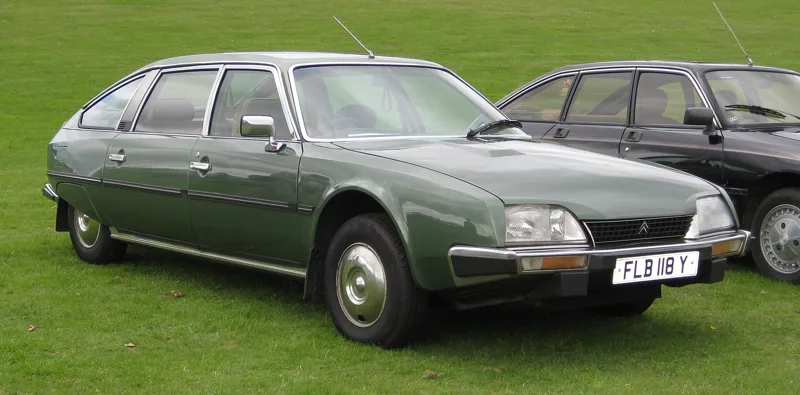
The CX's flowing lines and sharp Kammback rear were designed by Robert Opron. Its drag coefficient was 0.36, and the car's name referred to the French term for drag coefficient. A concave rear window cleared rain without a wiper.
The CX's controls were unusual. It had no steering column stalks, which let the driver reach all controls with both hands on the wheel, and its turn signals did not cancel themselves. The CX also used speed-sensitive DIRAVI steering, first introduced on the SM.
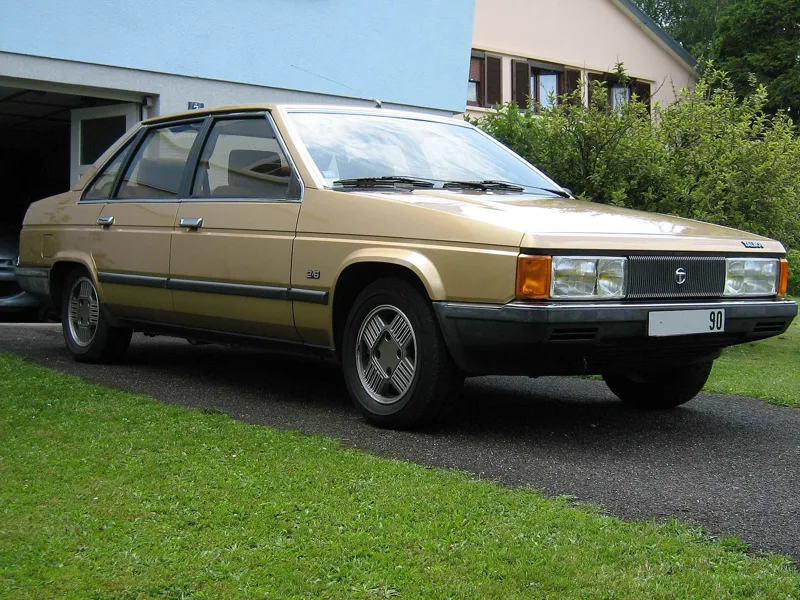
The Tagora's design started from a modern-styled saloon with a low beltline and large interior dimensions. The British team proposed features inspired by the Citroen SM, but Chrysler management in the United States thought them too extravagant, so the design became more conventional, with squared wheelarches and a raised beltline.
The Tagora also lost its vertical taillights in favour of horizontal ones, which the team considered more fashionable. The result was a conventional rear-wheel drive saloon with a longitudinal engine, rather than the CX's distinctive front-wheel drive layout.
What engines did the two cars use?
The CX's early engines were four-cylinder units. The Normale had a 1,985 cc engine with 102 PS (75 kW), and the CX 2200 had 112 PS (82 kW) from a twin-carburettor 2,175 cc unit. The 1979 Douvrin engine developed with Renault produced 106 PS (78 kW).
The GTi Turbo of 1985 to 1989 was the only CX whose engine matched its chassis, with 168 PS (124 kW) and a top speed above 220 km/h (137 mph). The 1984 Turbo-D 2.5 diesel was quoted at up to 195 km/h (121 mph).
The Tagora used a 2.2-litre Type 180 four with 115 hp (85 kW), which was a version of the older Simca engine with more capacity. A 2.3-litre XD2S turbodiesel with 80 hp (59 kW) was also offered, and it was used mainly in the Peugeot 505 and 604.
The Tagora's top engine was the 2.7-litre PRV V6 with 166 hp (122 kW). Its triple-barrel Weber carburettors gave it more power than the fuel-injected PRV in Peugeot's own cars, and it made the Tagora the most powerful French car of its time. Only 1,083 V6 Tagoras were made.
How did the reviewers judge them?
The CX was praised for its ride. The British Car magazine said the car seemed to float over bad surfaces, an image it compared to a vessel crossing above the seabed. The CX's suspension soaked up large undulations and kept its ride consistent whether empty or fully loaded.
The Tagora was not greeted with much acclaim. Autocar summed up its 2.2 GLS as excellent, if not a great advance, and Car magazine called it a problematic newcomer that did not exceed the winner of its group test, the Volvo 244 GLE.
Motor Sport was kinder, calling the Tagora usefully effortless, uncomplicated, simple to drive and very comfortable. The most common verdict across the published tests, however, was that the Tagora had no clear advantage over its competitors. Several testers pointed to comfortable seats and a generous boot as its strongest points.
Car noted that the Tagora's interior had comfortable seats, but it criticised the ventilation and the boot's unusual locking method. The magazine also said that the Volvo was as roomy despite its shorter wheelbase, and Setright said he would still choose a Peugeot 604 over the Tagora. Car also found the boot locked by a red handle inside the lid, an arrangement it called unusual.
How did the cars sell?
The CX was also a competitor in motorsport and rallying, and it competed and finished the 2022 and 2023 Dakar Rallies. The CX was a strong seller at first, with more than 132,000 built in 1978. It sold 1,170,645 cars from 1974 to 1991, though its reputation for high running costs cut sales over time. A slight revival followed the 1985 Series 2 changes, but it did not last.
The Tagora was priced beneath the 604 and in the 20,000 to 30,000 Deutsche Mark bracket in Germany. It sold far less. Chrysler had hoped for 60,000 a year, and the first fifteen months of production gave 16,169 cars, only a quarter of that projection. Volumes then fell by more than 80 percent in 1982, and PSA cancelled the car in 1983 with about 19,500 built.
By comparison, over 116,000 Peugeot 505s and 74,000 Citroen CXs were made in 1981 alone. The Tagora was a fraction of those figures, and by 2010 99.09 percent of the UK-registered cars were off the road. In the group's large-car volume, the 505 did the heavy lifting in those years, not the Tagora.
The Tagora also had a concept sibling. The Tagora Presidence, designed by Sunny Atri at the Talbot studio in Whitley, Coventry, was built to promote chauffeur-driven use by business executives and officials. Originally valued at 25,000 pounds, it now resides at a car museum in Poissy.
The Tagora's failure reflected a broader problem. PSA already had a crowded large-car lineup, including the CX, the 604 and the new 505, so the car had to be justified against models the group already sold.
Which buyer suits each car?
On the facts given, the CX suits a buyer who wants a French executive car with a distinctive ride, hydropneumatic suspension and a strong record of sales. The Tagora suits a buyer who wanted a comfortable, conventional saloon with a V6 option and was willing to accept a car with few clear advantages.
A buyer who valued character and a sense of French difference would look at the CX. Its aerodynamic shape, its unusual controls and its suspension gave it an identity that many executive buyers remembered.
A buyer who wanted an orthodox saloon with a V6 and a roomy boot would look at the Tagora. Its 572-litre boot and comfortable seats were its best points in the published reviews.
Neither car is shown to be better across the board. The CX has the far larger sales record and the more distinctive engineering, while the Tagora has the V6 and the conventional layout. The better choice depends on whether the buyer values a distinctive ride or a conventional saloon.
Specifications at a glance
| Feature | Citroen CX | Talbot Tagora |
|---|---|---|
| Production | 1974 to 1991 | 1980 to 1983 |
| Cars built | 1,170,645 | Fewer than 20,000 |
| Layout | Front-engined, front-wheel drive | Rear-wheel drive, longitudinal engine |
| Suspension | Hydropneumatic self-levelling | No figure given |
| Drag coefficient | 0.36 | No figure given |
| Launch engine | 1,985 cc four, 102 PS (75 kW) | 2.2-litre four, 115 hp (85 kW) |
| Top engine | GTi Turbo, 168 PS (124 kW) | 2.7-litre PRV V6, 166 hp (122 kW) |
| Diesel | Turbo-D 2.5, up to 195 km/h (121 mph) | 2.3-litre turbodiesel, 80 hp (59 kW) |
| Boot | No figure given | 572 litres |
| Awards | European Car of the Year, 1975 | No figure given |
| Output | 1,170,645 sold | 16,169 built in its first fifteen months |