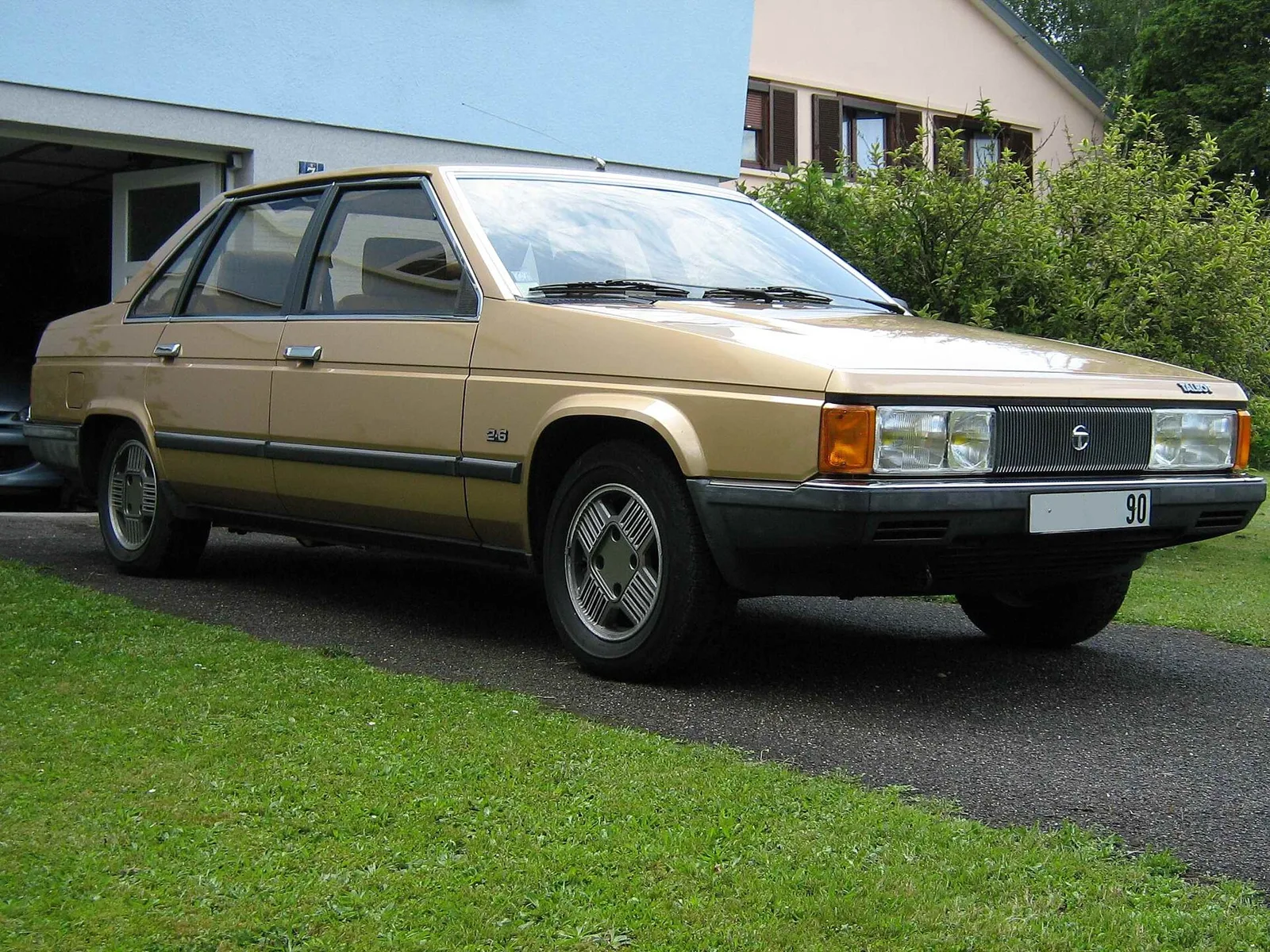
Developed at Chrysler Europe and finished by PSA, the Tagora was a roomy French-built saloon whose sales collapsed within two years of its 1981 launch.
The Talbot Tagora was a French-built executive saloon begun by Chrysler Europe and finished by PSA. Launched in 1981, it sold poorly, was cancelled in 1983 and left fewer than 20,000 examples.
The Talbot Tagora was an executive car that Chrysler Europe began and Peugeot's PSA group finished. It went on sale in France in April 1981 under the Talbot name, but poor sales forced PSA to cancel it two years later. Fewer than 20,000 were built, all at the former Simca factory in Poissy, near Paris.
What was the Talbot Tagora?
The Tagora was a rear-wheel-drive executive saloon, sold in the mid-1980s price band occupied by the Ford Granada and the Renault 20 and 30. It was marketed under the Talbot marque after PSA took over Chrysler's European operations on 1 January 1979. The first production car was presented in 1980, and it was launched commercially a year later.
Within a year of launch one commentator had called it a showroom flop. PSA cancelled the model in 1983, leaving the Tagora as the last large Talbot-badged car the French group would build.
A roomy French executive car that Chrysler started, PSA finished and buyers largely ignored.
Where did the Tagora's development begin?
Chrysler Europe started work on the Tagora in 1976 under the code name C9. The car was meant to replace the unsuccessful Chrysler 180 series. As with the Horizon and Alpine models, the technical work stayed in France while the styling was handled at Chrysler's design centre in the United Kingdom.
Simca 2000 was floated early on as a possible name, a title that would have tied the car to the French brand that had built much of Chrysler Europe's engineering. The name was dropped once Chrysler's European operations were sold.
How was the C9 styled?
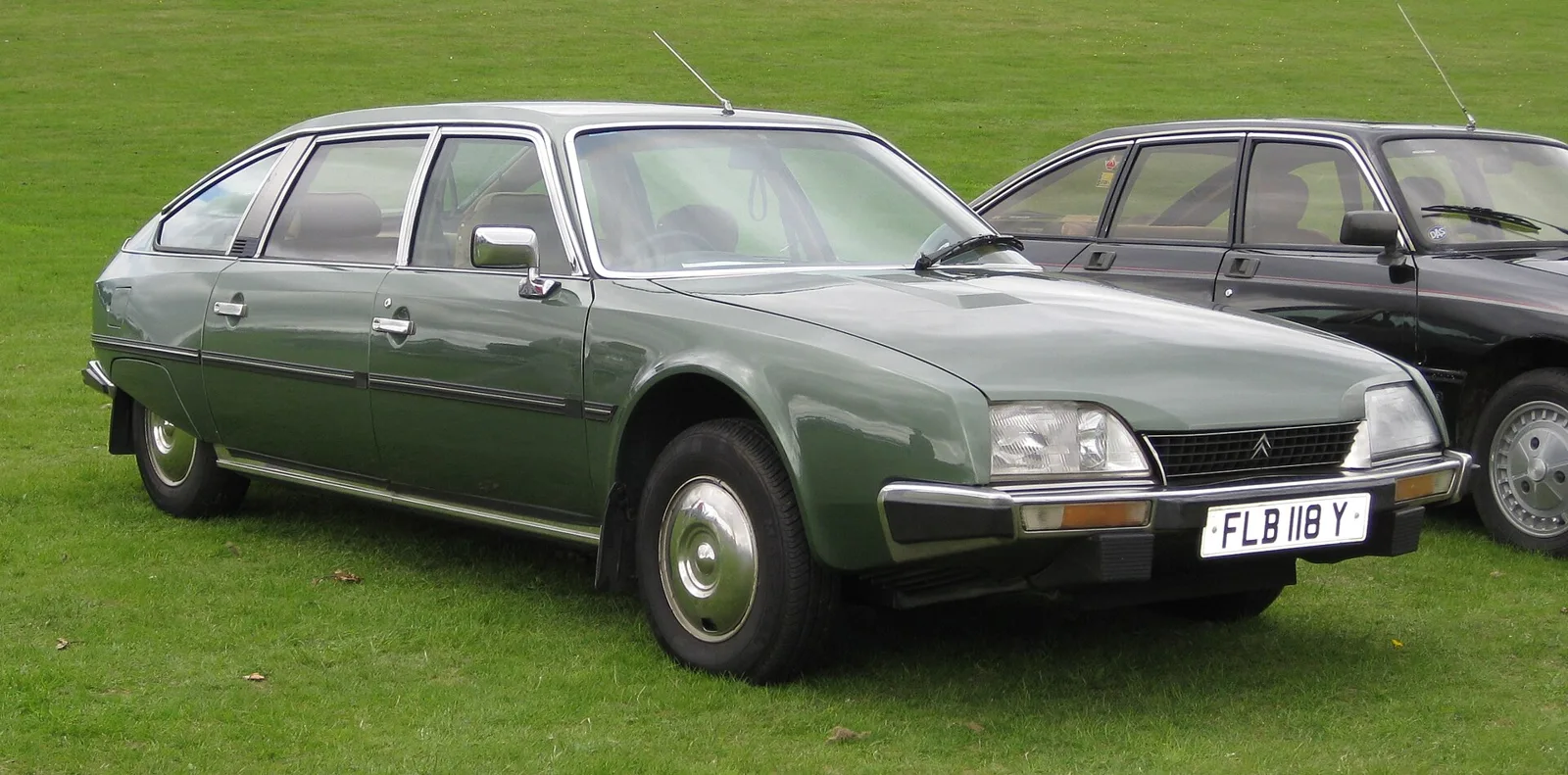
The original C9 prototype was a modern saloon with a low beltline and large interior dimensions, made possible by its long wheelbase. The British team first proposed features inspired by the Citroen SM. They included a glass panel between the headlights to hold the number plate, round front wheelarches and rear spats.
Chrysler management in the United States thought those ideas were too extravagant. The wheelarches were squared off, the spats were removed and the number plate moved to the front bumper, as on most cars. The beltline was raised to balance the tall silhouette, and the vertical taillights gave way to horizontal ones, which were judged more fashionable.
Why did the Tagora need a new engine?
The main rivals in the executive market offered engines bigger than the largest 2.0-litre four that Chrysler Europe used, and a six-cylinder was widely expected. A straight-six from Mitsubishi was considered unsuitable for a car of this class, leaving the Douvrin V6 as the obvious candidate.
The Douvrin, also called the PRV, was a joint development of PSA, Renault and Volvo. Because PSA used the PRV in its own models and the Tagora would compete with them directly, it seemed unlikely that Chrysler would be able to obtain the engine. The takeover resolved that problem.
What sales did Chrysler expect for the C9?
Chrysler Corporation approved the car on the assumption that Chrysler Europe would sell 60,000 C9s a year. That figure represented a projected five percent share of the executive market, which looked achievable because Chrysler held about seven percent of the European market overall. The projected volumes would have covered the tooling costs, with development costs handled through a separate annual budget.
Those projections were overtaken by events. The 1979 energy crisis shrank the large-car segment across Europe, and the Tagora's sales fell far short of the plan from the first year.
How did PSA take over the project?
Chrysler's management, facing bankruptcy, decided to divest its debt-ridden European operations while the C9 was still in development. The buyer was the French PSA Group, formed in 1976 when Peugeot took over Citroen. The deal was finalised in 1978, and the buyer paid one US dollar for the whole of Chrysler Europe and its obligations. The takeover took effect on 1 January 1979.
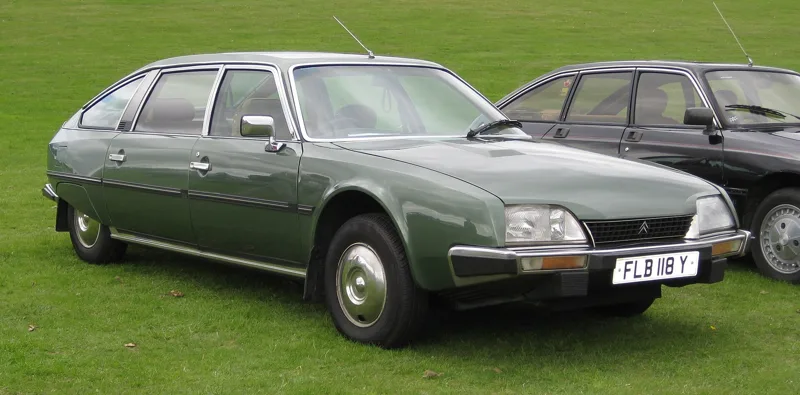
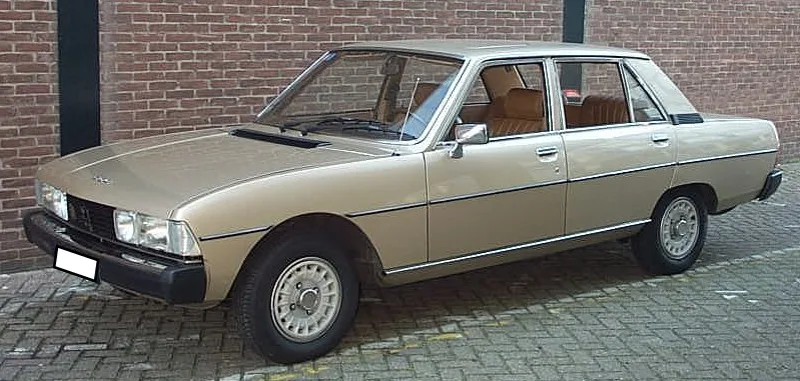
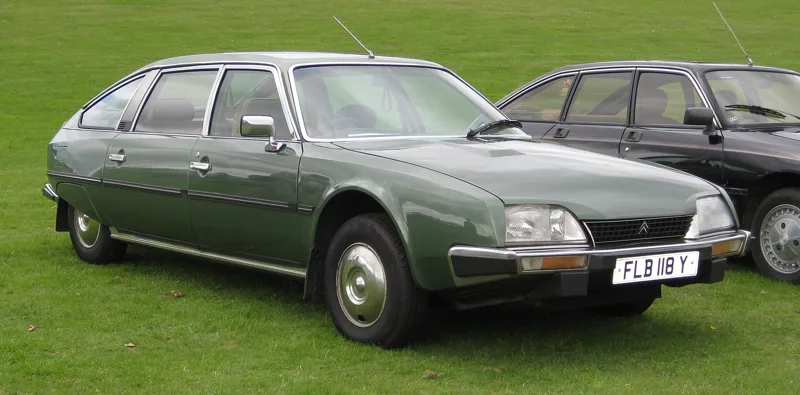
PSA already had a crowded large-car range, including the Citroen CX, the slow-selling Peugeot 604 and the new Peugeot 505. With so much money committed to the C9, PSA chose to finish it, but with changes that let it share parts with PSA models. The Simca double-wishbone front suspension gave way to MacPherson struts from the 505 and 604, and the rear axle came from the narrower 505.
The narrower axle was designed around the 505's body width, which left the Tagora's rear wheels badly inset within their arches. The front end was extended to accommodate the PRV, and with the model now under PSA control, using the V6 caused no difficulty.
How did the Tagora go on sale?
When Chrysler Europe's models were renamed under the Talbot marque, the C9 became the Talbot Tagora. The first cars left the former Simca plant at Poissy in 1980, and PSA showed the car at the Paris motor show that year. A hands-on press demonstration in Morocco in March 1981 preceded sales in France in April and in the UK in May.
British advertising claimed luxury and performance had been redefined. Pricing was set to overlap the Peugeot 505 and the lower end of the Citroen CX range, while sitting beneath the Peugeot 604. Its price was comparable to the Renault 20 and 30 and the Ford Granada. In Germany it sat in the 20,000 to 30,000 Deutsche Mark bracket.
Why did the Tagora's sales fail?
In its first fifteen months, from 1980 into 1981, a total of 16,169 Tagoras were produced. That was only a quarter of Chrysler's original projection, and even that level proved too high for the market. Volumes fell by more than 80 percent in 1982, and in 1983 PSA cancelled the model.
By the time production ended, roughly 19,500 cars had been built. For comparison, more than 116,000 Peugeot 505s and 74,000 Citroen CXs were made in 1981 alone. The Tagora's market share never came close to the figures that Chrysler had planned around.
How many Tagoras survive?
Practical Classics reported in December 2010 that 99.09 percent of UK-registered Tagoras were no longer on the road. The last British car still registered was declared off the road under a SORN notice from 2016, and it was returned to the road as of September 2022.
Survival rates were poor because rust attacked the cars, particularly around the rear suspension mountings. Martin Buckley suggested that the car might attain collectible status by 2003.
What engines did the Tagora use?
The Tagora was rear-wheel drive, with a longitudinally mounted engine. There were three engine choices, with four- and five-speed manual gearboxes and an optional three-speed automatic on the four-cylinder cars.
The base engine was a 2.2-litre Type 180 overhead-camshaft four, fed by a double-barrel Solex carburettor. It made 115 PS (85 kW) and 184 N-m (136 lbf-ft). It was a larger version of the older Simca Type 180 2.0-litre, also used in the Matra Murena, and it was unrelated to the American Chrysler K or the PSA Douvrin units.
The GL and GLS were the two trims for the four-cylinder. Only the GL offered the four-speed manual, and power steering was an option rather than standard. The GL was the first to be dropped, for the 1983 model year.
The 2.3-litre XD2S overhead-valve turbodiesel four delivered 59 kW (80 PS), with 139 lbf-ft (188 N-m) of torque. Peugeot developed it for the 505 and 604, and the diesel car was designated DT.
The 2.7-litre PRV overhead-camshaft V6 used two triple-barrel Weber carburettors and developed 122 kW (166 PS) and 173 lbf-ft (234 N-m). It was badged 2.6 and sat at the top of the range in SX trim, with no automatic option. Unlike the Peugeot version, which used fuel injection, the Tagora's V6 had carburettors, and that gave it more power. Only 1,083 V6 cars were made, and it became the most powerful French car of its time.
What was the Tagora Presidence?
Stylist Sunny Atri produced the Tagora Presidence concept at Talbot's Whitley studio in Coventry. It aimed to create demand for high-end Tagoras as chauffeur-driven limousines for business executives and government officials. The donor car was the 2.6 SX, and its interior had Connolly leather upholstery and brass highlights.
The Presidence also carried a telephone, a dictaphone, a text-message receiver and a television with a video recorder. It was originally valued at 25,000 pounds, and it now resides in a car museum in Poissy.
How did the press judge the Tagora?
The British motoring press was not impressed. Autocar tested the 2.2 GLS and called it excellent but not a major step forward. L. J. K. Setright of Car wondered who would buy one in such a crowded field. In a group test in Car the Tagora was called a problematic newcomer, and it did not beat the winner, the Volvo 244 GLE.
Motor Sport was kinder, describing the car as usefully effortless, simple to drive and very comfortable. The recurring criticism was that the Tagora had no clear advantage. Autocar's verdict was that it was comparable to its rivals but had no startling strengths. Rivals in that comparison were the Ford Granada 2.3 GL, the Opel Rekord 2.0S, the Renault 20TX, the Rover 2300 and the Volvo 244 GL.
Within that group the Tagora was the second most expensive car, but it did not lead in speed, acceleration, interior room or chassis design. It had the second highest top speed and was the third fastest to 60 mph. It also returned the best overall fuel economy, by 0.7 mpg, and had the fourth best legroom front and rear.
Autocar judged the handling on the good side and the performance good but not outstanding. Setright thought the ride as refined as could be expected and the roadholding better than expected. Car's December 1981 test found the 2.2 GLS prone to untidy handling, with understeer followed by oversteer, and it praised the older live-axled Volvo 244 for grip and balance.
What were the Tagora's interior and practical flaws?
The seats drew praise for comfort and detailing. Car noted that the Volvo was as roomy, despite its shorter wheelbase, and it said the steering wheel sat too close to the driver's legs. The ventilation control was unsatisfactory, with an unprogressive response at the cool end, and the car had no fan-blown cold air.
Car also complained that the ventilation fell down badly because of awkward controls, that storage was disappointing, and that opening the bonnet without a self-setting stay was heavy work. The boot had a large 572 litres of capacity, but it was locked by pushing in a red handle inside the lid before it was closed.
The Tagora's strengths were a spacious cabin, comfortable seats, fuel economy in 2.2 GLS form and a big luggage compartment. But the Volvo 244 GLE, launched in 1974, offered better seats, disc brakes at all four corners, better headlights, better ventilation and sharper handling for only a little more money.
How was the Tagora seen in later years?
Nearly a decade after production ended, the press saw the Tagora as average but not badly flawed. It had refinement, good manners and, in V6 form, good performance. Rust remained the chief problem for surviving cars, and it usually started around the rear suspension mountings.
Why did the Tagora fail commercially?
The Tagora was not a poor engineering project. Apart from the cabin ventilation, it had no major flaws. The 1979 energy crisis, however, dealt a blow to the European car market, and the large-car segment shrank sharply, which made Chrysler's projections unrealistic.
The car was launched under the Talbot brand, which was not established in the market and had a confused heritage. That left it at an immediate disadvantage against entrenched rivals such as the Ford Granada. Martin Buckley argued that Talbot did not advertise the car effectively, so people did not know it existed.
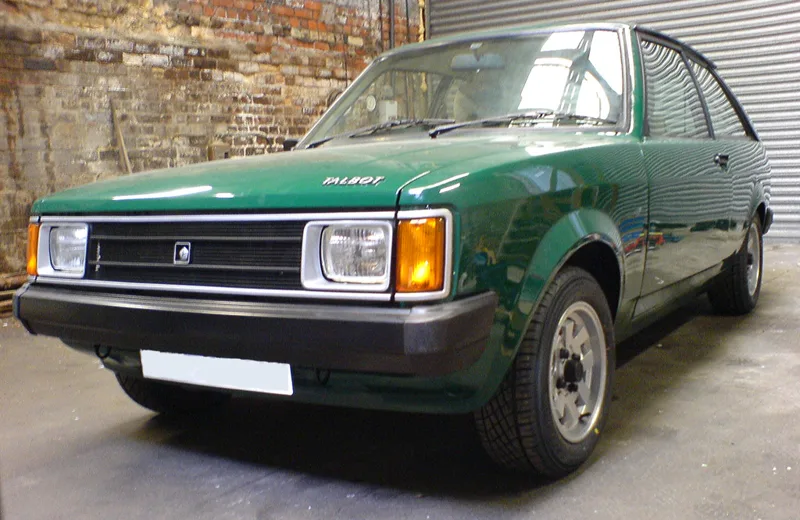
Design was another problem. What Car? found the Tagora so bland in style that it was disqualified in a market where character and status counted for so much. The windscreen rose at a steep angle above a short, wedge-shaped bonnet, and the car was wider and taller than most rivals. The narrow axle tracks looked awkward, especially at the rear, and the plain plastic dashboard did little to excite buyers.
What are the Talbot Tagora specifications?
| Specification | Detail |
|---|---|
| Launch | France, April 1981; UK, May 1981 |
| Cancelled | 1983 |
| Built | About 19,500, all at Poissy |
| Base engine | 2.2 L Type 180 OHC four, 115 PS (85 kW), 184 N-m (136 lbf-ft) |
| Diesel engine | 2.3 L XD2S turbodiesel four, 80 PS (59 kW), 188 N-m (139 lbf-ft) |
| V6 engine | 2.7 L PRV, 166 PS (122 kW), 234 N-m (173 lbf-ft), badged 2.6 |
| V6 production | 1,083 cars |
| Boot | 572 litres |
| First fifteen months | 16,169 produced |
| Gearboxes | Four- or five-speed manual; three-speed automatic on four-cylinder cars |