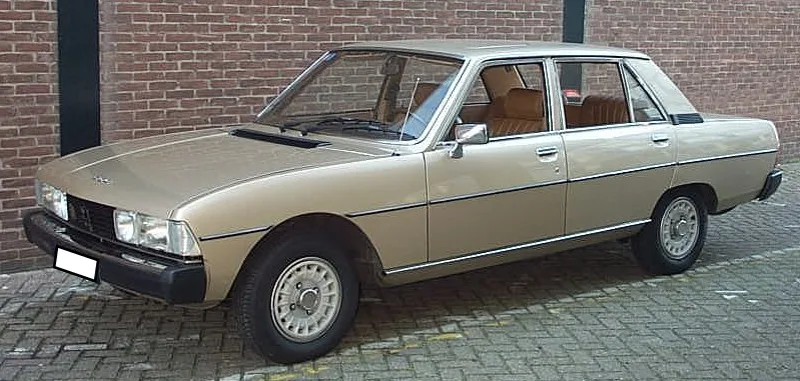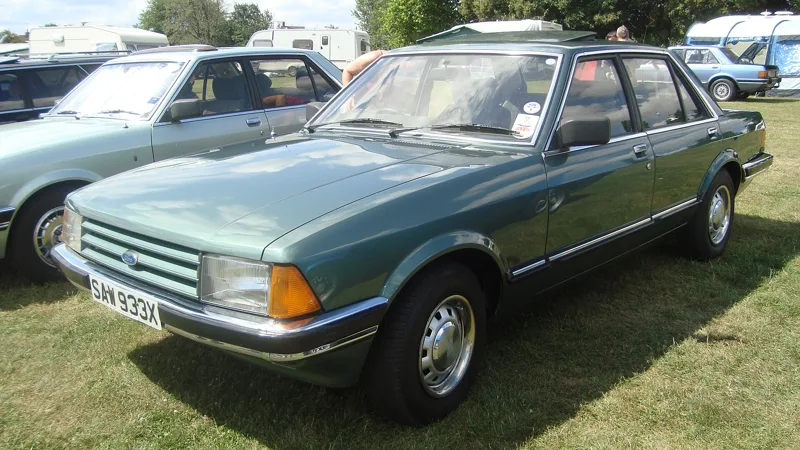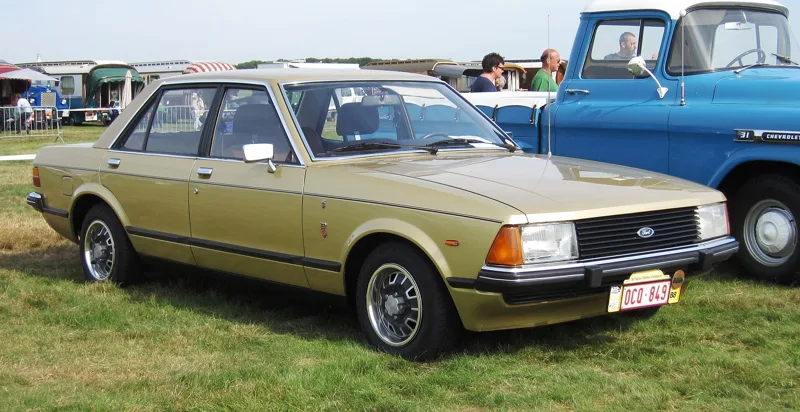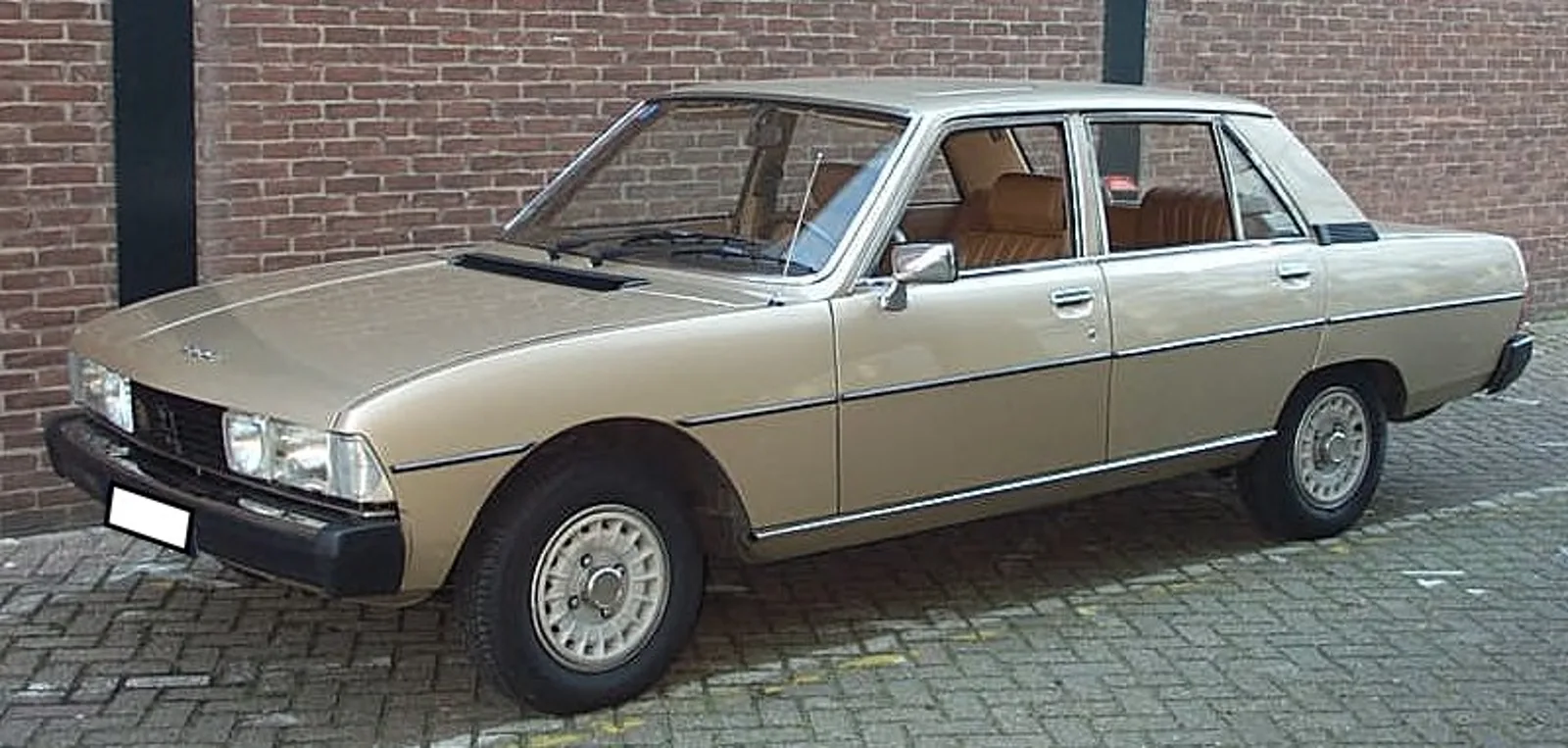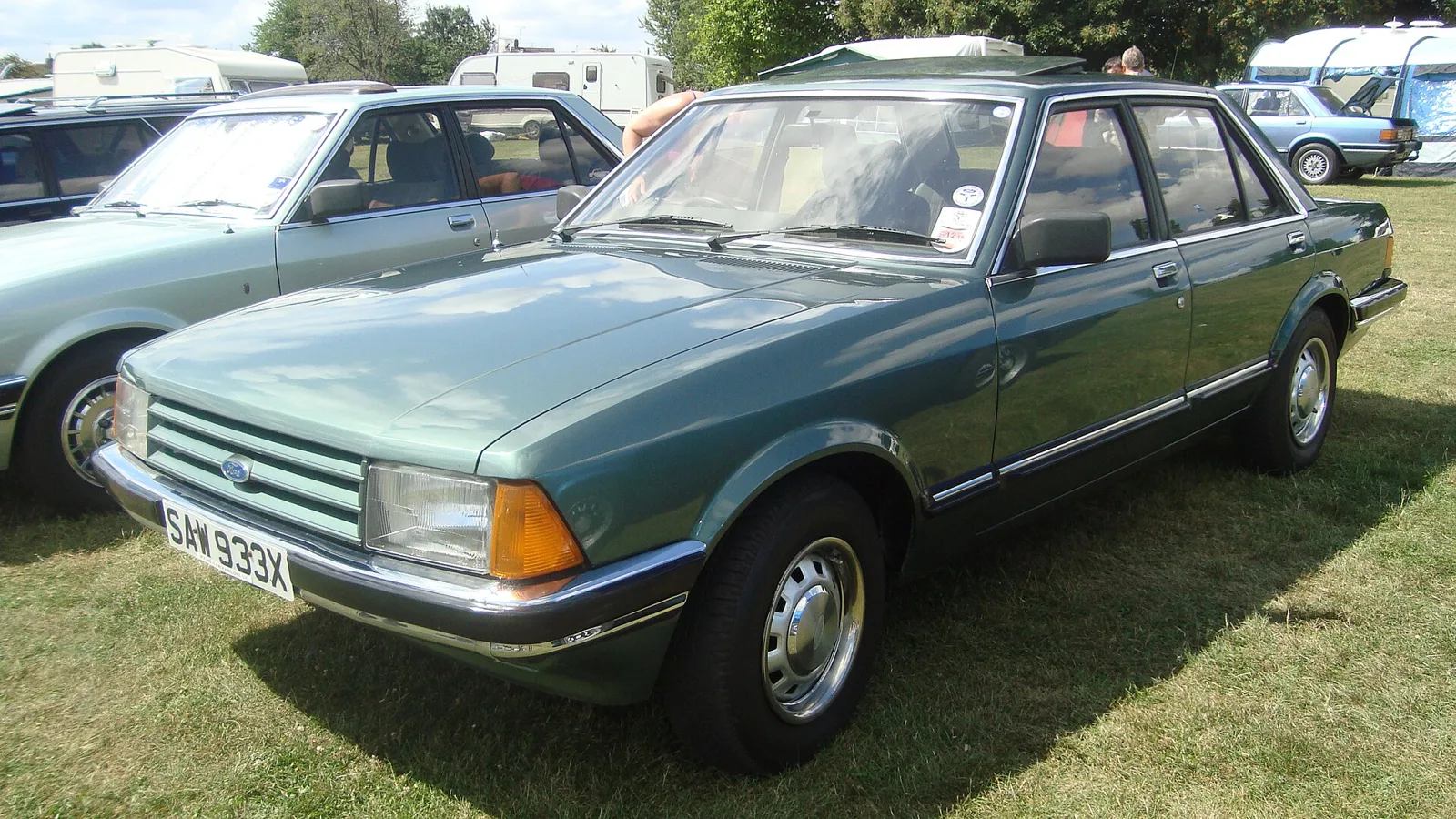
The Granada and the 604 were both executive cars sold in Europe in the 1970s and early 1980s, but they took very different routes, from Ford's shared engines to Peugeot's V6 and turbodiesel.
The Ford Granada was a European executive car from 1972 that stayed on sale until 1985 as a Mark II, and it led its British executive sector in sales for its whole production run. The Peugeot 604 was a Pininfarina-styled executive car sold from 1975 to 1985, with a V6 and later a turbodiesel. The two rivals shared the same market, and the facts given show how the 604's price and boot compared with the Granada's.
The Ford Granada and the Peugeot 604 were both European executive cars of the 1970s and early 1980s, sold in the same big-car segment that German makers dominated. The Granada was a Ford from 1972, built on Ford Europe's engines and chassis. The 604 was Peugeot's first large luxury saloon in around forty years, a Pininfarina-styled car sold from 1975 to 1985.
Where did the Granada and the 604 come from?
The Granada was launched in March 1972 and succeeded the British Ford Zephyr and the German P7 series as Ford's executive car in Europe. It completed the integration of Ford's British and German model ranges. The first generation was built at Cologne and Dagenham until 1976, after which production moved entirely to Germany.
The Mark II, known inside Ford as Granada 78, went on sale in August 1977 as a 1978 model, and it ran until April 1985. It was essentially a reskin of the 1972 car, with new panelwork that matched Ford's new design language. The UK and Irish Granada name continued to 1994 for a third generation, which was sold elsewhere as the Scorpio.
The 604 was unveiled at the Geneva Motor Show in March 1975, and sales began that September. Its engineering built on the Peugeot 504, with the 504's bulkhead, doors and part of its floorpan carried over. Most cars used a 144 PS (106 kW) 2.7-litre V6 developed with Renault and Volvo.
The Granada generally followed the mechanical layout of the Zephyr and Zodiac, with a coil-spring independent rear end. Its front MacPherson struts were replaced by double wishbones, first seen on the smaller TC Cortina and Taunus.
Like the Ford 17M, 20M and 26M, the Granada kept drum brakes at the rear, where the Zephyr and Zodiac had discs.
The Granada was popular for taxi, fleet and police use, and British firms converted it into limousine and hearse versions. Only twelve examples of the unusual four-door coupe limousine were built.
A two-door saloon joined the range in May 1973, which cut the entry-level German price by 415 Marks, but it was never produced or officially sold in the UK.
A Ford that was the British executive sales leader for years, and a Peugeot that was a sales failure with a good ride and a boot nobody could agree on.
Which engines did the two cars use?
The British Mark I Granada used the Essex V4 in 2.0-litre form and the Essex V6 in 2.5 and 3.0-litre capacities. German models used a Taunus V4 in 1.7 L, the Essex V6, or, more commonly, the Cologne V6 in 2.0, 2.3 and 2.6-litre sizes. The V4 was short-lived and was replaced in 1974 by the in-line Pinto four.
The Mark II used the Cologne V6 in 2.0, 2.3 and 2.8 L forms, and the fuel-injected 2.8 was rated at one hundred and sixty bhp when new. In 1981 the 2.8 Injection was rated at 150 bhp (112 kW) and came with white alloy wheels, Michelin TRX tyres and Recaro seats.
The 604's V6 was the main engine, but Peugeot also built a turbodiesel. Launched in 1979, it used a 2.3-litre Indenor diesel with a turbo that produced 80 PS. Later the diesel was enlarged to 2.5 litres with 90 PS, and then given electronic injection and 95 PS.
The Mark II was designed to match Ford's new design language, with stylist Uwe Bahnsen and the US design team admiring the Fiat 130 Coupe at the 1971 Geneva show. The Ford design studios at Cologne bought one and asked for a car that looked as good.
A September 1981 facelift brought larger wraparound bumpers, a three-bar grille, a revised dashboard and restyled taillights, with variable-rate rear springs as standard across the range.
What did the Granada's diesel and special versions offer?
Ford bought the 1.9 and 2.1-litre Indenor diesels from Peugeot for the Mark II, after the commercial diesel production lines were full. The 2.1 was presented as the Granada GLD at Geneva in March 1979, and by 1982 it had been replaced by a 2.5, which mostly went to taxi operators.
The Granada 2.8i S was the car used in the TV series The Sweeney, and a limited Sapphire model was announced with two-tone blue over silver paintwork. Ford of Britain also offered a Ghia X Executive with Connolly leather, which standardised luxury features that had been optional.
The Granada's Spanish story was complicated. Ford could sell only the Fiesta in Spain during the 1970s, and in 1979 it won permission to sell the Granada and Taunus, but rivals accused it of selling below cost. Import authorisation was briefly suspended and then reinstated with a 15 per cent price rise.
How did the cars price and sell?
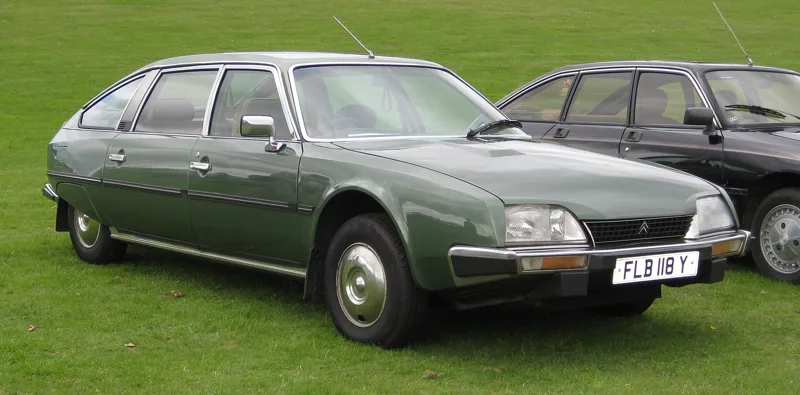
The 604 was priced at US$10,990 at launch. In the UK it cost GBP 4,785, compared with GBP 4,399 for a BMW 520, GBP 4,361 for a Citroen CX Pallas and GBP 3,485 for a Ford Granada 3000 GL. The 604 was therefore dearer than the Granada in the UK.
The Granada was a strong seller in the UK. It peaked in 1979 in seventh place among UK cars, with more than 50,000 sales, and it reached the top ten in 1978 and 1982. It held the British executive sector sales lead throughout its production.
The 604 was a commercial failure despite strong reviews. Over 36,000 were built in its first full year, 1976, and the launch of the cheaper Peugeot 505 in 1979 halved sales of the V6 604. By 1981 about 7,000 examples were produced, and 153,252 were built in total.
The 604 had unusually wide opening doors that made entry and exit very easy, which suited its role as a limousine. Peugeot's 604 marked its first entry into the executive market since the 1930s, driven by the growing affluence of the French market.
A quick summary of the 604's range shows it sold well at first. The turbodiesel and the petrol V6 were both offered, and the V6 was the more popular of the two.
What did the critics say about each car?
The 604 won praise for its formal Pininfarina styling, which Bilrevyen described as having calm elegance. Its ride was damped and supple, inherited from the 504, and its steering was described as among the finest of its time.
Contemporary journalists faulted the 604's conservative styling, its lack of technical innovation, its modest performance and a reputation for rust. Its launch also came in the recession that followed the 1973 energy crisis, which made large-engined cars unpopular in France.
The Granada's critical reception is less documented in this comparison. Its strengths lie in its sales and its wide range of bodies and specialised versions, from taxi to limousine to police use.
How big was the boot of each car?
The 604's boot capacity was a long-running argument. Peugeot claimed 498 litres, while figures across reviews ranged from 356 to 501 litres. Motor described the boot as only average in 1976, while Autocar measured 699 litres in 1975 and called it really capacious.
Autocar's 1977 long-term test of the SL found the boot one of the largest its author could remember, and What Car? called it simply vast in February 1980. The turbodiesel's long-term test in 1981 described it as huge, with four feet of usable width.
The Granada's boot is not compared with the 604's in this record, so no direct figure is given for the Ford.
The 604 TI added Bosch K-Jetronic fuel injection and a five-speed manual in September 1977. In 1981 the 604 STi arrived with Michelin TRX tyres, and total body immersion anti-corrosion treatment was introduced across the range.
Peugeot said the 604's boot held 498 litres, but reviews quoted 385, 402, 413 and 462 litres as well.
What were the turbodiesel and limousine versions?
The 604 is noted as the first production turbodiesel car sold in Europe, which put it ahead of the Mercedes-Benz 300 SD in that market. Its engine was slanted at 20 degrees to fit under the low bonnet, and early cars were hard to start in cold weather.
Autocar's Edward Eves tested the 604 turbodiesel in 1981 and recorded about 32.5 miles per gallon. He found it an effortless long-distance car, and he said that starting it was remarkably like firing up a petrol engine once the glow plugs had been tuned.
The French company Heuliez built 124 long-wheelbase limousines of the 604 between 1978 and 1984, with two extra movable seats. The Granada also had its own limousine and hearse versions built by British firms, which show how both cars were used in the executive and chauffeur market.
What happened to each car at the end?
The Granada Mark II ended in April 1985, and the 1985 to 1994 Granada was sold in the UK and Ireland only, with the Scorpio elsewhere. The Granada's replacement in the Ford line was therefore a shift in name rather than a clean end.
The 604 ended in November 1985, when a mere 581 examples were produced in that final year. The 505 V6 served as an interim flagship until the front-wheel-drive Peugeot 605 arrived in 1989.
Today the 604 is rare. Only 17 were road-legal in the UK in 2014, while the Granada remains a familiar name in British car history.
Side-by-side comparison
| Point | Ford Granada | Peugeot 604 |
|---|---|---|
| Years | 1972 to 1985, Mark I and II; to 1994 in the UK | 1975 to 1985 |
| Engines | Essex and Cologne V6s; Pinto four; Indenor diesels | PRV 2.7-litre V6 at 144 PS (106 kW); turbodiesel at 80 PS |
| Body styles | Saloon, estate and coupe in Mark I; saloon and estate in Mark II | Saloon and limousine |
| UK price | GBP 3,485 for the 3000 GL | GBP 4,785 at launch |
| Sales | More than 50,000 UK sales in 1979 | 153,252 built in total |
| Boot | Not given | Claims from 356 to 501 litres |
| Turbodiesel | Not given | First production turbodiesel car sold in Europe |
| Final year | 1985 in Europe, 1994 in the UK | 1985 |