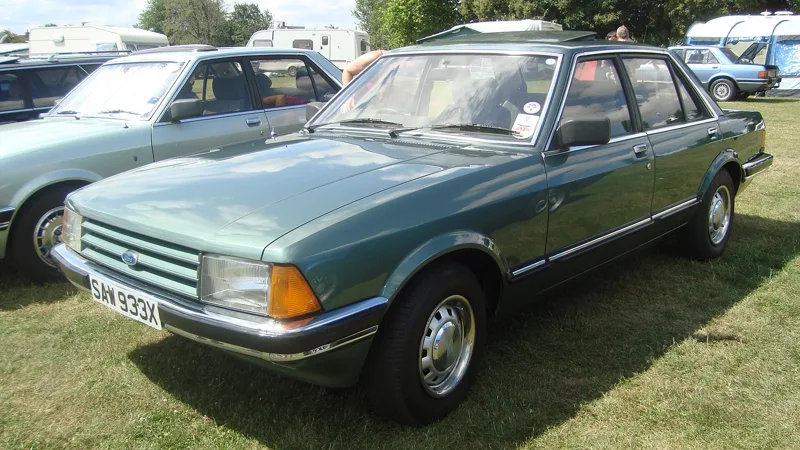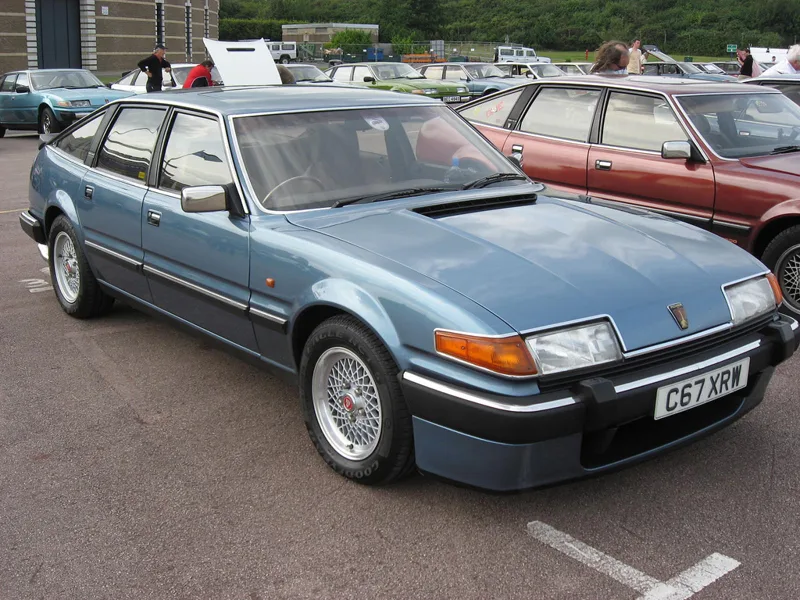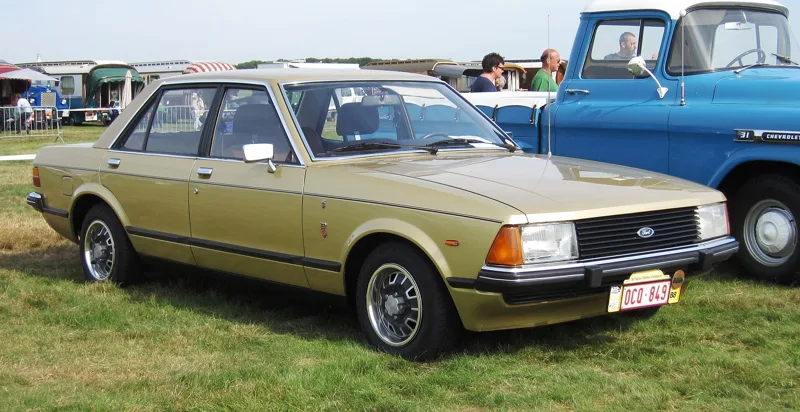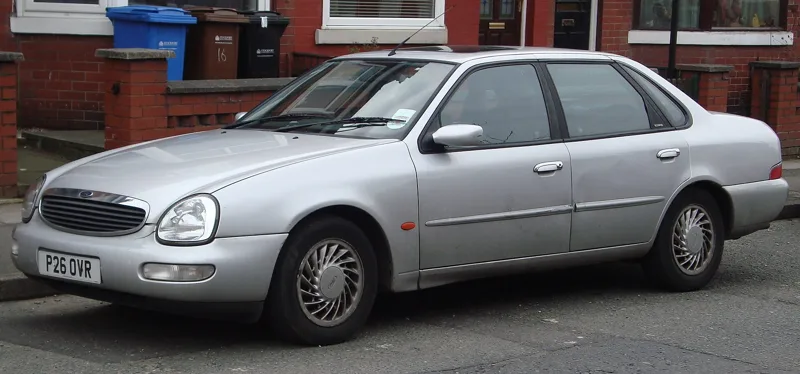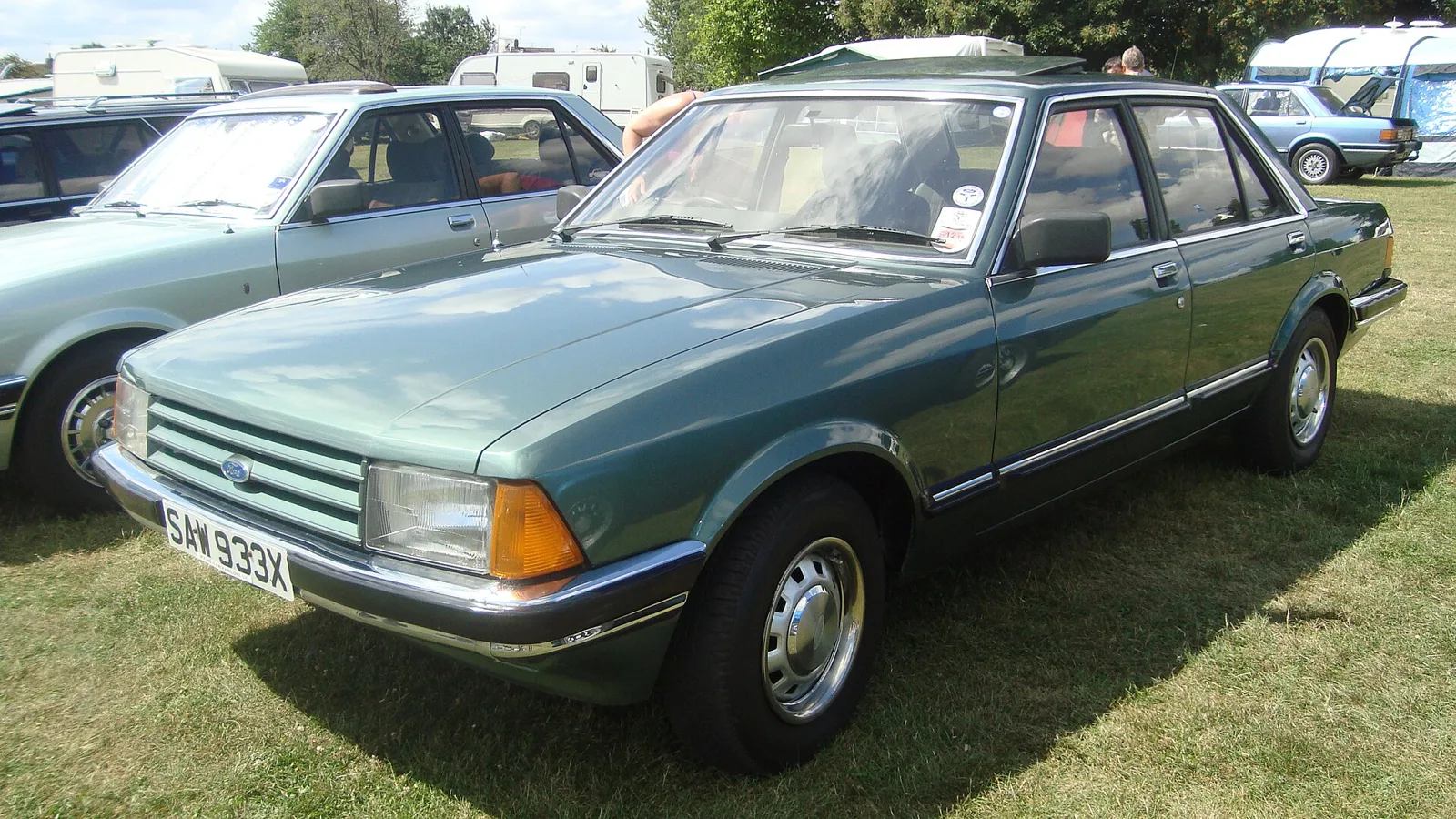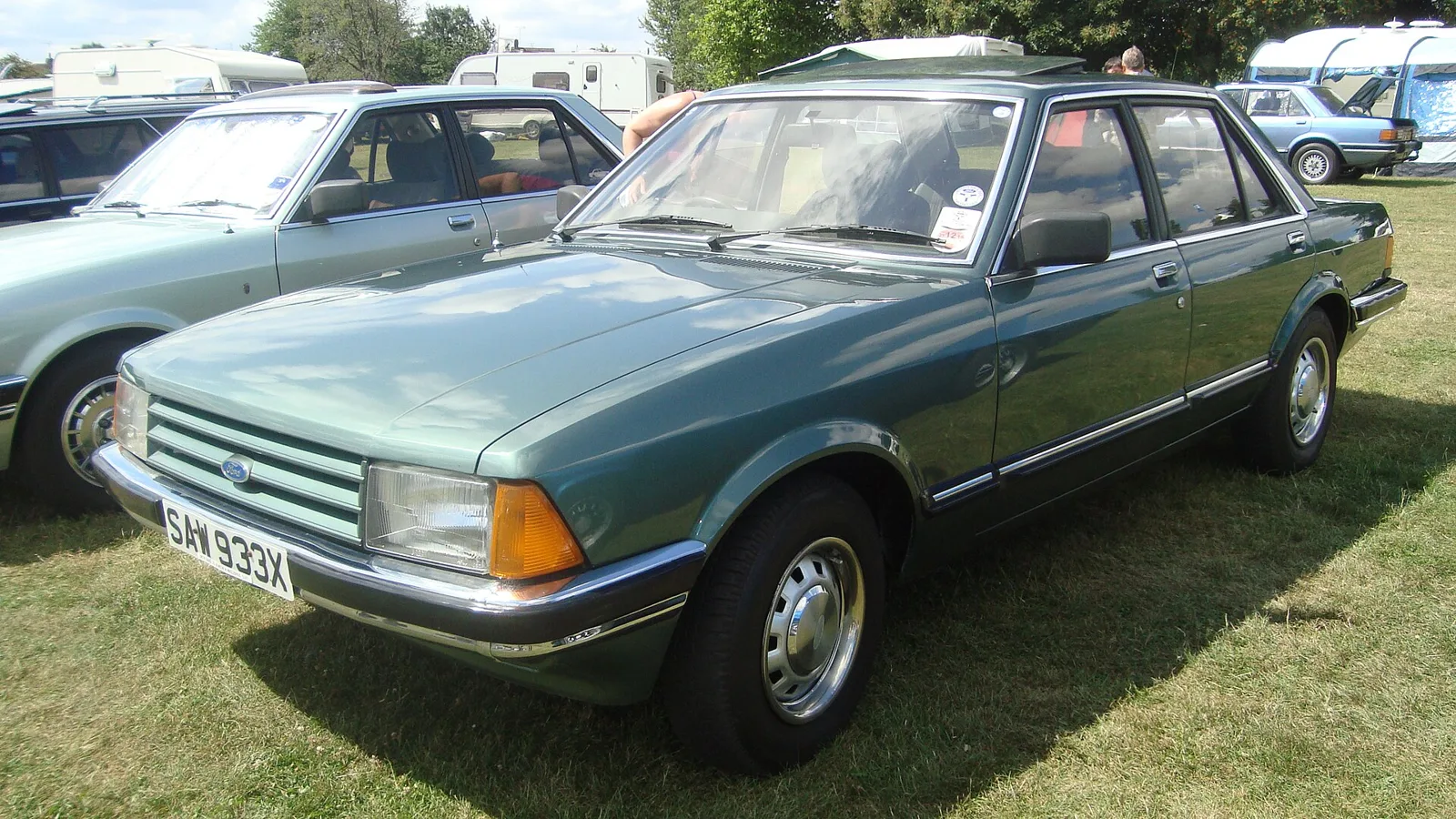
The Granada sold steadily in Britain for years, while the SD1 won the 1977 European Car of the Year title and then struggled in America.
The Ford Granada Europe was built from 1972 to 1994 and was Britain's best-selling car in its sector for its whole run. The Rover SD1 was built from 1976 to 1986, won the 1977 European Car of the Year title and struggled to sell in the United States. The two were direct rivals in Britain.
The Ford Granada Europe and the Rover SD1 were executive cars from rival makers that competed for buyers in Britain through the seventies and early eighties. The Granada came out of Ford's Cologne and Dagenham plants, while the SD1 came from British Leyland's Specialist Division. One became a long-running seller, and the other won a European award before struggling in America.
Where did the Granada and SD1 come from?
The Granada arrived in March 1972 as Ford's European executive offering, replacing the British Zephyr and the German P7-series. The SD1 was developed from 1971 to take over from the Rover P6 and the Triumph 2000, and it went on sale in June 1976.
The first Granada was built at Cologne and Dagenham until 1976, when production moved entirely to Germany. A second generation, the Mark II, appeared in August 1977 and was built until April 1985. The third generation carried the Granada name only in the United Kingdom and Ireland.
The SD1's name came from British Leyland's Specialist Division, and the number marked it as the first product of the in-house design team. The project began as RT1, short for Rover Triumph number one, before it was renamed SD1.
A Ford that stayed Britain's best-selling sector car for its whole run, against a British rival that won Europe's top award and then stalled in America.
Why were the Granada and SD1 rivals?
In Britain the Granada was the executive benchmark. Its lead in that sector never slipped during the run, even with the Leyland Princess, the Rover SD1 and the Vauxhall Carlton in pursuit.
The Granada soon proved popular with taxi, fleet and police users. British firms Coleman Milne and Woodall Nicholson converted it into limousines and hearses.
In 1979 the car peaked as Britain's seventh best-selling model, with more than 50,000 sales. It also appeared in the top 10 for sales in 1978 and again in 1982.
British Leyland fought the Granada from below as well. The smaller Princess came with 1.8, 2.0 and 2.2 litre engines, aimed at the entry-level Granada, while the SD1 aimed higher in the same market.
How did the Granada and SD1 styling compare?
The Mark II Granada was largely a reskin of the 1972 car, with straight-lined panels that brought it in step with Ford's newer design language. The SD1, by contrast, was a clean break from Rover's past, with a five-door hatchback body and a fastback profile.
Inside Ford the car was called Granada 78, and it borrowed styling cues from the Cortina and Taunus Mk IV and the Fiesta. Its inspiration came from a Fiat 130 Coupe that Ford's design team admired at the 1971 Geneva show, and the Cologne studio bought one to study.
A facelift arrived in September 1981 for the Mark II. Bigger wrap-around bumpers and a body-coloured grille with three bars were joined by a revised dashboard, restyled taillights and redesigned seats. The two-door saloon was dropped at the same time.
The SD1 was designed by David Bache, who drew on exotic machinery such as the Ferrari Daytona. An earlier Pininfarina study for the BMC 1800 also guided the design, and the same study helped shape the Citroen CX.
Inside, the car used little wood trim, relying instead on soft-feel plastics. Its dashboard air vent faced the passenger directly, and the display binnacle sat on top of the dash, so one moulding served both left- and right-hand drive cars.
What engines did each car use?
The Granada's engines ran from a 1.7-litre Taunus V4 and a 2.0-litre Essex V4 to Cologne V6s, with a Peugeot-sourced diesel added later. The SD1 relied on the Rover V8 and on a six-cylinder unit developed from Triumph's design.
The first-series British Granada used the Essex V4 in 2.0 litres and the Essex V6 in 2.5 and 3.0 litres. German cars used the Taunus V4 in 1.7 litres or the Cologne V6 in 2.0, 2.3 or 2.6 litres, and the Pinto in-line engine replaced the V4 in 1974.
The two-door fastback coupe was revised in 1974 with straighter lines. In the UK the revised coupe came only in 3.0 Ghia trim, while elsewhere in Europe it was offered in other trims with every engine.
Fuel-injected Cologne V6s in the 1976 and 1977 German models were rated at 150 PS (110 kW). The Mark II 2.8-litre injected cars were originally rated at 160 bhp, and in most of Europe the 2.8 Injection was later rated at 150 bhp (112 kW).
Indenor diesels in 1.9, 2.1 and 2.5 litres were offered in relatively small numbers. Ford bought Peugeot's XD engines for the smaller two, and the 2.1-litre car was presented as the Granada GLD at Geneva in March 1979.
The SD1's Rover V8 was a 3532 cc unit, fitted in the Rover 3500, and the car's range included the V8-S introduced in 1979. The 1982 Vitesse was launched with 192 hp (143 kW) after modifications such as a hotter camshaft.
The V8-S was replaced in late 1980 by the Vanden Plas model, which had leather as standard. Launched in June 1976 as the Rover 3500, the SD1 gained SOHC 2.3 and 2.6-litre sixes in November 1977, the same month the P6 and Triumph 2000 were discontinued.
What did the Granada do in South Africa?
The Granada reached South Africa in late 1972 in 3000 GXL automatic trim, with other models following. It replaced both the Australian-made Falcon, sold locally as the Fairmont, and the German 20M.
Most South African Granadas had the 3.0-litre six, and the 2.5-litre V6 was discontinued in 1975 as sales of the six-cylinder Cortina grew. The most dramatic version was the Granada Perana V8, built by Basil Green Motors.
The Perana used the 302 cu in (4.9 L) Windsor V8, which developed 255 PS (188 kW; 252 hp). It was sold through Ford dealers, and it gave the Granada name a performance flagship that the British range never had.
How did the press treat the two cars?
The SD1 was warmly received and took Europe's top prize for 1977, although its build quality drew complaints. Early cars also suffered flaking paint, which forced British Leyland into costly repainting.
Geneva showed the car in March 1977, some three months after the award, but dealers had no left-hand drive cars to sell. A tool makers' strike and a bodyshell dispute at Castle Bromwich had blocked production.
Motor's January 1977 road test of an automatic 3500 praised the car's excellence but found poor door seals and steering vibration at speed. Racing driver Raymond Mays later said that after 12,000 miles his Rover 3500 was the best car he had ever owned.
The Granada earned its reputation through steady sales rather than awards. The Ghia X Executive, sold by Ford of Britain, standardised Connolly leather and an electric sunroof, which set it above most cost-comparable executive cars in the early 1980s.
How did the cars sell abroad?
The SD1 struggled in the United States, where it returned in 1980 as the Rover 3500. Only 480 cars sold between June 1980 and the end of that year, and 774 sold in 1981. Rover stopped supplying American SD1s at the end of 1981.
The US car was built at Solihull and carried Lucas L-Jetronic fuel injection, dual catalytic converters and larger bumpers that stretched its length to 191 inches (4850 mm). The press reviewed it well and priced it against the BMW 5 Series, yet buyers stayed away.
Small Union Jack badges sat on its front wings to promote the car's British origins, and a five-speed manual was standard, with a three-speed automatic as a cost option.
Reasons for the failure are open to speculation. A weak dollar made imports expensive, oil prices rose sharply in 1979, the dealer network was small and the budget for publicity was thin.
The Granada's export story was more constrained. Import restrictions kept Ford's sales in Spain to the Fiesta during the seventies, and the Granada and Taunus were only authorised in 1979, on condition that Ford raised the price by fifteen percent.
In Australia, Ford's XD Falcon bore a strong visual resemblance to the Mark II Granada, although the two shared little beyond the headlamps. The Falcon was larger and used US-derived engines and chassis architecture.
Ford Granada Europe and Rover SD1 side by side
| Feature | Ford Granada Europe | Rover SD1 |
|---|---|---|
| Production | 1972 to 1994 (UK and Ireland Granada name until 1994) | 1976 to 1986 |
| Launch | March 1972, Mark I | June 1976, hatchback and fastback only |
| Body styles | Four-door saloon, five-door Turnier estate, two-door fastback coupe | Five-door hatchback fastback; estate prototype only |
| Base engines | Essex V4 2.0 litre; Taunus V4 1.7 litre; Pinto 1.6 litre in continental Europe from 1981 | Rover 3500 V8 (3532 cc); Triumph-derived six-cylinder units |
| Top engines | Cologne V6 2.8 litre fuel injected; 150 bhp (112 kW) Injection in most of Europe | V8-S from 1979; Vitesse 192 hp (143 kW) from 1982 |
| Diesel | Indenor 1.9, 2.1 and 2.5 litre, with Peugeot XD units | None described |
| Awards | None described | European Car of the Year for 1977 |
| UK sales | Best-selling car in its sector for its whole run; over 50,000 in 1979 | Competed with the Granada in the UK |
| US sales | None described | 480 in 1980; 774 in 1981 |
| Successor | Third generation, sold as the Ford Scorpio in most of Europe | Rover 800 in 1986 |
| Build sites | Cologne and Dagenham, then Germany only from 1976 | Solihull, then Cowley from 1981 |
Which buyer suits each car?
The Granada suits a buyer who wanted a proven executive car with a long track record in Britain and a choice of petrol, diesel and estate bodies. The SD1 suits a buyer who valued a car with a clean design and a V8, and who could accept the build quality issues of its early years.
Neither car settles the question outright. The SD1 earned the 1977 European Car of the Year title, while the Granada gave Ford a long run of strong British sales. Those are different kinds of success, and the SD1's US story was a clear failure.
A used buyer should check an early SD1 for paint and build quality, and a Granada for the engine it carries. The fuel-injected 2.8-litre cars are the rare ones, so originality matters more than the badge.
What became of the Granada and SD1?
The Granada's third generation became the Ford Scorpio in most of Europe, and the Granada name stayed in the United Kingdom and Ireland until 1994. The SD1 was replaced by the Rover 800 in 1986, and it was the last Rover-badged vehicle built at Solihull.
The SD1 went on building in other places. Production moved to the former Morris plant at Cowley in 1981, and the car was also built under licence in Chennai, India, as the Standard 2000 from 1985 to 1988.
Both cars left a mark on popular culture. Rover 3500 models appeared in The New Avengers and The Professionals, while the silver 2.8i S Granada featured in the television series The Sweeney.