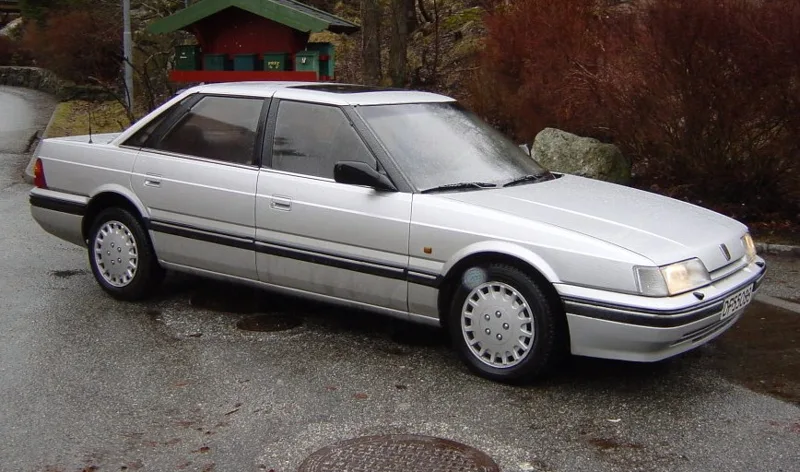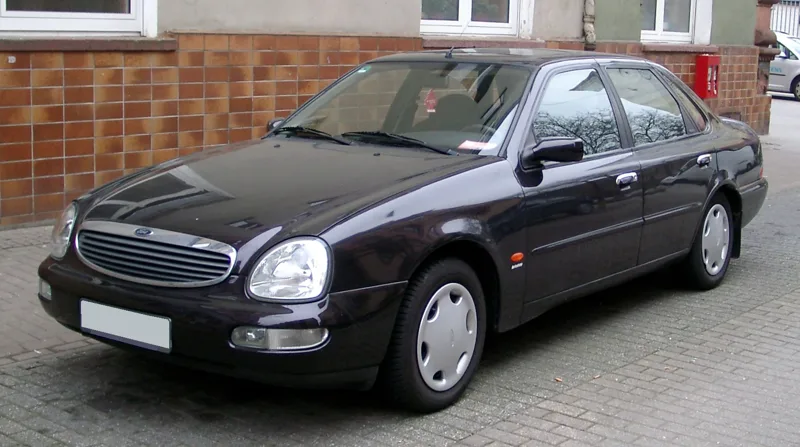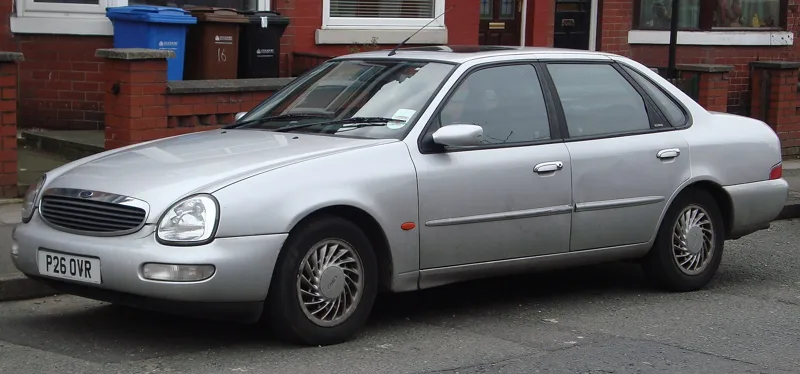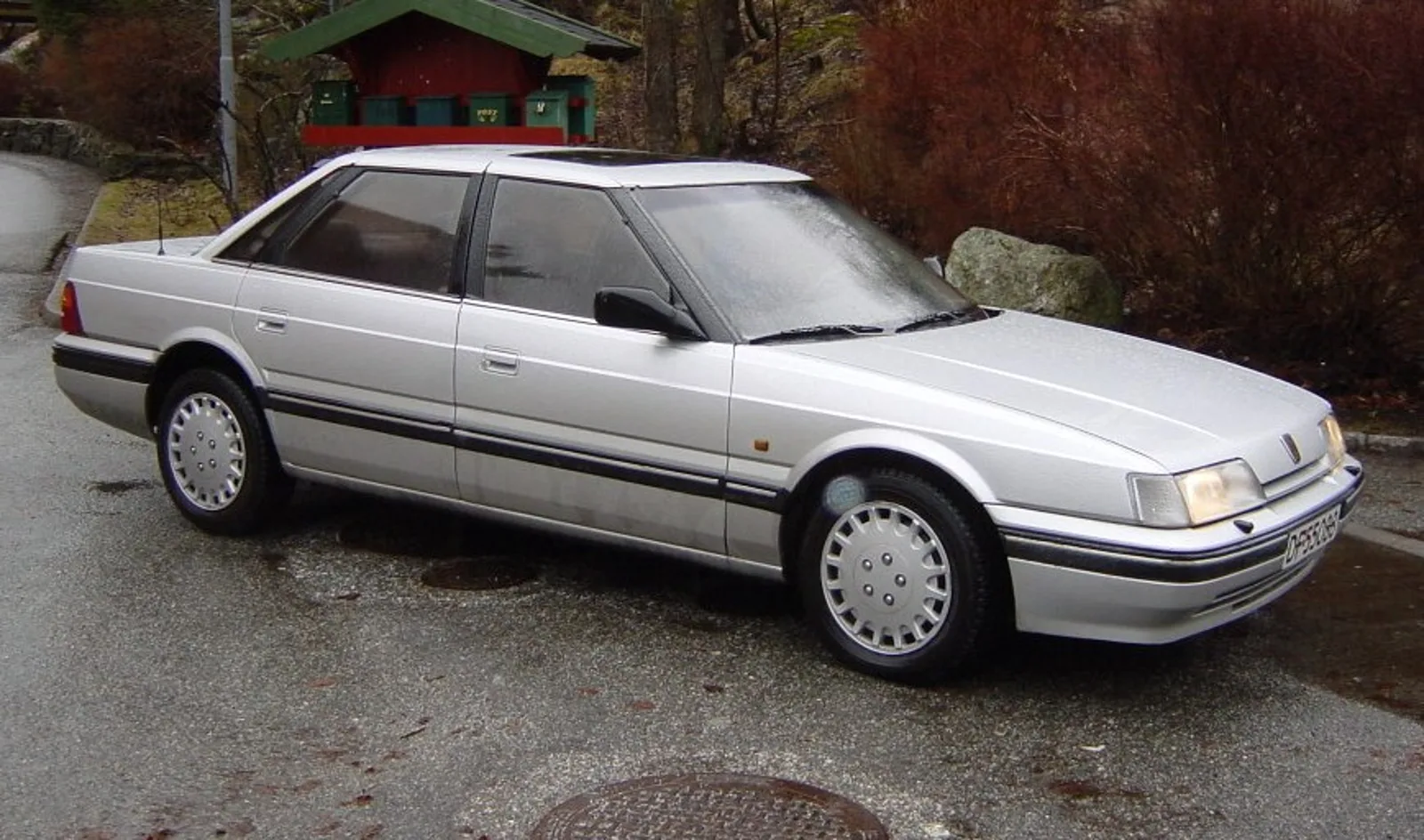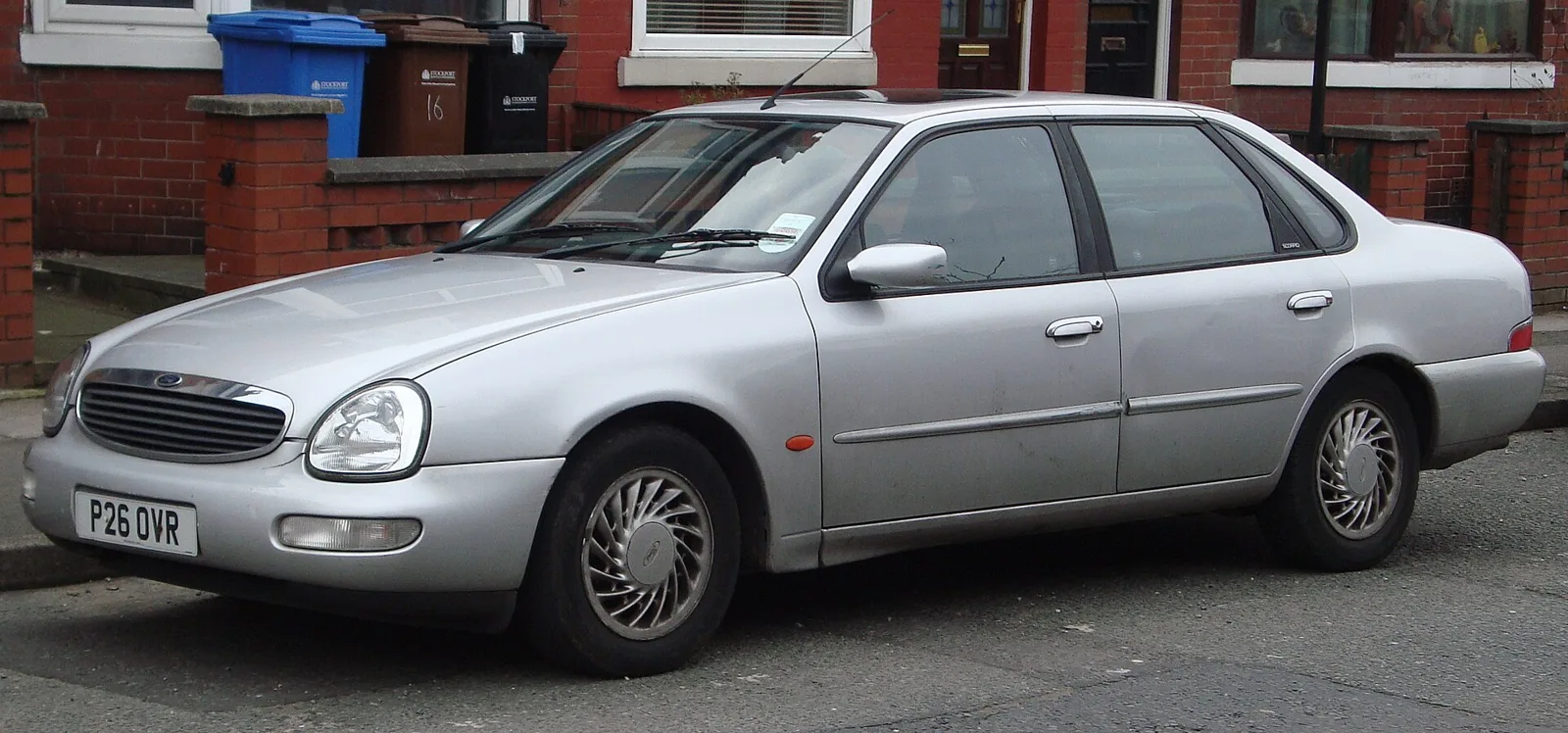
Both cars fought for the same British executive buyers, but one grew out of a Sierra and the other out of a partnership with Honda.
The Ford Scorpio was built from 1985 to 1998 and the Rover 800 from 1986 to 1999. Both were executive saloons competing for the same British buyers. Ford built on Sierra parts, while Rover's car came out of a joint project with Honda.
The Ford Scorpio and the Rover 800 Series were rival executive saloons that met in the same British showrooms in the years either side of 1990. Ford's car came out of Germany and rode on a stretched Sierra floorpan. Rover's came from a joint project with Honda, and it was sold as the Sterling in the United States.
Where did the Scorpio and 800 come from?
The Scorpio was built by Ford Germany from 1985 to 1998 as the replacement for the European Granada line, and it sat on a stretched Sierra floorpan. The Rover 800 was developed with Honda from 1981, launched on 10 July 1986, and took over from the Rover SD1.
Ford's engineers gave the project the codename DE-1, reflecting its intended place between the European D and E segments. The car leaned heavily on the Sierra, and its styling philosophy followed that of the Sierra and the Escort.
The Rover story started on a different track. Joint work with Honda began in 1981 under the codename XX, and the Honda version, known as the Legend, carried the code HX. Honda supplied the V6 engine, the transmissions and the chassis design, while British Leyland provided the four-cylinder engine and much of the electrical system. Development took place at Rover's Cowley plant and at Honda's Tochigi development centre.
That shared base made the 800 a close relative of the Honda Legend, which was sold in America under the Acura name. Each car kept its own bodywork and interior, so the two were never identical to look at.
One stretched a Sierra, the other shared a platform with Honda, and both fought for the same British executive buyers.
Why were the Scorpio and 800 rivals?
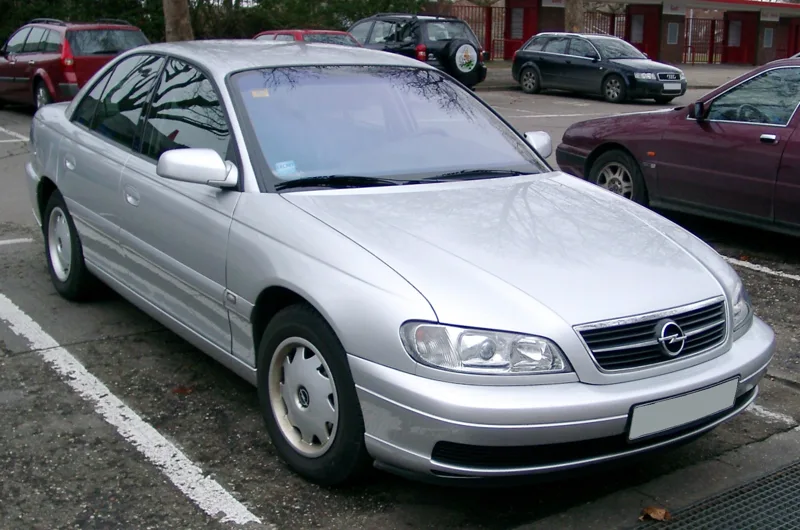
The two cars competed for the same British executive buyers. The 800 took on the Ford Granada, the Scorpio and the Vauxhall Carlton at launch, and from 1994 it faced the Vauxhall Omega and premium models such as the BMW 5 Series.
The Scorpio had a head start. It was launched more than a year before the new competitors from Rover and Opel, in a segment split between mainstream brands such as Ford and Vauxhall and prestige marques such as BMW and Audi.
Ford had aimed higher than that. The Scorpio was meant to be Ford's main European answer to the Mercedes-Benz and BMW executive cars. It built on an outgoing Granada that already offered leather seats, air conditioning and an electric sunroof, either as standard or as options, and it added features that were unusual for a mass-market car, including a heated windscreen, cruise control and electrically adjustable seats front and rear.
How did the engines compare?
The Scorpio started with Ford's Pinto four-cylinders and the Cologne V6, then moved to a DOHC engine and a 2.9-litre Cosworth V6. The 800 relied on Rover's 16-valve M series four, a Honda V6 that grew from 2.5 litres to 2.7, and a VM Motori diesel from 1990.
The Pinto came in 1.8 and 2.0 litres, and the V6 Cologne unit was offered in 2.4 and 2.8 litres. The bigger V6 later gave way to a 2.9-litre derivative. From the summer of 1989 a DOHC engine replaced the 2.0-litre Pinto, while the slow-selling 2.4 stayed in production until 1994.
The Scorpio Cosworth arrived in December 1990 with a 2.9-litre 24-valve V6. It was large and quick, and it was thirsty as well. Owners often complained about fuel economy, and early Mk I and Mk II Cosworths could suffer prop-shaft wear.
Ford swapped the outdated Peugeot XD3 diesel for a stronger unit from VM Motori in the 1992 facelift.
The 800's first engine was the 2.0-litre M series. The single-point M16e went into the 820e and 820se, while the multi-point M16i went into the 820i and 820si. Honda's 2.5-litre V6 powered the 825i and the Sterling, and it grew to 2.7 litres in February 1988.
The rarest 800 was the turbocharged 820 Turbo 16v, developed with help from Tickford. Just over 500 were built, and each was rated at 180 bhp (134 kW). There has long been speculation that the electronics held that figure back, partly to protect the gearbox.
The 1990 diesel used a 2498 cc VM Motori engine. The 2.0-litre T16 replaced the M16 before 1992, and it came in both naturally aspirated and turbocharged form. The turbo sat in the Vitesse Sport from 1994 to 1996, and in 1996 Rover's KV6 replaced the Honda V6.
How did the two cars differ in styling?
The Scorpio's styling was the bigger talking point, and the press was unusually harsh about it. Its bulbous headlights, wide grille and thin tail lights drew heavy criticism at launch. The 800's 1991 facelift returned a traditional Rover grille and more curvaceous bodywork, which proved far better received.
The Scorpio was the first Ford designed entirely on computer-aided systems, and its cabin moved upmarket with armchair-style seats. The exterior was another matter. Ford never named the designer, and a press focus group staged months before release did little to win over the critics.
Reviewers were scathing. Jeremy Clarkson, writing in The Times, called the car ugly and mocked its face, and he later said it settled any argument about the ugliest car on the road. Defenders called the grille bold and dramatic, but the public and press reaction was largely negative.
The Mk II Scorpio, launched at the Paris Motor Show in October 1994, was restyled inside and out. Its headlights, grille and door handles were taken from the Ford Crown Victoria, and the car kept the same floorpan and engine line-up. Reviewers praised its interior, handling and performance, and Clarkson judged it as talented as the Vauxhall Omega.
Rover's answer came at the 800's R17 facelift on 12 November 1991. The traditional Rover grille returned and the bodywork became more curvaceous, though the core XX structure, including the door design, had to stay. The change was a partial response to criticism of the folded-paper school of design that had made many cars look alike.
Which body styles could you buy?
The Scorpio arrived as a hatchback only, a decision that proved a mistake for Ford. A saloon followed in December 1989, and an estate in early 1992. The 800 began as a four-door saloon, added a five-door fastback in 1988 and a two-door coupe in early 1992.
The Mk II Scorpio dropped the hatchback altogether and came only as a saloon or an estate. Estates gained self-levelling rear suspension, a useful detail for a car that was already praised for its rear legroom.
The 800 coupe was a different proposition. It was developed with the American market in mind, but it never went on sale there because Rover had pulled out of the United States before its launch. It came with a 2.7-litre Honda V6, a four-speed automatic and 16-inch Rover Prestige alloys, and eighty percent of its interior and exterior was finished by hand.
How reliable were they?
Neither car earned a strong reputation for dependability. A Top Gear survey of 120 cars placed the Scorpio Mk II third worst among N-registered cars to own in the UK, with a low reliability rating. The 800 had early build quality problems in America and head gasket failures in its KV6 and M series engines.
The survey covered cars registered between August 1995 and July 1996. The Scorpio did slightly better in the 1999 and 2000 surveys, but its reliability record never fully recovered from the first verdict.
In America the early Sterling suffered from trim, electrical, paintwork and corrosion complaints that J.D. Power surveys and journalists picked up. Quality improved a great deal by the 1992 facelift, but trim rattles and electrical faults remained.
Mechanically, the KV6 and M series engines were hampered by head gasket failures, and Rover often replaced engines outright because repairs were not always possible after liner problems. The KV6 usually went with a JATCO gearbox that had its own issues, sometimes linked to incorrect fluid changes. Turbo versions of the 820 Vitesse also wore out gearbox bearings, which could be swapped for steel caged units.
Which car sold better in Britain?
The 800 sold better in Britain. It became the best-selling executive car in the UK in the early to mid-1990s and held that position for eight years, overtaking the Granada. The Scorpio failed to sell well, mainly because of its controversial exterior design.
Ford said the Scorpio beat its expected sales, but it never published the figures, so that claim cannot be tested. The Granada, which had led its sector almost continuously since 1972, was the car the 800 overtook.
Did either car succeed in North America?
Neither car made a lasting impact there. Ford's Merkur Scorpio was sold from 1988 to 1989 through Lincoln-Mercury dealers, with a 2.9-litre V6 rated at 104 kW (140 hp). Rover's car was sold as the Sterling, started strongly, then lost ground as quality complaints mounted.
The Merkur was marketed as an upscale mid-size luxury car, but it never came close to the impact Ford had hoped for. Most had a four-speed automatic and a few had a five-speed manual, and Canadian cars were automatic only. Ford dropped the Merkur name after 1989.
The Sterling came only with Honda's V6, and it shared its core vehicle with the Acura Legend, which did well in America at the same time. That made the 800's build quality problems more damaging, and Rover left the market before the coupe went on sale.
Scorpio and 800 side by side
| Feature | Ford Scorpio | Rover 800 Series |
|---|---|---|
| Production | 1985 to 1998, Ford Germany | 1986 to 1999, Austin Rover Group, then Rover Group |
| Development base | Stretched Sierra floorpan, codename DE-1 | Joint project with Honda, codename XX |
| Body styles | Hatchback at first, saloon from December 1989, estate from early 1992; saloon and estate only from 1994 | Four-door saloon at launch, five-door fastback from 1988, two-door coupe from early 1992 |
| Petrol engines | Pinto 1.8 and 2.0 litre; Cologne V6 2.4 or 2.8 litre, later 2.9 litre; DOHC 2.0 litre from 1989 | 2.0 litre 16-valve M series; Honda V6 at 2.5 litre, enlarged to 2.7 litre in February 1988; KV6 from 1996 |
| Diesel | Peugeot XD3 replaced by a VM Motori unit in 1992 | 2498 cc VM Motori from 1990 |
| Performance models | Cosworth from December 1990, 2.9 litre 24-valve V6 | 820 Turbo 16v, just over 500 cars, 180 bhp (134 kW); Vitesse Sport 197 bhp (147 kW) |
| Facelifts | March 1992; September 1997 | R17 on 12 November 1991; 1996 |
| North America | Merkur Scorpio, 1988 to 1989, 104 kW (140 hp) | Sold as the Sterling; sales fell as quality problems grew |
| Reception | Praised for comfort and handling; styling heavily criticised | Best-selling UK executive car for eight years |
| Reliability | Third worst N-registered car in a 1998 Top Gear survey | Head gasket failures on KV6 and M series engines |
| Successor | Not directly replaced | Rover 75, spring 1999 |
Which buyer does each car suit?
The facts point to different buyers. The Scorpio suits someone who values high-speed stability, a tight turning radius and generous rear seat room, and who can live with a polarising design. The 800 suits buyers who want the car that Britain bought most in the early 1990s, with a Honda V6 in the upper versions.
Neither record settles which car was better. The Scorpio was praised for its roominess and handling, but its styling cost it sales. The 800 sold better, yet its early build quality and later engine reliability left a mixed record.
A used buyer would be wise to check engine and gearbox history on either car. The 800's problems were tied to particular engines and gearboxes, while the Scorpio's weak points were its reliability ratings and the early Cosworth prop-shafts.
What became of the Scorpio and the 800?
The Scorpio ended production in the summer of 1998 without a direct replacement. The 800 was replaced by the Rover 75 in the spring of 1999. Ford's ownership of Jaguar and Volvo gave it direct access to the executive market through the Jaguar S-Type and Volvo S80.
Its last years were quiet. A September 1997 facelift brought darker headlight surrounds and a more subtle grille, and a new model had been planned for 1998 but never arrived.
Royal patronage gave the Scorpio a dignified footnote. The Dutch royal family used several, some stretched and all painted in Royal Blue, and a custom-built Scorpio landaulet is still kept in the royal stables.
Apart from the KV6 in 1996, few mechanical changes reached the 800. It remained a steady seller in its home market until the Rover 75 took over in spring 1999.