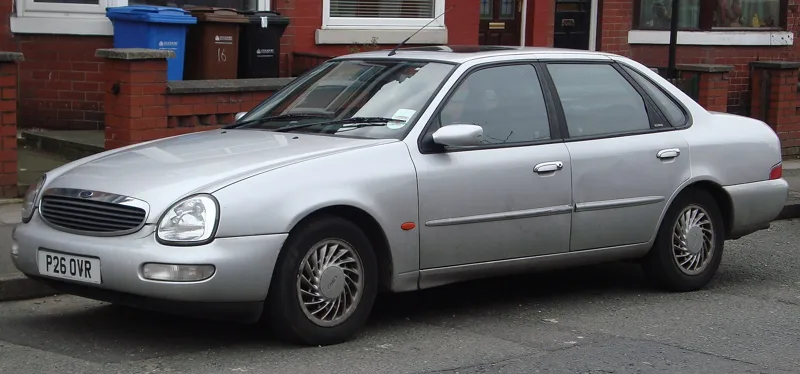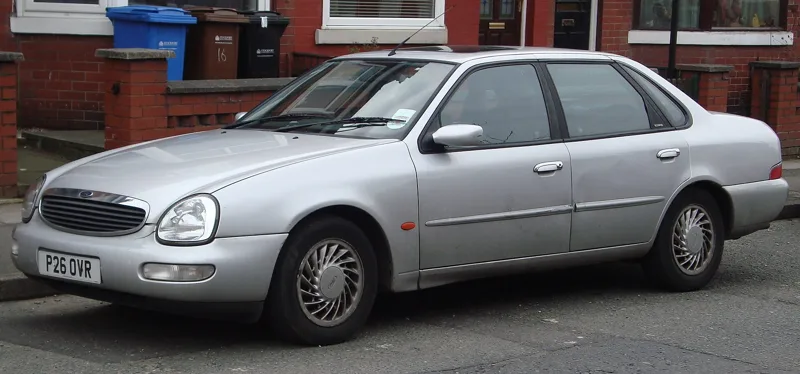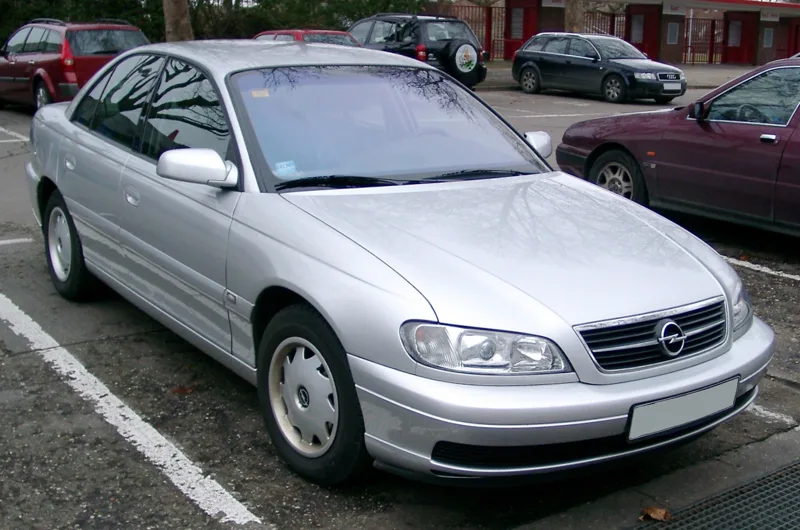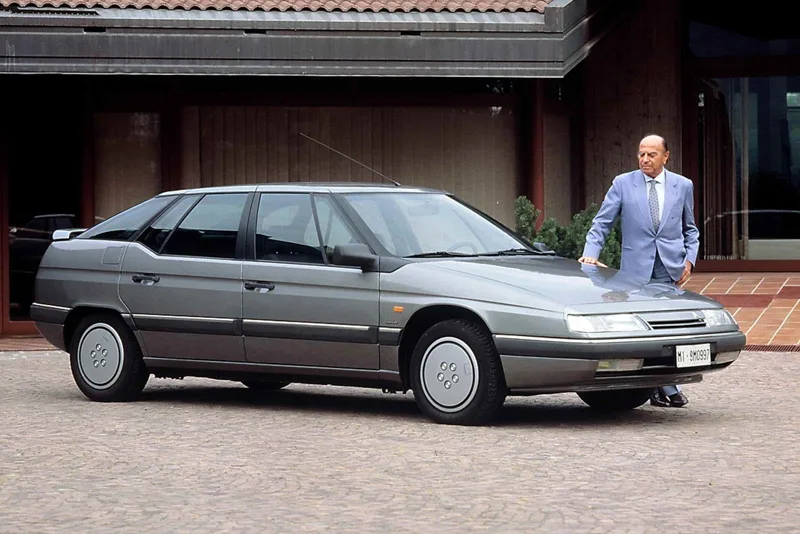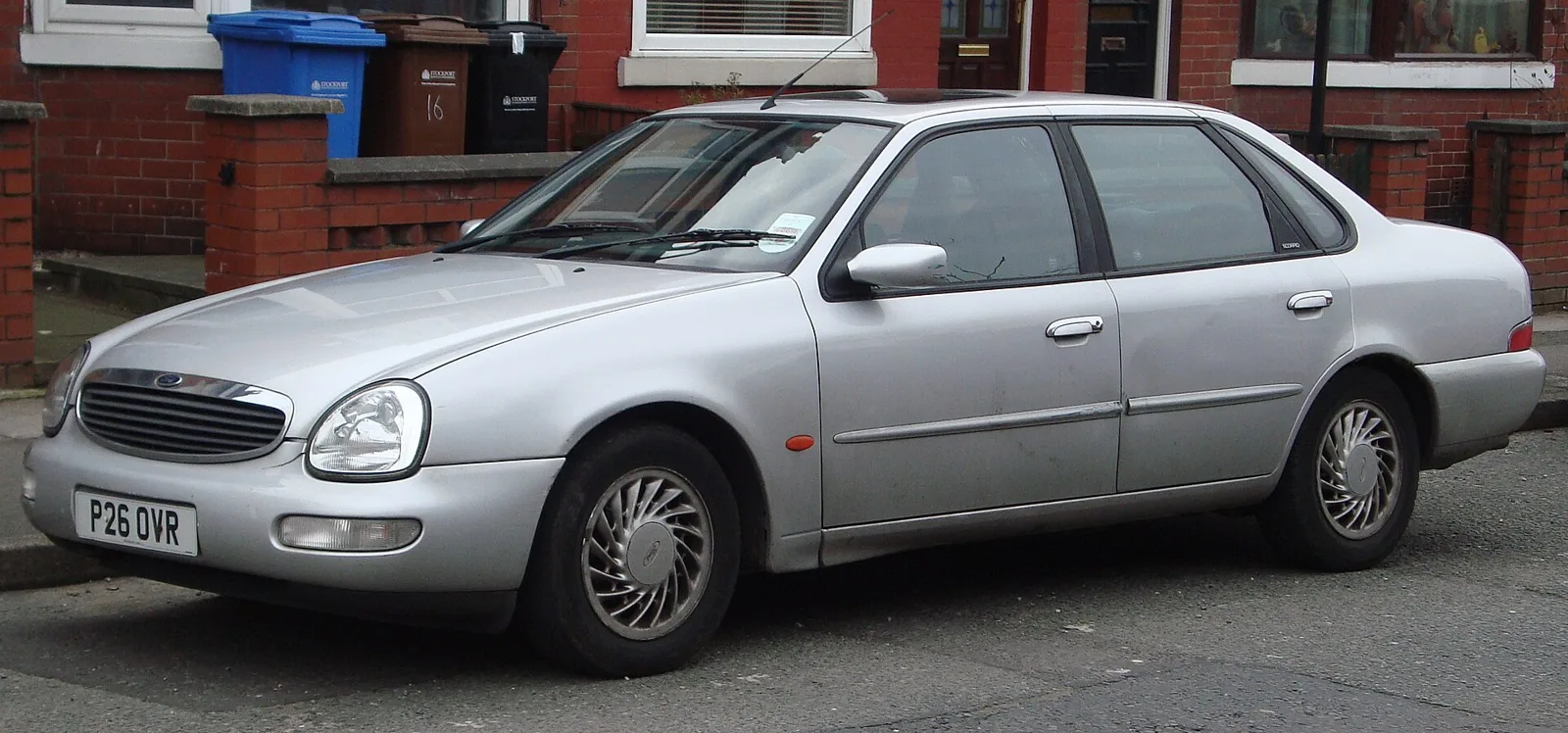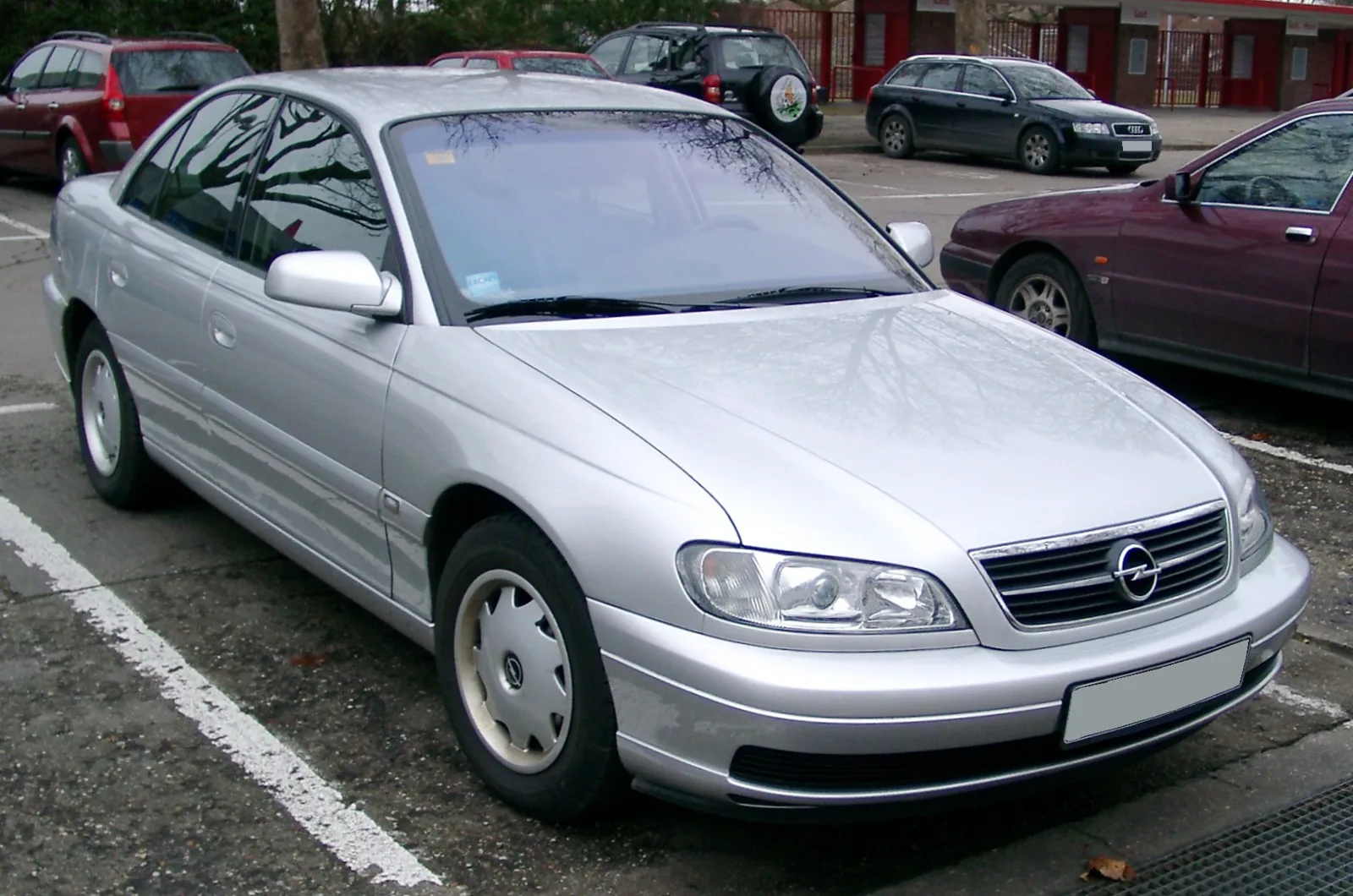
One was a Rekord successor that won a European award, the other a Honda-linked Rover that dominated British executive sales for a time.
The Opel Omega ran from 1986 to 2003 and was voted the best new European car of 1987. The Rover 800 Series, built with Honda, ran from 1986 to 1999 and was Britain's best-selling executive car for eight years. Opel's car arrived in Britain as the Omega B in 1994, and the two met in the same segment.
The Opel Omega and the Rover 800 Series were executive saloons from the same era, and through the 1990s they chased buyers in the same European and British showrooms. Opel's car replaced the Rekord and was crowned European Car of the Year for 1987. Rover's car was developed alongside Honda and went on to lead Britain's executive sales for a time.
Where did the Omega and 800 come from?
The Omega was introduced in September 1986 as the successor to the Opel Rekord, and it was built until 2003 across two generations. The Rover 800 was developed with Honda from 1981, launched on 10 July 1986, and replaced the Rover SD1. Both cars were new in the same year.
Opel's engineers treated the Omega as a refinement of the Rekord's design language, with aerodynamics a priority as fuel prices climbed. The result was a drag coefficient of 0.28, or 0.32 for the Caravan estate. Sales started in November 1986.
Outside Europe the Omega found new homes under different names. Isuzu took over its Japanese distribution from July 1989, placing the car above the Isuzu Aska in the lineup.
Rover's origins lay in a different kind of alliance. Joint work with Honda began in 1981 under the XX codename, and the Honda twin was the Legend, coded HX. Honda contributed the V6, the transmissions and the chassis, while British Leyland supplied the four-cylinder engine and much of the wiring.
An aerodynamic Opel that won Car of the Year, and a Honda-linked Rover that led Britain's executive sales for years.
Why were the Omega and the 800 rivals?
The Omega was the rival the 800 faced most directly in Britain. Before it arrived, the 800 competed with the Ford Granada, the Scorpio and the Vauxhall Carlton, and from 1994 the Omega B and premium models such as the BMW 5 Series joined that list.
Opel carried its ambitions up the market. It even built V8 prototypes aimed at premium saloons from BMW and Mercedes-Benz, although that version was cancelled.
The 800 began life as a hugely popular car in Britain's large executive class. That market was split between mainstream brands and prestige marques, and the Rover went head to head with mainstream models such as the Granada, the Scorpio and the Carlton.
What technology did the Omega offer?
The Omega was packed with features that were new to Opel, including electronic engine management, ABS, an on-board computer and an LCD instrument cluster. Its self-diagnosis system could be read by authorised service stations, a feature that is now standard on modern cars.
The on-board computer displayed figures such as momentary fuel consumption and average speed, and the glovebox was air-conditioned. The LCD cluster was offered in a CD version from 1987 but was dropped in 1991, when the car was facelifted.
The Omega was also one of the first cars to offer individually heated seats in the rear.
How were the Omega trims arranged?
The four basic trims were the LS, GL, GLS and CD, in ascending price order. The LS was clearly aimed at the fleet market, and in some markets the saloon was not offered to private buyers. The LS Caravan could also be ordered as a panel van, with the rear side windows covered by body-coloured foil.
The 1991 facelift changed the front and rear fascias, updated the interior materials and added sound-deadening. The 1.8-litre engine and the LS and GLS trims were dropped, while the CD was joined by a Club version and the CD Diamant.
The Omega Diamant package, introduced in 1988, could be added to the GLS, LS and CD trims. It brought alloy wheels, metallic paint, tinted windows, a cassette stereo, leather trim, and a painted grille and mirrors. It sold well, and a similar package with the same name later appeared on the Omega B.
Which engines did each car use?
Rear-wheel drive went with four- and six-cylinder engines from 1.8 to 3.0 litres, paired with a five-speed manual or a four-speed automatic. The 800 was front-wheel drive, with a 2.0-litre 16-valve M series four, a Honda V6 that grew to 2.7 litres, and a VM Motori diesel from 1990.
The Omega's petrol range ran from 1.8, 2.0 and 2.4 litre fours up to 2.6, 3.0 and 3.0 litre 24-valve sixes. The 1.8 and 2.0 fours used the Family II design, while the sixes and the 2.4 used the older cam-in-head family. Diesels came in 2.0 and 2.3 litres, plus a turbocharged 2.3-litre unit.
The 800's first engines were the M series and the Honda V6. The turbocharged 820 Turbo 16v, developed with help from Tickford, was built in just over 500 cars and rated at 180 bhp (134 kW). There has long been speculation that the electronics held that figure back, partly to protect the gearbox.
The 2.0-litre T16 replaced the M16 before 1992, and the KV6 replaced the Honda V6 in 1996. The Omega B2 later gained a 3.2-litre V6 and a 2.6-litre V6, while a BMW-sourced 2.5 DTI diesel with common rail injection arrived in 2001.
Where else was the Omega sold?
The Omega was rebadged around the world. It was the Cadillac Catera in North America, the Chevrolet Omega in South America and the Chevrolet Lumina in the Middle East, while Holden built re-engineered versions in Australia.
Brazilian buyers knew the car as the Chevrolet Omega, which used Opel 2.0-litre four and 3.0-litre six engines until 1994. General Motors do Brasil then needed new engines, so the four became a 2.2-litre unit rated at 116 PS (85 kW; 114 hp), and the six became a locally produced 4.1-litre Chevrolet straight-six with 168 PS (124 kW; 166 hp).
The locally produced six was tuned by Lotus and fitted with multi-point fuel injection. The Chevrolet Omega stayed in production until 1998.
Which Omega was the fastest?
The Lotus Omega was the quickest Omega of them all. Opel's 3.0-litre engine went to Lotus, where its capacity rose to 3.6 litres and two Garrett T25 turbochargers were fitted, with a water-cooled intercooler. The result was 377 bhp (281 kW), and it was capable of 280 to 300 km/h.
Acceleration was the real headline: 5.3 seconds to reach 100 km/h (62 mph) from a standstill, and 11.5 seconds to reach 160 km/h (99 mph). It weighed 1,663 kg (3,666 lb) and used a six-speed manual ZF gearbox from the Corvette ZR1, with Goodyear tyres marked with a small Omega symbol.
The Omega 3000 was the sports model before that. Its 3.0-litre straight-six made 177 PS (130 kW), with 220 km/h (137 mph) as its top speed, and needed 8.8 seconds to reach 100 km/h. The October 1989 engine upgrade lifted output to 204 PS (150 kW).
Opel's motorsport car was the Evolution 500, built with Irmscher to let Opel race in the DTM. Its three-litre straight-six produced 230 PS (169 kW) in road trim, and the racing version used 380 PS (279 kW). It did not achieve great success on the track.
Which body styles did each car offer?
The Omega came as a saloon or an estate, and the estate was called the Caravan. The Caravan's drag coefficient was 0.32, against 0.28 for the saloon.
The 800 arrived as a four-door saloon, gained a five-door fastback in 1988, and added a two-door coupe in early 1992. Rover's Special Vehicle Division also considered an estate in 1992 under the Shooting Break name.
Shown first at the 1991 Motor Show, the 800 coupe went on sale in early 1992. Eighty percent of its interior and exterior was finished by hand, and it came with 16-inch Rover Prestige alloys and a four-speed automatic as standard.
What did the 800's badges and trims mean?
The Sterling badge marked the top saloon in most markets, while Vitesse marked the top fastback. In some European markets the 2.0-litre petrol car wore Sterling badges, and a turbo version was later sold as the Vitesse to sidestep punitive duties on larger engines.
At launch the Sterling provoked controversy because its price clashed with that of the entry-level Jaguar XJ40. Late in the first generation's run, the Vitesse was almost as well equipped as the Sterling, with electric front seats among its features.
The 1996 facelift made climate control, a passenger airbag and passive immobilisation standard. A six-disc CD auto-changer went onto all models except the entry-level i, and the remote key moved from infrared to radio frequency.
What changed with the Omega B?
The Omega B arrived in 1994 as a completely new car, with contemporary styling and a conventional rear-wheel-drive chassis. Its engines were all new, its platform later underpinned the third-generation Holden Commodore, and it became GM's executive offering in Europe, taking over from the Opel Senator.
Leaked images of a design-studio mock-up surfaced in February 1990, and the press described the new saloon as coupe-like. Cadillac's Aurora concept, shown at the Chicago Auto Show that February, looked very much like the design the Omega B eventually adopted.
The Vauxhall version debuted the brand's new V-shaped grille, which the facelifted Astra also adopted later in 1994. The car won Ireland's Car of the Year award in 1995 and Japan's import car prize the same year. In the United States, the MV6 model was rebadged as the Cadillac Catera and sold from 1997 to 2001.
The B2 facelift in autumn 1999 brought a new bonnet with an integrated grille, revised bumpers and body mouldings, new tail lights and mirrors, fresh alloy designs, a centre console with GPS and climate controls, and an electronic stability programme.
Engine changes were gradual. The Omega B replaced Opel's outdated 2.3-litre diesel with BMW's turbocharged M51 inline-six, first coded U25DT and updated during 1996 to the Euro 2 compliant X25DT.
Omega and 800 side by side
| Feature | Opel Omega | Rover 800 Series |
|---|---|---|
| Production | 1986 to 2003; Omega A 1986 to 1994, Omega B 1994 to 2003 | 1986 to 1999, Austin Rover Group, then Rover Group |
| Drive layout | Rear-wheel drive | Front-wheel drive |
| Body styles | Saloon and estate | Saloon at launch, fastback from 1988, coupe from early 1992; estate considered in 1992 |
| Petrol engines | 1.8, 2.0 and 2.4 litre fours; 2.6, 3.0 and 3.0 litre 24-valve sixes; 3.2 litre V6 on the Omega B2 | 2.0 litre 16-valve M series; Honda V6 at 2.5 litre, 2.7 from February 1988; 2.0 litre T16; KV6 from 1996 |
| Diesel | 2.0, 2.3 and 2.3 litre turbodiesel; BMW 2.5 DTI from 2001 | 2498 cc VM Motori from 1990 |
| Transmission | Five-speed manual or four-speed automatic | Four-speed automatic standard on the coupe |
| Performance models | Omega 3000, Evolution 500 and Lotus Omega, 3.6 litre twin-turbo with 377 bhp (281 kW) | 820 Turbo 16v, just over 500 cars, 180 bhp (134 kW); Vitesse Sport 197 bhp (147 kW) |
| Motorsport | Evolution 500 built for the DTM | None mentioned |
| Awards and reception | European Car of the Year for 1987 | Best-selling UK executive car for eight years |
| North America | Cadillac Catera, a rebadged Omega B, 1997 to 2001 | Sold as the Sterling; sales fell as quality problems grew |
| Facelifts | Omega A facelift for 1991; Omega B2 in autumn 1999 | R17 on 12 November 1991; 1996 |
| Successor | Opel Signum | Rover 75, spring 1999 |
Which buyer suits each car?
The Omega suits a buyer who wanted a rear-wheel-drive executive car with a sporting top end and a choice of saloon or estate. The 800 suits a buyer who wanted a front-wheel-drive car with Honda roots, a Sterling luxury trim or a Vitesse sport trim, and the car that most British executives were choosing in the early 1990s.
Neither car has a clear winner on paper. The Omega earned the European Car of the Year title for 1987, while the 800 led British executive sales for eight years. Those are different measures of success.
A secondhand 800 buyer should ask about head gasket work and gearbox fluid changes, because those problems are well documented.
What became of the Omega and the 800?
The Omega ended production in 2003 and was succeeded by the Opel Signum. The 800 was replaced by the Rover 75 in spring 1999, after a steady run in its home market. The Omega B platform also formed the basis of the Australian Holden Commodore from the 1997 VT series.
Opel's flagship ambitions went further. The V8.com concept was built on a stretched Omega estate, with 9.5-inch screens for passengers and a GM LS1 V8 under the bonnet. The production Omega V8 was cancelled after 32 pre-series cars, because of concerns about the transmission and about overheating under sustained full throttle.
Apart from the KV6 in 1996, few mechanical changes reached the 800 in its final years. The car remained a steady seller at home until the Rover 75 arrived.