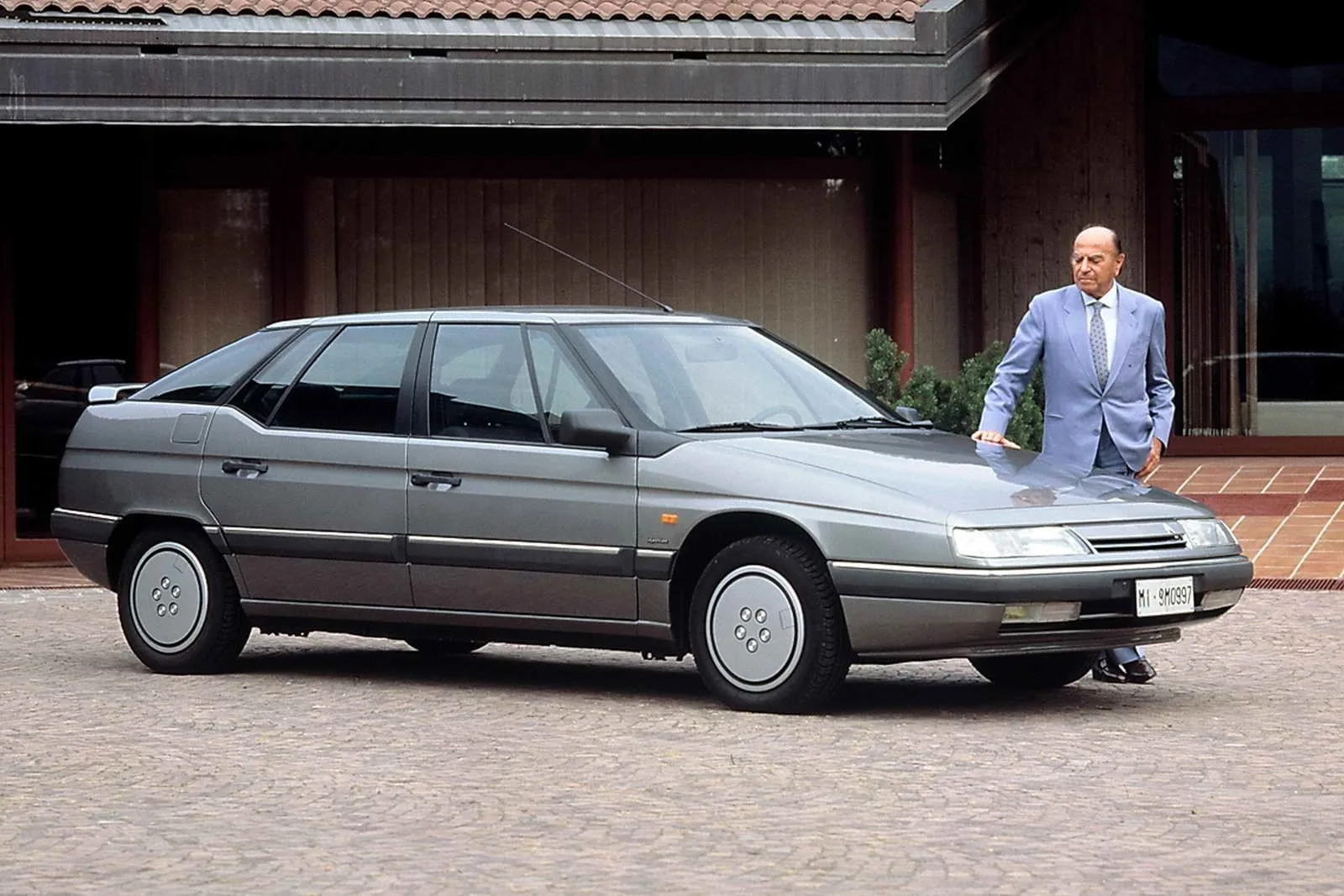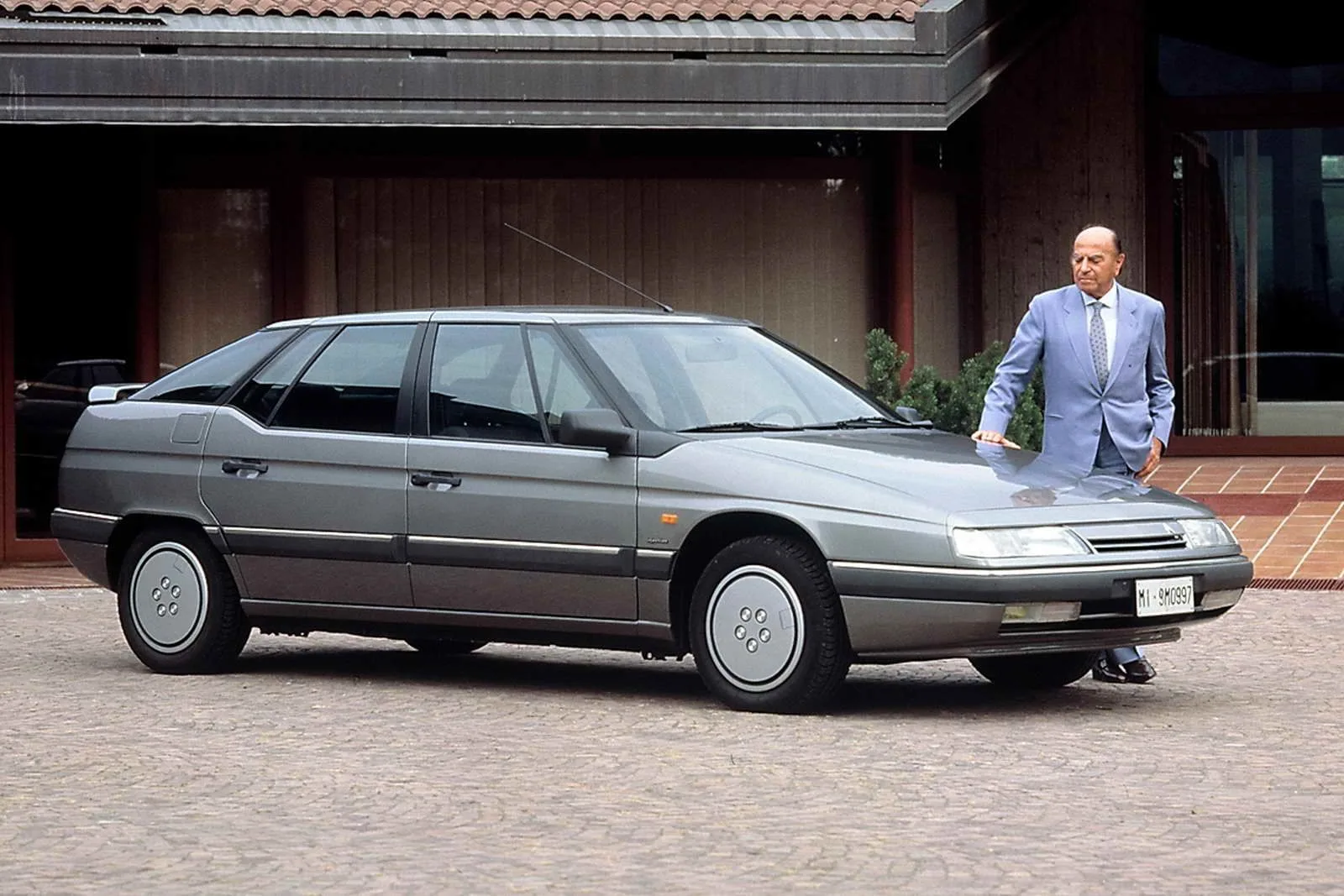
Both won European Car of the Year, but Citroen's XM brought hydropneumatic suspension and a Bertone shape, and it never reached its sales targets.
The Citroen XM was built from 1989 to 2000 and won European Car of the Year for 1990. The Opel Omega was built from 1986 to 2003 and won the same award for 1987. The XM's sales fell well short of plan, which made it the more troubled of the two.
The Citroen XM and the Opel Omega were both executive saloons that won the European Car of the Year title, the XM for 1990 and the Omega for 1987. The XM carried technology no production car had offered before, while the Omega was a volume car from a mainstream maker. They competed for the same buyers across Europe.
Where did the XM and Omega come from?
The XM went on sale in May 1989 as Citroen's flagship saloon, replacing the CX, and it was built until June 2000. The Omega, from Opel, was built between 1986 and 2003, first as the Omega A and then as the Omega B. Both cars lived long enough to receive a facelift.
Its launch date was 23 May 1989. Right-hand drive models reached Britain that October, while the XM Estate only arrived in spring 1991, when the older CX Break and Familiale were still being built.
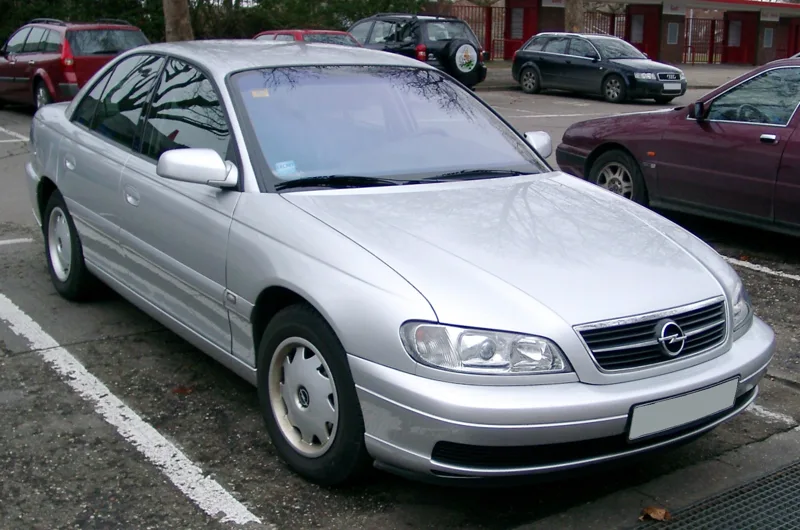
The Omega's story began in September 1986, as the replacement for the Opel Rekord. Sales started in November, and Opel had designed the body as an evolution of its earlier design theme, with aerodynamics at the centre as fuel prices rose.
A hydropneumatic Citroen that took Europe's top award but struggled to sell, next to an Opel that stayed on sale until 2003.
Why were the XM and Omega rivals?
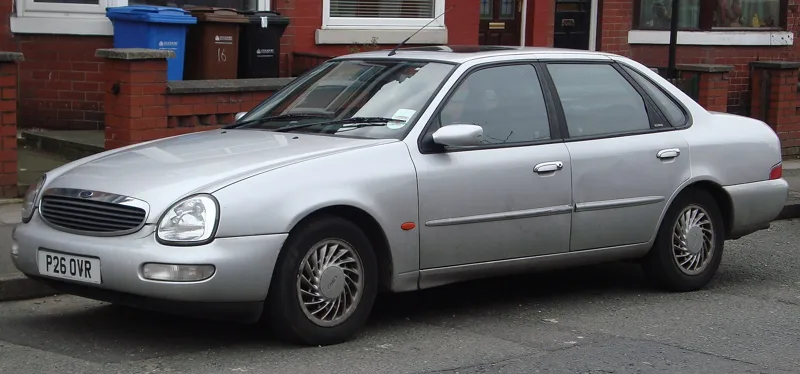
Citroen aimed the XM at prestige executive cars such as the Mercedes-Benz W124, the Audi 100 and the BMW 5 Series. That sector took 14.2% of the European market. The XM also faced mainstream models, including the Ford Scorpio and the Opel Omega.
The Omega was therefore the XM's mainstream rival, and both cars came from volume makers taking on prestige marques. The market for volume-brand executive cars was on the verge of decline. Ford pulled out of the sector in 1998, and Opel and Vauxhall followed in 2003.
Customers were giving more weight to speed and handling than to the ride comfort that was Citroen's speciality. That shift hurt the XM, since its appeal rested on the very quality buyers were starting to value less.
How did the XM's design and technology compare?
The XM had electronically controlled hydropneumatic suspension, a partly galvanised body shell and an optional 3.0-litre V6. The Omega offered electronic engine management, ABS and an on-board computer, plus a self-diagnosis system that is now standard on modern cars.
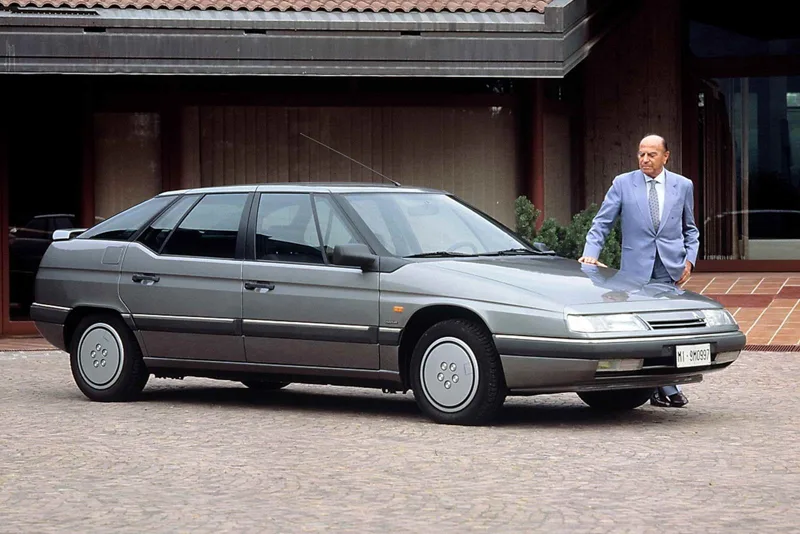
The angular Bertone shape grew out of Marcello Gandini's Citroen BX concept. Citroen's design chief pointed to the long, low bonnet, the generous glazing and the upward sweep of the belt line as the key elements. A second designer admitted the lowered belt line was a design statement that did nothing for aerodynamics.
In 2013 Car magazine listed the XM among Bertone's seven most significant designs. The car came as a five-door Berline and as a Break estate, and in France converters turned many into ambulances and delivery vehicles.
The XM shared its underpinnings with the Peugeot 605, and the pair suffered similar early growing pains. The rear seats were raised so that passengers could see out, and some models gained an extra interior rear window to make the large hatch easier to use.
How did Hydractive suspension work?
Hydractive 2, fitted to the second series, kept the XM soft in ordinary driving and switched to a firmer mode only when sensors detected a large or sudden change. The first series had a Comfort and Sport switch that firmed the car on command, a setting many owners found harsh.
On second-series cars the suspension sat in soft mode for normal driving, with fluid moving between the spheres to give the car its wafting ride. When the ECU sensed a large or sudden change, it locked out the extra centre spheres and stopped that flow, which firmed the car up and cut roll.
Sport mode on Hydractive 2 did not switch off the extra spheres, as it did on the earlier system. It widened the conditions that triggered firmness and held the firm setting for longer before returning to soft.
What changed between the XM's two series?
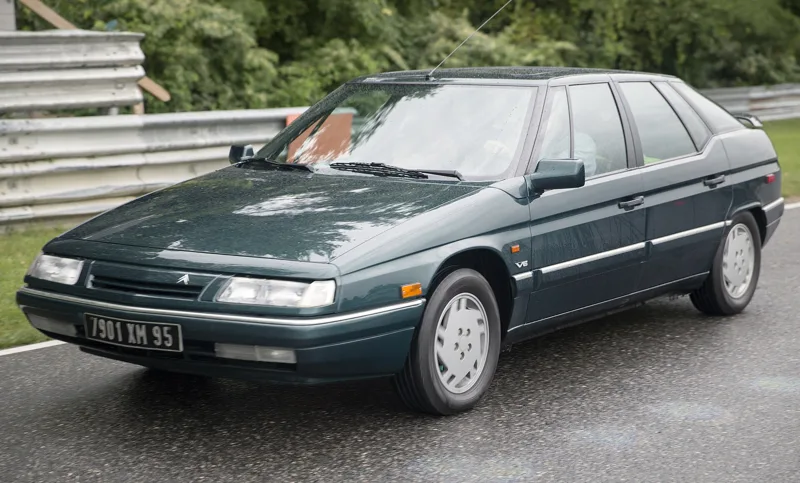
The first series ran from May 1989 to May 1994, and the second from June 1994 to June 2000. The changes were mostly in detail, but they mattered to owners. The double-chevron logo was relocated to the middle of the grille and enlarged, and the XM badge on the tailgate adopted a more stylised lettering.
Second-series cars also had a lower rear spoiler, a body-coloured panel between the windscreen and bonnet, and revised door mirrors. The distinctive single-spoke steering wheel gave way to a conventional four-spoke wheel with an integrated airbag, standard on most models and countries.
Interior changes included softer leather, redesigned door trim and variable heat seating on Exclusive models, which replaced a simple on-off setting with a dial offering three levels. A passenger airbag became standard after December 1995, and front seat-mounted side airbags were added in 1997.
The Omega's engineering was more conventional. It used a longitudinally mounted engine with rear-wheel drive, and buyers chose between a five-speed manual and a four-speed automatic. The Omega's engine line-up stretched from 1.8 and 2.0 litre fours to a 3.0-litre 24-valve six.
What engines and performance did they offer?
The XM's turbocharged petrols were its weak point at first. By early 1993 the XM was seen as an underachiever, and the 2.0-litre petrol variants were judged the least competitive. Citroen fitted low-inertia Garrett turbochargers to all but the base petrol, adding 15 bhp (11 kW).
That update made the XM more powerful than the Rover 820, the Vauxhall Carlton and the Ford Granada 2.0 GLX, all of which were more expensive. The mid-1994 facelift lifted turbo output to 150 PS (110 kW; 148 hp), up from 145 PS (107 kW; 143 hp).
The Omega 3000 was the sports model. Its 3.0-litre straight-six made 177 PS (130 kW), and the car reached 220 km/h (137 mph). The October 1989 engine upgrade lifted output to 204 PS (150 kW) and pushed the car to 240 km/h (149 mph).
The Lotus Omega, built with Lotus and fitted with two Garrett T25 turbochargers, produced 377 bhp (281 kW) from its 3.6-litre engine. Weighing 1,663 kg (3,666 lb), it was capable of 280 to 300 km/h and needed 5.3 seconds for 0-100 km/h.
Its speed was a sensitive matter. Other major German makers limited their high-performance models to 250 km/h, so the Lotus car, capable of 280 to 300 km/h, was a controversial machine. Its differential came from Holden's Commodore, and its gearbox was a six-speed unit from the Corvette ZR1.
How did sales and reputation compare?
The XM fell well short of its sales plan and became Citroen's weakest seller in the UK by early 1993. The Omega stayed on sale until 2003, when Opel left the volume executive sector that was on the verge of decline.
Early reviews were warm. The XM collected 14 more major awards in its first year, and 31,035 of the 333,405 cars built were Heuliez-built Breaks.
The XM's anticipated 450 cars a day, or 160,000 units a year, in its first full year never materialised. Like the CX, the XM lacked the worldwide distribution of BMW, Audi and Mercedes-Benz. It also launched a year before a global recession hit car sales. UK registrations fell from more than 2.3 million in 1989 to under 1.6 million in 1991.
Export markets were weaker from the outset, partly because of pricing. The least expensive XM cost nearly 50% more than the equivalent CX at launch. In Japan the car was sold through Mazda's Eunos chain, and Seibu Motor kept selling it after Eunos was discontinued in 1996.
The XM's reliability problems stemmed from a car that was underdeveloped at launch, and its styling alienated buyers who wanted a conventional three-box sedan. Its sister car, the Peugeot 605, also sold poorly.
Resale values were poor, and that hurt new-car sales. By the mid-1990s the XM's image left it less desirable than German rivals such as the BMW 5 Series. Quentin Willson had predicted in 1990 that its residuals would beat the CX's, but its resale value was far below average.
Which buyer suits each car?
The XM suits a buyer who values ride comfort and Citroen's hydropneumatic character, and who accepts that early cars had reliability problems. The Omega suits a buyer who wanted a conventional rear-wheel-drive executive car with a wide engine range, an estate option and an award-winning reputation.
Neither car settles the question on its own. The XM won the 1990 award with almost twice the votes of the Mercedes-Benz SL in second place, yet it never reached the sales its makers expected. The Omega won in 1987 and then ran a long production life.
A used XM buyer should check which series the car is, since series 1 and series 2 differ in suspension and interior. An Omega buyer should check the model, because the Lotus and Omega 3000 cars differ greatly from the base saloon.
Citroen XM and Opel Omega side by side
| Feature | Citroen XM | Opel Omega |
|---|---|---|
| Production | 1989 to 2000, 333,405 cars | 1986 to 2003; Omega A 1986 to 1994, Omega B 1994 to 2003 |
| European Car of the Year | 1990 | 1987 |
| Suspension | Electronically controlled hydropneumatic suspension | None described |
| Body styles | Five-door Berline; Break estate from spring 1991 | Saloon and estate |
| Engines | Petrol with low-inertia Garrett turbos from early 1993 (15 bhp / 11 kW more); 3.0 litre V6 option; 150 PS (110 kW; 148 hp) turbo after 1994 | 1.8, 2.0 and 2.4 litre fours; 2.6 and 3.0 litre sixes; 2.0, 2.3 and 2.3 litre turbodiesel |
| Performance models | Turbo update applied across the range except the base petrol | Omega 3000, Evolution 500, and the Lotus Omega at 377 bhp (281 kW) |
| Drive layout | None described | Rear-wheel drive |
| Design | Bertone shape developed from Gandini's BX concept | Aerodynamic evolution of Opel's design, drag coefficient 0.28 |
| Reliability | Underdeveloped at launch; mechanical problems in early model years | None described |
| Sales | Far below plan; UK sales of 3,500 units a year by early 1993 | On sale until 2003 |
| Facelifts | Mid-1994 | Omega A for 1991; Omega B2 in autumn 1999 |
| Successor | Citroen C6, late 2005 | Opel Signum |
What became of the XM and the Omega?
The XM's production ended in June 2000, after 333,405 cars over 11 years. The Citroen C6 did not appear until late 2005, and Citroen's own plans were confirmed by 1998.
The Omega B platform was adapted for the Holden Commodore VT, starting with the 1997 series and running on to 2006.
The C6 Lignage concept appeared at Geneva in March 1999, and it was scheduled for a 2001 launch. The production car was even less successful than the XM. The XM name passed to BMW in 2021, which used it for its XM SUV.
Opel's V8 ambition ended with the Omega. The V8.com concept, built on a stretched Omega estate, debuted at Frankfurt in September 1999. The production V8 was shown at Geneva in March 2000 and cancelled after 32 pre-series cars, over transmission concerns and worries about overheating.