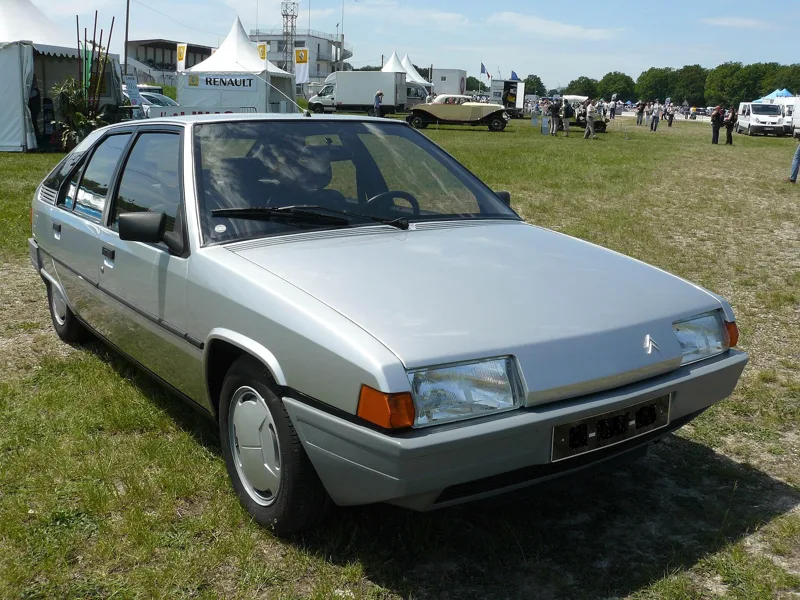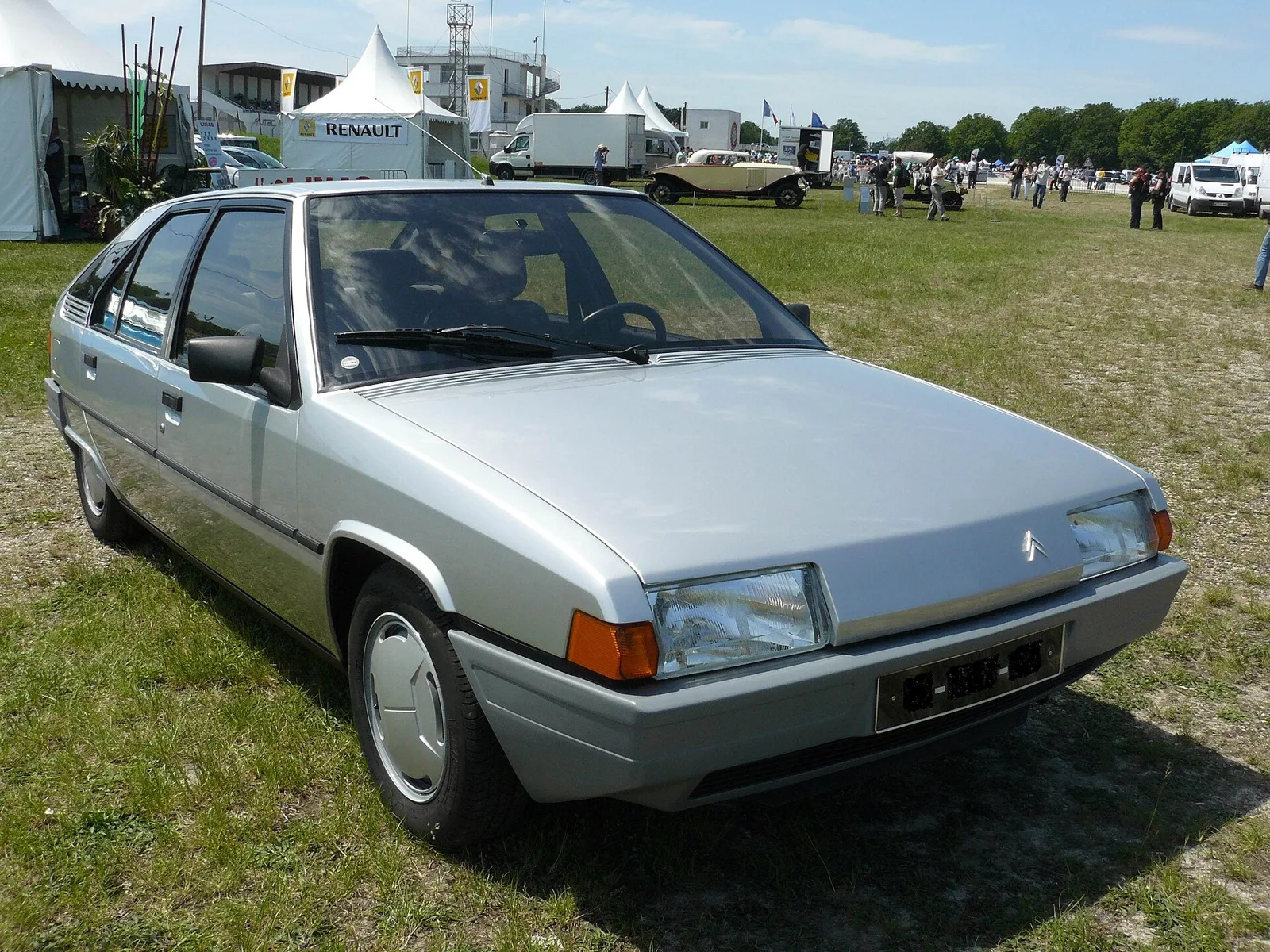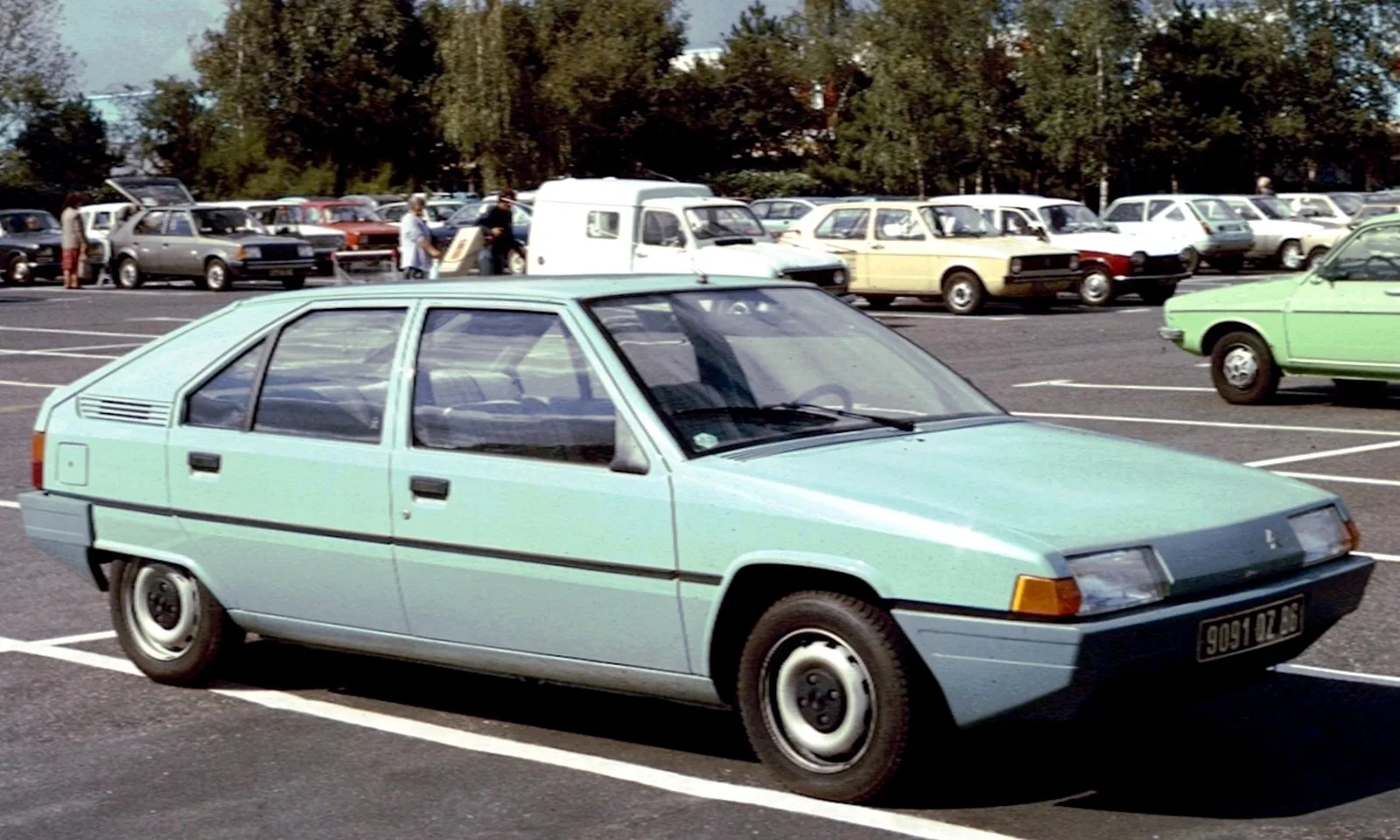
Marcello Gandini's angular Citroen from 1982, with plastic panels, hydropneumatic suspension, a diesel boom and a 16-valve performance model.
Built from 1982 to 1994, the Citroen BX sold 2,315,739 units. Styled by Marcello Gandini, it used plastic panels and hydropneumatic suspension, and it spawned diesel, GT, rally and 16V variants.
The Citroen BX was a large family car from the French maker that ran from 1982 to 1994 as a hatchback and estate. It was built light, with plastic panels and hydropneumatic suspension, and it turned into a diesel bestseller, a Group B rally entry and a 16-valve performance model. Its story is one of clever engineering paired with uneven build quality.
What is the Citroen BX?
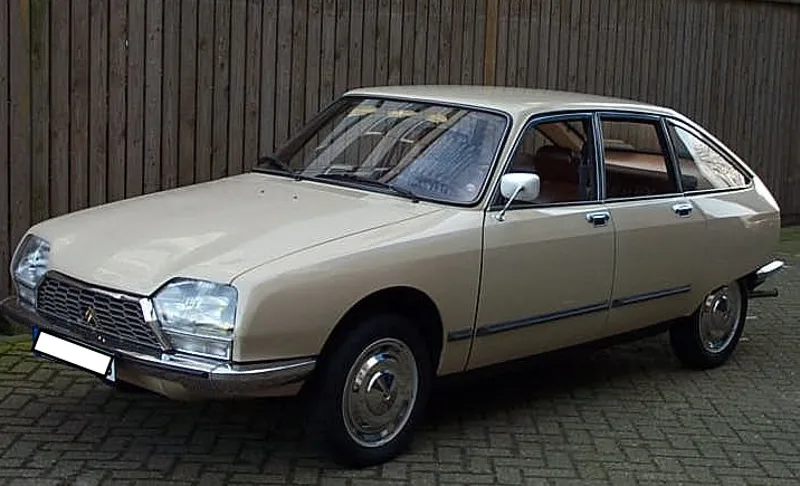
The BX is a large family car from Citroen, sold first as a hatchback and later as an estate. Marcello Gandini of Bertone styled it, and it was launched to succeed the GS and GSA. Citroen built 2,315,739 examples during its twelve years on sale, and the Xantia took over in 1993.
The car was designed to be lightweight, using few body parts and many plastic ones. The bonnet, tailgate and bumpers were made from plastic, and the BX kept the hydropneumatic self-levelling suspension that Citroen was known for. Front and rear disc brakes completed a package that looked modern for its time. Citroen added an estate a year after the hatchback arrived. The estates, called Break or Evasion, were built by Heuliez at its recently updated plant in Cerizay.
A light, plastic-clad family car that still managed to produce a rally machine and a 16-valve hot hatch.
How did the Phase II update change the BX?
The Phase II car arrived in 1986 with a redesigned interior. The satellite switchgear and bathroom-scale speedometer gave way to conventional stalks and analogue instruments. Outside, the bumpers were rounder, the wheel arches were flared for wider tyres, and the front indicators grew larger.
The 1988 Turbo Diesel brought new refinement to diesel motoring. Diesel Car magazine judged that nothing else on British sale came close to its mix of performance, roomy accommodation and economy. That reputation helped the diesel become the best-selling diesel car in Britain in the late 1980s.
A 1989 facelift added smoked rear lamps, new wheel trims and new interior fabrics. The BX also won many Towcar of the Year awards, and its self-levelling suspension was a strong reason why. Diesel models were especially popular for towing because they combined power with economy.
Which engines powered the BX?
The BX used PSA petrol engines of 1360 cc, 1580 cc and, from 1984, 1905 cc. A 1124 cc unit was also offered for countries where car tax followed engine capacity. The 1.1 and 1.4 models used the PSA X engine, known as the Douvrin unit.
The 1.6 was the first car to use the short-stroke XU engine, which was built at a new plant at Tremery. The XUD diesel arrived in November 1983 and became the most successful variant. Power steering became optional in 1984, which was welcome on the heavier diesel models.
A four-speed ZF automatic arrived in July 1984 on the 16 RS and TRS, while most BX cars built used a five-speed manual. In the late 1980s, a four-wheel drive system and turbodiesel engines were introduced, widening the range further.
Badges followed engine size: 11, 14, 16 and 19. The exception was the 17 diesel, which was really a 1769 cc unit. The 1.1 engine, code H1A, produced 55 hp (40 kW) DIN at 5800 rpm and was fitted from 1988 to 1993.
How did the BX perform in its sporting variants?
The BX Sport ran from 1985 to 1987, and 7,500 were built. Its 126 PS (93 kW) at 5800 rpm came from dual twin-barrel carburettors, and it was the most powerful BX in production at that time. It had a unique body kit, alloy wheels and a Pullman interior.
The GT followed in 1985 with 105 PS (77 kW) from a 1.9 litre engine. Citroen also made a Digit version based on the GT, which added a digital instrument cluster and an onboard computer. Only 4,000 Digits were built in 1985, which makes them rare today.
The GTi used a 1.9 litre eight-valve engine producing 122 PS (90 kW), and it could reach 198 km/h. An export BX16 GTi used a 113 PS (83 kW) engine and had a top speed of 194 km/h. Both cars shared the same overall character, with firmer suspension than the standard model. The 1.9 litre engine was shared with the Peugeot 405 SRi, though that car used a different inlet manifold and cylinder head.
Why did the BX 4TC fail in Group B?
The 4TC was Citroen's Group B rally car, entered in 1986. Its best World Rally Championship result was sixth place in the Swedish Rally that year. It contested only three rallies before Group B was banned following the death of Henri Toivonen in 1986.
The rally car was built around a longitudinal, turbocharged Simca Type 180 engine. Its capacity was reduced to 2,141.5 cc to stay within the three-litre limit after the multiplication factor was applied. It used the five-speed gearbox from the SM and a rear axle taken from the Peugeot 505. Its rear axle carried a carbon fibre prop shaft.
Group B rules required 200 street versions, with a 200 PS (147 kW) tune at 5,250 rpm. Citroen sold just 62 road-going 4TCs, and it bought many back because of build quality and reliability problems. Few of the original 200 remain, which is why surviving examples are sought after. Citroen pressured remaining privateers to stop, and the BX 4TC competition history ended by 1989.
What made the BX 16V special?
The BX 16V launched in May 1987 and was the first mass-produced French car with a 16-valve engine. Its XU9J4 1.9 litre unit produced 158 bhp (118 kW) and 177 Nm, which was strong for a naturally aspirated engine of its era. It reached 100 km/h in 7.6 seconds and topped out at 219 km/h (136 mph).
The engine gave 84 bhp per litre, which was impressive for a fixed-cam unit of the time. Anti-lock brakes were fitted as standard on the 16V. Its distinctive side skirts set it apart from every other BX. The 1990 facelift added harder suspension and a thicker anti-roll bar, which sharpened the handling. It also brought new fibreglass bumpers, anthracite painted wheels, smoked taillight lenses and a redesigned rear spoiler.
In a Swedish track test the 16V proved faster around a circuit than the Peugeot 405 Mi16, its in-house rival. Magnus Gustafsson also rallied a Group A BX 16V in Sweden, finishing second in the A7 category at the 1993 Swedish International Rally.
Why was there a BX Van?
In Finland vans paid less registration tax than passenger cars, so an extended fibreglass roof was fitted and the rear seat removed to create the BX Van. Finnish law required vans to offer cargo space at least 130 cm high and two and a half cubic metres in volume. The standard estate could not meet that rule, so the van was the workaround. Vans were the cheaper route for buyers who needed load space. The van kept the estate's basic shape but traded rear seats for a load area.
The BX Van proved popular, and over 2000 were sold. The original steel roof was cut away and replaced with a large fibreglass box. It shows how national tax rules could shape the design of a mass-market family car.
How did build quality affect the BX's reputation?
Build quality was the BX's biggest problem and damaged its reputation. In 1983 one quarter of production needed touch-ups before it could be shipped. Later cars were better assembled, but the early problems stuck in buyers' minds.
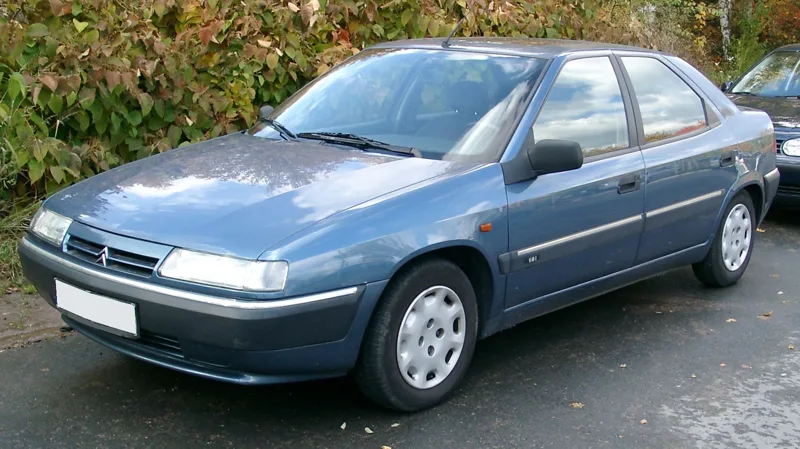
Citroen gradually replaced the BX. The smaller ZX arrived in early 1991 to take over part of the range, and the larger Xantia went on sale at the beginning of 1993. The BX hatchback was discontinued at that point, while the estates lasted into the following year.
Reviewers praised the ride, which was typically Citroen in its comfort, yet the finish did not always match rivals. That contrast explains why the BX is remembered as a clever car with a flawed reputation for assembly.
What was the BX Sport like on the road?
The BX Sport was built from 1985 to 1987, and it was never sold in the UK. It was a left-hand drive model only, and its engine work was developed by the French tuner Danielson. Its seat fabric was the same as that used on the CX Turbo of the period.
The body kit included a rear wing, side skirts and fender extensions that accommodated larger alloy wheels. Those wheels were later used on the GTi as well. Inside, the car had a unique dashboard and a Pullman-style interior that set it apart from the rest of the range.
Road testers praised the ride but judged the handling less sporty than the looks suggested, even after the suspension was modified. For many buyers that balance was the point, since the Sport offered the most powerful BX in production with a relaxed character.
Which BX models reached British roads?
The BX reached the right-hand drive UK market in August 1983, initially with 1.4 and 1.6 petrol engines. By 1986 more engine options were offered, along with a five-door estate. The diesel became the car's strongest seller, and it enjoyed a four-year run as the UK's best-selling diesel car from 1987.
Phase II cars added conventional stalks and a Turbo Diesel that impressed the press. Diesel Car magazine's praise helped that model build its reputation. Diesel models were especially popular as estates. By February 2016, just 485 examples were still on British roads, which shows how few survived the years.
Specification overview
| Specification | Detail |
|---|---|
| Production run | 1982 to 1994, 2,315,739 built |
| Designer | Marcello Gandini, Bertone |
| Suspension | Hydropneumatic self-levelling |
| Petrol engines | 1360 cc, 1580 cc, 1905 cc, plus 1124 cc |
| Sport | 126 PS (93 kW) at 5800 rpm, 7,500 built |
| GTi | 1.9 litre, 122 PS (90 kW), 198 km/h |
| 16V | 158 bhp (118 kW), 177 Nm, 0-100 km/h in 7.6 seconds |
| 4TC road car | 200 PS (147 kW) at 5,250 rpm, 62 sold |
| BX Van | Over 2000 sold in Finland |