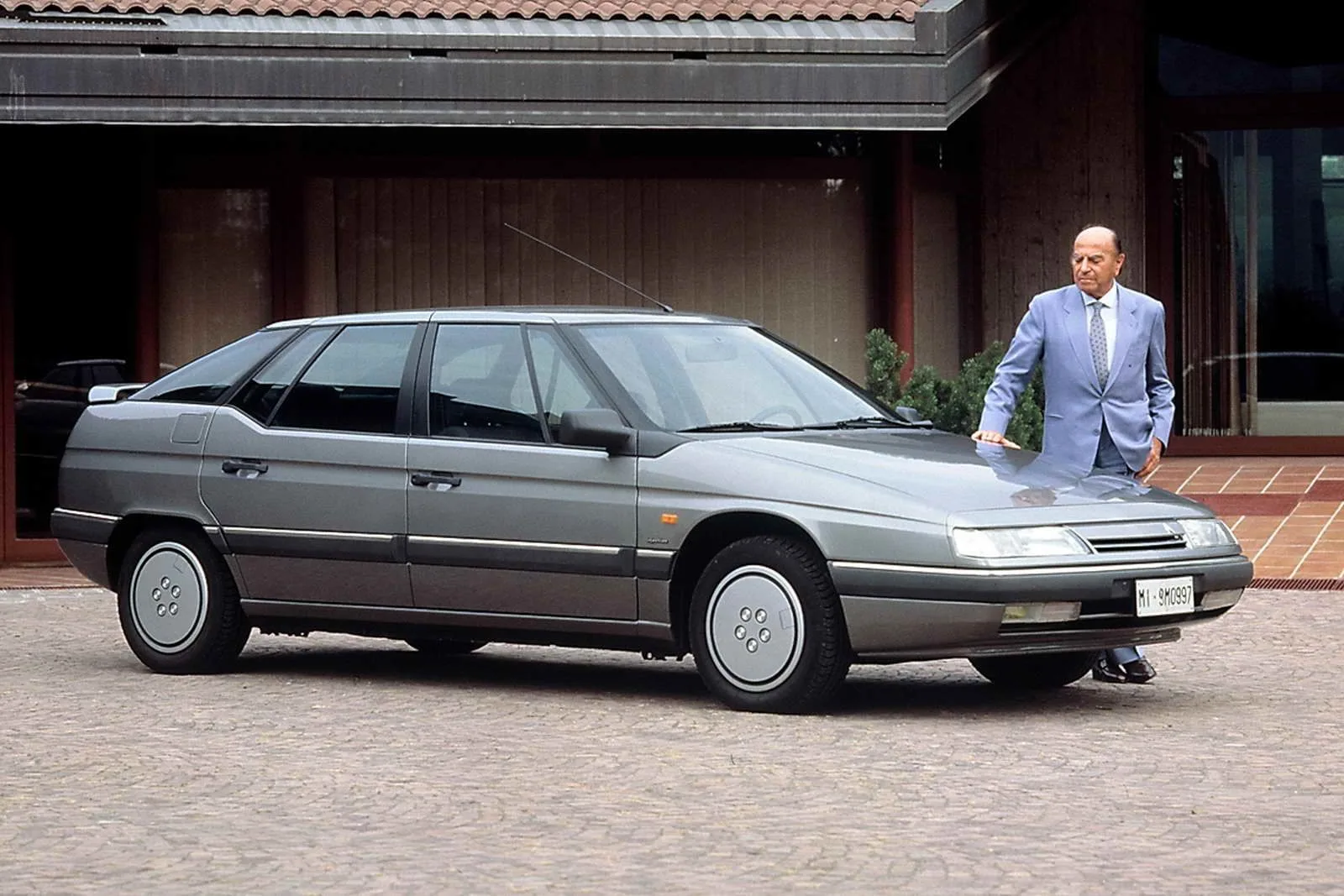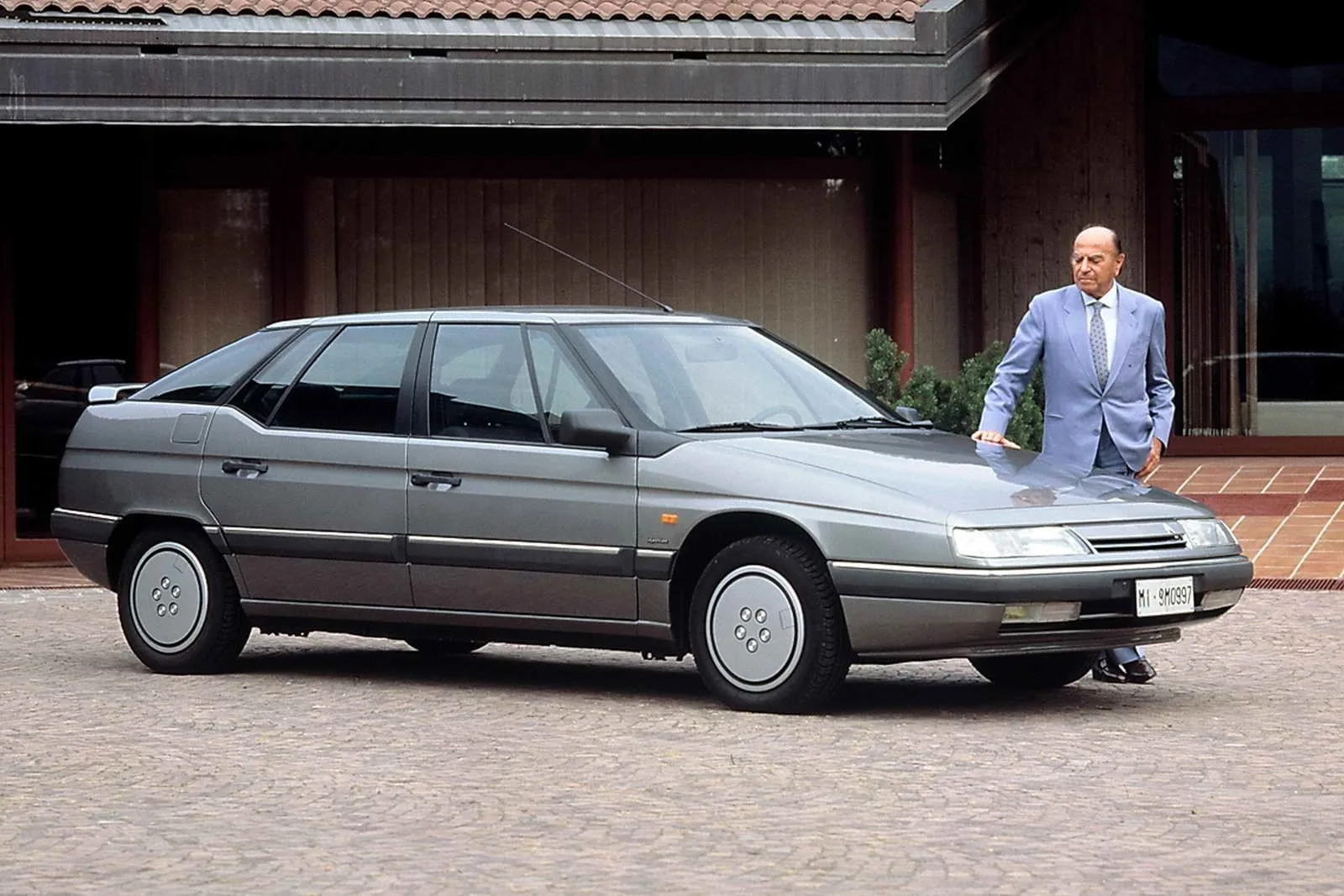
Citroen's electronically controlled hydropneumatic flagship, European Car of the Year for 1990, set against Ford Germany's Sierra-based Scorpio: origins, engines, reception, sales and the buyer each suited.
The Citroen XM and Ford Scorpio were European executive cars that both drew strong opinions. The XM, launched in 1989, won the 1990 European Car of the Year title and sold 333,405 cars. The Scorpio, from 1985, was Ford Germany's Sierra-based executive car and ended production in 1998.
The Citroen XM and the Ford Scorpio were both executive cars from European makers, and both had a hard time winning over critics. The XM was Citroen's flagship from 1989, and it was the first production car with electronically controlled hydropneumatic suspension. The Scorpio was Ford Germany's executive car from 1985, built on a stretched Sierra floorpan and sold as a replacement for the Granada.
This comparison covers why the two were rivals, how each came about, their engines and suspension, how they were received, their sales and which buyer each car suited on the facts available.
Why were the Citroen XM and Ford Scorpio rivals?
They were rivals in the European executive segment. The XM was intended to compete with prestige cars such as the Mercedes-Benz W124, Audi 100 and BMW 5 Series, but it also competed with mainstream brands, and the Ford Scorpio and Opel Omega were named among those rivals.
The Scorpio was intended to keep Ford's place in Europe as the main alternative to a Mercedes or BMW for buyers of an executive car. It was launched more than a year ahead of new competitors from Rover and Opel/Vauxhall, and it was seen as the volume choice in a segment that prestige makers were beginning to dominate.
Both cars entered a market that was changing. The volume makers' executive segment was on the verge of decline, with Ford pulling out of it in 1998 and Opel/Vauxhall in 2003, and customers were placing a higher priority on speed and handling than on the ride comfort Citroen was known for.
One car won European Car of the Year on the strength of its suspension; the other was Ford's Sierra-based executive with the first mass-market ABS across its range.
How did the two cars come about?
The XM replaced the Citroen CX as the company's flagship saloon. It was launched on 23 May 1989, went on sale in France immediately afterwards and reached the UK in right-hand drive in October 1989. The CX estate continued until spring 1991, when the XM estate arrived.
The XM's sister car, the Peugeot 605, also proved a weak seller, and the two shared many early problems.
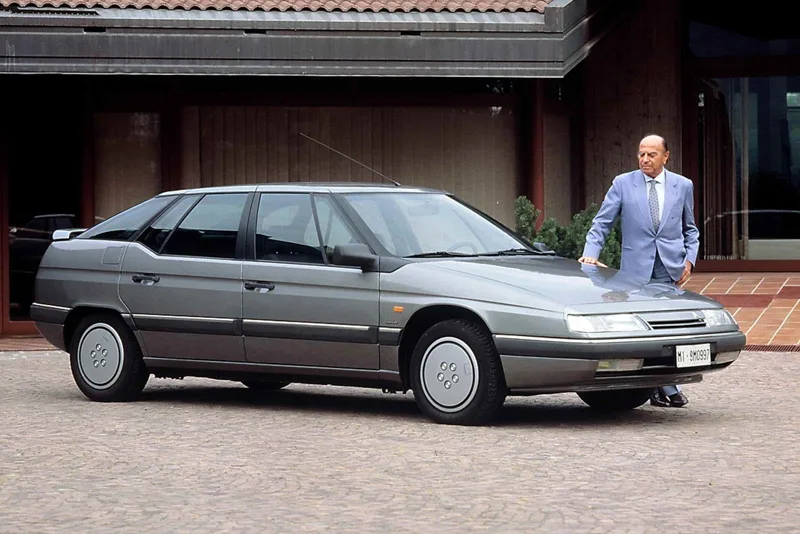
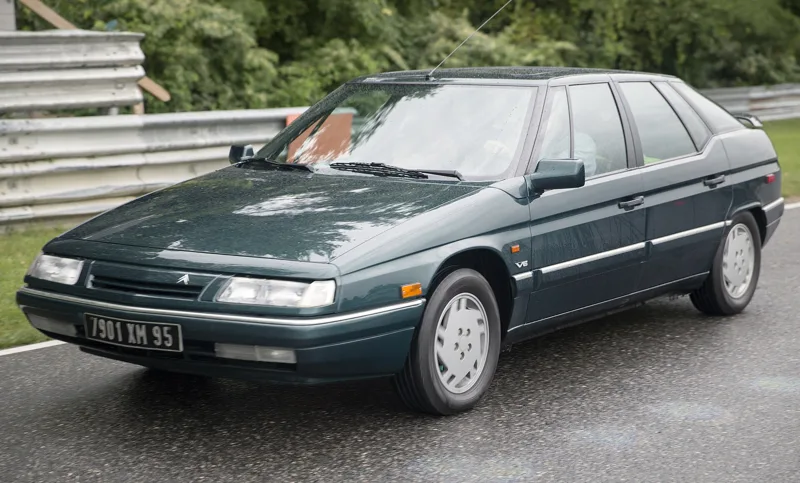
The XM's angular Bertone design was a development of Marcello Gandini's BX concept. It shared a floorpan with the Peugeot 605, and the two cars shared many of their early problems and their market fate.
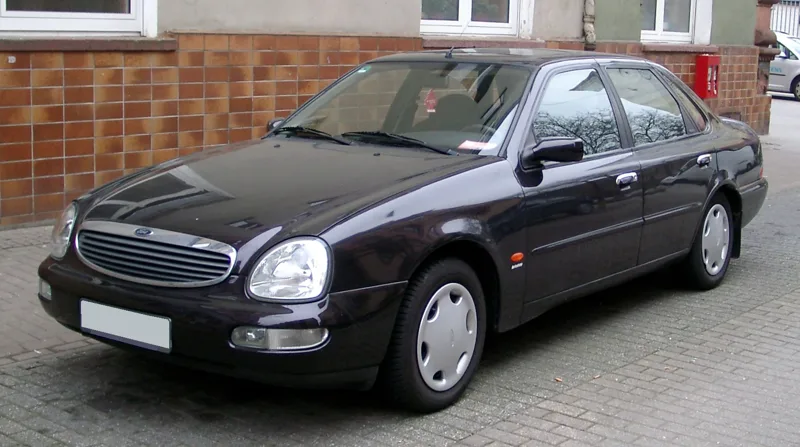
The Scorpio was codenamed DE-1, reflecting its aim to straddle the European D and E segments. It was built largely around the Sierra, using a lengthened version of that car's floor, and its look followed the Sierra and the third-generation Escort.
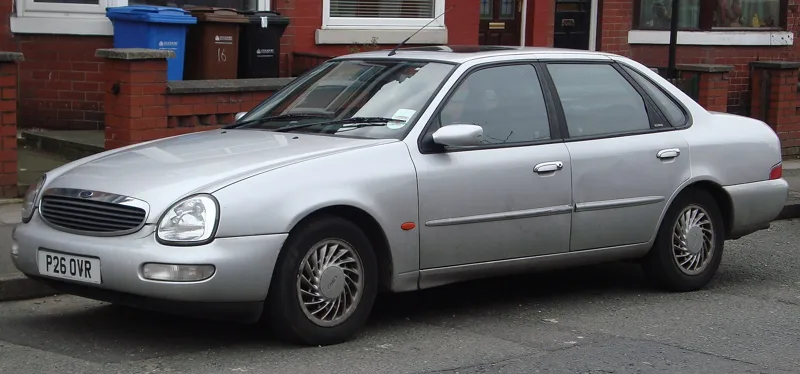
In the UK and Ireland the car was sold as the Granada, with the Scorpio name used only for a higher trim until 1994. Ford also kept the Scorpio separate from its Taurus, since European buyers valued high-speed stability, a tight turning radius and a sizable rear seat.
The Scorpio was launched in 1985 and was initially sold only as a hatchback. A saloon followed in December 1989, and an estate arrived in early 1992, when the range was facelifted with styling that hinted at the new Mondeo.
What engines and suspension did the two cars use?
The XM used electronically managed Hydractive suspension, which made it the first production car with that electronic control. It had a partially galvanised body shell and an optional 3.0-litre V6, while turbocharged engines were the mainstay of its later range.
In 1994 the XM's turbocharged engines produced 150 PS (110 kW; 148 hp), up from 145 PS (107 kW; 143 hp). The suspension was also redesigned to reduce roll, pitch and dive, and it gained a passive rear-steering system similar to the Xantia's.
The Scorpio used well-proven engines. The first generation began with the venerable Pinto unit in 1.8 and 2.0-litre sizes, and the V6 Cologne engine came in 2.4 and 2.8-litre forms, later replaced by a 2.9-litre derivative. The 2.0 DOHC replaced the Pinto from 1989.
The Scorpio Cosworth, introduced in December 1990, had a 2.9-litre 24-valve Cosworth V6. Its size and speed came at a cost, and owners often reported that about 25 miles per gallon was as much as the car would manage.
How did the two cars compare on technology?
The Scorpio's most notable advance was antilock braking, which was fitted as standard across the whole range. That made it the first mass-produced car with ABS across its line-up, and it also had a heated windscreen, cruise control and electrically adjustable seats.
The XM's technology was centred on its suspension and body. Its Hydractive system was electronically controlled, and the later Hydractive 2 system gave a soft ride most of the time, switching to a firmer mode when the car sensed a large or sudden change.
A Merkur Scorpio was also sold in North America from 1988 to 1989, with 140 hp from the Cologne 2.9-litre V6, but it never achieved the market impact Ford had hoped for.
The Scorpio's second generation was developed entirely with CAD/CAM, the first Ford design to be done that way. It also gained self-levelling rear suspension on the estates.
In Japan, Mazda's Eunos chain handled XM sales as part of a wider attempt to make the market look more open. The XM's technology was ambitious, but it was not fully developed at launch. Reliability problems followed, and the car as designed was inconsistent in its abilities, which undermined its technical reputation.
How did the critics and the public respond?
The XM was a critical success at first. In 1990 it was voted European Car of the Year, gaining almost twice as many votes as the second car, the Mercedes-Benz SL, and it went on to win a further 14 major awards within a year of its launch. It was a notable result for a car that would later struggle to sell.
Its styling was controversial. Its angular shape, long low hood and kick-up in the belt line alienated buyers who wanted a more conventional three-box sedan, and the car also lost ground because of its reliability and its resale value.
The Scorpio had a difficult reception as well. Its second generation, launched in October 1994, was widely criticised for its styling, although reviewers praised its luxury interior, its handling and its performance. Its reliability was also poor in the magazine surveys of the time.
A Top Gear survey in April 1998 listed the Scorpio as the third worst N-registered car to own in the UK, with a particularly low score for reliability. It fared slightly better in the 1999 and 2000 surveys.
How did the two cars sell?
The XM was built in 333,405 examples over 11 years, with 31,035 of them Heuliez-built estates. Its planned level of around 160,000 a year never materialised, and sales fell sharply in the late 1990s before production ended in June 2000.
Export markets were weaker from the start, partly because of pricing. The least expensive XM cost nearly 50 percent more at launch than the equivalent CX. Early UK sales were around 3,500 a year, making the XM Citroen's weakest seller in the country.
The Scorpio's sales figures are not given in the material available for this comparison, so its totals cannot be set against the XM's. The Scorpio was replaced by no direct successor, and Ford's ownership of Jaguar and Volvo gave it access to the executive segment through other models.
The XM was launched a year before a major recession began, and the UK's new car registrations fell from 2.3 million in 1989 to under 1.6 million in 1991. That shift hurt both cars, since the executive market was already moving toward prestige marques. The 1990s were a hard decade for volume executive saloons, and neither car escaped that pressure. By the late 1990s prestige marques had taken much of the executive segment, which left both cars competing for a smaller pool of buyers.
Which buyer suits each car?
On the facts given, the XM suits a buyer who wants a flagship executive saloon with an electronically controlled hydropneumatic ride, a distinctive design and a European Car of the Year pedigree. The Scorpio suits a buyer who wants a volume executive car with ABS across the range, a Ford badge and a Cosworth option for performance.
A buyer who valued ride comfort and an unusual technical character would look at the XM. Its suspension was the centre of its appeal, and its awards showed that the ride was recognised when the car was new.
A buyer who wanted a more conventional executive car with a wide range of engines and Ford service would look at the Scorpio. Its ABS and its well-proven engines gave it a practical, familiar character, though its styling put many buyers off.
Neither car is shown to be better across the board. The XM has the award and the more ambitious engineering, while the Scorpio has the simpler engine line-up and the wider Ford network. The better choice depends on whether the buyer values an unusual ride or a conventional Ford executive.
Specifications at a glance
| Feature | Citroen XM | Ford Scorpio |
|---|---|---|
| Production | 1989 to 2000 | 1985 to 1998 |
| Cars built | 333,405 | No figure given |
| Body styles | Saloon and estate | Hatchback, then saloon and estate |
| Suspension | Electronically controlled Hydractive | Conventional; self-levelling rear on estates |
| Engines | Turbocharged fours and 3.0-litre V6 | Pinto fours, Cologne V6 to 2.9 litres, Cosworth V6 |
| Top power | 150 PS (110 kW; 148 hp) turbo in 1994 | Cosworth 2.9-litre 24-valve V6 |
| Brakes | No figure given | ABS standard across the range |
| Awards | European Car of the Year, 1990 | No figure given |
| Design | Bertone angular design | DE-1 Sierra-based design, later CAD/CAM |
| Sales record | Early UK sales about 3,500 a year | No figure given |
| Reliability | Early reliability problems | Third worst N-registered car in a 1998 survey |